
A poem written by Dave Morris approximately twenty years ago
Dave Morris served in the Royal New Zealand Army Ordnance Corps from 6 May 1963 until 29 July 1985. He has also been a longstanding supporter of this website since its inception, generously sharing his knowledge, recollections and contributions to help preserve the history and traditions of the RNZAOC.
King Edward the Third, he uttered this phrase,
Back in the day when chivalry’s the craze.
Adding, one day you will wear it proud,
I will make it official: Wear it endowed.
‘Evil to him thinks evil who of it’,
Wear it with camos, Number Ones or mess-kit.
Wear it with pride so others see envy,
Remember your Corps and course, spirit esprit.
Remember it’s French and is not Latin,
And lead by example—you carry the baton.
Stand tall; stand proud and show good bearing,
‘Honi soit qui mal y pense’ is what you’re wearing.
The story behind the words
Dave Morris’s poem reflects upon the words Honi soit qui mal y pense and their place within military tradition. Although written in a light-hearted style, its references draw upon a history extending back to medieval England and the foundation of the Order of the Garter.
The phrase is Anglo-Norman French rather than Latin. It is generally translated as:
“Shame on anyone who thinks ill of it.”
Alternative translations include “Shame be to him who thinks evil of it” and the more literal, although awkwardly expressed, “Evil to him who thinks evil of it.” The first probably conveys the intended meaning most clearly to a modern reader.
Edward III and the Order of the Garter
The motto is associated with King Edward III, who founded the Most Noble Order of the Garter in about 1348.
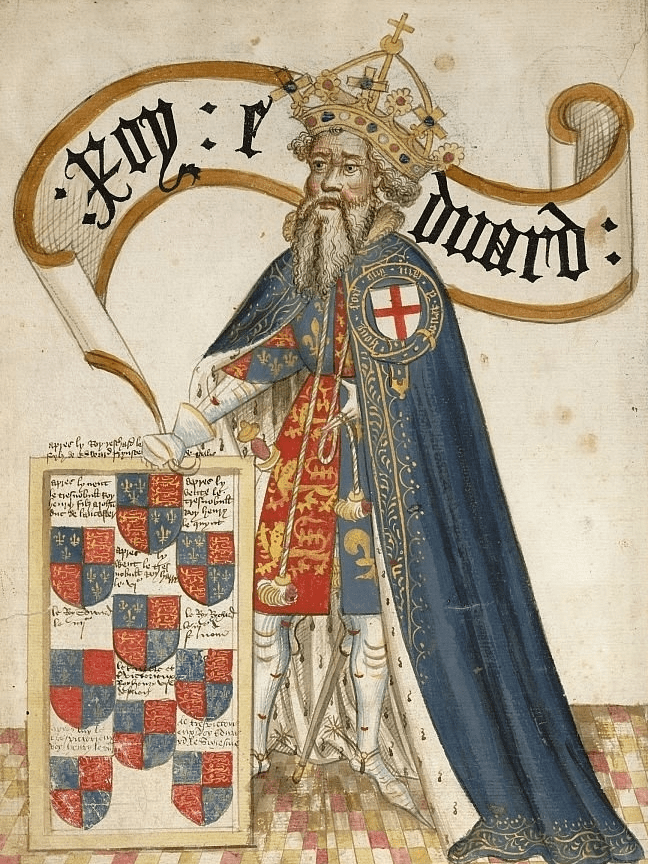
According to tradition, a lady lost her garter during a court function. When those present laughed, the King retrieved it and placed it around his own leg, declaring:
Honi soit qui mal y pense.
He is also said to have warned that those laughing would one day consider it an honour to wear the garter. This tradition is reflected in the poem:
Adding, one day you will wear it proud,
I will make it official: Wear it endowed.
The story captures the chivalric sentiment associated with the motto, but it should not be treated as established historical fact. The surviving accounts were written well after Edward III’s reign, and historians generally regard the dropped-garter incident as a later legend.
An alternative explanation is that the motto referred to Edward III’s claim to the French throne and condemned anyone who thought badly of, or questioned, his intentions.
Whatever its precise origin, the phrase became the enduring motto of the Order of the Garter, Britain’s oldest and most senior order of chivalry.
From the Garter to military badges
The Garter and its motto became familiar elements of British royal and military heraldry. When incorporated into a badge, the garter normally forms a circle around its central device. Its presence signifies a royal association; it does not necessarily represent the individual motto of the corps or regiment wearing the badge.
This distinction is particularly important when considering the badge of the Royal New Zealand Army Ordnance Corps.
After the New Zealand Army Ordnance Corps was granted the title “Royal” on 12 July 1947, its new badge incorporated a crown and the Royal Garter. The words Honi soit qui mal y pense appeared around the garter, surrounding the traditional shield of the Board of Ordnance.

Beneath it was a separate riband bearing the Corps motto:
Sua Tela Tonanti — “To the Warrior His Arms.”
Therefore, Honi soit qui mal y pense appeared prominently on the RNZAOC badge, but it was not the distinctive motto of the Corps. That distinction belonged to Sua Tela Tonanti. The former represented the Order of the Garter and the Corps’ royal status; the latter expressed the purpose and identity of Ordnance.
The same heraldic convention appeared in the badges of several other British and Commonwealth corps and regiments. This is why the words may be encountered on military insignia without being the organisation’s principal motto.
Wearing the tradition
Dave’s references to wearing the words with camouflage uniform, Number Ones and mess dress reflect the different occasions on which soldiers displayed their Corps insignia:
Wear it with camos, Number Ones or mess-kit.
Wear it with pride so others see envy.
For the wearer, the badge was more than an item of dress. It represented membership of the Corps, successful completion of training, pride in one’s trade and an obligation to uphold the standards inherited from those who had worn it before.
The poem’s reference to carrying the baton captures this continuity. Each generation temporarily holds the Corps’ traditions in trust before passing them to the next. Wearing the badge therefore carried an expectation of good bearing, professional competence and leadership by example.
Two mottos, one badge
| Inscription | Language | Meaning | Significance |
| Honi soit qui mal y pense | Anglo-Norman French | “Shame on anyone who thinks ill of it” | Motto of the Order of the Garter, representing royal association |
| Sua Tela Tonanti | Latin | Traditionally, “To the Warrior His Arms” | Distinctive motto of the RNZAOC |
Understanding this distinction does not diminish Dave Morris’s poem. Instead, it provides the historical context through which its meaning can be more fully appreciated. The poem is about the words worn around the badge, but its deeper message concerns pride, bearing, professional identity and the responsibility of carrying Corps traditions forward.
As Dave concludes:
Stand tall; stand proud and show good bearing,
Honi soit qui mal y pense is what you’re wearing.
Further information can be found in New Zealand Army Ordnance Corps Badges, 1916–1996 and Sua Tela Tonanti: The Story Behind the RNZAOC Motto.
