
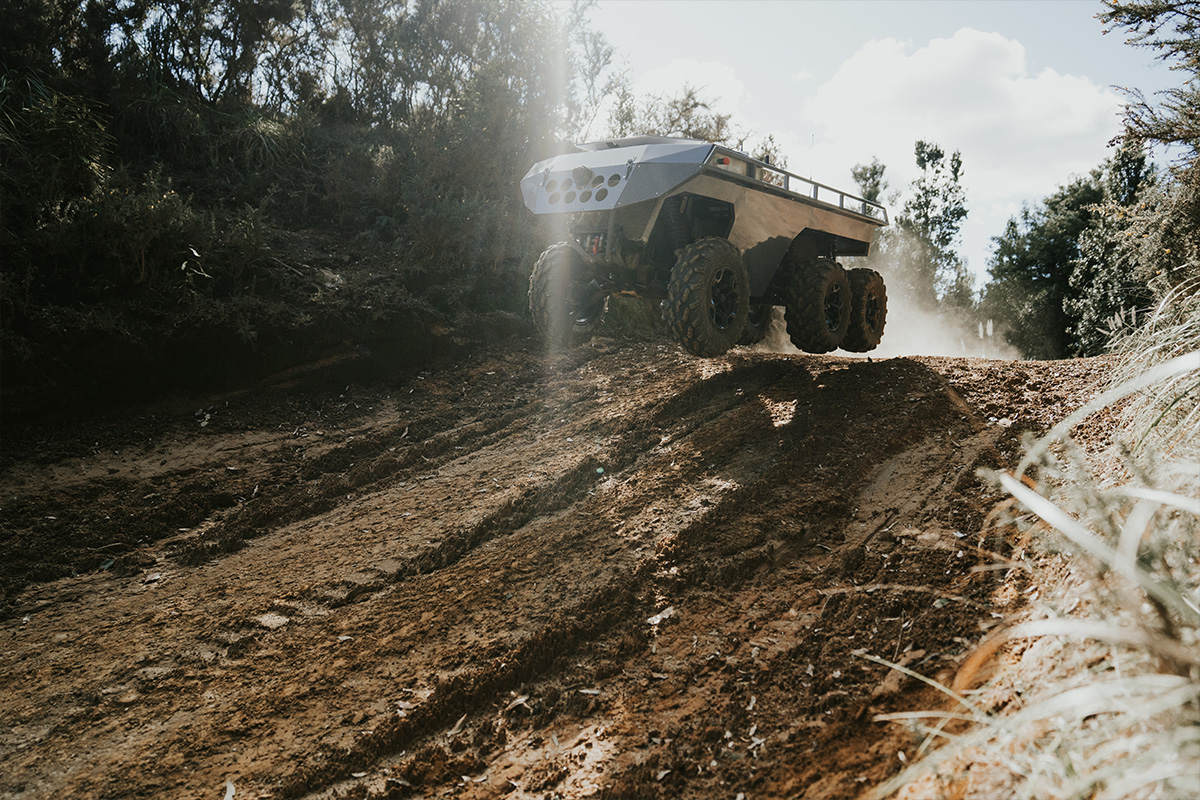
From the Waikato Commissariat to SAP, battlefield management systems and unmanned distribution.
In July 2026, Drones, Distribution and the Small Army: Logistics for New Zealand’s Motorised Infantry Future examined how unmanned aerial systems might transform the delivery of supplies to New Zealand soldiers operating on an increasingly dispersed and contested battlefield. The article argued that motorised infantry, the vulnerability of conventional replenishment arrangements and the growing availability of autonomous technologies demanded a reconsideration of how the Army sustained its combat forces.[1]
Developments since then have made the subject more immediate. Singapore’s experimentation with its Next Generation Infantry Battalion during Exercise Wallaby 2026, together with New Zealand’s own unmanned-vehicle trials, suggests that autonomous systems are becoming an increasingly important part of military capability development. Their significance extends beyond operating a vehicle without a driver or pilot. They raise more fundamental questions about how the military organises logistics, how information moves between the battlefield and the supporting supply system, and whether technology can genuinely improve a comparatively small army’s ability to sustain its forces.
A drone may deliver ammunition, communications batteries, or an urgently required repair component to a forward position, but that capability depends on the wider logistics organisation knowing what is required, where supplies are held, and how to release and transport them. The process must also give commanders and logistics personnel enough visibility to know whether the requirement has been met. The challenge therefore extends beyond the final journey from a supply point to a soldier: it concerns the connection between the person who needs an item, the organisation responsible for supplying it, the systems that authorise and record its movement, and the transport assets employed to complete delivery.
For the New Zealand Army, this raises an important question: how far forward does the Defence logistics information system extend, and how effectively does it connect to the digital systems commanders and soldiers use on the battlefield? The answer may prove more important to autonomous logistics than the performance of any individual unmanned vehicle.
An Old Problem in a New Form
Coordinating supply, transport, and information is not new in New Zealand military history. Although the technologies available to successive generations of logisticians have changed considerably, the underlying challenge has remained consistent: an army must identify requirements, obtain resources, arrange their movement and maintain sufficient control to know whether supplies have reached their intended destination.
During the Waikato campaign of 1863–64, British forces relied on a network of roads, river transport, animal-drawn vehicles, and forward depots to sustain troops advancing south from Auckland. As Richard J. Taylor shows in his doctoral study of British logistics during the New Zealand Wars, the campaign depended as much on the organisation and coordination of these resources as on the transport equipment itself.[2] Deputy Commissary-General Humphrey Stanley-Jones supervised a system that used bullock wagons, horse-drawn vehicles, steamers, barges, and canoes. The arrangements were complex: Taylor records that some stores were handled as many as sixteen times between Auckland and Ngāruawāhia, with each transfer adding work and increasing the risk of damage, loss, or errors in accountability.

An organisational disagreement in 1864 further illustrated the importance of coordinating supply and transport. After the 4th Battalion Military Train arrived, its commander proposed absorbing the Commissariat Transport Corps into the Military Train. Senior Commissariat officers opposed the proposal, arguing that the organisation responsible for obtaining and distributing supplies needed to retain effective control over how they reached the troops. General Cameron ultimately maintained separate responsibilities, with the Military Train undertaking selected transport duties while the Commissariat Transport Corps continued to support much of the forward distribution system.[3]
Although the circumstances differed from those facing a modern army, the disagreement raised a familiar question. Should the organisation operating transport equipment determine how it is employed, or should movement remain coordinated through the logistics system responsible for meeting operational requirements? Autonomous vehicles create a modern version of this problem. A drone might be operated by infantry, a logistics organisation or a specialist unmanned-systems team, but the operator should not necessarily determine supply priorities independently of the wider distribution system. The technology has changed considerably since 1864; the need to connect movement with supply management has not.
From Movement Control to Computerised Supply Accounting
The expansion of New Zealand’s expeditionary commitments during the twentieth century progressively increased the complexity of military distribution. Deploying and sustaining forces overseas demanded coordination between depots, ports, airfields, staging areas and deployed units, often across several modes of transport. Specialist movement-control, terminal, and air-dispatch capabilities developed because military movement involved more than supplying vehicles, ships, or aircraft; it also required managing capacity, priorities, destinations, and documentation.[4]
This specialisation distinguished operating transport from coordinating the movement of military resources. Movement control developed to use available means to support operational priorities, whether the journey was undertaken by road, sea, or air. Autonomous ground vehicles and logistics drones should be understood in the same way: additional movement resources whose use must be coordinated as part of the distribution system.
A comparable transformation occurred in stores administration. For much of its history, the Royal New Zealand Army Ordnance Corps (RNZAOC) relied upon handwritten records, vouchers and ledger cards to manage its inventory. Although these arrangements provided accountability, they were labour-intensive and depended upon accurate, timely manual transactions. Hollerith punched-card records, introduced in 1958, marked an important step toward mechanised supply accounting, while electronic accounting machines and computerised systems gradually improved transaction processing and inventory information production.[5]
The introduction of the Defence Supply System Retail (DSSR) in the 1980s, and the subsequent development of the Defence Supply System Development (DSSD), continued this process. Both initiatives sought to improve inventory management and reduce delays and inconsistencies associated with earlier arrangements. Nevertheless, computerisation introduced its own challenges. Staff had to be trained, records converted, and procedures revised, while the usefulness of information still depended on how promptly transactions were completed. A central computer might hold extensive inventory records, but they could become outdated when activity at a supply unit was not reflected quickly enough.

This was particularly evident when computerised logistics support was extended into the field. During Exercise Golden Fleece in 1989, the Army experimented with providing deployed logistics organisations access to Defence supply information through mainframe terminals. The COMRAT ration-management application was also trialled on portable computers, demonstrating how relatively modest technology could reduce repetitive administrative work and assist field planning.[6]

These experiments brought logistics information closer to deployed organisations, but they also highlighted the difficulties of transferring systems developed for established facilities into environments where communications, equipment reliability and technical support imposed additional constraints.
Modern battlefield networks are vastly more capable, yet the underlying challenge remains familiar. A computer system may provide excellent visibility of Defence inventories, but its operational value depends on whether relevant information reaches decision-makers in the field and whether they can communicate requirements back to the supply organisation without unnecessary delay or duplication.
Project Fusion, SAP and the Integration of Army Logistics
During the 1990s, the New Zealand Defence Force (NZDF) undertook a wider transformation of financial, inventory and maintenance-management systems. Project Fusion, initiated in 1994, introduced SAP enterprise resource planning software to integrate functions previously managed through separate applications. The company put financial management into operation in 1996, followed by inventory and logistics management in 1998 and plant maintenance in 1999.[7] The new environment created an opportunity to link stock holdings, equipment records, maintenance activities, and associated financial transactions through more consistent information and business processes.
Technological reform coincided with significant organisational change. On 9 December 1996, the Royal New Zealand Army Logistic Regiment (RNZALR) was formed through the amalgamation of the RNZAOC, the Royal New Zealand Corps of Transport (RNZCT) and the Royal New Zealand Electrical and Mechanical Engineers (RNZEME). The regiment united principal supply, transport and maintenance functions, recognising the growing interdependence of activities previously undertaken by separate corps.[8]
Although Project Fusion and the formation of the RNZALR were distinct initiatives, both reflected the need for closer coordination between logistics functions. SAP provided a more integrated information environment, while the RNZALR brought together soldiers and trades responsible for managing and executing much of the Army’s support. Neither reform eliminated complexity: records still depended upon disciplined transactions, and an integrated computer system did not automatically produce an integrated organisation. Nevertheless, the changes provided a foundation upon which further improvements could be built.
Three decades later, autonomous distribution offers another opportunity to extend integration, this time connecting not only administrative functions but also the digital management of supplies with the equipment that moves them physically.
Singapore and the Next Generation Infantry Battalion
Singapore provides a useful contemporary comparison because it too is seeking to improve military effectiveness while making efficient use of a limited personnel base. During Exercise Wallaby 2026 in Queensland, the Singapore Armed Forces tested elements of its Next Generation Infantry Battalion (NGIB), an evolving concept combining revised organisation, digital command systems and unmanned platforms. Singapore’s Ministry of Defence describes a battalion incorporating dedicated unmanned-systems elements, including reconnaissance and attack drones, supported by integrated command-and-control arrangements.[9]
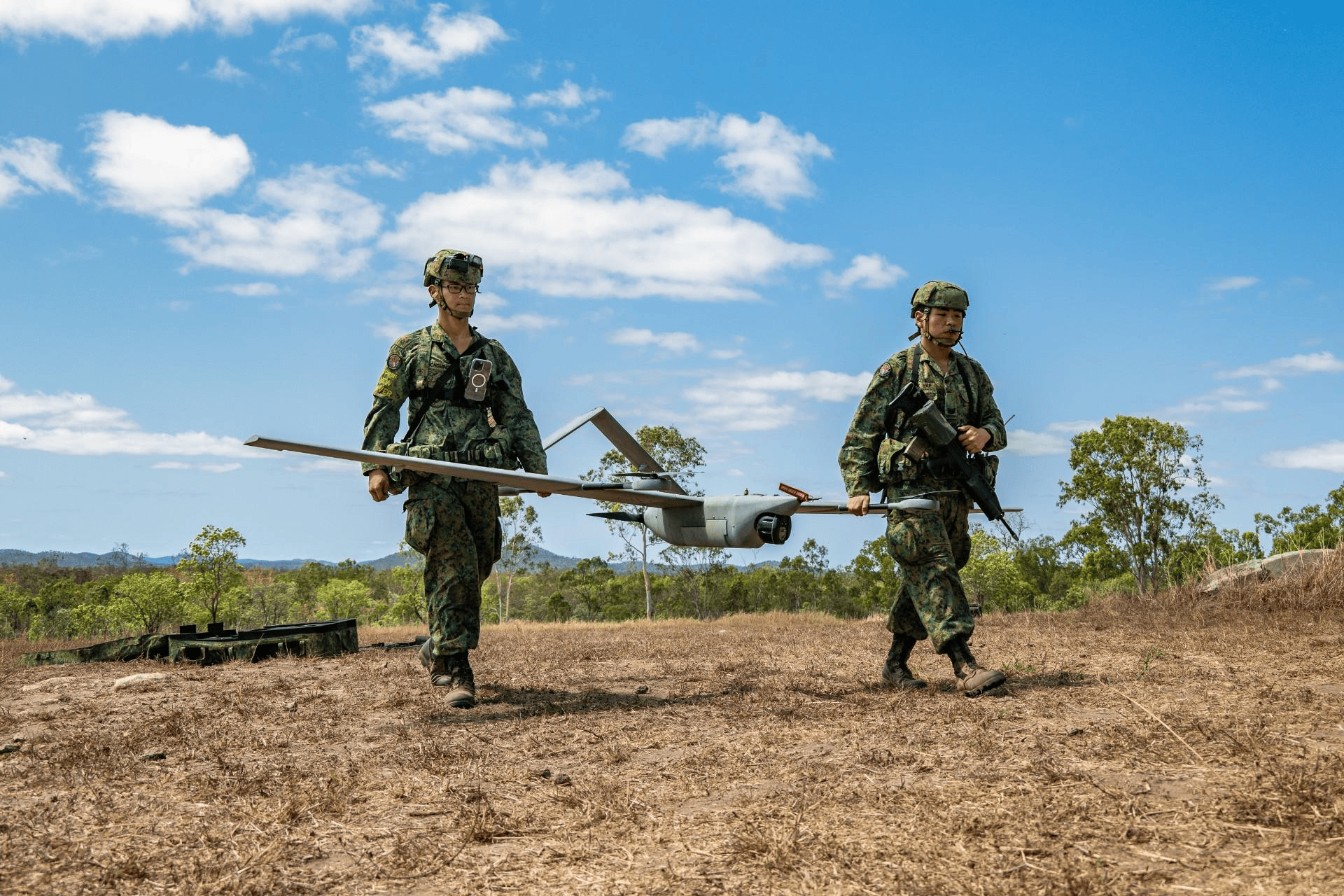
The significance of the NGIB lies not simply in introducing drones, but in incorporating them into infantry formations’ organisation and operating methods. Singapore is examining how technology might shift task distribution between soldiers and machines, rather than treating unmanned systems as supplementary equipment. This approach matters to New Zealand, whose Army must sustain a broad range of capabilities with a comparatively limited workforce.
However, the NGIB should not be interpreted as evidence that Singapore has established a fully autonomous logistics system. Conventional combat service support remains necessary, including transport, maintenance, medical support and other functions. The lesson is less about replacing logistics personnel than about examining whether new technologies can improve their effectiveness. Autonomous platforms may reduce repetitive or dangerous tasks, but they also require operators, maintainers, communications support and technical expertise. Assess their value in terms of the complete logistics workload, not simply the number of drivers a particular journey might no longer require.
The Digital Gap Between the Battlefield and the Supply System
The NZDF does not approach autonomous logistics without an information-management foundation. SAP has long supported key aspects of inventory, maintenance, and resource management, while the Army’s Network Enabled Army (NEA) programme is introducing tactical communications, information-sharing, and battlefield management capabilities. The Ministry of Defence identifies SitaWare as the Battle Management System acquired through the NEA programme, alongside deployable servers, digital devices, routers and communications infrastructure intended to improve situational awareness and information exchange.[10]
These developments represent a considerable advance in tactical communications, but they raise a question about the relationship between two different information environments. SAP primarily manages and accounts for Defence resources; the battlefield management system supports tactical command, situational awareness, and coordination. Both can support sustainment, but their existence does not mean logistics information moves automatically between them.
Consider a motorised infantry company operating some distance from its supporting logistics elements. One platoon needs replacement communications batteries, another needs ammunition, and a vehicle crew urgently needs a repair component. The company must communicate these requirements to the supporting organisation, which determines availability, sets priorities and arranges the release and movement of supplies. The receiving unit must then confirm delivery so that the appropriate records can be updated.
In a more closely connected system, authorised personnel could submit requirements electronically and receive useful updates as demands progressed. Commanders could establish what had been requested, what was available, what had been allocated, and what was moving towards them, without repeatedly seeking information through separate channels. The logistics organisation would benefit equally if information originating with the supported unit could be processed without unnecessary re-entry into different systems.
Publicly available NZDF and Ministry of Defence information does not currently establish that such an end-to-end process exists between SitaWare and SAP. This does not demonstrate that no interface or other means of exchanging logistics information is available, since some arrangements may not be publicly described. It does mean that seamless integration should be treated as something to confirm rather than an existing capability that can be safely assumed.
This distinction matters because operational visibility requires more than a record of Defence stock holdings. A commander needs to understand what the force can physically use, what has been committed, what is moving through the distribution system, and when outstanding demands may be met. An inventory balance may be accurate when recorded yet provide an incomplete picture of immediately available supplies if items are already allocated, awaiting dispatch, in transit or pending receipt.
The objective should not be to turn every soldier into an SAP operator or reproduce the complete enterprise system within the Battlefield Management System. A more practical arrangement would give authorised users simple ways to communicate requirements and get useful updates, while retaining proper supply accounting and management controls in the underlying logistics systems. Soldiers should not need to understand the complexity of those systems: the requirement should be communicated, processed, and fulfilled through an accountable process.
The Future ERP Programme: Another Opportunity for Change
How enterprise logistics information reaches the battlefield has become particularly relevant as the NZDF prepares another transformation of its resource-management systems. In September 2026, the NZDF issued an advance notice about its Future Enterprise Resource Planning (ERP) Programme, outlining plans to replace existing arrangements with a more integrated, enterprise-wide capability. The programme identifies SAP S/4HANA as the intended technology and includes systems integration, business integration and independent assurance among its major areas of work.[11]
This is a potentially significant development in Defence information management. Project Fusion sought to bring separate administrative and logistics functions into a common system; Future ERP offers an opportunity to reconsider how information is managed across the organisation and how it supports operational activity, including its relationship to commanders and personnel in the field.
The procurement notice does not establish that direct integration with SitaWare or autonomous logistics forms part of approved scope. Nevertheless, the future system’s design should consider how authorised operational users might submit logistics requirements, obtain suitable progress information, and maintain visibility without compromising the security or integrity of Defence records. The introduction of a modern ERP should be viewed as more than a replacement of ageing software. Experience with DSSR, DSSD, and Project Fusion shows that the greatest benefits require corresponding changes to procedures, responsibilities, and working practices.
Digital Freight Management and the Movement of Supplies
Another foundation is emerging through the NZDF’s continuing digitisation of freight management. Military freight has traditionally required substantial paperwork and manual coordination to identify, document and track supplies moving between locations. Digital freight processes offer opportunities to improve the preparation, management, and visibility of these movements.
Although developed principally for conventional freight administration, the underlying principles are relevant to autonomous distribution. A consignment should remain identifiable and accountable whether it moves by road, sea, air, or an unmanned platform. For example, an urgently required repair component could be identified through normal supply processes, prepared for dispatch, and allocated to suitable transport. Its movement could then be monitored electronically, and delivery confirmation would allow the relevant supply and movement records to be reconciled.
The benefit would come not solely from moving the item faster but from maintaining a connected record of the requirement, stock allocation, consignment preparation and receipt. When stores pass through depots, transport units, intermediate logistics locations, and forward delivery systems, each transfer can create delays, errors, or loss of visibility. A digital distribution system should therefore maintain consistent identification and accountability throughout the journey, reducing duplicate data entry and improving the ability to determine status. Autonomous delivery is not publicly established as an integrated function of existing NZDF systems, but digitised freight management provides a logical basis for future development.
New Zealand’s Autonomous Systems Experimentation
On 26 February 2026, the Government announced that the NZDF would trial several unmanned systems supplied by New Zealand company Syos Aerospace, including the SG400 unmanned ground vehicle. The experimentation included potential supply movement, reconnaissance, and other military applications, along with exploring integration between unmanned technologies and existing Defence systems.[12]
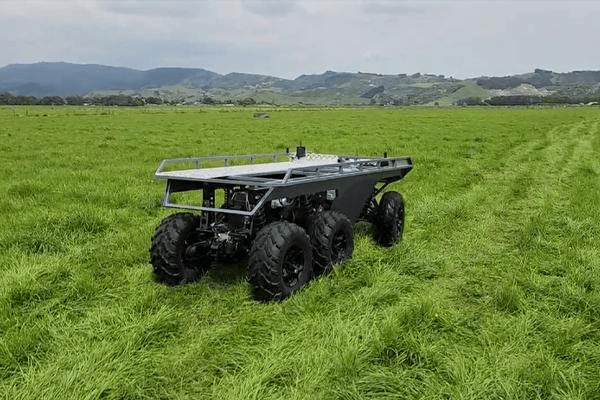
The trials provide an opportunity to assess how unmanned equipment might operate within the Army’s circumstances. Their value should be judged by more than whether a vehicle can travel between two locations or carry a nominal payload. A meaningful logistics trial would begin with an actual demand processed through appropriate supply procedures. Stores would be located, allocated, prepared and documented before a suitable platform was tasked; following movement, the receiving unit would confirm delivery and the relevant records would be reconciled. This would reveal whether the technology improves the entire distribution process or succeeds only at an isolated transport task.
Later experimentation could introduce competing supply priorities, multiple destinations, difficult terrain, communications disruption and opposing unmanned systems. Such trials would identify practical limitations while exposing required changes in movement control, maintenance, communications, and supply administration. The choice of vehicle should remain subordinate to operational requirements: a small aerial drone may suit an urgent repair component, an unmanned ground vehicle a heavier local load, and conventional transport bulk supplies or long distances. The aim should be to expand available distribution options, not replace established transport solely because a new technology is available.
Sustaining the Systems That Sustain the Army
Unmanned platforms would create additional technical and organisational responsibilities. Ground vehicles and aerial systems depend on batteries, motors, sensors, communications equipment, electronic components, and software that require maintenance and support. Some components may be replaced rather than repaired, while others need specialist facilities, diagnostic equipment or manufacturer assistance.
These requirements raise questions about Army trades and the future responsibilities of the RNZALR. Routine servicing might be undertaken by operators, while complex repairs could fall to appropriately trained technicians. Software support, technical modifications, component traceability and recovery of damaged platforms would also need to be addressed. For a small army, the burden could become significant if it bought limited fleets from several unrelated manufacturers, each requiring separate tools, spares, and training.
The benefit of autonomy must therefore be assessed against the people and resources required to sustain it. Removing a driver from one journey does not necessarily save manpower if additional personnel are needed to maintain, supervise, and recover the vehicle. Army logistics history warns that motor transport, electronic equipment, and computerised systems repeatedly created new technical requirements and specialised roles. Technology altered the work, but seldom eliminated the need for trained people.
Operating in the Pacific and on a Contested Battlefield
New Zealand must consider the environments in which its forces may operate. Much international discussion of autonomous logistics draws upon Ukraine and European experimentation, but the Pacific presents particular challenges: dispersed islands, steep terrain, heavy rainfall, limited road networks, restricted infrastructure and substantial distances between logistics locations. A platform that performs well in a prepared training area might struggle on a narrow island track, while a small aerial system may be constrained by weather, endurance, and payload.
Autonomous vehicles also introduce vulnerabilities. Electronic communications, navigation systems and software can be disrupted by jamming, spoofing, cyberattack or equipment failure. Repeated journeys along predictable routes may disclose the locations of supply points and supported units, while charging and maintenance facilities could become additional targets.
These considerations reinforce the need to sustain logistics activities during degraded communications. Deployed organisations must be able to record demands, manage local stock and confirm deliveries when central systems are inaccessible. Locally retained information, predefined authorisations, and procedures for reconciling transactions after communications are restored may help, but they require safeguards against outdated records and duplicate demands. As with the transition from manual to computerised accounting, technology should improve resilience rather than create new dependence.
Building the Next Stage of Army Logistics
The immediate requirement is not necessarily a large autonomous logistics organisation, but a sound understanding of which operational problems new technologies can solve and how the resulting capabilities will fit existing arrangements. A good starting point is to examine the path a supply demand currently follows from a deployed unit into the Defence logistics system: what information is visible, where manual intervention occurs, how requests are processed, and whether any existing interfaces connect tactical and enterprise systems.
The Future ERP Programme provides an opportunity to consider these questions alongside Network Enabled Army and digital freight developments. Improved demand and delivery visibility could benefit conventional logistics before unmanned distribution becomes routine. Allowing a commander to see whether a requirement has been received, allocated, dispatched or delivered could reduce repeated enquiries and improve operational planning, while giving logisticians a clearer picture of outstanding commitments.
Autonomous platforms could then be introduced progressively through normal exercises and supply procedures. Their contribution should be assessed against reliability, cost, personnel effort, maintenance, survivability and the performance of the entire distribution process. Disrupted communications and delayed record reconciliation should be treated as normal trial conditions rather than exceptional complications. Such an evolutionary approach would embed technology within established logistics responsibilities instead of allowing an isolated, administratively disconnected delivery system to develop.
Conclusion: Beyond the Last Tactical Mile
New Zealand military logistics demonstrates that adaptation has always been central to sustaining a small force. During the Waikato campaign, the Commissariat coordinated several means of transport across difficult terrain; a century later, expeditionary commitments encouraged specialist movement-control and terminal capabilities. Computerised supply accounting improved inventory management, while Project Fusion and the formation of the RNZALR brought previously separate functions into more closely integrated systems and organisations.
Each development reflected changing military requirements, but all reinforced the same principle: effective logistics depends upon coordinating people, information, resources and movement. Autonomous ground vehicles and drones now offer another opportunity for improvement. Singapore’s Next Generation Infantry Battalion shows the potential value of integrating unmanned technologies into military organisation, while New Zealand’s experimentation offers a starting point for determining which systems may suit its circumstances.
The greatest opportunity may nonetheless lie less in the machines themselves than in connecting the battlefield to the supporting Defence logistics organisation. The established SAP environment, Network Enabled Army, and digital freight management provide foundations; Future ERP offers another opportunity to consider how enterprise information could better support operations. What remains publicly unestablished is the extent to which tactical and enterprise systems already connect supply demands, meaningful stock visibility and distribution through to confirmed delivery.
The aim should not be to place SAP on every soldier’s device or turn the Battlefield Management System into a complete supply-accounting application. Instead, it should establish a reliable connection between operational need and logistics response, with information moving accurately and promptly through the system while preserving accountability. As the RNZALR approaches its thirtieth anniversary in December 2026, the challenge offers a suitable opportunity to reflect upon the regiment’s origins. The RNZALR was created by joining functions that had become increasingly interdependent; the same principle now applies to autonomous vehicles, digital systems, movement control and conventional logistics.
The next major transformation in New Zealand Army logistics may not be defined by the machines carrying supplies, but by the logistics system’s ability to connect the entire journey from demand to delivery. That would be entirely consistent with more than 160 years of adaptation in New Zealand military logistics.
Author’s note: This article follows “Drones, Distribution and the Small Army”, published on 8 July 2026. The discussion of SAP, SitaWare, digital freight and autonomous distribution concerns possible future integration, not a claim that an integrated end-to-end system is presently fielded by the NZDF. The views expressed are those of the author.
Notes
[1] Robert McKie, ‘Drones, Distribution and the Small Army: Logistics for New Zealand’s Motorised Infantry Future’, To the Warriors Their Arms, 8 July 2026, https://rnzaoc.com/2026/07/08/drones-distribution-and-the-small-army/.
[2] Richard J. Taylor, British Logistics in the New Zealand Wars, 1845–66 (PhD diss., Massey University, 2004), 129–45, https://mro.massey.ac.nz/server/api/core/bitstreams/be341167-ea4b-4209-a827-232c6fe110d6/content.
[3] Taylor, British Logistics in the New Zealand Wars, 171–74.
[4] Robert McKie, Accuracy Under Pressure: The New Zealand Army Movement Operator Trade (2025), https://rnzaoc.com/wp-content/uploads/2025/12/New-Zealand-Army-Movement-Operator-Trade.pdf.
[5] Robert McKie, ‘The Evolution of Computerised Supply Accounting within the Royal New Zealand Army Ordnance Corps, 1958–1990’, To the Warriors Their Arms, 20 September 2023, https://rnzaoc.com/2023/09/20/the-evolution-of-computerised-supply-accounting-within-the-royal-new-zealand-army-ordnance-corps-1970-1990/.
[6] McKie, ‘The Evolution of Computerised Supply Accounting’, particularly discussion of Exercise Golden Fleece 1989 and COMRAT.
[7] Robert McKie, ‘The NZDF’s Evolution of Inventory Management from DSSR to SAP, 1984–1998’, To the Warriors Their Arms, 14 November 2024, https://rnzaoc.com/2024/11/14/the-nzdfs-evolution-of-inventory-management-from-dssr-to-sap-1984-1998/; ‘Outsourcing for Better Army Logistics’, Army Logistician 36, no. 2 (March–April 2004): 31, https://d34w7g4gy10iej.cloudfront.net/pubs/pdf_67339.pdf.
[8] Robert McKie, ‘Three Traditions, One Regiment: The Supply Trades That Formed the RNZALR, 1911–1996’, To the Warriors Their Arms, 26 July 2026, https://rnzaoc.com/2026/07/26/three-traditions-one-regiment/.
[9] Singapore Ministry of Defence, ‘Fact Sheet: Overview of Exercise Wallaby 2026’, 23 October 2026, https://www.mindef.gov.sg/news-and-events/latest-releases/23oct26-fs/; ‘Fact Sheet: Next Generation Infantry Battalion (NGIB)’, 26 October 2026, https://www.mindef.gov.sg/news-and-events/latest-releases/26oct26-fs/.
[10] New Zealand Ministry of Defence, ‘Network Enabled Army C4 Project’, accessed 28 October 2026, https://www.defence.govt.nz/our-work/equip/capability-projects/network-enabled-army-nea-c4/; ‘Network Enabled Army Programme – An Overview’, https://www.defence.govt.nz/our-work/equip/capability-projects/network-enabled-army-nea-programme/.
[11] New Zealand Defence Force, ‘Future ERP – System Integrator, Business Integrator, and Quality Assurance’, Government Electronic Tender Service, 17 September 2026, https://www.gets.govt.nz/NZDF/ExternalTenderDetails.htm?id=34952898.
[12] Judith Collins, ‘Kiwi Drones to Boost Defence Capability’, New Zealand Government, 26 February 2026, https://www.beehive.govt.nz/release/kiwi-drones-boost-defence-capability.
