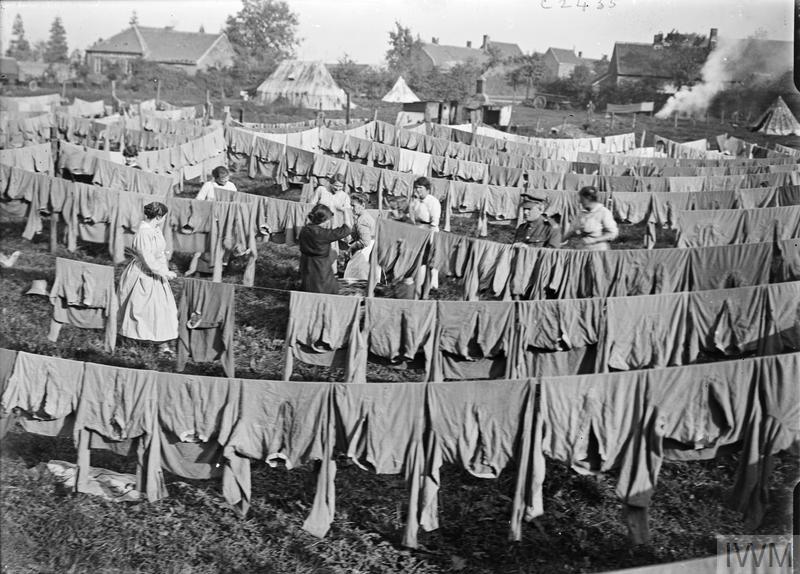
Amid the tumultuous landscape of World War Two, a Mobile Bath Unit emerged as a contributor to the triumph of the 2nd New Zealand Division in the Middle East and Italy. Picture this: battle-weary troops, having endured weeks of relentless pursuit through deserts and muddy fields in pursuit of the enemy, suddenly find themselves in a surreal moment. Covered in grime and exhaustion, they are met by an extraordinary sight – a unit ready to offer them a hot shower and a complete change of clothing. This transformation is nothing short of miraculous, revitalising soldiers’ spirits amid the hardships of war. The impact on morale is so profound that one can surmise that, at times, the enemy may have deliberately targeted Bath units for elimination, recognising their pivotal role. This article provides historical context on the NZEF Mobile Bath unit, which operated from 1941 to 1945, spanning Egypt, Syria, and Italy. It sheds light on the unit’s vital role in the overall success of the 2nd New Zealand Division during this pivotal period of World War Two.
Following the British model, the New Zealand Expeditionary Force (NZEF) incorporated a Bath unit into its organisational structure and war establishment. This unfamiliar capability posed challenges to the NZEF leadership, as they lacked experience in this field. There was considerable uncertainty about whether this responsibility fell under Ordnance or the Medical Corps, leading to delays in forming this units. On 15 November 1940, confirmation was received from NZEF liaison staff in London that Bath services did indeed fall under Ordnance responsibility.
Discussions persisted throughout 1941 regarding establishing a Bath unit, with the primary issue being whether this unit should be formed, equipped, and trained in New Zealand before deployment to the Middle East or formed from within the existing structure of the NZEF. Despite these ongoing deliberations, the NZEF Order of Battle was updated on 17 April 1941 to include a Divisional Mobile Bath Unit as part of the NZEF.
Authorisation for the formation of these units under the New Zealand Ordnance Corps (NZOC) was granted on 31 August 1941, with the Mobile Bath unit scheduled for formation on 6 September 1941.
In September 1941, a unit twenty-one strong, consisting of one officer and twenty other ranks, was formed through a call for volunteers. Most of the personnel initially came from infantry units. The initial officer Commanding (OC) was 2nd Lieutenant Astly. On 16 September 1941, the unit was assembled at the Engineer and Ordnance Training Depot (E&OTD).
Following the unit’s formation, most personnel spent five days at the Helwan prisoner of war camp, familiarising themselves with a British-run Bath unit. Upon their return to their depot, they discovered that their equipment had not arrived, and it was uncertain whether such equipment was even in Egypt.
Courses on compass work and similar activities began but became tedious. It was at this point that the unit undertook a crucial task. In the day’s scorching heat, they manually laid approximately 2560 cubic feet of concrete and constructed the entire set of buildings that would house the 6th Division Workshops. This gruelling work lasted for about three months, during which pieces of the unit’s equipment were gradually acquired piecemeal from various Base Ordnance Depots (BODs).
In early 2 December, Lieutenant P. Hawkins assumed command. On 10 January 1942, the unit left Maadi camp for the Canal Zone, where they served alongside the NZ Division on the Great Bitter Lake. They also provided showers to Indian and British troops at Kabrit, Fayid, and other locations in the zone. Despite facing minor challenges, such as a four-day sandstorm, they accomplished valuable work. Two incidents stood out during this time: a raid on a nearby airfield by enemy planes and a fire that destroyed the Shaftes picture theatre.
Vehicle Tactical Sign, NZ Division Mobile Bath Unit (1941)
The NZ Division moved to Syria in February, and the bath unit followed on 13 March. Without their own transport, the Bath unit relied on other units, often unloading and camping in various locations on-route. They reached Baalbeck on 20 March and began working alongside the 27th Battalion machine gunners, performing several months of essential tasks, including laying concrete floors by a creek fed by historic springs.
Syria provided an interesting change from the Egyptian sands, with the unit’s OC arranging many fascinating day trips to cities like Beirut, Damascus, Aleppo, Tripoli, and even Turkey. When the Division was hastily recalled to Egypt, the unit returned on 20 June, calling at the small town of Zahlie for a few days, where they joined up with the mobile laundry. Leaving on 29 June for Kfar Vitkin in Palestine. And then making stops along the way before arriving back in Maadi Camp. In July, they reorganised and left for the western desert, beginning operations at Burg el Arab in August.
After nearly a month in Burg el Arab, their water supply was requisitioned for urgent needs, leading to their return to Maadi Camp. The unit was temporarily disbanded, with the disinfector returned to BOD to allow full credit to be extended to the New Zealand Government, effectively covering its entire cost. The bath equipment was retained as an asset of New Zealand and stored at the E&OTD, anticipating potential future deployment in other theatres of operation.
On 22 August 1942, eleven Other Ranks from the Bath Unit were transferred back to their respective depots. The formal disbandment of both the NZ Divisional Mobile Bath Unit occurred on 30 September 1942, with the OC and remaining Other Ranks of the bath unit transferred to other branches of the NZOC on the understanding that if the bath capabilities were to be regenerated, these men would be released to train and have the unit fully operational within a matter of days.
In September 1943, the Bath unit was reformed at Maadi as 1 NZ Mobile Bath Unit, with 2nd Lieutenant D. Ewing in charge. The personnel remained the same in number, including two members from the previous unit who provided valuable information. However, the shower did not function as expected.
In October 1943, the NZ Division and the newly formed 1 NZ Mobile Bath Unit conducted a covert move from Egypt to the southern regions of Italy. In late October, the flight personnel left Alexandria, with the unit Drivers and equipment departing Port Said for Italy. After some travel, they arrived near the Sangro River and commenced operations. Despite challenges, the unit improved its functioning, and on New Year’s Eve, they faced a heavy snowstorm that transformed their surroundings. Despite the adversity, they carried on with their work.
As the Division moved to the Fifth Army front, the unit went to Atessa and proceeded northwest, proving invaluable to the Mobile Laundry unit by towing heavy trailers. In November 1943, the NZ Division ADOS expressed the intention to streamline administration by placing the Mobile Bath Unit under the command of the Officer Commanding the Mobile Laundry Unit. This move aimed to achieve greater efficiency in the management of both units.
On 16 February 1944, the NZ Mobile Bath Unit was disbanded, and concurrently, the NZ Mobile Laundry Unit was rebranded as the NZ Mobile Laundry and Bath Unit (NZ Mob Laundry & Bath Unit).
This restructuring aligned the New Zealand organisation with the British Army War Establishment II/293/1 of December 1943, categorised as a Type B: Mobile Field Laundry and Bath Unit. The mobile bath component of the MLBU consisted of four independent shower sections, one attached to each brigade and one remaining with the laundry.
Water for showers was drawn from a stream or other suitable supply by an electric pump, heated in a locally designed boiler fired with oil and water, and passed into a shower room, a tent with duckboards laid out inside, where six showers were available. A larger tent forming a dressing room opened into the shower tent. The water supply was continuous, and men could use as much as they pleased, within reasonable limits, with the duration of showers determined by the number waiting to go through. The showers used two hundred gallons of water an hour, and each section could manage 500- 600 men daily.
Vehicle Tactical Sign 2 NZ Mobile Laundry and Bath Unit (1944)
The figures below show the number of men who received showers. In cases where the numbers are low or incomplete, this can be attributed to the lack of recorded data during the Division’s advance or during periods when sufficient shower facilities were available within the Divisional area, rendering the full-time operation of mobile units unnecessary. An example of this was when the Division was billeted around Trieste.
Throughout the Italian campaign, the NZ Mob Laundry & Bath Unit supported the NZ Division, often deploying detachments to provide frontline units with essential services. The unit continued its service until it was disbanded as part of the NZEF on 8 December 1945.
A significant function of the New Zealand Army Ordnance Corps as part of the New Zealand Expeditionary Force during the First World War was managing the New Zealand Divisional Laundries and Baths. The Laundry and Bath functions helped to maintain the New Zealand Division’s hygiene by providing the opportunity for regular bathing, the exchanging of underclothing and socks and the delousing of uniforms. Although the NZ Division s Laundry and Bath functions were interconnected with its neighbouring Divisions and supporting Corps, this article’s focus is on providing a snapshot of the NZ Divisions Laundry and Bath operations from October 1916 to June 1918.
At the onset of the First World War, partly due to the lessons learnt in the South African War and the more recent Balkan Wars, the British Army had a reasonable understanding of the importance of hygiene in the field and published The Manual of Elementary Military Hygiene in 1912.[1] However, as with any military doctrine, the practical application of the field hygiene lessons learnt took time to become effective in the early years of the War. However, by the time the New Zealand Division arrived at the Western Front in mid-1916, the British Army had a rudimentary Laundry and Bath system at the Corps and Divisional levels into which the New Zealand Division was integrated into.
Command and Control
Initially, as the New Zealand Division took over the existing Laundry and Baths from British units, these functions were initially vested as a responsibility of the New Zealand Medical Corps, who provided officers and men to supplement he existing civilian staff.[2] In line with British practice both the Divisional Laundry and Baths came under the control of the Division Headquarters “Q” Branch, and from 21 December 1916, the New Zealand Division, Deputy Assistant Director of Ordnance Services (DADOS) was the officer responsible for the running of the Divisional Laundry and Baths.[3]
Baths
The Bathing concept was that four Bathhouses were to be established in a Divisional area: usually one Bathhouse for each Infantry brigade and one Bathhouse for the rest of the Division. The concept was that Soldiers were to rotate through Bathhouse on a schedule to allow the entire Division to be bathed once every ten days. In the early years of the war, Bathing facilities were rudimentary, with Baths ranging from breweries or fabric processing plants to Beer barrels cut in half.[4]
Although initially built on an ad-hoc basis using whatever resources were available, by 1917 most Bathhouses in the New Zealand Division were built and operated on a uniform pattern: [5]
A typical Bathhouse was be operated as follows.
The men enter at 1, Undress and hand their Service Dress and valuables in at 2(Obtaining receipt) and dirty underclothes at 3.
They then have a hot shower in D
While the men are having their showers, the seams of their Service Dress Tunics and Trousers were ironed to kill lice, and small repairs were undertaken.
Upon completing the shower, the men enter F, collect a towel, clean underclothes at 4 and their Service Dress and valuables at 5. Dress and leave by 6.
All Towels and dirty underclothes are sent from the baths to the Divisional Laundry daily, and a supply of clean or new items received in exchange.
In June 1918, the system of delousing the soldier’s Service Dress clothing was improved using the Thresh Disinfector Delousing Chamber. As soldiers passed into the Bathhouse, the soldier’s Service Dress was turned inside out and handed over to the Thresh operators. The Garments were hung up inside the Thresh’s airtight chamber and sealed. Coke braziers then heated the airtight chamber, and after the garments had been treated by this method for 15 minutes, they were found to be entirely free form lice and eggs.[6]
Personnel employed in the Divisional usually consisted of
Locally employed civilian women for ironing and mending.
Depending on the ebb and flow of the battle and the New Zealand Division’s movement, between October 1916 and June 1918 the DADOS War Diary records that Bathhouses to support the NZ Division were established in over thirty-four separate locations.[8] On most occasions, existing bathhouses were taken over from other Divisions. If there were no existing Bathhouse or the ones taken over were not deemed suitable, NZ Engineers were employed to construct new bathhouses.[9]
Plan for the NZ Divisional Baths as Vauchelles. Archives New Zealand
By June 1918, the New Zealand Divisional Bathhouse system was operating effectively and bathing on average between 700 – 800 troops daily, with 46411 men passing through the Divisional Bathhouses in total.[10]
New Zealand soldiers recently in the trenches outside the Divisional Baths, France. Royal New Zealand Returned and Services’ Association :New Zealand official negatives, World War 1914-1918. Ref: 1/2-013160-G. Alexander Turnbull Library, Wellington, New Zealand. /records/23139145
Soldiers after leaving the line wait their turn for a bath. Royal New Zealand Returned and Services’ Association :New Zealand official negatives, World War 1914-1918. Ref: 1/2-012817-G. Alexander Turnbull Library, Wellington, New Zealand. /records/23097155
Laundry
On most occasions, as the Division relieved an existing Division in the area and took over the existing Divisional Laundry as a going concern. However, there were occasions when a Laundry needed to be established from the ground up, such as when the Division Laundry and Baths at Pont de Nieppe were destroyed by enemy shell fire in April 1917.[11]
The Divisional Laundry received dirty garments from the Baths, (underclothes, socks, and towels) they were disinfected, washed, and mended and placed into a reissue pool.[12]
Usually, the Divisional Laundry placed indents on the supply chain for new items to replace items beyond repair, however, in January 1918 authority was granted for the Divisional Baths to hold a pool of new clothing to me maintained consisting of: [13]
5000 shirts
13100 vests woollen
12450 Drawers Woollen
12700 Towels
19000 pairs of socks
By 1918 the average output from the New Zealand Divisional Laundry was 35,000 – 40,000 garments per week.
Personnel employed in the Divisional Laundry usually consisted of.
Between October 1916 and June 1918, as the NZ Division moved, the NZ Divisional Laundry was also relocated and established in new locations, some of the known sites were
October 1916 Located at Estaires.
Pont de Nieppe, Laundry destroyed by enemy shellfire, 12 April 1917
18 to 25 April 1917 Established at Steenwerck, Handed over to the 8th Division.
Before and during the German 1918 Spring Offensive, the Divisional Laundry was located at.
RenninghelstOuttersteene Westoutre
Abbeville
Socks
Socks were an unlikely enabler; in the extreme conditions found in the mud-filled trenches, clean, dry socks were often the difference between life and death. When feet are constantly wet, as they often were in the trenches, they begin to rot. Gangrene sets in, and often the only remedy is amputation. In the First World War, 75,000 British troops died due to complications caused by trench foot.[15]
Acutely aware of the need for clean socks, the New Zealand Division maintained a system where socks were exchanged daily. To facilitate the daily exchange, a dry sock store was run in conjunction with the Bathhouses. Here dry socks were drawn daily by units in the line in exchange for dirty socks. The dirty sock was then be backloaded to the Divisional Laundry and exchanged for clean socks.
Once received by the Divisional Laundry, the dirty socks if damaged, were mended, washed, and once dried, treated with camphor (as prevention against trench foot) before being placed into the exchange pool.
By May 1918, the disruption caused by the 1918 German Kaiserschlacht offensive had affected the supply routes with the railway service from the Laundry at Abbeville becoming irregular, and it was taking 6-7 days for trucks to travel the short distance to replenish Bathhouses with clean underclothing and socks. However, given the hygiene and morale benefits that clean socks brought, the need to maintain the sock exchange system to the forward troops was a priority. Therefore, close to the front, under the supervision of the NZAOC, a small sock washing depot was established with Sixteen men from the Divisional Employment Company in May 1918. Socks were sorted with torn or holey socks returned to the Laundry for mending, with the remainder of the socks washed by hand. In fine weather, the drying was done outside, if it was wet, the socks were hung on wires from the ceiling of a room and dried employing coke braziers. The men did excellent work, and output was 4 to 5 thousand pairs daily and kept up an adequate supply.[16]
Soldiers washing socks during World War I, Bus-les-artois, France. Royal New Zealand Returned and Services’ Association :New Zealand official negatives, World War 1914-1918. Ref: 1/2-013179-G. Alexander Turnbull Library, Wellington, New Zealand. /records/23052031
New Zealand soldiers washing socks in wooden tubs near the New Zealand Divisional Headquarters at Bus-les-artois, 7 May 1918. Photograph taken by Henry Armitage Sanders Nº H-563 Photo source – Alexander Turnbull collection at the National Library of New Zealand. (Colorized by Marina Amaral from Brazil) https://www.facebook.com/marinamaralarts/?fref=nf See less
Gumboots
As the western front settled down into the routine of trench warfare in the winter of 1915, the time spent in the saturated trenches by British troops was limited to thirty-six hours during which the wearing of gumboots became widespread in the water-soaked areas.[17] The use of gumboots helped minimise the effects of mud and water on exposed feet, thus limiting Trench foot occurrences. Based on the early success of gumboots, contracts were placed with the North British Rubber Company (now Hunter Boot Ltd) to manufacture over 1,185,000 pairs of Gumboots for the British army during WW1.[18]
Boots were classed as Trench Stores and usually only issued to a division when it was on the line. The NZ Division was typically provided with around 6000 pairs, pooled, and issued from a Gumboot Store. The Gumboot store was designed with drying racks and heaters to allow the wet gumboots to be dried and prepared for reissue.
Plan for Drying Apparatus for Rubber Boots. Australian Imperial Force Unit War Diaries, 1914-1919 – Australian Corps Baths and Laundries, 2 – June 1916 – April 1918.” Australian War Memorial Archives Collection No AWM4 18/1/1 PART 2 (1918)
This article provides a small snapshot of how the Laundry and Bath functions contributed to maintaining the New Zealand Division’s hygiene by providing the opportunity for regular bathing, the exchanging of underclothing and socks and the delousing of uniforms. Although the playing a small but significant role in maintaining the combat effectiveness of the New Zealand Division, the efforts of the NZ Division DADOS Staff, the men of the Divisional Employment Companies and the locally employed civilian staff in maintaining the Laundry and Bath operations are worthy of further study to expand the historiography of New Zealand’s First World War combat enablers.
Notes
[1] Martin C. M. Bricknell and Colonel David A. Ross, “Fit to Fight – from Military Hygiene to Wellbeing in the British Army,” Military Medical Research 7, no. 1 (2020).
[2] Major J.S Bolton, A History of the Royal New Zealand Army Ordnance Corps (Trentham: RNZAOC, 1992), 71-72.
[3] “2nd Australia & New Zealand Army Corps [2anzac], Assistant Director of Ordnance Services (Ados) – War Diary, 1 December – 31 December 1916,” Archives New Zealand Item No R23487340 (1916).
[4] Janet Macdonald, Supplying the British Army in the First World War, vol. , (Pen and Sword military, 2019), , 143.
[5] “An Account of the Working of the Baths Established in the Divisional Areas in France,” Archives New Zealand Item No R24428508 (1918).
[6] “Headquarters New Zealand and Australian Division – New Zealand Division – Deputy Assistant Director of Ordnance Services (Dados) – War Diary, 1 June – 30 June 1918,” Archives New Zealand Item No R23487667 (1918).
[7] From May 1917 drawn from No 1 NZ (Divisional) Employment Company.
[8] Based on the DADOS War Diaries Bathhouses were established at, Neuve-Eglise, Selles, Balinghem,Merck-Saint-Liévin, Watou Area, Vlamertinge, Poperinghe, Canal Bank, Bayenghem, Potijze, Hondichen, Staple, Halifax Camp, Caistre, Béthencourt, Louvencourt, Pas, Nauchelles, Pont de Nieppe, Blendecques, Café Belge
[9] Peter D. F. Cooke, Won by the Spade: How the Royal New Zealand Engineers Built a Nation (Exisle Publishing Ltd, 2019), Bibliographies, Non-fiction, 199.
[10] “Headquarters New Zealand and Australian Division – New Zealand Division – Deputy Assistant Director of Ordnance Services (Dados) – War Diary, 1 June – 30 June 1918”
[11] “Headquarters New Zealand and Australian Division – New Zealand Division – Deputy Assistant Director of Ordnance Services (Dados) – War Diary, 1 April – 30 April 1917,” Archives New Zealand Item No R23487653 (1917).
[12] “An Account of the Working of the Baths Established in the Divisional Areas in France.”
[13] “Headquarters New Zealand and Australian Division – New Zealand Division – Deputy Assistant Director of Ordnance Services (Dados) – War Diary, 1 January – 31 January 1918,” Archives New Zealand Item No R23487662 (1918).
[14] From May 1917 drawn from No 1 NZ (Divisional) Employment Company.
[16] “Headquarters New Zealand and Australian Division – New Zealand Division – Deputy Assistant Director of Ordnance Services (Dados) – War Diary, 1 June – 30 June 1918.”
[17] Susan Cohen, Medical Services in the First World War (Bloomsbury Publishing, 2014).
Laundry and Bath Units have played a crucial role in the overall success of numerous conflicts in which New Zealand has been involved since the First World War. Troops, who had spent weeks pursuing the enemy through deserts, muddy fields, and dense jungles, often found it surreal to emerge covered in grime, only to be greeted by a unit offering them a hot shower and a complete change of clothing. The impact on the morale of these soldiers was so significant that it is reasonable to assume that, on many occasions, the enemy specifically targeted Laundry and Bath units for elimination. The identities of many Laundry and Bath operators remain unknown due to security concerns, and some soldiers even received the wrong laundry in return. As you well know, soldiers rarely forget such incidents when it comes to their personal kit.
This article aims to provide historical context on field baths and laundries and examine the primary Mobile Bath equipment used by the New Zealand Army from 1914 to 1996. The provision of laundry and bath functions in Commonwealth armies was a shared responsibility between the Medical and Ordnance Corps. The Royal Army Medical Corps (RAMC) provided facilities at hospitals and bases, while the Ordnance Corps supplied mobile facilities for deployment into the field. The primary roles of Laundry and Bath Units within the Ordnance Corps were as follows:
Decontaminating individuals and their equipment after a gas attack.
Providing laundry and bath facilities to forward units.
Offering laundry services to supported Medical Units.
First World War 1914-18
Operated as a Divisional unit overseen by the Divisional Bath and Laundry Officer, Divisional Bathhouses were strategically established in facilities such as breweries or fabric processing plants. These locations, equipped with large vats and a water supply, were easily repurposed for this critical function. Typically, a Divisional Bathhouse could accommodate up to 1200 men daily, providing essential services such as bathing, laundry washing, disinfection, drying, and minor repairs. The staff responsible for running the Divisional Bathhouse consisted of a combination of civilian personnel, Medical Corps members, and soldiers who were not considered fit for frontline duty.
In the New Zealand Division, the Divisional Bath and Laundry Officer’s role was placed under the supervision of the Deputy Assistant Director of Ordnance Stores (DADOS) starting in December 1916. This restructuring ensured effective coordination and support for the Division’s bathing and laundry needs.
Despite the presence of Divisional Bath Houses, some units occasionally organised their own bathing and laundry facilities, as documented by WHA Groom. “First of all, we had to have a clean up with a shower bath and clean underclothing, which would however again be lousy within a few hours; so with eager anticipation we marched off and after about a mile we came to the baths. There they were in a field – some baths! It was a corrugated iron compound, almost wide open to the elements and this housed an authentic Heath Robinson or Emmett contraption which consisted of a boiler with the hot water going through a small elevated tank from which the water flowed to pipes having small water can roses at intervals so in groups of twelve we stood shivering and at a signal from the corporal in charge on came the hot water – usually too damned hot and quick was the word as the shower did not last long. The slow ones were left with soap and no more water – a sorry predicament, but damned funny for those not caught”.[4]
The First Aid Nursing Yeomanry, commonly referred to as the FANYs, made efforts to facilitate bathing for soldiers by deploying a mobile bath unit affectionately named ‘James’ near the frontlines. This unit was equipped with ten collapsible baths and utilized the truck’s motor engine to heat water, allowing approximately 40 men per hour to enjoy the rare luxury of a bath.[5]
” Every possible care is taken of the health and comfort of our brave soldiers. After being relieved from a spell of duty in the trenches, they are frequently given a hot bath and served out with a clean change of underclothing: their own clothing being dried, cleaned and disinfected in the meantime “.Will’s cigarette cards published in 1916 illustrating military motors
WW1 Equipment
Serbian Barrels
The Serbian barrel, a vital innovation developed by the British military medical mission in Serbia, served the crucial purpose of heating water for disinfecting clothing and bedding. This process effectively destroyed lice and their eggs, thereby preventing the spread of diseases like typhus.
The initial design featured metal barrels with water at the bottom, placed over a fire to generate steam. Inside the barrel, a basket prevented direct contact with the water, ensuring that clothes and bedding remained dry. However, due to a shortage of metal barrels, modifications were made. Clothing was instead placed inside an empty wooden barrel with holes drilled in its bottom. A separate container filled with water was heated over a fire, and the wooden barrel was positioned above it. The resulting steam from the heated water passed through the holes in the barrel, effectively disinfecting the clothing. This ingenious invention, dubbed the “Serbian barrel,” played a significant role in curbing the typhus epidemic in 1915 and found widespread use among British and allied forces during World War I. Typically, four of these barrels were allocated per battalion or units of comparable size, although due to transportation constraints, many were left behind in base areas and often went unused.6
A mobile thresh disinfector left, on wheels and Serbian barrel delousers, used by the 2nd Australian Sanitary Section to kill lice in uniforms, blankets and so on. Neither of these methods were adequate for speedy, large-scale disinfection, which required high-pressure steam. Lice infestation was heavy among troops in the desert, opportunities for washing were limited. AWM A02718.
Men of the Army Ordnance Corps disinfecting clothing in improvised disinfectors, known as Serbian barrels. Imperial War Museum
Thresh Disinfector Delousing Chambers
The Thresh Disinfector Company secured a patent for their disinfection device in 1904, which marked a significant advancement in the field. This ingenious device harnessed the power of low-pressure steam to effectively disinfect bedding and clothing. Additionally, it had the capability to generate hot air, facilitating the drying process for the disinfected items.
These remarkable disinfectors were distributed to Divisions based on a specific allocation scheme. Each Division received one Foden steam wagon variant equipped with two Thresh chambers, along with two horse-drawn variants, each featuring a single Thresh chamber.
Both versions of the Thresh Disinfector shared a common design. They consisted of a horizontal steam chamber encircled by an outer jacket, which was integrated into a single unit with a boiler. To disinfect clothing effectively, the garments were loosely placed in a basket, allowing steam to penetrate all layers. Once the clothing was loaded into the disinfector, the doors were securely sealed. Then, a vacuum of 10 to 15 inches (254 to 381 mm of Mercury) was created within the chamber. Subsequently, steam was introduced until a positive pressure of 15 pounds (equivalent to 6.8 kg) was achieved, corresponding to a water temperature of 165 °C. This pressure was maintained for approximately twenty minutes.
Following this disinfection period, the steam was released, and another vacuum of 10 to 15 inches was generated to facilitate the drying of the disinfected clothing. This vacuum was maintained for around five minutes, ensuring that the items emerged both sanitized and dry, ready for use.
Horse-drawn Thresh Disinfector Delousing Chambers
The horse-drawn variant was a single thresh disinfector chamber mounted on a single-axis horse-drawn wagon. Fitted with a self-contained burner unit under the chamber, the horse-drawn variant could generate its own heated water to power the unit.
The Thresh Disinfector Delousing Chambers saw extensive use among Allied forces, including the United States and Australia. A notable deployment of these chambers involved 100 Foden Steam Wagons, each equipped with two such chambers. An innovative feature of the Foden Steam Wagon was its capacity to generate steam directly from its engine, eliminating the need for the burner unit present in the horse-drawn variant.
Both iterations of the Thresh Disinfectors proved highly effective in combating lice infestations, an unfortunate consequence of trench warfare. Their mobility allowed for deployment as needed, making them invaluable assets in safeguarding the health and hygiene of the fighting forces. These units played a crucial role in mitigating the health risks posed by the challenging conditions of trench warfare.
This Foden steam delousing vehicle is unit marked YD, the US 26th Yankee Division. The crew is assisted by German prisoners in one of the pictures. The 101st Sanitation Train was part of the 26th Division which arrived in France on September 21, 1917. Historic Military Vehicle Forum
Foden Steam Wagon with two ‘ Thresh ‘ Delousing Chambers in Corbie 1917. Copyright: IWM (Q 29222)
Australian troops are seen using the Foden Delousing Wagons, note the extension fitted to the funnel of one of the Foden Steam Wagons. AWM This image is reproduced strictly for non-commercial research and private study purposes as permitted under the Copyright, Designs and Patents Act 1988, as amended and revised.
American servicemen from the U.S. ‘ Yankee Division ‘, using a Foden Steam Wagon fitted with ‘ Thresh ‘ Disinfectors. LF This image is reproduced strictly for non-commercial research and private study purposes as permitted under the Copyright, Designs and Patents Act 1988, as amended and revised.
Disinfector Delousing Chamber Videos
Work of the NZ Medical Corps: In June 1917, when this film was shot by NZEF Official Photographer Lt H. A. Sanders, the New Zealand Division was in the line south of the river Douve with the front line forward of Ploegsteert Wood, in Northern France. At 15.38 on the video, it shows the operation of the New Zealand Medical Corps sanitary section. Men are seen entering the Divisional baths and handing their clothing and blankets to men running Fodden Lorry Disinfector with two Thresh Chambers, which could each deal with thirty blankets an hour (twenty minutes in heating, twenty minutes in steaming and twenty minutes in drying). This was to kill the lice which infected most front-line soldiers and which were responsible for much of the disease and scabies found in the trenches. View Here
US troops having their clothing deloused by steam during World War: Video clip showing Foden Lorry Disinfector with two Thresh Chambers in use with US Troops. View Here
Second World War 1939-45
As New Zealand did not maintain a large peacetime army, the country relied on contractual agreements with commercial laundries to fulfill the laundering needs of its forces. This system, referred to as “Dhobies” in the British Army, saw civilian contractors, or “Dhobies,” take responsibility for the base laundering requirements of the New Zealand Expeditionary Force (NZEF) upon their arrival at Maadi Camp near Cairo, Egypt, in 1940. The facilities for this purpose were constructed within Maadi camp under the supervision of the NZEF Hygiene Section. However, the Dhobi system had limitations, particularly when the units moved into the desert, necessitating alternative laundering solutions.[8]
1941-42
In the years 1941-42, following the British model, the NZEF included Laundry and Bath units within its organizational structure and war establishment. This unfamiliar capability presented challenges to New Zealand Military Ordnance leadership, as they had no prior experience in this area. There was significant uncertainty regarding whether this responsibility belonged to Ordnance or the Medical Corps, leading to delays in the formation of these units. On 15 November 1940, confirmation was received from NZEF liaison staff in London that Laundry and Bath services were indeed an Ordnance responsibility.[9]
Discussions continued throughout 1941 on the formation of Laundry and Bath units, with the main issue being whether these units should be created, equipped, and trained in New Zealand before being sent to the Middle East or formed from within the existing structure of the NZEF. Despite these ongoing deliberations, the NZEF Order of Battle was updated on April 17, 1941, to include the following units as part of the NZEF:
Divisional Mobile Laundry and Forward Decontamination Unit.
Divisional Mobile Bath Unit.
Authorisation for the formation of these units under the New Zealand Ordnance Corps (NZOC) was granted on August 31, 1941. The Mobile Bath unit was scheduled for formation on September 3, 1941, while the Mobile Laundry and Forward Decontamination unit was set to be formed on September 22, 1941.[11] This marked the official commencement of these critical units’ establishment and operations.
Equipping the laundry unit proved to be a protracted process, and it wasn’t until March 1942 that the remaining transport and trailers required for the unit were received from British Army stocks. However, the challenge of finding an adequate number of personnel to man these units persisted. Personnel were sourced from the New Zealand Ordnance Corps (NZOC) reinforcements and Training Group reinforcements.
During this period, the Laundry and Bath Units remained under the command of HQ Maadi Camp. Here, they conducted their training and familiarized themselves with the new equipment. Once sufficiently trained and ready for deployment, they were transferred to the command of the New Zealand Division.
On March 27, 1942, a suggestion was put forth by the 2 NZEF Deputy Director of Ordnance Services (DDOS). Given that the original title, “NZ Divisional Mobile Laundry and Forward Decontamination Unit,” was rather lengthy, and considering that the decontamination function of the unit was not operational, it was proposed to simplify the unit’s name to the “NZ Divisional Mobile Laundry.” This name change was officially implemented and published as NZEF Order 935 shortly thereafter.
Vehicle Tactical Sign, NZ Division Mobile Laundry (1941)
The Mobile Laundry Unit had its first operational deployment when it was tasked to support the New Zealand Division, which was stationed in Syria at the time. Setting up its operations at an old flour mill located near the small village of Burj al-Arab in north-western Syria, the Mobile Laundry Unit faced a steep learning curve during its week-long deployment in May 1942. This was due to the relatively recent acquisition of its new equipment, which had only been received two months prior.
Operating around the clock with three daily shifts, the unit managed to launder and dry over seven thousand blankets, in addition to the entire division’s winter clothing. By the conclusion of this initial week of operations, the Mobile Laundry Unit had significantly improved its efficiency and was capable of processing two thousand five hundred sets of battle dress uniforms daily. To assist with the workload, three hundred and fifty locally employed civilians were hired to handle tasks such as mending and ironing. This successful operation marked a substantial increase in the unit’s capacity and effectiveness.[12]
Vehicle Tactical Sign, NZ Division Mobile Bath Unit (1940)
While operating in support of the NZ Division, the Mobile Bath and Laundry units were deployed forward to play a crucial role in controlling the spread of typhus in Libya [13]. In addition to their vital medical functions, these units provided a much-needed respite for the soldiers serving in the frontlines.
For instance, a soldier from Whangarei who served in the NZ Divisional Cavalry wrote a heartfelt letter to his parents describing their experiences. He mentioned that they had finally been withdrawn from the firing line after an extended period of service. Despite their modest self-assessment, the soldiers had received commendations from various Generals for their dedicated work. He expressed their gratitude for the hot shower they had received from a mobile bath unit, describing it as a grand experience that helped them shed weeks of accumulated dirt. He admitted that this was the first proper wash they had enjoyed in nearly nine weeks, with the only prior attempts involving a few rough sponges and a small amount of water. Many of them hadn’t even removed their clothes for over five weeks.[14]
In June 1942, questions arose regarding the necessity of maintaining the decontamination functionality within the units. Finding an additional fifty-two Other Ranks to fulfill this role proved to be a challenging task. Given the uncertainty of whether the unit would be required for immediate service, it was suggested that the activation of this capability be delayed.
By August 1942, doubts began to emerge regarding the overall utility of both the Bath and Laundry units. It was believed that the effectiveness of these units depended heavily on the Division’s location and the availability of water resources. Despite their establishment, these units had only provided four months of service to the Division. The prevailing indications suggested that their effectiveness would not significantly improve in the future. Given the narrow front of operations in North Africa, it was determined that laundry services could be more efficiently provided by RAOC facilities or local contracts. Similarly, bath services could be adequately covered by RAOC assets, natural water sources, and temporary installations constructed as needed. Consequently, it was decided that the NZEF laundry and bath units should be disbanded.
Regarding the laundry equipment, due to its specialized and technical nature, it was intended to be returned to the British Ordnance. This would allow for a full credit to be extended to the New Zealand Government, effectively covering its entire cost. On the other hand, the bath equipment was retained as an asset of New Zealand and stored at the NZ Base Ordnance Depot, anticipating potential future deployment in other theaters of operation.
On 22 August 1942, forty-seven Other Ranks from the Laundry Unit and eleven Other Ranks from the Bath Unit were transferred back to their respective depots. Meanwhile, the two Officers and twenty-five Other Ranks of the laundry unit, as well as the Other Ranks of the bath unit, were to be transferred to other branches of the NZOC. It was understood that if the capabilities were to be regenerated, these personnel would be released to train and have the unit fully operational within a matter of days.
The formal disbandment of both the NZ Divisional Mobile Laundry Unit and NZ Divisional Mobile Bath Unit occurred on 30 September 1942.
1942 -1943
Amid the challenges posed by wartime conditions, acquiring new stocks of essential items such as battledress, blankets, greatcoats, shirts, and woollen underwear became increasingly difficult. To address this issue and make more efficient use of available resources, there was a proposal to utilize the mobile field laundry to renew partially worn articles. Consequently, on 30 September 1942, as the NZ Divisional Mobile Laundry Unit was disbanded, the NZ Base Laundry was established as a unit within the NZEF.[15]
Assuming responsibility for the equipment previously used by the disbanded Divisional Mobile Laundry unit, the NZ Base Laundry was situated at Maadi camp in Cairo, Egypt. The unit had an establishment comprising one officer and 20 Other Ranks. It was projected that over the course of twelve months, the NZ Base Laundry could process the following quantities of items for both Non-Divisional and Divisional units within the NZEF:
Following the capture of Tripoli in January 1943, the NZ Base Laundry Unit experienced an influx of ten additional personnel. Subsequently, a laundry section was dispatched from Maadi to Libya, a journey spanning a considerable 1,600 miles (approximately 2,574.95 kilometers). The forward section, despite the logistical challenges, managed to launder and replace a significant portion of the NZ Division’s clothing and bedding.
This section had only just established itself when the division received urgent orders to relocate and continue the campaign. Nevertheless, many soldiers from the NZ Division had already been provided with fresh and clean battledress, thanks to the forward section’s efforts. The previously worn battledress was properly cleaned and repaired, rendering it ready for further use.[17] Throughout this period, the Base Laundry Unit remained committed to supporting the NZ Division, especially as the division underwent a phase of refitting and reorganizing in the aftermath of the Axis defeat.
On 30 September 1943, the NZ Base Laundry Unit was officially disbanded. Just one day later, on 1 October 1943, the NZ Mobile Laundry was established as a new unit within the NZEF.[18] During the same month, in October 1943, the NZ Division, along with the newly formed NZ Mobile Laundry Unit, conducted a covert move from Egypt to the southern regions of Italy. On 18 October 1943, in Italy, the NZ Mobile Bath Unit was also created, becoming an integral part of the NZEF.[19]
1943-1945
Vehicle Tactical Sign 2 NZ Mobile Laundry and Bath Unit (1944)
In November 1943, the NZ Division ADOS expressed the intention to streamline administration by placing the Mobile Bath Unit under the command of the Officer Commanding the Mobile Laundry Unit. This move aimed to achieve greater efficiency in the management of both units.
On 16 February 1944, the NZ Mobile Bath Unit was disbanded, and concurrently, the NZ Mobile Laundry Unit was rebranded as the NZ Mobile Laundry and Bath Unit. This restructuring aligned the New Zealand organisation with the British Army War Establishment II/293/1 of December 1943, categorized as a Type B: Mobile Field Laundry and Bath Unit. It became officially known as the 2NZ Mobile Laundry and Bath Unit (2NZ MLBU). Throughout the Italian campaign, 2NZ MLBU played a vital role in supporting the NZ Division, often deploying detachments to provide frontline units with essential services. The unit continued its service until it was disbanded as part of the NZEF on 8 December 1945.[20]
Mobile Laundry Equipment
Mounted on 9 Trailers, the mobile equipment of the laundry consisted of;[21]
Four Trailer Type A – This was the washing trailer which carried the following equipment;
1 X Bradford Rotary washing machine,
1 X hydro extractor,
1 X soap boiler,
1 X ventilation fan,
hot and cold water, steam and electrical equipment.
One Trailer Type B – This was a drying trailer and carried the following equipment;
1 x Rotary Dryer,
steam, condenser and electrical equipment.
One Trailer Type C – This was a drying trailer and carried the following equipment;
1 X continuous drying machine -The continuous drying machine was a line which went through a series of pulleys. Items to be dried were pegged to the line which was slowly pulled through a chamber which blew hot air in one end and extracted it at the other. No ironing was done,
steam, condenser and electrical equipment.
Two Trailer Type D – With two of these per unit, these trailers provided hot water and hot air. It carried the following equipment;
1 X Clarkson steam boiler,
1 X calorifier,
1 X cold water tank,
1 X feed water tank,
1 X oil storage tank,
1 X centrifugal pump,
1 X feed pump,
piping, fittings and electrical equipment.
One Generator Trailer – This was a standard generator trailer with;
1 X Fowler Sanders or Lister 22/24Kw Fowler Sanders Diesel Generator
1 X switchboard
2 X distribution boxes
Distributed amongst all the vehicles for water supply and disposal were;
2 X 205 litre (45 gallons) per minute pumps with motors
effluent tanks
piping
water testing apparatus
The Washing machine and Dryer trailers were positioned back to back alongside another pair. Platforms were mounted between the trailers, with a canvas canopy over the top, this can be seen in the picture below.
For operation, the Mobile laundry required;
firm standing with an area of 19 meters (60 feet) by 19 meters (60 feet)
a water supply of 163659 litres (36,000 gallons) a day
a good access road
as much cover as possible,\\ although the laundry section was designed to operate in the open air
The Mobile laundry could wash 16000 blankets or 12000 sets of personal clothing a week.
RAOC Mobile Laundry at work 1944/45 (RAOC, public domain)
Mobile Laundry Video
Canadian Army Newsreel No.3: A short video showing a Canadian Ordnance Corps Laundry unit in action in Northwest Europe 1944/45. View Here
Mobile Bath Equipment
The Mobile Bath Unit consisted of two pieces of equipment;
The Mobile Bath equipment, and
The Disinfector equipment.
Bath Unit
The Bath Unit was mounted in a 1 ton 2 wheeled trailer and consisted of the means to heat water and pipe it to the showers, and included;
Hot water boiler,
oil burner,
semi-rotary pump,
couplings and fitting
The showers consisted of;
tubular metal shower trestles,
five or six shower heads,
pipework and fittings
The capacity was based on each man taking five minutes to shower,
A Subsection could bathe 60 to 70 men in an hour,
A section could wash 120 to 140 men in an hour,
The shower equipment was designed to be used in the open, but tents were provided for the showers and for changing rooms if necessary. Commonly showers were sited where changing could be in a building. A bath section requires a firm site, 18 meters (60 feet) by 12 meters (40 feet), and a water supply of 38641 litres (8,500 gallons) of water a day.
Canadian Army mobile bath. Wouenhaus, 8 April 1945. Photo by Alexander M. Stirton. Department of National Defence / National Archives of Canada, PA-198131.
Disinfector equipment
The primary purpose of the disinfector was to eradicate lice infestations, a pervasive issue in the challenging base and field conditions that soldiers had to endure. Despite regular bathing and laundering of underwear, lice remained a persistent problem. To effectively combat this issue, the disinfecting process involved using steam to eliminate both lice and their eggs from outer garments.
This disinfector equipment was mounted on the deck of a 4 X 2 ton lorry with drop sides. It featured two disinfecting cylinders, each equipped with an oil-fired heater and a water supply, cleverly positioned between the cylinders.
These unique disinfecting cylinders were ingeniously designed with a central hinge, enabling them to pivot 90 degrees for loading and unloading in a horizontal position. Afterward, they could be rotated into a vertical orientation for the actual disinfection process. It’s important to note that clothing was placed into the cylinders while dry, eliminating the need for wetting. Once the disinfection process was complete, the clothing was ready to wear almost immediately.
Truck 3-ton 4 x 2 Disinfector (Morris commercial)
Mobile Bath Video
Mobile Bath Unit (Western Desert): A short video showing a Mobile Bath unit in action in the Western Desert. View Here
Post-war the 1950’s
In the post-World War II period, the New Zealand Army was dedicated to deploying a division for service in the Middle East. As part of this commitment, the Royal New Zealand Army Ordnance Corps (RNZAOC) was responsible for providing Ordnance Divisional Troops, which were commanded by the Chief Royal Army Ordnance Corps (CRAOC). According to the Order of Battle for the New Zealand Army in 1953, the Ordnance organization under the NZ Division HQ CRAOC consisted of the following units:
An Infantry Division Ordnance Field Park.
A Mobile Laundry and Bath Company, which included:
Headquarters
Five Laundry Sections
Five Bath Sections.
Org Chart from “Org & Duty of RNZAOC in NZ Div” CRAOC 5.1 of 1 Sept 1953. National Archives of New Zealand
The primary purpose of the Mobile Laundry and Bath Company was to provide bathing facilities for soldiers and launder their underclothing. To support the laundry function, the company maintained a stock of underclothing, allowing each soldier to receive a clean set after bathing. The soiled underclothing was then washed and repaired as needed before being returned to stock for future use. The company was equipped with sewing machines to facilitate these repairs as part of the clothing exchange process.
The company’s structure was designed to operate double shifts, and in addition to troop accessibility, the main consideration for its placement was proximity to a water source. The Bath subsection required 400 gallons (1800 liters) per hour, while the Laundry Subsection required 300 gallons (1360 liters) per hour.
The 1950s shower units were ruidementary and considted of a GMC truck that had been modified with a water tank boiler and 16 shower heads. The process was also basic with once 16 men had stipeed doawn and assembed under the shower heads the shower operator issued the commands “Soap up after we give you an initial dousing”, then “Rinse yourself for the next thirty seconds.” The challange for the operator was to synchronise the pump handles back and forth to get the streams of hot and cold water to the showerheads at an acceptable temperature, if this was not acheived there were often loud and specific cries of protest.
Members of 1 Battalion, Wellington Regiment enjoying a field Shower, Daba Camp, Waiouru, Summer 1952-53 (7WnHb Regt, Public domain)
Showering in Korea, May 1952. Alexander Turnbull Library
The 1960’s and 70’s
In the 1960s, the 1st Composite Ordnance Company (1 Comp Ord Coy) of the RNZAOC included two specialised platoons for Laundry and Bath services: 5 (Laundry) Platoon and 6 (Bath) Platoon.
Laundry unit, single, trailer mounted. M-532
Introduced into service in 1967 and initially utilised during the 2 General Hospital (2GH) and 1 Casualty Clearing Section (1CSS) Annual Camp in March 1968, 1 Comp Ord Coy’s 5 (Laundry) Platoon was outfitted with two American Laundry units, single, trailer-mounted M-532.
The M-532 was a self-contained trailer mounted unit which consisted of;
A 2½-ton capacity, 2-wheel trailer.
A washer-extractor,
A Tumble Dryer,
A water heater,
An electric generator,
An air compressor, and
water pump.
The unit was able to furnish a complete (wash and dry) laundering cycle at a capacity of 120 pounds (54kg) per hour.
Two M-532 units were used by the New Zealand Army, of which one unit is now held by the National Army Museum at Waiouru, New Zealand.
LAUNDRY UNIT, M532 (US Army, public domain)
LAUNDRY UNIT, M532 (US Army, public domain)
Sgt Brian Quinn instructing National Servicemen on the Laundry Unit in the mid-1960’s. Photo taken in Kuku Valley Ammunition area, Trentham Camp. RNZAOC School.
Bath Unit, Portable, 8-Showerhead M1958
1 Comp Ord Coy’s 6 (Bath) Platoon was equipped with the American Bath Unit, Portable, 8-Showerhead M1958. The M1958 was a compact unit with various components, including:
A 20-gallon (75-liter) water heater.
A 3/4-horsepower water pump.
Two shower stands, each equipped with four nozzles.
A 3-kilowatt generator set.
A 55-gallon (209-liter) fuel drum.
All necessary ancillary equipment, including hoses and fire extinguishers.
The M1958 had a water consumption rate of approximately 960 gallons (3600 liters) per hour, and it could draw water from various sources such as tanks, mains, rivers, or ponds. This portable unit was capable of providing continuous bathing support for up to 3,000 troops.
M1958 Bath Unit Equipment layout (US Army, public domain)
The January 1972 edition of the RAOC Gazette made mention of the M1958 in service with the ANZUK Force.
” ANZUK Ordnance Depot” The unit has raised a Field Support Detachment, and under the command of Capt J Clarke supported by SSgt’s Ashdown and Shepard, it is supporting 28 ANZUK Brigade in the Mersing area of Malaysia.
The bath unit of the detachment is using an amazing American equipment which requires a brave man to peer through a peephole until combustion. Fortunately, the unit has such a man in Corporal Smith of the RNZAOC”
and this from the February 1972 issue of the RAOC Gazette:[22]
” The Bath section apparently run by Corporal Smith RNZAOC, succeed in bathing all comers and, in spite of water shortages, operated almost nonstop for twelve days.”
Schematic view of shower equipment from 1 Field Supply Company, RNZAOC, Standing Operating Procedures, December 1984M1958 set up receive water upstream of the unit, with the wastewater disposited downstream of the unit. (practice long discontinued due to environmental concerns). The two buried bucket like items in the foreground were known as ‘Chufffers’. Chuffers were a Diesel/Kerosene fuelled device for heating water in this case probably for shaving purposes. Robert Mckie Collection
The 1980’s and 90’s
The retirement of the M-532 laundry unit in the early 1980s marked the end of an era, leaving the Bath Unit M1958 as the sole survivor. While the Bath Unit faced challenges related to support and maintenance, it soldiered on until the later years of the 1980s. I distinctly remember witnessing one in action during the Triad Exercise of 1984 when I was stationed at Baggush Camp in Waiouru, learning under the guidance of Warrant Officer 2 Smith. It was a testament to the resilience and resourcefulness of the unit and its personnel
FW-37 Trailer Mounted Field Laundry Unit
FW-37 Mobile Laundry Equipment. RNZAOC SchoolFW-37 Mobile Laundry Equipment. RNZAOC School
The Replacement for the Laundry unit, M-532 was purchased in the early 80’s, it was the West German FW-37 Trailer Mounted Field Laundry Unit.
The FW-37 was a self-contained field laundry unit mounted on two trailers.
Washer Trailer, the washer trailer consisted of.
Two washing machines,
Hydro extractor,
Water pump,
Two Diesel/Oil Burners,
Hoses, electrical cables and other ancillary connections
Dryer Trailer, the Dryer trailer consisted of;
A single drying machine,
One Diesel/Oil Burner,
3 Phase generator,
Hoses, electrical cables and other ancillary connections.
The FW-37 and could be run by either mains power or by its own generator, Water could be supplied from a mains supply, water tank or local water supply such as a river or a pond.
The suggested layout of Laundry Unit from 1 Field Supply Company, RNZAOC Standing Operating Procedures, December 1984
Kerrick Shower Unit
As the M1958 Bath Units became worn out in the mid-1980’s, a replacement item was provided by Kerrick Industries. Utilising many of the M1958 Bath Units components, such as the hoses and shower stands the Kerrick was an electric powered, Kerosene fed unit.
Karcher Shower System
In the early 1990’s the NZ Army procured several Karcher Multi-Purpose Decontamination Systems (MPDS). Essentially a high tech Steam Cleaner the NZ Army systems were configured as either a;
A shower system, or
A decontamination System (used only by RNZE units, not RNZAOC).
Karcher MPDS (Karcher, public domain)
The Karcher-field shower 15 Person, was designed to give a shower for personal hygiene or decontamination for 15 persons at the same time. The Karcher-fieldshower was an entirely self-contained system, powered by its own engine and able to suck water from a local source such as a river or from a holding tank fed by mains water. The shower system was capable of showering 15 persons at the same time.
General Plan of Karcher Fieldshower. Karcher Fieldshower Operating Instructions
[1] The War Office, Ordnance Manual (War) (London: His Majestys Stationery Office, 1939), Appendix 1.
[2] “Administration within the Division,” in Administration in the Field (London: War Office, 1951).
[3] A. D. Carbery, The New Zealand Medical Service in the Great War, 1914-1918: Based on Official Documents (Uckfield, East Sussex: Naval & Military Press, [2006?], 2006), Bibliographies, Non-fiction, 176.
[4] W.H. Groom, Poor Bloody Infantry: A Memoir of the First World War (W. Kimber, 1976).
[6] “History of the Great War, Medical Services, Diseases of the War, Vol. I,” American Journal of Public Health (New York, N.Y. : 1912) 13, no. 6 (1923): 138.
[7] Gregory M. Anstead, “Historical Review: The Centenary of the Discovery of Trench Fever, an Emerging Infectious Disease of World War 1,” The Lancet Infectious Diseases 16 (2016): 168.
[8] A.H. Fernyhough, History of the Royal Army Ordnance Corps 1920-1945 (Royal Army Ordnance Corps, 1958), 121.
[9]2nzef – Organisation and War Establishments – Ordnance – Field Item Idr20107590 Record No Da 1/9/Sd81/21 (Wellington: New Zealand Archives, 1941).
[10] The New Zealand Army Ordnance Corps was the permanent Corps in New Zealand and the NZOC the tile of the Expeditionary Force Ordnance Corps.
[11]2nzef – Organisation and War Establishments – Ordnance – Field
[14] “Divisional Cavalryman’s Adventures,” Northern Advocate, 25 June 1942.
[15]2nzef – Organisation and War Establishments – Ordnance – Base, Item Idr20107591 Record No Da 1/9/Sd81/22 (Wellington: New Zealand Archives, 1941).
[16][16] Major J.S Bolton, A History of the Royal New Zealand Army Ordnance Corps (Trentham: RNZAOC, 1992).
[17] “Clothing for NZ Troops,” Press, Volume LXXIX, Issue 24011, 28 July 1943.
[18]2nzef – Organisation and War Establishments – Ordnance – Base.
[19]2nzef – Organisation and War Establishments – Ordnance – Field
[20] Robin Kay, “From Cassino to Trieste,” in Official History of New Zealand in the Second World War 1939–45 (Wellington: Historical Publications Branch, Department of Internal Affairs 1967).
[21] WWIIReenacting, “Mobile Bath and Laundry Unit Raoc,” in WWIIReenacting (2006).
[22] RAOC, “Anzuk Ordnance Depot,” RAOC Gazette, January 1972.