
From DPM to NZMTP: forty-five years of development, adaptation and logistical lessons.
The development of New Zealand Army combat clothing since the Second World War has been shaped by changing operational requirements, advances in textile technology, overseas military influences and the practical challenges of equipping a relatively small army for operations across widely differing environments. From the woollen Battle Dress and lightweight Drill Green uniforms of the 1950s, through the adoption of Disruptive Pattern Material (DPM), to the Multi-Terrain Camouflage Uniform (MCU) and its eventual replacement by the New Zealand Multi Terrain Pattern (NZMTP), each successive uniform has represented an attempt to balance operational effectiveness, wearer comfort, protection, durability and cost.
During the 1950s and 1960s, New Zealand’s military commitments in Southeast Asia exposed the shortcomings of clothing originally developed for temperate climates. Experience in Malaya and Vietnam highlighted the need for lightweight, durable garments suited to tropical conditions, prompting experiments with alternative fabrics, clothing designs and camouflage patterns. These included introducing Drill Green, trialling Australian tropical combat clothing, and developing the distinctive but ultimately short-lived Pixie Greens. By the mid-1970s, the Army had turned to British DPM as a more practical solution, with trials beginning in 1975 and approval for adoption later that year.[1]
DPM would remain the foundation of New Zealand Army combat clothing for more than three decades. However, it was far from unchanged. Successive modifications to camouflage colours, fabric weights, garment construction and equipment compatibility reflected evolving operational experience and manufacturing requirements. The introduction of Desert DPM in 2003 added another clothing range, highlighting the logistical difficulties of maintaining separate combat uniforms for different environments.
The development of MCU, introduced in 2013, represented a more ambitious attempt to address these challenges. Rather than maintain separate woodland and desert camouflage uniforms, the Army sought a modern, integrated clothing system built around a single multi-terrain pattern. Although MCU incorporated improvements in garment design and functionality, its comparatively short service life, reported manufacturing and performance problems, and eventual replacement by NZMTP raised questions about the processes used to develop, evaluate, procure and sustain combat clothing.
The transition to NZMTP, which began in 2020, was intended to provide a more practical and sustainable solution. Yet, as with previous uniform changes, its introduction involved more than selecting a new camouflage pattern. Procurement, sizing, clothing scales, distribution, the recovery of superseded garments and the differing requirements of Regular Force and Army Reserve personnel all influenced the pace of implementation. Indeed, the continued transition of Army Reserve personnel during 2025 demonstrated that the logistical consequences of a uniform change could extend for years beyond its initial introduction.
This article examines the development of New Zealand Army combat clothing from the introduction of DPM through to 2025, placing these changes within the broader history of post-war clothing development. Drawing on archival records, contemporary reporting, technical literature, and documents released under the Official Information Act in October 2026, it considers not only the evolution of uniforms but also the operational, procurement, and logistical decisions that shaped them.
Attention is given to the development and subsequent replacement of MCU, the lessons recorded in the 2015 Improved Combat Clothing System post-implementation review, and the management of the NZMTP transition. It also considers whether the Army’s longstanding preference for patterned combat clothing should be periodically reassessed against simpler alternatives and emerging approaches to battlefield concealment.
The central theme is that combat clothing is not merely a matter of camouflage, appearance or garment design. It is an operational capability supported by a complex logistical system. The history of New Zealand Army combat uniforms shows that successful clothing programmes depend as much on clearly defined requirements, realistic testing, manufacturing quality, inventory management, and long-term sustainment as on selecting an effective camouflage pattern.
From British DPM to a New Zealand clothing system, 1975–2013
In March 1975, the Army trialed British 1968 Pattern DPM clothing, receiving twenty-eight of the thirty sets requested. The evaluation was favourable. Rather than redesigning an established uniform before it had been used in New Zealand service, the Director of Infantry recommended adopting the British pattern essentially unchanged, apart from the cap, and considering alterations only after experience had been gained.[2]
Approval followed in December 1975, with procurement envisaged over five years from 1977/78. The chronology needs care: official correspondence records approval, initial procurement and early distribution in the later 1970s, while the specialist reference Camopedia dates the first recognisable New Zealand winterweight DPM production series to 1980–83. These are not necessarily competing accounts. Approval, first issue, large-scale procurement and locally recognisable production can occur at different times. Meanwhile, Drill Green and other older garments remained in use. The introduction of DPM was therefore a gradual logistical transition, not a single change of dress.[3]
Development of New Zealand DPM uniforms, 1980–2013[4]
Successive DPM series involved changes in fabric, colourway, and garment construction, rather than seven entirely different camouflage drawings. The following chronology distinguishes these developments and the associated garments.
1st Pattern DPM
The first DPM uniforms were issued to New Zealand military personnel between 1977 and 1983. Commonly referred to as the 1st Winterweight Pattern, these uniforms combined garments manufactured in the United Kingdom with a limited production run in New Zealand using fabric imported from the UK. The uniform consisted of DPM trousers and a smock, manufactured from medium-weight cotton-modal fabric of the same type used in the British Army’s 1968 Pattern Combat Uniform. Consequently, the first series of New Zealand DPM uniforms closely resembled their British counterparts in design and camouflage colouration, before New Zealand-produced DPM fabrics were developed in 1984.

2nd Pattern DPM
In 1984, a new winterweight uniform based on the British 1968 Pattern was produced using locally manufactured fabric. The temperate uniform consisted of a smock and trousers, while unlined lightweight trousers were also introduced as a more comfortable alternative for warmer conditions.
Although the camouflage pattern retained the original British DPM drawings, differences in dyes and locally produced fabric resulted in a distinctly different colouration. This marked the beginning of a recognisably New Zealand DPM variation, which would continue to evolve through subsequent generations of combat clothing.

The second series, including its winterweight uniform and lightweight trousers, remained in production until 1986. By then the winterweight uniform’s bulky construction was considered unsuitable for prolonged wear in warmer conditions, particularly during summer and tropical training. Consequently, a new, lighter style of combat uniform was introduced.[5]
3rd Pattern DPM
The 3rd Pattern New Zealand DPM consisted of Heavyweight and lightweight DPM trousers, commonly known as “stonewash” because the fabric faded noticeably through regular wear and repeated washing, giving it a distinctive washed-out appearance.

4th Pattern DPM
As part of the “Dress for the 90s” clothing programme, the first New Zealand DPM shirt-and-trouser combinations began to be introduced from 1986, marking a transition away from earlier winterweight smock-and-trouser ensembles. The lightweight uniform incorporated black, reddish-brown and golden-yellow disruptive shapes on a sea-green base. Although it retained similarities to the 2nd Pattern, this version was distinguished by a more pronounced “minty” green background and greater prominence of golden-yellow in the camouflage pattern.
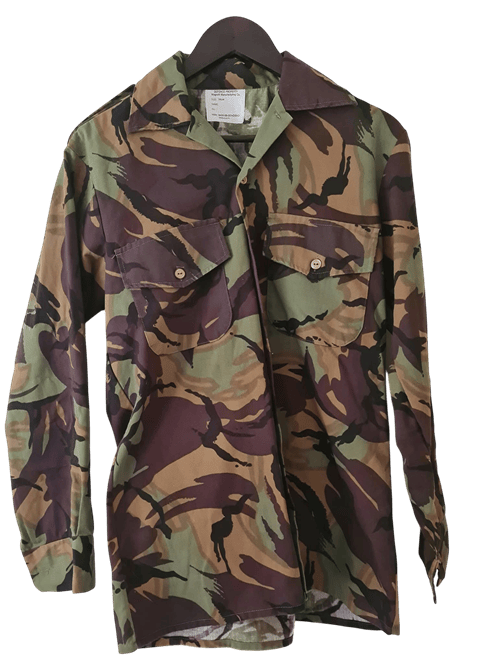
The DPM shirt retained the same basic cut as the jungle-green and woollen shirts then in service, providing continuity with existing New Zealand Army clothing designs. The ensemble included a DPM shirt and lightweight trousers, plus a matching DPM jungle hat and helmet cover.
5th Pattern DPM
Between 1994 and 1995, the 5th Series New Zealand DPM uniform was introduced, comprising a shirt, trousers and jungle hat. This series marked a departure from earlier DPM uniforms, with both a significantly different camouflage colouration and a revised cut for the shirt and trousers.
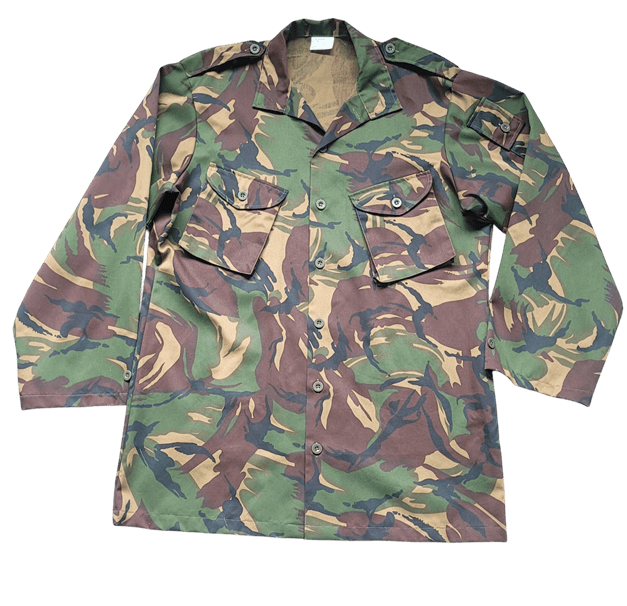
The camouflage featured black, chocolate-brown and olive-green disruptive shapes on a tan background, making it noticeably darker than earlier patterns. It earned the nickname “diesel” for its dark, somewhat faded appearance. The uniforms were reportedly of relatively poor manufacturing quality, with fabric prone to rapid fading through wear and laundering. These shortcomings, along with changes in garment design, reduced their popularity among serving personnel.
6th Pattern DPM
Beginning in 1996, the 6th Pattern New Zealand DPM uniform was introduced. Its camouflage featured black, dark-brown and distinctive golden-yellow disruptive shapes on a grass-green background, producing a noticeably different colouration from the preceding “diesel” pattern.
The ensemble comprised a redesigned combat shirt and trousers, a jungle hat and a wider-brimmed jungle hat. The shirt had pockets on each upper sleeve, angled breast pockets with slight bellows for added capacity, and a longer cut that could be worn tucked in or loose over the trousers. Its exposed buttons could occasionally snag on equipment during field activities.

The combat trousers used a revised cut to improve comfort and functionality. Internal waist drawstrings let you adjust the fit while keeping the cords concealed. Two large thigh cargo pockets provided additional storage, and ankle drawstrings allowed the trouser legs to be bloused over combat boots. As with previous New Zealand DPM patterns, 9 cm (3½-inch) belt loops were retained, permitting wear with a regimental stable belt in garrison or a military pistol belt in the field.
The two jungle-hat brim options offered headwear suited to different operating conditions. The ensemble later added a DPM Ventile smock and detachable fleece liner, providing wind and rain protection and additional insulation. Although garment details continued to evolve, the basic camouflage design and colouration remained largely unchanged until DPM was replaced by MCU.[6]
7th Pattern DPM
In the early 2000s, the 7th and final series of New Zealand DPM was introduced. It retained essentially the same camouflage artwork and colouration as the 6th Pattern but adopted ripstop fabric and revised cuts for both shirt and trousers, with improved resistance to tearing during field use.
The redesigned combat shirt incorporated a Chinese-style standing collar, concealed front buttons to reduce snagging, and concealed zipped chest pockets in place of the earlier exposed breast pockets. A central chest epaulette carried a rank slide. Velcro attachments allowed a name tape on the right chest and patches on both upper sleeves. At initial issue, however, the New Zealand Army had not yet adopted routine shoulder identification patches, so the sleeve panels were largely unused.

The ripstop combat trousers retained a cut broadly similar to the 6th Pattern, but featured a revised bellows design for the thigh cargo pockets. These changes reflected continuing refinement of the garment rather than a new DPM camouflage drawing. The 7th Pattern remained in use until the progressive introduction of the Multi-Terrain Camouflage Uniform (MCU), bringing more than three decades of New Zealand DPM clothing development to an end.
New Zealand Desert DPM
In 2003, New Zealand introduced a desert variation of Disruptive Pattern Material (NZ DDPM) for personnel deploying to arid regions, notably the Middle East and Afghanistan. Its two-colour camouflage closely resembled British desert DPM.
The desert uniform used the same basic garment design and cut as the 6th Pattern woodland DPM, including ripstop fabric, concealed front buttons, Velcro attachment panels on the upper sleeves, and bellows-style thigh cargo pockets on the combat trousers. However, maintaining both woodland and desert DPM ranges created additional requirements for provisioning, sizing, storage, and replacement; this provided context for the later ambition to develop one multi-terrain clothing system.[7]

Ancillary DPM clothing and the evolution of rank insignia
The evolution of New Zealand DPM was not confined to the basic combat shirt and trousers. Ancillary garments, particularly wet-weather and cold-weather clothing, were introduced alongside successive uniform patterns and progressively developed throughout DPM’s service life. These supplementary items did not always change at the same time as the principal combat uniform. As a result, personnel frequently wore garments from different generations together, reflecting both operational needs and the continued use of serviceable clothing stocks.
Production of the original windproof DPM smocks was discontinued after the 2nd Pattern DPM uniform. As an alternative cold-weather garment, the Army introduced a woollen DPM jacket based on the well-known Swanndri design. Although this jacket was not universally accepted by personnel, it provided an additional insulating option and was worn alongside surviving DPM smocks. The older smocks consequently remained in use until the introduction of the Ventile smock associated with the 6th Pattern clothing ensemble. The later Ventile smock, supported by a detachable fleece liner, further improved protection against wind, rain, and cold.
Th DPM period also progressively introduced and improved wet-weather clothing and other ancillary items. Their development was influenced by the different practical requirements of field service, including protection from rainfall, wind and cold, and the need to wear outer garments over the standard uniform. Because these items used different fabrics (Entrant for the first pattern, Wet Weather, and Gore-Tex for later versions) and were replaced on different cycles, their camouflage colours and construction did not necessarily match the contemporary shirt and trousers exactly.
Rank insignia also evolved as New Zealand moved from jungle-green clothing to successive DPM patterns. Until the introduction of the 4th Pattern DPM uniform, the jungle-green shirt continued to be worn with elements of the DPM ensemble. On the jungle-green shirt, officers wore rank on shoulder epaulettes, warrant officers used wristbands, and non-commissioned officers wore white chevrons sewn directly to the sleeves.
With the introduction of the 4th Pattern DPM shirt-and-trouser ensemble, the arrangements for officers and warrant officers initially remained unchanged: officers continued to wear rank on epaulettes and warrant officers on wristbands. For non-commissioned officers, however, rank moved to a brassard worn on the right sleeve, with green chevrons embroidered directly onto the brassard rather than white chevrons sewn to the garment.
The introduction of the 6th Pattern DPM brought another change: rank for all groups was worn on shoulder epaulettes. This standardised the location of rank insignia across officers, warrant officers and non-commissioned officers, replacing the earlier combination of shoulder, wrist and sleeve arrangements. These changes show that the DPM transition involved not only camouflage fabric and garment cuts but also evolving dress practice, identification, and integrating combat clothing with traditional Army requirements.
Why the successive DPM changes mattered
Looked at retrospectively, “DPM” suggests one long-lived uniform. In practice, the Army managed an evolving inventory of fabrics, colourways and garment designs, eventually split between woodland and desert ranges. For the logistics system, each revision affected clothing specifications, sizes, ordering, stock identification, interchangeability, and repair and replacement. This is the necessary background to the 2011 attempt to reduce the number of environmental clothing variants through the Improved Combat Clothing System. A single new system promised simplification, but also concentrated design, production and acceptance risks.[8]
A national multi-terrain uniform: the MCU, 2011–2019
The Improved Combat Clothing System (ICCS) commenced in February 2011, and the Multi-Terrain Camouflage Uniform (MCU) it produced (called the Multi Camouflage Uniform in some later NZDF documents) entered service in 2013. Its ambition went beyond a new camouflage print. Whereas successive DPM generations developed through adjustments to shirts, trousers, and ancillary garments, MCU was conceived as a coordinated, layered clothing system to replace separate woodland and desert lines: combat shirts and trousers, an under-body-armour shirt, insulated and fleece layers, wind-resistant garments, and wet-weather protection. For a relatively small army, the attraction was understandable: one general-issue multi-terrain system offered fewer colourways and more coherent clothing provision.[9]
NZDF’s public rationale, announced in July 2012, was that the existing patterns “work well in limited environments only”: DPM was “sub optimal in arid environments and urban terrain”, neither DPM nor Desert DPM was particularly effective in urban areas, and improved pattern-design technology now allowed a single pattern to cover a wider range of environments. NZDF also noted that its DPM was “used by many other nations around the world”. The project manager, Captain Ian Leabourne, summarised the requirement in 2013: “We needed something which would do the job in whatever environment we deploy to.” The June 2013 announcement planned for all Regular Force soldiers to have the uniform by November 2013 and Reserve Forces by October 2014, while the Air Force was expected to remain in DPM.[10] NZDF’s launch video, released in June 2013 as issue to 1st Brigade began, explained the pixelated design on the grounds that it “makes it harder for the eye to focus on one point”, and described the change of pattern as an opportunity to update the cut, since chest pockets could not be reached under body armour. It presented national distinctiveness as secondary: “one of the unintentional advantages of this new uniform is that it is unique to New Zealand”.[11]
The original Soldier Modernisation requirement was more ambitious than a change of printed cloth. Its concept of employment sought environmental and physical protection alongside concealment in visual and non-visual spectrums; it also treated personal equipment as an integrated system organised around the soldier’s survival, fighting, mission and living loads. Flame-resistant clothing and a deliberately layered range were explicit outcomes. The programme thus needs to be assessed as an integrated soldier-system project rather than as a camouflage-pattern purchase.[12]
New Zealand was not alone in attempting to consolidate woodland and desert clothing ranges. The British Personal Clothing System, announced in February 2011, combined Multi-Terrain Pattern clothing with redesigned garments, wet-weather protection and ancillary layers, with particular attention to compatibility with body armour. It was planned as a phased introduction, using existing stocks where serviceable. This is a useful contemporary parallel to the New Zealand decision, rather than evidence that either Army used the same trials, supply arrangements or acceptance standards.[13]
Much of what follows rests on documents released under the Official Information Act (OIA-2026-5887), supplemented by contemporary reporting and enthusiast commentary. Supplier reports, directives and plans record what was proposed, reported or directed; unless otherwise stated, they are not independent evidence of field performance or of completion on the dates given.
Selecting the pattern
The project assessed twelve camouflage patterns. According to NZDF information reproduced by Soldier Systems Daily in July 2012, the candidates were examined during 2011 in varied terrain around Waiouru. Five progressed to evaluation in basic garments by Capability Branch and Combat School staff, then the best two were tested in sandy terrain at Kaipara Air Weapons Range, in forested close country north of Auckland and in urban terrain at Whenuapai Airbase. The Chief of Army and the Sergeant Major of the Army then confirmed the choice by touring selected units with a mock-up uniform. Soldiers from 1 RNZIR, 2/1 RNZIR, Queen Alexandra’s Mounted Rifles and 16 Field Regiment also evaluated different materials and cuts during Exercise Alam Halfa, considering fit, functionality, durability and safety.[14]
The 2015 post-implementation review gives a more qualified account. Images representing New Zealand, East Timor, Afghanistan and the Solomon Islands informed initial visual screening before shortlisted patterns were assessed around Waiouru. In the final comparison, the two preferred candidates reportedly performed strongly in forest, jungle and urban environments, while HyperStealth’s Mike-1 performed better in sandy and rocky arid terrain, and a cross-section of soldiers expressed an aesthetic preference for Mike-1. The selection therefore combined measured environmental performance with visual judgement; it was not simply a popularity contest, but the review acknowledged that the process needed a stronger scientific basis.[15]
Two accounts from interested parties, rather than NZDF trial records, point the same way. Roggenwolf, whose RyewolfR2 design reached the final stage, described recognition testing near Waiouru in 2011 across jungle, forest, open tussock, sandy and urban terrain, and reported that by the end of November its pattern was running level with HyperStealth’s.
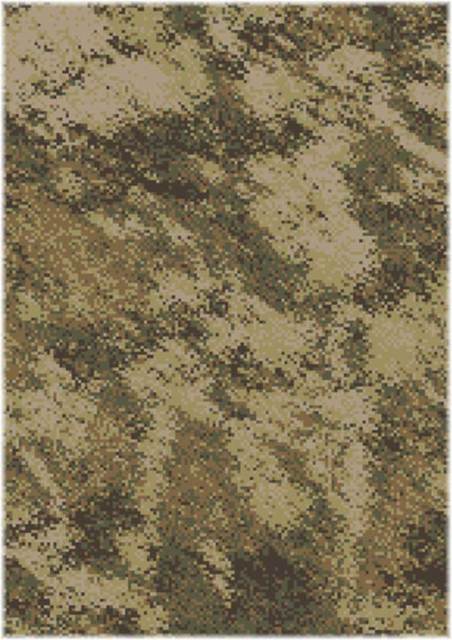
HyperStealth’s announcement of 27 July 2012 stated that its pattern tied the runner-up in three of the five terrains and scored slightly better in the other two; that because the results were so close the Army decided the winner on aesthetics; and that about 80 per cent of a cross-section of the Army chose its design; it also claimed that its pattern had outperformed Crye’s Multicam in the New Zealand trials.[16] The review later questioned whether the trials were long enough, sufficiently representative and comprehensive enough to verify the garments, fabrics and print as an integrated system. The distinction between selecting a promising pattern and demonstrating a durable, wearable, concealing uniform would prove important.[17]
Comparable programmes elsewhere show what a stronger scientific basis can look like, and how long it can take. The research organisation TNO developed the Netherlands Fractal Pattern for the Dutch armed forces using colour statistics from real environments and comparative testing, and it took nearly ten years. That work also found that plain-coloured items affected camouflage more than expected, so straps on new equipment were also camouflaged.

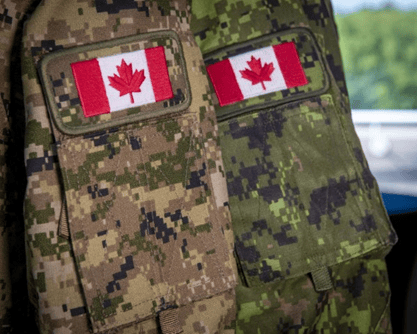
Canada’s CADPAT (MT), issued from February 2024, was generated with Defence Research and Development Canada software that analysed photographs of likely operating environments and was evaluated against other national, allied and commercial patterns, including Multicam. Canada also published its transition logistics: an expected 24-month changeover; retaining three sets; returning old-pattern uniforms to supply; interim wear of old-pattern layers with the new uniform; and a disposal plan in development.[18]
The original Mike-1-NZ camouflage specification can now be identified more precisely. An NZDF colour schedule released as Enclosure 1 lists six Pantone TPX shades, from brightest to darkest: Oxford Tan (15-1306), Silver Mink (17-1312), Elmwood (17-1019), Elm Green (18-0121), Aztec (18-1130) and French Roast (19-1012). These references provide an identifiable baseline for the original pattern, but the schedule contains no measurements of field effectiveness, spectral performance or colourfastness. Nor does it establish a one-to-one equivalence between its Pantone names and the descriptive colour names subsequently used during NZMTP development.[19]
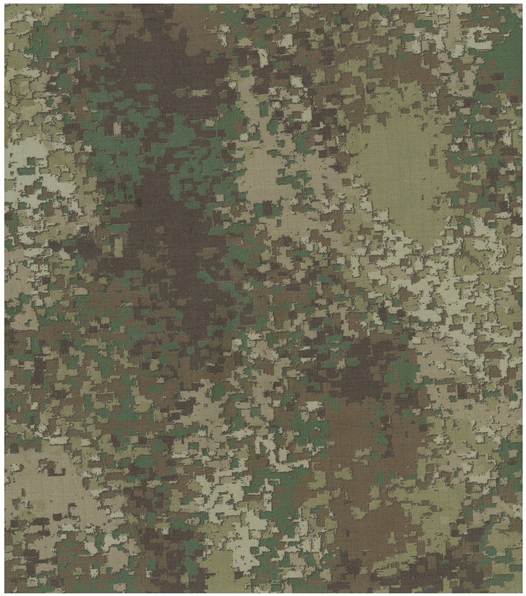
A separate 2011 technical schedule released as Enclosure 2 records near-infrared (nIR) reflectance for six colours in a pattern identified as Ghostex Kilo-1 (lot 60053), at wavelengths from 600 to 860 nanometres. At 860 nm the reported reflectance varied from 15 per cent for Dark Brown to 65 per cent for Green, while Cream registered 64 per cent. Green showed a pronounced increase at longer wavelengths, demonstrating that colours with quite different visible appearances can also behave differently in the near-infrared region. The schedule provides useful evidence that spectral characteristics were being measured during the development period, but it contains no test acceptance criteria, comparative performance results or confirmation that Kilo-1 was the final MCU production pattern. Its colour names should not be assumed to correspond directly to the Pantone specifications for Mike-1-NZ in Enclosure 1.[20] HyperStealth’s 2012 announcement places the New Zealand pattern in its Ghostex family, but associates Ghostex Kilo-1 with Afghan special forces rather than New Zealand, which reinforces that caution.[21]
Garment design and fabrics
The combat shirt had a more contemporary field cut, with upper-sleeve pockets intended to remain accessible when body armour or load-carrying equipment covered the torso, shifting storage away from the chest, where conventional pockets could be obstructed. The trousers departed from earlier DPM designs through provision for protective knee pads and revised adjustment and pocket arrangements, and a specialist under-body-armour shirt was provided for wear beneath ballistic protection. The surviving review describes these objectives and broad features but is not a complete tailoring specification: the exact closure, collar and insignia arrangements of each production version should not be inferred from it without the approved clothing drawings or a verified example.

Early Pattern MCU
The system included both ordinary non-flame-resistant combat clothing and specialised flame-resistant garments for designated operational requirements. Fabric weights differed materially: the 2015 development correspondence refers to existing 195 g/m² trouser fabric, prospective approximately 200 g/m² Teredo production fabric and 165 g/m² shirting held by the supplier, although these figures should not be treated as specifications for every MCU item or production batch.
The released fabric-test records show why flame performance must be evaluated by material and intended role. In tests commissioned by Workwear Group and reported by the New Zealand Wool Testing Authority, printed Teredo poly/cotton twill (200 g/m²), tested in June 2015 under ISO 15025:2000 using ten seconds of surface ignition, exhibited afterflame times of 55–97 seconds in the warp and 54–86 seconds in the weft. The results recorded flames reaching the specimen boundaries, 200 mm holes and flaming or molten debris. By contrast, an August 2014 test on Defender M flame-resistant ripstop (65 per cent Lenzing FR rayon, 25 per cent para-aramid and 10 per cent nylon) recorded no afterflame or afterglow exceeding one second, no flame reaching the edges, no holes and no flaming debris in the tested specimens. These are striking differences between the samples and support the operational distinction between non-flame-retardant and flame-resistant clothing. They do not establish the performance of all production batches, prove that ordinary MCU was intended to meet the flame-resistant specification, or constitute a comprehensive assessment of the finished clothing systems.[22]
Design development continued after initial issue. A Pacific Brands Workwear addendum dated 30 April 2015 proposed assessing redesigned non-flame-resistant shirts and trousers using 1,240 metres of existing 165 g/m² shirting held by Albion, sufficient for 250 shirts and 250 pairs of trousers worn by 125 trial participants. The supplier cautioned that trousers made from this lighter material would differ substantially from the existing trouser fabric and the proposed Teredo cloth and might wear out sooner, so the trial could not isolate any reduction in heat or weight attributable to the cut alone. The addendum recommended a limited introduction, consideration of existing fabric stocks and of the flame-resistant and non-flame-resistant variants, and a follow-up survey after twelve weeks of field wear. NZDF annotations stressed that this was a trial of garment design rather than of fabric performance, timed around suitable exercises and a decision before the next production run. The record establishes proposals and recognised risks, not that the trial was completed or that each change entered production.[23]

From prototype to production
The Workwear Group post-implementation review of October 2015 was candid. The final combination of garment design, fabric, and camouflage print had not been adequately evaluated together in final form before rollout; risk and decision records were incomplete; and the programme worked to demanding delivery dates.[24]
The limitations were particularly evident when the programme moved from prototype to production. Early camouflage candidates were digitally printed for assessment, but final production printing on different substrates changed their colour reproduction. The review states that the Army accepted a range of colours across substrates to avoid delaying rollout, with further adjustment deferred until after introduction and operational test and evaluation. Infrared-reflectance targets were developed using external experience and US MultiCam specifications; assessment included night-vision viewing and subsequent spectrometer readings. This is material evidence that colour and infrared performance were active design issues, but it does not establish that the accepted print failed a specified operational threshold.[25]
According to the review, project personnel considered delaying issue until the production-colour problem was resolved but estimated the cost of stopping the rollout at $2.5 million. Introduction therefore continued, with improvements pursued during tranche deliveries. The wearer assessment had involved approximately forty personnel under constrained exercise timings. The review’s criticisms focus on the robustness of verification and risk management, rather than a conclusive technical finding that the MCU pattern itself could not conceal soldiers.[26]
User preparation was a further weakness. Booklets, posters and a demonstration video accompanied issue, but instruction largely depended on soldiers reading this material rather than receiving practical training in the layering system, and the project team reported inappropriate layering and associated thermal-management concerns. Fielding new equipment requires training in its use, not just distributing the garments.[27]
The MCU experience also illustrates a broader technical distinction between material compliance and operational acceptance. A satisfactory print, fabric or garment component does not necessarily prove the fitness of the finished ensemble. When assessing future designs, the acceptance programme should therefore combine visual and near-infrared concealment, garment construction and movement, thermal burden when worn under equipment, durability after laundering, and the fire-safety performance of the finished material system. These are recommended evaluation dimensions rather than evidence that any specific MCU requirement was breached.[28]
Cost and scale
The review’s development cost comparison records planned expenditure of $120,850 against actual expenditure of $166,684.29, an increase of $45,834.29. Pattern-development expenditure rose from $13,350 to $60,182.61, and urgent air freight contributed to the variance. These are component development figures, not a reconciled cost of outfitting the Army, but the review recognised that the initial assumption that a single clothing system would produce savings had not been borne out.[29] It also found that the original comparison with the British transition to MTP had not adequately accounted for the difference between supplying approximately 100,000 British personnel and a New Zealand Army of roughly 6,500, nor for licensing and production arrangements: a reminder of the danger of relying on allied unit prices without comparable quantities, intellectual-property rights and supply-chain conditions.[30] For scale, the $13.6 million widely reported in 2019, when MCU’s replacement was announced, comes from NZDF’s June 2013 announcement, which gave it as the cost over two years of a full uniform fit-out for Regular and Reserve Army personnel.[31] The figure has not been reconciled with NZDF accounts.[32]
What soldiers and observers thought of MCU
The public record complicates any simple judgement that MCU was universally disliked. A June 2015 discussion on the British Army Rumour Service, written shortly after a multinational exercise involving New Zealand personnel, praised the uniform’s modern cut, removable knee pads and adjustment arrangements, while questioning the placement of front thigh pockets. Another contributor regarded the cut as superior to contemporary British clothing but reported rapid fading and relatively heavy fabric. The same discussion included an uncorroborated claim that the uniforms looked similar to United States uniforms in Afghanistan. These comments are useful contemporaneous impressions, not a substitute for documented NZDF evaluations.[33]
Dissatisfaction also reached the press. Stuff reported in April 2019, and again in August 2019 when the replacement was announced, that there had been 716 complaints or reports concerning MCU between January 2017 and January 2019, with material and manufacturing faults among the issues raised. Later summaries also discuss fit and practical performance. The August report added that the uniform was too hot to wear in some environments. The reported number should not be read as 716 distinct complainants, proven defects or a representative satisfaction measure without access to the underlying NZDF records. Nevertheless, it indicates that concerns extended beyond debates about the appearance of camouflage.[34]
Colour and camouflage: interpreting the criticisms
Reports that MCU faded with wear or washing should be judged against repeatable measurements rather than photographs or descriptions alone. ISO 105-C06 and ISO 105-B02 assess colourfastness to laundering and to artificial light, but neither establishes combat concealment, and visible colour change is not identical to altered near-infrared reflectance. Research on NIR-treated camouflage fabrics shows that washing can affect both, while material treatments can introduce flammability trade-offs.[35]
Later camouflage-collector discussions repeatedly questioned MCU’s colour reproduction, fading after wear and washing, and the tendency of its fine disruptive elements to merge into a relatively uniform tone at distance. In discussions from 2023 to 2025, contributors argued that the original pattern may have had greater potential than the colours actually reproduced on cloth; others compared its low-contrast appearance unfavourably with DPM or American Universal Camouflage Pattern. These perceptions recur, but the comments do not show that a particular printer altered the approved design or establish MCU’s measured performance against competing patterns.[36] Nor were they new. Comments beneath NZDF’s 2013 launch video already described the uniform as going “whitish grey from a distance” and being “far too light” for pine forest, compared it with the US Army’s Universal Camouflage Pattern, and hoped that “printing issues” would be resolved. In 2014, defence journalist Bob Morrison saw a noticeably greener colourway on an over-smock and was told it came from a different fabric batch, consistent with the review’s finding that colours varied in production.[37]
Such judgements were not unanimous. Some enthusiasts regarded the pattern as distinctive and potentially effective in drier, open, or high-country backgrounds; others still preferred its appearance to generic Multicam-derived patterns. A July 2026 exchange sharply criticised the loss of contrast at distance, illustrating how the same features could attract both collector interest and strong disapproval. The importance of terrain, distance, weathering and lighting recalls the Army’s camouflage-trial findings from the 1960s: no pattern should be assessed solely from close-up photographs or a single background.[38]
Even the direction of colour criticism was inconsistent. Camopedia records that operational personnel criticised the original colour scheme as fairly dark, whereas a contributor to a defence forum considered MCU too light for most New Zealand terrain, thought genuine Crye Multicam performed better in local bush and farmland, and also cited poor fit, rapid fading and stitching faults.[39] A commentator at the time of introduction made a further, system-level point: covering the soldier’s torso with solid coyote-brown body armour, load carriage and pack negated much of the benefit of any pattern.[40] Both observations reinforce the case for judging camouflage as part of the complete soldier system, on representative backgrounds.
Garment design and comfort should be considered separately from the camouflage pattern. One early commenter found MCU “a lot more comfortable to wear than the old DPM’s” while judging its camouflage benefits “minimal at best”.[41] Surplus-customer reviews of MCU under-body-armour and field shirts praise fit, comfort and construction, echoing the 2015 forum comments on the cut and optional protective padding. This limited positive evidence cannot negate service complaints, but it suggests that aspects of the clothing design retained value even when the camouflage colourway and quality control were criticised.[42]

Why the Army moved from MCU to NZMTP
The replacement began as a cost review. In September 2018 NZDF Clothing asked Workwear Group (WWG) to price MultiCam-pattern combat shirts and trousers against existing MCU garments, initially hoping to preserve the Army’s established colour palette. WWG sought military off-the-shelf options from six suppliers, but none could reproduce those colours in standard licensed MultiCam fabric. Crye was unwilling to grant a further licence at that time, although it offered to discuss developing a bespoke pattern directly with NZDF.[43] After NZDF directed WWG to cease MCU fabric orders in November 2018, the work expanded from a cost review to replacing the pattern, fabric and garments, and the project was renamed in December. With approximately fourteen months of MCU stock remaining and an estimated five-month replenishment lead time, schedule was a material constraint.[44]
This scope change was never captured in a revised formal project charter, which is significant given the 2015 review’s criticism of incomplete decision and risk documentation. Nor do the released records show why MCU was judged obsolete, or what relative weight the Army placed on performance, cost, compatibility and sustainment.[45]
The public explanation was brief. When the replacement was announced in August 2019, a Defence Force spokeswoman described the uniform reviews and updates as routine, citing changes in supplier capacity, new technology, and a wish to improve fit, form, and function, alongside the reported complaints and heat problems. Costs were said to be mostly covered by an existing contract and were withheld for commercial reasons, with parts of the uniform to be replaced over several years through the annual clothing replacement budget. The new uniforms were to be made in New Zealand, a point welcomed politically after earlier criticism of overseas production. Unlike MCU, launched in 2013 with a formal press release, NZMTP received little further public explanation.[46]
Pattern, colour and fabric
WWG compared camouflage development options from Bruck Textiles and Premier Defence Agency in Australia, both assessed as requiring around twelve to eighteen months, with a quicker option from incumbent supplier Carrington Textiles in the United Kingdom. Carrington proposed Erebis, a commercial pattern originally developed by Cortman Textiles. In December 2018 NZDF directed development of this pattern in New Zealand colours. The eventual NZMTP pattern, renamed Sibere in February 2019, was therefore neither simply Crye MultiCam nor a wholly new New Zealand drawing: it was an existing print adapted into an exclusive NZDF colourway. This distinction is significant when discussing national identity, intellectual property and the speed of procurement.[47]

NZDF’s own public description blurred this distinction. Its Visual Identity Standards (April 2022) described the NZMTP pattern as “similar to that worn by the British Armed Forces … but with a New Zealand Colour Scheme”, and commentators have repeated that NZMTP is a recoloured British MTP. The close report shows instead an adapted Erebis print, so any resemblance to British MTP is visual rather than evidence of a shared origin. The same page records that the programme would also replace the MCU jacket and the wet-weather jacket and trousers.[48]
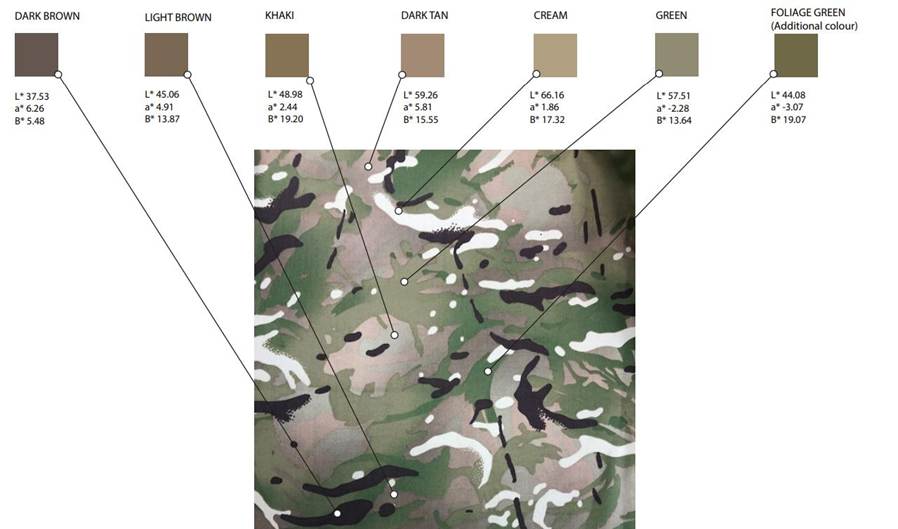
The colour development was more involved than initially anticipated. The six colours inherited from MCU—Dark Brown, Light Brown, Khaki, Dark Tan, Cream and Green—were judged insufficiently contrasting when transferred to Erebis. With NZDF approval, the cream was lightened and Foliage Green added, making a seven-colour pattern. Five fabric strike-offs were produced in January–February 2019; the final colourway was approved in February and an infrared-reflectance profile was subsequently developed. The illustrated colour chart on page 6 of Enclosure 14 is particularly valuable as a contemporary primary-source illustration of the approved seven-colour Sibere palette.[49]
Fabric selection addressed complaints about MCU colour matching and the weight of its non-flame-retardant clothing. The selected combination comprised 195 g/m² Teredo for non-FR trousers, lighter Fuji for non-FR shirts and 205 g/m² Excalibur for flame-retardant shirts and trousers. Carrington conducted tests covering colourfastness, tensile and tear strength, dimensional stability, permeability and relevant fire-retardant properties; WWG reports that independent checks by NZWTA also passed. Chief of Army approval followed in April 2019. The close report lists Fuji at 155 g/m² in its fabric schedule but describes it as 165 g/m² in its garment-design account; that internal discrepancy should not be silently reconciled without the approved fabric specification.[50]
Garment design and the 2020 evaluation
Garment design was not confined to reprinting MCU. Three alternatives were sampled: the MCU cut, a DPM-derived cut and a bespoke WWG design. NZDF approved the DPM design in May 2019 as an interim uniform while further evaluation continued. Consequently, the 2019–20 process combined a newer camouflage pattern and fabrics with elements of an earlier garment design. This qualified the original ambition of a simple pattern substitution and helps explain why later refinements were required.[51]
The evaluation instruction dated 29 January 2020 explicitly required comparison of NZMTP shirts and trousers against MCU and provides unusually specific evidence of how the Army intended to assess the replacement clothing. Its stated purpose was to examine fit, form and function. Personnel were instructed to wear the garments during their ordinary camp and field duties wherever possible, observe the labelled care requirements and submit their own findings rather than reach a collective judgement. The timetable ran from 30 January to 29 May 2020, with planned debriefs at Linton on 29 May and Burnham on 2 June. Under the instructions, participants collected trial NZMTPs in exchange for two clean MCU sets and a jungle hat, and they retained the trial garments after debriefing.[52]
The accompanying 51-question assessment form shows what this comparison actually measured. It recorded user characteristics and preferred fit, the frequency of use in field, office, classroom, workshop and warehouse settings, laundering practices, damage and repairs, and detailed shirt and trouser fit. Its direct MCU comparison covered next-to-skin and thermal comfort, drying time, appearance, movement while running, kneeling, crawling and reaching, compatibility with clothing layers and body armour, webbing and packs, and access to vehicles. In this respect the evaluation was more systematic than an informal collection of soldiers’ opinions. Nevertheless, the released instruction and blank questionnaire show the intended assessment framework, not the response distribution or the measured superiority of either uniform. The 2020 findings described in the later supplier close report must be attributed separately to that report.[53]
The available project close reports differ on the size of the February–May 2020 NZMTP garment evaluation. Enclosure 14 describes 102 personnel, including 36 women, whereas the later V3 close report (Enclosure 13) records 92 participants, comprising 38 women and 54 men. Both refer to the July 2020 evaluation, whose original report, like the September 2020 project charter, is not included in the released documents. The evaluation led to recommendations for alterations to the interim DPM-derived design and an alternate fit, but the participation figures cannot be reconciled from these close reports alone.[54]
NZMTP garment versions
Workwear Group’s October 2021 close report establishes a more precise garment chronology. NZMTP Version 1 entered service in March 2020 with flame-retardant and non-flame-retardant shirts and trousers, an under-body-armour shirt and a jungle hat. Alterations to garment trims produced Version 2 in June 2020.
Following the 2020 evaluation, a September 2020 project charter authorised fourteen changes to the Version 2 shirt, trousers and jungle hat for a proposed Version 3. Changes included shoulder gussets and elbow darts, removing trouser waist ties and front pleats, wider thigh pockets, adjustable waistband tabs, a crotch gusset, and knee reinforcement. The jungle hat was to lose its mesh lining and use stiffer Teredo fabric in the brim. The same project requested an alternate-fit range, primarily to improve fit for women but deliberately not described as a female-only uniform because other personnel might benefit from its cut.
Development used three-dimensional virtual garment modelling, including pressure, fit and stress maps, alongside sample garments. Initial V3 samples were delivered in October 2020 and alternate-fit samples in November. A small alternate-fit assessment included six women, who generally viewed the proposed fit positively; the supplier characterised this as a subjective preliminary assessment rather than an extensive operational trial. A revised symmetrical, fold-down collar was also incorporated for evaluation.
The supplier explored Carrington Spartan light and heavy no-melt/no-drip fabrics after favourable ASTM D6413 reports. Additional ISO 15025 tests NZDF requested were inconclusive, so the project retained Fuji and Teredo. The V3 and alternate-fit garments were trialled from 3 May to 25 June 2021, but the resulting evaluation report was not ratified for further development. In October, NZDF closed the project without approving either V3 or the alternate-fit range for introduction, and Version 2 remained the current specification. However, the hat alterations were intended for introduction after existing stocks were exhausted. This should not be confused with completed introduction of the unapproved V3 ensemble.[55] An April 2025 Reserve clothing directive nonetheless lists V3 and alternate-fit garments among possible issue priorities (see below).
Retrospective comparisons draw the same distinction between garment and pattern as the MCU commentary. Some commentators preferred certain MCU pockets and features while conceding NZMTP an advantage as a camouflage solution. Such comments are anecdotal and do not show that the replacement was inferior as a clothing system, but they reinforce the case for assessing fit, thermal burden, compatibility with body armour, manufacturing repeatability and camouflage effectiveness independently before making an overall procurement judgement.[56]
Issuing a uniform is not the end of a transition
The DPM-to-MCU change of 2013 established the stock-management principle later applied to NZMTP. Contemporary reporting of the June 2013 issue to 1st Brigade stated that serviceable returned DPM garments would be inspected and placed in a pool for recruits, officer cadets and RNZAF personnel until remaining stocks were exhausted. The arrangement shows that the long coexistence of old and new uniforms was partly a deliberate way to use serviceable inventory, rather than necessarily a failure to withdraw clothing promptly.[57]
The contemporary instruction itself provides a more precise account of this recovery. Dated 19 April 2013, it directed units to issue MCU against returned DPM on a one-for-one basis, inspect and launder withdrawn clothing, and classify it by serviceability, National Item Identification Number (NIIN), garment type and size. Serviceable stocks were to pass through regional supply depots for redistribution, including practical-wear stocks held for 1 (NZ) Brigade, while unsuitable items and excess Desert DPM were directed towards disposal at Trentham. The instruction envisaged the final withdrawal of retained DPM clothing from April 2014. These were prescribed arrangements and dates, rather than evidence that the entire recovery was completed on schedule.
Annexes to the instruction record the scale and financial implications of the 2013 change. The initial Regular Force MCU entitlement included two ordinary combat shirts and trousers, an under-body-armour shirt, a fleece liner, combat and wet-weather jackets, helmet cover, boonie hat and protective pads; additional flame-resistant operational garments were reserved for specified deploying personnel and roles. The accompanying price comparison listed ordinary DPM shirts at $87.26 and trousers at $82.24, against MCU training shirts at $140.07 and trousers at $201.03. The costs were individual 2013 item prices, not an overall programme cost. Together, the entitlement and price tables show why the introduction required funded scales, clothing-card adjustments, stock consolidation, and controlled disposal rather than simply issuing a replacement garment.[58]
The next stage was a formal withdrawal-from-service (WFS) project. An instruction issued in November 2014 recorded that MCU had been introduced to Regular Force personnel in December 2013 and that remaining DPM was to be withdrawn from Regular Force units by December 2014. It also recorded that Army Reserve, civilian and other holders were to return DPM clothing, and that collected material would be concentrated at Trentham for disposal. The dates describe the instruction’s requirements, not independently verified completion of every return.
Unlike the 2013 replacement instruction, the November 2014 WFS programme treated the process as five managed phases: requirements analysis; instruction and authorisation; physical withdrawal, transfer and master-data work; disposal; and final master-data clean-up and project closure. It required reconciling holdings, closing reservations and loans, categorising serviceable and unserviceable stock, transferring to the appropriate supply or disposal facilities, and amending inventory and individual-clothing records. Project milestones extended into May 2015. In this respect, the clothing transition continued well after the initial issue of MCU.
The annexes distinguish between Army withdrawal and Defence-wide obsolescence. Annex E lists clothing retained in service for Air Force use, whereas Annex F identifies unsupported DPM and Desert DPM lines for equipment-category changes and NIIN deregistration. Annex C separately valued a small group of B-plant clothing stock for disposal at $934.53; this was a defined subset rather than the total value of DPM holdings withdrawn. The instruction therefore illustrates the administrative complexity of removing an item range without prematurely deleting equipment still required by another service.[59]
The change from MCU to NZMTP was implemented through staged issue instructions in 2019 and 2020, prioritising formations and Regular Force personnel before the wider Army. Returned MCU clothing could be recovered and redistributed while holdings of the new range were built up. The transition therefore involved two supply systems at once: issuing NZMTP while accounting for, recovering and eventually disposing of MCU stock. This was a familiar problem, recalling the long overlap between Drill Green and DPM discussed in the earlier article.[60]
The December 2019 Land technical directive gives the planned changeover an operational framework. It states that the Army Clothing Board had reviewed the feasibility of continuing with MCU before deciding to pursue a replacement design; however, it does not reproduce the review or its technical and financial conclusions. The directive’s mission was to transition Army combat and field uniforms to NZMTP while maintaining a clothing system fit for contemporary operations. Its scope was deliberately narrower than the entire soldier clothing and equipment system: the Army envisaged commercial off-the-shelf MultiCam clothing separately for combat jackets, liners, wet-weather garments, and load-carrying equipment.
The original implementation concept set out an evaluation and sizing phase for February–May 2020; business-as-usual replacement of exhausted MCU lines from March; priority bulk issue from May to October, with operational deployments to receive an initial allocation; and a further business-as-usual sweep from January 2021. The initial order of precedence was 1 (NZ) Brigade, TRADOC and the remainder of the Regular Force. Personnel already posted overseas were to remain in MCU until return to New Zealand unless otherwise directed. These dates were planning milestones, not evidence that the entire Army had changed uniform by January 2021.
The subsequent DLC(L) Technical Directive 2020-02 of 29 May 2020 superseded and expanded that initial framework. It recorded Chief of Army approval to move away from MCU, describing it as obsolescent, but did not include the evidence or detailed decision record behind that assessment. The revised intent was to move by managed stock depletion, with less deliberate bulk issue through the end of financial year 2022/23; its stated end state was all Army personnel equipped to the applicable Scale of Entitlement by June 2023. This was an official target, not proof that transition was completed by that date.[61] It aligned with the August 2019 public announcement, which said it would phase out MCU over three to four years.[62]
The directive also specified important inventory and wear controls. Returned MCU garments were to be assessed for practical wear and serviceability and held for priority needs. Replacement was to be recorded against the individual’s clothing entitlement, rather than treated as an unrestricted additional issue. Mixing MCU and NZMTP shirts and trousers was prohibited, although pairing a jacket in one pattern with a uniform in the other was not automatically forbidden. Until the evaluation concluded, approved alterations were limited to shortening sleeves and trouser legs through an authorised NZDF tailor. Units were directed to complete sizing and nominal rolls before the bulk production programme. These details illustrate how distribution, uniformity, individual fit and accounting rules shaped the transition alongside the manufacturing schedule.[63]
Under the May 2020 five-phase plan, 1 (NZ) Brigade received first priority for bulk issue in June–July 2020, beginning with the infantry, armour, artillery and engineer units and followed by combat service support units. The bulk scale was generally two sets of NZMTP combat shirts and trousers and one jungle hat, issued on a one-for-one MCU exchange. Later phases envisaged Regular Force recruits and deploying personnel, TRADOC and other Regular Force personnel, and finally Army Reserve and Cadet Forces personnel. The directive assigned funding and manufacturing decision points to successive phases and required central management and redistribution of recovered practical-wear MCU stocks, particularly for trainees.[64]
The initial supply arrangements reveal how closely the new uniform was tied to MCU stock depletion. Version 1 NZMTP non-FR garments were available from March 2020, before the full uniform evaluation was completed. WWG began ordering replacement fabric in May 2019, manufacturing business-as-usual stocks from December and holding an additional 5,000 metres of fabric as contingency. The flame-retardant uniform and under-body-armour clothing followed from late July 2020 as the corresponding MCU stocks approached exhaustion.[65]
The accelerated brigade issue required a further production programme. NZDF approved a 6,000-set non-FR rollout in December 2019, for delivery by the end of June 2020. WWG’s Albany factory and Danam in Fiji provided the main manufacturing capacity. In February 2020 roughly 2,000 Army personnel were measured at Linton and Burnham using an RFID-supported sizing process. However, the withdrawal of the nominated cost centre and a late reduction in clothing entitlement from three sets to two prevented fully automated ordering and required WWG to manually rework individual demands before they could move through SAP and its own enterprise system.[66] The August 2019 public statement that the uniforms would be made in New Zealand was therefore only partly borne out by the initial rollout.[67]
The COVID-19 pandemic compounded the pressure. Fabric shipments were delayed by about six weeks, New Zealand production was interrupted by lockdown, and the supplier chose to keep some shirting material onshore rather than expose it to offshore supply risk. WWG and Danam ultimately delivered 5,400 sets during May–June 2020, while NZDF requested that the remaining 600 be retained in WWG stock. The close report records that delivered uniforms met its stated testing and acceptance requirements, and that the project remained within its approved budget. These are supplier-reported project outcomes rather than an independent assessment of every aspect of field performance.[68]
The supplier’s lessons-learned section also exposes shortcomings in project controls. It calls for earlier stakeholder engagement and defined success criteria, records that the changed scope was never formally captured in a revised charter, and notes that modified, alternative-fabric sizing garments stretched and compromised fit. WWG recommended future sizing samples be made from the same fabric as production garments, earlier planning of mass sizing, stable entitlement and cost-centre data for automated ordering, and a post-implementation review. The report therefore documents both considerable delivery achievement and avoidable administrative, testing and sustainment risks.[69]
The supply relationship then changed. After a tender, NZDF awarded its clothing contract, worth about $25 million a year in wearable items, to Australian Defence Apparel. Workwear Group, which had held the contract for more than two decades, lost it at the end of June 2021, and NZDF said it would manufacture most items in Australia. The V3 and alternate-fit project closed in October 2021 during that handover; the released documents do not say whether the supplier change affected it.[70]
The May 2020 directive specified further practical controls: sizing could resume only at COVID-19 Alert Level 2 or below, and the scale of individual MCU/NZMTP holdings was not to exceed the relevant entitlement during exchanges. MCU would continue to supply battle physical training and confidence-course activities until those garments were exhausted by fair wear and tear. The annexed item range also illustrates that the wider NZMTP-associated issue contained clothing and equipment in different patterns, including commercially available MultiCam jackets and pouches; replacement specifications for some associated items, including flame-resistant garments, were still pending. This reinforces the distinction between the NZMTP combat shirt-and-trouser pattern and the broader soldier clothing and equipment ensemble.[71]
MCU disposal was also a managed financial undertaking. WWG ceased routine MCU garment production in October 2019 and maintained monthly reports on remaining finished clothing, raw materials and trims. Its recorded stock and work-in-progress exposure reduced from approximately $1.94 million in May 2019 to $274,758.03 at 30 June 2020, and to $82,145.72 by 1 March 2021. A June 2020 NZDF purchase order included $158,461.63 for disposal of fabrics and trims and $34,150.68 for disposal of peripheral finished-garment sizes. These figures relate to the value and disposal of MCU stock; they are not the total cost of NZMTP.[72]
The Army Reserve transition remained incomplete in 2025. A Defence Logistics Command (Land) minute dated 7 April 2025 (DLC(L) Minute 772/2025) was intended to complete the Army Reserve transition to MTP clothing before the end of financial year 2024/25. It acknowledged that the Regular Force had completed its transition, while Reserve personnel continued to hold a mix of MCU and MTP, preventing the formal withdrawal of MCU across the Army. Units were to size active reservists, submit returns, receive garments through unit quartermaster stores, record individual entitlements and recover MCU on a one-for-one basis. The instruction set 28 May 2025 for sizing and returns, 23 June for final financial transactions, and 1 August for completed issues and consolidated MCU stock returns. These dates represent directed milestones, not verified completion.
Annex A set the Reserve scale at two NZMTP combat shirts, two pairs of combat trousers, one jungle hat and one under-body-armour shirt, with one each of MultiCam wet-weather jacket and trousers, Badger combat smock and Huron smock liner; the MCU fleece was to be retained. The supply priority was NZMTP Version 2, then customer-held stock, then NZMTP Version 3 or alternate-fit clothing. Since V3 and alternate fit had not been approved for introduction when the project closed in 2021, this shows the styles were contemplated as issue options by April 2025, but the instruction does not identify any intervening approval decision, quantity received or actual issue.[73]
On 4 August 2025, DLC(L) Minute 835/2025 (Update 01 to Minute 772/2025) reported that approximately 60 per cent of Army Reserve personnel had completed MTP issue by the end of FY2024/25. An extension, authorised following a 24 July funding decision, provided for issue funding through 1 December 2025, with related spending capped at $2.8 million. The revised two-phase programme required unit sizing and demands by 20 November 2025, SAP transactions and dispatch by 30 November, and final exchange and receipt—including entry of clothing issues into CAPES Personal Holding Records—by 1 March 2026. The instruction also required collection and sorting of returned MCU. These are new directed milestones rather than evidence of the transition’s eventual completion or the formal withdrawal of MCU.[74]
A different option: does every uniform need a pattern?
A further perspective comes from “Back to basics, a single-colour combat uniform”, an essay published in November 2025. Rather than assuming that every replacement must introduce a new camouflage pattern, it asks whether a modern, single-colour combat uniform could better serve a relatively small force. It draws on the Army’s historical preference for Jungle Greens in Southeast Asia and on evidence from the 1960s trials that no camouflage scheme was consistently effective against every background. The argument is therefore not a return to obsolete garments: it envisages modern construction, inclusive sizing, compatibility with body armour, near-infrared performance and fire-retardant options where the operational role demands them.[75]
The proposition also reframes the logistical question. A single-colour general-issue range might simplify fabric sourcing, colour matching, quality assurance, stockholding and repair, while specialist camouflage garments could be retained for roles and deployments where a measured concealment advantage justified their use. These are plausible potential benefits, not demonstrated cost savings. Any such proposal would require comparison against NZMTP using representative personnel and complete kit configurations in varied New Zealand and likely deployment environments. Trials should examine human-observer detection and recognition; calibrated visible and near-infrared performance before and after laundering; thermal burden; durability; compatibility with body armour and other equipment; and whole-of-life sustainment costs. International research provides a sound basis for designing such tests, but it does not establish that a single-colour New Zealand uniform would outperform NZMTP.[76]
Developments outside New Zealand also show why future clothing decisions should distinguish the everyday combat uniform from specialist concealment. In October 2022, Soldier Systems Daily reported on the Australian Wraith multispectral system, which its developers described as a reversible garment using specialist materials to reduce detection across more than the visible spectrum. This was an industry presentation, not proof of operational performance or evidence of NZDF adoption. It nonetheless illustrates why comparing camouflage solely by printed colourways risks overlooking emerging concealment requirements, including compatibility with sensors and the other equipment worn by the soldier.[77]
Seen alongside the MCU and NZMTP records, this argument is useful less as a prescription than as a test of the Army’s requirements-setting process. Before selecting a distinctively New Zealand pattern, a licensed allied pattern or a single-colour uniform, the Army should determine what concealment performance is demonstrably required, in which environments, at what cost and with what sustainment consequences. The 2025 Reserve transition papers remind us what is at stake: five years after the NZMTP transition began, the changeover still had not reached all personnel.
The 2021 close report adds a useful qualification to this argument. An established commercial pattern adapted to national colours did not remove the need for colour development, integrated garment trials, specialist fabrics, production capacity and controlled stock retirement. Nor did the claimed manufacturing efficiencies by themselves settle whether the Army had clearly defined and verified its operational requirements. The Sibere experience therefore provides a practical case study in the difference between a timely delivery and a fully evidenced clothing capability.[78]
Conclusion: the uniform changes, the logistics lessons persist
The period from DPM to NZMTP reveals both continuity and change. British DPM was adopted as an established allied solution and then repeatedly adapted to local cloth, climates and operational needs. MCU represented a more ambitious, integrated, and distinctive multi-terrain approach. NZMTP subsequently shifted the Army towards another pattern and clothing range. None of these choices was inherently straightforward: each involved compromises between concealment, comfort, durability, compatibility, cost and secure supply.
For Army logisticians, the most striking continuity is the scale of the work behind a seemingly simple dress issue. Fabric standards, colour consistency, catalogue records, size profiles, personal entitlements, supplier lead times, reserve holdings, replacement demand, returns and disposal must all work together. Approving a new uniform is only the beginning of a process that may span years across the Regular Force and Army Reserve.
The OIA-released material is particularly valuable because it allows the retrospective history to be tested against project documents. The 2015 MCU post-implementation review identifies limitations in integrated evaluation and risk and decision records. The 2021 NZMTP reports identify weaknesses in project documentation and show that further garment variants were not yet approved at close-out. Those findings raise concerns about individual programmes, not proof of a single recurring cause across every Army uniform change. One important question remains unresolved in the material examined: precisely what operational, technical and financial assessment authorised the decision to replace MCU.[79]
Criticism of MCU must also be interpreted carefully. Press accounts and soldiers’ or collectors’ comments describe fading, heat, fit and camouflage concerns, but they do not all measure the same thing and do not amount to controlled performance trials. Some users praised aspects of the garment design while criticising the pattern or its manufacture. Future evaluations should separate clothing fit and function, visual and near-infrared concealment, and material durability before combining the findings in a procurement decision.
The history that began with Battle Dress and Drill Green therefore continues well beyond the introduction of NZMTP. The enduring requirement is not merely a better-looking camouflage pattern; it is a clear operational specification, realistic whole-system trials, documented acceptance decisions, disciplined quality control and a funded plan for introduction, sustainment and withdrawal. Those were important in the 1950s and 1970s, and the evidence suggests they remained just as important into the 2020s.
Notes
[1] Robert McKie, “Development of NZ Army Combat Clothing, 1955–1980,” To the Warriors Their Arms, 11 February 2023, https://rnzaoc.com/2023/02/11/development-of-nz-army-combat-clothing-1955-1980/; Army 213/1/92, DSIR, “Tropical Clothing,” 3 October 1955, Archives New Zealand, R17187760.
[2] 2/1 RNZIR B5/12/2, “Evaluation Report Disruptive Pattern Uniforms,” 15 September 1975, Archives New Zealand, R17187753; D Inf 213/1/37/EP, “Temperate Disruptive Pattern Uniform,” 29 September 1975, ibid.; Army 213/1/37/EP, “Combat Clothing,” 9 December 1975, ibid.
[3] Army Staff Target 08 74/75, “Temperate Zone Combat/Training Clothing,” 16 July 1976, Archives New Zealand, R17311750; NZLF 18415/Ord 1, “Issue of DPM Smocks/Hoods/Liners,” 15 July 1981, ibid.
[4] Camopedia’s six series principally classify colourways; they are not six unrelated pattern drawings or six simultaneous changes in garment construction. Its production dates and colour descriptions are valuable for distinguishing variants but are secondary-source descriptions, not formal NZDF specifications. The 1975–77 archival evidence of procurement and early issue has therefore been preferred to Camopedia’s 1980–83 date for the first series; reconciling the two fully will require the surviving clothing specifications.
[5] “New Zealand,” Camopedia, section “New Zealand Camouflage Patterns,” https://camopedia.org/index.php/New_Zealand (accessed 15 October 2026), descriptions of first through sixth DPM colour series (1980–96).
[6] “New Zealand,” Camopedia, section “New Zealand Camouflage Patterns,” https://camopedia.org/index.php/New_Zealand (accessed 15 October 2026), descriptions of the third to sixth DPM colour series (1986–96); “New Zealand Army Combat Uniforms,” Webbingbabel, 12 September 2013, https://webbingbabel.blogspot.com/2013/09/new-zealand-army-combat-uniforms.html (accessed 15 October 2026), descriptions of the 1997 and 2008 uniform cuts.
[7] “New Zealand,” Camopedia, section “New Zealand Camouflage Patterns,” entry for 2003 desert DPM; “New Zealand Army Combat Uniforms,” Webbingbabel, 12 September 2013, https://webbingbabel.blogspot.com/2013/09/new-zealand-army-combat-uniforms.html.
[8] Workwear Group, “Post Implementation Review for RD563 Improved Combat Clothing System,” October 2015, 3–6, 12–16, OIA-2026-5887, enclosure 12; Defence Logistics Command (Land), “Withdrawal and Disposal from Service Instruction—Woodland DPM and Desert DPM Clothing,” 19 April 2013, OIA-2026-5887, enclosure 9.
[9] Workwear Group, “Post Implementation Review for RD563 Improved Combat Clothing System,” October 2015, 3–5, OIA-2026-5887, enclosure 12.
[10] Soldier Systems Daily, “Multi Terrain Camouflage Uniform for New Zealand Troops,” 24 July 2012, https://soldiersystems.net/2012/07/24/multi-terrain-camouflage-uniform-new-zealand-troops/; Bob Morrison, “New Zealand Army ~ M12 NZ MCU,” Joint Forces News, 28 February 2021, https://www.joint-forces.com/kit-camo/41062-new-zealand-army-m12-nz-mcu (accessed 21 October 2026), which summarises the NZDF press release of 20 June 2013. The issue dates are those announced in 2013, not confirmed completion dates.
[11] NZ Defence Force, “New look Army,” YouTube, 19 June 2013, https://www.youtube.com/watch?v=pUToHNl3K2A (accessed 21 October 2026). Official launch video; quotations transcribed from the soundtrack.
[12] Workwear Group, “Post Implementation Review for RD563 Improved Combat Clothing System,” October 2015, 3–7 and Appendix A, OIA-2026-5887, enclosure 12.
[13] Soldier Systems Daily, “Introduction of Personal Clothing System,” 8 February 2011, https://soldiersystems.net/2011/02/08/introduction-of-personal-clothing-system/. Reproduces a contemporary UK Ministry of Defence statement; the British programme is presented as comparative context, not evidence of NZDF decision-making.
[14] Soldier Systems Daily, “Multi Terrain Camouflage Uniform for New Zealand Troops,” 24 July 2012, https://soldiersystems.net/2012/07/24/multi-terrain-camouflage-uniform-new-zealand-troops/. The report reproduces contemporary NZDF programme explanations; the stated assessment results have not been independently verified against the original trial reports.
[15] Workwear Group, “Post Implementation Review,” 15–16, 19–20, paras. 85–98 and 121–130, enclosure 12.
[16] Hyperstealth Biotechnology Corp., “New Zealand Army Formally Announces New Multi Terrain Camouflage Uniform,” 27 July 2012, https://www.hyperstealth.com/NZ-MCU/ (accessed 21 October 2026). A designer’s own account of the trial, not an NZDF record.
[17] Workwear Group, “Post Implementation Review,” 5, 10–11 and 18–20, enclosure 12.
[18] Canadian Army, “CADPAT Multi-Terrain (MT) Modernized Combat Uniform (MCU) Information Hub,” 26 February 2024, modified 17 June 2024, https://www.canada.ca/en/army/news-publications/2024/02/cadpat-mt-uniforms.html; Jan Malschaert, “Ontdek je vlekje,” Defensiekrant, no. 11, 29 May 2019, https://magazines.defensie.nl/defensiekrant/2019/11/04_camouflage_10 (both accessed 21 October 2026). Both are official publications describing their own programmes; neither gives a full test protocol.
[19]New Zealand Defence Force, “New Zealand Mike-1-NZ Camouflage Pattern Pantones,” OIA-2026-5887, enclosure 1, 1. The schedule records six Pantone TPX references but no field-performance results.
[20]New Zealand Defence Force, “Ghostex Kilo-1 — nIR Readings,” lot 60053 (2011), OIA-2026-5887, enclosure 2, 1. The schedule presents colour-by-colour reflectance readings, not a documented NZDF acceptance test or evidence of the final adopted MCU pattern.
[21] Hyperstealth, “New Zealand Army Formally Announces New Multi Terrain Camouflage Uniform,” 27 July 2012; Morrison, “New Zealand Army ~ M12 NZ MCU,” Joint Forces News, 28 February 2021.
[22] New Zealand Wool Testing Authority, Test Report No. 1096110.0, printed Teredo poly/cotton twill, 10 June 2015, and Test Report No. 1055289.1, Defender M ripstop, 7 August 2014, ISO 15025:2000(E) surface ignition testing, OIA-2026-5887, enclosure 3, 1–2. The reports concern specific samples; the 2014 report notes the subcontracted testing was outside the scope of IANZ accreditation.
[23] Pacific Brands Workwear, “RD989 Army MCU Combat Shirt & Trouser Design Changes Findings Report, Addendum,” 30 April 2015, 1–2, OIA-2026-5887, enclosure 5.
[24] Workwear Group, “Post Implementation Review,” 13–14, 16–19 and 21–22, enclosure 12.
[25] Workwear Group, “Post Implementation Review,” 16, paras. 93–98, enclosure 12.
[26] Workwear Group, “Post Implementation Review,” 18–20, paras. 110–137, enclosure 12.
[27] Workwear Group, “Post Implementation Review,” 5–7, 17–18, paras. 16–23 and 108–109, enclosure 12.
[28] Havenith, “Heat Balance When Wearing Protective Clothing,” 289–96; R. Yahaya et al., “Development and Characterisation of Near-Infrared Camouflage Fabrics for Military Combat Uniform,” Journal of Industrial Textiles, published online 28 February 2025, https://doi.org/10.1177/15280837251319055.
[29] Workwear Group, “Post Implementation Review,” 12–13, paras. 56–65, enclosure 12.
[30] Workwear Group, “Post Implementation Review,” 4, 9, 12–13, paras. 6, 29, 56–65, enclosure 12.
[31] Morrison, “New Zealand Army ~ M12 NZ MCU,” Joint Forces News, 28 February 2021, reporting the NZDF release of 20 June 2013.
[32] Matthew Tso, “Uniform change for Defence Force,” The Post, 5 August 2019, via PressReader, https://www.pressreader.com/new-zealand/the-post-1022/20190805/281702616332639 (accessed 16 October 2026). The $13.6 million figure is reported journalism; its scope is described in NZDF’s June 2013 announcement (see above).
[33] “New(ish) NZ MCU Uniforms,” Army Rumour Service (ARRSE), discussion begun 4 June 2015, posts by “BuggerAll” and “tearsbeforebedtime,” https://www.arrse.co.uk/community/threads/new-ish-nz-mcu-uniforms.238467/ (accessed 16 October 2026). These are individual observations, not NZDF trial findings.
[34] Matthew Tso, “New Zealand Defence Force Switches Uniforms Following Review and Complaints,” Stuff, 4 August 2019, https://www.stuff.co.nz/national/114713520/new-zealand-defence-force-switches-uniforms-following-review-and-complaints; “NZ Army Uniform: Orders of Dress, NZMTP Combat Kit Guide,” Forces NZ, https://forces.co.nz/nz-army-uniform-orders-of-dress-nzmtp-combat-kit-guide/ (accessed 16 October 2026). The 716 figure is reported journalism and has not been independently reconciled with NZDF complaints data. The April 2019 Stuff report is cited in Matthew Tso, “Uniform change for Defence Force,” The Post, 5 August 2019, via PressReader, https://www.pressreader.com/new-zealand/the-post-1022/20190805/281702616332639 (accessed 16 October 2026), which also reports that the uniform was too hot in some environments; the original April report is Kirsty Lawrence, “Multi-terrain camouflage uniform under review as hundreds of complaints received,” Stuff, 20 April 2019, https://www.stuff.co.nz/national/112170378/multiterrain-camouflage-uniform-under-review-as-hundreds-of-complaints-received (accessed 21 October 2026).
[35] International Organization for Standardization, ISO 105-C06:2010, Textiles—Tests for Colour Fastness—Part C06: Colour Fastness to Domestic and Commercial Laundering (Geneva: ISO, 2010), https://www.iso.org/standard/51276.html; ISO 105-B02:2014, Textiles—Tests for Colour Fastness—Part B02: Colour Fastness to Artificial Light: Xenon Arc Fading Lamp Test (Geneva: ISO, 2014), https://www.iso.org/standard/65209.html; Yahaya et al., “Development and Characterisation,” abstract and results. These standards are recommended analytical benchmarks, not evidence that NZDF employed them.
[36] “New Zealand M12 MCU,” Reddit, r/camouflage, discussion begun 11 August 2023, https://www.reddit.com/r/camouflage/comments/15nsvcn/; “New Zealand MCU,” Reddit, r/camouflage, discussion begun 14 November 2024, https://www.reddit.com/r/camouflage/comments/1gqujqf/; “New Zealand MCU,” Reddit, r/camouflage, discussion begun 5 January 2025, https://www.reddit.com/r/camouflage/comments/1hubtvi/ (all accessed 16 October 2026). Contributors’ assertions concerning printing and pattern performance have not been technically verified.
[37] Public comments on NZ Defence Force, “New look Army,” YouTube, 19 June 2013, https://www.youtube.com/watch?v=pUToHNl3K2A (accessed 21 October 2026), posts by “NzfNetNz,” “DrLeavingsoon” (self-described as ex-NZDF) and “MadComputerScientist,” dated to about 2013 by YouTube’s relative timestamps; Morrison, “New Zealand Army ~ M12 NZ MCU,” Joint Forces News, 28 February 2021. The comments are anonymous and unverified; Morrison did not compare the garments side by side.
[38] “NZ MCU Set,” Reddit, r/camouflage, discussion begun 21 July 2026, https://www.reddit.com/r/camouflage/comments/1v2l2l6/nz_mcu_set/; “Camouflage for NZ Environment,” Reddit, r/camouflage, discussion begun 12 July 2024, https://www.reddit.com/r/camouflage/comments/1e121fm/camouflage_for_nz_environment/ (accessed 16 October 2026).
[39] “New Zealand,” Camopedia, https://www.camopedia.org/index.php/New_Zealand (accessed 16 October 2026); “NZDF General discussion thread,” DefenceTalk, https://defencetalk.com/military/goto/post?id=351325 (accessed 16 October 2026). The forum post is an individual opinion, not a trial finding.
[40] “New Zealand Defence Forces introduce new Multi Terrain Camouflage Uniform,” Strikehold, https://strikehold.net/2017/11/14/new-zealand-defence-forces-introduce-new-multi-terrain-camouflage-uniform/ (accessed 16 October 2026).
[41] Comment by “fixdeluxe1” on NZ Defence Force, “New look Army,” YouTube, 19 June 2013, dated to about 2014 by YouTube’s relative timestamp. Anonymous and unverified.
[42] Army and Outdoors, “NZ Army MCU UBACS Shirt,” customer reviews and product description, https://www.armyandoutdoors.co.nz/products/nz-army-mcu-ubacs-shirt; “NZ Army MCU Field Shirt,” customer reviews and product description, https://www.armyandoutdoors.co.nz/products/nz-army-mcu-field-shirt (accessed 16 October 2026). Reviews are from surplus customers, not verified field-test participants.
[43] Workwear Group, “Close Report RD1356 NZ Army NZMTP Combat Uniform Project,” 20 March 2021, 2–4, OIA-2026-5887, enclosure 14.
[44] Workwear Group, “Close Report RD1356 NZ Army NZMTP Combat Uniform Project,” 20 March 2021, 3–4, 6, OIA-2026-5887, enclosure 14.
[45] Workwear Group, “Close Report RD1356,” 13–15, enclosure 14; Defence Logistics Command (Land), “LC(L) Technical Directive 2019-04: WNGO for Transition of Army to NZMTP,” 20 December 2019, 1, enclosure 4.
[46] Matthew Tso, “Uniform change for Defence Force,” The Post, 5 August 2019, via PressReader, https://www.pressreader.com/new-zealand/the-post-1022/20190805/281702616332639 (accessed 21 October 2026). The reasons are those given by NZDF to the press, not the decision record.
[48] New Zealand Defence Force, Visual Identity Standards, version 1.1, April 2022, 52, released under OIA-2023-4776, https://www.nzdf.mil.nz/assets/Uploads/DocumentLibrary/OIA-2023-4776-Visual-Identity-Standards.pdf; Morrison, “New Zealand Army ~ M12 NZ MCU,” Joint Forces News, 28 February 2021. The branding page reproduces earlier planning text (production “planned for late 2019”) and is not a technical description.
[49] Workwear Group, “Close Report RD1356 NZ Army NZMTP Combat Uniform Project,” 20 March 2021, 5–6, OIA-2026-5887, enclosure 14.
[50] Workwear Group, “Close Report RD1356 NZ Army NZMTP Combat Uniform Project,” 20 March 2021, 4–6, OIA-2026-5887, enclosure 14.
[51] Workwear Group, “Close Report RD1356 NZ Army NZMTP Combat Uniform Project,” 20 March 2021, 6–7, OIA-2026-5887, enclosure 14.
[52] Defence Logistics Command (Land), “Evaluation Instruction 2020-01: NZMTP Uniform,” January 2020, 1–2, OIA-2026-5887, enclosure 8; Workwear Group, “Close Report RD1491, 1492 NZMTP Uniforms, V3 Alterations and Alternate Uniforms,” 18 October 2021, 1–7, enclosure 13.
[53] Defence Logistics Command (Land), “Evaluation Instruction 2020-01: New Zealand Multi Terrain Pattern (NZMTP) Uniform,” 29 January 2020, 1–3 and annex A, OIA-2026-5887, enclosure 8. This document specifies the trial protocol and questionnaire; it does not include completed evaluation returns or a results report.
[54] Workwear Group, “Close Report RD1356 NZ Army NZMTP Combat Uniform Project,” 20 March 2021, 7–8, OIA-2026-5887, enclosure 14.
[55] Workwear Group, “Close Report RD1491, 1492 NZMTP Uniforms, V3 Alterations and Alternate Uniforms,” 18 October 2021, 1–7, OIA-2026-5887, enclosure 13. The document describes garment versions, proposed design alterations, alternate-fit development, trial dates, fabric testing and the decision to close without introducing V3.
[56] “NZDF MCU Camo Kit,” Reddit, r/camouflage, discussion begun 3 October 2025, https://www.reddit.com/r/camouflage/comments/1nx5z5l/; “New(ish) NZ MCU Uniforms,” ARRSE, 4–5 June 2015, https://www.arrse.co.uk/community/threads/new-ish-nz-mcu-uniforms.238467/ (accessed 16 October 2026).
[57] Soldier Systems Daily, “NZDF 1st Bde Begins Fielding New Uniforms,” 21 June 2013, https://soldiersystems.net/2013/06/21/nzdf-1st-bde-begins-fielding-new-uniforms/. Contemporary report of first issue and DPM recovery arrangements.
[58] Defence Logistics Command (Land), “Withdrawal and Disposal from Service Instruction—Woodland DPM and Desert DPM Clothing,” LCL 18400-78, 19 April 2013, 1–4 and annexes A–C, OIA-2026-5887, enclosure 9. Figures are listed item prices and planned issue/withdrawal arrangements.
[59] Defence Logistics Command (Land), “Withdraw from Service Instruction—Woodland and Desert DPM Clothing,” DLEM 10001/5/Sldr Sys, November 2014, 1–5 and annexes B–F, OIA-2026-5887, enclosure 11.
[60] Defence Logistics Command (Land), “DLC(L) Technical Directive 2020-02: NZMTP Transition,” 29 May 2020, 1–4, OIA-2026-5887, enclosure 7.
[61] Defence Logistics Command (Land), “DLC(L) Technical Directive 2020-02: NZMTP Transition,” 29 May 2020, 1–2, OIA-2026-5887, enclosure 7. The June 2023 date is the intended end state stated in the directive.
[62] Morrison, “New Zealand Army ~ M12 NZ MCU,” Joint Forces News, 28 February 2021, summarising the 2019 announcement.
[63] Defence Logistics Command (Land), “LC(L) Technical Directive 2019-04: WNGO for Transition of Army to NZMTP,” 20 December 2019, 1–3, OIA-2026-5887, enclosure 4. The four-phase plan and administrative restrictions reflect the directive as issued, not evidence that all deadlines were met.
[64] Defence Logistics Command (Land), “DLC(L) Technical Directive 2020-02,” 2–4, 7–8, OIA-2026-5887, enclosure 7. The order of march and phase dates are planned issue arrangements rather than independently confirmed completion dates.
[65] Workwear Group, “Close Report RD1356 NZ Army NZMTP Combat Uniform Project,” 20 March 2021, 8, 10, OIA-2026-5887, enclosure 14.
[66] Workwear Group, “Close Report RD1356 NZ Army NZMTP Combat Uniform Project,” 20 March 2021, 8–9, OIA-2026-5887, enclosure 14.
[67] Tso, “Uniform change for Defence Force,” The Post, 5 August 2019; Workwear Group, “Close Report RD1356,” 8–9, OIA-2026-5887, enclosure 14.
[68] Workwear Group, “Close Report RD1356 NZ Army NZMTP Combat Uniform Project,” 20 March 2021, 9–13, OIA-2026-5887, enclosure 14.
[69] Workwear Group, “Close Report RD1356 NZ Army NZMTP Combat Uniform Project,” 20 March 2021, 13–15, OIA-2026-5887, enclosure 14.
[70] “Oz-made military kit may end NZ jobs,” Weekend Herald, 26 June 2021, via PressReader, https://www.pressreader.com/new-zealand/weekend-herald/20210626/281681142847769 (accessed 21 October 2026). Press report; the contract value is the NZDF figure for annual spending on wearable items.
[71] Defence Logistics Command (Land), “DLC(L) Technical Directive 2020-02,” 8–10 and annex A, OIA-2026-5887, enclosure 7.
[72] Workwear Group, “Close Report RD1356 NZ Army NZMTP Combat Uniform Project,” 20 March 2021, 10, OIA-2026-5887, enclosure 14.
[73] Defence Logistics Command (Land), “ARES Transition to MTP Clothing,” DLC(L) Minute 772/2025, 7 April 2025, 1–3 and annexes A–B, OIA-2026-5887, enclosure 16.
[74] Defence Logistics Command (Land), “DLC(L) Minute 772/2025: ARes Transition to MTP Clothing,” 7 April 2025, 1–2, OIA-2026-5887, enclosure 16; “DLC(L) Minute 835/2025: Update 01 to DLC 772/2025,” 4 August 2025, 1–2, enclosure 17.
[75] Robert McKie, “Back to basics, a single-colour combat uniform,” To the Warriors Their Arms, 3 November 2025, https://rnzaoc.com/2025/11/03/back-to-basics-a-single-colour-combat-uniform/; “Clothing – Tropical Clothing and Personal Equipment,” Archives New Zealand, R17187760 (1955–67); “Clothing – Introduction of Combat Clothing Project,” Archives New Zealand, R17187753 (1968–76). The single-colour proposal is an interpretation and has not been subjected to a costed NZDF evaluation.
[76] “Camouflage Assessment: Machine and Human,” 173–82; Yahaya et al., “Development and Characterisation”; ISO 105-C06:2010; Havenith, “Heat Balance When Wearing Protective Clothing,” 289–96.
[77] Soldier Systems Daily, “Land Forces 22 – Wraith Multi Spectral Combat Uniform,” 6 October 2022, https://soldiersystems.net/2022/10/06/land-forces-22-wraith-suit/. Industry reporting describes a proposed multispectral system, not an NZDF trial or adoption
[78] Workwear Group, “Close Report RD1356 NZ Army NZMTP Combat Uniform Project,” 20 March 2021, 4–15, OIA-2026-5887, enclosure 14.
[79] Workwear Group, “Post Implementation Review,” 14 and 21–22, enclosure 12; Workwear Group, “Close Report RD1356,” 13–15, enclosure 14; Defence Logistics Command (Land), “LC(L) Technical Directive 2019-04,” 1, enclosure 4.


