Australia’s Century-Long Tradition of Improving Things That Didn’t Need Improving
It is a truth universally acknowledged that Australia’s defence procurement philosophy can be summarised in six words: “Yes, but have you considered modifications?”
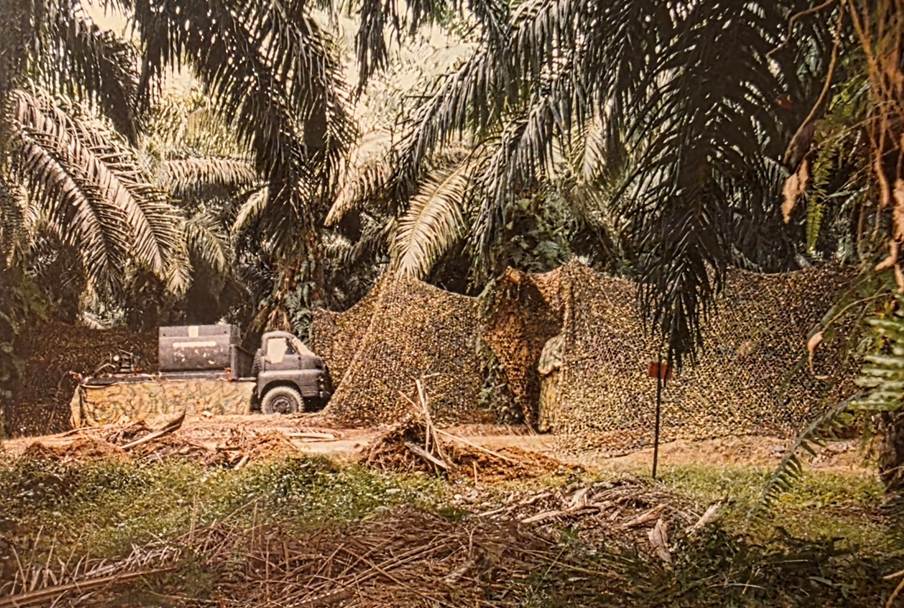
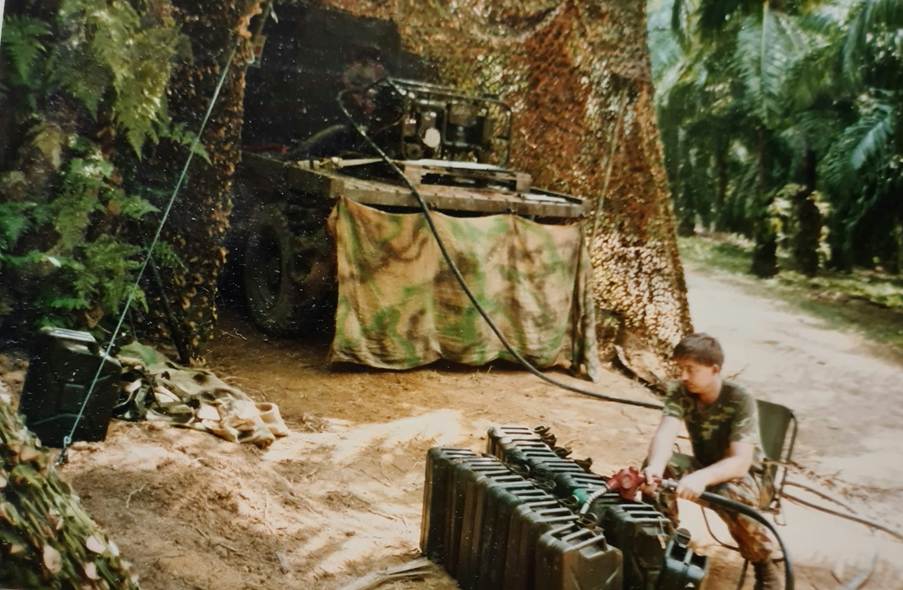
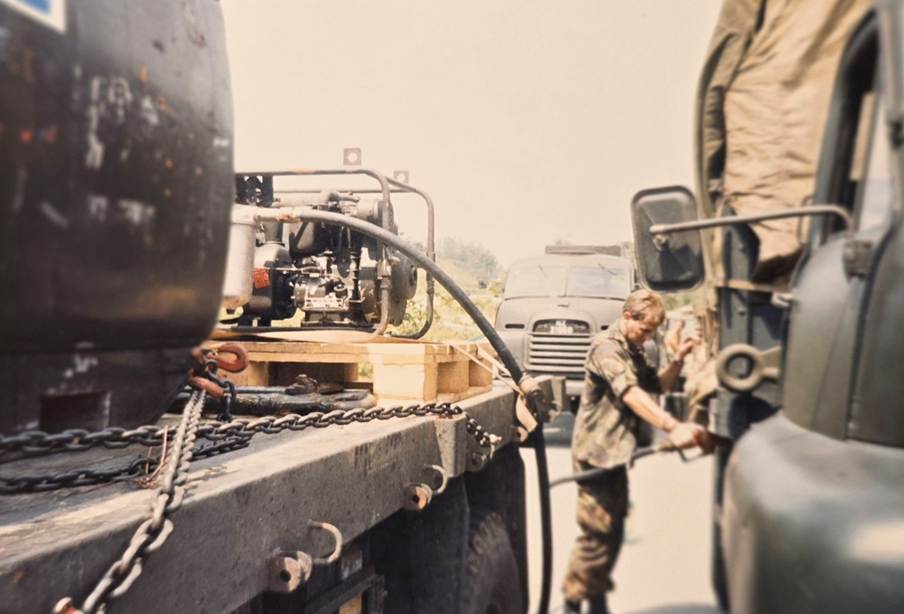
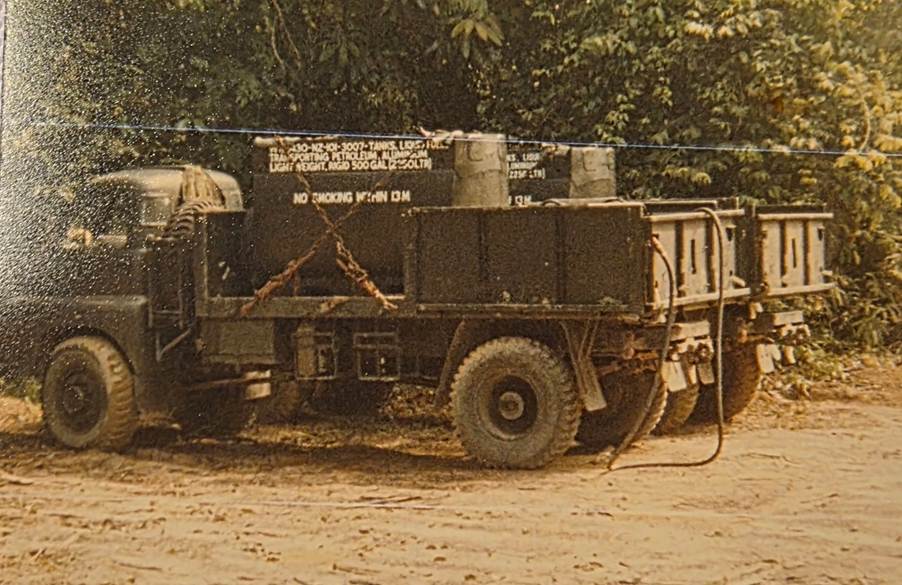
This proud tradition, it turns out, did not begin with the $1 billion Seasprite helicopter that couldn’t fly in bad weather, or the MRH-90 Taipan that was retired early and partially buried in the desert, or the M113 armoured personnel carrier that was upgraded so thoroughly it ended up unfit for combat. No, it stretches back at least to February 1915, when a New Zealand inventor named Captain J.F. Roberts demonstrated his travelling field kitchen at Broadmeadows Camp near Melbourne.
The Roberts cooker was a masterpiece of practical engineering. It had been exhaustively trialled in New Zealand, adopted as the sole field kitchen by the New Zealand Defence Department, and could feed 600 men from a unit designed for 250. Officers at Broadmeadows were full of praise. Captain Roberts was understandably pleased.
Then the Australian Defence Department got their hands on it.
Rather than use the proven two-vehicle limber-and-cooker arrangement, they mounted everything on a single lorry — facing the wrong way round, with the furnace doors at the front instead of the back, the oven doors blocked by the brake mechanism, the springs removed, the cook’s workspace reduced, and the elegant one-man turning system eliminated. Captain Roberts, with the restrained diplomacy of a man watching his life’s work being reassembled by a committee, observed politely that the Department had “not given his cooker a fair chance.”
Before our Australian neighbours bear the full weight of this gentle mockery, however, honesty compels several admissions.
To be fair, and fairness demands we acknowledge this, Australia has an enormous and capable military, and plenty of procurement decisions have worked out perfectly well. The F/A-18 Hornet and Super Hornet purchases were sound and delivered on time. The C-17 Globemaster heavy airlift fleet was delivered on schedule and within budget — a fact so remarkable it was specifically noted in defence reviews as an exception worth celebrating. The MH-60R Seahawk, acquired off-the-shelf from the United States, has been a straightforward success with the Royal Australian Navy. The M1A1 Abrams purchase gave the Australian Army a world-class main battle tank with minimal fuss. The P-8A Poseidon maritime patrol aircraft has been broadly regarded as a capable and appropriate choice. When Australia buys things sensibly and resists the urge to improve them into dysfunction, it does so very well indeed.
The failures, however, share a depressingly consistent profile. The Seasprite was a sound helicopter, but the decision to add an entirely new, untested, and uniquely Australian avionics suite was a mistake. New Zealand bought essentially the same aircraft without the bespoke modifications, and it worked fine, to the point where New Zealand later bought the helicopters Australia had abandoned and operated them successfully. The Collins-class submarine took a capable Swedish design, substantially enlarged it, mandated local construction through a newly created industry with no submarine-building experience, and integrated an American combat system never previously used in a submarine, producing boats that were, for years, described as “noisy as a rock concert” and that sometimes had five out of six vessels simultaneously out of service. The MRH-90 Taipan added local construction requirements and Australian-specific modifications to a European helicopter that was already challenging to support, ultimately producing a fleet so expensive to maintain and so unreliable in service that it was retired early and replaced by a modern version of the very Black Hawk it had been bought to supersede.
The pattern is not that Australia can’t buy equipment. It’s that Australia can’t resist improving equipment that already works — adding bespoke avionics, local-industry content requirements, novel combat systems, unique carriage arrangements, and Australian-specific modifications until the thing costs twice as much, arrives a decade late, and occasionally can’t open its oven doors while moving.
The impulse to tinker is not, however, uniquely Australian. It is arguably a standard feature of any peacetime military, where budgets exist, time is available, and there is no urgent operational reality to impose discipline on the requirements process. When armies are not actively fighting, the temptation to refine, improve, and customise is almost irresistible, and the consequences of over-engineering remain comfortably theoretical rather than immediately fatal.
Closer to home, New Zealand is not immune to the siren call of “Yes, but have you considered modifications?” We have had our own moments of requirements-creep, our own projects that drifted from elegant simplicity toward expensive complexity, and our own defence procurement decisions that looked better on paper than in practice. Those who live in glass houses, and so forth.
Which brings us back to Captain Roberts and why his story is something more than an amusing footnote. In February 1915, the modification of his field kitchen was an inconvenience. A well-designed piece of equipment was made awkward and less effective, but meals were still cooked, and soldiers were still fed. The cost of the institutional habit of improvement for its own sake was modest.
In an era of sharply rising strategic uncertainty, where the comfortable assumption that procurement timelines can stretch across decades is being stripped away with some speed, the Roberts cooker story carries a more pointed message. Programmes that might once have been refined over ten years of peacetime tinkering may now need to deliver capability in three or four years. Equipment that works adequately off the shelf may be considerably more valuable than equipment that works brilliantly in theory but spends years being modified to meet requirements that keep changing.
The lesson Captain Roberts could not quite bring himself to state directly in front of the assembled officers at Broadmeadows in 1915, that a good thing rendered complicated by committee is no longer a good thing, may be among the more important pieces of advice available to defence procurement officials in Wellington, Canberra, and well beyond, right now.
Some lessons from 1915 are worth taking seriously today. This might be one of them.
Contingency Reserve Stock, Historical Lessons, and the Future Land Force
The New Zealand Army Future Land Operating Concept 2035 describes a future land environment that will be increasingly connected and monitored, crowded, partnered, lethal, and complex. It also envisages a New Zealand Army that remains light, agile, precise, and expeditionary, able to task organise quickly and contribute to joint, interagency, and multinational operations.[1] Those ambitions depend on more than platforms, networks, and training. They also depend on the ability to sustain the force.
In contemporary logistics language, this includes the effective planning and management of Contingency Reserve Stock (CRS), stocks held beyond normal peacetime consumption to enable mobilisation, deployment, and maintenance in the field, and national backing. Although the New Zealand Army of the 1960s did not use that term, its experience in preparing clothing, personal equipment, and Ordnance support for Southeast Asian operations addressed the same underlying problem.
For a small army, CRS is not a passive holding in a warehouse. It is a readiness system. It connects force design, mobilisation, supply, repair, industry, transport, data, and trained logisticians. It determines whether a force can be generated, deployed, maintained, and adapted when normal supply arrangements are disrupted or when an operation moves faster than procurement and distribution systems can respond.
New Zealand has faced this problem before. In the 1960s, the Army had to shift from a force largely equipped for local training and inherited imperial assumptions to one capable of supporting deployed operations in Southeast Asia. The archival record from that period shows that New Zealand’s existing stocks, scales, and supply arrangements were not adequate for the new operational environment. The response was not simply to buy more stores. It required identifying unsuitable holdings, defining operational requirements, calculating maintenance reserves, estimating wastage rates, developing suitable tropical clothing and personal equipment, and reorganising the Royal New Zealand Army Ordnance Corps so that Field Force units could practise in peace the roles they would perform in war.
That experience provides a useful historical model for current and future CRS planning. But the article argues that the historical lesson is sharpened by a structural problem the 1960s Army did not face. Since the late 1990s, the New Zealand Army has progressively commercialised many of the logistics functions that previously held and managed reserve stock, producing a garrison supply system optimised for peacetime efficiency rather than deployment. Understanding what CRS requires, and why the current force may struggle to deliver it, depends on understanding both the historical record and the institutional conditions that have developed since. This article examines both.
Model of the NZ Army Regional Support Facility under construction at Linton Camp, which is due to open in 2027. Work beginning on the Linton Regional Supply Facility. Modern logistics infrastructure is central to force generation, but CRS requires more than buildings, it requires defined liabilities, visible stocks, trained logisticians, movement systems and rehearsed issue processes.
A Note on Terminology
This article uses the contemporary term Contingency Reserve Stock as a useful shorthand for the broader problem of holding stocks above normal peacetime consumption levels to support mobilisation, deployment, and maintenance in the field, as well as national backing. The term itself was not used in the 1960s files examined here. Those records instead refer to mobilisation requirements, maintenance stocks, theatre stocks, backing stocks in New Zealand, Field Force scaling, and war-role stockholding.
The value of the comparison lies not in the terminology, but in the continuity of the planning problem. The 1960s Army was not discussing CRS in modern language, but it was dealing with the same practical questions. What must be held? For whom? In what condition? For how long? Where? By whom? How is it replenished? How is it repaired? How is it moved? How is it made visible? How is it exercised before war or crisis?
The archival sources examined in this article concern clothing and personal equipment. That reflects the available documentary record, not a claim that CRS begins and ends with uniforms and boots. The planning principles the sources reveal, scaling against a defined liability, separating initial issue from maintenance stocks, establishing evidence-based wastage rates, layering national and theatre holdings, integrating stocks with the supply system that moves them, and exercising that system before the crisis begins, apply with equal force across all classes of supply: ammunition, vehicles, fuel, medical stores, communications equipment, technical spares, and engineer materiel. The clothing and personal equipment record is used here because it is unusually well-documented and captures the full planning cycle from requirement definition through to theatre sustainment. The argument it supports is not commodity-specific.
The 1960s Problem, Legacy Stocks for a New Theatre
The 1964 New Zealand Army clothing and personal equipment policy statement began with a blunt assessment. The Army’s clothing and personal equipment had been suitable for New Zealand and the Middle East during the Second World War, and had remained useful, with limitations, for post-war training. However, when New Zealand’s likely operational focus shifted to Southeast Asia, the Army found that its personal equipment was outdated and that very few New Zealand clothing items were suitable for tropical conditions. To equip the New Zealand element of the British Commonwealth Strategic Reserve, requirements had to be supplied from British stocks held in theatre.[2]
This is the first lesson for CRS planning. A reserve stock is only useful if it matches the environment, task, and operational concept. Large quantities of unsuitable stores create an illusion of readiness. They may fill ledgers and warehouses, but they do not generate operational endurance.
The 1964 policy response was explicit. With the reorganisation of the New Zealand Army and the need to provide initial outfitting and logistic support from New Zealand, there was a requirement to “develop, stock and issue” a suitable range of clothing and personal equipment for both New Zealand and Southeast Asia.[3] That phrase remains a useful framework. Reserve stocks are not merely purchased. They must be developed against a requirement, stocked against a scale, issued through a system, and maintained through usage, repair, and replacement.
The files also show that New Zealand was not simply copying allied practice. British, Australian, and American tropical clothing and personal equipment were studied, and allied sources remained important, but the emerging policy was to establish a New Zealand-controlled system. The logic was not autarky. It was resilience. New Zealand could still draw on allies, but it could not assume that allied theatre stocks would always be available, sufficient, or suitable.
New Zealand Army Ordnance Corps depot stores, showing the practical stockholding and distribution function on which mobilisation depended. CRS is not merely the existence of stores, but the system that keeps them serviceable, visible, scalable and ready for issue.
Mobilisation Stocks as a Planning Model
The 1964 policy statement outlined a disciplined stock-planning method. Annex D was to calculate the total mobilisation requirement, including nine months’ maintenance, comprising three months’ maintenance in the field and a further six months’ backing in New Zealand. Annex E then compared total liabilities with total assets, including personal issues, clothing store stock, and Ordnance stock, to calculate the net deficiency and the procurement requirement.[4]
That is recognisably close to what a modern CRS model should do. It requires planners to answer a sequence of practical questions.
What force is being generated?
What is its initial issue liability?
What is already on issue?
What is held in store?
What will be consumed, lost, damaged, condemned, repaired, or replaced during operations?
What must be procured, manufactured, refurbished, or repositioned before deployment?
The important point is that the Army was not simply asking, “How many items do we have?” It was asking, “How many items do we need to deploy, operate, and maintain a force over time?” That distinction remains central. Stock counts are not ready. Readiness exists only when holdings are measured against a realistic liability, a realistic rate of consumption, and a realistic replenishment timeline.
Immediate Readiness and the Advanced Logistic Element
The mid-1960s clothing and personal equipment programme also recognised the need to support the first echelon of a force. New Zealand had previously relied on British and allied sources for specialised clothing and equipment for overseas service, including forces in Malaya, Thailand, and South Vietnam. The files show that New Zealand was now expected to provide its own logistic support, including sufficient made-up garments and personal equipment for immediate issue to an advanced logistic support element that could be sent overseas at short notice.[5]
This remains a critical principle. CRS cannot be designed only around the total force requirement. It must also support the first elements that move, open the theatre, establish the support architecture, and enable follow-on deployment.
A layered model is therefore required. The first layer supports immediately ready elements. The second layer supports the main body and force build-up. The third layer provides theatre maintenance stocks. The fourth layer provides national backing, repair depth, procurement capacity, and industrial options.
This was essentially the logic of the 1960s programme, even though the terminology differed. The Army was trying to ensure that a force could be clothed, equipped, deployed, and maintained without waiting for an improvised solution after the crisis had already begun.
Vietnam, Wastage Rates, and Theatre Stocks
The strongest Vietnam-era evidence concerns wastage rates and theatre maintenance stocks. In December 1967, Army Headquarters investigated whether New Zealand overseas troops could receive their initial issue and subsequent maintenance of green drill outer garments from New Zealand-manufactured stock. The advantages identified included savings in overseas exchange, turnover of mobilisation stocks, active-service trials of New Zealand garments, maintenance of New Zealand manufacturing techniques, experience for logistic support units, and rationalisation of the wide variety of drill clothing items then on scale from different sources.[6]
The same paper sought to estimate wastage rates based on experience in Malaya and Vietnam, expressed in months for each item. It also asked for estimates of three months’ theatre stocks, on the basis that the battalion in Malaya and the 1st Australian Logistic Support Group in Vietnam would assume responsibility for maintenance and supplementary initial issues for troops arriving from New Zealand.[7]
This is one of the most important historical lessons. Wastage rates cannot be derived from peacetime usage alone. They must be informed by operational experience, environmental conditions, usage intensity, laundering arrangements, repair capacity, climatic deterioration, loss, damage, and condemnation.
The evidence from Vietnam also shows that theatre stock was not simply a matter of replacement. Clothing could be repaired, recovered, handed in, reissued, or condemned. A theatre repair arrangement in Saigon was being considered, with brigades at Bien Hoa estimating that thousands of garments per month would be repaired.[8] This points to a wider principle for modern CRS planning. Stocks must be planned with repair and return loops, not merely one-way consumption.
Vietnam as a Theatre Sustainment System
Bolton’s account of New Zealand Ordnance personnel in Vietnam adds practical context to the archival clothing and equipment files. There were no RNZAOC units in Vietnam, but small numbers of New Zealand Ordnance personnel served with HQ NZ V Force, 161 Battery, and Australian logistic support units. The average RNZAOC presence was only two officers and four other ranks. Most served in logistics appointments, although Bolton notes the exceptional case of Lieutenant Reginald Ellwood, who served as an Army pilot.[9]
New Zealand’s Vietnam commitment was therefore sustained through a hybrid system. There were small New Zealand national holdings, RNZAF air movement, Australian logistic support, and extensive reliance on United States depots. Bolton describes the difficulty of fitting New Zealand’s small “garden hose” supply system into the much larger United States logistic system. The United States worked in tons and gallons while New Zealand used metric measurement. The United States used computerised accounting, while New Zealand remained manual. The United States minimum standard load was often a pallet, while New Zealand might require only a carton.[10]
This is directly relevant to CRS. Reserve stock planning is not only about what New Zealand holds. It is also about whether New Zealand’s supply system can interface with allied and partner systems under operational conditions.
Bolton also provides a useful distinction between New Zealand national items and wider theatre sustainment. He records that the RNZAF moved personnel and stock by C-130 or Bristol Freighter, usually with one aircraft arriving in Saigon each week. HQ NZ V Force maintained a small quartermaster store of New Zealand national items. Unit quartermaster stores held shoulder titles, badges, and items of national identity. For almost everything else, New Zealand depended on its allies.[11]
That evidence sharpens the argument. New Zealand did not operate an independent Ordnance supply system in Vietnam. It operated within a theatre sustainment system dominated by Australian and American capacity. This does not weaken the CRS argument. It strengthens it. It shows that CRS must be understood as the planned relationship between national holdings, allied theatre stocks, transport systems, local purchase, repair pools, and the ability to interface with partner logistic systems.
Bolton’s description of Australian theatre stocks is especially valuable. Engineer support held 60 days’ operating stocks and 30 days’ theatre reserves of engineer stores, as well as designated project stores. Engineer technical stores were scaled on 12 months’ holdings for engineer equipment. Canteen stock levels were set at 60 days. Combat ration holdings included 50,000 units. The field hospital held 90 days’ stock, plus 90 days’ theatre reserves, plus 90 days’ buffer stocks of Australian-supplied items.[12]
The Advanced Ordnance Depot was the largest Ordnance unit in Vietnam. It held 15,000 line items of operating stock and theatre reserves, administered repair and maintenance pools of technical equipment, and based scaled holdings on 90 days plus a reserve.[13]
This was not CRS in name, but it was CRS logic in practice. The theatre sustainment system depended on layered holdings, operating stocks, theatre reserves, buffer stocks, repair pools, and transport rhythms.
The replenishment system was equally important. Bolton records a daily replenishment convoy by road from the Australian Logistic Support Group at Vung Tau to Nui Dat. Within any week, there would normally be a daily delivery of priority-demand items, ice, and perishables. Three times a week, ammunition and petroleum products moved forward. Twice a week, Ordnance and Engineer stores were moved. Even when some items were moved by United States transport, the Australian Logistic Support Group was tasked with around 46 truckloads every day, seven days a week. Routine bulk stores were resupplied every six weeks by HMAS Jeparit, usually loaded to its 4,300-ton capacity.[14]
The lesson is clear. Reserve stocks cannot be treated as isolated holdings. They must be planned as part of a theatre sustainment system, including national items, allied support, repair pools, transport rhythms, sea and air replenishment, local purchase, and the information systems needed to manage them.
The Risk of Allied Dependency
The historical files do not suggest that allied support was unimportant. British, Australian, and United States supply systems were central to New Zealand’s Southeast Asian support arrangements. However, the files show a growing awareness that reliance on allied theatre supply had limits. New Zealand needed to provide its own logistic support, even while drawing on allied patterns, specifications, experience, and supply channels.
Bolton’s account makes this point in operational terms. For almost everything beyond national identity items and small New Zealand holdings, New Zealand was dependent on its allies in Vietnam.[15] That dependency worked because Australia and the United States possessed large theatre support systems, but it also revealed the practical difficulty of integrating a small national supply system into larger allied logistics.
That lesson is sharper today. FLOC 35 recognises that future operations will be partnered, but partnership does not remove national responsibility for readiness.[16] Allies may provide access, interoperability, transport, contracted services, emergency support, and specialist stocks. They cannot be assumed to hold sufficient reserves for New Zealand’s requirements in every crisis. In a regional emergency, partners will have their own priorities. In a contested environment, access to allied stocks may be delayed by shipping, airlift, port capacity, cyber disruption, political decision-making, commercial scarcity, or adversary action.
The 1960s answer was balanced. New Zealand did not attempt to do everything alone, but it sought to reduce dependence on theatre-held allied stocks by establishing New Zealand-held stocks, New Zealand manufacturing experience, and New Zealand supply arrangements. That balance remains relevant.
The Supply System Matters as Much as the Stock
The 1968 RNZAOC reorganisation adds an essential layer. It shows that reserve stock planning is not only about quantities. It is about the system that holds, rotates, issues, replenishes, and accounts for those quantities.
The reorganisation was described as the first stage in a programme aimed at employing RNZAOC Field Force units in peace so that they could carry out their role in war.[17] The wider reorganisation paper noted increasing pressure from new and more sophisticated equipment, the near completion of the Field Force clothing and personal equipment programme, the need to maintain overseas forces from New Zealand in peacetime, and the transition from manual accounting to machine and eventually computerised systems. It concluded that RNZAOC had to reorganise if its supply functions were to meet the Army’s future requirements and if Ordnance units were to be trained in peace for their role in war.[18]
The same file expressed the principle even more directly. There could be very little effective preparedness for war in an Ordnance unit unless it held its initial scaling in peacetime, the stock was maintained and turned over by normal issue and replacement action, and issue experience was recorded to improve the stockholding range.[19]
This remains one of the clearest historical statements of the logic behind CRS. Stock that is held but not used, rotated, recorded, or exercised is not a mature reserve. It is a dormant inventory. Dormant inventories deteriorate, become obsolete, lose configuration control, and become disconnected from actual user demand.
The 1968 supply instruction also helps explain where clothing fitted within the system. Field Force stockholding units were not to hold ammunition, vehicles, or clothing in peacetime. Clothing remained within the clothing-store exchange system and base depot structure, while Field Force ordnance units held selected replacement items, spares, expendables, hardware, camp equipment, and general stores.[20]
That distinction is important for modern planning. Not every reserve stock has to be held by the deployed support unit. Some stocks should sit at national level, some at regional level, some with units, some with contractors, and some forward-positioned for rapid issue. The key is not ownership. The key is visibility, condition, access, governance, and rehearsed movement.
Ngāruawāhia Army Camp in 1962, showing the physical infrastructure of the Army’s supply system, including quartermaster and ordnance stores. Reserve stock only becomes readiness when it is connected to trained people, depots, issue routines and movement systems.
Doctrine and the Logic of Reserve Stockholding
The historical evidence can be strengthened by placing it against modern land logistics doctrine. New Zealand Defence Doctrine Publication 4-0, Logistics is useful as a comparative ABCANZ reference because it describes logistics as the science of planning and carrying out the movement and maintenance of forces. It also emphasises that logistics is not merely supply, but includes acquisition, storage, movement, distribution, maintenance, evacuation, disposal, transport, services, health support and personnel support.[21] In that doctrinal sense, CRS should not be understood as a static warehouse holding. It is part of a wider system that enables the force to be generated, deployed, sustained, recovered and reconstituted.
The doctrine’s logistics principles also align closely with the historical lessons of the 1960s. Responsiveness requires the right support at the right time and place. Foresight requires logisticians to anticipate future operations and identify, accumulate and maintain the assets, capabilities and information needed to support them. Balance requires the logistic system to reconcile economy with redundancy and reserve capacity. Sustainability requires support to be maintained throughout an operation, while survivability requires the logistics system to continue operating despite interference, degradation, or attack. Integration requires the logistic system to work across Services, coalition partners, civil organisations and other agencies.
These principles explain why CRS cannot be reduced to a stock count. A stock may exist, but if it is not visible, serviceable, correctly scaled, protected, transportable, interoperable and linked to a replenishment system, it does not provide operational readiness. The 1960s Army addressed this in period language through mobilisation requirements, maintenance stocks, theatre reserves and war-role stockholding. Modern doctrine expresses the same logic through preparedness, sustainability, survivability, integration, provisioning, warehousing, supply control and the logistic continuum.
Doctrine also helps explain the balance between push and pull support. Automatic, or “push,” replenishment is suitable where consumption is predictable or commanders decide to keep force elements topped up to prescribed levels. Demand, or “pull,” replenishment responds to specific operational or maintenance needs. In practice, doctrine recognises that both methods are normally used and that resilient support requires contingency planning, reserves and alternative support options. CRS therefore sits within the broader doctrinal requirement to combine forecast demand, responsive distribution, reserve capacity and adaptive support arrangements.
FLOC 35 and the Future Requirement
FLOC 35 gives the historical lesson contemporary urgency. It assesses that the future land operating environment will be increasingly connected and monitored, crowded, partnered, lethal, and complex. It also identifies an enduring need for combat-capable forces, combined-arms excellence, expeditionary forces with strategic agility, multi-role skills, rapid task organisation, superior situational awareness, and effective decision-making.[22]
The future land force is described as light, agile, precise, and reliant on force multipliers. By international standards, the New Zealand Army will remain a small army with limited firepower and force protection compared to medium or heavy forces. Its qualitative edge will depend on trained and motivated soldiers who are well-equipped and supported by situational awareness and command-and-control tools.
That makes sustainment more, not less, important. A light force may be strategically mobile, but it is also vulnerable to disruption. It may be deployed quickly, but only if the stocks, transport arrangements, documentation, repair systems, and replenishment pathways already exist. It may be able to organise tasks, but only if the logistics system can organise tasks with it.
FLOC 35 places “Sustain, Field the Force” within the future land force capability framework.[23] This should not be read narrowly as a support function behind the combat force. It is one of the conditions that allows the force to exist, deploy, operate, and endure. For a small army seeking agility, sustainment is not a rear-area administrative activity. It is a force multiplier.
The Commercialisation Problem: A Garrison System Not Designed to Deploy
The historical lessons outlined above rest on an assumption that now requires direct examination: that the New Zealand Army still retains an organic logistics system capable of holding, rotating, issuing, and deploying the stocks described in those lessons. The public evidence does not support a claim that all Army logistics have been commercialised in the same way. It does, however, show that important categories of support, especially clothing, wearables, and associated personal equipment, have moved into long-term commercial management arrangements.[24] This matters because those were precisely the types of stores through which earlier Ordnance and unit supply systems practised the peacetime routines required in war.
The clearest example is clothing and wearables. Government tender notices record that Workwear Group had been the prime vendor to the NZDF clothing contract since 1999, procuring items on behalf of the NZDF and offering total supply-chain management solutions. In 2019 the NZDF sought a market provider for “Wearables Supply and Management Services,” covering military uniforms, ceremonial attire, body armour, packs, helmets, and associated products. The required supplier capability was not limited to manufacture. It included global supply-chain and logistics management, inventory services, tailoring, and other associated services.³ The subsequent contract, awarded to ADA Pty Ltd, placed a major category of soldier clothing and equipment into a long-term managed-service arrangement.[25]
The institutional logic behind this pattern was not irrational. The Office of the Auditor-General’s 2013 report on NZDF civilianisation shows that, from 2010, NZDF sought to reduce costs, convert military positions in the “middle” and “back” into civilian positions, and increase the proportion of military personnel in the deployable “front.” Logistics and training sat within the “middle” or direct-support functions targeted by that reform logic.[26] In a period of constrained defence budgets and expeditionary commitments, the argument was coherent: use civilian and commercial arrangements where possible, reduce overhead, and concentrate uniformed manpower on operational outputs.
The difficulty is that a garrison supply system optimised for efficiency is not the same as a deployable logistics system designed for crisis. A commercial clothing and personal equipment system can work well when demand is stable, units remain at fixed locations, communications are functioning, distribution networks are open, and suppliers can operate normally. Those conditions are precisely the assumptions that may fail during mobilisation, regional emergency, or contested operations. Under stress, the critical question is not whether the contract functions in barracks, but whether the force can access, move, issue, replace, repair, and account for stock when normal commercial systems are delayed, disrupted, or overwhelmed.
This is where the contrast with the 1968 RNZAOC reorganisation is important. The reorganisation did not treat reserve stock as a passive inventory. It embedded stockholding, issue, replacement, and experience within the peacetime work of military logistics units. A public RNZAOC history records that 1 Composite Ordnance Company became the Field Force’s significant bulk Ordnance stockholding unit, responsible for bulk issues to 1 Ordnance Field Park and workshop stores sections, and held 60 to 90 days of war reserve stock in peacetime.⁶ The same wider historical pattern is seen in the development of unit-level storeman skills, in which accounting, storage, packing, dispatch, issue documentation, and quartermaster functions were taught and practised inside the Army.⁷
That earlier system did more than hold stores. It trained the people and routines required to use those stores under operational conditions. Stock was visible to the military system, moved through military accounting processes, rotated by issue and replacement, and managed by soldiers whose peacetime work gave them practical experience of wartime tasks. A commercial system may operate efficiently, but unless deliberately designed and exercised for deployment, it does not develop the same military skill, institutional memory, or field-supply competence. The supply chain functions, but it does not necessarily train. It delivers, but it does not automatically deploy.
This point is directly relevant to CRS planning. A reserve stock controlled through a civilian contract is only as useful as the contract, the contractor’s physical access to stock, the resilience of the supplier’s own network, and the ability of the Army to draw, transport, and issue that stock under operational conditions. If a crisis disrupts ports, road transport, commercial warehousing, labour availability, communications, or supplier priorities, the Army may face two problems at once: the operational problem it is responding to, and a logistics problem created by dependency on a system never primarily designed for that contingency.
Modern doctrine reinforces this caution. FLOC 35 describes a future land force that must be light, agile, and expeditionary, but it also warns against over-reliance on fragile resupply assumptions. Its discussion of future combat service support notes that “just in time logistics” is only relevant where resupply can be assured, and that the current support paradigm is too reliant on a resupply chain that can be interdicted or disrupted.[27] The 2025 Defence Capability Plan reaches a similar conclusion at the national level. It states that New Zealand’s supply chains and logistics can be affected by events far beyond New Zealand, that a defence force can operate only while it has access to supplies and logistics support, and that logistics resilience requires improved logistics and increased stocks of munitions and spare parts.[28]
The answer is not simply to reverse commercialisation. Contracted supply has a legitimate place in garrison sustainment, and the Army should not attempt to duplicate civilian capacity for every routine peacetime requirement. The requirement is more precise. NZDF must distinguish between garrison supply efficiency and deployable logistics assurance. It must identify which categories of stock are mission-essential, which contracted services must continue under emergency conditions, which stocks must remain under military governance, and which commercial arrangements require mobilisation clauses, surge provisions, priority access, war-risk provisions, and tested fallback plans.
Allied doctrine and experience support that approach. United States joint doctrine defines operational contract support as the planning for and obtaining of supplies, services, and construction from commercial sources in support of operations, but it also treats contract support integration, contractor management, and oversight as operational planning functions, not administrative afterthoughts.[29] The US Army has likewise warned that the major operational challenges in contract support lie in planning, integration, and contractor management, rather than merely in the letting of contracts.[30] The lesson is directly applicable to New Zealand: contracting can support operations, but only when it is deliberately integrated into force generation, mobilisation planning, risk management, and command accountability.
For CRS, the key issue is not whether an item is held by a military unit, a depot, a civilian contractor, or an industry partner. The key issue is whether the stock is visible, governed, accessible, serviceable, transportable, scalable, and exercised against a defined operational liability. Some stocks may sensibly remain in commercial hands during normal conditions. Others, especially those required for immediate force generation or early theatre opening, must be under military control or subject to contractual arrangements that guarantee military access at the point of need. The distinction must be made before the crisis, not improvised during it.
The FLOC 35 vision, therefore, makes the commercialisation problem more acute, not less. A light and agile force may be easier to deploy than a heavy force, but it is not easier to sustain if its stockholding, repair depth, issue processes, and distribution arrangements remain anchored to barracks and civilian supply assumptions. The 1960s Army was building a deployable logistics system to match its deployable ambition. The contemporary risk is that the force has retained the ambition while parts of its logistics architecture have become optimised for garrison efficiency. Closing that gap is not simply a procurement task. It is a force-design task, and it belongs at the centre of any serious CRS framework.
ADA New Zealand logistics hub in Manawatū. Modern clothing and wearables supply is increasingly managed through commercial logistics arrangements. Such systems can be efficient in garrison, but CRS planning must test whether they can provide assured access, surge capacity and issue control during mobilisation or disruption.
CRS as a Readiness System
The historical evidence suggests that CRS should be planned as a readiness system with seven principles.
First, CRS must be tied to an operational scenario. The 1960s problem was not abstract. It was Southeast Asia, tropical conditions, deployed forces, and the need to support troops from New Zealand. Current planning must be equally clear about climate, theatre, threat, duration, transport assumptions, and force package.
Second, CRS must be scaled against a defined force. A stockpile without a liability is only an accumulation. The 1960s files used mobilisation requirements, Field Force scales, maintenance periods, and theatre responsibilities. Modern CRS planning should do the same.
Third, initial issue and maintenance stocks must be separated. The items required to deploy a soldier are not the same as the items required to maintain that soldier for three months under field conditions.
Fourth, wastage rates must be evidence-based. Peacetime issue history is useful, but it must be adjusted for operational tempo, terrain, climate, repair, laundering, recovery, loss, damage, and condemnation.
Fifth, CRS must be layered. Immediate-ready forces require accessible stocks. Deployed forces require theatre maintenance stocks. New Zealand requires national backing stocks, repair depth, substitute items, procurement pathways, and industry options.
Sixth, stockholding must be integrated with the normal supply system. The RNZAOC reforms recognised that war readiness depended on peacetime practice, not paper scales alone.
Seventh, stocks must be visible, governed, and exercised. A reserve that cannot be found, inspected, moved, issued, or replenished in time is not a reserve in operational terms.
Implications for Current and Future Planning
The practical implications are clear.
CRS should be mapped against mission sets and task organisations, not only against generic commodity classes. A Joint Land Combat task group, a population support task unit, a humanitarian assistance force, and a capacity-building detachment will each impose different stock liabilities.
CRS should distinguish between immediate issue, deployment build-up, theatre maintenance, and national backing. These layers should be visible in planning, funding, storage, and reporting.
CRS should include repair and return assumptions. Clothing, tentage, specialist equipment, tools, batteries, medical items, communications accessories, water-production consumables, and selected spares all require different replenishment and repair logic.
CRS should be rotated through training. This prevents dormancy, tests the demand and issue system, and generates usage data. It also ensures that units and logisticians understand how to draw, use, return, and account for the stocks before an operation begins.
CRS should be linked to digital visibility. The future force envisaged by FLOC 35 cannot rely on invisible or manually reconciled reserves. Stock identity, location, condition, shelf life, ownership, and movement status must be visible enough to support rapid decision-making.
CRS should include industry and procurement lead times. The 1960s files recognised the importance of local manufacture and maintaining manufacturing techniques. Modern equivalents may include standing contracts, war clauses, supplier assurance, regional alternatives, repair partnerships, and substitute-item rules.
CRS should also include interoperability planning. Bolton’s Vietnam account shows how difficult it could be for a small New Zealand system to fit within larger allied systems. In modern terms, CRS planning must include data standards, packaging standards, consignment visibility, load units, dangerous goods requirements, national stock identifiers, partner stock interfaces, and the ability to operate when allied systems do not align neatly with New Zealand practices.
CRS planning must also identify which categories of stock require military governance, define the uniformed logistic capacity needed to manage and move those stocks under operational conditions, and incorporate war-clause provisions and mobilisation triggers into contracts that carry operationally relevant holdings. The garrison supply system and the deployable logistics system are not the same thing. Planning must treat them accordingly.
Finally, CRS must be exercised as part of force generation. A stock that exists only in a store is not fully tested. The real test is whether it can be demanded, authorised, packed, documented, transported, received, issued, replenished, repaired, and accounted for under time pressure.
Unresolved Questions
This article has not attempted to answer the two questions that any serious implementation of the CRS framework it describes would require.
The first is institutional ownership. The historical record shows that the 1960s RNZAOC reorganisation worked because responsibility was clearly assigned, specific units held specific stocks, specific officers were accountable for readiness, and the system was designed so that peacetime practice matched the war role. The contemporary equivalent is not obvious. Where CRS governance sits is not a question this article can resolve. But it is a question that must be resolved before the planning principles outlined above can be put into practice. A framework without an owner is a document, not a system.
The second is funding and prioritisation. The article has argued that CRS has been allowed to erode and that the commercialisation of garrison logistics has compounded the problem. It has not addressed why. The structural reasons are not hard to identify: stocks that sit idle in peacetime are difficult to defend in budget cycles; Treasury scrutiny of reserve holdings tends to treat them as tied-up capital rather than insurance; and the institutional incentives within defence planning generally favour visible capability, platforms, personnel, training, over the less visible readiness that CRS represents. Acknowledging those pressures does not resolve them, but any proposal to rebuild CRS that does not engage with the funding and prioritisation problem will not survive contact with the planning cycle. That engagement is beyond the scope of this article. It is not beyond the scope of the problem.
Conclusion
The New Zealand Army’s experience in the 1960s shows that the problem now described through Contingency Reserve Stock is not new, even if the terminology is. The files did not use the modern CRS label. They spoke instead of mobilisation requirements, maintenance stocks, theatre stocks, Field Force scaling, war-role stockholding, and backing stocks held in New Zealand. Yet the underlying requirement was the same: to ensure that the Army could generate, deploy, maintain, and adapt a force before normal supply systems became too slow, too fragile, or too uncertain.
One limitation of the historical evidence deserves acknowledgement. The archival record examined here is drawn from clothing and personal equipment files. That is not a limitation of the argument. It is a feature of the archive. The same planning logic, liability, scale, maintenance period, wastage rate, repair loop, theatre stock, and national backing apply to every class of supply the Army relies upon. Ammunition, vehicles, medical stores, fuel, communications equipment, and technical spares each present their own variants of the same underlying problem: what must be held, for whom, in what condition, for how long, and through what system? The clothing record makes that problem unusually visible. The answer it points toward is not confined to the quartermaster’s store.
Vietnam gives that lesson a practical theatre-level dimension. New Zealand’s national supply footprint was small, its Ordnance personnel in theatre were few, and its national holdings were limited mainly to specific New Zealand items. For most sustainment, New Zealand relied on Australian and United States logistic systems. Those systems worked because they were large, layered, and supported by operating stocks, theatre reserves, buffer stocks, repair pools, local purchase, daily road movement, regular air links, and periodic sea resupply. The lesson is not that New Zealand must hold everything itself. It is that New Zealand must understand, plan for, and exercise the relationships among national holdings, partner systems, theatre stocks, repair loops, and movement networks before a crisis begins.
Modern doctrine confirms the same lesson in contemporary language. Effective logistics depends on foresight, balance, sustainability, survivability, and integration. It requires the ability to position resources across the logistic continuum, protect the support system, combine push and pull replenishment, and maintain visibility over supply, movement, maintenance, repair, return, and disposal flows. CRS is therefore not merely a storehouse concept. It is a doctrinal expression of readiness that links the national support base, theatre support, deployed units, partners, industry, transport systems, and information networks.
FLOC 35 gives this historical and doctrinal lesson contemporary urgency. It describes a future land force that must be light, agile, precise, partnered, and expeditionary in an operating environment that will be more lethal, more monitored, more complex, and more contested. Such a force cannot rely on theoretical stocks, obsolete scales, invisible holdings, or improvised sustainment. A light force may be easier to deploy than a heavy one, but it is not easier to sustain if its stocks, repair depth, movement systems, and partner interfaces have not been planned in advance.
That lesson is sharpened by a structural problem the 1960s Army did not face. The commercialisation of military logistics since the late 1990s has produced a garrison supply system optimised for peacetime efficiency, not for deployment. Contracted arrangements have displaced many of the organic military functions through which reserve stock was previously held, rotated, and exercised. The result is a logistics architecture anchored to the barracks, one that depends on stable civilian infrastructure, functioning commercial supply chains, and conditions that may not exist when the force is called upon. The 1960s Army was building a deployable logistics system to match its deployable ambitions. The contemporary Army risks inheriting those ambitions while the logistics system that should underpin them has become increasingly anchored to garrison assumptions. Closing that gap is not a matter of wholesale reversal of commercialisation. It is a matter of being honest about what contracted garrison supply cannot do, retaining the military-governed logistics capacity that it will never replace, and designing CRS arrangements that will function when the commercial system cannot.
CRS should therefore be treated as part of “Sustain, Field the Force”, not as an administrative afterthought. It must be held against defined operational liabilities, rotated through peacetime use, informed by real wastage data, integrated with digital supply visibility, and exercised as part of force generation. The questions of who owns that responsibility and how it is funded are not answered here — but they are the questions on which implementation will turn. The historical lesson is clear. The future force will not be fielded by aspiration. It will be fielded by stocks, scales, systems, partners, and logisticians, ready before the crisis begins.
Notes
[1] New Zealand. Defence Force, Future Land Operating Concept 2035: Integrated Land Missions (New Zealand Defence Force, 2026).
[2] “Army Dress – NZ Army Clothing and Personal Equipment Policy Statement,” Archives New Zealand Item No R22243083 (1964).
[3] “Army Dress – NZ Army Clothing and Personal Equipment Policy Statement.”
[4] “Army Dress – NZ Army Clothing and Personal Equipment Policy Statement.”
[5] Annex explanation for mobilisation requirement and maintenance stocks, 23 October 1964. “Clothing – New Zealand Regular Forces: Scale of Issue,” Archives New Zealand No R17187792 (1964-1967).
[6] Quartermaster-General, “Outer Garments, Green Drill, Issue vs AS/NZ Dress,” 19 December 1967 “Clothing – New Zealand Army Force Far East Land Forces: Policy, Scales, Accounting etc,” Archives New Zealand No R17187815 (1964-1967).
[7] Continuation page requesting wastage rates and estimates of three months’ theatre stocks for Malaya and Vietnam. “Clothing – New Zealand Regular Forces: Scale of Issue.”
[8] HQ NZ V Force report on tropical combat clothing, 17 August 1965, discussing US fatigues, shortages, repair arrangements, and reissue practice in Vietnam. “Clothing – Tropical Clothing and Personal Equipment,” Archives New Zealand No R17187760 (1955 – 1967).
[9] Major J.S Bolton, A History of the Royal New Zealand Army Ordnance Corps (Trentham: RNZAOC, 1992), 194.
[10] Bolton, A History of the Royal New Zealand Army Ordnance Corps.
[11] Bolton, A History of the Royal New Zealand Army Ordnance Corps.
[12] Bolton, A History of the Royal New Zealand Army Ordnance Corps.
[13] Bolton, A History of the Royal New Zealand Army Ordnance Corps.
[14] Bolton, A History of the Royal New Zealand Army Ordnance Corps.
[15] Bolton, A History of the Royal New Zealand Army Ordnance Corps.
[16] Force, Future Land Operating Concept 2035: Integrated Land Missions.
[17] “System of Supply Following Reorganisation of the RNZAOC,” September 1968, “Organisation and Administration, Ordnance Depots: Formation and Establishment.,” Archives New Zealand No R17187552 (1968).
[18] “Future Roles and Functions of Units of the Royal New Zealand Army Ordnance Corps “Organisation and Administration, Ordnance Depots: Formation and Establishment..”
[19] discussion of supply systems, initial scaling, stock turnover, issue experience, and preparedness for war. “Organisation and Administration, Ordnance Depots: Formation and Establishment..”
[20] New Zealand Army, “System of Supply Following Reorganisation of the RNZAOC,” September 1968, stockholding policy for Field Force and Static Support Force units. “”Organisation and Administration, Ordnance Depots: Formation and Establishment..”
[21]Defence Logistics NZDDP-4.0 (Second Edition), New Zealand Defence Doctrine Publication: NZDDP, (New Zealand Defence Force, 2020), Non-fiction, Government documents.
[22] Force, Future Land Operating Concept 2035: Integrated Land Missions.
[23] Force, Future Land Operating Concept 2035: Integrated Land Missions.
[25] “Wearables Supply and Management Services Registration of Interest (ROI).”
[26] New Zealand. Office of the Auditor-General, New Zealand Defence Force: The Civilianisation Project (Office of the Auditor-General, 2013), 1.8,3.2-3.6. https://oag.parliament.nz/2013/civilianisation.
[27] New Zealand Army, Future Land Operating Concept 2035: Integrated Land Missions (New Zealand Defence Force, 2026). chrome-extension://efaidnbmnnnibpcajpcglclefindmkaj/https://www.nzdf.mil.nz/assets/Uploads/DocumentLibrary/Future-Land-Operating-Concept-2035-1.pdf.
New Zealand Army Logistic Trades Appointment, and Proficiency Badges
The trade, appointment, and proficiency badges worn by New Zealand Army logisticians tell a compact but revealing story of military change. At first glance, they are small pieces of cloth or metal, but their symbols record the Army’s movement from horse transport, hand trades, and wagon repair to motor transport, ammunition technology, movement control, catering, quartermastering, and integrated logistics.
The earliest badges belonged to the horse era. The Snaffle, Spur, Crossed Whips, Bit, Horseshoe, and Wheel reflected an Army that depended on horses, harness, carts, wagons, artillery limbers, and skilled tradesmen who could keep that system moving. Saddlers, farriers, wheelwrights, drivers, and smiths were not peripheral figures. They were essential to mobility, supply, and battlefield endurance. Without their skill, guns could not move, ammunition could not be brought forward, rations could not be delivered, and wounded men could not be carried from the field.
As the twentieth century progressed, the Army’s symbols changed with its technology. Horse-driving badges gave way to steering wheels and wagon wheels. Badges for electricians, engine drivers, artificers, ammunition technicians, movement operators, air dispatchers, caterers, quartermasters, and logisticians reflected a force increasingly shaped by mechanical, technical, and administrative skill. Yet the purpose remained constant, to recognise soldiers whose specialist knowledge enabled the Army to move, fight, repair, sustain, and endure.
By 1960, most of the pre-war logistic-related trade and appointment badges had disappeared from everyday use. The major survivor was the Hammer and Pincers, the old artificer and technical trades badge, which endured because its meaning could adapt from blacksmithing and armourer work to mechanical repair, technical mastery, and later advanced maintenance qualification. Apart from the later introduction of the Ammunition Technician badge, no significant new logistic trade badge would be introduced until the 2000s, when the modern RNZALR badge system began to reflect the broader professional identity of Combat Drivers, Movement Operators, Caterers, Quartermasters, and Logistic Specialists.
This article traces that evolution. It follows the badges from the Snaffle to the Taiaha and Key, showing how each symbol marked a particular skill, trade, appointment, or qualification, and how the visual language of New Zealand Army logistics changed as the Army itself moved from horses and wagons to vehicles, aircraft, shipping, digital systems, and integrated sustainment.
The badges in this article fall into three broad eras. The first runs from the earliest dress regulations of 1905 through to approximately 1960, covering the horse transport and early motor age, when badges reflected the trades of drivers, farriers, saddlers, wheelwrights, smiths, and artificers. The second era is defined more by absence than presence. From roughly 1960 to the formation of the Royal New Zealand Army Logistic Regiment in 1996, the badge landscape was largely static. The proposed 1960s trade badge system was never adopted, and apart from the approval of the Ammunition Technician badge in 1971, little changed visibly. The third era began with the RNZALR and continues to the present. It saw the gradual introduction of a modern badge family reflecting the Regiment’s full range of trades — Combat Drivers, Movement Operators, Ammunition Technicians, Caterers, and Logistic Specialists — each with a distinct symbol connecting professional identity to the wider story of New Zealand Army logistics.
Date
Badge
Event
1901
Hammer and Pincers
First New Zealand armourer sergeants arrive; badge in informal use
1905
Snaffle; Spur and Crossed Whips
Formalised in New Zealand Dress Regulations
1912
Hammer and Pincers
Formalised in New Zealand dress regulations
1914–1918
Spur with Whip in the Middle; Crown Spur with Whip in the Middle
Unofficial use during First World War
1923
Bit; Horseshoe; Wheel; Hammer and Pincers; Crown Crossed Whip and Spur; Crossed Whip and Spur
Expanded and formalised in 1923 Dress Regulations
1927
Crown Crossed Whip and Spur; Crossed Whip and Spur
Confirmed in New Zealand Gazette regulations; spur-and-whip pattern superseded
First recorded use for Driver of the Year competition
1988
Flaming A (fern frond pattern)
New Zealand heraldic version enters service
1996
RNZALR formed
Quartermaster and Supply trades integrated into new Regiment
2007
Taiaha and Key
Design selected as Logistic Specialist Top of Trade badge
2009
Taiaha and Key
Approved for wear
By 2012
Hei Matau; Combat Driver Top of Trade (Wagon Wheel)
Recorded as official RNZALR badges
Glossary
Term
Meaning
Badge context
Why it mattered
Snaffle
A simple horse bit used with reins to control a horse.
Used as a horse-driving proficiency badge. The 1905 system used the Snaffle to recognise driving skill, with different colours indicating levels of proficiency.
It represented the soldier’s ability to control horse transport, which was essential for moving guns, wagons, ambulances, supplies, and equipment.
Spur
A small metal device worn on a rider’s heel to cue or direct a horse.
Appeared in horse-driving prize and proficiency badges, often with crossed whips.
It symbolised horsemanship, control, and skilled handling of military horse teams.
Whip
A driving aid used to control and direct horses, especially in teams.
Seen in Crossed Whips and Spur badges, and in the unofficial Spur with Whip in the Middle badge.
It reflected practical horse-driving skill, particularly for transport and artillery drivers.
Crossed Whips
Two whips crossed as a badge symbol.
Used with the Spur to denote horse-driving proficiency or prize awards.
The crossed form created a clear badge symbol associated with professional driving of horse teams.
Bit
The metal mouthpiece fitted inside a horse’s mouth as part of the bridle.
Used for saddlers, saddletree makers, harness makers, and repairers.
It represented the trades responsible for making and maintaining horse harness and equipment.
Bridle
The headgear fitted to a horse, including the bit and reins, used to control the animal.
Connected to the Snaffle and Bit badges.
It was central to horse control and therefore a fitting symbol for horse-related military trades.
Harness
The leather and metal equipment used to attach horses to wagons, guns, carts, and limbers.
Associated with saddlers and harness makers.
Harness failure could stop movement, so harness trades were vital to military transport.
Saddler
A tradesman who made and repaired saddles, harness, and leather horse equipment.
Identified by the Bit badge.
Saddlers kept mounted and horse-drawn units serviceable.
Saddletree maker
A specialist who made or repaired the rigid frame of a saddle.
Included under the Bit badge group.
The saddle tree gave the saddle its shape and strength, making it essential to mounted service.
Farrier
A specialist who cared for horses’ hooves and fitted horseshoes.
Identified by the Horseshoe badge.
A lame horse could immobilise a gun team, wagon, or supply column.
Shoeing smith
A smith trained to shoe horses.
Linked to the Horseshoe badge.
The role combined blacksmithing and animal mobility support.
Horseshoe
A metal shoe fitted to a horse’s hoof.
Used as the badge symbol for farriers and shoeing smiths.
It was a direct symbol of keeping horse transport mobile.
Wheelwright
A tradesman who built and repaired wooden wheels.
Represented by the Wheel badge, often shown with twelve spokes.
Wheelwrights kept carts, wagons, limbers, and horse-drawn vehicles serviceable.
Wheeler
A term associated with wheel repair or wheelwright work.
Also linked with the Wheel badge.
It reflected the maintenance of wheeled transport before full motorisation.
Pincers
Heavy gripping tools, similar to tongs or pliers, used by smiths, armourers, and metalworkers.
Used with the Hammer in the Hammer and Pincers badge.
The symbol represented skilled repair, fitting, armourer work, and later artificer-level technical mastery.
Artificer
A highly skilled military tradesman, usually associated with advanced mechanical, armourer, engineering, or maintenance work.
Represented by the Hammer and Pincers badge.
The Artificer became the bridge between older craft trades and modern technical maintenance.
Governor
A mechanical device that regulates the speed of an engine.
Appeared in the Governor in Ring badge for engine drivers.
It symbolised competence in operating and controlling machinery.
Cart wheel
The wheel of a cart or wagon, later used more generally as a symbol of movement.
Used in movement control and transport-related badges or armbands.
It connected older wagon transport with the modern movements function.
Taiaha
A traditional Māori weapon — a long-handled staff with a carved blade at one end and a tongue-shaped point at the other, used by skilled warriors. It required years of dedicated training to master and was associated with authority, discipline, and martial excellence.
Used in the Taiaha and Key crossed badge as the Logistic Specialist Top of Trade badge, approved for wear in 2009.
It reflects the professional mastery and soldierly identity expected of a senior logistician, grounding the badge in New Zealand’s own warrior tradition rather than borrowing from British heraldry.
Key
A physical key, universally recognised as a symbol of custody, access, control, and responsibility for what is held under lock. In military and quartermaster tradition, the key has long represented the storeman or quartermaster’s authority over equipment, clothing, and supplies.
Used crossed with the Taiaha in the Logistic Specialist Top of Trade badge. The key’s association with quartermasters and storemen is shared across many Commonwealth and NATO armies, making it an internationally understood symbol within military logistics.
It represents the core responsibility of the logistician — ensuring the right equipment, stores, and supplies are accounted for, secured, and issued to those who need them. Paired with the Taiaha, it balances the warrior identity of the soldier with the custodial responsibility of the logistician.
From Horse Driving to Vehicle Driving
The earliest driving badges in this group belong to the horse era, when military movement depended on trained drivers, horse teams, wagons, carts, ambulances, artillery limbers, and supply vehicles. The Snaffle badge recognised horse-driving skill. A snaffle, or bridle-bit, is the metal mouthpiece used with reins to control a horse. In the 1905 system, the snaffle appeared as a driving proficiency badge, with red indicating skill and gold indicating distinguished skill.[1]
The Spur and Crossed Whips badge also represented horse-driving skill. It recognised men who could control horse-drawn transport and artillery teams under field conditions, moving guns, ammunition wagons, ambulances, and supply carts. Gold was awarded as 1st prize in driving a horse transport, and Red for 2nd prize in driving a horse transport.
The Spur with Whip in the Middle was an unofficial horse-driving prize badge worn on the lower left arm. It was not formally authorised in New Zealand dress regulations between 1905 and 1923. Instead, it was a British badge, associated with the Royal Artillery, that was adopted informally by some New Zealand Volunteer Force units and later appeared in connection with New Zealand soldiers serving with transport and artillery units during the First World War.
The badge recognised first prize in horse-driving skills. Its unofficial status is important. Although related official driving badges existed, the specific Spur with Whip in the Middle pattern was not listed in the New Zealand Dress Regulations from 1905 to 1923. The Crown Spur with Whip in the Middle was also unofficially utilised during the wartime era.
The use of these badges appears to have been based on British precedent and local adoption rather than formal New Zealand authority.
The 1923 and later 1927 regulations recognised the official badges, the Crown, Crossed Whip and Spur for first prize and the Crossed Whip and Spur for second, third and fourth prizes, which suggests that the spur-and-whip pattern had effectively been superseded after the First World War.[2]
The move from horse transport to motor transport changed the symbols of proficiency, but it did not change the underlying requirement for skill. The Army still needed soldiers who could move people, stores, fuel, ammunition, rations, water, and equipment safely, reliably, and under demanding conditions. As motor vehicles replaced horses, the older symbols of reins, spurs, and whips gave way to new badges based on the steering wheel. The Steering Wheel with Crown represented first prize in vehicle-driving skill, while the plain Steering Wheel represented second, third, and fourth prizes. These badges were the motor-age successors to the horse-driving proficiency badges. The visual language changed, but the purpose remained the same, to recognise the soldier who could control military movement with skill and judgement.[3]
This tradition continued through the Wagon Wheel with Number Inside, which became associated with the Driver of the Year competition. First recorded in 1973, the Driver of the Year became an enduring expression of professional driving skill. It tested far more than basic road driving. Competitors were assessed across practical and theoretical stands, including vehicle servicing, loading and lashing, light and heavy vehicle handling, cross-country driving, skilled circuit work, and adaptability under pressure.
The plain Wagon Wheel also became associated with the transport trade more broadly. Within the RNZALR, it developed into the Combat Driver Top of Trade Badge, worn by eligible officers, warrant officers, and senior non-commissioned officers who have achieved the required level of professional competence, instructional authority, and trade experience within Army land transport.
Recorded as an official badge by 2012, the Combat Driver Top of Trade Badge is awarded only to personnel who meet several professional requirements. They must hold the relevant senior Combat Driver trade qualification, either the former Driver, Royal New Zealand Corps of Transport qualification, or the Driver, Royal New Zealand Army Logistic Regiment Band 5 qualification. They must also be approved driving instructors, with a current Land Transport New Zealand driving instructor endorsement, and approved driving licence testing officers, with a current testing officer endorsement. In addition, they must be recognised within the relevant New Zealand road transport and Land Transport New Zealand framework, or by an equivalent authority. They must have completed either the Transport Platoon Sergeants Course or the Transport RNZALR Staff Sergeants Course.
Movements, from cartwheel to land, sea, and air
The Cartwheel armband/patch identifies personnel carrying out movement control duties. Its origins lay in the earlier Red Movement Control or MC armbands used by British and Commonwealth movement control personnel during the Second World War. These wartime brassards were plain, functional identifiers, intended to make movement control staff immediately recognisable at ports, railheads, road movement control points, airfields, and transit areas.
After the war, the worded armband gave way to a more standardised symbol. The yellow wheel on a red background became the recognised Allied and NATO-style identifier for movement control personnel. The wheel was simple, visible, and internationally understood as a symbol of movement, transport, and control.
Although the cartwheel recalled the older world of carts, wagons, and road movement, its meaning changed as the movement trade developed. By the post-war period, movement personnel were no longer concerned only with land transport. They coordinated the movement of people, vehicles, equipment, baggage, and freight by road, rail, sea, and air. In this way, the cartwheel became less a symbol of wagons and more a symbol of military movement itself.
The Anchor and Wings with Wheel Inside badge represented the broader and more advanced movements function. It built on the cartwheel as the established symbol of movement control, but added the other domains in which Movement Operators worked. The wheel represented movement control and land movement, including road and rail. The anchor represented sea movement, ports, shipping, and terminal operations. The wings represented air movement, air terminal activity, and aerial delivery.
Together, these elements captured the modern Movement Operator’s role across land, sea, and air. The badge was worn by senior Non-Commissioned Officers, Warrant Officers, and Officers who had qualified on the Movement Operator Advanced Course. It marked not just a qualification, but a wider level of professional responsibility within the joint logistics environment.
The AD in Wreaths with Wings badge represented Air Dispatch qualification. Introduced during the Second World War, the badge has been confirmed as approved for use in New Zealand in 1960, although it was probably in use earlier.[4] It identified personnel qualified to prepare, rig, load, and despatch stores and equipment by air. Within the RNZALR, Movement Operators qualified for the Air Dispatch Badge after completing the aerial delivery rigger course, serving 18 continuous months as a Movement Operator, and rigging a minimum of 20 successful sorties.
The Flaming A, ammunition as a specialist profession
The A in Flames, or Flaming A, represents the Ammunition Technician. The badge did not simply appear as a decorative trade mark. It recognised a dangerous and highly skilled profession.
New Zealand’s ammunition trade developed from nineteenth-century powder magazine management into responsibility for the full spectrum of ammunition and explosives. The British Flaming A originated after a 1948 design competition for Royal Army Ordnance Corps Ammunition Examiners, and the “A” reflected the trade’s status as an “A” Class trade. New Zealand considered adoption during the late 1950s and 1960s, but approval took time. Major Bob Duggan’s renewed case stressed that this was not merely a trade badge, but recognition of the dangerous and skilful nature of ammunition work. The Army Dress Committee approved the badge for qualified RNZAOC Ammunition Technical Officers and Ammunition Technicians on 31 May 1971.[5]
The New Zealand badge adopted in 1971 was initially identical to the RAOC badge. Officers required one year of practical experience after graduating from an ATO course in Australia or the United Kingdom, while Ammunition Technicians had to qualify in all aspects of the trade, a process that could take up to six years. In 1985, the Army moved towards qualification badges with a New Zealand heraldic character, using fern fronds as a common motif, and the fern-frond version of the Flaming A entered service in 1988.
Quartermaster to Logistic Specialist
The Quartermaster Star represented quartermaster duties, one of the Army’s oldest unit-level sustainment responsibilities. The quartermaster was responsible for the practical needs of the unit, including stores, equipment, clothing, accommodation support, supply administration, accounting, custody, and the issue and control of unit resources.
The badge belonged to an earlier system of appointment and duty badges, but it did not survive the First World War. Its discontinuance during the war reflected the wider rationalisation of badges and the changing organisation of military supply. Although the badge disappeared, the quartermaster function remained essential. Units still required trained personnel to manage stores, clothing, equipment, accommodation support, and the daily administrative systems that kept soldiers equipped and ready.
When the RNZALR was formed in 1996, Quartermaster and Supply personnel from across the Army were integrated into the new Regiment. This broadened the Regiment’s responsibilities and linked unit-level supply practice with the wider logistics system. Quartermastering was no longer simply a unit storekeeping function. It became part of an integrated sustainment chain connecting units, depots, supply systems, equipment accounting, operational stocks, and deployed support.
The Taiaha and Key Crossed badge represents the modern Quartermaster function. Its design was selected in 2007 as the Supply Technician (Now Logistic Specialist) Top of Trade badge and was approved for wear in 2009.[6] The taiaha reflects the soldierly character of the logistician, while the key represents custody, control, access, supply, accounting, and stewardship. It is a modern symbol for an old responsibility, ensuring the force has what it needs, where it needs it, when it needs it.
Saddlers, farriers, and wheelwrights
The Bit badge identified saddlers, saddletree makers, harness makers, and repairers. The bit was an obvious symbol for those who worked with horse equipment because it was part of the bridle used to control the animal.
The Horseshoe badge identified farriers and shoeing smiths. Farriers kept horses mobile by trimming hooves and fitting shoes. A lame horse could stop a gun team or supply wagon just as surely as a broken gearbox can stop a truck.
The Wheel, often shown with twelve spokes, represented the wheeler or wheelwright. The wheelwright built and repaired wheels for wagons, carts, artillery vehicles, and horse-drawn transport. The 1923 regulations listed the Bit, Horseshoe, Wheel, and Hammer and Pincers across various non-commissioned officer and warrant officer appointments, showing how deeply these trades were embedded in the Army’s working structure.
The Hammer and Pincers, the badge that survived
The Hammer and Pincers Crossed badge represented smiths, artificers, armourers, fitters, vehicle mechanics, toolmakers, and other technical trades. Pincers are heavy gripping tools, similar to tongs or pliers, used by blacksmiths, armourers, and metalworkers. Together, the hammer and pincers symbolised skilled repair, metalwork, weapons maintenance, fitting, and mechanical craftsmanship.
In New Zealand service, the badge can be traced to British Army Ordnance Corps armourers who arrived at the beginning of the twentieth century. Armourer Sergeants Bertram Buckley and John Hunter arrived in 1901, followed by William Edward Luckman in 1903. The badge was formalised in New Zealand dress regulations in 1912 and expanded in 1923 across armourers, artificers, fitters, mechanists, smiths, and related technical trades.
The Hammer and Pincers is especially important because, by 1960, it was effectively the only pre-war logistics-related trade badge still in use. The Bit, Horseshoe, Wheel, Snaffle, and horse-driving badges belonged to an older military world that had largely disappeared. The Hammer and Pincers survived because its meaning adapted. It moved from a broad craft-trade identifier to a symbol of technical authority, then to artificer mastery, and in the RNZALR era it remains associated with advanced maintenance qualification.
Catering
Recorded as an official badge by 2012, the Hei Matau badge represents the RNZALR Caterer Trade. The hei matau is a traditional fish-hook form and, in this setting, provides an appropriate symbol for food, provision, and sustainment. Its use reflects the central purpose of catering within the Army, feeding the force so that soldiers can train, deploy, endure, and recover.
The Hei Matau badge was carried over to the Caterer Trade which was stood up on 1 July 2022, following the disestablishment of the former Chef and Steward trades and their integration into a single, operationally focused trade. This change recognised that Army catering is not simply cooking. It combines food preparation, field feeding, hospitality, hygiene, ration management, event support, and deployed sustainment. In camp, caterers provide routine meals and welfare services. In the field, they sustain endurance. On operations, they help preserve health, morale, and operational tempo.
The hei matau, therefore, connects the practical act of feeding with the wider logistical purpose of sustaining people. It is a fitting emblem for a trade whose effect is felt daily across the Army, often quietly, but always directly. A force that is not properly fed cannot train effectively, cannot deploy for long, and cannot sustain itself under pressure.
Electricians, engine drivers, and technical specialists
The E in Wreaths badge identified qualified electricians. In the early twentieth century, electricity was still a specialist military capability, linked to lighting, signalling, generators, workshops, and later vehicle systems.
The Governor in Ring badge identified engine drivers. A governor is a mechanical device that regulates engine speed. The badge therefore symbolised competence in managing or operating engines. These badges show the Army’s shift from animal power and hand trades towards machinery, electricity, and technical systems.
1960s Recommendations
Based on the recommendations of the 1960 District and Formation Commanders’ Conference, the New Zealand Army undertook a comprehensive review of dress embellishments, including the possible introduction of trade badges for each of the Army’s major trade groups.
The review compared British and Canadian trade badge systems. The British system, which grouped some unlisted trades under general “A” or “B” badges, was considered unsatisfactory because it gave little visible recognition or incentive to individual tradesmen. By contrast, the Canadian system was seen as more practical and representative, as it had moved away from some older traditional designs and adopted badges that more clearly reflected the trades they represented.
The proposed New Zealand trade badges included:
Proposed Badge
Intended Trade Group
Wheel
All driving trades, all corps
Crossed Needle and Awl
Leather and textile trades
Crossed Keys
Storemen and storekeepers, all corps
Star
Catering trades, including RNZASC mess and anteroom stewards, RNZASC, RNZNC, and NZWRAC
However, despite the practical value of the proposal, the recommendations were not carried through. Financial constraints, combined with resistance from traditionalists, meant that the New Zealand Army missed an opportunity to introduce a wider and more visible system of trade identification. As a result, many tradesmen continued to serve without a distinctive badge that clearly identified their specialist function.
This decision is significant when viewed against the wider history of logistics badges. By the 1960s, many of the older pre-war trade badges, such as those associated with farriers, saddlers, wheelers, and horse transport, had disappeared from practical use. The Hammer and Pincers remained the principal surviving pre-war technical trade badge, while proposed new badges such as the Wheel, Crossed Needle and Awl, Crossed Keys, and Star were never adopted. The result was a more conservative badge culture, one that recognised some technical mastery but did not fully represent the breadth of Army logistics trades.
Conclusion
These badges provide a compact visual history of New Zealand Army logistics. They show how the Army moved from an organisation sustained by horses, wagons, hand trades, and craft skills to one increasingly shaped by motor transport, mechanical repair, ammunition technology, movement control, air dispatch, catering, quartermastering, and integrated logistics.
The older badges, the Snaffle, Spur, Crossed Whips, Bit, Horseshoe, and Wheel, belonged to a world in which mobility depended on horses, harness, wheels, and the tradesmen who kept them serviceable. The E in Wreaths and Governor in Ring reflected the emergence of electricity and machinery as specialist military skills. The Hammer and Pincers bridged both worlds. It began as a symbol of smiths, armourers, artificers, and mechanical craftsmen, but endured because its meaning adapted to the technical and maintenance needs of a modern Army.
By 1960, most of the older pre-war trade and appointment badges had disappeared from practical use. The Hammer and Pincers remained the principal survivor, while the proposed 1960s system of wider trade badges, including the Wheel, Crossed Needle and Awl, Crossed Keys, and Star, was never adopted. Apart from the later approval of the Ammunition Technician badge, no major new logistics trade badge system emerged until the modern RNZALR era. That gap is significant. It shows that while New Zealand Army logistics continued to expand in complexity, its visible system of trade recognition remained conservative and incomplete for much of the later twentieth century.
The later badges, the Flaming A, Cartwheel, Anchor and Wings, AD Wings, Hei Matau, Quartermaster Star, and Taiaha and Key, mark the re-emergence of visible professional identity across the broader logistics community. They recognise that logistics is not a single trade or narrow support function, but a system of specialist skills that enables the force to move, fight, repair, sustain, feed, account, distribute, and endure.
From the Snaffle to the Taiaha and Key, the symbols changed because the Army changed. Yet the purpose behind them remained constant. Each badge recognised a practical military skill, and each pointed to the same enduring truth: an Army is only as effective as the people who keep it moving, armed, supplied, repaired, fed, and ready.
Notes
[1]New Zealand Military Forces Dress Regulations, ed. New Zealand Military Forces (Wellington, 1 June, 1905).
[2] “Regulations for the Military Forces of the Dominion of New Zealand.,” New Zealand Gazette (Wellington), 25 May 1927, ; New Zealand Military Forces Dress Regulations, ed. New Zealand Military Forces (Wellington, 1923). https://rnzaoc.files.wordpress.com/2018/08/1923-nz-army-dress-regs.pdf.
[3]New Zealand Military Forces Dress Regulations, 23.
[4] “Clothing – Dress Embellishments: General 1960-1976,” Archives New Zealand No R17187826 (1960).
[5] “Army 220/5/103/AAC Army Dress Committee Meeting 1 March 1971,” Archives New Zealand No R9753141 (July 1971).
[6] “1180/1 Minutes of the meeting of Supply/Quartermaster Trade Seminar held at the Trade Training School on 13-15 November 2007,” (2007).
Memory, Mess Tradition, and Commonwealth Service Culture
Among the more unusual items in my Royal New Zealand Army Ordnance Corps (RNZAOC) collection are several bottles of Port produced or presented in connection with RNZAOC events and activities. At first glance, they appear to be simple commemorative bottles, the sort of object often retained after a dining-in night, corps function, reunion, anniversary, formal presentation, or mess occasion. Yet they also open a window into a much older military tradition.
Port, in British and Commonwealth military culture, is more than an after-dinner drink. It is bound up with mess etiquette, formal dining, loyal toasts, regimental memory, hospitality, presentation, and the preservation of institutional identity. In the case of the RNZAOC, a commemorative Port bottle can therefore be read as more than a souvenir. It is a small material link to the social world of the Corps, its mess customs, its ceremonial life, and the way soldiers marked service, comradeship, and belonging.
This is why such bottles deserve to be treated as artefacts. Their importance lies not simply in their contents, but in the history, ritual, and institutional memory that gathered around them.
Port, Portugal, and Britain
Port is a fortified wine from the Douro Valley in northern Portugal. Its close association with Britain developed strongly from the late seventeenth and early eighteenth centuries, shaped by trade, politics, war, and the long-standing Anglo-Portuguese relationship. During periods when French wines were less accessible, less reliable, or less politically acceptable, British merchants and consumers increasingly turned to Portuguese wine.
The Methuen Commercial Treaty of 1703 is often treated as a key turning point in this relationship. Paul Duguid’s study of the treaty is useful because it warns against viewing Methuen merely as a dry commercial agreement. Duguid argues that the treaty became embedded in English political and cultural imagination, while Port wine became one of its most enduring beneficiaries. In other words, Port’s British identity was not simply a matter of taste. It was also a product of trade policy, wartime rivalry, national preference, political imagination, and a long cultural memory of Britain’s relationship with Portugal.[1]
This matters for military history because the British officers’ mess drew heavily from the dining culture of Britain’s social elite. The mess was not simply a place where officers ate. It was a regulated social institution, part dining room, part club, part school of manners, and part guardian of regimental identity. Port entered military life through this world.
Why Port was fortified
Port’s fortified character was central to its success. Before modern bottling, refrigeration, chemical stabilisation, and temperature-controlled transport, wine was vulnerable. It could spoil, oxidise, or continue fermenting unpredictably during long journeys. This was a real problem for wines being moved from Portugal to Britain by sea.
In Port production, grape spirit is added to the fermenting wine. This stops fermentation before all the grape sugar has been converted into alcohol, leaving residual sweetness while increasing alcoholic strength. The result is a wine that is stronger, sweeter, fuller-bodied, and more stable than ordinary table wine, producing the fortified sweet wine recognised as Port.[2].
This made Port especially attractive to British merchants and consumers. It travelled well, stored well, and suited the needs of a maritime trading nation. For an empire connected by long sea routes and for armed forces accustomed to overseas service, that practical durability helped give Port a natural place in formal military hospitality.
Port and British military drinking culture
Alcohol has long had a place in military life, although not always in the same form or for the same purpose. Some drinks were regarded as medicinal, some as ration items, some as comforts, and some as markers of status or ritual. Gin and tonic, for example, emerged from British imperial experience in India, where quinine was made more palatable with gin, water, sugar, and lime. Rum, beer, wine, and spirits have all occupied different places in military culture, from ration issue to morale, comfort, and ceremony.[3]
Port’s place was different. It was not primarily a field ration or soldiers’ issue. It belonged more naturally to the formal world of the mess, the dining table, the toast, the presentation, and the ceremonial occasion. It was associated with officers, guests, formal dinners, and later with wider mess customs across officers’ and senior non-commissioned officers’ messes.
One modern military presentation supplier describes the gifting of Port as a tradition associated with British military service in Portugal that has evolved into a gesture of goodwill, camaraderie, and hospitality. This should be treated carefully as a traditional account rather than as definitive archival proof, but it reflects how Port has been remembered within military culture as a drink associated with friendship, respect, and formal presentation.[4]
The mess as a place of military identity
Edward Gosling strengthens the central argument of this piece. Gosling does not discuss Port specifically, but his analysis of the British officers’ mess explains why objects such as Port bottles, decanters, mess silver, portraits, menus, and trophies matter. He argues that the officers’ mess has historically functioned as a place where shared history, materiality, and social interaction help construct collective military leader identity. The mess is therefore not just a room. It is a social and symbolic setting in which military identity is learned, performed, reinforced, and passed on.[5]
Gosling also notes that the identity and history of a unit are communicated through tradition and through material and visual culture derived from past and present members and the events in which they participated.[6] This is directly relevant to the RNZAOC Port bottles. Their labels, crests, dates, inscriptions, and associations do not merely decorate the bottle. They locate the object within a web of memory, corps identity, mess culture, and shared experience.
This helps explain why a commemorative Port bottle should be treated as part of the RNZAOC’s material culture. It is not simply a container. It is a small, portable expression of an institution’s social life.
RNZAOC 75TH Anniversary Commemorative Port
The passing of the Port
The best-known Port custom is the passing of the decanter. In British dining tradition, the decanter is usually passed to the left. The Naval Officers Association of Australia describes the custom as “following the sun”, with Port passing clockwise and to the left, while also noting that the practice’s origins are obscure.[4] Taylor explains the custom in similar terms: the decanter is placed to the right of the host or hostess and then passed left around the table until it returns to its starting point.[7]
Several explanations are commonly offered. Some link it to naval custom, “port to port”. Others suggest that passing to the left kept the right hand, traditionally the sword hand, free. A simpler explanation is that passing in one direction ensures that every diner is included and that the decanter does not become trapped at one end of the table. Whatever its origin, the ritual reinforces orderly sharing, attentiveness, and participation.
There is also the traditional indirect rebuke when the Port stops moving. Rather than bluntly asking someone to pass the Port, another diner may ask, “Do you know the Bishop of Norwich?” The phrase serves as a polite hint that the decanter has come to rest and should continue its journey around the table.[8]
In a military mess, such rituals matter. They reinforce order, awareness, restraint, and shared participation. The passing of the Port is not simply about drinking. It is a small act of collective discipline. Everyone participates, nobody monopolises the decanter, and the table moves through the ritual together.
Port, toasts, and loyalty
Port is closely linked to formal toasts. In British and Commonwealth military practice, the Loyal Toast to the Sovereign has long been one of the central acts of a formal dinner. Other toasts may follow, including to the regiment or corps, to absent friends, to fallen comrades, to guests, or to allied and associated units.
This is where Port takes on a deeper significance. It becomes a ceremonial drink of loyalty and memory. It marks a transition from dining to reflection. The glass is raised not simply in celebration, but in acknowledgement of service, obligation, sacrifice, and continuity.
For a corps such as the RNZAOC, this is particularly important. The Corps was built around service, supply, maintenance support, ammunition, ordnance management, and the unglamorous but essential machinery of military sustainment. Its formal occasions gave members a way to express pride in that service. A Port bottle connected to an RNZAOC dinner or event, therefore, represents not only the function itself, but also the act of collective remembrance that accompanied it.
RNZAOC Ammunition Technician 1992 Reunion commemorative Port
The commemorative Port bottle
This is where the bottles in the collection become especially interesting. A commemorative Port bottle occupies an unusual place between a mess object, a presentation item, and a historical document. It may never have been intended as an archival record, yet it can preserve details that are otherwise easily lost.
A bottle label, presentation box, engraving, crest, date, unit title, occasion, or inscription can record the name of a corps, unit, mess, or association. It may identify the date of an anniversary or formal dinner, the location of an event, the names of presenters or recipients, the use of a particular badge, crest, or motto, and the social networks that connected serving members, veterans, and guests.
For the RNZAOC, such bottles are part of the Corps’ material culture. They sit alongside plaques, trophies, mess silver, menus, photographs, programmes, badges, reunion items, and presentation pieces. Individually, they may seem modest. Collectively, they help tell the story of how the Corps remembered itself.
Gosling’s work helps place these objects within a broader interpretive framework. He argues that place, history, and materiality can generate, transmit, legitimise, and sometimes reshape meanings associated with leadership and military identity.[9] A Port bottle is therefore not a neutral object. It can transmit meaning, especially when it carries a corps badge, a date, a motto, or the memory of a formal occasion.
RNZAOC identity, regimental culture, and New Zealand adaptation
The RNZAOC, like other New Zealand Army corps, inherited much from British and Commonwealth military tradition. Its members served within a culture shaped by mess dinners, corps days, formal presentations, loyal toasts, farewells, retirements, postings, and reunions. These occasions were not peripheral to military life. They helped sustain identity.
Carol-Jo Phillips’ thesis on New Zealand’s regimental system provides useful context here. Phillips argues that New Zealand inherited the idea of the regimental system from Britain, but that New Zealand’s smaller, more egalitarian, all-volunteer Army adapted that inheritance to its own cultural pressures and legacies. This is directly relevant to RNZAOC and later RNZALR history. New Zealand did not simply copy British practice unchanged. It absorbed, modified, and localised it.
Phillips also defines the regimental system not merely as an administrative structure, but as a form of military culture. Its features include corporate identity, beliefs, values, symbols, and the social and psychological framework that military culture provides for the individual soldier.[10] This helps explain why an object such as a Port bottle can carry meaning. It belongs to the symbolic life of a corps, but its value depends on the values it represents.
For a technical and logistics corps, this mattered. The work of RNZAOC personnel was often carried out behind the front line, in depots, workshops, ammunition areas, supply installations, offices, and administrative systems. The formal life of the Corps helped make that service visible. It gave members a shared language of belonging, whether they were Regular Force, Territorial Force, civilian staff, serving soldiers, or veterans.
A commemorative Port bottle from an RNZAOC function, therefore, speaks to several layers of identity. It reflects the British Commonwealth mess custom. It reflects New Zealand Army ceremonial practice. It reflects the social life of the Corps. It also reflects the pride of a specialist organisation whose contribution was often essential but not always widely understood.
Symbols, values, and the danger of empty tradition
Phillips’ thesis is also useful because it cautions against allowing symbols to become detached from the values they are supposed to represent. In her discussion of the New Zealand Army’s regimental system, she notes that symbols reflect values, but when they overshadow the values they represent, they can undermine those values.[11]
This point is important for an article about Port. A Port bottle has no automatic virtue simply because it is old. Its value depends on what it is used to express. If the object merely represents nostalgia, exclusiveness, or unthinking imitation, then it has limited worth. If, however, it represents comradeship, hospitality, remembrance, discipline, continuity, and belonging, it remains meaningful.
The same applies to the mess itself. Its importance does not rest on preserving every older habit unchanged. Its importance lies in preserving the best parts of military social culture, standards, mutual respect, confidence in formal settings, pride in service, and a sense of connection to those who came before.
Port as a gift and presentation item
The gifting of Port fits naturally into military culture because it combines hospitality with permanence. Unlike a single toast consumed at a dinner, a presented bottle can be retained, displayed, opened on a later occasion, or preserved unopened as a memento.
This gives it a dual character. It is both consumable and commemorative. It may be intended for sharing, but it may also be kept. In many collections, military Port bottles survive precisely because their owners understood they represented more than their contents. They marked an event, a relationship, a posting, a farewell, a reunion, or a milestone.
In this sense, an RNZAOC Port bottle is similar to a challenge coin, a plaque, an engraved tankard, a presentation shell case, a framed photograph, or an illuminated address. It is a token of association. Its value lies not only in what it is, but in what it connects.
Changing attitudes to alcohol and the survival of tradition
It is also important to acknowledge that social attitudes towards alcohol have changed significantly. Military organisations today operate in a very different environment from that of earlier generations. Greater attention is now given to health, professionalism, welfare, inclusiveness, the duty of care, and ensuring that formal occasions remain respectful and safe for all participants. Traditions once accepted without question are now more likely to be examined, moderated, or adapted.
Gosling’s article is particularly useful here. He notes that the officers’ mess can support socialisation and identity, but also warns that reliance on alcohol, or on evening and weekend functions, can become a barrier to genuine inclusivity.[12] This point strengthens the article by allowing Port to be discussed honestly. Port can be part of military tradition, but the tradition cannot be reduced to drinking.
As a result, Port can sometimes appear to belong to another era. A commemorative Port bottle may now seem more like an artefact of the past than a living part of military culture. For some, it may evoke an older mess world of formal dinners, smoking rooms, polished silver, rigid etiquette, and alcohol-centred hospitality. That perception is understandable. The military mess, like the wider society around it, has changed.
Yet this does not mean that the tradition has lost its value. The significance of Port in military culture has never rested solely on alcohol. Its deeper meaning lies in ritual, symbolism, and shared identity. The passing of the Port, the Loyal Toast, the toast to absent friends, the presentation bottle, and the commemorative label all belong to a broader tradition. They help mark occasions, honour service, welcome guests, farewell comrades, remember the fallen, and reinforce the bonds of a corps or regiment.
This is where the mess remains important. A mess is not simply a bar or dining facility. At its best, it is one of the institutions through which military culture is transmitted. It teaches standards, manners, hospitality, respect for rank without servility, confidence in formal settings, and awareness of the organisation’s history. It provides a setting where junior members observe senior members, where guests are hosted properly, where achievements are recognised, and where the living community of a corps or regiment connects with those who served before.
Gosling’s conclusion that the mess has continued to evolve in line with the requirements of modern Defence organisations is helpful here. The mess has never been a frozen institution. Its form and function have changed, but its continuing value lies in the role it plays in formal and informal military social structures.[13]
In that sense, Port should be understood less as a drink and more as a symbol. It represents continuity. It represents the discipline of ceremony. It represents the idea that military organisations are sustained not only by orders, equipment, establishments, doctrine, and systems, but also by customs, stories, shared rituals, and collective memory.
For the RNZAOC, the surviving Port bottles in this collection therefore have value even if the drinking culture around them has changed. They remind us of the social and ceremonial life of the Corps. They record occasions when members gathered as a community, not just as tradesmen, storemen, ammunition personnel, clerks, officers, soldiers, or civilian staff, but as members of a corps with its own identity and traditions.
The point is not to preserve alcohol-centred customs uncritically. Rather, it is to understand what those customs represented, and to decide which parts of the tradition still serve a useful purpose. The drink may become less central, but the values attached to the ritual, comradeship, remembrance, hospitality, dignity, continuity, and belonging, remain worth preserving.
A small object with a wider story
The bottles in this collection, therefore, provide a useful way to explain a wider tradition. They show how a Portuguese fortified wine became part of British dining culture, how British dining culture shaped the officers’ mess, how mess customs spread through the Commonwealth, and how New Zealand Army corps, such as the RNZAOC, adapted those customs into their own ceremonial life.
They also remind us that military history is not limited to weapons, vehicles, uniforms, medals, and campaign narratives. It is also found in objects of fellowship and ritual. Mess menus, toast lists, decanters, Port bottles, place cards, seating plans, presentation items, and reunion souvenirs all help reconstruct the lived culture of military organisations.
For the RNZAOC, such objects are especially valuable because they illuminate the human and social side of a Corps often remembered through stores, depots, equipment, ammunition, ledgers, workshops, and logistics systems. They show the Corps as a community.
Phillips’ discussion of New Zealand’s military culture reinforces this point. She argues that New Zealand’s regimental system adapted inherited British ideas to New Zealand’s own circumstances, emphasising values, cohesion, and cultural fit rather than simple imitation.[14] An RNZAOC Port bottle, therefore, sits at the intersection of inherited British Commonwealth custom and New Zealand Army adaptation. It is both traditional and local.
Conclusion
Port holds a distinctive place in British and Commonwealth military tradition because it connects practicality, status, hospitality, ceremony, and memory. Its fortified nature made it durable and suitable for long-distance trade. Its popularity in Britain made it part of elite dining culture. Its adoption by the mess made it part of military etiquette. Its use in toasts gave it ceremonial meaning. Its presentation as a gift turned it into a keepsake of service and comradeship.
The RNZAOC Port bottles in the collection are therefore more than curiosities. They are artefacts of corps identity. They record occasions when members of the Corps gathered, remembered, toasted, farewelled, celebrated, or renewed the bonds of service.
Changing attitudes towards alcohol may make these bottles seem, at first glance, like relics of a former mess culture. But their real significance lies beyond the alcohol itself. They represent tradition, ritual, memory, and belonging. They remind us that a corps is sustained not only by its official records and operational achievements, but also by the customs and shared practices through which its members understand who they are.
That point is strengthened by the scholarship on the mess and on New Zealand’s regimental system. The mess is a place where shared history, material culture, and social interaction help construct identity. The regimental and corps system is not merely an administrative arrangement, but a culture of values, symbols, memory, and belonging. Port, when understood in that context, is not simply an alcoholic drink. It is part of a symbolic language.
In that sense, the significance of Port is what the bottle represents: continuity, comradeship, restraint, loyalty, remembrance, and the shared discipline of belonging to a corps whose work sustained the New Zealand Army.
Notes
[1] Paul Diguid, “The Making of Methuen: the commercial Treaty in the English imagination,” História: revista da Faculdade de Letras da Universidade do Porto 4 (2003).
[9] Gosling, “The role of the officers’ mess in inclusive military leader social identity construction.”
[10] Carol J Phillips, “The shape of New Zealand’s regimental system: a thesis presented in partial fulfilment of the requirements for the degree of Master of Arts in Defence and Strategic Studies at Massey University, Palmerston North, New Zealand” (Massey University, 2006).
[11] Phillips, “The shape of New Zealand’s regimental system: a thesis presented in partial fulfilment of the requirements for the degree of Master of Arts in Defence and Strategic Studies at Massey University, Palmerston North, New Zealand.”
[12] Gosling, “The role of the officers’ mess in inclusive military leader social identity construction.”
[13] Gosling, “The role of the officers’ mess in inclusive military leader social identity construction.”
[14] Phillips, “The shape of New Zealand’s regimental system: a thesis presented in partial fulfilment of the requirements for the degree of Master of Arts in Defence and Strategic Studies at Massey University, Palmerston North, New Zealand.”
New Zealand Army Logistics Preparation to 30 June 1941
This article examines the New Zealand Army’s logistics preparations in New Zealand up to 30 June 1941, immediately before the wider wartime expansion that followed the deterioration of the Pacific situation later that year. Its focus is not simply on weapons and ammunition, but on the home-base logistics system needed to make them usable: Ordnance establishments, ammunition reserves, workshops, transport, stores, infrastructure, civilian labour, inspection, and the administrative machinery required to turn equipment into capability.
Main Ordnance Depot Cricket team, 1930s, the men who were the foundation of the NZAOC’s wartime expansion
This distinction matters. From 1940, New Zealand was also building a deployed expeditionary logistics organisation in Egypt and the Middle East to support the 2nd New Zealand Expeditionary Force. That overseas system drew away many experienced Regular Force officers and soldiers who had served through the interwar years, including key logistics personnel whose expertise was urgently needed both abroad and at home. This article does not attempt to examine the full logistics system deployed by 2 NZEF. Instead, it concentrates on the logistics situation within New Zealand, where the Army still had to mobilise, equip, store, maintain, feed, fuel, transport, and administer a rapidly expanding force while also supporting overseas commitments.
By mid-1941, New Zealand had not reached logistical abundance. It had, however, moved beyond passive austerity. Rearmament was underway, urgent orders had been placed, ammunition deficiencies were being addressed, infrastructure requirements had been costed, and the limitations of the small pre-war New Zealand Army Ordnance Corps, New Zealand Army Service Corps, and Mechanical Transport systems were becoming increasingly clear.
New Zealand’s rearmament did not begin suddenly in 1939, nor did it begin only because Major-General P. J. Mackesy reported on the state of the Military Forces. By the late 1930s, the Army, the NZAOC, and the NZASC were already working within their limited means to prepare for a more demanding form of war. Requisitions were being placed for modern weapons, ammunition, signalling stores, coast-defence equipment, anti-gas equipment, tentage, camp equipment, and technical stores. At the same time, the supply and transport system was slowly shifting from a horse-based structure towards motorised transport. The process was real, but it was limited, uneven, and too slow to overcome two decades of interwar economy before the Second World War arrived.
Wider strategic assumptions also shaped the Army’s position. New Zealand relied heavily on the Royal Navy, imperial defence, and the Singapore Strategy for its ultimate security. When rearmament resumed in the mid-1930s, air power received the clearest political and financial priority, leaving the Army to rebuild from a weaker base.
The shift from a 1937 NZAOC establishment of 44 military personnel and 122 civilians to an April 1939 establishment that identified 10 officers and 38 WO1s and other ranks in the Armourer, Armament, and Ammunition sections should not be overstated as dramatic numerical growth. What it does show is that rearmament was beginning to expose the need for a more clearly defined specialist NZAOC structure. The Army was not merely acquiring weapons and equipment; it also had to create the trained military depth needed to inspect, maintain, store, account for, issue, and sustain them. When the position of the NZASC is added, the wider point becomes clearer still. New Zealand’s Army was not simply short of modern equipment. It was short of the trained logistics capacity required to move, feed, fuel, maintain, and sustain a modern force. Rearmament was therefore not only an equipment programme, it was also a logistics mobilisation.
Imperial Defence, Austerity, and Normalised Risk
The pre-war Army’s condition can be understood through the concept of normalisation of deviance.[1] In this context, it does not mean that officers, soldiers, public servants, or logisticians were careless. It means that the Army gradually became accustomed to operating under constrained, abnormal, and improvised conditions. Reduced establishments, limited training, obsolete equipment, small ammunition reserves, civilianised logistics staff, thin supply and transport arrangements, and inadequate mechanical depth became part of the accepted interwar operating environment.
This process was shaped by more than local economic measures. New Zealand’s defence policy in the 1920s and early 1930s operated within a wider British imperial framework, including the assumption, formalised in Britain’s “Ten Year Rule”, that no major war was likely within a ten-year planning horizon.[2] As a Dominion of the British Empire, New Zealand’s ultimate security was still expected to rest heavily on the Royal Navy and the wider imperial defence system, especially the Singapore Strategy.[3] This strategic setting reinforced pressure to limit defence expenditure and encouraged the view that the Army could remain small in peacetime, with expansion to follow if danger returned.
Of all the Dominions, New Zealand showed particularly strong loyalty to Britain between the wars, but this loyalty did not remove the strategic anxieties created by New Zealand’s Pacific location. By the 1920s and 1930s, New Zealand leaders were already concerned that British policy did not always account for the security needs of Australia and New Zealand. This was reflected in criticism of the British reluctance to proceed with the Singapore base and of actions that appeared to weaken the collective security system on which New Zealand believed it was especially dependent. In that setting, New Zealand’s reliance on imperial defence was not passive ignorance. It was a strategic choice made by a small Dominion whose defence planning, expenditure, and Army establishments were shaped by the assumption that the main shield would be imperial sea power rather than a large standing land force.[4]
The reductions of 1930 to 1931 were central to this process. Introduced as emergency economic measures during the Depression, they reshaped what the Army expected of itself. The suspension of compulsory military training, the contraction of the Territorial Force, and the civilianisation of much of the NZAOC’s clerical and stores workforce created a much smaller defence system. The NZASC was also affected by the same economic climate, reduced training base, and limited vehicle holdings. What began as austerity became the baseline from which later mobilisation had to proceed. The effect was not simply financial; it was organisational and cultural. The Army learned to survive on too little.[5]
When the international situation deteriorated in the mid-1930s, New Zealand began to rearm, but the emphasis was uneven. Air power appeared to offer a modern, technologically advanced, and comparatively efficient means of defending an isolated maritime country.[6] The Cochrane review of New Zealand’s air defence requirements in 1936 reinforced this direction, and the Air Force Act 1937 separated the air arm from the Army and established the Royal New Zealand Air Force as an independent service.[7] Major investment followed in air bases, equipment, and training infrastructure. Air power was increasingly seen as the modern way ahead.
The result was that the Army became, in practical terms, the “Cinderella service”. This phrase should not be read as meaning that no one cared about the Army, or that Army officers were inactive. Rather, it captures the period’s order of priorities. The Navy and imperial sea communications remained central to strategic thinking, the Air Force attracted the most visible modern investment, and the Army was left to manage with a small regular cadre, a weakened Territorial system, ageing equipment, limited motor transport, inadequate ammunition reserves, and a logistics structure still shaped by the interwar economy.
This does not mean New Zealand ignored preparedness. The evidence points in the opposite direction. During the interwar period, the Army continued to plan, train, revise mobilisation arrangements, conduct exercises, experiment with mechanisation, and order modern equipment where possible. New Zealand was not asleep. It was alert, but constrained.
[8]The problem was more subtle. The Army adapted to scarcity so successfully that scarcity itself became embedded in the system. Reduced manpower, limited ammunition, ageing equipment, inadequate transport, and civilianised stores support were no longer seen only as emergency conditions to be corrected at speed. They became the environment within which the Army learned to function.
The limits of that system were exposed publicly by the Four Colonels’ Revolt. Senior Territorial officers protested the condition and direction of the Territorial Force, challenging a system in which reduced strength, limited training, poor morale, and inadequate equipment had become accepted as normal. Their protest breached military regulations, and the officers were placed on the retired list rather than court-martialled.[9] Yet the significance of the episode lies less in the disciplinary outcome than in what it revealed. By the late 1930s, informed military opinion recognised that the Army’s constrained condition was not simply economical, it was dangerous.
Seen through the lens of normalisation of deviance, the revolt was a warning sign. It showed that some officers were no longer willing to accept reduced establishments, weak Territorial strength, limited equipment, and low morale as normal. This interpretation avoids two extremes. It avoids the simplistic claim that New Zealand ignored defence between the wars. It also avoids the opposite error, suggesting that because planning existed, the Army was adequately prepared. The reality sits between the two. Interwar austerity, imperial defence assumptions, reliance on Singapore, and the prioritisation of air power created a force that was professionally aware and adaptable but also conditioned to operate below the level that modern war would demand.
Rearmament Before War
It would be misleading to suggest that New Zealand’s military rearmament began only with the emergency orders placed after the outbreak of war. The NZAOC files from the late 1930s show that a limited, uneven, but genuine process of re-equipment had already begun.
The evidence is scattered through requisitions, stock returns, and NZAOC correspondence rather than presented as a single grand programme. That in itself is revealing. Rearmament before 1939 was not a dramatic national mobilisation, but a piecemeal process of ordering selected modern weapons, replenishing ammunition, improving coast defences, obtaining technical stores, and trying to keep existing equipment serviceable.
Some requisitions reached back into the mid-1930s. Outstanding High Commissioner requisitions included entries dated from 1935 onward for detonators, fuzes, guncotton, mortar cartridges, grenades, and related explosive stores. The same schedules also recorded requisitions for 1936, 1937, and 1938: directors, switchboards, wireless components, mortar fittings, rangefinders, survey equipment, smoke generators, and other technical stores. This shows that the Army was already attempting to rebuild elements of its technical and ammunition base before the immediate pre-war crisis.[10]
By 1938 and 1939, the pattern had become more clearly connected to modern fighting equipment. The NZAOC schedules record orders for Bren guns and equipment, 3-inch mortars, 3-inch mortar equipment for mortars already in store, and QF 2-pounder carriages and equipment. Other entries included Boys anti-tank rifles, anti-gas equipment, medical equipment, tentage, and camp equipment. These were not simply replacements for worn-out stock. They represented the first stages of a deliberate effort to align New Zealand’s forces with contemporary British practice.
New Zealand’s limited rearmament was more forward-looking than it might first appear. Where funds and British supply allowed, New Zealand sought access to modern British-pattern equipment before, or almost as soon as, those items were accepted into British service. Orders and requisitions in the late 1930s included Bren guns, Boys anti-tank rifles, 3-inch mortars, 2-pounder anti-tank equipment, modern rangefinding stores, defence electric lights, searchlights, signalling equipment, and associated technical stores. These were not obsolete leftovers or belated purchases of discarded equipment. In several cases, they represented equipment at the leading edge, and sometimes the bleeding edge, of contemporary military technology. They were the types then reshaping British and imperial forces.
This distinction matters. New Zealand was not indifferent to modernisation, nor unaware of the direction in which British military practice was moving. It was attempting to align itself with the newest available imperial standards, including weapons, instruments, communications equipment, and technical systems that were only just entering wider British service. The weakness lay elsewhere: finance, British production capacity, imperial priority, shipping, and the small scale of New Zealand’s requirements meant that modernisation could be recognised and even ordered well before it could be delivered in useful quantity.
The best summary is therefore not that New Zealand began rearming in 1939. Rather, by 1939, New Zealand’s rearmament was already underway, but it remained limited, fragmented, and too slow to meet the scale of the coming war.
The Logistics Baseline, 1937 to April 1939
The pre-war NZAOC establishment shows how small the support organisation still was. In 1937, the NZAOC military establishment numbered 44 personnel. This was supported by a civilian establishment of 122, giving a combined NZAOC establishment of 166. That establishment covered the Main Ordnance Depot, the Ordnance Workshop at Trentham, Northern and Southern Command elements, clerical staff, storemen, armourers, artificers, saddlers, tent repairers, tradesmen, caretakers, night-watchmen, and other support personnel.[11]
The Director of Ordnance Services had already recognised the danger of a small establishment. In March 1937, when commenting on proposed NZAOC military and civilian establishments, he noted that the figures assumed that the existing organisation and establishment of the Territorial Force would remain largely unchanged, and that no major increase beyond existing schemes for coast and air defence was contemplated. He warned that if any great development of mechanisation took place during the next five years, the establishment of the Ordnance Workshops would probably prove inadequate.
The April 1939 figures add an important intermediate point. They show that, immediately before the outbreak of war, the uniformed Ordnance specialist base remained extremely small. The return listed only 38 WO1s and other ranks across the Armourer, Armament, and Ammunition sections at the Main Ordnance Depot, Waikato Camp and Burnham Camp. This figure did not include the 10 NZAOC officers and should not be read as the entire Ordnance workforce. Ordnance stores were still substantially staffed by civilians, while military personnel were concentrated in specialist armourer, armament, and ammunition duties.[12]
Section
Main Ordnance Depot
Waikato
Burnham
Total
Armourer Section
11
3
3
17
Armament Section
9
8
2
19
Ammunition Section
1
1
0
2
Total WO1s and other ranks
21
12
5
38
Even with those qualifications, the figure is revealing. On the eve of war, the uniformed technical core available to support weapons, ammunition, and armament stores was still modest. The system relied on a combination of a small uniformed technical cadre and a civilian stores workforce. This arrangement could sustain a peacetime Army, but it was not designed for mass mobilisation, large-scale mechanisation, major ammunition expansion, or the rapid receipt of modern weapons and technical equipment from overseas.
This civilian staffing was not accidental. It was the result of an economic decision taken during the Depression. On 14 July 1930, all ranks of the Corps, except officers, armament artificers, and armourers, were transferred to the civil service. The clerical and stores sections of the Corps were demilitarised, placed on a civilian basis, graded by the Public Service Commissioner, and subjected to reduced pay rates. This helps explain why the April 1939 uniformed Ordnance figures appear so small. They do not show the whole NZAOC labour force, but the remaining uniformed technical cadre within a system where much of the stores and clerical work had been civilianised.[13]
The question of whether NZAOC staff should again wear uniform became a live issue during the war. A January 1940 letter to the Prime Minister argued that NZAOC men had once worn uniform, were serving in the war, and were “the backbone” of the system. A further letter complained that men at Trentham doing NZAOC work were not provided with a uniform or rank, despite working for King and country. By 30 June 1941, this question had not been fully resolved. It would take the increasing pressure of wartime expansion to force a final decision.[14]
The NZASC and the Interwar Logistics Base
The New Zealand Army Service Corps provides an important companion to the NZAOC story. If the NZAOC showed the difficulty of storing, maintaining, inspecting, and issuing equipment, the NZASC showed the parallel challenge of moving and sustaining the force. In the interwar period, the NZASC remained small, underfunded, and still partly shaped by horse transport, but it was not inactive. Its officers and soldiers continued to train, revise establishments, experiment with motor transport, and preserve a body of practical knowledge in supply and transport that would become vital after 1939.
At the centre of this continuity was Stanley Herbert Crump. His First World War experience had been directly relevant to the problems New Zealand would face again in the Second World War. He had served in Egypt and Palestine with the New Zealand Mounted Rifles Brigade and the Mounted ANZAC Divisional Train, gaining experience in supply, transport, movement, and sustainment in difficult country. Senior officers praised his resourcefulness, reliability, and ability to keep formations supplied despite heat, dust, mud, poor roads, and long marches. That experience mattered because the Middle East would again become the main theatre in which New Zealand’s Army Service Corps had to prove itself.[15]
After the war, Crump remained in the Regular Force and became closely associated with the Permanent Army Service Corps. By 1923 he was Officer Commanding the PASC, while also fulfilling duties connected with supplies, transport, and Quartermaster-General functions at General Headquarters. The establishment of a permanent ASC element had been considered carefully after the First World War. In 1919, Lieutenant Colonel William Avery argued that such a corps was needed to control mechanical transport equipment, provide supply and transport services in the military districts, instruct Territorial ASC units, provide trained officers for mobilisation, and ensure proper care of ASC vehicles and equipment.[16]
This was significant. It shows that the interwar ASC was not merely a dormant remnant of the First World War. Its permanent cadre existed to preserve knowledge, train the Territorial ASC, maintain equipment, and provide the nucleus for mobilisation. The problem was that this nucleus remained small and had to operate within the same financial and political constraints that affected the rest of the Army.
On their Way to Burnham’, Star (Christchurch), 5 March 1934
The ASC’s development also illustrates the uneven transition from horse to motor transport. As late as the mid-1930s, each military district still retained a section dedicated to horse transport and only one section for Motor Transport. The horse had not yet disappeared from New Zealand military logistics. Nevertheless, the direction of travel was clear. In 1937, Major-General J. E. Duigan reported that successful transportation in war had always depended on the efficient use of civil resources and that the modern Army was now dependent on the motor industry for its mobility. He also noted that using motor transport instead of horse-drawn vehicles for unit transport had been successfully tried and would be adopted in the future.[17]
The change was gradual rather than dramatic. New Zealand moved more slowly than Australia and Britain in mechanising its supply and transport services. Financial constraints limited the number of military vehicles that could be acquired in peacetime, and Territorial ASC units continued to train with limited equipment. Yet the evidence shows steady adaptation. By 1938, despite the small number of trucks and lorries physically owned by the New Zealand Military Forces, Territorial ASC units were conducting increasingly motorised convoys and drills. One South Island exercise in August 1938 was described as the largest motorised military convoy assembled in the South Island, although its total strength was still modest: six lorries, four vans, four cars, three motorcycles, and accompanying army kitchens and trailers.
This matters for understanding 1939. When the Second World War began, New Zealand did not have a fully motorised ASC ready to support a modern division. The official history of the Petrol Company later observed that in 1919 the Army Service Corps could muster only twenty motor trucks and cars, and that by 1939 New Zealand possessed only eighty-six military motor vehicles of all kinds. It also noted that after compulsory military training was abolished in 1930, the NZASC was reduced from 457 all ranks to 287, and by 1939 had dwindled to 168, mostly Territorials, divided among the three military commands. Each command had a composite ASC company that undertook all ASC duties and still used horse transport. The judgement was blunt: when the Second World War broke out, New Zealand had no unit specially formed or trained to supply a modern fighting force with petrol, oil, and lubricants, or to service its vehicles.[18]
That statement should not be read as meaning that there was no preparation. Rather, it captures the difference between a trained nucleus and a fully developed wartime capability. The interwar NZASC had preserved expertise, trained Territorial personnel, experimented with motorisation, and provided officers and soldiers with practical knowledge of supply and transport. What it lacked was scale. It did not possess enough vehicles, specialist units, trained manpower, or mechanical depth to support a modern division without rapid expansion.
The mobilisation of the ASC in 1939, therefore, paralleled the NZAOC problem. The Supply Company official history recorded that, although the unit’s operations were based on motor transport, there were only ten training vehicles in camp, two of them artillery tractors, and those few vehicles had to be shared with 4 Reserve Mechanical Transport Company. Petrol Company faced similar limitations, receiving a mixed collection of civilian-style vehicles, including butchers’ vans, brewery wagons, and a small number of heavier trucks, to provide at least some motor transport training before embarkation.[19]
The NZASC also contributed to the broader administrative and welfare dimensions of mobilisation. In October 1939, public concern over soldiers’ nutrition led to the creation of a committee to examine military food, with Crump serving in his role as Quartermaster-General. The committee considered the diet of troops in New Zealand camps and drew on advice from the Medical Research Council. This was another reminder that logistics was not confined to vehicles and supplies. It also included feeding, nutrition, camp administration, and soldiers’ health and morale.[20]
The interwar NZASC therefore reinforces the central argument of this article. New Zealand was not idle before 1939, but neither was it ready in the full sense required by modern war. Like the NZAOC, the ASC had preserved a small professional core and had begun adapting to mechanisation, but it remained constrained by limited money, reduced establishments, horse-era habits, and a shortage of vehicles. By 1939, it possessed experience and intent, but not the scale, equipment, or depth required to sustain a modern expeditionary force without urgent wartime expansion.
Weapons, Ammunition, and the 1939 Capability Gap
The same pattern was visible in weapons and ammunition. The 1939 figures reveal the practical limits of New Zealand’s defence position at the outbreak of war. In many areas, requirements were clear, but holdings were low, incomplete, or still represented by orders rather than equipment physically in hand. More importantly, weapons, ammunition, transport, and storage are inseparable. A gun without ammunition was not a capability. Ammunition without safe storage, transport, inspection, and trained personnel was not a capability either. Nor could equipment become operational capability unless the Army possessed the supply and transport system required to move it, feed it, fuel it, and keep it in use.
The most obvious example was anti-tank defence. The requirement for 2-pounder anti-tank guns was recorded as ninety weapons, but only sixteen were shown as on order. This left a balance of seventy-four still required. The shortage was not simply numerical. Anti-tank warfare had become one of the defining problems of modern land operations, and the 2-pounder represented New Zealand’s intended move towards a more credible anti-armour capability. Yet in 1939, the Army had only on order a fraction of what it believed it required.[21]
Anti-tank ammunition was even more fragile. The 2-pounder anti-tank gun had a war reserve requirement, but the 1939 schedule showed no stock in hand, and the reserve was dependent on future delivery. This meant that anti-tank capability was doubly constrained, by the limited number of guns and by the uncertain arrival of ammunition.
The position with light automatic weapons was similarly revealing. Against a requirement of 1,245 light machine guns, only forty Brens were available in 1939, with 312 on order. The Bren was central to modern infantry firepower. However, its limited availability meant that much of the force still depended on older Hotchkiss and Lewis light machine guns while awaiting more modern equipment.
Armourer Inspecting Lewis Guns during her interwar period, King Edward Barracks, Christchurch
Rifles presented a different type of problem. The requirement for .303 rifles was recorded at 22,470, while 73,481 were shown as available or on order. The rifle issue was therefore less about absolute absence and more about mobilisation, distribution, training, reinforcement, and the demands of an expanding force.
Field artillery was also a mixed picture. The older 18-pounder remained important, with fifty-four recorded. There were also eighteen 4.5-inch howitzers, four 60-pounders, twelve 6-inch howitzers, and smaller numbers of other field and coast-defence weapons. These provided a basis for training and mobilisation, but they also reflected the persistence of First World War-era equipment in New Zealand service. The modern 25-pounder appeared in planning, with a requirement for ninety guns, but remained an aspirational transformation for the Army’s field artillery holdings.
Ammunition holdings reveal the same unevenness. For the 18-pounder, the war reserve requirement was 56,700 rounds. The 1939 schedule showed 14,696 rounds in stock and 5,500 on order, for a total of 20,196 rounds in sight. This was well short of the desired reserve. A later memorandum of 22 September 1939 recorded urgent orders for a further 36,000 rounds, 15,000 from India and 21,000 from the United Kingdom.[22]
For the 4.5-inch howitzer, the requirement was 18,900 rounds. The same schedule showed 3,389 rounds in stock and 5,539 on order, for a total of 8,928 rounds in sight. The September 1939 memorandum then recorded urgent orders for a further 10,000 rounds, 7,000 from India and 3,000 from the United Kingdom.
The 25-pounder was different. It represented the desired future of field artillery, but in 1939, it was still more of a requirement than a practical holding for New Zealand. This is important because it highlights the gap between the intent to modernise and the physical delivery. The Army knew what it needed and was attempting to align with British developments. Still, global demand, British production priorities, shipping, and local infrastructure all slowed the conversion of requirement into capability.
Small arms ammunition was held in much larger quantities, but even here, the figures show an Army working towards readiness rather than resting on abundance. For .303 ammunition, the schedule recorded 22,629,121 rounds in stock, 19,000,000 on order, and a total in sight of 45,629,121 rounds, against a recommended war reserve of 48,000,000 rounds. It also noted an estimated annual training turnover of 5,000,000 rounds.
Ammunition type
In stock
On order
Total in sight
Recommended war reserve
.303 ammunition
22,629,121
19,000,000 plus components
45,629,121
48,000,000
.455 pistol ammunition
120,947
192,000
312,947
300,000
Anti-tank rifle ammunition
Nil
100,000
100,000
100,000
3-inch mortar ammunition
5,184
15,664
23,848
24,000
1939 Ammunition Readiness Snapshot
By 30 June 1941, the Army’s ammunition position had improved in some areas, but it remained uneven. The essential point is not that New Zealand had solved its ammunition problem by mid-1941. It had not. Rather, the Army had recognised the scale of the deficiency, placed urgent orders, and begun the difficult process of aligning ammunition reserves, storage, transport, inspection, and issue systems with the requirements of a modernising force.[23]
Urgent Orders and the Shift from Peace to War
The September 1939 memorandum is especially useful because it shows how quickly assumptions changed once war approached. It stated that earlier estimates had been prepared on a peacetime basis, but that urgent orders had since been placed for ammunition and field artillery tractor equipment.
The urgent ammunition orders were substantial. The United Kingdom orders were estimated at £79,000, equivalent to approximately NZ$10.5 million in 2026, while the orders placed in India were estimated at £80,641, approximately NZ$10.7 million in 2026. Orders were also placed for 100 Marmon-Herrington adapters fitted to vehicles at £74,000, approximately NZ$9.8 million in 2026.[24]
These figures matter because they show that New Zealand’s early mobilisation was not simply administrative. It involved real financial commitment, rapid overseas procurement, and the practical effort to turn older or impressed vehicles into artillery tractors.
The Marmon-Herrington adapter order is especially useful because it demonstrates the practical character of early wartime logistics. New Zealand was not merely buying guns and ammunition. It was also trying to create the transport and traction capacity needed to move artillery in a more mobile war.[25] This was a small but telling example of a wider problem. Weapons required ammunition, but they also required vehicles, tractors, spares, workshops, mechanics, drivers, and storage.
Old Weapons, New War
One of the most important themes in the 1937 to 30 June 1941 evidence is the coexistence of old and new. The 18-pounder, 4.5-inch howitzer, 60-pounder, 6-inch howitzer, Lewis guns, Hotchkiss guns and older coast-defence systems remained part of the Army’s practical inventory. At the same time, Bren guns, Boys anti-tank rifles, 3-inch mortars, 2-pounder equipment, wireless sets, modern range-finding gear, and searchlight equipment were being sought or introduced.
This should not be dismissed as mere backwardness. In 1939 and 1940, New Zealand had to train, mobilise, defend ports and key installations, support overseas commitments, and prepare for possible attack, all at once. Under those conditions, an older gun with ammunition, trained detachments, and an existing maintenance base was often more useful than a modern gun that had not yet arrived.
The NZAOC problem was therefore not simply one of obtaining new weapons. It was also one of keeping older weapons in service, sourcing ammunition for multiple calibres, accounting for mixed holdings, maintaining spares, and supporting training with equipment that was often already nearing obsolescence.
This was integrated logistics in practice. The issue was never just, “how many guns?” It was also, “what ammunition?”, “what sights?”, “what carriages?”, “what spares?”, “what trained maintainers?”, “what storage?”, and “what risk?”
Motorisation Before 30 June 1941
The same pattern was visible in motor transport. Modern war required not only guns, rifles, mortars, ammunition, and wireless equipment, but vehicles, trailers, tyres, tools, spare parts, workshops, mechanics, drivers, vehicle parks, recovery arrangements, fuel, and accounting systems. In 1939, the NZAOC remained largely shaped around clothing, camp equipment, ammunition, arms, and accessories, while the NZASC had only limited vehicle holdings and an uneven motorisation base.
Before the war, the Army possessed only a small motor vehicle fleet. One later account records that by September 1939, the Army owned 62 vehicles, while the MT Stores history records the pre-war Army vehicle holdings as 56 vehicles. Another ASC-focused account reported that the total number of military motor vehicles was 86 by 1939. The differences are not decisive for the argument. All point to the same conclusion: the pre-war Army was not yet organised for the motor transport demands of a rapidly expanding wartime force.
This exposed another limit in the pre-war support system. The Army was trying to align itself with British modern military practice, which by 1939 was increasingly motorised. Some of this thinking had already reached New Zealand through equipment such as Bren guns and Universal Carriers, as well as limited experiments in mechanisation. However, interwar defence policy, financial constraints, and the small size of the pre-war logistics organisations meant that New Zealand did not possess a support structure comparable to that of the Royal Army Ordnance Corps or the Royal Army Service Corps in Britain. The NZAOC had limited experience supporting Mechanical Transport at scale, while the NZASC had preserved knowledge of supply and transport but lacked the vehicles, manpower, and specialist units needed for a modern expeditionary division.
The response was organisational as much as material. Recognising that the Army’s motor fleet would expand beyond what the existing structures could easily absorb, the Quartermaster-General established a separate Mechanical Transport Branch. This allowed the NZAOC to concentrate on its core responsibilities, while the MT Branch managed and maintained the growing fleet of purchased and impressed vehicles. The branch drew heavily on the expertise of the New Zealand motor industry, with many staff recruited directly into the New Zealand Temporary Staff. In the early years of the war, the Army relied heavily on civilian vehicles impressed into service, and on existing stocks from motor manufacturers and dealerships, which were purchased to provide MT spares.[26]
For the period to 30 June 1941, the important point is not the later scale of the MT organisation, but the fact that motorisation had already exposed a structural weakness. The Army could not simply acquire vehicles and expect them to produce mobility. Each vehicle created a requirement for drivers, fitters, mechanics, tyres, tools, spares, workshops, recovery, fuel, records, and stores control. Motorisation, therefore, added another layer to the same problem faced by the NZAOC and the NZASC more broadly. New capability demanded a larger and more specialised support system.
Infrastructure, the Hidden Cost of Rearmament
The 1939 to 1940 Mackesy-related papers provide clear evidence that planners understood rearmament as both an infrastructure and an equipment problem. The follow-up work divided the programme into three parts: reserve ammunition for weapons already possessed or ordered, modern fighting and technical equipment for the Territorial Force, and the magazine, garage, and storage accommodation needed to house the equipment and ammunition covered by the first two parts. It also recommended that, if the proposals were approved in principle, an immediate start be made on local expenditure for accommodation.[27]
This is one of the most important points in the article. It shows that New Zealand’s early war preparation was not just a matter of ordering guns, rifles, mortars, vehicles, and ammunition. Those items had to be received, protected, stored, maintained, issued, moved, and accounted for.
Trentham Camp, November 1941. National Archives, AAOD,W3273, Box 19, Record WDO 9811, R18059582
The proposed infrastructure programme was substantial:
Infrastructure item
1939 estimate
Indicative 2026 NZD
Additional magazines for ammunition
£126,000
NZ$16.7 million
Garage accommodation, 440 vehicles at £160 each
£70,400
NZ$9.3 million
Storage accommodation
£100,000
NZ$13.2 million
Total accommodation
£296,400
NZ$39.2 million
The accommodation programme is significant because it demonstrates that rearmament created second-order demands. More ammunition requires more magazines. More vehicles require garage accommodation. More technical equipment requires storage. A larger Army needed not only weapons, but a larger physical logistics system.
By 30 June 1941, many of these requirements had been recognised, but the full expansion of depots, magazines, workshops, Mechanical Transport stores, supply systems, and inspection systems still lay ahead. The point is not that New Zealand had solved the logistics infrastructure problem by mid-1941, but that it had begun to define it.
Later wartime construction would reveal the full scale of the problem through a nationwide magazine construction programme. But for this article, the crucial point is that the requirement for magazines, garages, and storage had already been recognised before 30 June 1941. Ammunition did not merely appear in an inventory. It required land, roads, traverses, buildings, guard accommodation, repair workshops, water, electricity, camouflage, rail access, safety distances, and trained staff.[28]
Industry, Inspection, and the Home Logistics Base
New Zealand’s early wartime logistics system also had to prepare for the output of local industry. Large quantities of stores were still expected from overseas, but domestic production was becoming increasingly important. Local industry would go on to produce or assemble Universal Carriers, small-arms ammunition, mortars, mortar bombs, shell fuzes, gunnery instruments, Sten guns, wireless equipment, military clothing, boots, pumps, petrol tanks, grenades, road-construction equipment, water bottles, and other stores.
Article from Newzeaford News, November 1941
This industrial effort did not reduce NZAOC or NZASC work. It increased it. Every locally produced item had to be inspected, proved where necessary, received, stored, packaged, maintained, accounted for, issued, and, in many cases, transported to camps, depots, ports, or units. New Zealand industry became part of the Army logistics support system, but military logistics organisations remained the mechanism that turned industrial output into usable military stores.
By 30 June 1941, the later full system had not yet matured, but the requirement was already apparent. Rearmament was neither simply an industrial nor a military problem. It was a combined logistics problem linking government, industry, inspection, transport, storage, accounting, and issue.
The Capital Cost of Readiness
The overall 1939 programme was costed in three main parts:[29]
Programme component
1939 estimate
Indicative 2026 NZD
Part A, reserve ammunition for existing equipment
£276,971
NZ$36.7 million
Part B, modern fighting equipment
£1,898,753
NZ$251.4 million
Part C, magazine, garage, and storage accommodation
£296,400
NZ$39.2 million
Total programme
£2,472,124
NZ$327.3 million
The scale of these sums is important. The 1939 programme was not a minor tidy-up of existing stocks. It was a major capital proposal to modernise the Territorial Force, build ammunition reserves, and provide the physical infrastructure needed to sustain the new equipment.
The fact that Part C alone equates to roughly NZ$39 million in 2026 terms underlines how much of rearmament lies outside the weapons themselves. Magazines, garages, stores, workshops, handling arrangements, supply systems, transport arrangements, and accounting systems were not secondary details. They were the practical foundation of readiness.
When the manpower, industrial, NZAOC, NZASC, and MT evidence is added, the point becomes even stronger. A modern Army could not be built merely by approving equipment tables or placing orders overseas. The Army needed trained personnel to staff depots, workshops, ammunition sections, inspection organisations, mechanical transport branches, supply and transport branches, industrial inspection systems, catering arrangements, and administrative control systems. The cost of readiness was therefore financial, physical, organisational, industrial, and human.
Preparation Before Expansion
By 30 June 1941, New Zealand had not solved its logistics problem, but it had begun to define it. Rearmament was underway, urgent overseas orders had been placed, and selected holdings of rifles, Bren guns, mortars, grenades, ammunition, and coast-defence stores had improved. Yet readiness remained uneven. Modern anti-aircraft equipment was still limited; the 25-pounder had not yet fully replaced older field artillery, anti-tank equipment remained short, and ammunition reserves were still vulnerable to movement, training consumption, redistribution, and delayed overseas supply.
The central issue was balance. The Army was not simply acquiring stores; it was trying to build a force in which weapons, ammunition, transport, workshops, depots, trained personnel, inspection systems, and infrastructure developed together. The NZAOC, NZASC, Mechanical Transport organisation, and Quartermaster-General’s Branch each carried part of that burden. Together, they show that rearmament was never just a weapons programme. It was the beginning of a national logistics mobilisation.
By mid-1941, the foundations had been laid, but the system remained thin. The larger expansion still lay ahead, and it would test every part of the logistics structure that had been preserved, improvised, or rebuilt during the late 1930s.
Lessons for Contemporary New Zealand Military Logisticians
The 1937 to 30 June 1941 experience offers useful lessons for contemporary New Zealand military logisticians, but they should be handled with care. The purpose is not to judge the interwar Army with the benefit of hindsight. The officers, soldiers, public servants, and civilian workers of the period operated within severe financial, political, industrial, and imperial constraints. The value of the case study lies in demonstrating how a small logistics system behaves when it must expand rapidly under strategic pressure.
The first lesson is that preparedness cannot be measured by equipment holdings alone. Weapons, vehicles, radios, ammunition, fuel, rations, and technical stores only become military capability when the supporting system exists to receive, inspect, store, issue, maintain, repair, move, feed, fuel, and account for them. The pre-war Army had identified many of its equipment deficiencies, and orders for modern stores were already being placed. The limiting factor was often the depth of the logistics system beneath those orders.
The second lesson is that small peacetime compromises can become normalised. The interwar Army adapted to reduced establishments, civilianised stores support, limited transport, old weapons, small ammunition reserves, horse-era supply structures, and inadequate infrastructure. These arrangements were understandable in the circumstances, but over time, they became the accepted baseline. A workaround that keeps a system functioning in peacetime may conceal a weakness that becomes critical during mobilisation or crisis.
The third lesson is that logistics manpower is a capability. The small pre-war NZAOC cadre, the civilianised stores workforce, the tiny April 1939 uniformed technical establishment, and the reduced NZASC all show that trained logisticians cannot be created instantly. Storemen, supply personnel, cooks, petrol personnel, drivers, ammunition personnel, armourers, artificers, mechanics, clerks, inspectors, transport staff, and technical specialists all require experience and continuity. Modern systems may be more digital, but they still depend on trained people who understand both the process and the operational consequences.
The fourth lesson is that modernisation creates second-order demands. In the 1930s and 1940s, the expansion of motor transport created requirements for workshops, spares, tyres, tools, mechanics, vehicle depots, fuel arrangements, drivers, traffic control, convoy procedures, and MT stores. The same principle applies today. New platforms, digital systems, protected mobility, sensors, autonomous systems, or deployed networks all generate support burdens that may be larger and more complex than the original acquisition suggests.
The final lesson is that readiness is cumulative. The Army could expand after 1939 because some framework already existed, but that framework was thin. Depots, workshops, magazines, transport systems, supply arrangements, catering systems, inspection arrangements, and trained personnel all had to grow under pressure. The enduring lesson is that logistics readiness must be built before the crisis. Once mobilisation begins, the logistics system is no longer preparing for war. It is already part of the fight.
Conclusion
By 30 June 1941, New Zealand had not reached logistical abundance, but it had moved beyond passive austerity. Rearmament was underway, urgent orders had been placed, ammunition deficiencies were being addressed, infrastructure requirements had been costed, and the weaknesses of the small pre-war NZAOC, NZASC, and Mechanical Transport systems were increasingly visible.
The evidence from 1937 to mid-1941 changes the way New Zealand’s early wartime preparation should be understood. Rearmament did not begin suddenly in 1939, nor was the Army intellectually dormant before the war. Requisitions for ammunition, explosives, modern weapons, signalling stores, coast-defence equipment, anti-gas equipment, tentage, and technical stores show that modernisation was already underway. The NZASC story points in the same direction. Its interwar training, permanent cadre, Territorial structure, and gradual shift from horse to motor transport show that preparation existed but remained limited, uneven, and short of the scale required for modern war.
The deeper weakness was logistical. Weapons required ammunition, ammunition required magazines, vehicles required workshops and spares, local production required inspection, and all of it required trained personnel, records, transport, storage, supply, feeding, fuel, and administrative control. The growth from a 1937 NZAOC establishment of 44 military personnel and 122 civilians, through an April 1939 technical establishment of 10 officers and 38 WO1s and other ranks, together with the reduced and lightly motorised NZASC, shows that this was never only a weapons programme. It was a logistics mobilisation.
That mobilisation was still incomplete by mid-1941. The Army had preserved important professional knowledge, retained a small regular and Territorial logistics base, and begun to identify the infrastructure and manpower required for expansion. Yet it still lacked the depth needed for a fully modern force. The normalisation of interwar constraint had left New Zealand with a system that could begin mobilisation but not expand without strain.
The story of 1937 to 30 June 1941 is therefore not one of simple failure or effortless mobilisation. It is the story of an Army, and its Ordnance, Army Service Corps, Mechanical Transport, and Quartermaster-General’s services, attempting to turn limited interwar resources into wartime capability. By mid-1941, that transition was incomplete, but its direction was unmistakable: readiness depended as much on logistics, manpower, industry, motor transport, storage, inspection, supply, transport, fuel, feeding, and infrastructure as it did on guns and ammunition.
Notes
[1] D. Vaughan, The Challenger Launch Decision: Risky Technology, Culture, and Deviance at NASA (University of Chicago Press, 1996).
[2] Christopher M Bell, “Winston Churchill and the ten-year rule,” Journal of Military History 74, no. 4 (2010).
[3] Paul William Gladstone Ian McGibbon, The Oxford companion to New Zealand Military History (Auckland; Melbourne; Oxford: Oxford University Press, 2000, 2000), , 495-96.
[4] AA Cruickshank, “Changing Perspectives of New Zealand’s Foreign Policy,” Pacific Affairs 40, no. 1/2 (1967).
[14] Major J.S Bolton, A History of the Royal New Zealand Army Ordnance Corps (Trentham: RNZAOC, 1992).
[15] James Russell, “Brigadier Stanley Crump – An Underappreciated New Zealand Military Logistics Commander: a thesis presented in partial fulfilment of the requirements for the degree of Master of Arts in History at Massey University, Manawatu, New Zealand” (Massey University, 2022), 12-14.
[16] Russell, “Brigadier Stanley Crump – An Underappreciated New Zealand Military Logistics Commander: a thesis presented in partial fulfilment of the requirements for the degree of Master of Arts in History at Massey University, Manawatu, New Zealand,” 14-15.
[17] Russell, “Brigadier Stanley Crump – An Underappreciated New Zealand Military Logistics Commander: a thesis presented in partial fulfilment of the requirements for the degree of Master of Arts in History at Massey University, Manawatu, New Zealand,” 16.
[18] Arthur Leon Nelson Kidson, Petrol Company (Historical Publications Branch, 1961, Wellington, 1961), Non-fiction, 1-2.
[20] Russell, “Brigadier Stanley Crump – An Underappreciated New Zealand Military Logistics Commander: a thesis presented in partial fulfilment of the requirements for the degree of Master of Arts in History at Massey University, Manawatu, New Zealand.”
[21] “Organisation for National Security, Chiefs of Staff Committee – Recommendations No 42 – 43 of Mackesy report – Supply of modern equipment for the army and the provision of reserves of ammunition, September 1939,” Archives New Zealand No R16640388 (1939).
[22] “Organisation for National Security, Chiefs of Staff Committee – Recommendations No 42 – 43 of Mackesy report – Supply of modern equipment for the army and the provision of reserves of ammunition, September 1939.”
[23] “Appendices to Report on QMG (Quartermaster-General’s) Branch,” Archives New Zealand Item No R25541151 (30 June 1944), .
[24] For the indicative modern equivalents in this article, 1939 pounds have been converted on a broad CPI basis into 2026 New Zealand dollars. For consistency, £1 in 1939 is treated here as approximately NZ$132.40 in 2026. These figures should be treated as comparative values, not exact modern procurement equivalents, because defence equipment, land, buildings, labour, shipping, and specialist stores do not all inflate at the same rate.
On 12 May 1910, the New Zealand Army Service Corps, NZASC, was formally established as a designated component of New Zealand’s Military Forces. It was a milestone in the development of New Zealand military logistics, giving formal structure to the transport, supply, and support services needed to keep the Army moving, fed, equipped, and sustained in the field.
The date of 12 May would remain central to the Corps’ identity. It became the anniversary of the NZASC, later the Royal New Zealand Army Service Corps (RNZASC), and then the Royal New Zealand Corps of Transport (RNZCT). The Corps’ motto, Nil Sine Labore, “Nothing Without Labour”, neatly captured the practical, often unglamorous, but indispensable nature of its work.
From the beginning, the NZASC represented more than carts, trucks, kitchens, and stores. It embodied the simple military truth that no army can operate for long unless it can be supplied, moved, fed, and administered. Courage and firepower may win attention, but endurance depends on logistics.
Across the twentieth century, the men and women of the NZASC, RNZASC, and RNZCT supported New Zealand forces through war, occupation, training, and peace-support operations. From Gallipoli and the Western Front, through the Second World War, Korea, South East Asia, and later operational commitments, the Corps provided the transport, catering, postal, and movement support that allowed the Army to function.
In 1946, the prefix Royal was approved in recognition of the Corps’ service during the Second World War and the occupation of Japan. The NZASC then became the Royal New Zealand Army Service Corps, a title that reflected both wartime service and the Corps’ established place within the New Zealand Army.
The Corps also made a significant contribution during the Korean War. Although often overshadowed by combat formations, 10 Company RNZASC served as part of Kayforce and the 1st Commonwealth Division, providing essential transport and support from 1951 until 1956.
On 12 May 1979, the RNZASC ceased to exist, and its responsibilities were redistributed. Road transport, movements, air dispatch, postal functions, and catering passed to the newly formed Royal New Zealand Corps of Transport, while responsibility for foodstuffs and petroleum, oils, and lubricants passed to the Royal New Zealand Army Ordnance Corps.
The RNZCT continued this proud tradition until 9 December 1996, when it was disbanded and absorbed into the newly formed Royal New Zealand Army Logistic Regiment (RNZALR). In that transition, the identity of the old Corps changed, but its legacy continued in the wider integrated logistics system of the modern New Zealand Army.
The story of the NZASC, RNZASC, and RNZCT is therefore not simply the story of a former corps. It is the story of the people who made movement, supply, catering, postal support, and sustainment possible. It is the story of soldiers whose work was often performed behind the front line, away from public attention, but whose contribution was essential to every operation.
On 12 May, we remember the formation of the New Zealand Army Service Corps in 1910, honour the service of those who wore the badges of the NZASC, RNZASC, and RNZCT, and acknowledge their enduring contribution to New Zealand military logistics.
Modernisation, Mobilisation, and Early Integrated Logistics Thinking in the New Zealand Army
In May 1939, Major-General P. J. Mackesy, C.B., D.S.O., M.C., submitted his report on the Military Forces of New Zealand. Prepared after a short but intensive inspection, the report has not acquired the same place in New Zealand defence history as the earlier assessments associated with Scratchley, Jervois, Fox, Babington, or Kitchener. Those reports, and the reforms or controversies that followed them, are comparatively well recorded. Mackesy’s report, by contrast, remains less visible, despite being written only months before the outbreak of the Second World War and despite its clear relevance to New Zealand’s final pre-war military preparations.
Read in isolation, Mackesy’s report appears to belong to the pre-war world of Imperial defence planning, Territorial Force mobilisation, coast defence, ammunition reserves, mechanisation, and ordnance services. Yet when considered against the principles of modern capability management and Integrated Logistics Support (ILS), it reveals something more enduring. Mackesy did not create integrated logistics thinking in the New Zealand Army, nor did he use the terminology of modern ILS. Rather, his report provides an early and clear example of the same underlying logic, that equipment, ammunition, personnel, training, storage, mobilisation, reserves, finance, procurement lead times, accommodation, and technical support had to be treated as connected parts of one military capability system.
This distinction matters. Mackesy was not arriving to modernise an entirely dormant Army. By 1939, the New Zealand Army was already in the throes of modernisation. Modern equipment had been ordered, some had arrived, and the Army staff were attempting to keep pace with contemporary British doctrine, mechanisation, mobilisation planning, and the implications of modern weapons. The problem was not total inactivity, but incompleteness. Mackesy’s significance lay in reinforcing an existing direction of travel, exposing the remaining gaps, and turning modernisation from a matter of equipment acquisition into a whole-force capability problem.
The later expansion of the New Zealand Army Ordnance Corps (NZAOC) demonstrates why that distinction matters. By 1942, the Ordnance Depot and Ordnance Workshops establishments had both been expanded and treated as Dominion establishments. In other words, manpower was managed nationally across New Zealand rather than permanently assigned to a single depot or workshop. The depot system provided the national machinery for receipt, accounting, storage, issue, and distribution, while the workshop system provided the technical capacity for inspection, repair, modification, maintenance, and specialist support. This wartime growth shows that the support problem Mackesy identified was not theoretical. Once modern equipment, ammunition, vehicles, and technical stores entered service, the Army had to build the support organisation beneath them. In modern ILS terms, the Mission System forced the Support System to expand.
The modern NZDF ILS Capability Management Handbook describes ILS as critical to cost-effective planning, integration, optimisation of through-life support, and the sustainment of safe capability. It links ILS to affordability, Whole-of-Life Cost awareness, preparedness, availability, and Defence resilience. Mackesy was not applying that formal framework in 1939, but his method, and the Army’s subsequent treatment of Recommendations 42 and 43, anticipated many of its principles.
This article, therefore, does not argue that Mackesy invented modern ILS, nor that his report can be used as a direct measure against contemporary logistics practice. Rather, it argues that Mackesy’s report provides a historically useful example of integrated logistics thinking before the term existed. It also offers contemporary logisticians a professional reminder, not a judgment, that military capability is only credible when the support system beneath it is understood, resourced, tested, and sustained.
Put simply, Mackesy was asking whether the Army’s equipment, people, stores, transport, workshops, training and facilities could work together as a real wartime system.
For readers unfamiliar with modern logistics terminology, the central idea is simple. A military capability is more than the equipment listed on an inventory. It also depends on the people trained to use it, the ammunition and spares held for it, the facilities that store and maintain it, the transport that moves it, and the systems that account for and sustain it. Modern ILS gives that idea a formal structure. Mackesy’s report shows that the same logic was already evident in the New Zealand Army’s planning in 1939.
Major-General P. J. Mackesy and the circumstances of the report
Major-General Pierse Joseph “Pat” Mackesy, C.B., D.S.O., M.C., was a senior British Army officer of the Royal Engineers and a decorated veteran of the First World War. He was commissioned into the Royal Engineers in 1902, served in a range of operational and staff appointments, and by the late 1930s was an experienced Imperial officer with a professional background in command, training, mobilisation, and military organisation. His standing mattered because he was not a casual visitor or political commentator, but a senior officer able to assess New Zealand’s forces against contemporary British military practice.
Major-General Pierse Joseph “Pat” Mackesy, C.B., D.S.O., M.C., photographed in 1937, two years before he was asked to report on the Military Forces of New Zealand. Image: Walter Stoneman, National Portrait Gallery, London
His report on the Military Forces of New Zealand was prepared at the request of His Majesty’s Government in New Zealand after the Pacific Defence Conference. The United Kingdom authorities made his services available to the New Zealand Government for a few weeks, and he began his investigations in Auckland on Monday, 1 May 1939. By 22 May 1939, he had submitted his report to Army Headquarters, Wellington.[1]
Mackesy was careful to acknowledge the limits of his inquiry. He stated that it was impossible for one individual, in only three weeks, to investigate in detail all the activities and points of importance connected with the military forces of a country the size of New Zealand. Nevertheless, he had sought to obtain a fair and thorough general view of the problems involved. He also emphasised that his recommendations would require careful investigation before any action could be taken.[2]
He also made clear that the report was not an official British Government or War Office directive. The opinions, views, and recommendations were his own, and he alone was responsible for them. This gave the report a direct and candid tone. Mackesy told the Prime Minister that he understood plain and honest words were required, but he also stressed that where he criticised what he found, he did not intend criticism of individuals or groups. His purpose was to look at conditions as they existed and suggest how they could reasonably be improved.[3]
The timing was significant. The report was written only months before the outbreak of the Second World War, at a moment when the deteriorating international situation was testing New Zealand’s defence assumptions. Mackesy’s task was therefore not academic. He was examining whether the New Zealand Army, particularly its Territorial Force, mobilisation arrangements, equipment, ammunition reserves, training system, accommodation, and ordnance services, could meet the demands likely to be placed upon it in war.
Mackesy in the tradition of British defence inspection reports
Mackesy’s 1939 report also sits within a longer tradition of British officers inspecting, advising upon, and reporting on New Zealand’s defences. He was not the first senior Imperial or British officer to examine the country’s military arrangements, nor was his report an isolated event. From the late nineteenth century onward, New Zealand had repeatedly looked to British professional military expertise to assess its defence organisation, coastal protection, volunteer forces, mobilisation arrangements, and military efficiency.
Among the better-known examples were Major-General Sir Peter Henry Scratchley and Major-General Sir William Francis Drummond Jervois, whose work on colonial defence helped shape the port and coastal defence systems of Australia and New Zealand in the late nineteenth century.[4]
The pattern continued with Lieutenant-Colonel Francis John Fox, appointed Commandant of the New Zealand Permanent Militia in 1892. Fox inspected the Volunteer Force and produced a highly critical 1893 report, which caused a public and political stir for its uncompromising comments on the force’s condition and officers’ fitness for command.[5] Major-General Sir James Melville Babington, Commandant of the New Zealand Defence Forces from 1902, also produced formal reports on the Defence Forces of New Zealand.[6] Field Marshal Horatio Herbert Kitchener, 1st Earl Kitchener, later inspected New Zealand’s forces during his 1910 tour, contributing to the defence reform debate around compulsory military training and the wider reorganisation of Dominion defence.[7]
These earlier inspections and reports are reasonably well recorded in New Zealand defence history. Their recommendations, political reception, and subsequent reforms are traceable through parliamentary papers, newspapers, biographies, and later historical writing.
Mackesy’s report is different. Although it was prepared at a critical moment, only months before the outbreak of the Second World War, it appears to have attracted comparatively little sustained attention. The surviving archival record confirms that Mackesy submitted a formal report on the Military Forces of New Zealand on 22 May 1939, and that a later file addressed Recommendations 42 and 43, concerning modern equipment and ammunition reserves. Yet compared with Scratchley, Jervois, Fox, Babington, and Kitchener, there is a noticeable dearth of readily accessible secondary discussion on Mackesy’s findings and their subsequent influence. One possible reason is timing: war intervened almost immediately, shifting attention from broad reform to urgent mobilisation. Another may lie in Mackesy’s later wartime reputation. Within a year of advising New Zealand, Mackesy was associated with the controversial Norwegian campaign and was recalled after his handling of the Narvik operation enraged Prime Minister Winston Churchill. According to later accounts, Mackesy refused to commit his troops to what he considered “the sheer bloody murder” of an “arctic Gallipoli”, prompting Churchillian accusations of “feebleness and downright cowardice”. Although he avoided court-martial, Mackesy never again held field command.[8] While there is no clear evidence that New Zealand consciously suppressed or distanced itself from Mackesy’s report for that reason, his subsequent fall from favour may have made him a less convenient figure to acknowledge publicly.
That relative silence is significant. Mackesy’s report came at the hinge point between peacetime economy and wartime mobilisation. Unlike some earlier reports, it was not followed by a long period of public debate or gradual reform. The declaration of war rapidly overshadowed the broader recommendations, and attention appears to have narrowed to the most immediately actionable parts of the report, especially Recommendations 42 and 43 on modern equipment and ammunition reserves.[9] The follow-up papers show that these recommendations were implemented as a programme covering ammunition reserves, modern fighting and technical equipment, and the magazine, garage, and storage accommodation required to support them.[10]
For that reason, Mackesy’s report deserves to be recovered and re-examined. It belongs in the same broad tradition as Scratchley, Jervois, Fox, Babington, and Kitchener, but its significance lies in its timing. It was a final pre-war external assessment of the New Zealand Army before the demands of the Second World War forced theory into action. Its relative neglect has obscured the degree to which the Army’s wartime mobilisation priorities, especially modern equipment, ammunition reserves, mechanisation, and storage, were already being framed through a recognisably integrated logistics lens.
A report on the Army as a system
The structure of Mackesy’s report is revealing. Its table of contents moved beyond narrow questions of manpower or equipment and examined Regular Forces, the Territorial Force, the Special Reserve, Cadet Units, training, accommodation, mobilisation preparations, mechanisation, modern fighting equipment, ammunition, trained reserves, publicity, ordnance services, and financial administration.[11]
This breadth is important. In modern capability language, Mackesy was examining a range of inputs that would now be recognised across the PRICIE construct. The NZDF ILS Handbook describes PRICIE as the fundamental inputs to capability, covering Personnel, Research and development, Infrastructure and organisation, Concepts, doctrine and collective training, Information technology, and Equipment, logistics and resources.[12]
Mackesy did not use that vocabulary, but his report covered many of the same areas. He did not treat modern equipment as a stand-alone answer. He saw that equipment without trained personnel, ammunition, storage, transport, maintenance, and mobilisation arrangements did not constitute real military capability.
Mackesy’s central concern was that New Zealand’s military arrangements gave the appearance of a force without necessarily providing the substance of one. His analysis was rooted in a simple but enduring question:
Could the New Zealand Army actually perform the tasks expected of it in war?
He concluded that, under existing conditions, it could not do so with confidence.
Mission System and Support System
The modern NZDF ILS Handbook describes capability from an ILS perspective as the combination of a Mission System and a Support System. The Mission System is the part of the capability that directly performs the operational function, such as aircraft, ships, armour, communications, or, in Mackesy’s case, modern weapons and vehicles. The Support System is the totality of support infrastructure, resources, services, people, processes, and systems that enable the Mission System to be supported and operational objectives to be achieved.[13]
This distinction helps explain why Mackesy’s report remains relevant. His concern was not only that the New Zealand Army lacked sufficient modern Mission Systems, such as contemporary weapons, vehicles, and technical equipment, but also that the supporting system around them was incomplete. Ammunition reserves, trained personnel, mobilisation depth, magazines, garages, stores, training arrangements, and sources of supply all had to be provided if modernisation was to become a real capability.
In modern ILS terms, Mackesy was not simply asking, “What equipment does the Army need?” He was asking, “What system of support is required to make that equipment usable, sustainable, and available in war?”
The modern ILS view of capability as a Mission System supported by an integrated Support System. Although Mackesy did not use this terminology in 1939, his report considered many of the same elements, including personnel, training, equipment, ammunition, reserves, storage, transport, facilities, and supply.
Not modernisation from a standing start
It is important not to overstate Mackesy’s role as though he arrived in New Zealand to instruct an entirely dormant Army to modernise from scratch. By 1939, the New Zealand Army was already in the throes of modernisation. The process was slow, constrained by finance, dependent on British supply, and uneven in its results, but it was real. Since the mid-1930s, the Army had been placing orders for modern equipment, updating mobilisation planning, experimenting with mechanisation, and attempting to keep pace with contemporary British doctrine.
This is an important qualification to the common claim that New Zealand entered the Second World War wholly unprepared and equipped no better than it had been in 1918. The reality was more complex. Material deficiencies remained serious, but the Army was not intellectually or administratively stagnant. From 1934, the Director of Ordnance Services, Major Thomas Joseph King, worked to ensure that key ordnance positions were held by competent and experienced personnel. At the same time, New Zealand staff followed British doctrinal developments as closely as practicable, including changes in Field Service Regulations, mechanisation, training, mobilisation planning, and the implications of modern weapons.[14]
The same was true in the Army Service Corps. Although New Zealand’s transition from horse transport to motor transport was slow, it was already underway by the time Mackesy arrived. As late as the mid-1930s, each military district still retained one horse transport section and only one motor transport section, yet the direction of travel was clear. Major-General J. E. Duigan reported in 1937 that successful wartime transportation depended upon the efficient employment of civil resources and that the Army was now dependent on the motor industry for its mobility. Trials conducted in 1936 and 1937 had shown that motor transport could replace horse-drawn unit transport, and Duigan stated that this would be universally adopted in future. By 1938, despite the limited number of trucks and lorries held by the New Zealand Military Forces, Territorial Army Service Corps units were already conducting increasingly motorised convoy training.[15]
The archival record supports this more nuanced interpretation across both equipment and logistics. A 1938–39 Ordnance file shows a range of modern stores and equipment either on order, received, or being managed through requisition. These included Bren guns and components, Bren gun maintenance spares, 3-inch mortars, 2-pounder anti-tank guns and equipment, wireless sets No. 9 and No. 11, anti-gas equipment, Boys anti-tank rifles, portable cookers, tentage, medical equipment, signalling equipment, and large quantities of ammunition.[16]
The follow-up material to Mackesy’s report makes the same point. In relation to specialised vehicles, it noted that equipment requirements had to be considered as a whole and obtained from the most suitable source. It also recorded that the Army Department’s existing programme already provided for 39 Bren carriers, with six received and a further twelve on order, and eighteen six-wheeled field artillery tractors, with twelve previously ordered tractors already received.
Mackesy’s significance, therefore, was not that he invented the requirement for modernisation. Rather, he validated and sharpened it. He exposed the scale of the gap between partial modernisation and a force capable of mobilisation to the war establishment. The Army had begun to move beyond its First World War equipment base, and its staff were attempting to keep abreast of modern doctrine and equipment trends. Still, the process remained incomplete, under-resourced, and insufficient for the demands that war would impose.
A fair reading is that Mackesy reinforced an existing direction of travel and gave it strategic urgency. He turned modernisation from a series of equipment orders, doctrinal updates, and mobilisation preparations into a whole-force capability problem. The issue was no longer simply whether New Zealand had begun ordering modern equipment. It was a question of whether that equipment, together with trained personnel, ammunition reserves, storage, transport, maintenance, mobilisation depth, and supporting infrastructure, could be integrated into a force ready for war.
The iceberg effect
The modern ILS Handbook uses the “iceberg effect” to explain why ILS is necessary. It notes that capability planning and procurement have traditionally focused on equipment acquisition, while failing to account for Whole of Life Cost and Through Life Management. The visible acquisition cost is on the surface, while beneath it lie the larger, often less visible costs and requirements associated with operations, distribution, maintenance, training, technical data, supply support, test and support equipment, software, and disposal. The Handbook states that all these elements should now be considered early and planned across the life cycle, from policy and strategy to disposal.[17]
The ILS “iceberg effect”, showing how acquisition cost is only the visible portion of capability cost. Mackesy’s 1939 report anticipated this logic by linking modern weapons and vehicles to ammunition reserves, storage, magazines, garages, training, personnel, and procurement lead times.
Mackesy’s report and the follow-up work on Recommendations 42 and 43 show that the Army was already grappling with a similar problem in 1939. Modern weapons could not be considered in isolation. They required ammunition reserves, practice stocks, storage, magazines, garages, trained personnel, replacement depth, and a procurement plan that recognised lead times and sources of supply.
In other words, Mackesy saw beneath the surface of acquisition. He understood that the mere purchase of modern equipment would not solve the Army’s problem unless the less visible support system was also resourced.
The danger of paper capability
One of Mackesy’s most powerful themes was the difference between paper strength and usable strength. His examination of the Auckland defences showed this clearly. The 13th Heavy Battery required 338 all ranks for war manning of the fixed defences, but at the time of his visit, it had only a fraction of that number available. The Fortress Battalion had a war establishment of 773 all ranks, but a strength of only 320, of whom about sixty were considered physically unfit for war service.[18]
This was more than a manpower complaint. Mackesy was testing the force against its assigned task. A unit might exist on paper, but if it could not be manned, trained, equipped, and mobilised when required, it was not a real capability. This is directly comparable with modern capability assurance. Modern ILS and capability management similarly ask whether a capability is available, supportable, deployable, and sustainable, not merely whether it exists on an equipment register or establishment table.
Mackesy’s criticism was especially relevant because the Army’s mobilisation model relied heavily on the Territorial Force expanding rapidly in an emergency. He saw that this expansion would not be simple. Men might have little or no training. Units would need to be built up from inadequate peacetime strengths. Composite units would disintegrate on mobilisation into their component regiments. The gap between peacetime organisation and wartime effectiveness was therefore not administrative. It was operational.
Normalisation of deviance and the acceptance of military risk
A further way to read Mackesy’s report is as an early warning against what would now be called the normalisation of deviance.[19] The New Zealand Army had not suddenly become under-prepared in 1939. Rather, the condition Mackesy described had developed over time. Reduced establishments, obsolete equipment, inadequate reserves, limited training opportunities, insufficient accommodation, and reliance on rapid improvisation had gradually become accepted as normal peacetime conditions.
This was not necessarily the result of neglect by any one individual. Mackesy himself was careful not to criticise individuals or bodies of individuals, and he acknowledged that earlier decisions may have appeared necessary at the time. The problem was more systemic. Successive economies, assumptions, and deferrals had created a situation in which the Army’s deficiencies were visible but had not yet forced decisive correction.[20]
The extent to which these deficiencies had already become visible was demonstrated by the so-called “Four Colonels’ Revolt” of May 1938. Colonels Neil Lloyd Macky, C. R. Spragg, A. S. Wilder, and F. R. Gambrill publicly challenged official assurances about the state of the Territorial Force, arguing that New Zealand’s citizen army had been reduced below what was required for national defence, that recruiting and training were inadequate, and that morale had suffered. Their action breached military regulations and led to their posting to the retired list, but it also exposed the depth of professional unease within the senior Territorial leadership. Mackesy’s report should therefore be read against this background. He was not the first to identify the Army’s weaknesses.[21] Still, his external assessment gave formal shape to concerns that experienced New Zealand officers had already risked their careers to express.
In modern ILS terms, Mackesy was forcing decision-makers to confirm the impact of inaction. The ILS Handbook states that ILS principles include recognising constraints, focusing ILS effort where it will deliver the greatest benefit, and confirming the impact of any inaction.[22] Mackesy’s report did precisely that. He showed that what had become administratively familiar in peace would become dangerous on mobilisation.
The Army could still parade, train, administer, and maintain the outward form of a military system, but the underlying support structure was fragile. It lacked sufficient trained personnel, modern equipment, ammunition reserves, replacement weapons, accommodation, and mobilisation depth. Because those weaknesses had existed for some time without immediate disaster, they risked being accepted as the norm.
The declaration of war changed the calculation. What had been tolerable as a peacetime economy became a mobilisation risk. Mackesy’s report, therefore, demonstrates the danger of treating chronic under-resourcing as an acceptable condition. The absence of an immediate crisis had made shortages familiar, and that familiarity had made them appear manageable. Yet war removes the margin that peacetime under-resourcing depends upon.
Mackesy’s anti-improvisation principle
Mackesy’s report contains one of the clearest statements of the principle that underpins modern ILS. He warned that unless matters had been studied in peace, confusion and unnecessary loss of life and treasure would result when war forced unexpected action. He accepted that improvisation in war was possible but added that improvisation without previous thought and training was a costly expedient.[23]
This is, in essence, the logic of ILS. It exists to prevent an organisation from discovering too late that the ammunition reserve is inadequate, the spares are unavailable, the technical documentation is missing, the training pipeline is incomplete, the facilities are unsuitable, the supply chain lead time is too long, or the force cannot be sustained under operational conditions.
Mackesy’s language was that of 1939. The principle was timeless. A capability must be prepared before it is required. It cannot be wished into existence on mobilisation.
Recommendations 42 and 43, from report to action
The strongest evidence of ILS-like thinking appears in the follow-up work on Mackesy’s Recommendations 42 and 43, concerning the supply of modern equipment for the Army and the provision of ammunition reserves. The memorandum submitted by Major-General J. E. Duigan, Chief of the General Staff, in August 1939 divided the matter into three connected parts.
Part A dealt with the provision of reserve ammunition for weapons already in possession or already ordered. Part B dealt with the provision of modern fighting and technical equipment for the Territorial Force, together with the necessary ammunition reserves for new weapons. Part C addressed the magazine, garage, and storage accommodation required to house the equipment and ammunition covered by Parts A and B.
This structure is crucial. The Army was not simply proposing to buy modern weapons. It was linking weapons to ammunition, reserves, accommodation, garages, magazines, and storage. It also recommended that the projects be considered as a whole and that, if approved in principle, provision be made over a period of years, in line with the time required to obtain the various types of equipment and ammunition. Immediate local expenditure on accommodation was recommended, while enquiries were to be made into the most satisfactory sources of supply, taking account of both cost and delivery date.
This is ILS in all but name. Modern ILS would frame the same issue in terms of supportability, facilities, supply support, support equipment, training consumption, war reserves, procurement phasing, and whole-of-life cost. The 1939 language was different, but the logic was closely aligned.
The same logic is evident in the wartime expansion of the NZAOC. In 1937, the Ordnance establishment was still being framed around peacetime assumptions, limited mechanisation, and a relatively small depot and workshop structure. The Director of Ordnance Services had warned that if any great development of mechanisation occurred during the next five years, the Ordnance Workshop establishment would probably prove inadequate.
By 1942, that warning had become reality. The scale of mobilisation, equipment receipt, ammunition storage, inspection, accounting, repair, and issue had made the pre-war structure insufficient. War Cabinet approved an amended Ordnance Depot establishment of 30 officers and 1,019 other ranks, distributed across Trentham, Northern District, Central District, and Southern District. In parallel, it authorised a revised Ordnance Workshops establishment of 425 all ranks, comprising 15 officers and 410 other ranks, covering the workshops at Trentham, Devonport, and Burnham. Both the Ordnance Depot and Ordnance Workshops establishments were to be treated as Dominion establishments, rather than as separate fixed establishments for each depot or workshop.[24]
The scale of that support system is clearer when the pre-war and wartime establishments are placed side by side.
Ordnance function
Pre-war establishment position, 1937–38
1942 wartime establishment
What changed
Ordnance Depots
Small mixed military and civil establishment, framed around peacetime assumptions and the existing Territorial Force
30 officers and 1,019 other ranks, a total of 1,049, across Trentham, Northern District, Central District, and Southern District
Depot support became a national supply, storage, accounting, receipt, issue, and distribution system
Ordnance Workshops
The limited workshop structure was considered vulnerable if mechanisation expanded. The 1938 Armament Section proposal included 3 officers, 9 WO1 artificers, and 25 other ranks across Trentham, Devonport, and Burnham
15 officers and 410 other ranks, a total of 425, covering Trentham, Devonport, and Burnham
Technical repair, inspection, modification, and maintenance became a national sustainment function
Establishment principle
Localised peacetime structure
Both depot and workshop establishments are treated as Dominion establishments.
This was significant. It meant that NZAOC manpower was being managed as a national support capability, adaptable and transferable in response to the changing pressures of mobilisation, storage, repair, inspection, and distribution. The depots represented the system’s supply, accounting, storage, receipt, issue, and distribution functions. The workshops represented the technical sustainment arm, including armament artificers, instrument artificers, wireless artificers, carpenters and joiners, painters, plumbers and tinsmiths, blacksmiths and welders, electricians, clerks, storemen, and labourers.
Taken together, these two NZAOC establishments show that modernisation did not stop at acquisition. Modern equipment had to be received, inspected, accounted for, stored, issued, repaired, modified, maintained, and technically supported. In modern ILS terms, the Mission System had forced the expansion of the Support System beneath it.
Equipment, ammunition, reserves, and war wastage
The follow-up paper on Recommendations 42 and 43 showed that the Army was already thinking in terms of holdings, orders, war reserves, and annual practice expenditure. In Part A, the schedules showed ammunition held in the Dominion or on order, what was considered necessary as a war reserve, and what expenditure was required for annual practice.[25]
Part B extended this logic to modern weapons and technical equipment. It identified the nature and number of modern weapons and equipment required to replace or supplement obsolete or obsolescent equipment, to complete the Territorial Force war establishment, and to provide a 25 per cent reserve. It also calculated the ammunition required for those new weapons on a similar scale. [26]
This was not a narrow procurement. It was capability planning. It connected equipment to force structure, reserves, ammunition, training, and replacement needs. The inclusion of a 25 per cent reserve reflected an understanding that war consumes equipment as well as ammunition. Weapons break, vehicles wear out, losses occur, and reinforcements require training and equipping. The Army was therefore not planning merely for possession, but for endurance.
The scale of the problem is clearer when the weapon and ammunition returns are viewed across the period from 1939 to 1944. In August 1939, New Zealand’s modernisation remained uneven. Older weapons such as the 18-pounder, 4.5-inch howitzer, 60-pounder, and 6-inch howitzer still formed part of the artillery inventory, while modern weapons such as the 25-pounder, 2-pounder anti-tank gun, Bren gun, Bofors 40-mm anti-aircraft gun, and 3.7-inch anti-aircraft gun were either on order or still being discussed. By March 1944, the position had changed dramatically. Quartermaster General returns show 255 25-pounders, 219 2-pounder anti-tank guns, 226 6-pounder anti-tank guns, 10,991 Bren guns, and very large ammunition holdings, including 920,701 rounds for the 25-pounder, 423,259 rounds for the 2-pounder anti-tank gun, 428,023 rounds for the 3.7-inch anti-aircraft gun, and 608,984 rounds for the Bofors 40-mm. These figures show that Mackesy’s concern was not theoretical. Modernisation required not only weapons, but reserves, ammunition, storage, distribution, trained personnel, and a system capable of sustaining war consumption.
Weapon or ammunition type
1939 position
Later wartime position
Significance
25-pounder guns
Requirement identified
255 by 1944
Modern field artillery standard
2-pounder anti-tank guns
16 On order against 90 required
219 by 1944
Early anti-tank modernisation
6-pounder anti-tank guns
At the prototype stage
226 by 1944
Later response to armour threat
Bren guns
40 available, 312 on order
10,991 by 1944
Expansion of modern infantry firepower
25-pounder ammunition
Initial Requirement of 58000 rounds identified
920,701 rounds by 1944
Shows ammunition burden of modernisation
Bofors 40-mm ammunition
Initial Requirement of 10000 rounds identified
608,984 rounds by 1944
Reflects growth of AA defence requirements
The problem of obsolete equipment
The need for this enlarged Ordnance support system was reinforced by the condition of the equipment itself. The follow-up material to Mackesy’s report made clear that the Territorial Force remained heavily dependent on old equipment. Apart from coastal defences and a few items of modern equipment already obtained or on order for the Field Force, much of the Territorial Force’s equipment remained of the pattern used in the previous war. Existing small arms were insufficient to equip the Territorial Force at war strength, and, except for rifles, there were no reserve weapons to replace war wastage or train reinforcements. [27]
This was a strikingly modern supportability problem. A force may possess equipment, but if that equipment is obsolete, insufficient, unsupported, or lacks reserves, the capability remains fragile. Mackesy and the Army Board understood that modernisation had to address both first-line equipment and depth. It was not enough to equip the first increment of a force. The system had to be capable of replacing losses, training reinforcements, and sustaining the force over time.
Lead time, source of supply, and industrial reality
The follow-up paper also recognised the hard limits imposed by procurement lead times and industrial capacity. It noted that new equipment could not be obtained from Great Britain until more than twelve months after the outbreak of war, and that even if ordered immediately under peace conditions, delivery would take place only over several years, depending on manufacturing time and the priority given to New Zealand’s orders. It also observed that ordering requirements in instalments were uneconomical and would not necessarily produce earlier or more uniform delivery.[28]
This is another point of strong alignment with modern ILS and capability management. Today, this would be described as supply chain risk, industrial capacity, source-of-supply analysis, procurement phasing, delivery risk assessment, and schedule dependency. In 1939, it was practical military administration. New Zealand could not assume that equipment would be available when war came. It had to consider where equipment could be sourced, how long it would take to arrive, what priority New Zealand would receive, and whether local expenditure could begin immediately on the supporting infrastructure.
Facilities as part of the capability
Part C of the follow-up paper addressed magazine, garage, and storage accommodation. It estimated the additional accommodation needed for ammunition already on order, ammunition under Part A, ammunition under Part B, vehicle garage accommodation, and general storage.
This is one of the clearest examples of the programme’s support logic. Modernisation was not treated as complete once weapons or vehicles had been ordered. The Army needed somewhere to store ammunition safely, somewhere to garage vehicles, and somewhere to hold equipment. The capability, therefore, depended on the estate as much as on the equipment itself.
This point is reinforced by the 1940 summary of estimated Army expenditure. Although prepared before Japan entered the war, the report is significant because it was already looking beyond immediate equipment purchases to the infrastructure required for mobilisation, home defence, training, storage, maintenance, and sustainment. In that sense, it anticipated many of the pressures that would later become urgent after the Pacific War began. Alongside weapons, ammunition, vehicles, and general equipment, the summary included provision for buildings, water supply, roads, hospital accommodation, officers’ quarters, ordnance stores, garages, and workshops.[29]
The range of facilities identified in the 1940 expenditure summary shows that infrastructure was being treated as a mobilisation requirement.
Facility or infrastructure item
Evidence from the 1940 expenditure summary
Capability significance
Buildings and camp infrastructure
Buildings, water supply, roads, hospital accommodation, officers’ quarters, and other camp works were included
Shows that mobilisation required a physical estate able to house, train, administer, and sustain an expanded force
Ordnance stores
Provision was included for Ordnance stores
Equipment and ammunition required controlled storage, accounting, preservation, and issue facilities
Weapons, vehicles, instruments, and technical stores required repair, modification, maintenance, and inspection facilities
Magazine and ammunition accommodation
The wider Mackesy follow-up programme identified magazine, garage, and storage accommodation as part of the equipment and ammunition problem
Ammunition reserves were only useful if they could be safely stored, managed, protected, and issued
Roads and water supply
Roads and water supply were included as expenditure items
Camps, depots, magazines, and workshops required basic infrastructure before they could function as military facilities
The table illustrates that facilities were not an administrative afterthought. They were part of the support system that allowed weapons, ammunition, vehicles, stores, and personnel to become usable military capability. The timing sharpens the significance. In 1940, New Zealand was not yet at war with Japan, but the Army was already identifying the estate and infrastructure requirements that would underpin mobilisation and home defence. When the Pacific War later made the threat to New Zealand more immediate, many of these requirements were no longer theoretical.
Training and the human system
Mackesy also understood that trained people were central to capability. His report criticised the absence of regular units, the scattering of regular personnel across instructional and administrative duties, and the lack of a trained force available for mobilisation to protect while the Territorial Force prepared itself. He also noted that officers lacked opportunities to exercise tactical command in peace.[30]
Again, this reflects a whole-system view. Equipment required trained operators, trained commanders, trained instructors, and training areas. The Army’s problem was not merely material. It was institutional. Modern weapons, vehicles, ammunition, stores, workshops, garages, and magazines could not generate capability unless trained personnel existed to use, account for, maintain, repair, distribute, and command them.
The wartime expansion of the NZAOC reinforces this point. By 1942, the Ordnance Depot and Ordnance Workshops establishments had both become Dominion establishments, reflecting the need to manage trained manpower nationally rather than as a series of isolated local appointments. The depots required personnel able to handle receipt, accounting, storage, issue, and distribution, while the workshops required armament artificers, instrument artificers, wireless artificers, tradesmen, clerks, storemen, and labourers able to support increasingly technical equipment. The growth of the NZAOC was therefore not simply an increase in numbers. It was the creation of a trained human support system beneath modernisation.
The modern ILS Handbook identifies training support as one of the 10 ILS elements, involving the resources, skills, and competencies necessary to acquire, operate, support, and dispose of a capability system. It also identifies personnel as a separate ILS element, covering human resources and the prerequisite training, skills, and competencies required to acquire, install, test, train, operate, and support the capability system throughout its life cycle. Mackesy’s concern with Regular Forces, Territorial training, instructors, officers, cadets, and reserves fits closely with that logic.
Mapping Mackesy against the modern 10 ILS elements
The NZDF ILS Handbook lists 10 ILS elements: engineering support, maintenance support, supply support, packaging, handling, storage and transportation, training support, facilities, support and test equipment, personnel, technical data, and computer support.[31] Mackesy’s report and the follow-up work do not align with all these equally, but the comparison is revealing.
NZDF ILS element
The Mackesy-era equivalent visible in the reports
Alignment
Engineering support
Modern equipment selection, mechanisation, suitability of weapons and vehicles
Partial
Maintenance support
Garages, stores, vehicle support implications, mechanisation
Partial
Supply support
Ammunition reserves, war reserve stocks, replacement weapons, source of supply
This mapping helps keep the argument balanced. Mackesy was not applying modern ILS in full. There is little visible evidence of what would now be called technical data management, configuration management, Reliability, Availability, and Maintainability analysis, Level of Repair Analysis, Failure Modes, Effects, and Criticality Analysis, or computer support. But the strongest areas of alignment, supply support, training support, facilities, personnel, storage, transportation, and supportability planning, are precisely the areas most central to whether a mobilisation force could be made real in 1939.
Whole-of-life awareness, not modern Whole of Life Costing
The ILS Handbook states that Whole of Life Cost incorporates all costs attributable to a capability throughout its life cycle, and that many of these costs are incurred during the In-Service phase, even though key cost decisions are made much earlier.[32] Mackesy’s work should not be described as Whole of Life Costing in that modern technical sense. It did not model all costs across acquisition, operation, support, upgrade, and disposal.
However, it did move well beyond simple purchase cost. The follow-up work considered capital costs, ammunition reserves, annual practice expenditure, magazines, garages, storage accommodation, delivery times, sources of supply, and phased expenditure over several years.[33] That was not modern Whole-of-Life Costing, but it was a clear form of whole-of-support awareness.
This distinction matters. It avoids anachronism while preserving the core argument. Mackesy was not using a modern costing model, but he was applying the broader principle that capability costs do not end with equipment acquisition.
Was Mackesy’s report parked?
It would be fair to say that Mackesy’s report was initially parked, but that phrase needs careful handling. It was not simply ignored. Mackesy himself stated that his suggestions would require careful investigation before action could be taken. That gave the Government and the Army Department room to treat the report as a major advisory document rather than to implement it in full immediately.
In May 1939, New Zealand was still technically at peace. Mackesy’s broader recommendations, covering the Regular Force, Territorial Force, training, pay, prestige, reserves, cadets, accommodation, mobilisation, equipment, ammunition, ordnance services, and financial administration, represented a substantial reform agenda. It was unlikely that such a programme would be adopted in its entirety within weeks.
Once war was imminent, however, the position changed. The report appears to have been used selectively, with attention narrowing to those parts that could be translated most directly into urgent military preparedness. Recommendations 42 and 43, dealing with modern equipment and ammunition reserves, received particular attention. A memorandum of 22 September 1939 confirms this shift, noting that the original estimates had been prepared on a peacetime basis and that urgent orders had since been placed for 18-pounder gun ammunition, 4.5-inch howitzer ammunition, and 100 Marmon-Herrington adapters fitted to vehicles.[34]
Mackesy’s report, therefore, became less a comprehensive reform blueprint and more a menu of urgent war-preparedness measures. The deeper structural issues, such as the creation of regular units, institutional training reform, and the broader status of the Army, did not receive the same immediate attention. What moved first were the recommendations most directly connected to mobilisation, equipment, ammunition, mechanisation, storage, and mobility.
ILS as formalised old-fashioned military planning
The comparison with modern ILS should not be overstated. Mackesy was not applying a formal ILS framework. His report does not show modern logistics support analysis records, reliability and maintainability modelling, configuration management databases, digital technical data, performance-based support contracts, or through-life governance structures.
The ILS Handbook describes modern ILS as structured, iterative, life cycle-based, and linked to Through Life Support, Systems Engineering, Logistics Support Analysis, Whole of Life Costing, supportability testing, configuration management, RAM, and other technical disciplines. Mackesy’s 1939 work was not that.
Yet the underlying method is unmistakably aligned. Mackesy and the subsequent Army Board work treated capability as an integrated system. They considered personnel, training, equipment, ammunition, reserves, accommodation, storage, mobilisation, source of supply, lead time, cost, and delivery. The later expansion of the NZAOC Depot and Workshops establishments as Dominion establishments, together with the 1940 expenditure planning for buildings, roads, water supply, ordnance stores, garages, and workshops, shows that this logic moved beyond paper analysis into practical mobilisation planning. The Army understood that a force could not be judged by its nominal existence, or by equipment on order, but by its ability to mobilise, train, store, issue, repair, move, reinforce, and sustain itself under wartime conditions.
This is the essential point. Modern ILS did not invent the idea that a military capability must be supportable. It formalised an older military truth.
Contemporary reflections for logisticians
Mackesy’s report should not be read as a simple checklist against which to judge contemporary logistics practice. The strategic setting, technology, force structure, governance, and scale of modern defence capability are vastly different from those of 1939. Nor should the report be used to imply that modern logisticians are repeating the failures of an earlier generation. Its value lies elsewhere. It provides a historical case study in how supportability, preparedness, and sustainment can determine whether military capability is real or merely assumed.
For contemporary logisticians, the first reflection is that capability must be understood as a system. Mackesy’s report did not treat weapons, vehicles, ammunition, personnel, training, storage, accommodation, and mobilisation as separate subjects. He examined them as interdependent parts of one military problem. The subsequent wartime expansion of NZAOC depots and workshops, and the inclusion of facilities such as stores, garages, workshops, roads, water supply, and accommodation in 1940 planning, reinforce the same point. A capability may be acquired through equipment, but it is delivered through the support system that allows it to be stored, issued, maintained, repaired, moved, supplied, trained, and sustained.
The second reflection is that gaps are easiest to tolerate when they have become familiar. Mackesy did not describe an Army that had suddenly become deficient. He described a force that had adapted over time to shortages, workarounds, obsolescence, limited reserves, inadequate establishments, and constrained training. In modern terms, this highlights the importance of identifying the impact of inaction. A shortage that has been managed for years may still be a real operational risk when circumstances change.
The third reflection is that mobilisation and sustainment cannot be improvised at the point of crisis. Mackesy’s warning about improvisation without previous thought and training remains relevant, not because the conditions of 1939 are directly comparable to today, but because the principle is enduring. Supply chains, storage, maintenance arrangements, trained personnel, technical data, contracts, transport, infrastructure, workshops, and reserves all require time, investment, facilities, and deliberate planning before they are needed.
The fourth reflection is that modernisation is not complete when equipment is ordered. New Zealand was already modernising before Mackesy arrived, with modern equipment received, further items on order, and staff attempting to remain current with British doctrine. Yet Mackesy’s report showed that partial modernisation was not enough. Equipment had to be connected to ammunition reserves, trained users, storage, transport, maintenance, repair, mobilisation depth, and supporting infrastructure. The 1942 Ordnance establishments and the 1940 facilities planning show the practical consequence of that principle: modernisation created a support burden that had to be manned, housed, equipped, and sustained.
Finally, Mackesy’s report demonstrates the value of honest external examination. His assessment was not perfect, nor was it a full implementation plan, but it forced attention onto the relationship between stated capability and actual readiness. For logisticians, that is perhaps the most useful enduring point. The purpose of logistics advice is not simply to support decisions already made, but to clarify what those decisions require if the capability is to be safe, available, supportable, repairable, and sustainable.
Read this way, Mackesy’s report is not a judgment on the present. It is a reminder that logistics has always been central to the credibility of military capability. The language has changed, and modern ILS has formalised the process, but the professional obligation remains familiar: to ensure that capability can be generated, supported, and sustained when required.
Conclusion
Major-General Mackesy’s 1939 report should be read not simply as a criticism of the New Zealand Army, but as a whole-force capability assessment. He arrived when the Army was already modernising, but that modernisation remained incomplete. His value lay in exposing the gap between equipment acquisition and usable military capability.
The follow-up work on Recommendations 42 and 43, together with the later expansion of Ordnance Depot and Ordnance Workshops establishments, demonstrates that this was not an abstract concern. Modern weapons, vehicles, ammunition, and technical stores required reserves, storage, magazines, garages, workshops, trained personnel, accounting systems, repair capacity, and distribution arrangements. The 1940 facilities planning reinforces the same point. Before the Pacific War made the threat to New Zealand more immediate, the Army was already identifying the estate and infrastructure needed to support mobilisation and home defence.
Measured against the modern NZDF ILS Handbook, Mackesy’s work was not ILS in the contemporary technical sense. It lacked the formal structures, terminology, analytical tools, and governance of modern capability management. Yet it clearly reflected the principles that ILS now formalises; early attention to supportability, recognition of whole-of-support requirements, integration of Mission System and Support System considerations, and the need to design capability that can actually be prepared, used, maintained, repaired, and sustained.
For contemporary logisticians, Mackesy’s report is best read as a historical reflection rather than a judgement. It reminds us that logistics is not a secondary activity performed after capability decisions have been made. It is part of the capability itself. Equipment without trained people, ammunition, spares, storage, transport, maintenance, infrastructure, workshops, repair capacity, and mobilisation depth is not a complete military capability.
The terminology has changed, the governance has become more formal, and the tools have become more sophisticated, but the underlying principle remains the same:
A capability is not real until it can be trained, equipped, supplied, stored, moved, maintained, repaired, reinforced, and sustained when required.
Notes
[1] “NZ Forces – Army -Report on the military forces of NZ by Major-General Mackesy (22 May 1939),” Archives New Zealand No R18871665 (1939).
[2] “NZ Forces – Army -Report on the military forces of NZ by Major-General Mackesy (22 May 1939).”
[3] “NZ Forces – Army -Report on the military forces of NZ by Major-General Mackesy (22 May 1939).”
[4] Roderick MacIvor, Citizen Army: The New Zeland Wars Lost Official History (Wellington: Defence of New Zealand Study Group, 2025), 214-15.
[5] Paul William Gladstone Ian McGibbon, The Oxford companion to New Zealand Military History (Auckland; Melbourne; Oxford: Oxford University Press, 2000, 2000), , 180.
[8] N. Smart, Biographical Dictionary of British Generals of the Second World War (Pen & Sword Military, 2005).
[9] “Organisation for National Security, Chiefs of Staff Committee – Recommendations No 42 – 43 of Mackesy report – Supply of modern equipment for the army and the provision of reserves of ammunition, September 1939,” Archives New Zealand No R16640388 (1939).
[10] “Organisation for National Security, Chiefs of Staff Committee – Recommendations No 42 – 43 of Mackesy report – Supply of modern equipment for the army and the provision of reserves of ammunition, September 1939.”
[11] “NZ Forces – Army -Report on the military forces of NZ by Major-General Mackesy (22 May 1939).”
[12] Defence Logistic Command – Integrated Logistics Support Centre of Expertise, Integrated Logistics Support in Capability Management Handbook Third Edition (New Zealand Defence Force, 2022).
[13] Defence Logistic Command – Integrated Logistics Support Centre of Expertise, Integrated Logistics Support in Capability Management Handbook Third Edition.
[15] James Russell, “Brigadier Stanley Crump – An Underappreciated New Zealand Military Logistics Commander: a thesis presented in partial fulfilment of the requirements for the degree of Master of Arts in History at Massey University, Manawatu, New Zealand” (Massey University, 2022).
[16] “QMG (Quartermaster General) – Ordnance “, Archives New Zealand No R18527870 (9 January 1937 – 1939).
[17] Defence Logistic Command – Integrated Logistics Support Centre of Expertise, Integrated Logistics Support in Capability Management Handbook Third Edition.
[18] “NZ Forces – Army -Report on the military forces of NZ by Major-General Mackesy (22 May 1939).”
[19] D. Vaughan, The Challenger Launch Decision: Risky Technology, Culture, and Deviance at NASA (University of Chicago Press, 1996).
[20] “NZ Forces – Army -Report on the military forces of NZ by Major-General Mackesy (22 May 1939).”
[21] Ian McGibbon, The Oxford Companion to New Zealand Military History, 179-80.
[22] Defence Logistic Command – Integrated Logistics Support Centre of Expertise, Integrated Logistics Support in Capability Management Handbook Third Edition.
[23] Defence Logistic Command – Integrated Logistics Support Centre of Expertise, Integrated Logistics Support in Capability Management Handbook Third Edition.
[24] “Establishments – Ordnance corps,” Archives New Zealand No R22441743 (1937-1968).
[25] “Organisation for National Security, Chiefs of Staff Committee – Recommendations No 42 – 43 of Mackesy report – Supply of modern equipment for the army and the provision of reserves of ammunition, September 1939.”
[26] “Organisation for National Security, Chiefs of Staff Committee – Recommendations No 42 – 43 of Mackesy report – Supply of modern equipment for the army and the provision of reserves of ammunition, September 1939.”
[27] “NZ Forces – Army -Report on the military forces of NZ by Major-General Mackesy (22 May 1939).”
[28] “NZ Forces – Army -Report on the military forces of NZ by Major-General Mackesy (22 May 1939).”
[29] “Chief of the General Staff: Gun Ammunition, general army equipment and New Zealand Force numbers,” Archives New Zealand No R22849606 (1940).
[30] “NZ Forces – Army -Report on the military forces of NZ by Major-General Mackesy (22 May 1939).”
[31] Defence Logistic Command – Integrated Logistics Support Centre of Expertise, Integrated Logistics Support in Capability Management Handbook Third Edition.
[32] Defence Logistic Command – Integrated Logistics Support Centre of Expertise, Integrated Logistics Support in Capability Management Handbook Third Edition.
[33] “Organisation for National Security, Chiefs of Staff Committee – Recommendations No 42 – 43 of Mackesy report – Supply of modern equipment for the army and the provision of reserves of ammunition, September 1939.”
[34] The reference to “100 Marmon-Herrington adapters fitted to vehicles” appears to relate to four-wheel-drive conversion equipment supplied by the American firm Marmon-Herrington. These adapters were not simply minor spare parts, but conversion assemblies that allowed standard commercial vehicles, usually built as two-wheel-drive trucks, to be adapted for military use with improved cross-country mobility. Such kits typically involved the fitting of a driven front axle, transfer case, driveline modifications, and associated mounting components. Their inclusion alongside urgent ammunition orders shows that, by September 1939, New Zealand’s preparations were extending beyond stockpiling munitions to improving the field mobility of its vehicle fleet; “Trucks converted with Marmon-Herrington All-Wheel Drive Conversion Kits,” Marmon-Herrington military vehicles, 2002, 2026, https://www.mapleleafup.nl/marmonherrington/truck.html
NZAOD and New Zealand Army Bulk Refuelling in Malaysia, 1985–1989
The photographs accompanying this article show New Zealand Army Unit Bulk Refuelling Equipment (UBRE) in practical field use during exercises in Malaysia in the second half of the 1980s. The vehicles were operated by the New Zealand Advanced Ordnance Depot (NZAOD) in Singapore, supporting New Zealand forces training in the region during the final years of New Zealand Force Southeast Asia.
Evidence now places NZAOD’s truck-mounted bulk fuel support in Malaysia from at least Exercise Pemburu Rusa in 1985 through to Exercise Taiha Tombak XI in 1989, the final exercise for NZAOD. These images provide a rare visual record of how New Zealand’s tactical bulk refuelling capability appeared in service, not as a polished catalogue item or purpose-designed military refuelling module, but as a pragmatic, improvised system assembled from available tanks, pumps, hoses, fittings, and vehicle platforms.
The images are important because they show the reality behind later Army correspondence, which described the in-service New Zealand UBRE as an “ad hoc combination” of equipment. That description was not an exaggeration. By the late 1980s, the New Zealand UBRE was a field-engineered arrangement based around a 2000-litre rigid tank, a pallet-mounted dispensing pack, and an RL Bedford truck. The system worked, but it was never an ideal or fully purpose-designed solution. It was a practical answer to a practical problem, moving and issuing fuel forward in conditions where jerrycans alone were too slow, labour-intensive, and inefficient.
The ad hoc New Zealand UBRE
In its typical late-1980s form, the New Zealand UBRE consisted of a 2000-litre rigid fuel tank shackled or otherwise secured to the deck of an RL truck in NZAOD and a UNIMOG truck for NZ-based units. Nearby, a palletised dispensing pack was mounted, containing a pump, filter, meter, hoses, and fittings. Some pumps were self-contained, consisting of a pump, filter, and meter within a robust frame. Other pumps were made up of separate pump, filter, and meter components that were often grouped together on a pallet base and secured with steel banding tape.
The tank and dispensing pack were connected by two-inch hoses using camlock fittings. These fittings could be wired shut, but they required constant checking during movement, as vibration and road travel could work them loose. Fuel was dispensed to vehicles through a one-inch hose. In some cases, this could be fitted to a hose reel, but more often the hose was simply wound around the dispensing pack for stowage.
In New Zealand, a UBRE could be configured to dispense petrol, diesel, or Aviation Turbine Fuel. However, in Singapore, the NZAOD UBREs were configured specifically for petrol, then commonly referred to as MT Gas. Each issue was recorded on an MD638 Issue Sheet in litres, based on the meter reading. This detail is important. Although the equipment itself was improvised, the accounting and control of fuel remained formalised. The operator had to issue fuel, read the meter, record the quantity, and maintain a written record of consumption. In that sense, the UBRE was not merely a pump and tank on the back of a truck; it was part of a wider supply and accountability system.
The photographs show the dispensing pack either sitting exposed on the truck deck, with hoses visible around the tank and pump assembly or with the vehicle sideboards remaining fitted. The arrangement was functional, but it relied heavily on operator vigilance, routine checks, and practical experience.
Taiha Tombak X
Several photographs show the UBREs in convoy or road movement. These views make clear how exposed the equipment was. The dispensing pack, hose work, and tank fittings sat on the open deck, secured for movement but still vulnerable to vibration, weather, and rough roads. This was the kind of operating environment that made loose couplings, leaking fittings, and constant equipment checks an everyday concern.
Pemburu Rusa88
Other images give a clearer side view of the RL-mounted UBRE. The large rectangular tank dominates the deck, with the dispensing pack positioned at the rear. The visible placarding, external hose work, and “No Smoking within 13M” markings highlight its role as a fuel-carrying and fuel-dispensing vehicle rather than a general cargo truck. The images also illustrate one of the central compromises of the system. The RL provided mobility and load-carrying capacity, but the refuelling equipment was not integrated into the vehicle as it would be in a purpose-built tanker or modern fuel module. It was mounted onto the truck, rather than designed as part of it.
Taiha Tombak IX
One of the most useful photographs shows three UBRE-equipped vehicles together in Malaysia. Rather than isolated refuellers, the image captures a small mobile fuel element, with each RL carrying a 2000-litre rigid tank and associated dispensing equipment. This gives a better sense of how the ad hoc UBRE capability could be grouped to support exercises, providing a dispersed yet practical bulk refuelling capacity. It also highlights the variation within the system. Although each vehicle performed the same broad role, the equipment was not a fully standardised, purpose-designed refuelling module. It was a collection of workable configurations assembled from available tanks, pumps, hoses, fittings, and vehicle platforms. That flexibility was useful in the field, but it also created challenges for maintenance, training, and safety.
Lunch stop Taiha Tombak XI
A mobile field fuel point
The wider photographic set adds further detail to how these improvised UBREs were actually operated. They were not simply trucks carrying fuel tanks. In the field, they could be established as temporary fuel issue points, with warning signs, no-smoking controls, drums used to mark or control the area, and fuel dispensed by hose directly into vehicles or into containers.
Pemburu Rusa88
One image shows a controlled fuel point layout, with drums and signage forming a visible boundary around the dispensing area. Others show UBREs in harbour, in hides, on roads, and at exercise locations, demonstrating that the system was used as a mobile field fuel capability rather than as static depot equipment.
UBRE Hide Taiha Tombak XI
The photographs also show fuel being issued directly to vehicles and, in some cases, into jerrycans or other containers.
Taiha Tombak XI
This confirms that the UBREs were not limited to bulk vehicle refuelling alone. They could support vehicle replenishment, container filling, and local redistribution of MT Gas as required. The equipment was flexible, but that flexibility came from operator skill and improvisation rather than from a formally integrated design.
Kerbsiode convoy refuelling Taiha Tombak X
One photograph of field administration is particularly useful. It shows the paperwork side of the operation, reinforcing that the fuel issue remained formally controlled even when the equipment was improvised. Issues were measured with the meter and recorded in litres on the MD638 Issue and Receipt Sheet. At the end of each day, the MD638 issue and receipt sheets would be reconciled, and the balance would be entered on an AFNZ 28 Supplies and POL Ledger Card. This was then checked against the physical stock by dipping the tank. The result was a daily record of receipts, issues, book balance, and actual balance, with allowance made for normal tolerances, spillage, and calculated measurement variation. The UBRE may have been ad hoc in construction, but the discipline surrounding fuel accounting remained intact.
The activities shown in these photographs should be read as a snapshot rather than a complete record of NZAOD Petroleum Operator activity in Southeast Asia. They capture the principal known examples where UBREs were utilised in Malaysia between 1985 and 1989, but Petroleum Operators also supported New Zealand Transport Squadron activity and other exercises or depot requirements. They also supported helicopter refuelling for 141 Flight RNZAF. The UBREs were therefore only one visible part of a wider petroleum support function that linked vehicle movement, air support, depot supply, and field sustainment during New Zealand’s final years in Singapore and Malaysia.
Reconciling 638s Taiha Tombak X
The introduction of the UBRE idea
During this period, the term UBRE itself was not widely understood outside the Petroleum Operator community. It appears to have entered New Zealand Army usage through officers and soldiers who had been exposed to British petroleum doctrine and equipment, including Phil Green and H. J. Carson. Carson and Green were officers who had seen British UBRE mounted on Bedford or similar standard trucks during their time on the long petroleum course in the United Kingdom. They brought the concept back into New Zealand service, where it was discussed, adapted, and reinforced through Petroleum Operator courses.
British Army UBRE
British Army UBRE
In this sense, UBRE was not just a piece of equipment. It was a British idea filtered through New Zealand circumstances and given practical form by petroleum operators who understood that the Army needed something better than jerrycans alone, even if a fully engineered solution was not yet available.
Earlier New Zealand Petroleum Operators in Southeast Asia included Billy Vince, Stu McIntosh, Ian “Butch” Hay, Alan Barnes, Brian Calvey, John Weeds, and A. J. Weston. This list is not exclusive, and any omissions are regretted. Their service provides important continuity to the later NZAOD UBRE story. The ad hoc RL-mounted UBREs of the late 1980s did not appear in isolation. They developed from an established petroleum support presence in Southeast Asia, shaped by earlier operators, older equipment, field expedients, and the practical demands of supporting New Zealand forces in Malaysia and Singapore.
Earlier evidence, Exercise Pemburu Rusa, 1985
The use of NZAOD bulk fuel equipment in Malaysia can now be pushed back before the 1987–1989 photographic record. A contemporary recollection titled “Driving in Malaysia, An Experience” records that, after arriving in Singapore in late August 1985, Staff Sergeant Stu McKintosh recalls his first introduction to driving on the Malay Peninsula came during Exercise Pemburu Rusa, conducted between 2 and 31 October 1985. After initially driving the escort Land Rover for an RT-25 rough-terrain forklift, he soon found himself driving an RL fitted with a single 2000-litre tank on about four refuelling runs back to Singapore.[1]
Each trip took around two hours one way, despite the distance being only about sixty miles, with road conditions, traffic, and local driving habits contributing to the slow journey. This account is important because it confirms that NZAOD was operating truck-mounted bulk fuel arrangements in Malaysia before the later Taiha Tombak photographs. It does not prove that the exact UBRE configuration seen in the later images was already in routine use, but it does show that RL-mounted fuel carriage and refuelling support formed part of NZAOD’s exercise support system by late 1985.
It also reinforces a recurring theme in the photographic evidence, fuel support in Malaysia was never simply a technical matter. It required drivers and petroleum operators to move heavy, fuel-carrying vehicles over long distances and through demanding traffic conditions while maintaining the safety and accountability expected of military fuel operations.
The 1985 Pemburu Rusa experience helps explain the later Taiha Tombak arrangements. By the time larger exercises were being supported in the late 1980s, NZAOD already had practical experience moving fuel-carrying RLs between Singapore and Malaysian exercise areas. The later ad hoc UBREs therefore appear less as a sudden invention and more as the development of an existing pattern, using RL trucks, rigid tanks, pumps, filters, meters, hoses, local commercial support, and Petroleum Operator trade knowledge to create a mobile refuelling capability suited to New Zealand’s needs in Southeast Asia.
Exercise Taiha Tombak IX, 1987
The Taiha Tombak series provides a clearer sequence of NZAOD UBRE employment in the closing years of the New Zealand presence in Singapore. Two UBREs were sent on Exercise Taiha Tombak IX in 1987, conducted in Pahang State. Their use shows that, by 1987, the RL-mounted UBRE had moved beyond an occasional solution and had become part of the expected NZAOD support package for major exercises.
Taiha Tombak IX
With only a limited pool of NZAOD personnel available to support Exercise Taiha Tombak IX, soldiers were employed across multiple roles as required. At different stages of the exercise, Corporal Flo Tamehana and Lance Corporals Terry Read, Richard Tyler, and Rob McKie worked within the Petroleum Section. Their role was to operate the UBREs, handle fuel issues, maintain the dispensing equipment, and support kerbside or field refuelling as required by the exercise.
The exercise arrangement required repeated resupply runs to keep the UBREs filled. When operating in Johor State, this was normally achieved by returning to Singapore. However, when the exercises moved farther north up the Malay Peninsula, returning to Singapore was no longer practical. In those cases, fixed fuel sources were arranged through contracted commercial fuel companies, such as Mobil, using civilian service stations or commercial fuel points in or near the exercise area. In practical terms, the UBREs operated either as a shuttle-based bulk fuel link between Singapore and the deployed force, or as a mobile distribution system refilled from contracted civilian fuel infrastructure closer to the exercise.[2]
Exercise Pemburu Rusa, 1988
A further NZAOD detachment deployed on Exercise Pemburu Rusa in 1988 for approximately eight weeks, operating out of the Chaa Airfield area in Johor State. This confirms that UBRE use by NZAOD was not limited to the larger Taiha Tombak exercise series, but formed part of a wider pattern of field fuel support in Malaysia during the late 1980s.
The Petroleum Operators on Exercise Pemburu Rusa in 1988 were Lance Corporals Terry Read, Richard Tyler and Rob McKie. Their task was to keep the UBREs supplied and operational during the eight-week deployment, including repeated resupply runs from Chaa Airfield back to Singapore.
The exercise arrangement required repeated resupply runs from the exercise area back to Singapore to refill the UBREs. These were usually conducted as overnight trips. The fuel vehicles would leave the exercise area, complete the approximately two-hour road move back to Singapore, refuel overnight in barracks, and return to the exercise area the following morning. In practical terms, the UBREs were operating as a shuttle-based bulk fuel link between Singapore’s fixed support base and the deployed exercise area in Johor.
This routine again highlights the practical value of the RL-mounted UBRE, as well as the workload imposed on petroleum operators. They had to combine long-distance driving, refuelling, vehicle checks, field distribution, and ordinary detachment duties over an extended period. The UBRE was not just a piece of equipment, it was part of a daily sustainment rhythm connecting the depot base in Singapore with the deployed field force in Malaysia.
Exercise Taiha Tombak X, 1988
The operational value of these improvised UBREs is well illustrated by Exercise Taiha Tombak X, a brigade-size exercise conducted annually with the Malaysian Armed Forces in the states of Perak and Kedah. New Zealand involvement included 1 RNZIR, 141 Flight, the New Zealand Force Hospital, the New Zealand Military Police Unit, New Zealand Workshops, New Zealand Transport Squadron, and NZAOD. The NZAOD detachment was small, only fourteen personnel, but it carried a wide sustainment burden, including expendables, clothing, ammunition, water, POL, and rations.
The detachment’s Petroleum Section was central to the exercise. It consisted of Lance Corporals Terry Read, Rob McKie and “Monkey” Siemonek. Preparation began as early as March, with requirements being developed for the units to be supported during the exercise.
The move from Singapore to the exercise area took three days and covered approximately 800 kilometres. The Brigade Maintenance Area (BMA) moved first, followed by 1 RNZIR. At Tampin, the first overnight stop, the cooks established a kitchen while the petroleum operators refuelled the convoy. On that first night, two UBREs were emptied and then refuelled in the township of Tampin. The next day, as the BMA moved north towards Taiping, Terry Read and Monkey Siemonek remained behind to refuel 1 RNZIR, while Rob McKie left the convoy at Tapah and established a kerbside refuelling point just to top up vehicles so they could complete the move to Taiping.
Advance Partt Packet Taiha Tombak X
This detail is important because it shows the UBREs doing exactly what they were intended to do: extending the force’s reach by allowing fuel to be staged, issued, replenished, and repositioned during a long road move. The vehicles were not simply carrying reserve fuel. They enabled movement over distance, supported a staggered convoy, and allowed different elements to be topped up at key points along the route.
Once the exercise began, based at an airfield in Taiping, the petroleum operators’ workload was relentless. The account records that the detachment worked up to twenty hours a day. A typical Petroleum Operator’s day began with stand-to half an hour before first light, followed by washing, breakfast, first parade of vehicles, and morning briefing from 0700 to 0900. From 0900 to 1900, the petroleum operators could be driving to Butterworth to refuel, conduct taskings, and carry out unit duties. From 1900 to 0300, they could be setting up distribution points deep in the exercise area.
The exercise also demonstrates that petroleum support was not limited to operating the pump. The Petroleum Section had to move with the force, establish distribution points, carry out long refuelling runs, maintain its own vehicles and equipment, and continue with ordinary unit duties such as camouflage, sentry duties, mess fatigues, rubbish duties, and defensive tasks. The UBRE was therefore part of a wider field routine, not a standalone technical asset.
The comparison with Malaysian refuelling practice is also revealing. The account describes Malaysian soldiers refuelling from a 3-ton Mercedes-Benz truck loaded with 44-gallon drums. A vehicle would pull alongside, fuel would be pumped from a rotary pump into a jerrycan, then emptied into the vehicle, with a soldier recording each 20-litre increment. Much of this was done by the light of a kerosene lamp.
This comparison highlights the relative efficiency of the New Zealand UBRE, improvised though it was. The New Zealand system was still crude by later standards, but its tank, pump, meter, filter, and hose arrangement allowed measured fuel to be issued directly from the vehicle.
The circumstances surrounding Exercise Taiha Tombak X also demonstrate the improvisational culture behind the system. For this large exercise, held in the vicinity of Taiping, three UBREs were to be provided by NZAOD. There were sufficient trucks and 2000-litre rigid tanks available, but only one serviceable pumpset in NZAOD. Replacement pumps sent from New Zealand arrived only the day before deployment.
With an open TY125 purchase order in place, the Petroleum team approached Fredie from Hong Teck Hin Hardware, a trusted local supplier used by the New Zealand Forces, and sourced suitable meters and filters.
One unit was assembled the night before deployment, while the other was built on the road at a refuelling rendezvous as the team waited for the battalion’s main body to arrive. Once mounted on the pumps, these modifications created compact dispensing units that were less prone to leaks or loose connections while driving.
That episode says much about the character of New Zealand Army logistics in Singapore during the late 1980s. The capability existed, but it relied on local initiative, trade knowledge, and the ability to solve practical problems quickly. The additional UBREs were not completed because the system was neither elegant nor well-resourced. It was completed because the soldiers involved understood what was needed, found the missing components, and made the equipment work in time for the exercise.
That improvisation was also a by-product of the early Petroleum Operator courses. With scarce equipment, much of it purchased in the late 1960s and by the late 1980s approaching twenty years of age, course time was often spent taking the equipment apart, reassembling it, understanding how the pumps, filters, meters, hoses, and fittings worked, and learning how to produce a workable dispensing pack from whatever was available. The term UBRE itself was not yet common Army language, but within the Petroleum Operator community, it became shorthand for a capability learned from British practice, adapted through coursework, and made practical with New Zealand equipment. This created operators who understood the equipment at a practical level, not just as users, but as soldiers capable of maintaining, adapting, and making it function on a shoestring.
Taiping Airfield Taiha Tombak X
In Singapore, that training culture proved decisive. When the exercise requirement exceeded the available complete sets, the solution was not to wait for a formal procurement process, but to identify the shortfall, source suitable commercial components locally, and integrate them into the third UBRE overnight. The photographs of local civilian fuel infrastructure and support activity reinforce the wider reality of NZAOD operations in Singapore. Military capability often depended on a close working knowledge of local suppliers, workshops, hardware stores, and commercial fuel facilities. In this environment, sustainment was not a neat separation between military and civilian systems. It was a practical blend of Army need, local knowledge, commercial availability, and the initiative of experienced ordnance soldiers.
It was a classic example of small-army improvisation, where formal requirements, limited holdings, ageing equipment, and operational deadlines met the practical ingenuity of the depot floor.
Kerbside refuelling and the return move
The return move from Taiping further demonstrates how the UBREs were used as a mobile refuelling chain. After the exercise ended, the detachment moved back to Taiping to join 1 RNZIR for the move back to Singapore. The Petroleum Operators again set up a kerbside. Once Terry Read and “Monkey” Siemonek’s trucks were empty, they refuelled and moved down the route to establish a kerbside at Tampins. Rob McKie completed refuelling at 2000 hours and then departed to set up another kerbside at Tapah.
The scale of the work was considerable. The first vehicles left Taiping at 0600 hours and were due at Tapah by 0800. At Tampins, Terry Read and “Monkey” Siemonek were busy from the arrival of the first vehicles and refuelled 120 vehicles. By the end of the exercise, the Petroleum Section had issued 55,000 litres of MT Gas. The same detachment also issued 48,000 litres of water, while general stores achieved 100 per cent demand satisfaction.
These figures convert the photographs from interesting images into a measurable logistics story. The UBREs were not incidental vehicles in the background of an exercise. They were central to moving the force, and their operators were responsible for tens of thousands of litres of fuel during long road moves, at field distribution points, and on return-route kerbsides.[3]
Exercise Taiha Tombak XI, 1989
In 1989, three UBREs again participated in Exercise Taiha Tombak XI. As in the previous year, Taiha Tombak X required long road moves, route replenishment, field fuel points, and repeated coordination between the deployed force and available fuel sources. This exercise was significant because it would be the final major exercise for NZAOD before the end of New Zealand’s permanent presence in Singapore.
By this stage, the RL-mounted UBRE was a proven, if imperfect, solution. Across several years of Malaysian deployments, it had supported long-distance movement, kerbside refuelling, field distribution points, route replenishment, and wider exercise sustainment. Although the equipment remained improvised, the method was by then well understood. Petroleum Operators knew how to assemble, check, move, refill, operate, account for fuel, and keep the system working under field conditions.
The Petroleum Operators supporting Taiha Tombak XI were Corporals Heather Thomas and Richard Tyler, and Lance Corporal Rob McKie. Their participation marked the endpoint of the visible NZAOD UBRE story in Malaysia. Its value lay not only in the equipment itself, but in the trade knowledge, local initiative, field routine, and hard-won experience built around it.
Topping up in Butterworth Taiha Tombak XI
Taiha Tombak XI was the last Malaysian exercise of this type for the NZAOD. By the end of 1989, New Zealand’s permanent force presence in South East Asia had drawn to a close, and the remaining New Zealand elements had redeployed from Singapore back to New Zealand. With that redeployment, a distinctive chapter in New Zealand’s post-war military logistics ended. For the NZAOD Petroleum Operators, the Malaysian UBRE deployments represented a small but important example of practical field logistics, where limited equipment, local adaptation, and experienced soldiers combined to sustain operations over distance.
Later Army Review and the Wider UBRE Problem
The NZAOD photographs and exercise accounts help explain why the Army became increasingly concerned about UBRE by the early 1990s. They show a capability that worked, but which depended heavily on adaptation, operator judgement, and equipment that had never become a fully purpose-designed military refuelling system.
Official correspondence from 1991 confirmed the problem. Army records described the existing UBRE as an ad hoc combination of equipment, much of it using items that had been in service since before 1975. The same review noted that the equipment was in poor repair, was unsafe, and failed to meet hazardous-substances transport requirements, although temporary waivers had been arranged.
By late 1991, UBRE had therefore become more than a practical refuelling asset. It had become a safety, capability-definition, and interoperability problem. Papers considered by the Army Capital Acquisition Management Committee noted that the existing UBRE had undergone an Army Maintenance Area Technical Services engineering review, which found “extremely serious safety hazards” in the equipment. The issue was not simply one of age or maintenance. The Army also lacked a clearly defined user requirement, with AST 57.2 identifying a nominal requirement for 20 UBRE sets but providing insufficient detail on the required characteristics or performance.[4]
Following the Army restructuring, this figure was questioned. Army Maintenance Area Technical Services estimated that ten to twelve refurbished sets might be sufficient, using the existing 2000-litre rigid tanks as the basis for a modified system. The preferred interim solution was pragmatic rather than ambitious. Instead of immediate replacement, which was expected to cost more than $60,000 per set, AMA Technical Services proposed refurbishing the existing tanks and replacing the hoses, connections, and associated equipment with safer and more suitable components at an estimated cost of $10,000 to $20,000 per set.[5]
The role UBRE was meant to fulfil remained significant. It was required for first-line resupply to units needing immediate bulk fuel replenishment when other methods were impractical or cost-ineffective. It was also required to provide kerbside refuelling facilities at second line, mobile bulk refuelling facilities for RNZAF helicopters supporting ground forces, and mobile bulk refuelling facilities for civil aid or emergency tasks in New Zealand and overseas.
At the same time, New Zealand was closely watching developments in Australia. The Australian Army was moving towards different UBRE systems for armoured and general-purpose wheeled requirements. For New Zealand, this raised a choice between adopting the Australian solution, including a separate RNZAC refuelling capability, or developing a modular New Zealand UBRE system while maintaining interoperability through standardised pumping and distribution equipment.
This context is important because the system’s shortcomings did not make it irrelevant. On the contrary, UBRE was essential because it filled a real operational need. It allowed petroleum operators to move beyond purely manual fuel distribution and gave commanders a more efficient means of sustaining vehicles, aircraft support, and mobile formations in the field.
Towards safer Unimog-mounted UBREs
By 1991, safety and legislative concerns had begun to force a more formal approach to UBRE mounting and carriage. The earlier RL-mounted arrangements had demonstrated their value in Malaysia. Still, they also exposed the weaknesses of carrying fuel tanks and dispensing equipment on open vehicle decks using improvised restraints. As transport and dangerous goods compliance became harder to ignore, the Army moved towards a more secure mounting system based on two 2000-litre rigid tanks carried on the deck of a Unimog.
To enable this, the original rigid tanks were modified from their earlier design. Reinforced forklift lifting channels were added, pressure relief valves were fitted, and the original gate valves were replaced with more modern ball valves. The mounting system allowed each 2000-litre tank to be tied down to the platform by screw-tightened rods, four per tank, providing a much more positive restraint than chains or straps. The whole platform was then secured to the Unimog with twistlocks, providing a safer, more controlled method of carriage.
.
Unimog UBRE, Ex Ivanhoe 1991
This represented an important step in the evolution of the New Zealand Army UBRE. The basic concept remained the same, a mobile bulk fuel system built around 2000-litre rigid tanks and a dispensing capability, but the method of securing the load had changed. The improvised logic of the RL-mounted UBRE was being replaced by a more engineered solution that better recognised the hazards of carrying flammable liquids over distance and across rough military routes.
This development did not immediately erase the earlier ad hoc systems. Instead, it marked the transition between the field expedients of the 1980s and the more regulated fuel-handling environment of the 1990s. The same small-army need remained, to move bulk fuel forward and issue it efficiently, but by 1991, the equipment was being reshaped by safety requirements, dangerous goods legislation, and the lessons learned from years of operating improvised UBREs in New Zealand, Singapore, and Malaysia.
The ad hoc UBRE would soldier on for another decade. Although safer mounting arrangements were introduced, the Army did not yet have a fully purpose-built replacement. As a result, the modified UBRE capability continued in service through the 1990s, bridging the gap between improvised field equipment and a formalised bulk refuelling system. That transition was finally completed in 2002, when the purpose-built Unit Bulk Refuelling Equipment Mk1 entered service, incorporating dedicated pumps, meters, and filters as part of a more deliberate and standardised capability.
For NZAOD in Singapore, this capability was particularly valuable. Exercises in Malaysia placed New Zealand vehicles and units into demanding tropical conditions, often operating away from fixed support facilities. Bulk fuel support had to be mobile, flexible, and responsive. The ad hoc UBREs shown in these photographs were therefore not curiosities. They were part of the everyday sustainment machinery that allowed New Zealand forces to train and operate in Southeast Asia during the final years of New Zealand’s long military presence in Singapore.
The images also speak to the professionalism of the Petroleum Operator trade. Operating this equipment was not simply a matter of turning on a pump. It required fuel-handling knowledge, an understanding of bonding and earthing, awareness of fire and environmental risks, pump operation, filter and meter management, hose discipline, vehicle-loading awareness, accounting discipline, and constant attention to leaks and loose fittings. In the absence of a purpose-designed system, safe operation depended heavily on the skill and judgement of the operators.
The options before the Army were therefore familiar small-army choices. Australian equipment offered a possible route to interoperability but raised questions about compatibility with New Zealand’s vehicle fleet and the need to support both A vehicles and B vehicles. Existing New Zealand equipment could be modified, but only at increasing cost and without fully resolving the underlying design limitations. The choice was whether to extend the life of an improvised but familiar capability, adopt an overseas design, or invest in a more suitable New Zealand solution.
These photographs capture the capability before that reassessment fully overtook it. They show UBRE in its late-1980s form, practical, rugged, improvised, and imperfect. They also show a period when New Zealand Army petroleum support was evolving from the older world of jerrycans, drums, and field expedients towards a more technical and regulated bulk fuel environment. In that sense, the ad hoc UBREs used by NZAOD in Singapore and Malaysia were transitional equipment. They belonged to an era when sustainment capability was often created through adaptation, local initiative, and trade knowledge.
Current NZ Army UBRE
Their importance lies in that very imperfection. They remind us that logistics history is not only about formal establishments, new equipment projects, or official doctrine. It is also about the equipment that soldiers actually used, the compromises they managed, and the practical systems that kept vehicles moving, exercises running, and commanders supported. Between 1985 and 1989, on Malaysian roads, in jungle hides, at temporary fuel points, and beside civilian fuel infrastructure, these ad hoc UBREs did exactly that. Their continued operation into the 1990s and eventual replacement by the Unit Bulk Refuelling Equipment Mk1 in 2002 confirm their place as an important bridge between improvisation and modern military fuel distribution.
Notes
[1] Stuart McIntosh, “Driving in Malaysia – An Experience,” RNZAOC Pataka Magazine (1986): 39-43.
Each year, 4 May provides an opportunity to indulge in one of the most enduring traditions of modern popular culture, International Star Wars Day. Built around the now familiar pun, “May the Fourth be with you,” the day has become a global celebration of George Lucas’s fictional galaxy, its Jedi and Sith, its starships and stormtroopers, its rebels, empires, smugglers, droids, and planetary struggles.
For those interested in military history, Star Wars is more than entertainment. Beneath the lightsabers, space battles, heroic duels, and sweeping political drama lies something less glamorous but far more decisive: logistics.
The Star Wars galaxy is a universe of war on an immense scale. Fleets cross star systems. Armies deploy across planets. Bases are built in deserts, forests, ice fields, moons, and asteroid belts. Blockades isolate worlds. Rebel cells survive on hidden stockpiles. Empires project force across vast distances. None of this is possible without supply, transport, maintenance, fuel, food, ammunition, communications, medical support, engineering, repair, and movement control.
The Force may bind the galaxy together, but logistics keep it operating.
The Real Force Behind the Fight
Star Wars invites us to focus on visible power. We remember Darth Vader’s presence, Luke Skywalker’s courage, Leia Organa’s leadership, Han Solo’s improvisation, the Millennium Falcon’s battered brilliance, and the terrifying scale of the Death Star. Yet every one of these depends on an unseen system of sustainment.
A Star Destroyer is not simply a weapon. It is a floating city, a warship, an airbase, a barracks, a repair facility, a command post, and a logistics node. It requires fuel, reactor components, coolant, atmosphere systems, food, water, uniforms, medical stores, spare parts, ordnance, trained technicians, docking facilities, and a constant flow of replacement equipment.
A stormtrooper legion may appear uniform and self-contained, but it also needs rations, armour, weapons, power cells, transport, accommodation, casualty evacuation, communications support, maintenance, and administration. A Rebel squadron does not fly because its pilots are brave. It flies because technicians have patched the fighters, astromech droids have diagnosed faults, fuel has been secured, missiles have been loaded, and someone has found enough spare parts to keep old ships in the air for one more mission.
This is the great hidden truth of Star Wars. The galaxy’s fate often turns on logistics while the story points our eyes elsewhere.
The Empire and the Burden of Scale
The Galactic Empire represents industrial military power at its most imposing. Its strength lies in scale, standardisation, centralisation, and reach. It has shipyards, depots, garrisons, military academies, command networks, weapons factories, and the ability to move forces across interstellar distances. Its Star Destroyers and stormtrooper legions are symbols of state power made visible.
But scale is also a burden.
The larger and more centralised a military system becomes, the more it depends on predictable flows. The Empire must sustain fleets, feed garrisons, maintain shipyards, repair fighters, move prisoners, transport fuel, administer occupied worlds, and replace losses. It must control space lanes, docking facilities, fuel sources, industrial planets, communications systems, and regional depots.
This makes the Empire powerful, but also vulnerable. Its very size creates patterns. Its movements can be watched. Its supply routes can be mapped. Its bases can be targeted. Its logistics become part of its signature.
The Death Star is the clearest example. It is usually remembered as a battle station, a superweapon, and a symbol of Imperial arrogance. But it is also a vast logistics gamble. It concentrates enormous quantities of labour, material, technical knowledge, command staff, weapons systems, maintenance capacity, and political prestige into a single platform. When it is destroyed, the Empire does not merely lose a weapon. It loses a major concentration of industrial and military investment.
The second Death Star repeats the same error. The Empire again concentrates power in a single visible node. It assumes that mass, secrecy, and intimidation will overcome vulnerability. It does not.
In modern military terms, the Death Star is not just a superweapon. It is a strategic supply chain failure waiting to happen.
The Rebellion and the Logistics of Survival
The Rebel Alliance survives because it cannot afford to fight like the Empire. It lacks industrial depth, secure territory, large bases, and mass. Its strength lies in dispersion, mobility, concealment, improvisation, local support, and the ability to move before it is fixed and destroyed.
Yavin IV, Hoth, and later Rebel bases are not permanent fortresses. They are temporary nodes in a moving network. The Rebellion stockpiles what it can, salvages what it finds, repairs what it must, and evacuates when discovery becomes inevitable. Its logistics are fragile, but they are also adaptive.
Hoth was not simply a battle, it was a sustainment and evacuation operation conducted under enemy pressure.
This is where Star Wars offers a surprisingly useful lesson for modern warfare. A smaller force does not survive by ignoring logistics. It survives by making logistics lighter, more mobile, more dispersed, more redundant, and harder to target.
The evacuation from Hoth is one of the finest logistics scenes in the series. The battle itself is dramatic, but the real question is whether the Rebellion can preserve enough people, equipment, data, leadership, and combat power to fight again. The shield generator, ion cannon, transports, escort fighters, loading crews, droids, medical staff, and hurriedly packed stores all matter. Hoth is not simply a defeat. It is a survival operation.
The Rebellion loses the base, but it preserves the movement. That is the point. A force that can move under pressure remains a force. A force that cannot move becomes a target.
Droids, Data, and the Modern Battlespace
Star Wars has always understood that machines are part of sustainment. Astromech droids repair starfighters in flight. Protocol droids manage communication. Medical droids support casualty care. Loader droids and maintenance systems keep ships, bases, and depots functioning. Even the smallest background droid often represents a logistic function.
In the modern world, those background systems have become more important, and more vulnerable. Contemporary logistics depends on data. Freight systems, inventory records, digital manifests, automated identification, satellite tracking, port systems, maintenance platforms, commercial contractors, and communications networks all help sustain military operations. But they also create signatures.
A convoy can be tracked. A port backlog can be observed. An unusual demand for fuel, tyres, batteries, medical stores, generators, ammunition packaging, engineering equipment, or spare parts can reveal intent. A digital freight pattern can disclose a build-up before the first shot is fired.
In Star Wars terms, the Rebellion’s problem is not only hiding Luke Skywalker or protecting the Death Star plans. It must also hide the pattern of activity that keeps the Rebellion alive. Fuel movements, spare parts, food supply, coded transmissions, medical evacuation, and repair activity all risk revealing the location and strength of the force.
The modern lesson is clear. A military force must protect not only its weapons and people, but also its logistic metadata. In an age of drones, satellites, cyber intrusion, commercial tracking systems, and open-source intelligence, the supply chain can betray the campaign plan.
Drones and the End of the Safe Rear Area
Star Wars is full of small systems with outsized effects: probe droids, seeker droids, remotes, buzz droids, surveillance systems, and automated sentries. They were once colourful science fiction details. Today they look more like warnings.
Drones have changed the relationship between distance and danger. They can search, loiter, strike, distract, overwhelm, and expose. They turn logistics into a visible and vulnerable activity. Fuel trucks, ammunition points, bridging equipment, repair vehicles, headquarters, generators, water points, field kitchens, and workshops all produce signatures. Heat, movement, noise, radio traffic, light, routine, and digital emissions can all attract attention.
In the drone age, convoys, fuel points, workshops, and supply nodes are no longer safely behind the front line.
The old assumption that logistics happens behind the fighting edge no longer holds. The rear area is now part of the battlespace. Ports, depots, airfields, fuel farms, warehouses, repair facilities, data centres, contractor hubs, and transport corridors can all be observed and struck.
This does not mean logistics should stop. It means logistics must fight differently.
Sustainment must be dispersed, mobile, protected, deceptive, redundant, and capable of quick recovery. Supplies cannot simply be piled into large, convenient depots. Repair cannot depend entirely on distant central workshops. Fuel cannot be concentrated in obvious farms. Communications cannot rely on a single network. Contractors cannot be assumed to operate safely in areas once considered secure.
In Star Wars terms, the Empire builds big, centralised, visible systems. The Rebellion survives through dispersion, deception, improvisation, and movement. The drone age suggests that even conventional forces may need to learn from the Rebel model.
The Iran, United States War and the Star Wars Question
Contemporary warfare has made the Star Wars comparison more relevant, not less. The Iran, United States war has shown how a weaker power can challenge a stronger one, not necessarily by defeating it platform for platform, but by attacking access, tempo, certainty, and sustainment.
This naturally raises the Star Wars question: is the United States the Empire, and Iran the Rebellion?
The comparison is tempting, but too simple.
The Strait of Hormuz illustrates how access, maritime movement, unmanned systems, and logistics can become strategic pressure points.
On the surface, the United States looks more like the Empire. It has carrier strike groups, global bases, satellite networks, alliances, advanced aircraft, precision weapons, logistics commands, airlift, sealift, contractors, and the ability to project power worldwide. Its military power depends on reach, technology, maritime access, forward support, munitions supply, fuel, data, and a global sustainment network.
Iran, by contrast, has relied heavily on asymmetric tools: drones, missiles, small craft, mines, proxies, geography, political pressure, and the ability to impose risk around maritime chokepoints such as the Strait of Hormuz. It does not need to defeat the United States ship for ship or aircraft for aircraft. It needs to delay, disrupt, impose cost, complicate access, and make sustainment more difficult.
But the analogy must not be pushed too far. The Rebel Alliance in Star Wars is morally framed as a resistance movement against tyranny. Iran is not that. Nor is the United States simply the Empire. Real war does not divide neatly into heroes and villains. States act through interest, fear, ideology, deterrence, coercion, domestic politics, alliance commitments, economic pressure, and military calculation.
The better comparison is structural, not moral.
If the United States resembles the Empire, it is because it carries the burden of imperial-scale logistics. Its strength rests on being able to project and sustain power across the globe. But that strength depends on ports, airfields, tankers, sealift, fuel, munitions, overflight access, host-nation support, contractors, communications, and political permission.
If Iran resembles the Rebellion, it is not because it is heroic. It is because it is fighting as a weaker power fights, by targeting the assumptions that allow a larger power to operate. Access, timing, predictability, shipping, fuel, data, and political will become the battleground.
The lesson is not that one side is good and the other evil. The lesson is that any force built on scale, technology, and reach becomes vulnerable when a smaller opponent can see, delay, strike, spoof, mine, jam, or politically disrupt the logistics that hold that power together.
That is the Star Wars lesson made real.
The Blockade of Naboo and the Weaponisation of Movement
The Phantom Menace is often remembered for its politics, Jedi, and spectacle, but at its centre is a logistics operation: the blockade of Naboo. The Trade Federation does not begin by destroying the planet. It isolates it. It controls access. It turns movement, trade, and supply into weapons.
That plot now feels uncomfortably modern.
A blockade does not need to destroy everything to be effective. It can delay shipping, raise insurance costs, create shortages, disrupt confidence, force rerouting, and generate political pressure. A port, strait, canal, air corridor, or freight network can become a battlefield without looking like one.
The blockade of Naboo is therefore not simply a fictional crisis. It is a reminder that logistics can be attacked without a conventional invasion. Control of movement can become coercion. Denial of access can become strategy. Supply can become leverage.
In Star Wars, the blockade is broken by daring action. In real life, blockades and maritime disruption require endurance, escort, clearance, diplomacy, insurance, industrial resilience, alternative routes, and political resolve. Courage matters, but it is not enough. Logistics must be fought for, protected, and restored.
The Clone Wars and the Cost of Mass Mobilisation
The Clone Wars show another side of sustainment: the logistics of mass mobilisation. The Grand Army of the Republic appears almost overnight, but behind it sits an immense support structure. Cloning facilities, training systems, armour production, weapons manufacture, troop transport, medical evacuation, ammunition supply, planetary staging areas, maintenance systems, and command networks all make the war possible.
The clone army is standardised, disciplined, and rapidly deployable. That standardisation is a logistic advantage. Common equipment, common training, common doctrine, and common medical requirements simplify sustainment. But the Clone Wars also show the danger of strategic dependency. The Republic relies heavily on specific production systems, centralised decisions, and a war economy shaped by hidden manipulation.
Strategic reach depends on the less visible machinery of airlift, sealift, depots, maintenance, and movement control.
This remains a modern lesson. Mobilisation is not just having equipment on a list. It requires people, repair depth, spare parts, consumables, ammunition, transport, data, training institutions, industrial capacity, and political will. Modern war consumes at a rate peacetime systems rarely anticipate.
Drones, missiles, air defence interceptors, batteries, electronic warfare equipment, tyres, engines, generators, medical stores, precision components, water purification systems, and communications equipment all become decisive. The mundane becomes strategic. The overlooked becomes essential.
In Star Wars, the army that appears suddenly still has to be sustained continuously. That is the hard part.
New Zealand and the Lesson Behind the Fiction
For New Zealand, the lesson is particularly relevant. As a maritime nation with long supply lines, limited strategic depth, and dependence on ports, shipping, air routes, commercial contractors, digital systems, and imported equipment, logistics is not a secondary military function. It is national resilience.
Star Wars helps because it strips the issue back to essentials. A force must be able to move, supply, repair, feed, fuel, communicate, protect, and regenerate. If it cannot do those things under pressure, it cannot fight for long. If its supply chain is visible, brittle, centralised, or dependent on assumptions of peace, it becomes vulnerable before the first engagement.
The contemporary environment points to several practical lessons.
First, stockholding matters again. Just-in-time logistics is efficient in peace but fragile in crisis. Critical consumables, including fuel, batteries, medical items, repair parts, water production consumables, tyres, communications equipment, selected engineering stores, and ammunition-related support items, must be treated as operational capabilities, not administrative burdens.
Second, movement control matters. Freight visibility, authorisation, tracking, and accountability are not clerical niceties. They are how commanders understand what is moving, where risk is building, what can be sustained, and what will fail first.
Third, repair depth matters. Equipment that cannot be repaired forward becomes a wasting asset. A force that depends entirely on distant contractors, long lead times, or fragile import chains will lose tempo.
Fourth, deception matters. In the age of drones and data, logistics must conceal intent. False signatures, dispersed nodes, protected information, disciplined movement patterns, controlled emissions, and redundant routes are no longer exotic ideas. They are part of survivability.
Fifth, people matter. Systems do not sustain forces by themselves. Drivers, suppliers, maintainers, ammunition specialists, movements staff, caterers, clerks, planners, and commanders turn stores and data into operational effect.
The lesson is not nostalgic. It is practical. The force that cannot sustain itself under pressure cannot endure.
The Unsung Force Remains the Decisive Force
Star Wars endures because it tells mythic stories in a recognisable military universe. It gives us heroes and villains, but also convoys, bases, depots, hangars, docking bays, repair crews, droids, evacuation drills, blockades, fuel problems, spare parts, and desperate movements under pressure.
The Millennium Falcon survives because it can be repaired. The Rebellion survives because it can evacuate. The Empire falters because it over-concentrates power. The Clone Wars expand because mass mobilisation becomes possible. Naboo suffers because movement and trade are weaponised. The Resistance survives only by moving before it is destroyed.
The “unsung force” is not behind the fight. It is part of the fight.
In the drone age, logistics is no longer safely hidden behind the front line. It is under observation, under attack, and increasingly decisive. Ports, depots, airfields, fuel systems, data networks, repair facilities, and supply chains are now central to how wars are fought, delayed, escalated, and sustained.
On International Star Wars Day, it is worth remembering that the galaxy’s fate was never decided by lightsabers alone. The Force may inspire the story, but logistics make the story possible.
Without fuel, food, parts, power, data, transport, maintenance, and people, no Jedi, fleet, army, empire, republic, rebellion, or resistance can endure.
The side that sustains the fight, survives the strike, moves before being fixed, repairs faster than it breaks, and protects its supply chain from both missiles and metadata, is the side that remains in the war.
It began, as many good stories do, with a small, almost forgotten act of kindness.
In 1941, in a munitions factory at Chorley in Lancashire, a young woman named Edith Edna Smith, born 7 December 1921, slipped a handwritten note into an ammunition box. At the time, she was living between Argyle Road, Leyland, Lancashire, and her family home at Providence Place, Gilesgate Moor, Durham. She was barely twenty years old.[1]
Edith was one of the thousands of women working at the vast Royal Ordnance Factory Chorley, one of Britain’s largest wartime filling factories, where artillery ammunition, including 3.7-inch anti-aircraft rounds and 25-pounder field gun ammunition, was prepared for shipment across the world, natures that would later be held in New Zealand depots such as Belmont.[2]
Like many of those workers, she added a simple message, “Carry on the good work”, and signed her name and address, never knowing if it would ever be read.[3]
At the time, Britain and its Empire were still fighting largely alone against Nazi Germany. The early years of the war had not gone well. There had been setbacks across Europe, the threat of invasion remained real, and the country had endured sustained bombing during the Blitz. Victory was far from assured.
In that context, such a message was more than a casual gesture. It was a quiet acknowledgement of the risks faced by those at the front, and a way for those working behind the lines to express solidarity. The women filling and packing ammunition were not distant from the war, they were part of it, contributing directly to the means by which it would be fought.
Her note reflected something characteristic of that period, a shared sense of purpose that extended beyond the individual. It was not written for recognition, nor with any expectation of reply, but as a small act of encouragement from one part of the war effort to another.
Seen from today, in a society that often emphasises the individual, the message carries a different weight. It speaks to a time when the collective mattered more than the personal, and when even the smallest contribution was understood as part of something larger.
That box entered the vast machinery of wartime logistics. It moved through the supply chain, sent first to New Zealand, then to Fiji and then returned to New Zealand, part of the expanding system that supported both Pacific operations and home defence.[4] There it remained.
Explosive Storehouse at the Former Belmont Ammuntion Area in Wellington, now a regional Park.
As the war ended and urgency gave way to accumulation, New Zealand’s ammunition holdings grew into a vast and complex system of depots and magazines. Sites like Belmont, established during the wartime expansion from 1942, became long-term repositories for these stocks.[5] Over time, the problem shifted from shortage to surplus, from supply to storage, accounting, and eventual disposal.
It was into this environment that Joe Bolton, a 20-year-old Ammunition Technician of the Royal New Zealand Army Ordnance Corps (RNZAOC), stepped in the late 1960s.
By 1967, much of the wartime stock had long outlived its original purpose. Clean-ups of ageing ammunition were underway, and it was during one of these that Joe opened the box.
Inside, among the remnants of a war long finished, he found Edith’s note, still legible after twenty-six years. He later noted that several other messages from the Chorley girls had been found among the old ammunition stocks, but Edith’s was the only one that remained clearly legible after more than a quarter of a century.[6]
Rather than discard it, he did something simple, but remarkable.
He wrote back.
By then, Edith had married and was now Edith Mortimer, living at 56 Coronation Avenue, Carville, County Durham, with her husband George William Mortimer. The address she had written in 1941 no longer existed, Providence Place had since been demolished, but the letter still found its way to her. A local postman, drawing on his knowledge of the community, successfully redirected it.
Against all odds, a message sent into the unknown during the Second World War had found its way home.
The story quickly captured attention. It made headlines in New Zealand and Britain, including coverage in the Daily Mirror.[7] What might have been a curiosity became something more enduring.
Joe and Edith began to write to each other.
Across the distance between New Zealand and England, and across the years between wartime youth and post-war adulthood, a genuine friendship developed.
From Ammunition to Innovation
Nearly a decade later, in 1977, the story gained its most human chapter and quietly intersected with a major technological shift in military ordnance.
Joe was in England on a course in Leamington Spa, learning about the then-new “Wheelbarrow” system, a remotely controlled bomb-disposal robot developed by the British Army in the early 1970s. Designed to allow operators to investigate and render safe explosive devices from a distance, it replaced the dangerous “long walk” approach with remote handling and marked a significant advance in explosive ordnance disposal practice.
Joe was among those exposed to this emerging capability at an early stage. His involvement placed him within the small group of practitioners who would go on to help introduce and embed this technology within the New Zealand Army.
56 Coronation Ave Durham, England
A Journey Completed
His visit coincided with the Queen’s Jubilee, giving him a rare opportunity. He took the train north to Durham to visit Edith and her husband, Billy, at their home on Coronation Avenue for the weekend.
Edith, by then in her mid-fifties, was understandably nervous. She knew Joe was an Army officer, and her imagination had filled in the gaps. Would he arrive speaking in a clipped, formal accent, perhaps even dressed like a guardsman in a bearskin? She also knew he was Māori, and, shaped by distance and unfamiliarity, she wasn’t quite sure what to expect.
By Joe’s account, she had taken tranquillisers beforehand to steady her nerves.[8]
When he arrived, those concerns dissolved almost immediately.
They offered him a drink. Joe’s response, that he “could murder a beer”, cut straight through the tension. As he later recalled, the room visibly relaxed.
What followed was not ceremony or formality, but genuine warmth. Edith and Billy, though modest in means, extended generous hospitality and refused to let him pay for anything during his stay.[9]
Edith Mortimer passed away on 9 November 1993, but the note she placed in an ammunition box in 1941, and the connection it created, endured far beyond her lifetime.
The Man Behind the Story
Joe’s actions in replying to Edith’s note reflected something consistent throughout his career.
He served in South Vietnam, was later commissioned, and went on to serve in a range of logistics and ordnance roles within the New Zealand Army, both in New Zealand and overseas.
Major J.S Bolton ATO Conference Dinner, Hopu Hopu Camp, 10 September 1986
Joe Bolton passed away in 2020. He is survived by his wife, Marilyn, who has preserved his account of this story along with the original 1967 newspaper clippings.
The Human Trace in the System
What had begun as a pencilled note in 1941 became, decades later, a meeting between two people connected by chance, history, and simple human decency.
Behind every system, every depot, every stockpile, there are people, and sometimes, even in something as impersonal as an ammunition box, they leave behind a trace of themselves that endures.