Keeping the Army Working

The Early Roots of RNZEME and Today’s RNZALR Maintenance Support Trades
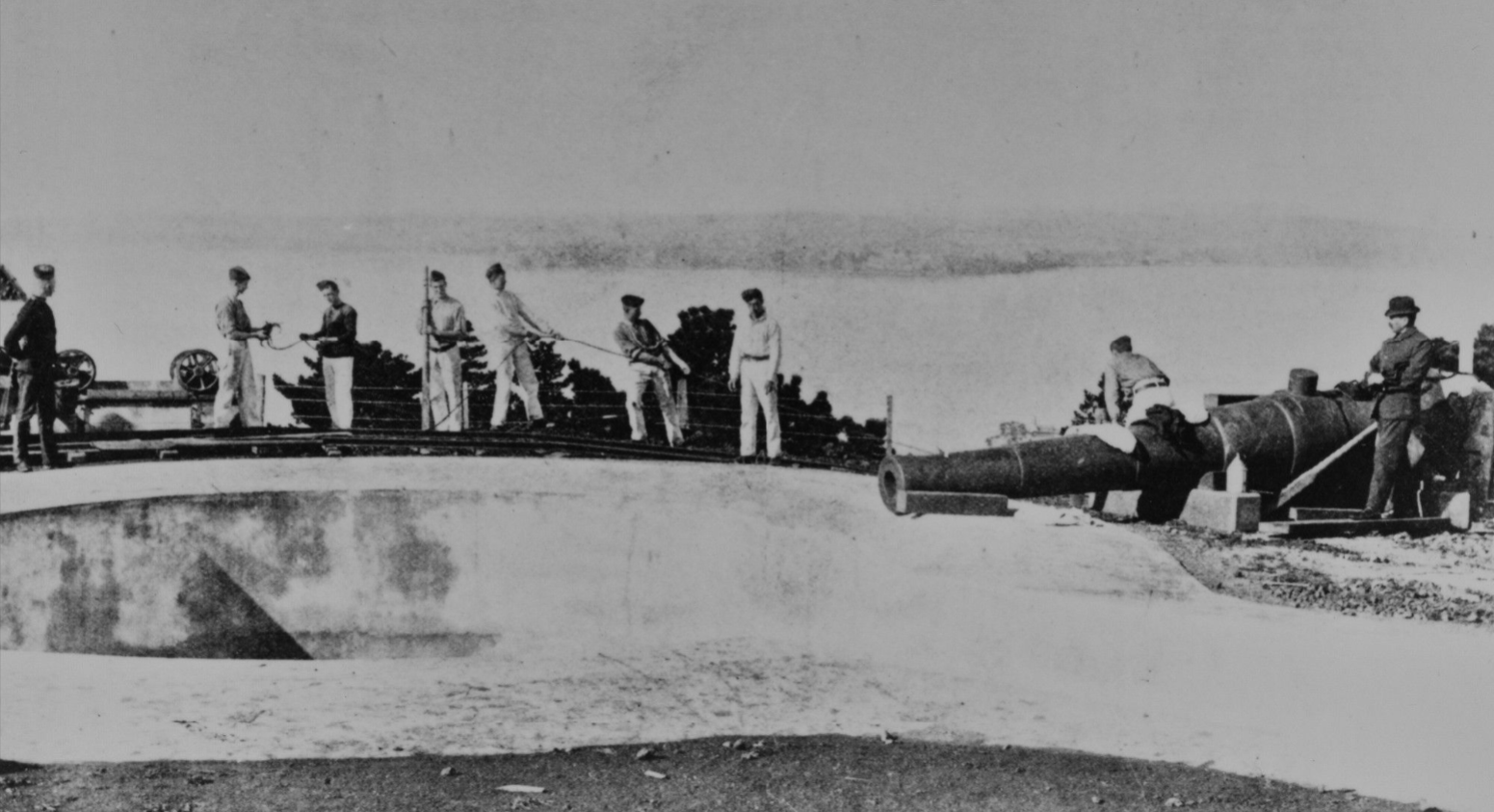
Hauling a 13-ton disappearing gun into position on Mount Victoria, Devonport, 1899. Installing coastal artillery required substantial lifting equipment, careful handling and coordinated labour: Auckland Libraries Heritage Collections T2306. Photographer unknown. Catalogue records no known copyright restrictions.

Today’s Royal New Zealand Army Logistic Regiment (RNZALR) Maintenance Support tradespeople carry forward the military engineering work associated with RNZEME. When the RNZALR was formed in 1996, it brought together RNZEME, RNZAOC and RNZCT within an integrated logistic organisation.[1] Its workshop trades include Armourers, Automotive Technicians, Electrical Fitters, Electronics Technicians and Maintenance Fitters.[2] Their equipment has changed considerably, but their purpose remains recognisable: keeping the Army’s equipment serviceable and returning it to use when it fails.

For these tradespeople, the nineteenth-century maintenance story remains practically relevant. It records successive generations learning new technologies, maintaining different equipment types, training their replacements and making the case for adequate workshops and technical staffing. These recurring demands provide a contemporary perspective on the service’s foundations before 1917.

The Challenge of Early History

Peter Cape’s Craftsmen in Uniform and Peter Cooke’s Warrior Craftsmen cover the history of the Royal New Zealand Electrical and Mechanical Engineers and its immediate Ordnance predecessors from 1917 onwards. The earlier foundations are harder to trace. They lie among civilian armourers, Defence Stores employees, military artificers and the specialists who maintained the machinery of New Zealand’s coastal defences. Their work crossed administrative boundaries and appeared in records created for purposes other than preserving a corps history.

Cape recognised the problem. Writing in 1976, he described a “curious grey period” in the nineteenth century and reproduced an Archives response explaining that no separate record of armourers and artificers had been identified. Cooke subsequently challenged the familiar account that began with three Wellington artificers in 1892, pointing to a larger technical workforce already serving in the Permanent Militia during the 1880s.[3]

Surviving expenditure records, official reports, and histories of individual armourers help define this earlier service. Read together, they suggest that the foundations of RNZEME developed through the gradual accumulation of skilled personnel, workshops, inspection duties and training arrangements. This was also part of the ancestry of RNZAOC: the provision, custody and maintenance of military equipment developed in close association long before separate corps assumed responsibility for supply and engineering.

British Military Precedents

British forces brought established military trades to New Zealand. Armourers, wheelwrights and blacksmiths supported regiments and batteries, while workshops employed both soldiers and civilians. Cooke describes workshop facilities at Albert Barracks in Auckland and Mount Cook in Wellington during the late 1840s, together with mobile forges used on campaign. These provided an early setting for the military employment of technical skills.[4]

Experience also passed into colonial service through individuals. Cape identifies Patrick Gorman, a former soldier of the 58th Regiment who took his discharge in New Zealand and became an arms cleaner with the Auckland Militia. Such appointments linked the practical maintenance of weapons to the emerging colonial organisation responsible for holding and issuing them.[5]

The Civilian Foundation

The civilian armourers deserve particular attention. Wellington’s maintenance service included Edwin Henry Bradford, Edward Metcalf Smith, and Walter Christie, while David Evitt and, later, George Evitt served in Auckland. They gained experience through several routes: British military service, arms manufacture, commercial gunsmithing, and training in government workshops. Christie’s progression from arms cleaner to assistant armourer is a useful example of practical training within the service. Civilian gunsmiths also repaired government weapons in the districts and supported Volunteer units.[6]

Plan of the Auckland Defence Stores armourers’ shop, 1883—a purpose-built workplace supporting the inspection and repair of military small arms.

These men worked through a period of substantial change in firearms. Muzzle-loading weapons gave way to breech-loaders, followed by magazine rifles and machine guns. New mechanisms increased the demands on inspection, fitting and repair, while older weapons remained in circulation. The service therefore required both familiarity with successive equipment types and continuity of experience within its workshops.

Early Formal Organisation (1880–81)

By 1880–81, the estimates clearly recognised maintenance as a continuing government function. Under Stores and Magazines, Auckland had provision for an armourer and three arms cleaners. Wellington had an armourer, an assistant and three arms cleaners. These appointments sat alongside storekeepers, clerks and magazine staff.[7] The organisation responsible for weapon custody also provided the people who kept them serviceable.

Coastal Defences Expansion (1880s)

The expansion of coastal defences during the Russian scares of the 1880s greatly widened this technical requirement. The batteries formed part of a harbour-defence scheme in which guns, submarine mines, torpedo boats and, increasingly, electric searchlights had complementary roles. At Wellington, Fort Ballance was intended to cover the harbour approaches and a proposed wartime minefield between Point Gordon and Ward Island; searchlights would illuminate the channel and minefield.[8] These schemes developed over years. Their intended arrangement should not be mistaken for a complete, continuously operational system at every port in 1885.

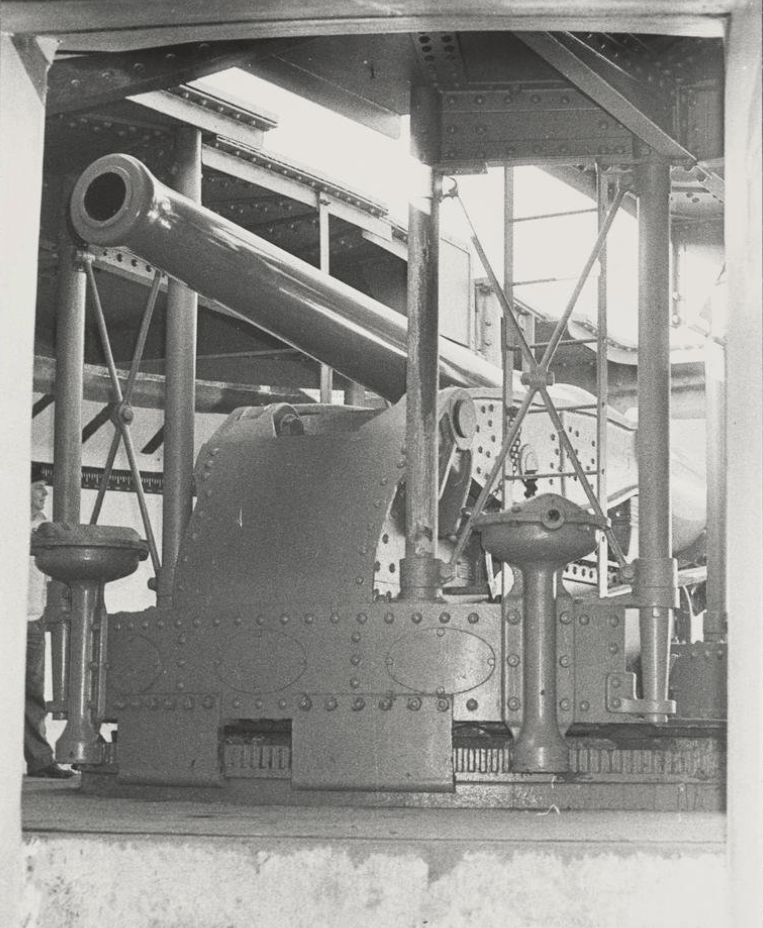
The guns themselves brought substantial machinery into military service. Rifled muzzle-loaders remained alongside the newer breech-loading weapons. Taiaroa Head’s armament over 1885–1905 included 64-pounder and 7-inch muzzle-loaders, a 6-inch disappearing gun, and smaller quick-firing guns.[9] North Head’s 8-inch disappearing guns illustrate the additional complexity of the new mountings: recoil drove the gun down behind cover, compressing air through a system using water and a pressure vessel; the stored energy then raised it again.[10] The engineering requirement extended from the barrel and breech to the carriage, moving joints and pressure machinery.
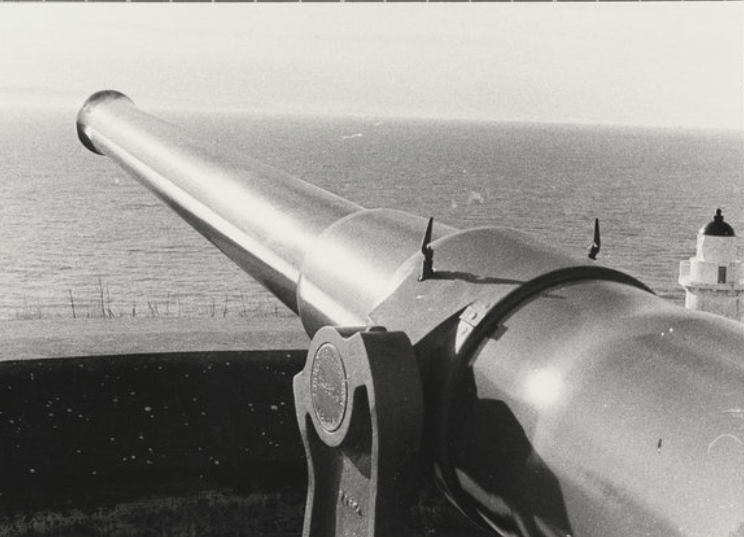
Taiaroa Head’s six-inch Armstrong gun in its raised position. Its hydro-pneumatic mounting illustrates the increasingly complex machinery supporting coastal defence. Hocken Collections P2014-014/6-017-002
Taiaroa Head’s six-inch Armstrong gun in its lowered position. Its hydro-pneumatic mounting illustrates the increasingly complex machinery supporting coastal defence. Hocken Collections P2014-014/6-017-003.

Another branch of this machinery went afloat. Four Thornycroft spar torpedo boats arrived in 1884 and became associated with the names Waitemata at Auckland, Poneke at Wellington, Defender at Lyttelton and Taiaroa at Port Chalmers. At Magazine Bay, Lyttelton, a purpose-built boatshed and slipway supported Defender from 1885.[11] Cape describes the boats’ compound condensing engines, supplied with steam from locomotive-type boilers, and their single-screw propulsion. Their weapon was an explosive charge carried on a projecting spar.[12] Maintaining this equipment required marine engineering and metalworking skills, as well as knowledge of the weapon itself.
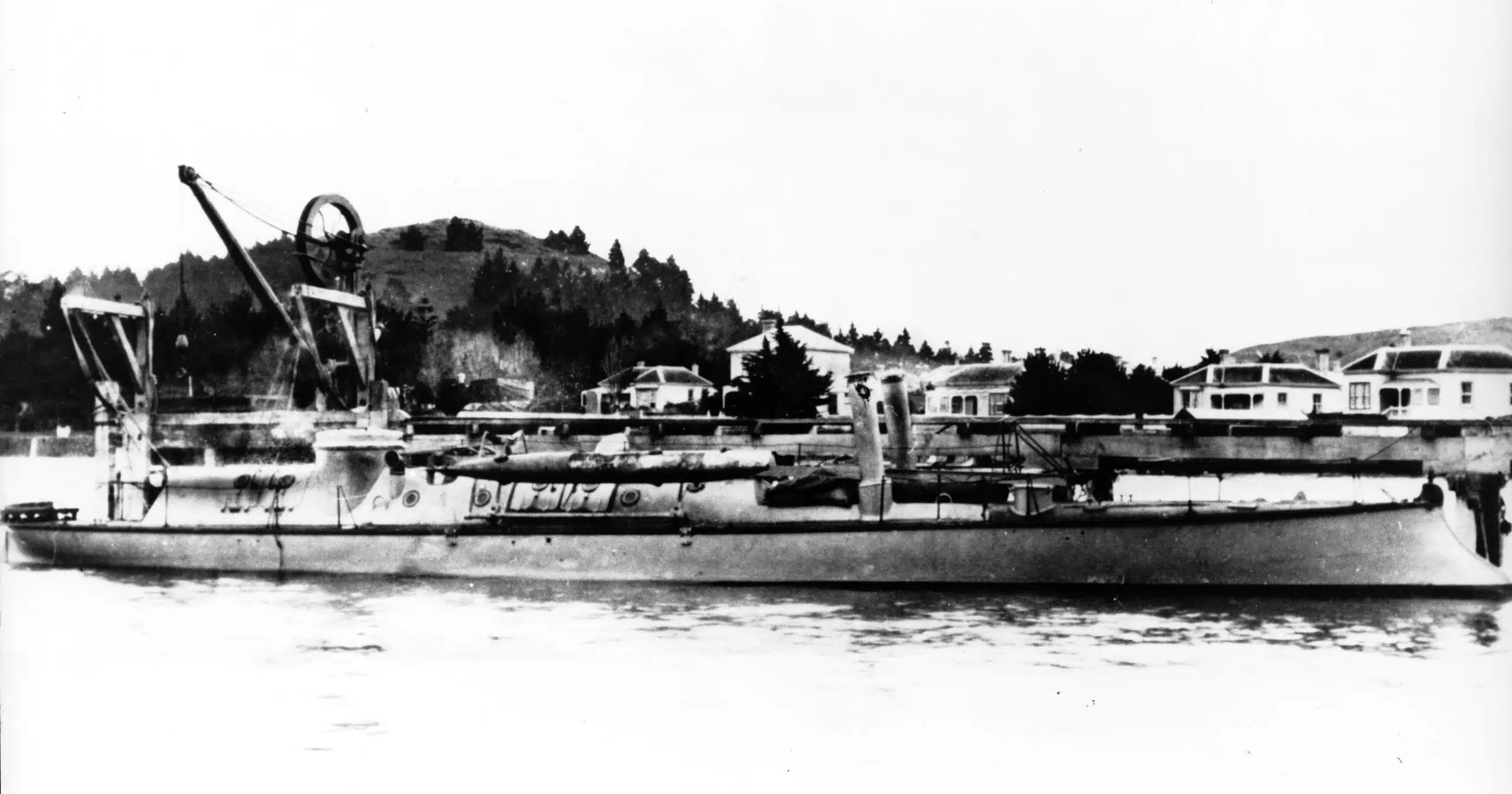
A spar torpedo boat alongside the wharf at Torpedo Bay, Devonport. Steam-powered craft added marine machinery to the equipment supporting New Zealand’s harbour defences.”
National Museum of the Royal New Zealand Navy, AAA 0007.

Submarine mining added electrical work to the harbour-defence service. Here, submarine meant underwater mines, rather than underwater vessels. Shore-controlled minefields depended on cables, electrical testing and firing apparatus, batteries and observation arrangements. At Torpedo Bay, the developing depot included workshops, fitting rooms and a forge, followed by a connecting-up shed in 1897 and a new test room in 1898. Its test and firing equipment included shutter indicators, while telephones and voice pipes supported communication.[13] The mine was only one part of an installation whose readiness depended on machinery and electrical connections ashore and afloat.
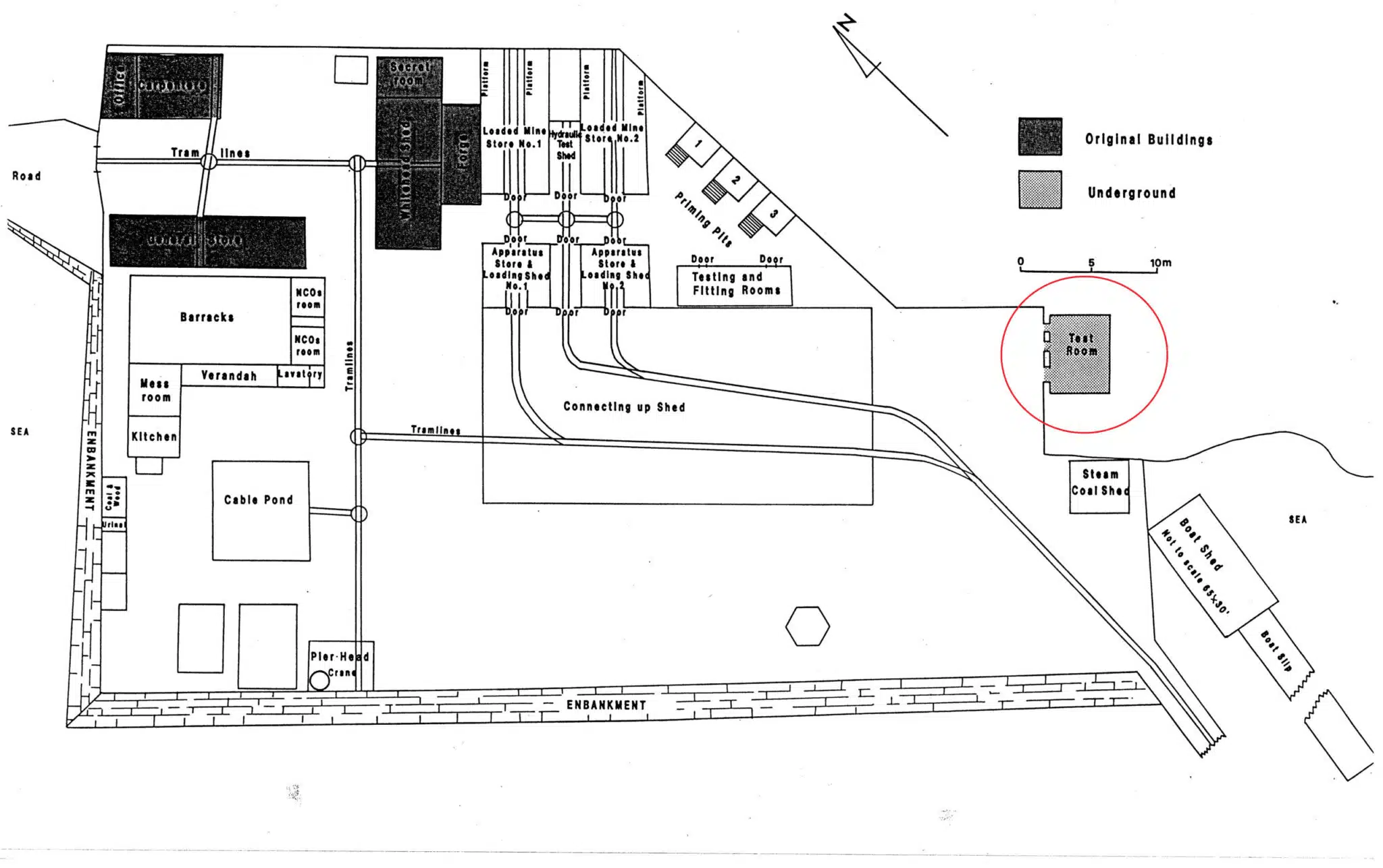
Torpedo Bay mining establishment, 1899. The site plan shows the specialised facilities supporting the preparation, handling and testing of harbour-defence equipment.”
National Museum of the Royal New Zealand Navy

The site’s technical role continued long after submarine mining ceased. The former Torpedo Yard subsequently housed the Devonport Ordnance Workshop from 1925 to 1941, followed by No. 12 Ordnance Workshop from 1941 to 1946. This continued use provides a tangible connection between the nineteenth-century harbour-defence establishment and the Army’s twentieth-century maintenance and repair organisation.

Equipment Range and Maintenance Demands

The following examples show the breadth of equipment encountered before 1917. The equipment and installations are documented; the maintenance demands in the final column are inferred from their construction and function, except where contemporary reports expressly describe the work. They are not a complete allocation of duties to particular trades or units.

EquipmentDocumented New Zealand examplesMaintenance demands
Small arms and machine gunsMartini-Henry and .303 rifles in the 1899 report; Maxim inspection and repair training in 1914.[14]Inspection and repair of actions, firing and feed mechanisms, barrels and fittings; keeping armourers familiar with successive patterns.
Coastal guns and mountingsRifled muzzle-loaders, 6-inch and 8-inch disappearing guns, and smaller quick-firing weapons.[15]Fitting and metalwork on gun mechanisms and carriages; attention to bearings, traversing gear, recoil and pressure components.
Rangefinders and pressure gaugesTaiaroa Head’s 1886 depression rangefinder; Fox’s explicit account of instrument repairs by fitter artificers.[16]Care of optical and mechanical parts; accurate adjustment and repair of instruments used for ranging and machinery checks.
Steam engines, dynamos and searchlightsFort Takapuna’s engine room and searchlight, added in 1899, with a steam engine driving a dynamo.[17]Engine and boiler upkeep; lubrication and mechanical adjustment; attention to generators, wiring, connections and lamps.
Controlled submarine minesTorpedo Bay’s batteries, cables, test and firing apparatus and connecting-up facilities.[18]Testing electrical continuity and insulation; maintaining connections, indicators and associated apparatus.
Spar torpedo boatsThornycroft boats with compound engines, locomotive-type boilers, propellers and spar equipment.[19]Upkeep of steam plant, propulsion and steering; repair of hull fittings and weapon-handling mechanisms.
Ammunition handling machineryMagazine rails and trolleys at Fort Takapuna; powered ammunition hoists associated with North Head’s 6-inch Mk VII battery, operational by 1911.[20]Keeping running gear and lifting machinery serviceable; mechanical repairs and attention to corrosion and wear.
CommunicationsFort Ballance’s ten-line telephone exchange, installed in 1899; telephone and voice-pipe arrangements at the mining base.[21]Maintaining instruments, lines, connections and fittings through which observers and operators communicated.

Technical Expertise and Organisational Development (1886–1912)

This range helps explain the employment of fitters, engineers, electricians, carpenters and other artisans within the permanent forces. A serviceable gun barrel alone could not make a battery effective if its mounting, ammunition supply or supporting equipment failed. The later engineering corps’ association with electrical and mechanical work therefore had substantial precedents in the harbour-defence service, even though the men concerned served under different organisations.

Cape’s account of the 1886 organisation places Artillery, Engineers and the Torpedo Corps within the developing permanent forces. The Defence Act transferred the relevant elements of the Armed Constabulary into the Permanent Militia. In his 1887 report, Colonel Sir George Whitmore described the Engineer Corps as skilled military artificers and artisans employed on defence works.[22]

The estimates make the range of appointments particularly clear:

Financial yearOrganisationTechnical appointments provided for
1880–81Stores and Magazines, AucklandOne armourer and three arms cleaners
1880–81Stores and Magazines, WellingtonOne armourer, one armourer’s assistant and three arms cleaners
1886–87Engineer CorpsSeventeen artificers, one sergeant-major/foreman and two sergeants
1886–87Torpedo CorpsFour engineers, five artificers, an electrician and lecturer, and a Whitehead and submarine instructor
1891–92Garrison ArtilleryTwelve artificers at seven shillings a day
1898–99No. 1 Service CompanyTwelve artificers at eight shillings a day

These were funded appointments, rather than a return proving that every position was occupied throughout each year. They should also be read as separate establishments, not combined into a single corps total. Their importance lies in the continuing recognition of specialist technical employment within both civilian and military organisations.[23]

Technical oversight developed alongside these establishments. Cape records the appointment of Lieutenant A. P. Douglas, RN, in August 1887 to inspect guns, ammunition, equipment and associated stores in the forts. Lieutenant J. Falconer became Inspector of Submarine Mining Stores and Establishments the following month.[24] Inspection responsibilities were becoming more clearly defined alongside operating and repairing the equipment.

Reorganisation altered where the tradesmen served. Cape records that, when the Engineer and Rifle branches were abolished in 1888, qualified personnel could transfer into the remaining branches. Four artificers;T. E. Bryce, W. E. Moore, J. Trainor and H. D. James, transferred from the Engineers to the Garrison Artillery.[25] Their movement is a useful example of continuity through administrative change: the disappearance of a branch did not mean that its skills disappeared from military service.

Beyond the 1892 Myth

This wider picture changes how we should understand the often-repeated 1892 starting point. The short corps histories identify two fitter artificers and one wheeler artificer at Wellington in that year. That local group cannot represent the beginning or the full extent of New Zealand’s military maintenance service. Civilian armourers were already established, other technical trades were funded during the 1880s, and the artillery estimates provided for twelve artificers across the opening years of the 1890s.[26]

Contemporary reports also describe their actual work. The 1892 report on the New Zealand forces credited battery artificers with overhauling guns and mountings, making repairs and improving fittings. Their efforts saved expense and improved efficiency. It also highlighted the limited advancement available to men with substantial technical responsibilities.[27]

Colonel F. J. Fox’s report, presented in 1893, distinguished fitter artificers from wheeler artificers. Fitters required knowledge of fitting, turning and blacksmithing, and repaired instruments such as rangefinders and pressure gauges. He valued their work highly and recommended graded promotion and pay. He also considered ordinary drill and parades an unnecessary demand on men already occupied by specialist duties.[28]

Fox separately proposed teaching artillery artificers selected gunsmithing tasks and using them for annual district inspections of small arms, with necessary repairs charged to the corps holding the damaged weapons. This remained a proposal. It nevertheless shows how training, inspection, repair and accountability were being considered together.[29]

The civilian service continued alongside these military arrangements. Wellington’s armourer and assistant recur through the decade’s expenditure summaries. The 1898–99 provision included salaries of £201 and £156 respectively, together with two arms cleaners at £120 each.[30] These posts help explain why the history cannot be reconstructed from artillery establishments alone.

Not every technical-looking description should be read as a distinct trade. The 1891–92 Torpedo Branch estimates included fourteen men in the combined category of first-class torpedomen and artificers. That is not evidence of fourteen artificers. It records an establishment in which operating duties and technical employment overlapped.[31]

The supporting facilities continued to expand during the 1890s. The 1898 Public Works Statement recorded two concrete cable tanks at Auckland, together with work on the mining depot’s stores, tramway and test room. At Shelly Bay, Wellington, a torpedo-boat shed had been built and its slipway was almost complete; electric-light emplacements were also under construction.[32] Cable storage, workshops, rails, sheds and slipways all enlarged the physical establishment requiring upkeep. They also show that the technical consequences of the 1880s defence programme extended well into the following decade.

By 1899, this small service faced an expanding burden. Colonel A. P. Penton reported that armaments, electric searchlights and installations had increased without a corresponding increase in staff. His report also described the uneven replacement of infantry weapons: North Island forces had received .303 rifles, while the South Island still awaited replacement of its Martini-Henry arms.[33] Equipment development was increasing the demands on the men responsible for maintenance, even where their numbers changed little.

The maritime equipment also changed. The submarine-mining steamers Janie Seddon and Lady Roberts arrived at Wellington in January 1902.[34] These vessels belong to the next stage of development, rather than to the original acquisition of spar torpedo boats in 1884. They extended the story of steam-powered craft serving the harbour defences, with the continuing need to maintain their machinery and hulls.

The opening years of the twentieth century brought further specialisation. Cape records Armourer Sergeants J. Hunter and B. Buckley at Wellington and Lyttelton respectively in 1902, and the arrival of Armourer Staff Sergeant W. E. Luckman at Wellington in August 1903. These appointments strengthened the armourer service’s technical leadership. Workshop accommodation also improved: a Wellington artificers’ workshop was authorised in 1903 and completed in 1905, and an armourers’ workshop was erected at Christchurch in 1907.[35]

The artillery trades were broader than the general term artificer might suggest. Cape records a 1905 establishment of sixteen, comprising nine armament artificers, five carpenters and two painters. By 1913, the authorised total remained sixteen, but actual strength was thirteen.[36] Supporting the weapons and installations required several trades, and the number authorised still exceeded the number available.

Electrical work also passed through successive organisational arrangements. Cape traces the former submarine-mining organisation through No. 2 Service Company into the Royal New Zealand Engineers in 1902. In 1907 it became the Electric Light section of the Royal New Zealand Artillery.[37] This places electrical expertise within the pre-war maintenance story, alongside the more familiar work on guns and small arms. It also illustrates why later corps boundaries cannot simply be projected backwards onto the nineteenth-century service.

Formalising the Armourer Service (1912–1913)

A particularly significant development occurred on 1 May 1912. General Order 118 placed armourers, apart from regimental armourers, in the New Zealand Ordnance Corps. It provided a defined trade organisation and progression for the armourer service. The distinction in title and scope matters: this NZOC preceded the broader New Zealand Army Ordnance Department, and the New Zealand Army Ordnance Corps was constituted in 1917.[38]

The 1913 annual report shows this professional structure taking shape in practice. It listed a senior armourer, an armourer quartermaster-sergeant, five armourer sergeants, an assistant and four apprentices. Five assistants had qualified for appointment as sergeants, while four apprentices began a five-year course, initially on probation. The senior armourer remained at Wellington for technical work and training; district armourers undertook inspection and repair throughout the year.[39]

The following year’s report recorded further technical instruction. Senior district armourers attended a machine-gun course in Wellington under the Chief Armourer and passed examinations in inspecting and repairing Maxim guns. They could then train their assistants. Armourer cadets were also attached to districts to gain field experience.[40] This was a developing system of trade education, examination and supervised practical work before the First World War.

The scope of the RNZA artificers’ work was equally tangible. The 1913 report recorded that they moved and re-erected a former Defence Stores building at Dorset Point to accommodate Garrison Artillery Territorials. The exposed location made the shelter particularly useful during camp.[41] Work of this kind helps explain the presence of carpenters and other trades alongside armament specialists.

These developments did not create one unified maintenance organisation. Armourers, artillery artificers, electrical specialists and regimental tradesmen still worked within different structures. Civilian and military responsibilities also remained interdependent. The efforts to establish a wider Ordnance service therefore concerned how existing work and personnel should be organised, as well as how the service should expand.

Cape traces recommendations for an Ordnance Corps through Babington’s reports in 1904–05 and Kitchener’s visit in 1910. Temporary ordnance depots and training for selected personnel at the 1913 camps were further steps towards a more systematic organisation.[42] The practical experience accumulated in stores, workshops and camp administration supplied a foundation for the demands of wartime mobilisation.

The separate RNZA Army Ordnance Corps Section established in April 1915 illustrates the variety of work gathered under the term ordnance. Its initial establishment of one non-commissioned officer and six gunners at Mahanga Bay was principally concerned with making up artillery ammunition.[43] It formed part of the wider development of Ordnance, but should not be treated as the origin of all repair and maintenance activity: the armourers and artificers discussed here had already been working for decades.

The 1917 Formalisation

The 1917 regulations provided the formal endpoint to this account’s early organisational history. Published in the New Zealand Gazette on 7 June and effective from 1 February, they constituted the NZAOD and NZAOC as permanent military organisations. The Corps establishment separately recognised clerical and stores personnel, armourers and armament artificers.[44] These categories reflected responsibilities with substantial pre-war foundations.

Workshop development continued alongside that reorganisation. The 1917 report recorded an ordnance workshop at Trentham standardising musketry equipment and the Mount Cook armament workshop being used for ordnance work.[45] Established skills and facilities were being adapted to the scale and requirements of the wartime Army.

Legacy: From 1917 to Today

Viewed from 1917, the earlier history is therefore one of accumulated capability. Civilian armourers sustained small arms; military artificers maintained guns, machinery and installations; inspectors checked equipment; and experienced tradesmen trained their successors. The permanent coastal-defence forces of the 1880s were a major stage in that development, while the Defence Stores armourers reveal an older foundation. Together, these overlapping services supplied the people, practices and technical experience inherited by Ordnance and, in time, RNZEME.

Modern Maintenance Support: Continuity and Evolution

That inheritance continues within RNZALR Maintenance Support. The connection is evident in the relationship between established engineering skills and new methods. Today’s Maintenance Fitters use machining, welding and hydraulic fault-finding alongside computer-aided design and 3D printing. Their training covers equipment such as field kitchens, water pumps and fuel dispensing systems.[46] Electronics Technicians maintain communications and night-vision equipment and use automatic test equipment to diagnose faults.[47] The technological range has expanded, but the need to understand equipment, identify faults, and restore serviceability remains central.
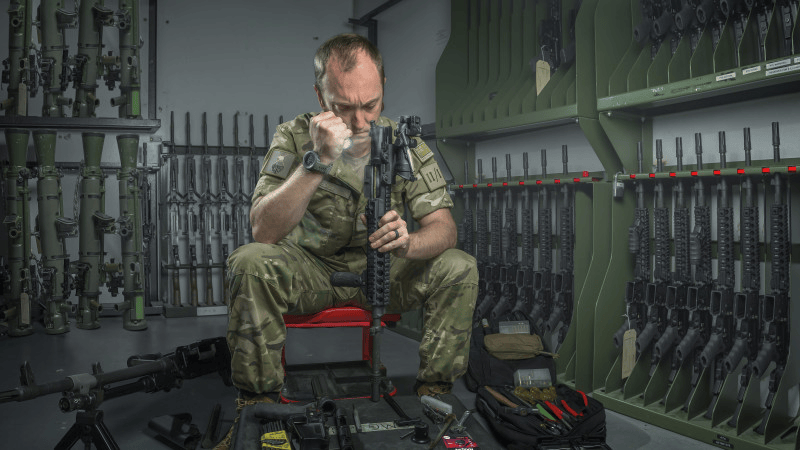
Corporal Ash Peden inspecting a rifle at Burnham Military Camp, 2023. Skilled inspection remains central to keeping military weapons serviceable.”
New Zealand Defence Force. Image filename: 20230403_P1024180_NZDF_002.

New equipment also creates an ongoing obligation to train the people who maintain it. After the Bushmaster fleet was delivered in 2023, instructor training covered both operation and maintenance; work integrating enhanced communications equipment has added another technical dimension.[48] The parallel with disappearing guns and electrical harbour defences is the need to develop technical knowledge as equipment enters service. Today’s tools and systems demand their own qualifications and experience.

Developing that experience still takes significant time. The modern Maintenance Fitter apprenticeship takes approximately four years and combines practical work with theoretical study.[49] Electronics Technician development similarly combines formal courses with unit experience and can lead to supervisory and instructional appointments.[50] The early armourer apprenticeships and specialist courses described above therefore have a recognisable contemporary counterpart. Maintaining a technical workforce requires a continuing supply of learners, experienced supervisors and instructors, and people available for immediate repair tasks.

Workshop provision has also continued to evolve. Farrier Lines, opened at Linton in December 2023, includes vehicle lifts, rolling roads, a gantry crane and a range for testing repaired small arms.[51] Burnham’s Te Toki / The Forge followed in November 2025, replacing maintenance accommodation dating from the 1940s.[52] These developments give a modern expression to the problem faced by the earlier service: workshop facilities must suit the equipment, working methods and volume of work expected of their occupants.
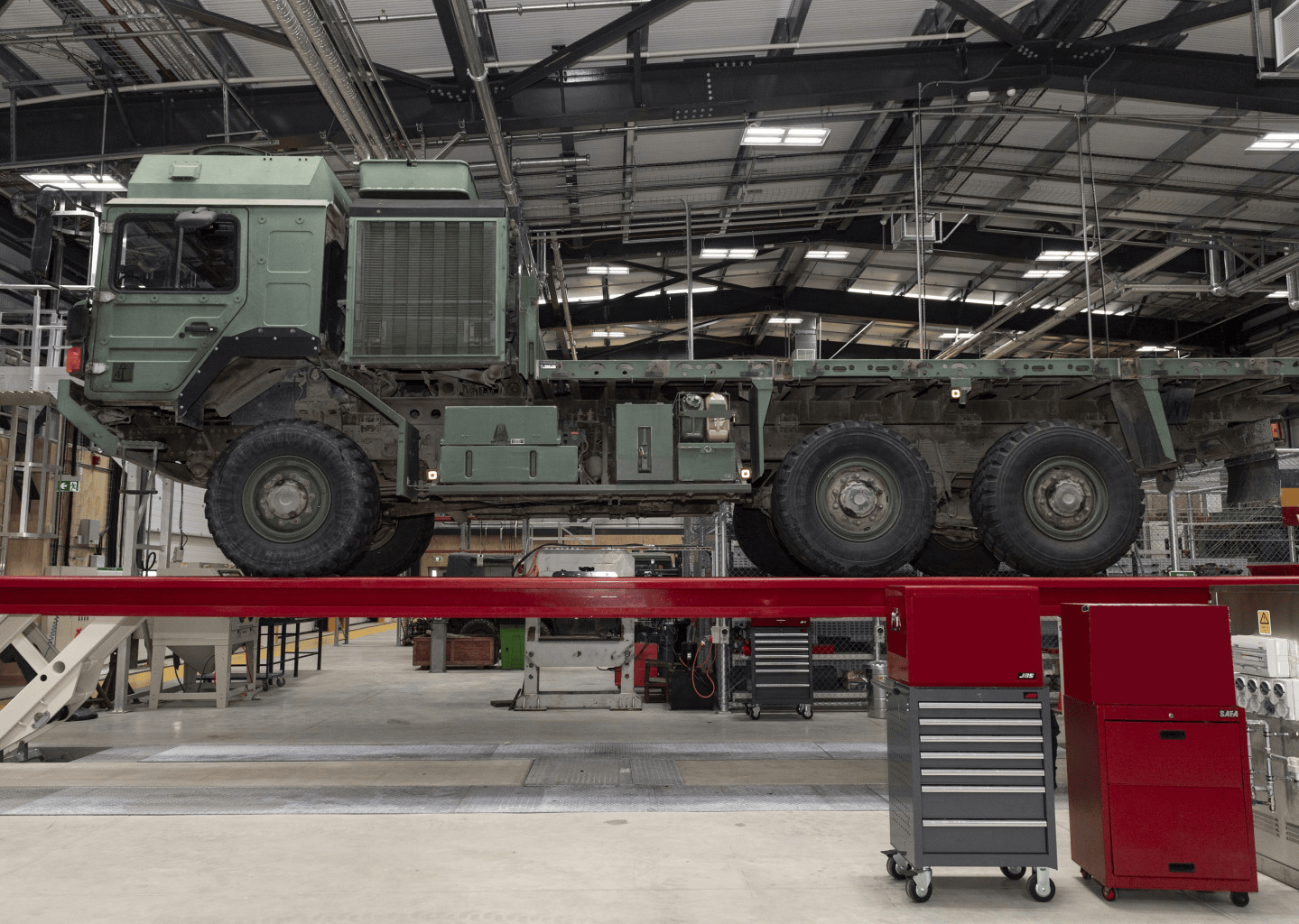
Inside Farrier Lines, Linton’s Maintenance Support Facility, opened in December 2023. Modern workshops continue the longstanding requirement for facilities matched to increasingly sophisticated equipment.”
New Zealand Defence Force.

The relationship between trade proficiency and soldiering also remains important. Fox’s concern about the demands of ordinary drill on busy artificers reflected the circumstances of the 1890s. Today’s Maintenance Support personnel must apply their skills in the field as well as in equipped workshops. The 2024 Farriers Trophy explicitly tested expedient repairs under operational pressure in austere conditions, alongside all-arms, technical and recovery skills.[53] Protecting time for trade development and maintaining military readiness are both necessary parts of preparing a deployable maintenance service.

Read as a comparison of responsibilities, the recurring challenges are clear:

Recurring challengeEvidence before 1917Contemporary relevance
Keeping pace with technologyDisappearing mountings, electrical mine systems and searchlights broadened the work beyond small-arms repair.Electronic diagnosis and computer-aided manufacture add to established mechanical and electrical skills.[54]
Developing technical experienceApprenticeships, district inspections and specialist instruction trained armourers for increasingly demanding work.Formal qualifications require practical experience and supervision before they produce an experienced tradesperson.[55]
Providing suitable workshopsDedicated workshops and depot facilities developed as maintenance responsibilities expanded.The Linton and Burnham facilities demonstrate the continuing need to renew maintenance infrastructure.[56]
Applying skills under military conditionsArtificers combined technical employment with responsibilities within the permanent forces.Maintenance Support training includes field repairs, recovery and soldiering under pressure.[57]
Matching support to the equipment heldPenton reported growing equipment responsibilities without a corresponding staff increase in 1899.[58]His warning remains a useful question for capability planning: do trained personnel, tools, spares, facilities and training capacity keep pace with equipment demands?

The enduring lesson is that technical support must develop with the force it sustains. Acquiring equipment creates a continuing requirement for maintenance knowledge, facilities and practical experience throughout its service life.

For today’s RNZALR Maintenance Support tradespeople, this earlier history extends their professional inheritance beyond RNZEME’s own formation. The armourer inspecting a rifle, the artificer repairing a gun mounting and the electrical specialist testing a harbour-defence installation were addressing versions of a familiar problem: how to keep military equipment dependable when it was needed. Their successors work with different tools and far more complex systems, but the Army’s reliance on skilled people to turn equipment into usable capability endures.

Notes

[1] New Zealand Defence Force, “Chef and Steward Trades—112 Years of Loyal and Dedicated Service,” 19 August 2022, https:/​/​www.nzdf.mil.nz/​media-​centre/​news/​chef-​and-​steward-​trades-​112-​years-​of-​loyal-​and-​dedicated-​service/​, for the 1996 formation of RNZALR from the three corps. The contemporary framing does not attempt to retell the intervening history covered by Cape and Cooke.

[2] New Zealand Defence Force, “NZ Army, US and Australian Logisticians Test Their Combat Support Skills,” 2026, https:/​/​www.nzdf.mil.nz/​media-​centre/​news/​nz-​army-​us-​and-​australian-​logisticians-​test-​their-​combat-​support-​skills/​, identifying the five workshop trades participating in the Farriers Cup.

[3] Peter Cape, Craftsmen in Uniform: The Corps of Royal New Zealand Electrical and Mechanical Engineers, an Account (Wellington: Corps of Royal New Zealand Electrical and Mechanical Engineers, 1976), 3–4; Peter Cooke, Warrior Craftsmen: Royal New Zealand Electrical & Mechanical Engineers, 1942–1996 (Wellington: Defence of New Zealand Study Group, 2017), 6–7. The supplied extracts cover Cape, pp. 1–15, and Cooke, pp. 6–9.

[4] Cooke, Warrior Craftsmen, 6–7.

[5] Cape, Craftsmen in Uniform, 3–4. Gorman is treated here as an early named example, without assigning an unsupported appointment date.

[6] Robert McKie, “New Zealand Military Armourers, 1840–1900,” To the Warriors Their Arms, 3 June 2025, https:/​/​rnzaoc.com/​2025/​06/​03/​new-​zealand-​military-​armourers-​1840-​1900/​. [7] Mil Expenditure 1881(4).docx, supplied research summary for the financial year ending 31 March 1881, sec. 8, “Stores and Magazines by depot and port.”

[8] Heritage New Zealand Pouhere Taonga, “Fort Ballance,” List no. 5074, https:/​/​www.heritage.org.nz/​list-​details/​5074/​Listing. Used for the intended minefield, searchlight coverage and the 1899 telephone exchange; the proposed wartime minefield is not treated as continuously laid in peacetime.

[9] Royal Albatross Centre, “Fort Taiaroa Tours,” https:/​/​albatross.org.nz/​fort-​taiaroa-​tours/​. The site’s custodians identify the gun types used during 1885–1905 and the surviving 1886 depression rangefinder.

[10] Department of Conservation, North Head: Self-guided Walk, https:/​/​www.doc.govt.nz/​documents/​conservation/​historic/​by-​region/​north-​head-​self-​guided-​walk.pdf, description of the 8-inch disappearing gun and its pressure mechanism. Engineering New Zealand, “Armstrong Disappearing Gun,” https:/​/​www.engineeringnz.org/​programmes/​heritage/​engineering-​heritage-​records/​defence/​armstrong-​disappearing-​gun/​, also explains the recoil and return principle of the Taiaroa mounting.

[11] Te Ūaka The Lyttelton Museum, “The Defender of Whakaraupō, Torpedo Boat No. 168,” https:/​/​www.teuaka.org.nz/​stories/​whakatere-​moana-​maritime/​royal-​navy/​the-​defender-​of-​whakaraupo-​torpedo-​boat-​no-​168; Cape, Craftsmen in Uniform, 6–7. Accounts differ over Nordenfelt armament: Te Ūaka describes a gun aboard Defender, whereas the National Museum of the Royal New Zealand Navy, “Spar Torpedo Boats,” https:/​/​navymuseum.co.nz/​explore/​by-​collections/​ships/​spar-​torpedo-​boats/​, states that the New Zealand boats were not fitted with it. Cape describes provision for mounting one.

[12] Cape, Craftsmen in Uniform, 6–7.

[13] National Museum of the Royal New Zealand Navy, “Torpedo Bay Mining Base,” https:/​/​navymuseum.co.nz/​explore/​by-​collections/​places/​torpedo-​bay-​mining-​base/​. The account draws on contemporary plans and submarine-mining manuals. Its brick-and-wood test room in an excavated cliff should not be confused with a standard concrete bunker at every installation.

[14] A. P. Penton, report on the Defence Forces of New Zealand, 14 July 1899, AJHR, 1899, H-19, https:/​/​paperspast.natlib.govt.nz/​parliamentary/​AJHR1899-​I.2.3.2.26. Defence Forces of New Zealand: Report of the General Officer Commanding the Forces for the Period from 20th June, 1913, to 25th June, 1914, AJHR, 1914, H-19, para. 53, “Armourers,” https:/​/​paperspast.natlib.govt.nz/​parliamentary/​AJHR1914-​I.2.3.2.29.

[15] Royal Albatross Centre, “Fort Taiaroa Tours.” Department of Conservation, North Head: Self-guided Walk; Engineering New Zealand, “Armstrong Disappearing Gun.”

[16] Royal Albatross Centre, “Fort Taiaroa Tours.” F. J. Fox, Report on the New Zealand Permanent and Volunteer Forces, AJHR, 1893, H-9, 5–6, 44, https:/​/​paperspast.natlib.govt.nz/​parliamentary/​AJHR1893-​I.2.3.2.10.

[17] Department of Conservation, “Fort Takapuna History,” https:/​/​www.doc.govt.nz/​parks-​and-​recreation/​places-​to-​go/​auckland/​places/​fort-​takapuna-​historic-​reserve/​fort-​takapuna-​history/​. The ammunition-tunnel rails belong to the early fort; the later naval ammunition-store tramway and concrete slide are outside this article’s period.

[18] National Museum of the Royal New Zealand Navy, “Torpedo Bay Mining Base.”

[19] Cape, Craftsmen in Uniform, 6–7.

[20] Department of Conservation, “Fort Takapuna History.” D. G. Veart, North Head: The Development of a Fort, Science and Research Internal Report no. 79 (Department of Conservation, August 1990), 26, 29, https:/​/​www.doc.govt.nz/​globalassets/​documents/​science-​and-​technical/​srir79.pdf. The report describes the Mk VII battery’s ammunition hoists and dates its operational readiness to 1911, after arrival of the guns in 1905 and mountings in 1910.

[21] Heritage New Zealand Pouhere Taonga, “Fort Ballance.” National Museum of the Royal New Zealand Navy, “Torpedo Bay Mining Base.”

[22] Cape, Craftsmen in Uniform, 5–7; G. S. Whitmore, report on the New Zealand forces, 25 April 1887, Appendices to the Journals of the House of Representatives (AJHR), 1887, H-12, https:/​/​paperspast.natlib.govt.nz/​parliamentary/​AJHR1887-​I.2.2.6.12.

[23] Supplied research summaries: Mil Expenditure 1881(4).docx, Stores and Magazines; Mil Expenditure 1887(2).docx, Engineer and Torpedo Corps establishments; Mil Expenditure 1892.docx, Garrison Artillery; and Mil Expenditure 1899.docx, No. 1 Service Company, citing Estimates B-7, p. 76. Financial years in the table are shown as spans; filenames use the ending year.

[24] Cape, Craftsmen in Uniform, 6–7.

[25] Cape, Craftsmen in Uniform, 9, citing General Order 7, 31 March 1888. Names are reproduced as Cape prints them; their individual service files have not been examined.

[26] “History of the Corps of Royal New Zealand Electrical and Mechanical Engineers,” undated typescript in Adobe Scan 14 Sept 2026.pdf, PDF p. 8; supplied annual expenditure summaries from Mil Expenditure 1891(1).docx onwards. Cape, Craftsmen in Uniform, 9–10, associates a twelve-man group with an order dated 7 December 1898. The earlier estimates already provide for twelve artillery artificers, so 1898 is not used here as the first appearance of that establishment.

[27] Report on the New Zealand forces, AJHR, 1892, H-12, discussion of artificers, https:/​/​paperspast.natlib.govt.nz/​parliamentary/​AJHR1892-​I.2.3.3.14.

[28] Fox, Report on the New Zealand Permanent and Volunteer Forces, 5–6, 44.

[29] Fox, Report on the New Zealand Permanent and Volunteer Forces, 5–6, 44.

[30] Mil Expenditure 1899.docx, supplied research summary, Stores and Magazines, citing Estimates B-7, p. 78.

[31] Mil Expenditure 1892.docx, supplied research summary, Torpedo Branch establishment.

[32] W. Hall-Jones, Public Works Statement, AJHR, 1898, D-1, 86, defence works at Auckland and Wellington, https:/​/​paperspast.natlib.govt.nz/​parliamentary/​AJHR1898-​I.2.2.2.1. The report distinguishes completed works from those still under construction.

[33] Penton, report on the Defence Forces, AJHR, 1899, H-19.

[34] “The Government Fleet,” Evening Post, 16 January 1902, https:/​/​paperspast.natlib.govt.nz/​newspapers/​EP19020116.2.53, reporting the arrival of the two submarine-mining steamers.

[35] Cape, Craftsmen in Uniform, 10; “History of the Corps,” Adobe Scan 14 Sept 2026.pdf, PDF p. 8, for the 1903 authority and 1905 completion of the Wellington artificers’ workshop. These dates concern that workshop project, not the earliest military workshop facilities at Mount Cook.

[36] Cape, Craftsmen in Uniform, 10, 12.

[37] Cape, Craftsmen in Uniform, 9.

[38] New Zealand Military Forces, General Order 118, “New Zealand Armourers,” 1 May 1912, reproduced in Robert McKie, “Unappreciated Duty: The Forgotten Contribution of New Zealand’s Defence Stores Department in Mobilising the New Zealand Expeditionary Force in 1914” (MA thesis, Massey University, 2022), 70, https:/​/​mro.massey.ac.nz/​bitstream/​10179/​17653/​1/​McKieMAThesis.pdf. The reproduced order, attributed there to John Boyce’s personnel file, has been visually checked. Its title is New Zealand Ordnance Corps (NZOC).

[39] Defence Forces of New Zealand: Report of the General Officer Commanding the Forces for the Period from 28th June, 1912, to 20th June, 1913, AJHR, 1913, H-19, para. 51, “Armourers,” https:/​/​paperspast.natlib.govt.nz/​parliamentary/​AJHR1913-​I.2.5.2.34.

[40] Defence Forces of New Zealand, AJHR, 1914, H-19, para. 53, “Armourers.”

[41] Defence Forces of New Zealand, AJHR, 1913, H-19, 24, para. 68, “Permanent Fortifications and Works.”

[42] Cape, Craftsmen in Uniform, 14–15. The recommendations and camp arrangements are successive developments; they are not treated as evidence that all Ordnance functions were newly created at that time.

[43] “History of the Corps,” Adobe Scan 14 Sept 2026.pdf, PDF p. 8. The section’s ammunition role is distinguished from the existing small-arms and armament-repair services.

[44] “New Zealand Army Ordnance Department and New Zealand Army Ordnance Corps Regulations,” New Zealand Gazette, no. 95, 7 June 1917, 2292–93, https:/​/​gazette.howison.co.nz/​nzg/​1917/​issue/​95/​page/​2292. February 1 is the effective date, rather than the publication date. The reproduced establishment also appears in Adobe Scan 14 Sept 2026.pdf, PDF pp. 8–10.

[45] Cape, Craftsmen in Uniform, 15, reproducing the 1917 report, item 66; corroborated by “Local and General,” Evening Post, 8 August 1917, https:/​/​paperspast.natlib.govt.nz/​newspapers/​EP19170808.2.41. The report records the workshop as established by 1917; no more precise opening date is inferred here.

[46] New Zealand Defence Force, Defence Careers, “Maintenance Fitter,” accessed 14 September 2026, https:/​/​www.defencecareers.mil.nz/​army/​careers/​browse-​roles/​maintenance-​fitter, sections on the role, apprenticeship and trade training.

[47] New Zealand Defence Force, Defence Careers, “Electronics Technician,” accessed 14 September 2026, https:/​/​www.defencecareers.mil.nz/​army/​careers/​browse-​roles/​electronics-​technician, sections on equipment, diagnosis, training and career progression.

[48] New Zealand Ministry of Defence, “Protected Mobility Capability Project,” accessed 14 September 2026, https:/​/​www.defence.govt.nz/​our-​work/​equip/​capability-​projects/​protected-​mobility-​capability-​project/​, section on Protected Vehicle—Medium. The project account distinguishes delivered vehicles and training from communications integration work.

[49] New Zealand Defence Force, Defence Careers, “Maintenance Fitter.”

[50] New Zealand Defence Force, Defence Careers, “Electronics Technician.”

[51] New Zealand Defence Force, “Linton Military Camp Opens State-of-the-art Maintenance Facility to Support NZ Army Equipment,” 6 December 2023, https:/​/​www.nzdf.mil.nz/​army/​army-​news/​linton-​military-​camp-​opens-​state-​of-​the-​art-​maintenance-​facility-​to-​support-​nz-​army-​equipment/​.

[52] New Zealand Defence Force, “Major Milestone for South Island Logistic Resilience,” 27 November 2025, https:/​/​www.nzdf.mil.nz/​media-​centre/​news/​major-​milestone-​for-​south-​island-​logistic-​resilience/​.

[53] New Zealand Defence Force, “Specialist Trade Skills Celebrated at Trade Competition,” 26 April 2024, https:/​/​www.nzdf.mil.nz/​media-​centre/​news/​specialist-​trade-​skills-​celebrated-​at-​trade-​competition/​, Farriers Trophy section.

[54] New Zealand Defence Force, Defence Careers, “Maintenance Fitter.” New Zealand Defence Force, Defence Careers, “Electronics Technician.”

[55] New Zealand Defence Force, Defence Careers, “Maintenance Fitter.” New Zealand Defence Force, Defence Careers, “Electronics Technician.”

[56] New Zealand Defence Force, “Linton Military Camp Opens State-of-the-art Maintenance Facility.” New Zealand Defence Force, “Major Milestone for South Island Logistic Resilience.”

[57] New Zealand Defence Force, “Specialist Trade Skills Celebrated at Trade Competition,” Farriers Trophy section.

[58] Penton, report on the Defence Forces, AJHR, 1899, H-19.


1 March: The RNZASC Corps Day

Regimental and Corps days are more than dates in an Army calendar. They preserve the moments when a corps acquired its identity, acknowledge the people who built it, and give serving and former members an opportunity to recognise a shared professional inheritance.

For the Royal New Zealand Army Service Corps (RNZASC), that inheritance was founded on an elementary military truth: an army cannot operate without food, transport and systematic arrangements for supply. The RNZASC Corps Day, originally set for 1 March, recalled the decisive step taken in 1913 towards turning that truth into an organised New Zealand Army capability.

The long road to a Service Corps

The creation of a New Zealand supply and transport organisation was not sudden. Annual defence reports from the early twentieth century repeatedly warned that the Defence Forces lacked the trained personnel and arrangements needed to sustain troops in the field.

In 1903, it was proposed that each military district should have a small company trained in supply and transport. The intention was not to create a large permanent organisation, but a trained nucleus able to expand in war. The following years showed how difficult that was to achieve. Reports noted that a force could not live without food, nor be fed without arrangements made during peace; that mobility would make supply still more difficult; and that realistic manoeuvres were being constrained by the absence of trained supply and transport resources.¹

By 1905, the case was put even more directly: a supply and transport corps was “an absolute necessity if a Force is to act in the field”. Yet the proposed organisation did not immediately materialise. In 1906, the authorities still reported that no transport or supply corps existed, despite repeated requests to establish one. By 1908 and 1909, plans remained focused on raising small district companies capable of meeting peacetime training requirements and expanding on mobilisation.²

These reports are striking because they describe a problem familiar to later generations of logisticians. Operational ambition, training activity and plans for deployment all depended on a sustainment system that could not be improvised after a crisis began.

1 March 1913

The event chosen to commemorate RNZASC Corps Day occurred on 1 March 1913, when four Army Service Corps non-commissioned officers arrived from Britain to help organise the Army Service Corps within the New Zealand Defence Forces.

AppointmentName
Company Quartermaster SergeantJ. J. Wass
Company Sergeant MajorJ. W. F. Cahill
Staff Quartermaster SergeantP. M. Petty
Staff SergeantF. E. Ostler

The 1912-13 annual report recorded that the four men had been lent from Britain to assist with forming and instructing the necessary companies of the Dominion Army Service Corps. Pending its formal establishment, they were employed on supply and transport duties during annual training camps.³

That year also saw the establishment of brigade supply depots and the commencement of specialist instruction for selected officers and non-commissioned officers. The report judged this a “great step” towards the formation and training of the Corps: the principles of Service Corps control of supplies and transport had at last been put into practice.⁴

The four ASC NCOs returned to Britain at the outbreak of the First World War. By then, however, the Corps had been sufficiently established to carry forward its own work.

Establishing Corps Day

In May 1963, Army Headquarters authorised 1 March to be recognised annually as RNZASC Corps Day. The date was deliberately selected to mark the fiftieth anniversary of the 1913 arrival of the four British ASC NCOs and the practical beginning of the New Zealand Army Service Corps organisation.⁵

This was a thoughtful choice. It did not merely commemorate an administrative order or badge. It recognised the moment when an acknowledged capability gap began to be filled by trained people, doctrine, organisation and practical field experience.

At a time when the RNZASC was serving across New Zealand and Southeast Asia, Corps Day also provided an opportunity to connect contemporary supply, transport, catering, movements and petroleum personnel with the Corps’ formative purpose: ensuring that New Zealand soldiers could move, be fed and remain operational.

From RNZASC to RNZCT and RNZALR

The Corps Day tradition continued through later organisational change, although dates and emphases evolved.

The RNZASC was disbanded in 1979, with its responsibilities divided principally between the Royal New Zealand Corps of Transport (RNZCT) and the Royal New Zealand Army Ordnance Corps (RNZAOC). The RNZCT observed its Corps Day on 12 May, marking the 1910 formation of the New Zealand Army Service Corps and retaining the transport and movement strand of the Service Corps inheritance.⁶

The RNZAOC observed 12 July, the anniversary of the 1947 grant of the Royal prefix to the New Zealand Army Ordnance Corps. Its Corps Day recognised the distinct ordnance tradition of accounting for, storing, maintaining and issuing the Army’s weapons, ammunition, equipment and general stores.⁷

The Royal New Zealand Electrical and Mechanical Engineers (RNZEME) observed its Corps Day on 1 December. The date became associated with the Corps’ proud and distinctive culture of skilled maintenance, recovery, technical tradecraft and repair in support of the field force.⁸

With the formation of the Royal New Zealand Army Logistic Regiment (RNZALR) in 1996, the RNZAOC, RNZCT and RNZEME ceased to exist as separate corps. Their people, trades, units and traditions were brought together with Quartermaster functions into a single logistic regiment. The RNZALR observes Corps Day on 4 April.⁹

CorpsCorps DaySignificance
RNZASC1 MarchArrival of four British ASC NCOs in 1913 to organise the Corps in New Zealand
RNZCT12 MayCommemoration of the 1910 formation of the New Zealand Army Service Corps
RNZAOC12 JulyGrant of Royal status to the NZAOC in 1947
RNZEME1 DecemberRNZEME Corps Day and its maintenance tradition
RNZALR4 AprilThe modern Regiment’s annual day of recognition

A continuing inheritance

The separate corps have gone, but their central purpose has not. The RNZALR inherits the RNZASC understanding that an Army must be supplied and moved; the RNZCT tradition of transport and movement control; the RNZAOC responsibility for materiel, ammunition and supply; and the RNZEME commitment to repair, recovery and technical readiness.

Remembering the RNZASC Corps Day therefore does more than recall an early twentieth-century event. It reminds present-day logisticians that the foundations of sustainment endure: trained people, clear responsibility, practical preparation, and the professional determination to ensure that the force can move, fight, and endure.

Notes

“Corps Day – RNZASC,” Army Headquarters memorandum and historical enclosure, 1963, 1-2.

Ibid., 2.

Ibid., 1, 3.

Ibid., 3.

Ibid., 1, 3.

Robert McKie, “RNZAOC Days of Significance,” To the Warriors Their Arms, 11 July 2022.

Ibid.

“Army Engineers Get Noisy,” Ruapehu Bulletin, 12 December 1995, 10.

“RNZALR Corps Day,” Army News, no. 387 (2007), 22; Robert McKie, “Central Districts, RNZAOC Corps Day 2017,” To the Warriors Their Arms, 16 July 2017.


Saint Eligius’s Day Reflection: Celebrating 150 Years of New Zealand’s Maintenance Tradition

On this 1 December, as we mark Saint Eligius’s Day and salute the enduring legacy of the Royal New Zealand Electrical and Mechanical Engineers (RNZEME), we commemorate more than seven decades of service under that name, and more than 150 years of New Zealand’s ordnance, mechanical and logistical tradition. Saint Eligius, long regarded as the patron of metalworkers and armourers, provides a fitting focus for honouring the craftsmen and technicians whose skill has kept New Zealand’s soldiers equipped and mobile in peace and war..

    From Defence Stores to RNZEME, a long heritage

    The roots of RNZEME extend deep into the nineteenth century, when the fledgling New Zealand forces began assuming responsibility for their own military stores and maintenance. The New Zealand Defence Stores Department, successor to Imperial supply and maintenance arrangements, was established in the 1860s and, by 1869, had depots in Wellington at Mount Cook and in Auckland at Albert Barracks.

    Within that organisation, a small but increasingly professional cadre of armourers and artificers emerged. Between the 1860s and 1900, New Zealand’s military armourers evolved from civilian gunsmiths and part-time repairers into disciplined specialists who maintained an expanding array of weapons, from carbines and pistols to magazine rifles and early machine-guns such as the Gardner and Maxim. Their work underpinned the readiness of the colonial forces and set the technical and professional standard that later generations of ordnance and electrical and mechanical engineers would inherit.

    Among these early figures, Walter Laurie Christie stands out. Serving for forty-five years in the Defence Stores Department and as a soldier during the New Zealand Wars, Christie embodied the blend of military service, technical mastery and administrative reliability that became a hallmark of New Zealand’s ordnance and maintenance tradition.

    From those armourers and artisans came the artificers of the Permanent Militia in the 1880s, from which grew a tradition of maintenance and repair that would carry New Zealand forces through decades of change. By the time of the First World War, this heritage had matured into the New Zealand Army Ordnance Corps (NZAOC), gazetted on 1 February 1917, responsible for arming, equipping and maintaining New Zealand’s forces at home and abroad.

    During the Great War, armourers of the NZAOC and the mechanics of the new Mechanical Transport Sections of the New Zealand Army Service Corps (NZASC) worked tirelessly behind the lines to keep weapons, vehicles and equipment in service, ensuring the steady flow of matériel to the front.

    Between the wars and into the Second World War, the NZAOC and the NZASC remained the heart of New Zealand’s supply and transport capability. Yet the increasing complexity of weapons, instruments, communications equipment and mechanical transport demanded a broader, more specialised technical arm.

    Mechanised mobilisation and the MT Branch

    The Second World War brought that challenge into sharp focus. From September 1939 to March 1944, New Zealand’s military vehicle fleet exploded from just 62 vehicles to 22,190, a transformation that turned a largely foot-bound force into a fully motorised army in a few short years.

    To manage this rapid mechanisation at home, the Mechanical Transport (MT) Branch was created within the Army system to complement the existing Ordnance Workshops. The MT Branch, working closely with the NZAOC, took responsibility for the provision, storage and issue of all classes of vehicles and spare parts, as well as the repair of those vehicles. From 1939 to 1963, MT Stores were developed and managed as a distinct but tightly integrated function, ensuring that everything from staff cars to heavy trucks and specialist vehicles could be procured, held, accounted for and kept on the road.

    In parallel, New Zealand Ordnance Corps Light Aid Detachments (LADs) were established to provide first-line repair to units both overseas and in home defence roles. These small detachments, working alongside Ordnance Workshops and MT Branch organisations, formed the backbone of New Zealand’s repair and maintenance capability during the war.

    The consolidated register of 2NZEF logistics units shows just how extensive this support system became, with New Zealand logistics formations sustaining the force in North Africa, the Middle East, Greece, Crete and Italy. Together, the MT Branch, MT Stores system, Ordnance Workshops and LADs created a sophisticated, layered maintenance and repair network that anticipated the later integration of these functions under NZEME and, ultimately, RNZEME.

    Wartime evolution, the birth of NZEME and RNZEME

    As the Second World War engulfed the globe and New Zealand raised the 2nd New Zealand Expeditionary Force (2NZEF) for overseas service, the need for dedicated mechanical and electrical maintenance became pressing. In the Middle East in 1942, New Zealand Electrical and Mechanical Engineers (NZEME) was formed within 2NZEF to align the organisation with British practice and to bring armourers, instrument repairers, vehicle mechanics and other specialists into a single technical corps.

    At war’s end, in New Zealand, these arrangements were mirrored at home. On 1 September 1946, workshops and many mechanical transport functions were formally separated from the NZAOC and placed under NZEME, under the control of the Director of Mechanical Engineering, though some MT stores remained under ordnance control. In recognition of their wartime service and importance, the Royal prefix was granted in 1947, creating the Royal New Zealand Electrical and Mechanical Engineers, RNZEME.

    The motto adopted by RNZEME, Arte et Marte – “By Skill and Fighting”, or “By Craft and Combat”, captures perfectly the dual calling of its tradespeople as skilled craftsmen and soldiers in uniform.

    RNZEME’s role, Light Aid Detachments, workshops and beyond

    Throughout its existence, RNZEME provided vital support across a broad spectrum of New Zealand Army operations. Its personnel were attached to combat units as Light Aid Detachments, backed by field workshops and, at the national level, by base workshops at Trentham. Between them, they ensured that everything from small arms and radios to trucks, armoured vehicles and heavy plant could be maintained, repaired or rebuilt when needed.

    Whether on operations overseas, on exercises, or in daily training, RNZEME craftsmen stood ready, ensuring that New Zealand’s soldiers remained equipped, mobile and operational.

    The legacy continues, from RNZEME to RNZALR

    In 1996, the New Zealand Army undertook a significant reorganisation of its logistics and support corps. The RNZEME, the Royal New Zealand Army Ordnance Corps and the Royal New Zealand Corps of Transport, along with Quartermaster functions, were amalgamated into the Royal New Zealand Army Logistic Regiment, RNZALR.

    Although RNZEME no longer exists as a separate corps, its traditions of mechanical skill, repair, readiness and technical leadership live on in every RNZALR Maintainer, in every workshop and unit, and through the repair chain that sustains the New Zealand Defence Force today.

    Honour and remember

    On this RNZEME Day, we recall with gratitude every craftsman-soldier, artisan-mechanic, armourer and artificer whose steady hands and often unsung labour have underpinned New Zealand’s military capability, from the Defence Stores armourers of the 1860s, through two world wars, to the modern era of integrated logistics.

    We remember the nineteenth-century armourers who mastered each new generation of weapon, the long-serving servants of the Defence Stores Department, the armourers and artificers of the Permanent Militia, the NZAOC workshop staff, the mechanics of the NZASC, the MT Branch and MT Stores personnel who managed the vast wartime vehicle fleet, the NZOC Light Aid Detachments that kept front-line units moving, and the workshops and LADs of NZEME and RNZEME, which carried that tradition into the late twentieth century.

    Their legacy is not only in the weapons maintained, the vehicles repaired, or the radios restored, but in the very capacity of New Zealand’s soldiers to fight, move and endure. On this day, we salute their craftsmanship, quiet dedication, and ongoing contribution to the security and strength of this nation.

    Arte et Marte – by skill and by fighting, past, present and future.


    New Zealand Military Armourers, 1840–1900

    Between 1863 and 1900, New Zealand’s military armourers underwent a profound transformation—from civilian gunsmiths and part-time artificers to disciplined professionals whose technical skills underpinned the readiness of the colony’s armed forces. More than any other in the nation’s military history, this period saw the most sweeping changes in firearms technology: the rapid evolution from flintlocks to breech-loaders, to magazine-fed rifles and early automatic weapons such as the Maxim gun. Armourers were not merely maintaining weapons but adapting to new mechanisms, materials, and tactical requirements with each generation of arms.

    Colonial Armoury Display, National Army Museum Te Mata Toa

    This era’s legacy lies in its pioneering spirit and institutional foundations. Figures such as Edwin Henry Bradford, David and George Evitt, and Edward Metcalf Smith developed inspection, repair, and local training systems that would provide the backbone for future professionalisation. By the end of the century, these homegrown innovations were complemented by the arrival of British-trained armourers and standardised practices, culminating in the creation of a professional and modern military technical trade. The adaptability and precision instilled during this foundational period remain central to the identity and function of New Zealand’s military armourers today.

    Colonial Foundations and Early Supply (1840–1858)

    New Zealand’s military logistics began ad hoc. The first militia units, raised in the 1840s to respond to local unrest, were equipped via commercial purchases, British Army stores, and Colonial Stores in Australia. In 1845, 500 flintlock muskets were issued to the militia; by 1852, percussion muskets were held in store, though outdated flintlocks remained in circulation.[1]

    In 1856, a directive from the Secretary of State for War, Lord Panmure, tempered the colony’s reliance on British stores. This directive restricted supplies to colonies unless reimbursed. This prompted New Zealand to assume greater responsibility for its military logistics, laying the groundwork for a more self-reliant arms supply chain.[2]

    The Rise of the Armourer (1858–1890s)

    The 1860s marked a turning point in the adoption of new firearms technologies. In 1860, New Zealand was the first nation to adopt the Hay Pattern Rifle. This was followed by widespread conversion of muzzle-loaders to the Snider pattern and adoption of the Martini-Henry rifle. These technological shifts necessitated the appointment of trained personnel to oversee weapon maintenance.

    Hay Pattern Rifle. Terry Shattock Collection
    Cavalry Carbine. Terry Shattock Collection

    In 1866, the government appointed Edwin Henry Bradford, a former Imperial armourer, as the Chief Armourer in Wellington. Bradford served in this role for 35 years, developing systems of maintenance, inspection, and repair that laid the foundation for the armourer profession in New Zealand.[3]

    From 1868, Edward Metcalf Smith, a highly experienced, Imperial-trained armourer, supported Bradford. Smith resigned in 1872 to pursue experimental work in the processing of iron sands. He was succeeded by Walter Christie, who began his service as an arms cleaner and learned his trade as an armourer on the job. Christie remained as Assistant Armourer until 1903, when a new generation of armourers assumed responsibility, and his technical skills were no longer central to the department’s evolving needs.[4]

    David Evitt—a former armourer with the British Military Stores and a skilled gunsmith—played a similarly foundational role in Auckland. Upon his death in 1872, he was succeeded by his son, George Evitt, who continued as the Armourer for Auckland. George held the position until 1888, when it was abolished due to public sector redundancies.[5]

    These armourers maintained an expanding array of arms: carbines for cavalry, pistols for officers and artillery, bayonets and swords for all services, and early machine guns such as the Gardner and Maxim. The armourers’ responsibilities required broad expertise and tools to match the demands of each weapon type.

    Expansion and Civil-Military Collaboration

    As New Zealand’s military demands grew throughout the 19th century, so did the infrastructure required to support them. Regional appointments were made in centres such as Nelson and New Plymouth, and civilian gunsmiths were authorised to repair government-owned arms, many also serving as armourers for the Volunteer Corps. Full-time Arms Cleaners were employed in Auckland (until 1888) and Wellington, while part-time Arms Cleaners were often appointed in regional areas to help maintain the serviceability of weapons, working alongside the armourers. Arms Cleaners had first formally been employed as government staff in 1860, and some, such as John Penligen in Auckland, would serve for over 25 years.

    Plan of the Auckland Defence Stores Armourers’ shop, 1883

    By 1893, small arms inventories reflected the mix of ageing and modern equipment: 8,400 medium Snider rifles, 3,620 Snider artillery carbines, and 1,881 Snider cavalry carbines were still on issue. The poor condition of many weapons led to calls for more robust inspection and maintenance processes and, ultimately, the adoption of the Martini-Henry as a more suitable service rifle.

    Transition Towards Professionalisation (1890s–1900)

    By 1900, New Zealand’s armourers had progressed from informal civilian gunsmiths and part-time military artificers to indispensable professionals. Their expertise ensured that, despite a diversity of ageing weapon stocks, New Zealand’s forces were kept at a level of readiness that inspired confidence—on the rifle range and, from 1899, on the battlefields of South Africa.

    In the final decade of the 19th century, New Zealand transitioned to newer weapons: the Remington-Lee rifle was introduced in 1887, followed by the .303 Martini-Enfield in 1898 and, soon after, the Lee-Metford and Lee-Enfield bolt-action rifles. Armourers were required to master the maintenance of increasingly complex magazine-fed systems, raising the demand for skilled training. In response, Armourer Sergeants from the Army Ordnance Corps would soon be seconded to New Zealand (from 1901), signalling the beginning of a new professional era.

    Government forces with a Maxim rapid-fire gun in Rawene, Northland for the 1898 Dog Tax Rebellion. Photo / Charlie Dawes, Auckland Libraries

    Foundations of a Technological Profession

    Compared with a similar 37-year period in the 20th century (1963–2000), the technological transformation between 1863 and 1900 stands out as significantly more profound. In that earlier period, armourers had to adapt to a wholesale revolution in firearms technology—from flintlocks and percussion muskets to breech-loaders, magazine-fed bolt-action rifles, and early automatic weapons such as the Gardner and Maxim gun. Each advance introduced new materials, mechanisms, and tactical demands, requiring armourers to reinvent their craft continually.

    By contrast, the 1963–2000 era, though marked by notable refinements—including modular design, composite materials, optics, and electronic integration—did not witness such foundational changes. The key technologies of automatic weapons, metallic cartridges, and gas operation were already well established by the early 20th century. Later developments focused on improving standardisation, ergonomics, and user interfaces rather than redefining weapon function.

    The foundations laid by 19th-century figures such as Bradford, Evitt, and Smith provided the institutional knowledge and organisational base for future professionalisation. This process was further formalised in 1901 with the arrival of British-trained armourers, who brought standardised training, inspection regimes, and technical doctrine shaped by the British Army. These innovations transformed the New Zealand armourer trade into a disciplined technical profession aligned with international military standards, culminating in establishing the New Zealand Army Ordnance Corps in 1912.

    New Zealand Defence Forces General Order 118, 1 May 1912

    In summary, the period from 1863 to 1900 was the most revolutionary era in the history of New Zealand’s military armourers. It was a time of accelerated technological advancement and professional transformation—from gunsmith to technician. The enduring systems and standards first laid down in this era, along with the adaptability and ingenuity of its practitioners, continue to shape the trade to this day.

    Armourer Profiles

    Edwin Henry Bradford

    Edwin Henry Bradford was born on 24 June 1829 in Westminster, Middlesex, England. Trained in the trade of gun manufacturing, Bradford dedicated his entire working life to the profession. He gained valuable experience at several prominent establishments, most notably spending several years employed at the renowned Royal Small Arms Factory (RSAF) at Enfield, a centre of British military firearms production during the 19th century.

    Bradford married in London on 27 June 1858. A few years later, seeking new opportunities, he emigrated to New Zealand, a colony then facing growing defence requirements amid escalating tensions between Māori and Pākehā.

    On 1 January 1864, Bradford was appointed the Government Armourer in Wellington. In this role, he was responsible for inspecting, maintaining, and repairing firearms issued to military and militia units in the region—a critical function at a time when conflict was a persistent threat.

    Bradford’s skills were further called upon during Tītokowaru’s War, a key campaign of the New Zealand Wars that raged through South Taranaki from June 1868 to March 1869. During this time, he was appointed Armourer Sergeant to Colonel Thomas McDonnell’s Pātea Field Force. This position placed him at the heart of frontline logistics, where the reliable upkeep of arms was vital to the effectiveness and survival of the colonial troops operating in difficult terrain under constant threat.

    Following this campaign, Bradford resumed his duties in Wellington, serving as Government Armourer through the final decades of the 19th century. He remained in this post until his death on 22 April 1901, passing away in Wellington at 71.

    Edwin Henry Bradford’s long and steady service as a military armourer represents an essential, though often overlooked, element of New Zealand’s colonial defence infrastructure. His technical expertise and dedication contributed significantly to the operational readiness of the forces engaged in the turbulent era of the New Zealand Wars.

    Edward Metcalf Smith

    Edward Metcalf Smith was born around 10 January 1839 in Bradley, Staffordshire, England, to Charles Smith, a monumental sculptor, and Maria Joiner. His early exposure to Staffordshire’s iron industry shaped his career in metalwork and military service. Smith began his apprenticeship as a gunsmith at the Royal Small Arms Factories in London and Enfield, followed by advanced work at the Royal Arsenal in Woolwich—centres of excellence in British arms manufacture.

    In 1861, Smith became a Garrison Armourer for New Zealand field forces, arriving in Auckland aboard the African. That same year, on 24 December, he married Mary Ann Golding, daughter of army officer Nicholas Golding. Smith’s expertise quickly made him pivotal in colonial New Zealand’s military logistics and weapons maintenance.

    During his early years in New Zealand, Smith worked in Auckland’s Military Store Department alongside armourers like David Evitt. A disciplinary incident in June 1863, where Smith assaulted Evitt over a disagreement in the armoury, resulted in his conviction and a two-month sentence of hard labour. Despite this setback, Smith’s technical skills and reputation persisted.

    Returning briefly to England in 1864, Smith soon returned to New Zealand, settling in Taranaki with his wife’s family. He established a gunsmithing business on Devon Street, New Plymouth, and joined the Taranaki Militia and Taranaki Rifle Volunteers on 23 July 1864. Due to his recognised skills, he immediately rose to armourer sergeant.

    Appointed Armourer at the Defence Store in Wellington on 27 December 1868, Smith continued to enhance New Zealand’s military infrastructure. Concurrently, he pursued industrial innovation to develop a local iron industry using Taranaki’s natural resources. Known as “Ironsand Smith,” he, Decimus Atkinson, and John Perry experimented with iron sand smelting processes. Smith resigned from the Defence Department in 1873 to focus on these industrial ventures.

    His most ambitious project, the Titanic Iron and Steel Company, built a smelter at Te Henui in the mid-1870s. Despite significant effort, the enterprise failed commercially and dissolved in 1881. Smith remained committed to local steel production, advising on smelting projects and advocating for further research trips to Britain.

    Entering politics in the 1880s, Smith was elected as the Member of the House of Representatives for Taranaki in 1890. He held the seat (except during 1896–99) until his death on 19 April 1907. Known for his eccentric dress and humorous speeches, he was a colourful figure in politics and industry.

    Edward Metcalf Smith is survived by his wife Mary Ann, who passed away in 1923, and ten children, including Sydney George Smith, who also served as an MP for Taranaki.[6]

    David Evitt

    Born in 1817 in Armagh, Ireland, David Evitt emigrated to New Zealand in 1849 with his wife and young son George. They settled in Auckland, where he established a successful gunsmithing business in Barrack Street that later became Evitt and Son.

    By 1853, David was joined in New Zealand by his half-brother, John Evitt, who opened the well-known Evitt Gunsmith shop in Queen Street. John’s son, David Evitt (1833–1888), would also enter the trade, working as an armourer for the Military Store Department at Britomart Barracks. John passed away in 1864.

    From the early days of his time in New Zealand, David frequently undertook arms repair work for the government and was officially appointed Government Armourer in October 1866. Despite being unaided, he maintained all the arms of Auckland province in excellent order—a task requiring multiple armourers in other provinces. It was said that while Wellington Province required three armourers and still had to send hundreds of weapons to Auckland, Evitt managed alone.

    In 1870, possibly due to the responsibility of his government armourer work, David and his son George’s partnership, Evitt and Son Gunmakers, was dissolved by mutual consent, with George taking over the business.

    Yet, despite his dedication and effectiveness, he was not always treated with the respect he deserved—a fact that likely escaped the notice of senior authorities, though deeply felt by Evitt. Just a week before his passing, seriously unwell, he returned home. However, upon hearing that one rifle still required repair, he rose from his bed, completed the work, and only then returned home to die on 23 February 1872.[7]

    Evitt was widely respected and admired by all who knew him. Through hard work, thrift, and quiet virtue, he amassed a modest amount of property, yet remained devoted to his workshop. He took great pride in keeping thousands of arms in serviceable condition, ready to be issued immediately in emergencies.

    Those who knew him personally and appreciated his humble character and steadfast service deeply mourned his loss. His passing marked a significant loss to Auckland and the public service. His son, George Evitt, succeeded him as Government Armourer.[8]

    George Evitt

    George Evitt was born in Devonport, England, in 1841 and emigrated to New Zealand with his parents in 1849. He later served as a volunteer during the New Zealand Wars and remained active in the Volunteer Forces for many years. A skilled marksman, he earned a reputation as a crack shot, winning numerous prizes for his shooting.[9]

    Following his father’s death in 1872, George Evitt was appointed Government Armourer—a position he held until 1888, when he was retired under the Cabinet’s retrenchment scheme. He then moved to Gisborne, where he lived for some time before relocating to Christchurch about eight years before his death. George Evitt passed away on 23 January 1905, aged 64.[10]


    Notes

    [1] Major of Brigade, Arms and ammunition issued for New Plymouth Militia are to be paid for, Archives New Zealand Item ID R24118692, (New Zealand Archives, 20 December 1858).

    [2] Notice to Foreign Stations from War Department, 19 April 1856. Brigade, Arms and ammunition issued for New Plymouth Militia are to be paid for.

    [3] Public Petitions Committee, Wellington Date: 27 September 1901 Subject: Petition of W H Bennett, as Trustee of late Armourer E. H. Bradford, for an allowance on behalf of Misses Bradford, Archives New Zealand Item ID

    R24401715, (Wellington: New Zealand Archives, 1863-1901).

    [4] E M Smith Esq, MHR, Wellington Date: 28 October 1895 Subject: For a record of his service in the Taranaki Military Settlers and as Armourer in Defence Stores, Archives New Zealand Item ID

    R24333406, (Wellington: New Zealand Archives, 1892).

    [5] “Reductions in civil service,” Appendix to the Journals of the House of Representatives, 1888 Session I, H-30, 11 May 1888, https://paperspast.natlib.govt.nz/parliamentary/AJHR1888-I.2.3.2.31

    [6] E M Smith Esq, MHR, Wellington Date: 28 October 1895 Subject: For a record of his service in the Taranaki Military Settlers and as Armourer in Defence Stores.

    [7] “Death of David Evitt,” Auckland Star, Volume XX, Issue 52 (Auckland), 2 March 1889, https://paperspast.natlib.govt.nz/newspapers/AS18890302.2.48.

    [8] “Sudden Death of Mrs Evitt,” New Zealand Herald, Volume XVIII, Issue 6154 (Auckland), 8 August 1881, https://paperspast.natlib.govt.nz/newspapers/NZH18810808.2.22.

    [9] George Evitt, Armourer, Auckland Date: 28 February 1888 Subject: As to compensation on account of his services being dispensed with, Archives New Zealand Item ID

    R24324370, (Wellington: New Zealand Archives, 1888).

    [10] “Death of George Evitt,” Poverty Bay Herald, Volume XXXII, Issue 10268, 28 January 1905, https://paperspast.natlib.govt.nz/newspapers/PBH19050128.2.25.


    By Words We Are Known: The Mottos of New Zealand’s Army Logistic Corps

    “Actions speak louder than words; let your words teach and your actions speak.” – Anthony of Padua

    Across the military world, mottos occupy a special place in a unit’s identity. Far more than decorative phrases, they encapsulate ethos, tradition, pride, and mission. New Zealand’s Army logistic corps have long embraced this tradition, each adopting a motto that speaks to their distinct contributions to sustaining and enabling military operations. Together, these mottos form a vital cultural bridge to the Royal New Zealand Army Logistic Regiment (RNZALR) of today.

    This article explores the historic mottos of New Zealand’s logistic corps — the Royal New Zealand Army Service Corps (RNZASC), Royal New Zealand Corps of Transport (RNZCT), Royal New Zealand Army Ordnance Corps (RNZAOC), and Royal New Zealand Electrical and Mechanical Engineers (RNZEME) — and how their spirit continues in the RNZALR’s regimental motto.

    The RNZASC and RNZCT: “Nil Sine Labore” — Nothing Without Labour

    The Royal New Zealand Army Service Corps (RNZASC), formed in 1910 and later reorganised into the Royal New Zealand Corps of Transport (RNZCT) in 1979, adopted the Latin motto “Nil Sine Labore”, meaning “Nothing Without Labour.”

    • Meaning and Significance:
      “Nil Sine Labore” captured the essential reality of logistics: success in battle is impossible without the unceasing work of those who provide transport, fuel, rations, and supplies.
    • Wider Context:
      Like the mottos of other Commonwealth service corps (e.g., British Army Service Corps), it stresses the indispensable nature of effort behind the scenes. While combat might capture glory, labour — the unseen supply chain — sustains the force.
    • Legacy:
      The RNZCT’s adoption of the same motto ensured continuity, even as functions evolved from general service to highly mobile modern transport operations.

    The RNZAOC: “Sua Tela Tonanti” — To the Warrior Their Arms

    The Royal New Zealand Army Ordnance Corps (RNZAOC) proudly carried the Latin motto “Sua Tela Tonanti”, traditionally translated as “To the Warrior His Arms”, though now often rendered as “To the Warrior Their Arms” for inclusiveness.

    • Meaning and Significance:
      This motto embodies the RNZAOC’s role in arming the Army, providing everything from ammunition and weapons to clothing and technical stores. It positions the Corps not as passive administrators, but as an essential enabler of combat power.
    • Wider Context:
      Inherited from the historic British Board of Ordnance, the motto ties the RNZAOC directly to a centuries-old tradition of sustaining armies through mastery over materiel — arms to the Thunderer (Jove), or in modern terms, arms to the Warrior.
    • Legacy:
      The RNZAOC’s operational support philosophy — rapid, flexible, forward-moving supply and repair — deeply influenced New Zealand’s logistic identity into the RNZALR era.

    The RNZEME: “Arte et Marte” — By Skill and Fighting

    The Royal New Zealand Electrical and Mechanical Engineers (RNZEME) chose the Latin motto “Arte et Marte”, meaning “By Skill and Fighting” or “By Craft and Combat.”

    • Meaning and Significance:
      “Arte et Marte” speaks to the technical excellence demanded of soldiers who kept vehicles, weapons, and equipment operational in all conditions, often under fire. It acknowledges that engineering support is not a civilian function, but a battlefield art practised in war.
    • Wider Context:
      Similar mottos appear across the engineer and technical corps throughout the Commonwealth, blending pride in professionalism with recognition of the combat environment they work within.
    • Legacy:
      RNZEME’s ethos of skilled technical intervention in the face of adversity feeds directly into the RNZALR’s emphasis on innovation, adaptability, and operational effectiveness today.

    The RNZALR: “Mā Ngā Hua Tu Tangata” — By Our Actions We Are Known

    When the Royal New Zealand Army Logistic Regiment (RNZALR) was formed in 1996 through the amalgamation of the RNZCT, RNZAOC, RNZEME, and the All-Arms Quartermaster functions, it needed a new motto — one that would respect its heritage while uniting its many trades and traditions.

    The selected motto, in Te Reo Māori, is “Mā Ngā Hua Tu Tangata”, which translates as “By Our Actions We Are Known.”

    • Meaning and Significance:
      This motto synthesises the underlying spirit of the earlier corps mottos. Labour, provision of arms, technical skill, and combat support all manifest through actions — actions that sustain the force and ultimately define success.
    • Wider Context:
      By choosing a motto in Te Reo Māori, the RNZALR affirmed its place within a distinctly New Zealand military culture. This reflected the nation’s commitment to multiculturalism and honoured Māori and Western traditions.
    • Continuity and Evolution:
      While the words changed, the spirit endures.
      • “Nil Sine Labore” – Nothing is possible without action.
      • “Sua Tela Tonanti” – The arms are provided through action.
      • “Arte et Marte” – Action is both skilled and courageous.
      • “Mā Ngā Hua Tu Tangata” – Actions define reputation.

    Thus, the RNZALR motto is not a break with the past but the culmination of it — a living link between generations of logisticians who have sustained New Zealand’s Army from the earliest days to the present.

    Conclusion: Living the Legacy

    Military mottos are far more than slogans; they are declarations of identity, values, and purpose. In the case of New Zealand’s Army logistics corps, each motto reflects a vital facet of the broader logistics enterprise — from hard work and skilled maintenance to the critical task of arming and equipping the warfighter.

    Through “Mā Ngā Hua Tu Tangata”, the RNZALR carries forward these proud traditions, reminding every Logistic Specialist, Movements Operator, Caterer, Maintainer, and Combat Driver that it is through their actions — perhaps unseen by many, but vital to all — that the Army stands strong.