More Than a Tow Truck: The Evolution of New Zealand Army Recovery Vehicles, 1942–2026

To the casual observer, a military recovery vehicle looks like little more than an oversized tow truck: a powerful engine, a crane or winch and heavy towing gear, called out when another vehicle breaks down or gets stuck. Its job seems simple: retrieve the vehicle and take it somewhere it can be repaired.

Military recovery is far more demanding than roadside assistance. A civilian tow truck usually works on sealed roads, close to workshops and spare parts. A military recovery crew may have to work where roads are damaged or non-existent, the ground is soft or broken, communications are unreliable and the area is hostile. The casualty might be a light utility vehicle, a fully laden cargo truck, an armoured personnel carrier or a vehicle damaged in combat.

Recovering such equipment calls for heavy lifting, complex winching and rigging, route assessment, mechanical knowledge and sound judgement. From Canadian Military Pattern wreckers and Scammell heavy recovery tractors to modern armoured and heavy wheeled recovery vehicles, successive generations of recovery crews have enabled the New Zealand Army to retrieve, repair and return valuable equipment to service.

Scope of This Article

This article is an introduction, not a definitive study. It explains the role of recovery in military logistics and outlines selected vehicle types, recovery trailers and developments from the Second World War to the present.

The article concentrates on recovery vehicles employed within New Zealand and by New Zealand forces in the Pacific, including 3rd New Zealand Division. It does not cover the recovery vehicles operated by the 2nd New Zealand Expeditionary Force (2NZEF) in the Middle East and Italy. Although many were of types also used in New Zealand, these vehicles were generally supplied through British sources and, with limited exceptions, were returned to British depots following the war..

The historical overview draws partly on an informal working register the author compiled as part of a wider project to identify and document New Zealand Army vehicles and equipment. The register is not an official Army document or a verified inventory. Service dates, quantities and unit allocations taken from it are provisional, should be read as approximate, and need to be confirmed against contemporary records. Where possible, register entries have been checked against two archival sources: the appendices to the Quartermaster-General’s Branch report of 1944 and a Central Military District vehicle return of June 1950.

The aim is to provide a starting point for further research and discussion, particularly among those who operated, maintained or worked alongside recovery vehicles. Documents, photographs and personal recollections would help build a fuller history of this often-overlooked part of New Zealand Army logistics.

Wreckers, Recovery Tractors and Recovery Vehicles

Military recovery vehicles have been known as wreckers, breakdown tractors, recovery tractors, recovery carriers and armoured recovery vehicles. The terminology reflects differences in national practice, equipment configuration and intended employment.

The term wrecker is mainly American, used in both military and civilian practice, and generally describes a vehicle with a lifting boom, winch and towing gear. The Ward LaFrance M1A1, M816 and M1089 are examples. British and Commonwealth practice more often used breakdown tractors or recovery tractors, particularly for heavy vehicles built for difficult terrain, such as the Scammell Pioneer and Explorer.

Recovery vehicle is the broadest term, covering wheeled and tracked vehicles used to extract, lift, tow or evacuate disabled equipment. Armoured recovery vehicles give protected, specialist support to armoured units. The categories overlap, and a wrecker and a recovery tractor can do much of the same work. This article uses recovery vehicle as a collective term but keeps official designations where they are known.

Recovery and the Military Supply Chain

Military logistics is often imagined as the forward movement of ammunition, fuel, rations, spare parts and other supplies. Yet the supply chain is not a one-way road to the battlefield. Damaged vehicles, unserviceable components, repairable assemblies and surplus equipment must also move rearwards for repair, reclamation or disposal.

New Zealand military logistics doctrine describes logistics as including the movement and sustainment of forces, maintenance, evacuation and disposal of materiel.[1] The wider logistic continuum connects the strategic, operational and tactical levels, including the reverse movement of equipment for salvage or repair.[2]

A casualty is first recovered: extracted from where it failed and moved to safety. If it cannot be repaired there, it is evacuated to a forward maintenance facility and, if it needs more extensive work, to a workshop further back. Recovery links the casualty with the people, tools, facilities and parts needed to return it to service. Today this is called reverse logistics, but the military practice long predates the term.

Recovery as Part of Maintenance Support

Maintenance keeps equipment serviceable or restores it to service. Recovery moves equipment that cannot move safely under its own power. New Zealand doctrine places recovery within the wider maintenance and movement system, and complementary Australian land logistics doctrine describes it as movement to a place where repair or replacement can take place.[3]

Specialist recovery vehicles sit at the top of a structured process. As a 2002 New Zealand aide-memoire put it, user units are responsible for all of their own recovery until the casualty is either untowable or needs specialist equipment to extract it.[4] Units first attempt self-recovery, using only the equipment and crew carried with the vehicle: its own winch, recovery stores such as tow ropes, shackles and snatch blocks, and hand winches such as the Tirfor, of which the larger T35 model could pull 5 tonnes. Failing that, another unit vehicle may be able to tow or winch the casualty clear. Only when these options fail is a specialist recovery vehicle and its crew called in. This keeps the scarce heavy recovery assets free for the jobs that genuinely need them.

Tirfor manual wire-rope winch, complete with operating handle and steel wire rope.

New Zealand practice drew on British and later Australian doctrine, and both describe the same idea as lines of recovery. The 1968 REME Recovery Manual organised recovery in four lines linked to the lines of workshops, while stressing that the division ‘must not be regarded as rigid’.[5] Australian doctrine of the late 1970s used three. First-line recovery is the unit’s own effort, to the limit of its resources. Second-line recovery, provided by the recovery elements of the formation workshop, goes forward to collect casualties that units have had to leave and backloads them to collecting points where they can be repaired or moved on. Third-line recovery works along the lines of communication, clearing routes and recovering disabled vehicles there.[6]

A recovery vehicle need not carry out the repair itself; its main task may be to bring the casualty within reach of a repair team. Even so, recovery crews usually bring considerable mechanical expertise and often help with field repairs, lifting components and repositioning equipment.

An enduring principle is to repair as far forward as practicable. A successful forward repair avoids a long evacuation, reduces road congestion and frees scarce recovery and transport assets. When the parts, specialist tools or safe working conditions are not available, the casualty must be recovered to a better-equipped location. Doctrine recognises this tension between rapid forward repair and the efficiency of larger workshops further to the rear.[7]

The Recovery Crew: More Than a Driver and a Winch

A recovery vehicle is only as effective as its crew. A laden truck bogged to its axles in soft ground can resist a pull far greater than its own weight, and slopes, damaged steering or brakes, weakened recovery points and unstable ground all add to the problem.

Crews must assess the casualty’s weight and load, the likely resistance, the strength of anchors and recovery points, winch capacity, rope angles and the ground, and rig snatch blocks to gain mechanical advantage where needed. Recovery training reduced this to a calculation that changed little over decades. The 1968 REME Recovery Manual treated rolling resistance as a fraction of the casualty’s weight, from one twenty-fifth on a smooth road to one half in black mud, added one-sixtieth of the weight for each degree of slope and an allowance for damage, then a 25 per cent safety factor. By that method a 52-ton Centurion stuck in deep mud with one track jammed needed a pull of about 55 tons.[8] A 2002 New Zealand aide-memoire applies the same formula to a 7-tonne Unimog carrying 2 tonnes of stores, bogged in mud on a 15-degree slope with a bent tie rod: the pull required came to about 9¾ tonnes, well beyond the vehicle’s own winch.[9] The aim is not maximum force but a controlled extraction, without further damage to the casualty or risk to the people around it.

These technical decisions are made in an operational setting. Crews may work in darkness, in severe weather or under threat, often relying on the supported unit for security and labour. They also need room to work: the 1968 manual warned that recovery tasks were ‘prone to interference from the enthusiastic amateur’ and insisted that the crew be allowed to carry out the task ‘without interference and misguided advice’.[10] Recovery is a specialist military trade that demands judgement, training and experience.

An M1089 Medium Recovery Vehicle operating in heavy snowfall. The photograph illustrates the challenging conditions in which military recovery crews must operate, often contending with extreme weather, poor visibility and difficult terrain while undertaking technically demanding recovery tasks.

The organisation behind the crews was just as deliberate. A 1955 Royal New Zealand Electrical and Mechanical Engineers (RNZEME) handbook placed the Recovery Officer within the workshop, with crews and equipment drawn from it. He was to keep every recovery vehicle and crew ready to move day or night, run a 24-hour system for receiving requests, record each vehicle’s route, crew and expected return, and send relief if a crew was overdue. His role was described as ‘a specialised task’, and he was to train his crews ‘to attain a high degree of skill, dexterity, safety and – above all – initiative’. The arrangement endured: in 2002 the recovery section of 2nd Logistic Battalion’s workshop was still manned from the workshop when required and tasked through the same chain as its forward repair teams.[11]

Recovery Vehicles and Specialist Recovery Trailers

A recovery vehicle was often only one part of a wider recovery arrangement. Specialist recovery trailers and transporters could carry disabled or unserviceable vehicles when damage to wheels, axles, suspension or transmission made towing unsafe, or when a tracked vehicle had to travel a long distance.

A heavy recovery vehicle might extract a casualty from difficult terrain, then load it onto a trailer for evacuation to a workshop. The vehicle best suited to extraction is not always the most efficient for long-distance movement.

Transferring the casualty to a trailer also frees the heavy recovery vehicle for its next task. Recovery vehicles, trailers, transport and workshops are therefore parts of one process. Not every New Zealand recovery vehicle had a dedicated trailer, and the historical pairings warrant further research, but trailers and their loading equipment deserve recognition in any full account of Army recovery capability.[12]

The returns give some idea of numbers. In March 1944 the Army held six recovery trailers, 89 carrier transporters and nine tank transporters. It had bought 134 Federal transporters, 124 of which were sold on to United States forces. By June 1950, Central Military District held three six-wheeled 8-ton light recovery trailers, suited to carrying Universal Carriers and other light vehicles.[13]

Keeping the Lines of Communication Open

A disabled vehicle can block a bridge, narrow road, track or defile and hold up an entire convoy. Fuel, ammunition, and ration deliveries may stop, and medical evacuation and maintenance teams may be delayed. Clearing the obstruction restores more than one vehicle’s mobility; it reopens part of the force’s distribution network.

Recovery is therefore both a maintenance resource and a means of keeping the force mobile. This matters especially for a small army whose logistic assets must support dispersed units over difficult routes.

Wartime Foundations, 1942–1958

The Second World War greatly expanded the Army’s mechanisation. Trucks, artillery tractors, armoured vehicles and engineering equipment created a matching need to recover casualties caused by mechanical failure, accident, difficult terrain or enemy action.

The scale of that need shows in the Quartermaster-General’s returns, where recovery vehicles appear as ‘breakdown’ trucks and tractors as well as ‘wreckers’. At 31 March 1944 the Army held 201 breakdown trucks, 137 in New Zealand and 64 in the Pacific, together with eight breakdown tractors, six recovery trailers and 20 mobile cranes. The returns for the individual Pacific forces account for fewer breakdown trucks, so the tables evidently classified some vehicles differently. They show the 3rd New Zealand Division with 24 breakdown trucks shipped from New Zealand and a wrecker taken over from United States forces in New Caledonia, Tonga Force with a breakdown truck and a second American wrecker, and Fiji’s single breakdown truck transferred to the Fiji Military Forces. The Army had also supplied ten breakdown trucks to the RNZAF.[14]

From 1942, wreckers included the Diamond T Model 969B heavy wrecker. Its six-wheel-drive chassis carried a Holmes W-45 twin-boom wrecker body rated to lift 10 tons, and the booms could be worked separately, one anchored to steady the vehicle during a side lift while the other took the load. The 1944 returns show that 20 Diamond T vehicles had been bought by March 1944, but not how many were wreckers, and the withdrawal date has yet to be confirmed. The National Army Museum still holds a working example.[15]

Diamond T Model 969B heavy wrecker.

The British Scammell Pioneer SV2S 6×4 was another important heavy recovery tractor. Despite having no front-wheel drive, its walking-beam rear bogie, low gearing and great pulling power gave it impressive cross-country ability, and chain tracks could be fitted over the rear wheels for soft ground. The recovery version carried an 8-ton winch and a 3-ton crane. Twenty-two Scammells had been bought by March 1944, but the returns group them with artillery tractors, so it is not yet clear how many were SV2S recovery tractors rather than R100 gun tractors. The register records the SV2S in service from about 1942 to 1980. In 1955, the recommended study material for RNZEME recovery officers still began with the Manual of Recovery volume on the heavy Scammell tractor.[16] The National Army Museum’s example, Te Rangatira, took part in the parade for the opening of the Auckland Harbour Bridge in 1959 and was still at Ngāruawāhia Camp in 1979, supporting that late date.[17]

Scammell Pioneer SV2S 6×4

Light and medium recovery was handled by Canadian Military Pattern Chevrolet 3-ton 4×4 wreckers and Ford F60L vehicles fitted with Holmes recovery gear. These could support transport units and workshops without tying up a heavy tractor. The Army ordered 70 of the Ford ‘Holmes wreckers’ in 1943, and they remained in service until the early 1970s.[18] In June 1950, the Central Military District alone held 15 Ford and two Chevrolet 4×4 light breakdown lorries, all in depot rather than with units.[19] The register suggests Chevrolet service from about 1942 to 1960.

Post-war Transition: Ward LaFrance and Bedford

After the war, the Army continued to operate a mixed fleet of British, Canadian and American vehicles. Their different weights, drivetrains, recovery points and handling created an equally varied recovery requirement.

The American Ward LaFrance M1A1 heavy wrecker provided substantial lifting and towing capability, and New Zealand appears to have had only one. Built by Kenworth in 1943, it served with the United States Army in Italy and was rebuilt in England after the war before the New Zealand Army bought it. It arrived in mid-1952 and was issued to the Southern District Vehicle Depot at Burnham Military Camp, where it served for the next 26 years as the RNZEME’s main heavy recovery vehicle in the South Island. In 1955 its Continental petrol engine was replaced by a GM 6004 diesel taken from a Valentine tank, which meant substantial changes to the chassis, cab and bonnet.[20]

Ward LaFrance M1A1 heavy wrecker

Its working life shows the range of tasks a heavy recovery vehicle could be given. In 1953 it towed Valentine tanks from Christchurch to Lake Rotoiti and moved buildings from Godley Head to Tekapo Camp. In 1954 its brakes failed on the descent of the Sumner–Lyttelton road, and Lance Corporal Shearer managed to save the truck from almost certain destruction; an accident at Little River in 1957 put it out of action for almost a year. In 1978, shortly before retiring to the National Army Museum, it recovered its own successor, an M816, in South Canterbury, and after reaching Waiouru it recovered a fully laden IHC dump truck near Mangaweka.

The Bedford RL light recovery vehicle, known in New Zealand service as ‘Truck, Light Recovery, Bedford RLW, 3 Ton GP’, was used by RNZEME units within New Zealand to recover light trucks and Land Rovers. Introduced in the early 1960s alongside the other RLs, it was withdrawn in the late 1980s.[21] The British Army’s equivalent, the ‘Tractor 3 ton GS Recovery Light, 4×4, Bedford’, was built on a strengthened RL cargo chassis with twin rear wheels. It carried a 7-ton main winch with 240 feet of rope and a 3-ton jib that slewed through 180 degrees, used sprag legs for anchorage, and was designed to recover wheeled vehicles up to the 3–5-ton class.[22] It shows why an army needs a range of recovery assets: a light casualty need not tie up a heavy recovery tractor.

Truck, Light Recovery, Bedford RLW, 3 Ton GP

The 1959 Scammell New Zealand Specials

Four specially configured Scammell 6×6 recovery tractors were purchased for the RNZEME in 1959. These were not ordinary British Army Scammell Explorers. Enthusiast accounts describe an Explorer-derived chassis and rear recovery body, combined with Constructor- or Contractor-style cab and front bodywork, powered by a Rolls-Royce diesel rather than the standard Explorer’s Meadows petrol engine.[23]

The Specials were reportedly powered by a Rolls-Royce C6NFL six-cylinder diesel of about 180 bhp.[24] The reason for the special configuration remains to be established from original technical and contract records. The ‘Tractor, 16-ton, GS, Recovery, Heavy, 6×6, Scammell’, was in service from 1959 to 1978.

16-ton GS Recovery Heavy 6×6 Scammell tractor

The standard Explorer’s six-wheel drive, articulated rear bogie and recovery gear were designed for demanding cross-country work, and the New Zealand Specials appear to have kept these strengths. In British service, the Explorer was classed as a medium recovery vehicle, the ‘Tractor GS Recovery, 6×6, Scammell’, with a 15-ton winch carrying 420 feet of rope and a 3-ton fixed jib; most relied on holdfast plates for anchorage, though some had a rear spade anchor.[25] New Zealand, with no heavier wheeled recovery vehicle, recorded its Specials as heavy. Buying only four suggests a specialised capability, although where they were allocated has not yet been verified.

A surviving Scammell general arrangement drawing, no. 6.T.511, is titled ‘G.A. of R.V. 6×6 R.R. L.H. Drive’. Its recovery layout and cab are relevant to this family of export designs, but because it is annotated for left-hand drive, it cannot yet be taken as the exact specification of the right-hand-drive New Zealand vehicles. Scammell’s drawing registers and the procurement papers could settle the connection.[26]

Three of the four are reported to survive, the fourth having been broken up by the Army for spares; chassis numbers and ownership histories are needed to confirm this. One, NZ 22956, is held by the National Army Museum. Udy and Mitchell put their withdrawal in the early 1970s,[27] but a former RNZEME tradesman recalls the Explorers still nominally on the fleet at Waiouru around 1978 and being phased out in favour of the M816, which supports the later date.

Tracked Recovery and the M113 Family

The M113 armoured personnel carrier brought different challenges. Tracked vehicles could go where wheeled wreckers struggled, and damaged tracks, running gear and heavy assemblies needed specialist support.

The M806 light armoured recovery vehicle gave mechanised units a tracked recovery capability that could keep up with them. The M579 fitter’s vehicle had a related but different role, bringing fitters and their equipment forward to carry out repairs; it was a maintenance vehicle rather than a recovery vehicle. The 1967 orders included two recovery vehicles (one M806A1 and one M806) and five M579A1 fitter vehicles.[28]

M806 light armoured recovery vehicle

The first vehicles entered service in 1970, and the M113 family was decommissioned by the end of 2004 after the decision to buy the NZLAV. Together, the two variants show complementary tasks: recovering casualties and repairing them close to where they failed.

M579 fitter’s vehicle

The M816 and M1089

The American M816 medium wrecker, based on the M809 series, had a six-wheel-drive chassis and a hydraulic crane with a boom extending about 3 to 5.5 metres and slewing through 270 degrees. With outriggers and boom jacks deployed, it could lift about 7,400 kg, and it carried a 9,100 kg front winch and a 20,000 kg rear winch. The M816 served from approximately 1978 to 1997. Udy and Mitchell place its introduction in the mid-1970s, although RNZEME recollections suggest that it had not reached Waiouru by about 1978. This points towards a possible late-1970s introduction, although the precise date remains to be established.[29]

M816 medium wrecker

The Stewart & Stevenson M1089 medium recovery vehicle, part of the American Family of Medium Tactical Vehicles, marked the next stage of wheeled recovery. Introduced in 1997, the five in service by 2018 were reported to be M1089A1R wreckers, a standard dating from about 2004, so the date needs checking. The type was still listed in the NZDF vehicle fleet in 2026.[30] The equipment had become more sophisticated, but the principles of sound rigging, safe towing and trained crews were unchanged.

M1089 medium recovery vehicle

Armoured Recovery and the NZLAV

Replacing the M113 family with the New Zealand Light Armoured Vehicle (NZLAV) brought new recovery and maintenance demands. The NZLAV is New Zealand’s version of the LAV III, built by General Dynamics Land Systems – Canada and known in Canadian service as the Kodiak; it is closely related to the American Stryker. A wheeled armoured vehicle is not simply a heavy truck: its weight, configuration and operating conditions call for matched support. Of the 105 NZLAVs bought in 2003, three were completed as LAV-R recovery vehicles, and the type remains on the NZDF fleet list, although the wider NZLAV fleet has since been reduced to 73 after sales to Chile.[31]

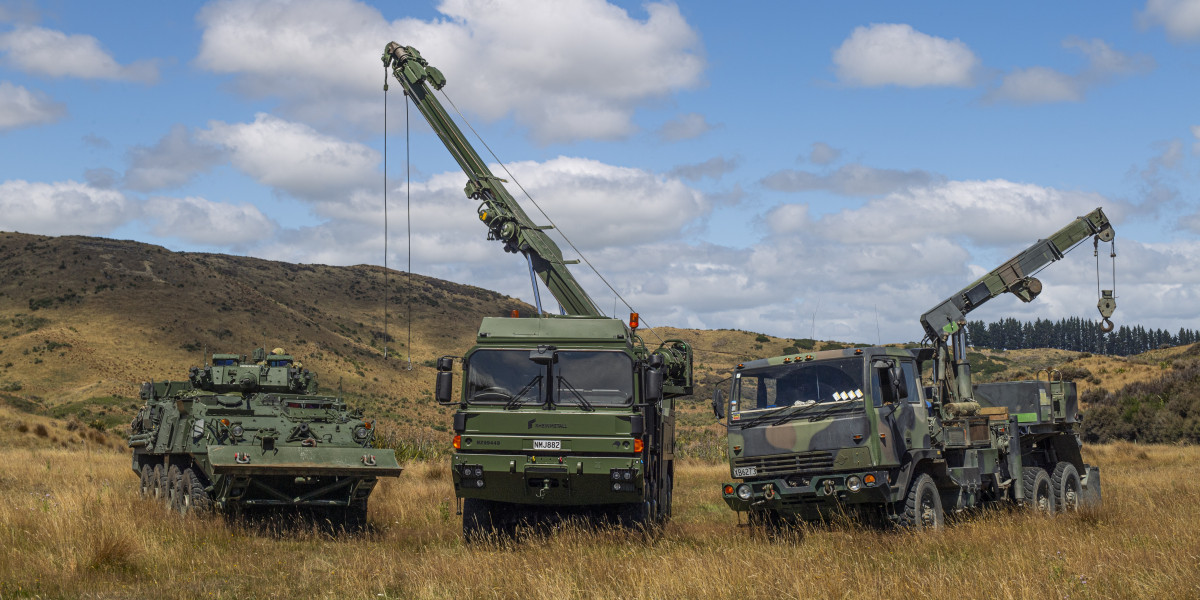
The New Zealand Army’s most capable vehicle is the LAV III, otherwise known as the NZLAV – nearest the camera is an NZLAV-R Recovery Vehicle [© Gordon Arthur]

The LAV-R is fitted with a TR200 recovery winch and an earth anchor. Dug into the ground, the anchor lets the LAV-R brace itself and use its winch to extract a bogged or disabled vehicle, rather than relying only on its own weight and traction. Because it carries additional recovery tools and stores, the LAV-R also keeps the rear stowage box that crews of the infantry variant usually remove in favour of a plywood platform, which gives them extra stowage and a clear arc of fire over the rear. Its introduction and service history deserve their own study.

The MAN HX Heavy Recovery Vehicle

The MAN HX44M 8×8 Heavy Recovery Vehicle is the latest step in New Zealand Army heavy wheeled recovery. Three were formally handed over at Trentham Military Camp on 25 November 2021,[32] as the final element of the Medium Heavy Operational Vehicle project. Two went to Linton and one to Burnham, and they became available for operational deployment at the end of 2022. Each has a Rotator crane, a main winch with a 25-tonne pull and remote controls for most static functions; operating the crane requires a specialist certificate.[33]

MAN HX44M 8×8 Heavy Recovery Vehicle

The MAN HX gives the NZDF modern heavy recovery capability matched to its contemporary vehicle fleet, reducing reliance on coalition partners or contracted recovery services during deployed operations. As military vehicles have become heavier and more complex, recovery equipment has had to improve in lifting capacity, towing performance, and mobility. As military vehicles have become heavier and more complex, recovery equipment has had to match them with improved lifting, towing and mobility. The underlying task, however, would be familiar to anyone who crewed a Pioneer or a New Zealand Special: recover the casualty safely and return it to the maintenance system.

Eight Decades of an Evolving Capability

New Zealand’s recovery history is not a tidy sequence in which one model replaces another. Wartime wreckers, post-war heavy tractors, general-purpose Bedford wreckers, tracked recovery carriers, modern medium wreckers and today’s heavy recovery vehicles often served at the same time, meeting different needs.

Recovery equipment has changed as the supported fleet, terrain, doctrine, vehicle weights and maintenance philosophy have changed. A full history therefore needs to cover not just the vehicles but the trailers, crews, workshops, transport arrangements and decisions that connected battlefield casualties with the repair system.

Conclusion: Recovering More Than Vehicles

Over eight decades, the machinery has changed, but the purpose has not. Whether extracting a bogged truck, recovering an armoured vehicle, clearing a blocked route or moving a casualty to a workshop, recovery crews have helped keep the force mobile and in the field.

The four Scammell New Zealand Specials are a particularly revealing part of that story, showing how a small army adapted a proven overseas design to its own needs.

Behind every recovery vehicle is a crew whose judgement, technical knowledge and experience can determine whether valuable equipment is returned to service or lost. Although these vehicles may appear to the casual observer to be little more than military tow trucks, they have long been an essential component of the Army’s maintenance and logistics system. This introductory survey only begins to explore their history, and much remains to be documented about the vehicles, specialist equipment and personnel involved. Their task has always been to recover vehicles; their wider contribution has been to restore combat power.

Notes

[1] New Zealand Defence Force, NZDDP–4.0: Defence Logistics, 2nd ed. (Wellington: New Zealand Defence Force, 2020), chap. 1.

[2] Australian Army, Land Warfare Doctrine 4-0: Logistics (Canberra: Australian Army, 2018), 12–14. This publication provides a complementary account of the two-way logistic continuum.

[3] Australian Army, Land Warfare Doctrine 4-0, 30–31.

[4] 2nd Logistics Battalion, “Combat Service Support Aide Memoire,” issue 1, January 2002, section 3, “Recovery.”

[5] Ministry of Defence (UK), REME Recovery Manual, Army Code No. 70434 (London: Ministry of Defence, March 1968, amended July 1970), paras 21–23.

[6] Australian Army, Manual of Land Warfare, Part One, Volume 1, Pamphlet No 6, Administration in the Area of Operations (Provisional) (1977), chap. 10, sec. 50.

[7] Australian Army, Land Warfare Doctrine 4-0, 31–32.

[8] REME Recovery Manual, paras 246–266.

[9] 2nd Logistics Battalion, “CSS Aide Memoire,” sec. 3.

[10] REME Recovery Manual, para. 15.

[11] 2nd Logistic Battalion, Standard Operating Procedures, SOP 701 and 703, issue 1, October 2002.

[12] New Zealand Defence Force, NZDDP–4.0, chap. 1; Australian Army, Land Warfare Doctrine 4-0, 30–32. Historical vehicle–trailer pairings require separate verification.

[13] Quartermaster-General’s Branch, “Appendices to Report on QMG Branch,” 1939–1944, apps 13-D, 13-M and 13-S, R25541151 (AEFZ W5727 22617), Archives New Zealand, Wellington; Central Military District, “Return of Vehicles in Possession as at 30 June 1950,” Form MT 18-A, in HQ CMD 47/2/08, Register of Arms, Instruments and Vehicles, R22497304, Archives New Zealand, Wellington.

[14] Quartermaster-General’s Branch, “Appendices to Report on QMG Branch,” apps 13-F, 13-I, 13-J, 13-K, 13-N and 13-S.

[15] Allan Udy and Alex Mitchell, On the Wheels of History 1: Vehicles and Artillery of the National Army Museum (NZ) (Aviation Film Productions, 2017), 34.

[16] HQ CREME NZ Div, “Notes for RNZEME Officers,” précis no. 10.

[17] Udy and Mitchell, On the Wheels of History, 40.

[18] Udy and Mitchell, On the Wheels of History, 64.

[19] Central Military District, “Return of Vehicles in Possession as at 30 June 1950.”

[20] Udy and Mitchell, On the Wheels of History, 66.

[21] Udy and Mitchell, On the Wheels of History, 102.

[22] REME Recovery Manual, paras 484–487.

[23] “A Look at the Scammell Explorer,” Military Trader, https://www.militarytrader.com/military-vehicles/a-look-at-the-scammell-explorer; Mick Bell, “Scammell Explorer 6×6 Recovery Vehicle Export Version for New Zealand RNZEME,” Mick Bell Plans, 2 April 2020, https://mickbellplans.com/2020/04/02/scammell-explorer-6×6-recovery-vehicle-export-version-for-new-zealand-rnzeme/.

[24] Former RNZEME tradesman (service 1977–85), “Scammell Wrecker” thread, Maple Leaf Up forum, March 2018, http://www.mapleleafup.net/forums/showthread.php?t=28629.

[25] REME Recovery Manual, para. 488.

[26] Scammell Lorries Ltd., G.A. of R.V. 6×6 R.R. L.H. Drive, drawing 6.T.511 (Watford, England, undated).

[27] Udy and Mitchell, On the Wheels of History, 80.

[28] Phil Cregeen, “Carrier Armoured Personnel M113A1,” NZ Arms Register ID 174, draft v1, 18 March 2012, citing M. Burgess, Fighting Vehicles of the New Zealand Army, https://www.armsregister.com/arms_register/arms_register_documents/174_nzar_id_174_m113A1_apc.PDF.

[29] Udy and Mitchell, On the Wheels of History, 110.

[30] Shephard Media, “New Zealand Officially Receives HX44Ms,” December 2021, https://www.shephardmedia.com/news/landwarfareintl/new-zealand-officially-receives-hx44ms/; New Zealand Defence Force, response to Official Information Act request OIA-2026-5659, March 2026, https://www.nzdf.mil.nz/assets/Uploads/DocumentLibrary/OIA-2026-5659-NZDF-Vehicles.pdf.

[31] “New Zealand Sells LAVs to Chile,” CONTACT, 20 April 2022, https://www.contactairlandandsea.com/2022/04/20/new-zealand-sells-lavs-to-chile/; New Zealand Defence Force, OIA-2026-5659.

[32] Rheinmetall, “Rheinmetall MAN Military Vehicles Completes Handover of HX 8×8 Heavy Recovery Vehicles to New Zealand Defence Force,” press release, 8 December 2021.

[33] New Zealand Defence Force, “Heavy Helpers Ready and Waiting,” 11 March 2022, https://www.nzdf.mil.nz/media-centre/news/heavy-helpers-ready-and-waiting/.

Why Drones Alone Won’t Solve the New Zealand Army’s Logistics Problems.

From the Waikato Commissariat to SAP, battlefield management systems and unmanned distribution.

The next major transformation in New Zealand Army logistics may not be defined by autonomous vehicles or drones, but by Defence’s logistics systems’ ability to connect operational requirements with the resources needed to sustain deployed forces. Autonomous technologies offer new means of transporting supplies, but their operational value will depend on how well they are incorporated into established logistics arrangements.

In July 2026, Drones, Distribution and the Small Army: Logistics for New Zealand’s Motorised Infantry Future examined how unmanned aerial systems might transform supply delivery to New Zealand soldiers operating on dispersed and contested battlefields. The article considered the vulnerability of conventional replenishment arrangements and the opportunities presented by autonomous technologies.[1]

Developments since then have made the subject more immediate. Singapore’s experimentation with its Next Generation Infantry Battalion during Exercise Wallaby 2026, together with New Zealand’s unmanned-vehicle trials, suggests that autonomous systems are becoming a practical question for military capability development.

An unmanned vehicle does not, by itself, transform military logistics. It provides another means of distribution, but it must operate within a system that identifies requirements, manages resources, sets priorities and coordinates support.

For the New Zealand Army, this raises a broader question: how might Defence’s enterprise logistics systems, tactical digital capabilities and movement-management arrangements evolve to support increasingly automated distribution?

The question is not new. Successive generations of New Zealand logisticians have confronted the same problem of coordinating supply, transport, information and accountability, and how they addressed it offers a useful foundation for thinking about the Army’s future.

An Old Problem in a New Form

Whatever the technology, the underlying challenge has been consistent: an army must obtain resources, organise their distribution and keep enough control over both to sustain its operations.

During the Waikato campaign of 1863–64, British forces relied on roads, river transport, animal-drawn vehicles and forward depots to sustain troops advancing south from Auckland. As Richard J. Taylor shows in his study of British logistics during the New Zealand Wars, the campaign depended as much on the organisation and coordination of these resources as on the transport equipment itself.[2]

Deputy Commissary-General Humphrey Stanley-Jones supervised a distribution system that used bullock wagons, horse-drawn vehicles, steamers, barges, and canoes. Taylor records that some stores were handled as many as sixteen times between Auckland and Ngāruawāhia, with each transfer creating additional work and increasing the risk of damage, loss, or errors in accountability.

British military activity at Pukerimu on the Waikato River, April 1864. Steam-powered river transport was a key part of the distribution network that sustained British operations during the Waikato campaign. Alexander Turnbull Library Reference: E-047-q-046 by Joseph Osbertus Hamley

An organisational disagreement in 1864 brought the issue into sharp focus. After the 4th Battalion Military Train arrived, its commander proposed absorbing the Commissariat Transport Corps into the Military Train. Senior Commissariat officers opposed the proposal, maintaining that the organisation responsible for obtaining and distributing supplies needed effective control over how they reached the troops. General Cameron ultimately retained separate responsibilities, with the Military Train undertaking selected transport duties while the Commissariat Transport Corps continued supporting much of the forward distribution system.[3]

The disagreement raised a question that remains relevant: should the organisation operating transport equipment determine how it is employed, or should the logistics system responsible for meeting operational requirements coordinate its employment?

Autonomous vehicles present the same problem in a new form. A drone might be operated by infantry, a logistics organisation or a specialist unmanned-systems element, but responsibility for operating the platform does not necessarily confer authority to establish supply priorities independently of the wider distribution system.

The technology has changed since 1864. The requirement to coordinate supply and movement has not.

From Movement Control to Computerised Supply Accounting

The expansion of New Zealand’s expeditionary commitments during the twentieth century progressively increased the complexity of military distribution. Deploying and sustaining forces overseas required coordination between depots, ports, airfields, staging areas and deployed units, frequently involving several modes of transport.

Specialist movement-control, terminal and air-dispatch capabilities developed because military movement involved more than providing vehicles, ships or aircraft. It also required managing capacity, priorities, destinations and documentation.[4]

A comparable transformation occurred in stores administration. For much of its history, the Royal New Zealand Army Ordnance Corps (RNZAOC) relied on handwritten records, vouchers and ledger cards to manage inventories. Although these arrangements provided accountability, they were labour-intensive and depended on accurate and timely manual transactions.

The introduction of Hollerith punched-card records in 1958 marked an important step towards mechanised supply accounting. Electronic accounting machines and computerised systems subsequently improved transaction processing and the production of inventory information.[5]

The Defence Supply System Retail (DSSR), introduced during the 1980s, and the subsequent Defence Supply System Development (DSSD) continued this progression. Both initiatives sought to improve inventory management and reduce delays and inconsistencies associated with earlier arrangements.

Sergeant Gerry Rolfe and DSSR Terminal, FMG Annual Camp 1988. RNZAOC Collection

Nevertheless, computerisation introduced new challenges. Personnel required training, records had to be converted, and procedures revised. The usefulness of information also depended on how promptly transactions were completed. A central computer might hold extensive inventory records, but those records could become outdated when activity at a supply unit was not reflected quickly enough.

These limitations became particularly evident when computerised logistics support was extended into the field. During Exercise Golden Fleece in 1989, the Army experimented with providing deployed logistics organisations access to Defence supply information through mainframe terminals. The COMRAT ration-management application was also trialled on portable computers, demonstrating how relatively modest technology could reduce repetitive administrative work and assist field planning.[6]

Hewlett-Packard Portable Vectra CS used by New Zealand Army logistics personnel in 1989. Portable computers were among the technologies evaluated as the RNZAOC sought to extend computerised supply and ration-management capabilities into the field. Robert McKie Collection.

These experiments brought logistics information closer to deployed organisations while highlighting the difficulties of transferring systems developed for established facilities into environments where communications, equipment reliability and technical support imposed additional constraints. Improvements in information processing proved most useful when matched by procedures and equipment suited to the conditions in which soldiers operated.

Project Fusion, SAP and the Integration of Army Logistics

During the 1990s, the New Zealand Defence Force (NZDF) undertook a wider transformation of financial, inventory and maintenance-management systems.

Project Fusion, initiated in 1994, introduced SAP enterprise resource planning software to integrate functions previously managed through separate applications. Financial management entered operation in 1996, followed by inventory and logistics management in 1998 and plant maintenance in 1999.[7]

The new environment provided opportunities to connect stock holdings, equipment records, maintenance activities and associated financial transactions through more consistent information and business processes.

Technological reform coincided with significant organisational change. On 9 December 1996, the Royal New Zealand Army Logistic Regiment (RNZALR) was formed by amalgamating the RNZAOC, the Royal New Zealand Corps of Transport (RNZCT) and the Royal New Zealand Electrical and Mechanical Engineers (RNZEME).[8] The regiment brought together the principal supply, transport and maintenance functions, recognising the increasing interdependence of activities previously undertaken by separate corps.

Although Project Fusion and the formation of the RNZALR were distinct initiatives, both reflected the same requirement: closer coordination between logistics functions. SAP integrated the information; the RNZALR integrated the people and trades.

Neither reform eliminated complexity. Inventory accuracy still depended on disciplined transactions, while an integrated computer system did not automatically produce an integrated organisation. Nevertheless, both laid foundations for later improvement.

Singapore and the Next Generation Infantry Battalion

Singapore offers a useful comparison because it, too, must generate military capability from a limited personnel base, and it is actively integrating new technology into its force rather than simply acquiring it.

During Exercise Wallaby 2026 in Queensland, the Singapore Armed Forces tested elements of its Next Generation Infantry Battalion (NGIB), an evolving concept combining revised organisation, digital command systems and unmanned platforms. Singapore’s Ministry of Defence describes a battalion incorporating dedicated unmanned-systems elements, including reconnaissance and attack drones, supported by integrated command-and-control arrangements.[9]

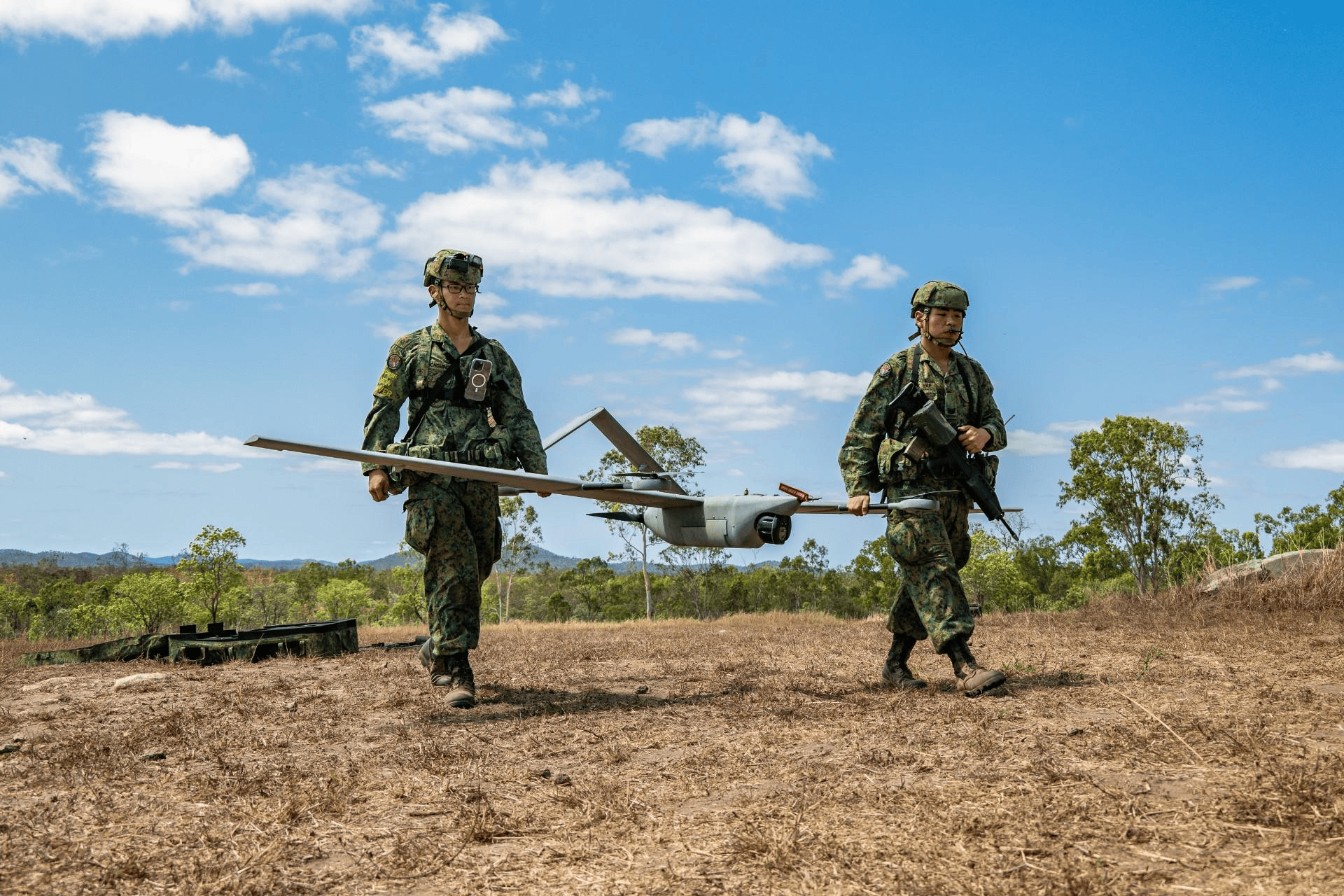
Singapore Army personnel prepare a fixed-wing unmanned aerial vehicle during Exercise Wallaby 2025 in Queensland, Australia. Singapore’s continuing experimentation with unmanned systems forms part of its broader efforts to improve infantry effectiveness and integration. Singapore Ministry of Defence.

The NGIB’s significance lies not in the drones themselves but in building unmanned technologies into the organisation and operating methods of infantry formations, redistributing tasks between soldiers and machines rather than treating unmanned systems as supplementary equipment.

That is the lesson for New Zealand. The NZDF’s unmanned-systems trials are a necessary start, but trialling platforms is not the same as integrating them. Singapore is changing organisation, command arrangements and operating methods alongside the equipment, and New Zealand will need to do the same if autonomous systems are to deliver more than isolated demonstrations. The NGIB is not an autonomous logistics system, and conventional combat service support remains essential. It does, however, show the deliberate, whole-of-force approach that New Zealand Army logistics will need.

There is also an important distinction between remotely operated, supervised autonomous and more fully autonomous systems. A remotely operated vehicle may remove a driver from immediate danger while retaining a substantial operator workload. A supervised autonomous system may undertake some navigation or movement functions independently but still require human oversight and intervention. Greater autonomy raises further questions of reliability, decision-making authority and accountability.

Integration is also less about replacing logistics personnel than about examining whether new technologies can improve their effectiveness. Any assessment must consider the complete workload, including operators, maintainers, communications specialists and recovery personnel, rather than simply counting the drivers a particular journey might no longer require.

The Digital Gap Between the Battlefield and the Supply System

The NZDF already possesses much of the digital infrastructure on which future logistics capabilities could be built. SAP supports key aspects of inventory, maintenance, and resource management, while the Army’s Network Enabled Army (NEA) programme is introducing tactical communications, information-sharing, and battlefield management capabilities.

The Ministry of Defence identifies SitaWare as the Battle Management System acquired through NEA, alongside deployable servers, digital devices and communications infrastructure intended to improve situational awareness and information exchange.[10]

These systems serve different purposes. SAP manages Defence resources and their associated records, while SitaWare supports tactical command and coordination. Their functions are complementary, but public information does not show how far logistics requirements and inventory data can pass between them. That matters when deployed units need supplies.

From Operational Requirement to Logistics Response

Consider a hypothetical motorised infantry company operating 40 kilometres from its supporting logistics element. One of its vehicles becomes unserviceable because of a failed component, creating an urgent requirement for a replacement.

The company communicates its requirement to the supporting logistics organisation, which must identify the component, confirm availability, determine priority, and arrange delivery. Depending on the procedures and systems available, these activities may involve separate communications, manual coordination and transactions across different applications.

A more closely integrated arrangement could allow an authorised requirement to enter a governed logistics workflow, with relevant status information returned to the supported unit as the demand progresses. This would give commanders improved visibility without requiring them to operate the enterprise inventory system directly.

The example’s value lies in identifying what information operational decisions require and which systems should provide it.

Enterprise systems should remain authoritative for the records they are designed to maintain, while tactical applications should present information appropriate to their users. Any exchange between them would require suitable security, authorisation, data governance and technical arrangements.

The principal question is therefore not whether SAP should be replicated within a battlefield management system, but what logistics information commanders require and how it can be made available reliably.

Future ERP: An Opportunity to Consider Operational Logistics Integration

The relationship between enterprise logistics information and battlefield requirements matters now because the NZDF is preparing another transformation of its resource-management systems.

In September 2026, the NZDF issued an advance notice concerning its Future Enterprise Resource Planning (ERP) Programme, outlining plans for a more integrated enterprise-wide capability. The programme identifies SAP S/4HANA as the intended technology and includes systems integration, business integration and independent assurance among its major areas of work.[11]

Project Fusion sought to bring separate administrative and logistics functions into a common information environment. Future ERP provides an opportunity to examine how that environment should support Defence activities in the coming decades.

The procurement notice does not indicate that integration with SitaWare or support for autonomous logistics is within the programme’s scope, and Future ERP should not be assumed to provide them.

The more useful question is whether the operational information requirements associated with deployed logistics have been sufficiently identified to inform future enterprise-system design and related capability development.

Who is responsible for ensuring that the information requirements of deployed Army logistics are appropriately reflected across enterprise systems, tactical digital capabilities and future distribution technologies?

Different programmes, organisations, and funding arrangements are developing the capabilities involved. Without an agreed understanding of operational requirements, individual systems could meet their own objectives while leaving gaps in support for deployed forces.

DSSR, DSSD and Project Fusion all showed that successful technological change depends on aligning systems, procedures, responsibilities and the people who use them, not only on new software. Future ERP should therefore be seen within the wider evolution of Defence logistics, not merely as the replacement of an ageing enterprise application.

Digital Freight Management and the Movement of Supplies

The NZDF’s continuing digitisation of freight management provides another potential foundation for future distribution capabilities.

Freight management concerns a different aspect of logistics information from inventory accounting or tactical command. Its principal responsibilities include documenting consignments, identifying destinations, recording handling requirements and coordinating movement between locations.

Digital freight processes offer opportunities to reduce manual paperwork, improve the consistency of movement documentation and strengthen consignment visibility. These functions would remain relevant whether supplies were transported by conventional vehicles, aircraft, or autonomous platforms.

For autonomous distribution, particular attention would need to be given to consignment identification, the information required to task a transport resource and the means of confirming receipt. Standardised data and appropriate tracking arrangements could allow different transport platforms to operate within established movement-management procedures.

An autonomous vehicle would not, however, be automatically compatible with existing freight applications; any interface would need to be assessed for technical feasibility, operational requirements, security and organisational responsibility.

Movement control offers the precedent: as noted earlier, specialist movement organisations emerged because coordinating movement required skills and procedures distinct from operating the transport itself. The same distinction should inform the employment of autonomous distribution systems. Their introduction would expand available transport options without removing the need for effective movement coordination and accountability.

New Zealand’s Autonomous Systems Experimentation

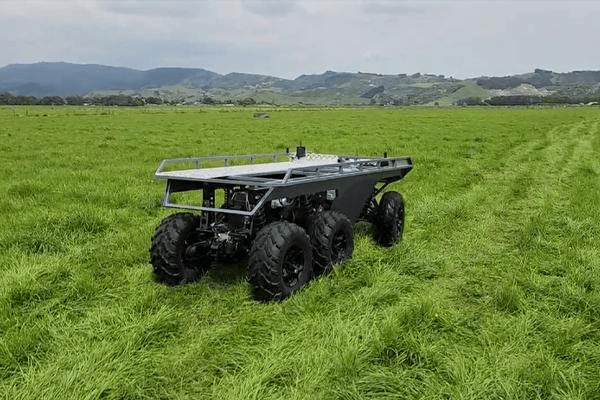
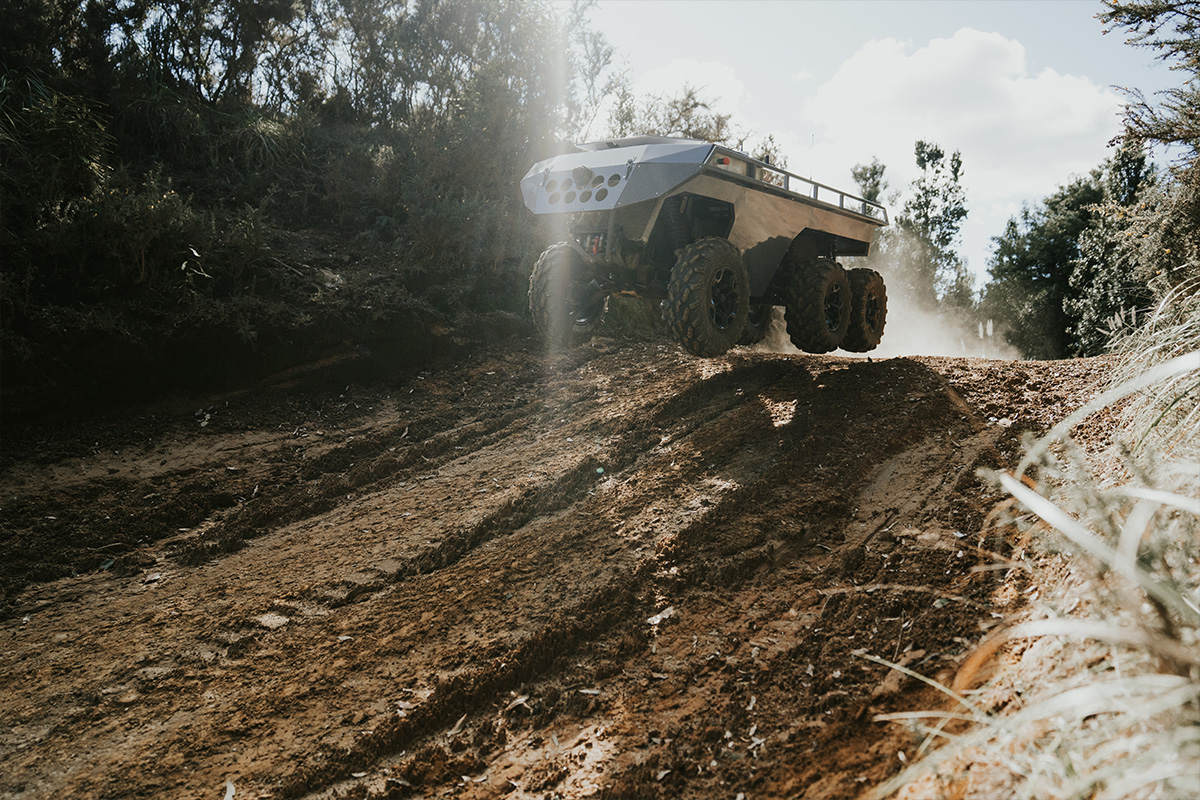
New Zealand’s question is how to move from trial to integration. On 26 February 2026, the New Zealand Government announced that the NZDF would trial several unmanned systems supplied by New Zealand company Syos Aerospace, including the SG400 unmanned ground vehicle. The experimentation included potential applications involving supply movement, reconnaissance and other military tasks, alongside examining integration between unmanned technologies and existing Defence systems.[12]

A Syos Aerospace unmanned ground vehicle. In February 2026, the New Zealand Government announced that the NZDF would acquire and trial the company’s SG400 unmanned ground vehicle as part of an examination of potential military applications, including the movement of supplies. Photo: SYOS Aerospace

The value of these trials should not be judged solely by whether a vehicle can travel between two locations or carry a specified payload. A more meaningful logistics assessment would examine how effectively the equipment performs an assigned distribution task within established military procedures.

Such an assessment would consider tasking, load preparation, delivery, recovery and the personnel required to support the platform. It would also determine whether autonomous equipment offers measurable advantages in speed, safety, reliability, or personnel use.

Subsequent experimentation could introduce multiple destinations, competing priorities, difficult terrain, degraded communications and the presence of opposing unmanned systems.

The choice of transport resource should remain subordinate to the operational requirement. A small aerial system may suit an urgently required component, an unmanned ground vehicle a heavier local load, and conventional transport bulk supplies or longer distances. The aim should be to expand distribution options, not to replace established transport simply because a new technology is available.

Sustaining the Systems That Sustain the Army

Autonomous systems would create additional technical and organisational responsibilities. Unmanned ground vehicles and aerial platforms depend on batteries, motors, sensors, communications equipment, electronic components, and software that require maintenance and support.

Some components may be replaced rather than repaired, while others could require specialist facilities, diagnostic equipment, technical expertise or manufacturer assistance. These requirements raise questions about Army trades and the future responsibilities of the RNZALR.

Routine servicing might be undertaken by operators, while more complex repairs could fall to appropriately trained technicians. Software support, configuration management, component traceability and the recovery of damaged platforms would also need consideration.

For a comparatively small army, the support burden could become significant if limited fleets from several manufacturers required different spare parts, diagnostic tools, training arrangements and technical support.

The benefit of autonomy must therefore be assessed against the personnel and resources required to sustain it.

New Zealand Army logistics history provides repeated examples of technological improvements creating new trades, specialisations and support requirements. Motor transport, electronic equipment and computerised supply systems changed the nature of logistics work but did not eliminate the requirement for trained personnel. Autonomous technologies are likely to follow a similar pattern. The challenge for the RNZALR will be to determine how these systems can be sustained within an organisation already responsible for supporting an increasingly complex range of military equipment.

Operating in the Pacific and on a Contested Battlefield

Much contemporary discussion of autonomous logistics draws on developments in Ukraine and European military experimentation. However, the Pacific presents distinct challenges, including dispersed islands, steep terrain, heavy rainfall, limited road networks, restricted infrastructure and substantial distances between logistics locations.

A platform that performs effectively in a prepared training area may struggle on narrow island tracks or in heavily vegetated terrain. A small aerial system may be constrained by weather, endurance, payload and the availability of suitable launch or recovery locations.

Autonomous systems also introduce vulnerabilities related to communications, navigation, software, and electronic warfare. Jamming, spoofing, cyberattack or equipment failure may interrupt operations. Repeated movement along predictable routes could disclose the locations of supply points and supported units, while charging and maintenance facilities could become additional targets.

Logistics organisations must therefore be able to operate with degraded communications. Deployed personnel must retain the ability to identify requirements, manage local stock, coordinate essential movement and record deliveries when central systems are unavailable.

Locally retained information, predefined authorisations and procedures for reconciling transactions once communications are restored may provide useful resilience, although they introduce risks involving outdated records and duplicate demands.

The Army’s experience of extending computerised supply systems into the field in the 1980s is a useful parallel: technology improves access to information only so far as it remains reliable under field conditions. A future autonomous distribution system should enhance the resilience of Army logistics rather than create a dependence on uninterrupted digital connectivity.

Building the Next Stage of Army Logistics

Mechanised accounting, DSSR, Project Fusion and SAP each required changes to organisation, procedures and training, not just new equipment or software. Autonomous distribution will be no different. Three areas warrant attention as the NZDF develops its future logistics capabilities.

Understanding Existing Processes

First, establish how deployed logistics requirements are currently communicated, authorised, and fulfilled, including the systems and procedures involved. This would help identify manual interventions, existing interfaces and opportunities to improve the availability of operational information.

Defining Information Requirements

The second is to determine what information commanders and logisticians need from enterprise and tactical systems, and which organisations should maintain authoritative records. These requirements could inform Future ERP, Network Enabled Army and related capability planning.

Evaluating Complete Logistics Activities

The third is to assess autonomous distribution through realistic military logistics tasks rather than isolated demonstrations of vehicle performance. Trials should examine reliability, personnel requirements, maintenance, communications resilience and the effectiveness of the supporting procedures, as well as payload and mobility. Such assessments would help establish where autonomous technologies offer practical advantages over conventional arrangements.

For the RNZALR, the underlying challenge is familiar. Future technologies will introduce new methods and responsibilities, but their successful employment will still depend on coordinating supply, transport and maintenance.

Conclusion: Beyond the Last Tactical Mile

New Zealand military logistics history shows that adaptation has always been central to sustaining a relatively small force.

During the Waikato campaign, the Commissariat coordinated several transport methods across difficult terrain. A century later, expeditionary commitments encouraged the development of specialist movement-control and terminal capabilities. Mechanised and computerised supply accounting improved inventory management, while Project Fusion and the formation of the RNZALR brought previously separate logistics functions into more closely integrated systems and organisations. Each development reflected the military requirements and technological possibilities of its time.

Autonomous ground vehicles and drones now offer another opportunity to improve military distribution. Singapore’s Next Generation Infantry Battalion shows what deliberate integration of unmanned technologies into a military organisation looks like. New Zealand’s experimentation is the starting point for doing the same in its own operational circumstances.

The established SAP environment, Network Enabled Army and digital freight management provide foundations to build on. Future ERP is an opportunity to decide how enterprise information should support operational requirements.

As the RNZALR approaches its thirtieth anniversary in December 2026, it is worth recalling its origins. The regiment was created by bringing together supply, transport and maintenance functions that had become increasingly interdependent; autonomous technologies are another stage in that continuing evolution.

The technologies available to the Army will continue to change. The fundamental responsibility of military logistics will not: ensuring that the right resources reach the right place, at the right time, in a condition that allows the force to accomplish its mission.

The next major transformation in New Zealand Army logistics may therefore be defined not by the machines carrying supplies, but by the logistics system’s ability to connect the entire journey from demand to delivery.

That would be consistent with more than 160 years of adaptation in New Zealand military logistics.

Notes

[1] Robert McKie, “Drones, Distribution and the Small Army: Logistics for New Zealand’s Motorised Infantry Future,” To the Warriors Their Arms, 8 July 2026, https://rnzaoc.com/2026/07/08/drones-distribution-and-the-small-army/.

[2] Richard J. Taylor, British Logistics in the New Zealand Wars, 1845–66 (PhD diss., Massey University, 2004), 129–45

[3] Taylor, British Logistics in the New Zealand Wars, 171–74.

[4] Robert McKie, Accuracy Under Pressure: The New Zealand Army Movement Operator Trade (2025), https://rnzaoc.com/wp-content/uploads/2025/12/New-Zealand-Army-Movement-Operator-Trade.pdf.

[5] Robert McKie, “The Evolution of Computerised Supply Accounting within the Royal New Zealand Army Ordnance Corps, 1958–1990,” To the Warriors Their Arms, 20 September 2023, https://rnzaoc.com/2023/09/20/the-evolution-of-computerised-supply-accounting-within-the-royal-new-zealand-army-ordnance-corps-1970-1990/.

[6] McKie, “Evolution of Computerised Supply Accounting,” discussion of Exercise Golden Fleece 1989 and COMRAT.

[7] Robert McKie, “The NZDF’s Evolution of Inventory Management from DSSR to SAP, 1984–1998,” To the Warriors Their Arms, 14 November 2024, https://rnzaoc.com/2024/11/14/the-nzdfs-evolution-of-inventory-management-from-dssr-to-sap-1984-1998/; “Outsourcing for Better Army Logistics,” Army Logistician 36, no. 2 (March–April 2004): 31, https://d34w7g4gy10iej.cloudfront.net/pubs/pdf_67339.pdf.

[8] Robert McKie, “Three Traditions, One Regiment: The Supply Trades That Formed the RNZALR, 1911–1996,” To the Warriors Their Arms, 26 July 2026, https://rnzaoc.com/2026/07/26/three-traditions-one-regiment/.

[9] Singapore Ministry of Defence, “Fact Sheet: Overview of Exercise Wallaby 2026,” 23 October 2026, https://www.mindef.gov.sg/news-and-events/latest-releases/23oct26-fs/; “Fact Sheet: Next Generation Infantry Battalion (NGIB),” 26 October 2026, https://www.mindef.gov.sg/news-and-events/latest-releases/26oct26-fs/.

[10] New Zealand Ministry of Defence, “Network Enabled Army C4 Project,” accessed 28 October 2026, https://www.defence.govt.nz/our-work/equip/capability-projects/network-enabled-army-nea-c4/; “Network Enabled Army Programme – An Overview,” https://www.defence.govt.nz/our-work/equip/capability-projects/network-enabled-army-nea-programme/.

[11] New Zealand Defence Force, “Future ERP – System Integrator, Business Integrator, and Quality Assurance,” Government Electronic Tender Service, 17 September 2026, https://www.gets.govt.nz/NZDF/ExternalTenderDetails.htm?id=34952898.

[12] Judith Collins, “Kiwi Drones to Boost Defence Capability,” New Zealand Government, 26 February 2026, https://www.beehive.govt.nz/release/kiwi-drones-boost-defence-capability.