This period would see the RNZAOC. Continue to support Regular, Territorial and Compulsory Military Training. Ongoing support to Kayforce would continue.[1]
Key Appointments
Ordnance Directorate
Director of Ordnance Services – Lieutenant Colonel F Reid, OBE
Southern Military District
Southern District Ordnance Depot
Ordnance Officer – Captain A.A Barwick
Southern District Ammuinition Depot
Officer Commanding – Capt & QM S.H.E Bryant
Small Arms Ammunition Production Proof Office
Inspector – Capt & QM G.A Perry. ED
Compulsory Military Training
During this period three CMT intakes marched in;[2]
6th intake of 2850 recruits on 19 Jun 1952
7th intake of 2645 recruits on 11 Sept 1952
8th intake of 2831 recruits on 8 Jan 1953
On completion of CMT recruit training, recruits were posted to Territorial units close to their home location to complete their CMT commitment, with RNZAOC CMT recruits posted to either;
1st Infantry Brigade Ordnance Field Park Platoon, Hopuhopu.
2nd Infantry Brigade Ordnance Field Park Platoon, Mangaroa.
3rd Infantry Brigade Ordnance Field Park Platoon, Burnham.
1 Armoured Brigade Ordnance Field Park Platoon.
Territorial Force
The Ordnance Headquarters of the New Zealand Division, was on 19 Apr 1952 re-designated as Headquarters CRNZAOC New Zealand Division (HQ CRNZAOC NZ Div).[3]
Kayforce
The RNZAOC continued to support Kayforce with the dispatch of regular consignments of Maintenance stores and with all additional requests for stores by Kayforce met.
This period saw the first RNZAOC men rotated and replaced out of Kayforce;
Out of Kayforce
Staff Sergeant Neville Wallace Beard, 3 Jun 1952
Lance Corporal James Ivo Miller, 21 Jun 1952
Lieutenant Colonel Geoferry John Hayes Atkinson, 15 Jan 1953
Corporal Desmond Mervyn Kerslake, 18 Mar 1953
Into Kay force
TEAL Flight from Auckland,15 May 1952
Private Dennis Arthur Astwood
TEAL Flight from Wellington, 7 Jun 1952
Corporal Wiremu Matenga
TEAL Flight from Wellington, 14 Jun 1952
Sergeant Barry Stewart
TEAL Flight from Auckland, 30 Jun 1952
Lance Corporal Thomas Joseph Fitzsimons
Private Gane Cornelius Hibberd
TEAL Flight from Wellington, 30 Aug 1952
Staff Sergeant James Russell Don
1 Sept 1952
Corporal Gordon Winstone East
TEAL Flight from Auckland, 23 Dec 1952
Captain Patrick William Rennison
TEAL Flight from Auckland, 3 Mar 1953
Lance Corporal Alexander George Dobbins
Coronation Contingent
On 2 Jun 1953, Queen Elizabeth II was crowned as monarch of the United Kingdom and British Commonwealth of nations. To commemorate the coronation, New Zealand provided a contingent of 75 Officers and men. RNZAOC soldier Temporary Staff Sergeant Earnest Maurice Alexander Bull was appointed as the Contingent Quartermaster Sergeant.[4] T/SSgt Bull would travel with the contingent on the long and uncomfortable return trip to the United Kingdom on the Australian aircraft carrier HMAS Sydney. Despite some controversy on the inadequate accommodation provided on the HMAS Sydney and quality of the New Zealand uniforms compared to the Australians, it was still considered a privilege to be part of the contingent.[5] A highlight for Bull was when he held the appointment of Sergeant of the Guard at St James Palace.
At Sea. 1953. Army members of the Australian and New Zealand Coronation Contingent engaged in rifle drill aboard the aircraft carrier HMAS Sydney, while en route to England for the coronation of Her Majesty, Queen Elizabeth II. Copyright expired – public domain
Ordnance Conferences
Ordnance Conference 16 – 18 September 1952
The Director of Ordnance Services hosted a conference of the Districts DADOS and the Officer Commanding Main Ordnance Depot (MOD) at Army Headquarters over the period 16-18 September 1952.[6]
Ordnance Conference 21-23 April 1953
The Director of Ordnance Services hosted a conference of the Districts DADOS and the Officer Commanding Main Ordnance Depot (MOD) at Army Headquarters over the period 21-23 April 1953.
Items discussed at the conference included;
Corps Policy
Corps Establishments
Estimation of expenditure
Provision
Vehicles and Spares
LAD tools
Standard packages
District problems
Routine Ordnance Activities
Over this period the RNZAOC in addition to its regular duties of provision, holding and the issue of multitudinous stores required by the Army including the additional issue of training equipment to the territorial Force allowing all units sufficient equipment for normal training.
Ammunition Examiner Qualification
Private Luskie qualified as an Ammunition Examiner as AE No 75
Small Arms Ammunition
Production of small-arms ammunition had met the monthly target, with the ammunition, fully proofed and inspected before acceptance.
Introduction of New Equipment
As new equipment was introduced, the RNZAOC would play an essential role in the acceptance processes. Upon delivery from the supplier, the equipment, its accessories and spares would be received into an RNZAOC Depot. The equipment would be inspected and kitted out with all its accessories before distribution to units. Depending on the equipment, several examples may have been retained in RNZAOC Depots as War Reserve/Repair and Maintenance Stock. Maintenance stocks of accessories and spares were maintained as operating stock in RNZAOC depots. If the new equipment was or contained a weapon system, ammunition specific to the equipment was managed by RNZAOC Ammunition Depots.
During this period, the following equipment was introduced into service;[7]
It was announced in December 1952 that a trial to replace the famous “Lemon Squeezer” hat was to be undertaken.[9] Reintroduced in 1949 as the official peacetime headdress, the Lemon Squeezer was found to be unsuitable because it could not be rolled up or placed into a pocket without losing its shape.[10] One it the items to be trialled was a Canadian style peaked ski caps made of brown serge wool used in the Battle Dress uniform.
Trentham Camp Commandant
For the first time since 1931, the appointment of Trentham Camp Commandant would be filled by an Ordnance Officer. In December 1952, Major D Roderick the incumbent Officer Commanding of the Main Ordnance Depot would take up the additional appointment of Trentham Camp Commandant.[11] Assisting Major Roderick as the Regimental Sergeant Major of bothTrentham Camp and the Main Ordnance Depot was Warrant Office Class One Alfred Wesseldine.[12]
Linton Fire
A fire in the ordnance store at Linton Military Camp on 15 February destroyed a quantity of Army stores and records and left a large part of the building gutted with losses valued at £11695 (2021 NZD$706492.66).
Hope Gibbons Fire
On 29 July 1952, fire broke out in the Hope Gibbons building in Wellington. Located in Dixon Street, the eight story Hope Gibbons office block became a towering inferno after a vat of industrial thinners caught alight in an adjacent building to the rear. One of the unsatisfactory and dispersed locations of the government archives, the building held numerous public records from the Public Works, Lands and Survey, Labour and Employment, Agriculture, Marine and Defence Departments. Many of the paper records dating back to 1840 were destroyed or damaged. Some records were salvaged and are still undergoing conservation work.
Included in the Defence Department files were many of the records of the Colonial Storekeeper, Defence Stores Department and the early Ordnance Corps, including records from the 1st and 2nd World Wars. The destruction and damage of these records created a significant gap in the historiography of the New Zealand Army Ordnance Corps.
The tremendous loss of public records in this fire prompted the establishment of the National Archives in 1957.[13]
Honours List
Long Service and Good Conduct
Warrant Officer Class One Bernard Percy Banks, Southern Districts Vehicle Depot, 16 Oct 1952.[14]
Warrant Officer Class One William Galloway, Central District Ordnance Depot, Waiouru Sub Depot, 25 Sept 1952
Enlistments into the RNZAOC
Brian Gush –16 May 1952
Robert J Plummer – 16 Sept 1952
John B Glasson – 9 Dec 1952
Thomas Woon – 17 Jun 1952
Transferred into the RNZAOC from other Corps
Warrant Officer Class One William Galloway from NZ Regiment to RNZAOC, June 1952
Warrant Officer Class One Ronald William Stitt from The Royal New Zeland Artillery to be Lieutenant and Quartermaster, RNZAOC from15 March 1953.[15]
Re-Engagements into the New Zealand Regular Force
With effect 1 Apr 1952, the undermentioned members of the RNZAOC were re-engaged into the NZ Regular Force;
Warrant Officer Class Two (Temp WO1) Ronald John Crossman [17]
Warrant Officer Class One George William Dudman[18]
To Lieutenant
1952, Lieutenant (on probation) J. H. Doone, with seniority from 25 Oct 1948.[19]
Transferred to Reserve of Officers
The following officer was transferred to the Reserve of Officer with effect 17 Nov 1952;[20]
Lieutenant R. K. Treacher
Notes
[1] “H-19 Military Forces of New Zealand Annual Report of the General Officer Commanding, for Period 1 April 1952 to 31 March 1953 “, Appendix to the Journals of the House of Representatives (1953).
[2] Peter Cooke, Fit to Fight. Compulsory Military Training and National Service in New Zealand 1949-72 (Auckland: David Ling Publishing, 2013), 539.
[3] Chief of Royal New Zealand Army Ordnance Corps “Units Resignated,” New Zealand Gazette No 32, 19 April 1953, 554.
[4] Howard E. Chamberlain, Service Lives Remembered : The Meritorious Service Medal in New Zealand and Its Recipients, 1895-1994 ([Wellington, N.Z.]: H. Chamberlain, 1995), 67-68.
[5] ” N.Z. Contingent Protests on Coronation Voyage,” Townsville Daily Bulletin (Qld. : 1907 – 1954) 7 May 1953
[6]Conferences – Ordnance Officers, Item Id R17188101 (Wellington: Archives New Zealand, 1950).
[7] Damien Fenton, A False Sense of Security : The Force Structure of the New Zealand Army 1946-1978, Occasional Paper / Centre for Strategic Studies: New Zealand: No. 1 (Centre for Strategic Studies: New Zealand, Victoria University of Wellington, 1998), Bibliographies, Non-fiction, 21.
During this period, the peacetime Army undertook a reorganisation so that in the event of war it would be trained and equipped to rapidly and efficiently conduct operations. Based on this principle, units and formations of the Army were structured as follows:
Army Troops; including Army Headquarters, Army Schools, and base units.
District Troops; including District and Area Headquarters, Coast and Antiaircraft Artillery.
NZ Division
In general, Army Troops contained the machinery for the higher command and administration of the New Zealand Army; District Troops the home defence and elementary training element; and the NZ. Division as the mobile striking force for employment within or outside New Zealand as the situation may demand.
Compulsory Military Training
Required to build and sustain the Army’s new structure, Compulsory Military Training (CMT) was the tool utilised to provide a sustainable military force. Instituted under the provisions of the Military Training Act 1949 and supported by a public referendum, CMT was an ambitious scheme designed to turn individual recruits into capable soldiers. CMT obliged eighteen-year-old males to undertake fourteen weeks of Initial training followed by a three-year commitment to serve in the Territorial Army with a six-year reserve commitment. The CMT experience began with fourteen weeks of recruit training conducted at Papakura, Waiouru, Linton and Burnham after which recruits would spend three years posted to a Territorial unit. Unlike previous peacetime compulsory military training schemes that have been a feature of New Zealand life since 1909, the 1949 system would include Ordnance units sustained by regular intakes of recruits.[2]
Senior Ammunition Officers Conference
Over the period 21-24 June, the Director of Ordnance Services held the first conference of RNZAOC Senior Ammunition Officers.[3]
Attending the Conference were;
Lieutenant Colonel A.H Andrews, DOS
Major F Reid, DADOS (1)
Major I.S Miller, CIOO
Captain J.G.R Morley, SIOO
Captain N.C Fisher, Tech Assistant
Captain E.C Green, DIOO Northern Military District
Captain G.H Perry, DIOO Central Military District
Captain R. P Kennedy, OC Central District Ammunition Depot
Captain E Hancock, DIOO Southern Military District
Captain W Ancell, OC Southern District Ammunition Depot
Major M.J Leighton, OC Main Ordnance Depot
Captain M.J Keeler, Main Ordnance Depot
Captain W Langevad RNZA, OC Army Ammunition Stores Depot
Item discussed at the conference included;
The Ammunition Organisation in New Zealand, including;
Shortages of Staff
DIOO Office and Staff
Depot IOO’s
Accounting
Provision of Staff
Control of Ammunition personnel
Regimental Duties
Promotion – Other Ranks
Issues between Depots
General turnout of Staff at Depots
Demonstration of the Cordite Heat Test
Responsibilities, including
CIOO
SIOO
Army Ammunition Stores Depot
Inspection and Proof Section
District IOO’s
District Ammunition Repair Depots
Depot IOO’s
OC Ammunition Depots
Reports and Returns
General Ammunition Subjects, including
Advance information regarding dumping
Ammunition courses and refresher training
Verbal Instructions
Conveyance of Government Explosives by road
Explosive Limits NMD
Magazine Regulations
Ammunition Storage in Fiji
Policy, including
Increase of new Establishments
Trentham and Linton Magazines
Training of unit representatives
Visit to Army HQ Ammunition Accounts Section
Ordnance Conference
The Director of Ordnance Services hosted a conference of the Districts DADOS and the Officer Commanding Main Ordnance Depot(MOD) at Army Headquarters over the period 8-10 March 1950.[4]
Items discussed at the conference included;
Distribution of equipment for CMT between Districts and from the MOD to Districts,
Ordnance staff establishments,
Issue of Ammunition and explosives for CMY including priority of repair and alternatives,
Army estimates in relation to Ordnance
Submission of District concerns
Ammunition for Defence Rifle Clubs
Ordnance activities over the period
Over the period the RNZAOC conducted the following activities[5]
A large quantity of general and technical stores, weapons, ammunition and many Vehicles were overhauled, inspected, repaired where necessary, and distributed from the main depots to camps and smaller depots. Careful organisation and selection of priorities contributed to a substantial overtaking of the arrears of work which had accumulated as a result of the post-war reduction in staff.
The RNZAF stores depot at Mangaroa was taken over by the Army, and the extra storage space provided enabled much equipment to be moved out of the Government storage area at Seaview, where 95,000 square feet (8825 square meters) was made available to other Government Departments.
The Inspecting Ordnance Officers Group concentrated on the preparation of ammunition and explosives required for Territorial recruit training. In addition, the disposal of unserviceable stores by burning or detonation continued when personnel were available for this task. The service proof of all small-arms ammunition stocks had been under effective action for nine months at the Proof Office, Mount Eden. This revealed a general decline in the condition of stocks. The annual inspection and proof of ammunition were undertaken, being the basis of all operations of the Group.
Disposal of surplus assets (general stores) continued. A total of seventy-eight vehicles were disposed of during the period under review.
The general maintenance and preservation of ordnance equipment had been curtailed to some extent by staff shortage, but it was anticipated that these arrears would be overtaken soon.
New Years and Birthday Honours List
His Excellency the Governor-General announced that the King was graciously pleased, on the occasion of the New Year and Birthday, to confer the following Honours on the following members of the RNZAOC: -Military Division:
Member of the Most Excellent Order of the British Empire (MBE)
Warrant Officer Class One William Sampson Valentine, RNZAOC, of Christchurch.[6]
WO1 Valentine originally listed in 1915 and saw active service in Egypt, Gallipoli and France. After serving as a POW Repatriation Guard in 1919, Valentine enlisted into the Temporary Branch of the NZAOC at Featherston Camp. Transferring into the Permanent Staff of the NZAOC in 1924 and transferred to Burnham Camp. WO1 Valentine was transferred into the Civil Staff in 1931, remaining employed by the NZAOC at Burnham. Recalled to the colours in 1942, Valentine enlisted in the New Zealand Temporary Staff, remaining with the NZAOC at No 3 Ordnance Sub Depot, Burnham Camp. Transferred into the RNZAOC in 1947, WO1 Valentine was re-engaged into the NZ Regular Force in 1950. Retiring in 1954, WO1 Valentine Passed away in 1959.[7]
Warrant Officer Class I Edward Coleman, RNZAOC.
Transfer of IOO personnel
As a result of the raising of a new establishment for the IOO Group and the recommendations of the Senior Ammunition Conference held in June 1949 , the system of having all members of the IOO Group on the strength of Army Headquarters was changes so that were posed to the unite in which they were employed in. Accordingly, with effect 10 October 1949 the following appointments were made;
Northern Military District
Captain K.C Green, Struck of Strength of Army HQ to HQ Northern Military District as District IOO located at the District HQ
Lieutenant C.L Sanderson, Remained on Strength of IOO Group Army HQ as IOO in Charge Inspection and Proof Section, NMD, Located at Hopuhopu
Warrant Officer Class One F.W Chambers, struck off strength Army HQ, take on strength of Northern District Ammunition Depot as Ammunition Examiner.
Sergeant E.C Sherman, struck off strength Army HQ, take on strength of Northern District Ammunition Depot as Ammunition Examiner.
Lance Corporal M.J Corcoran, struck off strength Army HQ, take on strength of Northern District Ammunition Depot as Ammunition Examiner.
Staff Sergeant W.H Kerr, struck off strength Army HQ, take on strength of Northern Military District Ammunition Repair Depot.
Sergeant E.A Clarke, struck off strength Army HQ, take on strength of Northern Military District Ammunition Repair Depot.
Corporal W.E Stevenson, Struck off strength Army HQ, take on strength of Northern Military District Ammunition Repair Depot.
Private J.R Roche, Struck off strength Army HQ, take on strength of Northen Milirary District Ammunition Repair Depot.
Central Military District
Captain E.D Gerard. Struck of Strength of Army HQ to HQ Central Military District as District IOO located at the District HQ
Captian E.T Marriot, Struck of Strength of Army HQ to Central District Ammunition Depot as Depot IOO
Staff Sergeant C.S Crichton, , Struck off strength Army HQ, take on strength of Central District Ammunition Depot as Ammuniton Examiner.
Sergant J.D Smith, Struck off strength Army HQ, take on strength of Central District Ammunition Depot as Ammuniton Examiner.
Sergeant K.W Kibblewhite, Struck off strength Army HQ, take on strength of Central District Ammunition Depot as Ammuniton Examiner.
Sergeant W Foster, Struck off strength Army HQ, take on strength of Central District Ammunition Depot as Ammuniton Examiner.
Corporal W.E Beasley, Struck off strength Army HQ, take on strength of Central District Ammunition Depot as Ammuniton Examiner.
Warrant Officer Class Two E.C.L McvKay, Struck off strength Army HQ, take on strength of Central Military District Ammunition Repair Depot,m Belmont as Laboratory Foreman.
Sergeant A.N.J Swain, struck off strength Army HQ, take on strength of Central Military District Ammunition Repair Depot as Ammunition Examiner.
Corporal J.J Hawkins, struck off strength Army HQ, take on strength of Central Military District Ammunition Repair Depot as Ammunition Examiner.
Corporal W.B DFoughe, struck off strength Army HQ, take on strength of Central Military District Ammunition Repair Depot as Ammunition Examiner.
Southern Military District
Captain E, R Hancock, Struck of Strength of Army HQ to HQ Sothern Military District as District IOO located at the District HQ
Captain F.J Mitchell, Captain E.T Marriot, Struck of Strength of Army HQ to Southern District Ammunition Depot as Depot IOO
Staff Sergeant J Leslie, struck off strength Army HQ, take on strength of Southern District Ammunition Depot as Ammunition Examiner.
Warrant Officer Class Two C.W Ludman, Taken in strength of Southern Ammunition Repair Depot as Laboratory Forman.
Sergeant G.A Bailey, struck off strength Army HQ, take on strength of Southern Military District Ammunition Repair Depot, Burnham as Ammunition Examiner.
Private E.A Burt, struck off strength Army HQ, take on strength of Southern Military District Ammunition Repair Depot, Burnham as Ammunition Handler.
Private I.E Maxwell, struck off strength Army HQ, take on strength of Southern Military District Ammunition Repair Depot, Burnham as Ammunition Handler.
Main Ordnance Depot
Captain L.C Williams, Technical Assistant, AID, Remained on Strength IOO Group Army HQ, Local Admin by MOD.
Captain W Langevad RNZA, OC Army Ammunition Stores Depot, Remained on Strength IOO Group Army HQ, Local Admin by MOD.
Corporal R.C Fisher, Technical Assistant, AID, Remained on Strength IOO Group Army HQ, Local Admin by MOD.
Private F.W Harris NZ WAC, Technical Assistant, AID, Remained on Strength IOO Group Army HQ, Local Admin by MOD.
Re-Engagements into the New Zealand Regular Force
With effect 1 April 1950 the undermentioned members of the RNZAOC were re-engaged into the NZ Regular for a period of one year;
31976 Cpl (T Sgt) G.H Bailey
31964 LCpl E.A Burt
31236 WO1 E.C Forgie
31881 Cpl A.J Grimwood
31240 WO2 (T/WO1) C.W Hall
31878 Pte C.W Hindle
31878 SSgt J Leslie
SSgt G.J Martin
31870 Cpl R. O’Keefe
31241 WO2 J.L Peterson
31865 LCpl CE Peach
31864 Sgt S.F Pyne
31247 SSgt I.F Roberts
32470 Cpl E.H Regnault
31233 W.S Valentine
31642 W.M Wilkinson
31859 E.J Wilson
Notes
[1] “Appointments, Promotions, Transfers, and Resignations, of Officers of the New Zealand Army “, New Zealand Gazette No 35, 9 June 1949, 1326.
[2] “H-19 Military Forces of New Zealand Annual Report of the General Officer Commanding, for Period 1 June 1949 to 31 March 1950 “, Appendix to the Journals of the House of Representatives (1950).
[3] “Establishments – Ordnance Corps “, Archives New Zealand No R22441743 (1937 – 1946).
[4]Conferences – Ordnance Officers, Item Id R17188101 (Wellington: Archives New Zealand, 1950).
[5] “H-19 Military Forces of New Zealand Annual Report of the General Officer Commanding, for Period 1 June 1949 to 31 March 1950 “.
[6] “New Year Honours List “, New Zealand Gazette No 2, 12 January 1950.
[7] “William Sampson Valentine,” Personal File, Archives New Zealand 1915-1954.
Much of this article is published with the permission of the author of Service Lives Remembered, The Meritorious Service Medal in New Zealand and Its Recipients: 1895-1994, Howard (Clas) Chamberlain.Copyright Howard (Clas) Chamberlain
David Orr was born in Wellington on 13 January 1935 a son of John and Elizabeth Agnes Orr (nee Graham) who came from Ballymena and Randalstown, County Antrim, Northern Ireland. Dave’s father was a policeman and at the time of Dave’s enlistment was stationed at Kaponga near Hawera. Dave shared his home life with two brothers and a sister and was educated at the Hawera Technical High School. He left after reaching Form Five to be employed as a concrete worker by Mr J.A. Stenning of Hawera. Dave was called up for service under the Compulsory Military Service scheme and after the initial training became a Territorial Force soldier. He reached the rank of Lance Corporal before joining the Regular Force. On 1 August 1957, Dave married Beverly Ann Barnett at Taumaranui. Dave would have three children, Gary John (b. 20 Jan 1958, Taumaranui), Susan Beverly (b. 22 Nov1959) and Debra Kay (b. 21 Feb 1961, Palmerston North).
Plaque of 1 Battalion the New Zealand Regiment. Robert McKie collection
Dave enlisted into the Regular Army in August 1957 and after a basic refresher training course, followed by advanced corps training at Waiouru was posted to the 1st Battalion, New Zealand Regiment. This Battalion was the replacement for the Special Air Service Squadron which had been in Malaya from 1955. The Battalion paraded through Wellington in November 1957 prior to its departure for Malaya. It was transported to Singapore on board the troopship TSS CAPTAIN COOK (which had been used for bringing migrants to New Zealand after WW2) arriving in December. On arrival in Malaya many of its personnel were sent just across the causeway from Singapore to Johore State for acclimatisation and jungle training mainly at the Jungle Warfare School at Kota Tingi. In March 1 NZ Regiment moved to Ipoh, and relieved the 1st Battalion the Royal Lincoln Regiment which had been on operations in North Malaya in the State of Perak.
ANZAC Day Sobraon Camp 1958. Left to Right: Alkie McAlpine, Sam Peleti, Dave Orr, Bill Roden, Max Handley, Dave Wilson. 1Bn NZ Regiment Newsletter Nov 2011.
Dave was posted to active service as the Battalion was employed on counter-insurgency duties in an effort to round up remaining terrorists which were the hardcore members of the Malayan Communist Party. The Battalion was involved in deep jungle patrols of up to platoon size as the Emergency was still being fought. Apart from other duties, Dave was involved with setting up the Pipe Band of 1 NZ Regiment whilst in Malaya. (During this tour, while on patrol, one of the members of the band was hauled out of his bed in the jungle by a tiger and severely injured.) On 5 August 1959 Dave Orr emplaned on an RNZAF Hastings aircraft at Singapore and returned to New Zealand. For his service in Malaya Dave was awarded the General Service Medal 1918 clasp ‘Malaya’
Royal New Zealand Army Ordnance Corps 1955-1996 badge Gilt, anodised plain. Robert McKie Collection
Dave Orr changed Corps to RNZAOC upon his return to New Zealand in 1959, became a Storeman/Clerk and was posted to Central District Ordnance Depot (CDOD), Linton, where he was also involved with forming the Linton Camp Pipe Band which now no longer exists. He was promoted Corporal during August 1962 and Sergeant during April 1967. He was next posted to Waiouru Sub-Depot of CDOD, promoted Staff Sergeant in 1967 and WO2 in 1970. WO2 Orr was posted back to Linton Camp in 1974 to 1 General Troops Workshops (RNZEME) stores section before returning to CDOD in 1975 when he was promoted WO1.
RNZAOC Conductor Badge. Robert Mckie Collection
WO1 Orr was awarded the Long Service and Good Conduct Medal (Military) on 1 August 1975. He was posted to Trentham Camp during 1977, firstly to 1 Base Ordnance Depot (later 1 Base Supply Battalion then 5 Logistics Regiment) then to the appointment of RSM, the RNZAOC School. He was later appointed a Conductor in the RNZAOC, a distinction much prized and not granted lightly within the RNZAOC. During 1977 he initiated the setting up of the RNZAOC Warrant Officers’ and Sergeants’ silver collection now valued at thousands of dollars.
While posted to the New Zeland Advanced Ordnance Depot in Singapore, WO1 Orr was awarded the Meritorious Service Medal on 29 April 1982
The citation for the Meritorious Service Medal reads in part as follows, “Warrant Officer Orr has given dedicated and reliable service not only to his Corps but also the Army as a whole. He has shown his ability to understand and communicate with soldiers at all levels and has portrayed an image of a “Soldier Friend”. Young soldiers find WO1 Orr easy to approach and always willing to help. In all his dealings WO1 Orr puts others needs before those of his own. His exceptional service and conduct were recognised in 1975 when he was awarded the Long Service and Good Conduct Medal.
Warrant Officer Orr has been actively involved in many activities including Chief Marshal, Napier Military Pageant, Directing Staff Wanganui Military Pageant, Palmerston North, New Plymouth and Hamilton Military Pageant, for which he has received noted commendations…
In recognition of an outstanding career WO1 Orr has been awarded the Meritorious Service Medal. This medal is only awarded to senior NCOS with at least 21 years service. Only 20 serving personnel may be awarded it at any one time and then only those soldiers who have performed good, faithful, valuable and meritorious service and possessed of an irreproachable conduct throughout the qualifying period. The Meritorious Service Medal admirably compliments his earlier award of the Long Service and Good Conduct Medal.”
Warrant Officer Class One (Conductor) Dave Orr receiving his MSM from the Commander NZ Force SEA, Brigadier Burrows 1982. Joe Bolton Collection
Dave was actively involved with Camp and Corps sport during his career both as a player and administrator. Dave Orr retired from the Army in 1985 and was employed as the Property Officer (a civilian appointment) at Trentham Camp until his retirement.
Dave passed away on the morning of 26 March 2020 after a long illness.
When New Zealand entered the First World War and an Expeditionary Force was raised for overseas service, no Ordnance Corps was in place to support the Force. The subsequent formation and operations of the New Zealand Army Ordnance Corps (NZAOC) to support the New Zealand Expeditionary Force (NZEF) is an area that is overlooked in all the contemporary New Zealand histories of the First World War. As part of this historical oversight, the stories of the men who served in the NZAOC have remained untold and forgotten to all but a few distant family members. This article will tell the story of the Deputy Assistant Director of Ordnance Services (DADOS) of the New Zealand Division for the bulk of the war, Lieutenant Colonel Alfred Henry Herbert. Herbert was an experienced Territorial Force Officer and shopkeeper from Eketahuna who built up the NZAOC from the ground up to ensure that the NZ Division was provided with all of its Ordnance needs from February 1916 to March 1919.
New Zealand Army Ordnance Corps Badge, 1916-1919 (Robert McKie Collection 2017)
Alfred Henry Herbert was born at Newbury, Berkshire, England, on 4 October 1867 to William and Kathrine Herbert. The Herbert family emigrated to New Zealand in 1877, settling in Wellington. Herbert attended Mount Cook School and, upon completing his studies, found his calling in the grocery, plumbing and drapery trades, where he gained clerical and accounting experience.[1]
Herbert gained his first military experience in October 1885 when he joined the New Zealand Volunteer unit, the Wellington Guards. As a private soldier, Herbert excelled in shooting, gaining prizes in several of the shooting competitions that were a popular aspect of the volunteer experience. Herbert remained in the Wellington Rifles until February 1888. [2]
July 1887 found Herbert working at the Cuba Street Branch of the Wellington Meat Preservation Company. Herbert also participated in several charitable and civic activities during 1887, such as becoming a member of the Loyal Antipodean Lodge of Oddfellows [3] and Secretary of the Wellington Tradesmen’s Aetheric club.[4] In later years Herbert also became a Freemason and a Justice of the Peace.[5]
Herbert relocated to the growing North Wairarapa town of Eketahuna, sixty kilometres north of Masterton, where he became an active and respected community member. At the time, Eketahuna did not have a volunteer unit, but it did have the Eketahuna Rifle Club, which Herbert joined in 1891 as a member and treasurer, where he continued to maintain his skill in shooting.[6]
On 14 August 1894. Herbert married Lizzie Toohill, the eldest daughter of Mr D. E. Toohill, the Eketahuna chemist.[7] On 2 March 1895, Herbert’s only child Arthur Lancelot was born. Having spent three years as a General Storekeeper with Jones and Company of Eketahuna, Herbert branched out in 1895 with his brothers Lancelot and Marcus, establishing the business of Herbert Brothers with their anchor store in Eketahuna and branches in Pahiatua and Alfredton.[8]
The South Africa War that began in 1899 encouraged a wave of militarist enthusiasm to sweep across New Zealand, and Eketahuna wanted to play its part. Seventy men from Eketahuna banded together and formed the Eketahuna Mounted Rifle Volunteers and applied to the Defence Department for recognition, which was declined, with the men encouraged to join Masterton or Pahiatua units. The Eketahuna locals persisted, and despite many of the original seventy men already seeing service or serving in South Africa, the Eketahuna Mounted Rifle Volunteers gained acceptance into service as part of the New Zealand Volunteer Force on 10 September 1900.[9] Fifty-Seven men were sworn into the unit on 8 November 1900, and officers were elected, including Herbert as a Second Lieutenant.[10] The Eketahuna Mounted Rifles became C Squadron of the Second Regiment, Wellington (Wairarapa) Mounted Rifles in 1901 but were still referred to as the Eketahuna Mounted Rifles.[11]
Herbert was promoted to Captain in 1903 and assumed the role of Officer Commanding of the Eketahuna unit. Herbert remained as the Officer Commanding until 5 April 1907 when he resigned and transferred into the Reserve of Officers on the active list as Unattached. Herbert unsuccessfully attempted the Captain to Majors promotion examination in September1909, but successfully re-sat the examination in December 1909 and was promoted to Major as at 1 December 1909.
Taking an interest in local politics and furthering the prosperity of Eketahuna, Herbert was one of several local business owners who banded together to establish the Eketahuna Town Board on 19 July 1905. With Herbert elected as the Chairman, Herbert continued to lead the town board until 1907, when despite not having the required population base, Eketahuna gained the status of a Borough. In the elections of the Eketahuna Borough Council held on 25 April 1907, Herbert was elected as the first Mayor of Eketahuna, a position he held until 1909, followed by a term as a Borough councillor from 1912 to 1914.[12]
With the formation of the Territorial Army in 1911, the Eketahuna Mounted Rifles were amalgamated into the 9th (Wellington East Coast) Mounted Rifles, and Herbert transferred into the 9th (Wellington East Coast) Mounted Rifles as the Second in Command on 15 March 1911.[13]
Appointed to the NZEF on 16 January 1915, Herbert took command of the 9th (Wellington East Coast) Mounted Rifles as part of the third reinforcements departing New Zealand on 14 February 1915. Included in the third reinforcements was the first Māori Contingent under the command of Major Henry Peacock. During the voyage to Egypt, Peacock contracted typhoid and was hospitalised in Albany and then repatriated to New Zealand. Herbert was selected as the replacement Commanding Officer of the Māori contingent and granted the temporary rank of Lieutenant Colonel on 26 March 1915.
Unlike Peacock, who had trained with the Marois, understood their needs, and had their confidence, Herbert was an outsider. Like many Pakeha of his era, Herbert had had little or no contact with Māori, and his relationship with the Māori contingent was to be a difficult one. Despite the enthusiasm of the Māori contingent, there were still many in command who still doubted the utility and usefulness of the Māori troops, and the Māori Contingent was initially side-lined undertaking training and Garrison roles in Egypt and Malta, and it was not until late June that they were called forward for service in Gallipoli. Landing in Gallipoli on 3 July 1915, the Marois participated in much of the hard fighting that took place during July and August. As the Marois fought hard and impressed many with their martial prowess, their relationship with Herbert deteriorated and came to a head-on in early August. A series of incidents and allegations saw three Māori Officers suspended and later returned to New Zealand but reinstated into the NZEF in December. By the end of August, the Māori Contingent was broken up, and the men were distributed throughout the other New Zealand units, with Herbert seconded to a British unit.
On 20 August, Herbert took up temporary command of a British Battalion, the 9th (Service) Battalion Worcestershire Regiment and then was placed in command of the Otago Infantry Battalion on 30 August. Herbert remained with the Otago’s on Gallipoli during their period of rest and reconstitution on Mudros, and on their return to Gallipoli in the final weeks leading up the final Gallipoli evacuation. Herbert’s service with the Otago’s was, according to Godley, “with great success”.[14]
Herbert’s future was uncertain; the Māori Committee of the House of Representatives had made it clear in a letter to the Minister of Defence that “Herbert was not to have anything more to do with the Marois in the future”, so Herbert returning to command the Marois was out of the question. Therefore, Herbert was struck off the strength of the Māori Contingent and posted to the Headquarters of the NZEF as the Officer Commanding of the Cairo Base Depot. Herbert’s tenure in this role was short as a DADOS for the NZ Division was required. The previous incumbent Captain W.T Beck’s service at Gallipoli had taken its toll, and in November, a Medical Board found him “incapacitated for military duty”, resulting in his repatriation to New Zealand. The NZAOC had two other officers: Lieutenants King and Levien. These officers had both performed the duties of the DADOS after Beck’s evacuation from Gallipoli, but a more experienced officer was required to fill the vacant position of DADOS and Herbert, with his military and civilian experience, was a good match for the role.
Despite being on active service, Herbert was promoted to Lieutenant Colonel, and Commanding Officer of the 9th (Wellington East Coast) Mounted Rifles on 22 November 1915, a position he did not fill until his demobilisation from the NZEF in 1919.
On 1 February 1916, Herbert was transferred into NZAOC and appointed as the NZ Division, DADOS and Officer Commanding of the NZEF NZAOC. The NZAOC that Herbert was taking command of was an organisation that was in its infancy and one that he was to build from the ground up. The NZAOC was not a feature of the pre-war New Zealand Military, and on the mobilisation of the NZEF in 1914, a small Ordnance Staff consisting of the Deputy Assistant Director of Ordnance Services (DADOS) and an SNCO clerk became the foundation staff of the NZAOC.[15]The Ordnance Manual (War) of 1914 detailed the role of the DADOS as to “deal with all matters affecting the Ordnance services of the division. The DADOS would manage the state of the clothing and equipment on the charge of the units composing the division and would from time to time advise the officers in charge of the stores which in all probability would be required for operations”.[16] As the NZEF arrived in Egypt and settled down to the business of preparing itself for war, the need for a larger New Zealand Ordnance organisation must have been recognised, leading to the commissioning from the ranks of the first NZAOC officers on 3 April 1915.[17] Soldiers and NCOs were also attached to the nascent Ordnance Depots at Zeitoun, Alexandra and Gallipoli throughout 1915 and into 1916. The expansion of the NZAOC in early 1916 resulted from organisational changes across the British Army Ordnance Corps (AOC) as the scale of the war and the support required became apparent.[18] In line with all British Divisions, the DADOS of the NZ Division assumed responsibility for a small Ordnance organisation complete with integral transport.[19]
A wounded Herbert with Lieutenant Colonel A.B. Chaytor April 1916.National Army Museum of New Zealand
Herbert spent February to March 1916 coming to grips with the roles and responsibilities of the DADOS and preparing the NZ Division for service in France. Herbert departed for France on 6 April 1916. On arriving in France, the task ahead for Herbert and his men must have been tremendous. Much of the Division’s original equipment that had survived the Gallipoli campaign remained in Egypt. The NZ Division was re-equipped against new scales that had evolved to meet the conditions on the Western Front. The Divisions DADOS Staff spent hours compiling indents based upon returns furnished by Regimental Quartermasters. Once raised, Herbert checked the indents to ensure that no unit was exceeding their requirements and then forwarded to the supporting Ordnance in the Corps Area. Herbert soon learnt the responsibilities of Ordnance were more than the ordering, accounting, and management of stores but also the management of the Divisional Baths and Laundries, the Divisional Salvage Company, Divisional boot repair shops and Divisional Armourers Shops.[20]
An indication of the success of Herbert’s efforts in managing the diverse Ordnance functions in the NZ Division is recorded in the citations for his two Mentioned in Dispatches (MID) and Distinguished Service Order (DSO).[21]
MID citation 4 January 1917
“Has practically organised this Department from the bottom and has done very good work. At all times, he has spared no pains to satisfy the demands made on him.”
MID Citation 1 June 1917 (Field Marshal Haig Dispatch)
“For distinguished and gallant services and devotion to duty.”
DSO Citation 4 June 1917
“This officer has paid the greatest attention to his work and by his care and attention to detail has very considerably reduced the wastage in the Division, thereby effecting very material economy.”
Like many New Zealand families, Herbert was directly affected by the war. On 30 December 1915, Herbert’s brother Frank was lost at sea when the P&O vessel the SS Persia, which he was an officer, was torpedoed and sunk without warning off the island of Crete by the German U-boat U-38.[22] A further loss struck the Herbert family when Herbert’s only son Edward Lancelot Herbert was Killed in Action on 16 November 1916.[23] Soon after the notification of their son’s death, Herbert’s wife travelled to London and set up a flat which became a home away from home for many of the homesick soldiers from the Eketahuna District.[24]
Herbert remained with the NZ Division until late March 1918, when in the wake of the German Spring Offensive, or Kaiserschlacht (“Kaiser’s Battle”) of March 1918, Herbert was seconded to XI Corps of the British Fifth Army. The Fifth Army had borne the brunt of the German Spring Offensive and took the blame for failing to hold the German advance. Relinquishing the appointment of NZ Division DADOS and Officer Commanding of the NZAOC on 31 March 1918, Herbert Transferred into XI Corps as the Deputy Director of Ordnance Services (DDOS). The Fifth Army, including the XI Corps, rebuilt and had its reputation vindicated by its actions in the 100-day offensive.
On the war competition, Herbert returned to New Zealand relatively fast, sailing from Plymouth on 17 March 1919. Herbert’s return to Eketahuna was a festive affair with most of the community gathering at the railway station to greet him with an observer noting, “He was the best known soldier in the district and on his return from the front he dismounted the train to be with his wife, who was known in the war areas for her services to the troops, to a tumultuous welcome, the school children all being allowed to join the crowd at the station”.[25]
Lieutenant-Colonel Alfred Henry Herbert, NZAOC. aucklandmuseum/Public Domain
With his return to civilian life and resumption of his Territorial Army career as Commanding Officer of the 9th (Wellington East Coast) Mounted Rifles, Herbert’s association with the NZAOC seems to have ended. However, at the NZEF Senior Officer Conference of November 1919, Herbert was appointed as the convenor for the NZAOC war history.[26] It seems out of character for Herbert to not follow through on the task of convening the NZAOC War History, but no official wartime history of the NZAOC was ever published, leaving a significant gap in New Zealand’s historiography of the First World War. An explanation as to why this occurred is that Herbert had a falling out with the Army over his placement on the retired list. The New Zealand Gazette of 18 March 1920 published a notice that Herbert had relinquished command of the 9th (Wellington East Coast) Mounted Rifles and posted to the retired list. This notice came as a surprise to Herbert, who subsequently submitted an objection through the command chain. Ultimately Herbert’s complaint was dismissed by the Commander of New Zealand’s Military Forces on 8 April 1920. It was considered that Herbert had already exceeded his time in the position, and although his service as the DADOS of the NZ Division was well recognised and appreciated, it did not give him the experience in handling troops during a war which was essential in the role of Regiment Commanding Officer.[27]
With this dispute behind him, Herbert returned to manage his business concerns and remain an active member of the community with an appreciation, stating that “He certainly did not bring back to his business any show of army rank …… he was a gentleman …. and well-known as he owned three stores in the district. He was thoughtful, business-like and strict”.[28] Herbert took an interest in the welfare of returned soldiers and spent time as President of the Eketahuna Returned Servicemen’s Association (RSA). Herbert was also a speaker for many public functions where he reminisce on his experiences as DADOS, providing humorous accounts of the trials and tribulations he endured in France in trying to see that all units were adequately equipped, at the same time endeavouring to ensure that no one ” put it across him ” for extra issues.[29]
For his military service since 1885, Herbert was awarded the following medals and awards;[30]
Companion of the Distinguished Service Order (DSO)
1914-1915 Star
British War Medal (1914-1920)
Victory Medal with oak leaf
Colonial Auxiliary Forces Long Service Medal
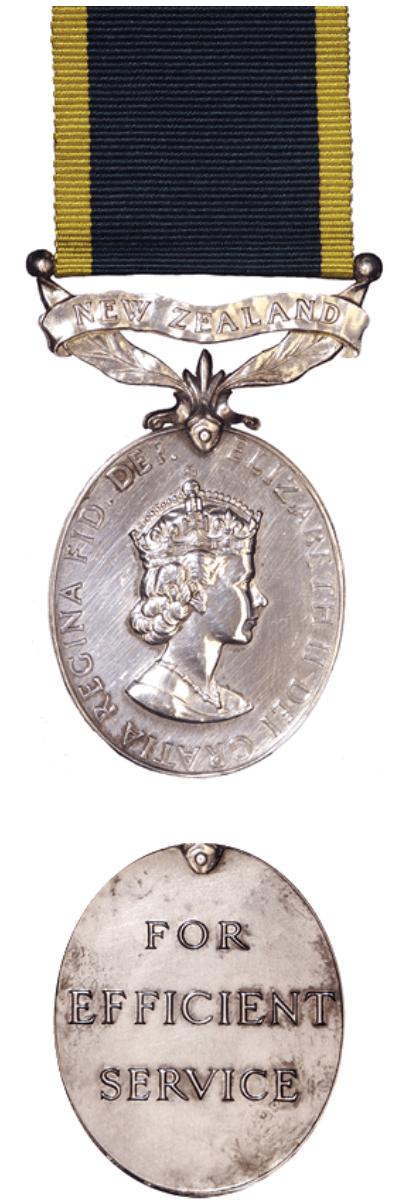
New Zealand Long and Efficient Service Medal
Herbert remained a stalwart of the Eketahuna community for the remainder of his life and passed away on 14 May 1946 at the age of 77 years and now rests in the Mangaoranga Eketahuna cemetery.
Notes
[1]The Cyclopedia of New Zealand [Taranaki, Hawke’s Bay & Wellington Provincial Districts], (Victoria University of Wellington, 1908), 726.
[2] “Alfred Henry Herbert “, Personal File, Archives New Zealand 1914.
[3] “Advertisements,” Evening Post, Volume XXXIII, Issue 76, 31 March 1887.
[4] “Advertisements,” Evening Post, Volume XXXIV, Issue 58, 6 September 1887.
[5]The Cyclopedia of New Zealand [Taranaki, Hawke’s Bay & Wellington Provincial Districts], 726.
[7] “Masterton,” New Zealand Times, Volume LVI, Issue 2285, 15 August 1894.
[8] Alfred managed the Eketahuna store, and his brothers Lancelot and Marcus managed Pahiatua and Alfredton stores. Herbert Brothers was incorporated as A.H Herbert and Company Limited on 6 March 1905 and dissolved on 1 July 1992.
[9] Peter Best, Eketahuna: Stories from Small Town New Zealand (Wairarapa Archive, 2001), Non-fiction, 30-31.
[10] “The Eketahuna Mounted Rifles,” Wairarapa Daily Times, Volume XXVI, Issue 6703, 8 November 1900.
[11] D. A. Corbett, The Regimental Badges of New Zealand: An Illustrated History of the Badges and Insignia Worn by the New Zealand Army (Auckland, N.Z.: Ray Richards, 1980, Revised enl. edition, 1980), Non-fiction, 160.
[12] Irene Adcock, A Goodly Heritage; Eketahuna and Districts 100 Years, 1873 – 1973 (Eketahuna Borough and County Councils, 1973), Non-fiction, 315-16.
[14] M. Soutar, Whitiki! Whiti! Whiti! E!: Māori in the First World War (Bateman Books, 2019), 185.
[15] Captain W.T Beck and Sergeant N.J Levien. “Appendices to War Diaries, I – Lxii,” Item ID R23486739, Archives New Zealand 1914-1915.
[16]Ordnance Manual (War), War Office (London: His Majesties Printing Office, 1914).
[17] Sergeants King and Levien to 2nd Lieutenant “Grants of Temporary Rank, Appointments and Promotions of Officers of the New Zealand Expeditionary Force,” New Zealand Gazette 8 July 1915.
[18] Arthur Forbes, A History of the Army Ordnance Services (London: The Medici society, ltd., 1929), 151.
[19] Records of the exact manning and organisation of the NZ Division DADOS branch have not been seen, but was similar to the organisation of the Australian DADOS Divisional Ordnance Staff, which was comprised of:
1 Officer as DADOS (Maj/Capt)
1 Conductor of Ordnance Stores per Divisional HQ
1 Sergeant AAOC per Divisional HQ
1 Corporal AAOC per Divisional HQ
3 RQMS (WO1) AAOC
3 Sergeants AAOC, 1 to each of 3 Brigades
3 Corporals AAOC, 1 to each of 3 Brigades
As the war progressed, additional Ordnance Officers were included in the DADOS establishment who, along with the Warrant Officer Conductors, managed the Ordnance staff and day-to-day operations allowing the DADOS the freedom to liaise with the divisional staff, units and supporting AOC units and Ordnance Depots. John D Tilbrook, To the Warrior His Arms: A History of the Ordnance Services in the Australian Army (Royal Australian Army Ordnance Corps Committee, 1989), 78.
[20] “Deputy Assistant Director of Ordnance Services (Dados) – War Diary, 1 August 1916 – 31 June 1918,” Archives New Zealand Item No R23487667 (1916-1918).
[21] Wayne McDonald, Honours and Awards to the New Zealand Expeditionary Force in the Great War 1914-1918, 3rd edition ed. (Richard Stowers, 2013), Directories, Non-fiction, 113.
[22] “Lost on the Persia,” New Zealand Herald, Volume LIII, Issue 16127, 15 January 1916.
[23] “Fallen New Zealanders,” New Zealand Times, Volume XLI, Issue 9521, 1 December 1916.
[24] Adcock, A Goodly Heritage; Eketahuna and Districts 100 Years, 1873 – 1973, 225.
[25] Wesley Parker, It Happened in Eketahuna: Four Years in the Life of a Boy (Mount St. John Press, 1990), Non-fiction, Autobiography, 95.
[26]Conference of Senior Officers, New Zealand Expeditionary Force, (Archives New Zealand, R22550177, 1919).
“Advertisements.” Evening Post, Volume XXXIII, Issue 76, 31 March 1887.
“Advertisements.” Evening Post, Volume XXXIV, Issue 58, 6 September 1887.
“Alfred Henry Herbert “. Personal File, Archives New Zealand, 1914.
“Appendices to War Diaries, I – Lxii.” Item ID R23486739, Archives New Zealand, 1914-1915.
Conference of Senior Officers, New Zealand Expeditionary Force. Archives New Zealand, R22550177, 1919.
The Cyclopedia of New Zealand [Taranaki, Hawke’s Bay & Wellington Provincial Districts]. Victoria University of Wellington, 1908.
“Deputy Assistant Director of Ordnance Services (Dados) – War Diary, 1 August 1916 – 31 June 1918.” Archives New Zealand Item No R23487667 (1916-1918,).
“The Eketahuna Mounted Rifles.” Wairarapa Daily Times, Volume XXVI, Issue 6703, 8 November 1900.
“Fallen New Zealanders.” New Zealand Times, Volume XLI, Issue 9521, 1 December 1916.
“Grants of Temporary Rank, Appointments and Promotions of Officers of the New Zealand Expeditionary Force.” New Zealand Gazette 8 July 1915.
“Lost on the Persia.” New Zealand Herald, Volume LIII, Issue 16127, 15 January 1916.
“Masterton.” New Zealand Times, Volume LVI, Issue 2285, 15 August 1894.
Ordnance Manual (War). War Office. London: His Majesties Printing Office, 1914.
“Returned Soldiers.” Evening Post, Volume CIII, Issue 136, 12 June 1922.
Adcock, Irene.A Goodly Heritage; Eketahuna and Districts 100 Years, 1873 – 1973.Eketahuna Borough and County Councils, 1973. Non-fiction.
Best, Peter. Eketahuna: Stories from Small Town New Zealand. Wairarapa Archive, 2001. Non-fiction.
Corbett, D. A. The Regimental Badges of New Zealand: An Illustrated History of the Badges and Insignia Worn by the New Zealand Army. Auckland, N.Z. : Ray Richards, 1980, Revised enl. edition, 1980. Non-fiction.
Forbes, Arthur. A History of the Army Ordnance Services. London: The Medici society, ltd., 1929.
McDonald, Wayne. Honours and Awards to the New Zealand Expeditionary Force in the Great War 1914-1918. 3rd edition ed.: Richard Stowers, 2013. Directories, Non-fiction.
Parker, Wesley. It Happened in Eketahuna: Four Years in the Life of a Boy. Mount St. John Press, 1990. Non-fiction, Autobiography.
Soutar, M. Whitiki! Whiti! Whiti! E!: Māori in the First World War. Bateman Books, 2019.
Tilbrook, John D. To the Warrior His Arms: A History of the Ordnance Services in the Australian Army Royal Australian Army Ordnance Corps Committee, 1989.
Warrant Officer Class One, Conductor Badge 1915-1918. Robert McKie Collection
The Honourable and Ancient Appointment of Conductor has origins dating back to 1327 where they are mentioned in the Statute of Westminster as the men whose job it was to conduct soldiers to places of assembly. The “Conductor of Ordnance” is also mentioned in the records of the siege of Boulogne in 1544. Surviving as an appointment directly related to the handling of stores in the British army until the late 19th century, the appointment was formalised by Royal Warrant on 11 January 1879 which established conductors of supplies (in the Army Service Corps) and conductors of stores (in the Ordnance Stores Branch) as warrant officers, ranking above all non-commissioned officers.
The need for a New Zealand Ordnance Corps had been discussed since the turn of the century, so when war came in 1914, New Zealand was without an Ordnance Corps. Once the lead elements of the NZEF disembarked and established itself in Egypt, a New Zealand Ordnance Organisation was hastily created from scratch. Growing from the New Zealand DADOS staff the embryonic New Zealand Army Ordnance Corps (NZAOC) was created as an NZEF unit during 1915 and was formally established as a unit of the NZEF establishment in January 1916.
Following the British model, the NZAOC included Warrant Officers Class One appointed as Conductors and Sub-Conductors as part of its organisational structure. Drawn from across the units of the NZEF and with an average age of 23, many of the men who were NZAOC Conductors had seen service at Gallipoli during the Dardanelles Campaign. Learning the hard lessons because of the administrative failures during that campaign, there is little doubt that these men understood the importance of their appointments in assuring that Ordnance stores were sourced and pushed directly forward to the frontline troops of the NZ Division.
The wide recognition in many historical sources that the New Zealand division was one of the best organised, trained and equipped Divisions in the British Army during the war in Europe is in part due to the contribution of the NZAOC and its conductors, with at least 4 four Conductors awarded Meritorious Service Medals for their work.
Warrant Officer Class One, Sub-Conductor Badge. 1915-1919 Robert McKie Collection
William Coltman
12/1025 Acting Sub-Conductor William Hall Densby Coltman, NZAOC. Auckland Weekly News/Public Domain
The first New Zealander to hold a Conductor appointment was Company Sergeant Major William Coltman. Enlisting into the Auckland Infantry Regiments in Sept 1914, Coltman served in the Dardanelles where he was injured. Transferring into the NZAOC in February 1916 as a Company Sergeant Major with the appointment of Acting Sub-Conductor. Coltman remained in this role with the NZAOC until March 1917 when he was commissioned as a 2nd Lieutenant and spent the rest of the war as an Infantry Quartermaster officer in the New Zealand Machine Gun Corps.
Charles Gossage
Charles Gossage enlisted in the Otago Mounted Rifles in September 1914. Serving in the Dardanelles, Gossage transferred into the NZAOC in February 1916. On the 24th of July 1916 with the rank of Company Sergeant Major, Gossage was promoted to Warrant Officer Class 1 with the Appointment of Conductor. Gossage would hold this appointment until the 24th of Jan 1917 when he was commissioned as a Lieutenant. Gossage would remain on the New Zealand Division DADOS staff, finishing the war as a Major and NZ Div DADOS. Awarded the OBE, Gossage would continue to serve in the Home Service NZAOC as an Accounting Officer until December 1922.
Arthur Gilmore
Arthur Gilmore enlisted in the Auckland Infantry Regiment in September 1914. Serving as part of the DADOS Staff at Gallipoli. Gilmore was formally placed on the strength of the NZAOC on the 8th of April 1916. In Dec 1916 Sergeant Arthur Gilmore was promoted to Warrant Officer Class 1 with the appointment of Conductor. Gilmore would remain as a Conductor in the NZEF until Feb 1919 when he was commissioned as a 2nd Lieutenant. For his services as a Conductor, he was awarded the MSM.
Walter Geard
Walter Geard enlisted in the Auckland Infantry Regiment in August 1914. Seeing Service in the Dardanelles. Staff Sergeant Geard was attached to the New Zealand Mounted Brigade Headquarters for Ordnance duties where he was promoted to Warrant Officer Class 1 with the appointment of Conductor on 1 Jan 1917. Geard’s tenure as a Conductor was short as he was commissioned as a 2nd Lieutenant on 20 June 1917. Transferred from Egypt to France in August 1918, Geard spent the rest of the war on the staff of the NZ Division DADOS, demobilising as a Lieutenant in 1919.
William Simmons
William Henchcliffe Simmons was a railway clerk who enlisted in D Battery of the New Zealand Field Artillery in August 1914. Seven days later Quartermaster Sergeant Simmons embarked as part of the NZEF Samoa Advance Force. Returning to New Zealand in March 1915, Quartermaster Sergeant Simmons was transferred into the 1st Battalion of the New Zealand Rifle Brigade which was then training a Trentham Camp. In October 1915 Quartermaster Sergeant Simmons deployed with the 1st Battalion of the New Zealand Rifle Brigade to Egypt. Disembarking in Egypt in November 1915 Quartermaster Sergeant Simmons was attached to Brigade Headquarters with the acting rank of Warrant Officer as the clerk NZAOC. Transferring into the NZAOC on the 26th of February 1916 with the rank of Company Sergeant Major. Promoted to Warrant Officer Class 1 with the appointment of Conductor on the 1st of January 1917. Simmons tenure as a Conductor was short as he was promoted to 2nd Lieutenant in June 1917. Simmons remained in the NZAOC filling various staff roles in France and England for the duration of the war, finally being appointed Honorary Captain in Feb 1920 when he was appointed as the Officer in Charge of NZ Ordnance in England, a post he held until October 1920 when he was demobilised. For his services as a Conductor, Simmons was awarded the MSM.
Clarence Seay
6/3459 Warrant Officer Class 1 (Conductor) Clarence Adrian Seay, MSM. NZAOC Archives New Zealand/Public Domain
Clarence Seay was a farm cadet who enlisted in C Company on the 8th Reinforcements on the 20th of August 1915. Arriving at the New Zealand Base depot in Egypt in November 1915, Seay was transferred into the NZAOC in February 1916. With the pending promotion of Conductor Simmons, Sergeant Seay was promoted to Temporary Warrant Officer Class 1 with the appointment of acting Sub-Conductor on the 23 Mar 1917. Attaining substantive rank as a Warrant Officer Class 1 with the appointment of Sub-Conductor on 28 April 1917. Seay was promoted to full Conductor on the 22nd of September 1917. Seay remained with the NZ Division for the remainder of the war. In May 1918 Seay suffered a personal loss when his younger brother Gordon Seay, was killed in action. Sadly Seay died of Influenza on the 20th of February 1919 in Cologne, Germany. Interred in the Commonwealth War Cemetery in Cologne. Based on his performance Seay was awarded the MSM
“For long and valuable service. This NCO has done continuous good work and has performed his duties in a most excellent manner. As Senior Warrant Officer, with the New Zealand Ordnance Department, his work has been of a most arduous character and has frequently involved him in situations which have called for a display of energy and initiative. In an advance, the necessity of clean clothing and socks, etc, for the fighting troops is sometimes very acute. Conductor Seay on his energy and ability has at times been of the greatest assistance to the DADOS in administrating a very important branch of the service.”
Walter Smiley
Enlisting into the Canterbury Infantry Regiment in August 1914. Injured in the Dardanelles, Smiley was evacuated to Malta, then England returning to ANZAC Cove on the 7th of December 1915,, where he was transferred into the NZAOC and attached to the Canterbury Battalion. Sergeant Walter Smiley was promoted to Temporary Warrant Officer Class 1 with the appointment of acting Sub-Conductor on the 23 April 1917. Gaining Substantive rank as a Warrant Officer Class 1 with the appointment of Conductor on the 20th of December 1917. Smiley would carry out his role as a Conductor first in France, then England from October 1918 until he was demobilised in October 1919.
Frank Hutton
Frank Hutton enlisted in the Otago Infantry Regiment in August 1914. After service in the Dardanelles, Hutton was promoted to Sergeant and transferred to the NZAOC on the 1st of December 1915. Sergeant Frank Hutton was promoted to Warrant Officer Class 1 with the appointment of Sub-Conductor on the 1st of December 1917. Remaining with the NZ Division for the remainder of the war, Hutton was demobilised in September 1919.
Hutton was re-enlisted into the NZAOC as a Lance Corporal on the 14th of December 1942 as an Ammunition Examiner in the Inspecting Ordnance Officer Group in the Northern Military district based at Ngaruawahia. Hutton was discharged from the RNZAOC on the 6th of June 1948 when he was 69 years of age.
Edward Little
Enlisting in the 5th Wellington Regiment on the 9th of August 1914, Little was transferred into the Otago Infantry Battalion on the 23rd of March 1915. Injured in the buttocks and shoulder in the Dardanelles after a recovery period Little was transferred into the NZAOC on the 17th of February 1916, moving with he NZ Divison to France. On the 15th of April 1917, Sergeant Edward Little was promoted to the rank of Warrant Officer Class 1 with the appointment of Sub-Conductor. Promoted to the rank of Warrant Officer Class 1 with the appointment of Conductor on the 31st of August 1918. Transferred to the Middle East in October 1918, Conductor Little spent the remainder of the war attached to the New Zealand Mounted Rifles Brigade Headquarters and was demobilised in October 1919.
John Goutenoire O’Brien
Private John O’Brien left New Zealand with the 6th Reinforcements on the 14th of August 1915. After service in the Dardanelles, O’Brien was transferred into the NZAOC in February 1916. Serving in France for 2 years O’Brien was assigned to London Headquarters in March 1918 as the Chief Clerk. Staff Sergeant John O’Brien was Promoted to Temporary Warrant Officer Class 1 with the Appointment of Acting Sub-Conductor on the 18 October 1918. Gaining Substantive rank as a Warrant Officer Class 1 with the appointment of Sub-Conductor on the 25th of November 1918. O’Brien was appointed as a Conductor on the 1st of Feb 1919. O’Brien was awarded the MSM and was the senior Warrant Officer NZAOC EF when he was demobilised in March 1920. His final duties included the indenting of new equipment for two divisions and a Mounted brigade that would equip the New Zealand Army until the late 1930s.
After a short stint serving in the NZAOC in New Zealand, O’Brien would return to his pre-war trade of banker. Immigrating to the United States, O’Brien attended De Paul University Law School in Chicago from 1921 to 1924. In 1926 O’Brien took up the position of vice-president of the Commercial National Bank in Shreveport, Louisiana. During the Second World War, O’Brien then a US Citizen served in the United States Army Air Force as a Lieutenant Colonel in the South-West Pacific Theatre of Operations.
Edwin Green
8/1484 Sub Conductor Edwin Stanley Green, NZAOC. Auckland Weekly News/Public Domain
Enlisting into the Otago Infantry Regiment in December 1915, Green served in the Dardanelles where he was wounded. Transferring into the NZAOC in December 1916, Staff Sergeant Edwin Green was Promoted to Temporary Warrant Officer Class 1 with the Appointment of Acting Sub-Conductor on the 20 October 1918. Gaining Substantive rank as a Warrant Officer Class 1 with the appointment of Sub-Conductor on the 26th of November 1918. Green was demobilised in Dec 1919.
Charles Slattery
A member of the Royal New Zealand Artillery since February 1898, Charles Slattery was transferred into the New Zealand Permanent Staff as a Quartermaster Sergeant for the Wellington Railway Battalion on the 7th of October 1913. Joining the 2nd Battalion of the Wellington Regiment as part of the 37th Reinforcements in November 1918. Slattery was then transferred to the NZEF New Zealand Army Ordnance Corps on the 6th of January 1919 and promoted to Warrant Officer Class One with the appointment of Conductor. Sadly Slattery died of Influenza on the 25th of February 1919 in Cologne.
Harold Hill
Enlisting into the Wellington Infantry Regiment in February 1915, Hill would see service in the Dardanelles before transferring into the NZAOC in February 1916. Promoted to Corporal in April 1916 and then Sergeant in September 1916. Sergeant Hill was promoted to Warrant Officer Class 1 with the appointment of Sub-Conductor on the 21st of Feb 1919. Hill was demobilised in October 1919.
Arthur Richardson
Initially enlisting in the Royal New Zealand Artillery in 1913. Serving with the NZEF from June 1917 to August 1919, Sergeant Artificer Richardson was temporarily transferred from the New Zealand Artillery into the NZAOC in Feb 1918. Promoted to Temporary Warrant Officer Class 1 with the appointment of Acting Sub-Conductor on the 3rd of Feb 1919. Richardson was demobilised from the NZEF on the 13th of Feb 1919 and returned to service with the Royal New Zealand Artillery. In 1928 Richardson was Transferred back into the NZAOC counting to serve until the creation of the New Zealand Electrical and Mechanical Engineers, retiring in 1951.
Hubert Wilson
Enlisting into the New Zealand Field Artillery in August 1914, Wilson was wounded in the thigh while serving in the Dardanelles. Remaining with the Artillery for several years, Staff Sergeant Wilson Transferred into the NZAOC in October 1918. Promoted to Warrant Officer Class 1 with the appointment of Acting Sub-Conductor on the 3rd of March 1919. Wilson was demobilised from the NZEF in May 1920. For his actions before joining the NZAOC Wilson was awarded the Military Medal.
From 1915 to 1996 the following Honours and Awards were awarded to members of the;
New Zealand Army Ordnance Corps (NZEF), 1915 – 1921
New Zealand Army Ordnance Department, 1917 – 1924
New Zealand Army Ordnance Corps, 1917 – 1947
New Zealand Ordnance Corps, 1940 – 1946
Royal New Zealand Army Ordnance Corps, 1947 – 1996
Military Cross
Military Cross. NZDF
The Military Cross was created on 28 December 1914 to be awarded to officers in recognition of “an act or acts of exemplary gallantry during active operations against the enemy on land.
1942
Temporary Captain Frank David Barry
For extreme devotion to duty, great determination and remarkable skill under difficult and hazardous circumstances. As OME of 15 Light Aid Detachment in the Libyan campaign of November – December 1941 he displayed great coolness under fire and inspired both his unit and other nearby units with confidence during the critical days of 29-30 November at Bel Hamed. During the recent fighting on the El Alamein line he constantly displayed initiative of the highest degree in repairing vehicles under extremely difficult conditions whist his recovery work was particularly outstanding. Night after night he recovered vehicles and guns from our forward minefields, and on many occasional he recovered vehicles and guns, both our own and enemy, from ‘No Mans Land’ and even German minefields. Due almost entirely to his efforts, eight 6-pdrs and three 50mm anti-tank guns were recovered and pout into fighting order in a very short time at a critical stage of the Al Alamein battle , and all this was done in addition to the normal repair and maintenance of his own unit – the 7th NZ Anti-Tank Regiment. His work has been really outstanding in this respect and he has been an inspiration to the whole NZ Ordnance Corps.
Military Medal
Military Medal. Wikipedia Commons
The Military Medal was created on 25 March 1916 to be awarded as the Other Ranks equivalent to the Military Cross.
1941
Private Mervyn William Curtis
During a heavy air attack on Maleme aerodrome on 15 May 1941, Pte Curtis was acting as a member of a machine gun section which had been located on the eastern perimeter of the aerodrome. A British ‘Gladiator’ machine was shot down and made a forced landing on the beach in front of one of the gun pits. the plane overturned and the pilot was pinned in his seat, upside dawn and was unable to extricate himself. Although an enemy plane was attempting to set fire to the damages British plane with incendiary bullets, Pte Curtis ran forward and freed the pilot from his parachute harness and took him back to safety.
1943
Sergeant Claude Rex Pulford
Companions of the Distinguished Service Order (DSO)
COMPANION OF THE DISTINGUISHED SERVICE ORDER. NZDF
The Distinguished Service Order was instituted in 1886 and awarded for meritorious or distinguished service by officers of the armed forces during wartime. The DSO was awarded to over 300 New Zealanders during both World Wars.
1916
Captain William Thomas Beck
For distinguished service in the field during the operations at the Dardanelles
1917
Lieutenant Colonel Alfred Henry Herbert
This officer had paid the greatest attention to his work and by his care and
attention to detail has very considerably reduced the wastage in the Division,
thereby effecting very material economy. I confidently recommend him for an award.
Most Excellent Order of the British Empire
The Most Excellent Order of the British Empire is a British order of chivalry established on 4 June 1917 by King George V. The five classes of appointment to the Order are, in descending order of precedence:
Knight Grand Cross or Dame Grand Cross of the Most Excellent Order of the British Empire (GBE)
Knight Commander of the Most Excellent Order of the British Empire (KBE)
Commander of the Most Excellent Order of the British Empire (CBE)
Officer of the Most Excellent Order of the British Empire (OBE)
Member of the Most Excellent Order of the British Empire (MBE)
The British Empire Medal is affiliated with the order, but its members are not members of the order.
Commander of the Order of the British Empire (CBE)
Commander of the Most Excellent Order of the British Empire. NZDF
1919
Lieutenant Colonel Herbert Edward Pilkington
1945
Brigadier Thomas Joseph King
1964
Brigadier Allan Huia Andrews
1993
Brigadier Piers Martin Reid
Officer of the Order of the British Empire (OBE)
Officer of the Order of the British Empire with 1917-35 Ribbon. NZDF
1919
Temporary Major Charles Ingram Gossage
Major Norman Joseph Levien
Major Thomas James McCristell
1943
Lieutenant-Colonel Allan Huia Andrews
Lt-Col Andrews as ADOS 2 NZ Division in the campaigns in Greece, Libya and the Western Desert displayed conspicuous skill and organising ability under difficult circumstances. As ADOS he has had the responsibility of the initial equipping of units of the Division, and by far the most difficult part of keeping units equipped to strength during battle, as well as the responsibility to the technical services of the NZOC. His organising ability, determination and skill have been an inspiration to all with whom he came in contact. In the battle of El Alamein he displayed executional organizing ability and untiring zeal in replacing unit equipment which had been lost or damaged in battle, and by his efforts in this direction fighting units were given added striking power.
1946
Lieutenant-Colonel Ernest Leonard Guy Bown
1953
Lieutenant-Colonel Francis Reid
1960
Major Francis Anness Bishop (For service in Malaya 1Jan-31 July 1960)
1961
Lieutenant-Colonel Henry McKenzie Reid
1965
Lieutenant-Colonel Edward William Whiteacre
1984
Brigadier Malcolm John Ross
Member of the Order of the British Empire (MBE)
Member of the Order of the British Empire MOD UK
1919
Major Norman Joseph Levien
1939
Captain David Nicol
1941
Temporary Captain George Douglas Pollock
1942
Lieutenant Colonel John Owen Kelsey
Second Lieutenant Neville John Rollison
1944
Warrant Officer Class Two Alan Frank Curgenven
Captain William Charles Hastings
Lieutenant George Rupert Gable
This officer has, by ingenuity and improvisation, showed great initiative and ability in overcoming difficulties and in carrying out his work during the whole period of his services in Fiji, New Caledonia, Guadalcanal, Vella Lavella and Green Island. In so doing he has set an outstanding example to his men in carrying out their work of maintaining the division’s equipment at a high standard of serviceability.
1945
Captain (Temporary Major) Harold Cordery
Major Frank Arthur Jarrett
Second Lieutenant Desmond Godfrey Leitch
Temporary Warrant Officer Class One Herbert James Shepherd
1946
Lieutenant Bernard Ewart Woodhams
1949
Warrant Officer Class One Edward Coleman
1950
Warrant Officer Class One William Sampson Valentine
1953
Colonel Geoffrey John Hayes Atkinson
1960
Major Francis Anness Bishop
1961
Lieutenant and Quartermaster Henry Williamson
1962
Staff-Sergeant Robert James Plummer
1964
Major Jack Harvey
1974
Warrant Officer Class One Henry Eric Luskie
1975
Warrant Officer Class Two Ian Mac Stevenson
1977
Warrant Officer Class One Barry Stewart
1978
Warrant Officer Class Two Brian Michael Colbourne
1983
Major and Quartermaster Edward Vennel Sweet
1994
Captain Michael Anthony Mendonca
British Empire Medal (BEM)
British Empire Medal. NZDF
1945
Staff Sergeant Patrick Arthur Fear
1946
Staff Sergent William Alexander Sammons
1953
Sergeant (temporary) James Russell Don
“Sgt Don consistently carried out his duties in the Korean Sub-Depot of the Commonwealth Ammunition Depot in a most praiseworthy manner by his personal conduct and leadership he set a find (sic) example at all time to the troops under his command. He worked with untiring energy in supervising the receipt and issue of ammunition and never failed when day and night demands from the forward areas were heavy. He rendered services in excess of what is normally expected of an NCO of his rank”
1959
Staff-Sergeant (Temporary) Maurice William Loveday
1961
Warrant Officer Class Two (Temporary) Ian McDonald Russell
1962
Staff-Sergeant Robert James Plummer
1967
Staff Sergeant Leslie Mullane
1981
Corporal Tere William Kururangi
1983
Temporary Warrant Officer Class Two Peter Gordon Barnes (Territorial Force)
1994
Warrant Officer Class Two Tony John Harding
Corporal Richard Stuart Tyler
1995
Warrant Officer Class Two Ross Charles Fearon
Meritorious Service Medal (MSM)
Meritorious Service Medal. NZDF
The Meritorious Service Medal was awarded between 1898 and 2013. initially instituted by British Royal Warrant on 28 April 1898 as an award for Warrant Officers and Senior Non-Commissioned Officers of the Army.
Between 1985 and October 2013, the Meritorious Service Medal was awarded for meritorious service of twenty-one years or more and recipients must have already held a long service and good conduct medal. The number of army personnel holding the award was restricted to twenty serving Army personnel.
Nearly all recipients of this medal have been of the rank of Sergeant or above. However, in the early 20th Century some awards were made to lower ranks. The last Royal Warrant (1985) specified that only those with the substantive rank of Sergeant could be considered for award of the medal.
1917
Warrant Officer Class One Wilhelm Henchcliffe Simmons
This NCO has performed all his duties with conspicuous ability and has contributed to the efficiency of his Corps.
1918
Armourer Sergeant Quartermaster Sergeant George Bush
Armourer Sergeant Clarence Guy Charles Wagg
For conspicuous ability as Armourer Sergeant in charge of Divisional Armourers and through his energy and application, over one hundred Lewis and Vickers Guns, brought in by Salvage Companies, were repaired and put into action at a critical period of the Passchendaele offensive
1919
Staff Sergeant Major (Honorary Lieutenant) Albert Austin
Warrant Officer Class One (Conductor) Arthur Gilmore
Armourer Sergeant Percival James Lister
For consistent devotion to duty. 9/119 Arm Sergeant Percival James Lester has done consistently good work as Armourer Sergeant of this Battalion. Possessing exceptional mechanical and good inventive ability, he has to his routine duties, designed and constructed several forms of apparatus intended to improve the handling of Lewis gun etc., He has been unsparing in his endeavours to keep efficient the arms and other mechanical appliances in use by the unit, working long hours to do everything possible for the good of the ordnance of the Battalion
Conductor John Goutenoire O’Brien
Conductor Mark Leonard Hathaway
Warrant Officer Class One (Conductor) Clarence Adrian Seay
For long and valuable service. This NCO has done continuous good work and has performed his duties in a most excellent manner. As Senior Warrant Officer, with the New Zealand Ordnance Department, his work has been of a most arduous character and has frequently involved him in situations which have called for a display of energy and initiative. In an advance the necessity of clean clothing and socks etc., for the fighting troops is sometimes very acute. Conductor Seay on his energy and ability has at times been of the greatest assistance to the DADOS in administrating a very important branch of the service.
1920
Armourer Sergeant Quartermaster Sergeant John Alexander Adamson
Private Patrick Keeshen
Staff Sergeant David Llewellyn Lewis
1921
Corporal John Francis Hunter
1922
Private Charles William Marshall
Warrant Officer Class One Thomas Webster Page
1923
Staff Sargent Saddler George Alexander Carter
Armourer Staff Quartermaster Sergeant Thomas Reid Inch
Armourer Sergeant Harold Victor Coyle Reynolds
1924
Corporal Edgar Charles Boalt
Armourer Sergeant Andrew Archibald Young
1926
Warrant Officer Class One Michael Joseph Lyons
1927
Private William Valentine Wood
1929
Lance Corporal William Terrington Popple
Sergeant Albert Edward Shadbolt
Corporal Earnest John Williams
1930
Warrant Officer Class Two Samuel Thomson
1931
Corporal Philip Alexander Mackay
Sergeant Edward Ashton Waters
1943
Warrant Officer Class One Arthur Sydney Richardson
1946
Warrant Officer Class One Percy Charles Austin
Warrant Officer Class One John William Dalton
Warrant Officer Class One Eric John Hunter
1947
Warrant Officer Class One Bertram Buckley
Warrant Officer Class One Willian Charles Hastings
1955
Warrant Officer Class One William Galloway
1957
Warrant Officer Class One Bernard Percy Banks
Warrant Officer Athol Gilroy McCardy
1967
Warrant Officer Class One Maurice Sidney Phillips
1968
Staff Sergeant Kevin Patrick Anderson
Warrant Officer Class One Murray Alexander Burt
1969
Warrant Officer Class One Earnest Maurice Bull
Warrant Officer Class One John Bernard Crawford
Warrant Officer Class One Alick Claud Doyle
Warrant Officer Class One Hector Searl McLachlan
Warrant Officer Class One Douglas Keep Wilson
1972
Warrant Officer Class One Barry Stewart
Warrant Officer Class One David Gwynne Thomas
1976
Warrant Officer Class One George Thomas (Rockjaw) Dimmock
1978
Warrant Officer Class Two Ian McDonal Russell
1979
Warrant Officer Class One Bryan Nelson Jennings
1981
Warrant Officer Class One Alexander Harvey McOscar
1982
Warrant Officer Class One David Andrew Orr
Warrant Officer Class One (Conductor) Dave Orr receiving his MSM from the Commander NZ Force SEA, Brigadier Burrows 1982. Joe Bolton Collection
1986
Warrant Officer Class One Anthony Allen Thain
1994
Warrant Officer Class One David Wayne Kneble
The Efficiency Medal
The Efficiency Medal and clasps are rewards for long and meritorious service by warrant officers, non-commissioned officers, and soldiers of the New Zealand Territorial Force who have performed the requisite qualifying service under these regulations.
1937
E.T Prichard (18-Year Clasp)
31289 R.H Miller (24-Year Clasp)
34927 R.B Mendoerwcroft (18-Year Clasp)
1942
A Paton (24-Year Clasp)
1946
31690 J.H Bell (18-Year Clasp)
1954
30224 F.A Bishop
1955
31365 J.A.G Bremner
35454 E.C Pedersen
31246 D.K Wilson
1956
37462 D.H Driver
1969
717032 L.A Cairns-Cowan (24-Year Clasp)
1973
209062 I.M Stevenson
1977
J839140 R.J.R Peterson (18-Year Clasp)
1978
4 76998 R.D Cryer
1981
G728945 G.N Young
1982
F484385 R.C Kiddie
1985
W853550 P.V Collins
G755280 J.R Ealker
1986
V44294 B.A Goldstone
G76566 P.W Finnerly
1987
F744929 C.C Olsen
1988
X7 59734 B.R Neal
E755278 B.G Gooch
1989
G20933 B Bremner
R42335 G.L McGhie
K478041 W Pautapa
1990
841470 B.R Swain
K632808 R.J.R Webb
J768576 C.W Cormack, 1 Bde Wksp
1993
W75890 M.J Emery, 1 Log Regt
V75096 K.L Monk, 1 Log Regt
U748162 G.J West, 1 Log Regt
Mentioned in Dispatches (MID)
A Mentioned in Dispatches award was awarded when a serviceman’s name appeared in an official report written by a superior officer and sent to the high command, in which his or her gallant or meritorious service was described.
1916
Captain William Thomas Beck
1917
Lieutenant Colonel Alfred Henry Herbert
1918
Staff Quartermaster-Sergeant Reginald Pike
1919
Armourer-Sergeant Charles Mervyn Abel
For distinguished and gallant services and devotion to duty during the period 16th September 1918 to 15th March 1919
Captain Charles Ingram Gossage
For distinguished and gallant services and devotion to duty during the period 16th September 1918 to 15th March 1919
Corporal Matthew Henderson
For distinguished and gallant services and devotion to duty during the period 16th September 1918 to 15th March 1919.
Warrant Officer First Class (Conductor) Clarence Adrian Seay
1941
Staff Sergeant Stanley Copley Bracken
Private John Wilson Wallace
1942
Second Lieutenant Thomas Lindsay Cooper
Captain Donald Edward Harper
Lieutenant Colonel John Owen Kelsey
1944
Captain John Brodie Andrews
Captain Gordon Stanley Brash
Staff Sergeant Allen Anthony McMahon
Lance Corporal Colin James Ross
Staff Sergeant John Bell Taylor
Warrant Officer Class One Robert William Watson
1945
Staff Sergeant Francis William Thomas Barnes
Honorary Major Conrad William Owen Brain
Staff Sergeant Henry France
Corporal Lewis James Garnham
Corporal Robert Love Gibbs
Lieutenant Colonel Donald Edward Harper
Captain Robert Clay Jones
Lieutenant Colonel John Owen Kelsey
Warrant Officer Class Two Thomas Edward Lawson
Corporal Charles Hector Lorrett
Private William McCullough
Warrant Officer Class Two Alexander Douglas McKenzie
Captain Harrison Lee McLaren
Warrant Officer Class Two Robert Morrison
Sergeant Arthur William Thomas Pearce
Staff Sergeant Lionel Pedersen
Corporal Stanley Hewitson Phillips
Warrant Officer Class Two James Pilgrim
Staff Sergeant John Frederick Popenhagen
Warrant Officer Class Two James Roughan
Private John Edwin Sanders
Corporal Gilbert Scarrott
Warrant Officer Class One Julius John Charles Schultz
Private Charles Edward Sumner
Corporal Thomas Henry Sunley
Sergeant Peter Llewellyn Wagstaff
1946
Corporal Harding George Bommer
Warrant Officer Class Two Thomas Clifford Catchpole
Sergeant John Earnest Donoghue
Private Vernon Charles Goodwin
Lance Corporal Herbert Ernest Edwin Green
Sergeant Leslie Louis Merlin Hallas
Major Hugh France Hamilton
Private Charles Wesley Helliwell
Corporal Douglas Haig Spence Hunter
Lance Corporal Arthur Leask
Corporal William Hugh McIntyre
Lance Corporal Jack Clifford Miller
Captain Harold Oakley Nuttall
Private Albert Nuttridge
Private Edwin Albert Oberg
Captain Ronald Stroud
Captain Edwin Charles Sutcliffe
Second Lieutenant Ian Talbot
Driver Maurice Joseph Trewarn
Private Charles Sutcliffe West
Corporal Robert Yates
1947
Corporal Jack Stanley Wooster (Recommended)
1968
Captain and Quartermaster (temporary) David Ralph Hughes
Legion of Merit
Legion of merit. Wikipedia Commons
The Legion of Merit is a United States military award that is given for exceptionally meritorious conduct in the performance of outstanding services and achievements. The decoration is issued to members of the United States and foreign militaries.
1947
Lieutenant-Colonel Maurice Salmon Myers.
Colonel Myers has been head of the Ordnance Service of this division since its arrival in the South Pacific area in November 1942. Throughout his employment in this capacity he has rendered signal service to the division, notably in regard to the procurement of equipment which has been supplied to us through American sources. Without his careful foresight and planning the equipment problems of the Third New Zealand Division would have been much greater than they proved to be.
Armed Forces Honour Medal 2nd Class
South Vietnam Honour Medal 2nd class
The Armed Forces Honour Medal was a South Vietnamese medal awarded to any member of the military who actively contributed to the formation and organisation of the Vietnamese military in South Vietnam. The medal was intended for non-combat achievements. The second class medals were awarded to warrant officers and enlisted personnel.
Staff Sergeant G.W. Byrom
Sergeant B.R. Swain
Sources
Beattie, P., & Pomeroy, M. (2016). Gallant acts & noble deeds: New Zealand Army honours and awards for the second World War. Auckland: Fair Dinkum Publications.
Chamberlain, H. (1995). Service Lives Remembered: The Meritorious Service Medal in New Zealand and Its Recipients, 1895-1994. H. Chamberlain.
McDonald, W. (2001). Honours and Awards to the New Zealand Expeditionary Force in the Great War, 1914-1918. Hamilton, New Zealand: Richard Stowers.
Polaschek, A. (1983) The complete New Zealand Distinguished Conduct Medal. Christchurch, Medals Research Christchurch.


 Charles Gossage enlisted in the Otago Mounted Rifles in September 1914. Serving in the Dardanelles, Gossage transferred into the NZAOC in February 1916. On the 24th of July 1916 with the rank of Company Sergeant Major, Gossage was promoted to Warrant Officer Class 1 with the Appointment of Conductor. Gossage would hold this appointment until the 24th of Jan 1917 when he was commissioned as a Lieutenant. Gossage would remain on the New Zealand Division DADOS staff, finishing the war as a Major and NZ Div DADOS. Awarded the OBE, Gossage would continue to serve in the Home Service NZAOC as an Accounting Officer until December 1922.