ANZAC Day Reflections: Honouring the Ordnance Soldier – Their Legacy Lives On in the RNZALR

ANZAC Day is a sacred day of remembrance and gratitude in New Zealand. It is a day when we pause to honour the breadth of military service—those who stormed the beaches and scaled the ridgelines, and those who sustained them from behind the lines. Among these often-unsung heroes are the men and women of the Ordnance Corps. Ordnance soldiers have provided the New Zealand Army with the weapons, ammunition, equipment, and logistical support necessary to fight, survive, and succeed for over a century. Their role has always been vital, even if it has been carried out of the limelight.

But what exactly is an Ordnance soldier?

At their core, Ordnance soldiers are Logistics Specialists and Ammunition Technicians—responsible for ensuring that every frontline soldier has what they need, when they need it. They manage everything from the smallest screw in a field weapon to the vast stocks of food, clothing, and ammunition that sustain entire armies. Their work includes storage, distribution, accounting, repair, salvage, and technical inspection. In short: if it moves, fires, feeds, or protects, it likely passed through the hands of Ordnance personnel.

The roots of military ordnance stretch deep into history. The first recorded Ordnance Officer in the British military was appointed in 1299 to manage siege equipment, such as catapults and battering rams. Over time, these responsibilities evolved into a professional and structured system of military storekeeping and supply, one that reached New Zealand in the 1840s with the arrival of British Imperial forces.

By the 1860s, as the Imperial presence waned, the responsibility for military logistics was gradually handed over to New Zealand personnel. The Defence Stores Department was formally established in 1869 to oversee the nation’s military stores. This marked the beginning of New Zealand’s independent ordnance tradition. In 1917, during the First World War, the New Zealand Army Ordnance Corps (NZAOC) was officially formed, taking over duties from the Defence Stores Department. The Corps provided critical support throughout the war and maintained the Army through the interwar years.

With the Second World War outbreak, the Ordnance Corps expanded dramatically. To support 2NZEF, the New Zealand Ordnance Corps (NZOC) was raised for overseas service, while a separate NZOC served as the NZAOCs Territorial element. In 1942, the engineering and maintenance functions of the NZOC operating in the Middle East were separated to form the New Zealand Electrical and Mechanical Engineers (NZEME). This change was mirrored in New Zealand in 1946, when workshops were transferred from the NZAOC to the newly created NZEME.

In recognition of its wartime service, King George VI granted the “Royal” prefix to the Corps on 12 July 1947, making it the Royal New Zealand Army Ordnance Corps (RNZAOC). That same year, the territorial and regular elements were merged into a single corps that would serve with distinction for the next half-century.

Every ANZAC Day, we reflect on the legacy of the Ordnance soldier—from the dusty cliffs of Gallipoli and the battlefields of North Africa to the supply depots of World War II, the jungles of Southeast Asia, and the humanitarian missions of the late 20th century. Their story did not end with the close of the Cold War. In 1996, the RNZAOC was amalgamated with the Royal New Zealand Corps of Transport (RNZCT) and the Royal New Zealand Electrical and Mechanical Engineers (RNZEME) to form the Royal New Zealand Army Logistic Regiment (RNZALR)—a unified, modern logistics formation designed to meet the evolving demands of military operations in the 21st century.

The legacy of the Ordnance soldier lives on today in every RNZALR Logistic Specialist and Ammunition Technician. Their story is not just a historical record—it is the very foundation of the RNZALR. Their values of resilience, quiet courage, and professional excellence continue to shape the New Zealand Army’s ability to sustain and succeed at home and abroad.

Gallipoli and the First World War: The Storekeeper on Anzac Beach

The story of the New Zealand ordnance soldier begins amid the brutal landing at Gallipoli on 25 April 1915. Captain William Beck, a New Zealand Staff Corps officer, was appointed Deputy Assistant Director of Ordnance Services (DADOS) for the New Zealand and Australian Division. According to several accounts, Beck was the first New Zealander ashore at ANZAC Cove, leading the landing of Godley’s divisional headquarters under intense fire.

His task was immense. Amid the beachhead’s chaos, confusion, and carnage, Beck quickly set about establishing a makeshift ordnance dump right on the shoreline—improvising with salvaged crates, scattered supplies, and a growing stream of urgently needed materiel. As soldiers surged inland and casualties mounted, Beck and his small team organised the distribution of ammunition, rations, clothing, and basic field stores to units already under fire in the hills above. Without shelter, maps, or proper infrastructure, this operation became a lifeline to the forward troops.

Supplies on the beach at ANZAC Cove 1915. Athol Williams Collection, Alexander Turnbull Library

Beck worked under relentless fire, including from a remarkably accurate Turkish artillery piece that pounded the beachhead daily. Nicknamed “Beachy Bill” by the troops, the gun became infamous for zeroing in on the supply areas, and Beck’s improvised depot was one of its most frequent targets. The name, according to some accounts, was given in ironic tribute to Captain Beck himself, whose unwavering presence under fire seemed to draw the enemy’s attention as reliably as the tides. Despite the danger, Beck remained calm and courteous, continuing to perform his duties in conditions that would have driven many to cover. His efforts earned him the enduring moniker “the brave storekeeper on Anzac Beach.” He became a quiet legend among his peers. General Sir William Birdwood, commanding the ANZAC forces, was said to personally check on Beck during his rounds, out of admiration and concern. Beck’s courage and composure under fire became emblematic of the Ordnance Corps’ ethos: professionalism in adversity, and mission before self.

Though he was later evacuated due to illness caused by the stress of battle in August 1915, Captain Beck’s role at Gallipoli demonstrated how critical logistics were to the survival and sustainment of fighting troops—and that the Ordnance soldier was not a rear-echelon presence, but a frontline enabler in every sense.

Following the Gallipoli campaign, the New Zealand Expeditionary Force (NZEF) was reorganised and redeployed to the Western Front in France and Belgium, as well as to the Sinai and Palestine campaigns in the Middle East. What began in 1914 as a two-man effort—Beck and Sergeant Norman Levien—expanded rapidly into a structured logistics organisation. In 1917, the New Zealand Army Ordnance Corps (NZAOC) was formally established as a dedicated branch of service, recognising its work’s increasingly specialised and essential nature.

On the Western Front, Ordnance personnel established and managed supply dumps and armourers’ workshops across the scarred landscapes of the Somme, Messines, and Passchendaele. They worked in trenches, mud, and snow—often within range of enemy artillery—ensuring that troops had the bullets, boots, tools, and trench stores required to sustain a static war of attrition.

Their responsibilities went well beyond basic supply. Ordnance units also operated salvage sections to recover, repair, and repurpose battlefield equipment—a critical function in conserving resources and maintaining operational tempo. They ran mobile repair facilities and oversaw essential services like bath and laundry units, which not only preserved hygiene in the harsh conditions of trench warfare but also boosted morale and prevented disease. These services reflected the Ordnance Corps’ holistic approach to sustaining soldiers, not just with materiel, but with cleanliness, comfort, and care in brutal circumstances.

In the Middle East, NZAOC detachments supported mounted operations across the harsh deserts of Sinai and Palestine. Operating in support of the New Zealand Mounted Rifles Brigade, Ordnance soldiers adapted their methods to suit long, exposed supply lines and the mobile nature of desert warfare. They managed camel trains, improvised field depots, and operated forward repair points—often little more than canvas shelters in the sand—to keep men and animals in the fight. Salvage and maintenance tasks were equally essential here, where resupply could be days away and every item had to be made to last.

By the end of the First World War, the NZAOC had grown into a compact, disciplined, and highly respected corps. From the mud of Flanders to the sands of Beersheba, their work underpinned New Zealand’s military effort. Though rarely seen in official war photographs or commemorated in mainstream histories, their contributions were vital. They demonstrated that logistics was not a sideline to combat—it was its backbone. They also laid the foundation for a professional military logistics tradition in the RNZALR today.

The Second World War and Beyond: Backbone of the Battlefield

During the Second World War, the NZAOC matured into a seasoned and indispensable pillar of military capability. Whether supporting the fight abroad or maintaining the war effort at home, Ordnance personnel were the engine behind the Army’s ability to project and sustain force across multiple theatres of war.

North Africa and Italy: Desert Sands and Mountain Passes

In the North African campaigns of 1941–42, Ordnance units operated across Egypt and Libya’s vast, unforgiving deserts, supplying the 2nd New Zealand Division during pivotal battles such as Operation Crusader and El Alamein. Supply depots were often under canvas, exposed to enemy air raids and desert winds. Light Aid Detachments worked tirelessly in the blistering heat to keep tanks, trucks, and artillery in the fight, repairing on the move and recovering damaged equipment under fire.

A dedicated Ordnance Convoy Section was raised to support the increasing volume and complexity of operations. Its task was to move stores and equipment from rear areas to forward supply points, filling a critical gap when the New Zealand Army Service Corps (NZASC) could not meet demand. These convoys ensured a continuous flow of tools, spare parts, and personal equipment to the front, often through contested or poorly marked desert tracks.

The NZ Divisional Salvage Company also operated until late 1941, recovering and repurposing valuable battlefield materials—everything from damaged vehicles to discarded equipment. This function saved resources and contributed to operational sustainability by rapidly recycling assets back into the supply chain.

Ordnance support also extended to troop welfare. Mobile Bath and Laundry Sections accompanied the Division to provide frontline hygiene services, which were essential in preventing disease, exchanging clothing, maintaining morale, and improving the force’s overall combat effectiveness. Their presence in forward areas helped ensure that troops remained as healthy and combat-ready as conditions allowed.

Fred Kreegher, New Zealand Ordnance Field Park, sorting out stores in the rear of his Bin Truck. The Noel Kreegher collection

When the Division redeployed to Italy in late 1943, the harsh desert gave way to snow-covered mountains and treacherous river valleys. But the demands on Ordnance personnel did not ease. During gruelling campaigns at Monte Cassino and through the Po Valley, the NZOC once again delivered. Ordnance Field Parks and dumps were established within range of enemy guns, and equipment was recovered, repaired, and reissued under complex and often perilous conditions.

These layered capabilities—convoy operations, salvage and recovery, technical maintenance, and personal support—ensured the Division could manoeuvre and fight confidently, knowing its logistical tail was secure. The Ordnance Corps wasn’t simply supporting the fight—it was integral to sustaining it.

The Pacific Theatre: Islands of Sustained Effort

While New Zealand’s main expeditionary force focused on Europe and the Mediterranean, many New Zealand troops were also deployed to the Pacific. Here, the NZAOC supported the 3rd New Zealand Division across island bases in New Caledonia, the Solomon Islands, Tonga, and Fiji. These were remote and logistically challenging environments—characterised by tropical diseases, heavy rain, mud, and dense jungle.

Ordnance detachments established supply points, maintained stores, repaired equipment, and ensured operational readiness across scattered islands. These locations often lacked established infrastructure, requiring personnel to be resourceful and adaptable. Camp maintenance, local procurement, and even salvaging enemy materiel became part of the day-to-day tasks.

Although the 3rd Division never saw major set-piece battles like those in North Africa or Italy, it did undertake several opposed amphibious operations and complex island-clearing operations, most notably in the Solomon Islands campaigns at Vella Lavella, Treasury Islands, and Green Island. These landings were tactically complex and logistically demanding, requiring close coordination between combat troops and supporting elements. The Division’s presence helped safeguard New Zealand’s Pacific interests and contributed meaningfully to the broader Allied campaign in the South-West Pacific Area. The Ordnance Corps was instrumental in keeping this contribution viable—its soldiers operated under arduous conditions, far from public view but never from operational necessity.

The Home Front: Sustaining the War Machine

Back in New Zealand, the Ordnance Corps played an equally vital—if often overlooked—role in sustaining the nation’s war effort. Depots at Trentham, Hopuhopu, Burnham, Palmerston North and Waiouru became crucial hubs for receiving, inspecting, storing, and distributing supplies to deployed units. The scale of this effort was immense: weapons, uniforms, vehicle parts, ammunition, and medical supplies flowed in and out of these depots on a daily basis.

Ordnance staff oversaw procurement, stock accounting, and quality control, ensuring that New Zealand’s contribution to the global conflict was met efficiently and precisely. In addition to servicing the expeditionary forces, these depots supported the Home Guard, Territorial units, and mobilisation centres. When new battalions were raised or re-equipped, Ordnance issued the kit and ensured everything was fit for purpose. This included the units of the 2nd New Zealand Expeditionary Force deployed overseas, as well as the three Divisions and supporting arms raised for home defence. These domestic formations—charged with protecting New Zealand from possible invasion—required full logistical support, from uniforms and webbing to weapons, ammunition and transport. Ordnance Corps personnel were central to ensuring these forces were ready to respond, maintaining a continuous flow of supplies while adapting to changing wartime demands.

“Repairing despatch riders’ motor-cycles. Photo of mechanics and motorcyclists repairing motorcycles at a field workshop during military manoeuvres in Northland.” Auckland Weekly News, 23 December 1942, p.14 Auckland Libraries Heritage Collections AWNS-19421223-14-03

The wartime workforce also included women, with members of the New Zealand Women’s Army Auxiliary Corps (NZWAAC) taking on duties in Ordnance depots, handling clerical tasks, managing stores, and supporting logistics operations nationwide. Their involvement further highlights the adaptability and inclusivity of the Ordnance mission in meeting the demands of total war.

Post-war Transition

Post-war deployments saw Ordnance personnel serve in Japan, Korea, Malaysia, Vietnam, and beyond—often integrated within British, Australian, or Commonwealth logistics formations. Though New Zealand’s contribution to these conflicts was modest in size, the professionalism and impact of its Ordnance soldiers were significant. In the Korean War (1950–53), New Zealand’s primary combat force—16th Field Regiment—was supported by a small but capable number of logistics specialists. Ordnance staff embedded within allied supply chains, managing stores, issuing ammunition, and repairing equipment under the demanding conditions of the Korean Peninsula’s harsh winters and mountainous terrain.

During the Malayan Emergency (1948–1960) and the subsequent Indonesian Confrontation (1962–1966), New Zealand troops operated in dense jungle environments that tested their combat and logistics capabilities. Ordnance soldiers were seconded as individuals to the New Zealand Battalion or British units, where they maintained supply lines through monsoon rains, oppressive humidity, and remote jungle bases. Their tasks ranged from maintaining small arms and issuing jungle kit to managing the complex movement of stores between staging areas and patrol bases—a vital function in an environment where regular resupply was challenging and sometimes depended on airdrops or riverine transport.

Although New Zealand did not deploy a complete Ordnance unit in Vietnam, RNZAOC personnel were seconded individually to Australian and United States forces. These included roles such as supply officers, ammunition controllers, and non-commissioned officers (NCOS) stationed at key logistics hubs like Nui Dat and Vung Tau. Working in a high-tempo combat zone, they handled everything from weapons and clothing to fuel, spare parts, and ammunition—often under the threat of enemy attack. The complexity of the Vietnam conflict demanded rapid response times, adaptability, and technical proficiency, all of which the Ordnance soldiers delivered in spades.

Beyond direct deployments, Ordnance personnel were also deeply involved in supporting the considerable effort required to sustain a deployable division maintained under New Zealand’s national service and conscription scheme during the Cold War. This mobilisation model meant that the RNZAOC was responsible for equipping, maintaining, and provisioning a standing force-in-being that could be rapidly expanded in times of crisis. Warehouses and mobilisation stores across the country were stocked with weapons, webbing, clothing, communications equipment, and general supplies—ready to be issued to citizen-soldiers if called upon. The planning, accounting, and logistical foresight required to maintain this latent capability were immense, and it stood as a testament to the professionalism of the Corps.

Across these theatres and responsibilities, Ordnance personnel served in austere and unpredictable environments. Whether embedded with an allied supply unit in the jungle or managing stockpiles for national mobilisation, they maintained the flow of materiel that kept New Zealand’s military effort credible and ready. Though they rarely received public recognition, their contribution was the vital connective tissue that made readiness a reality.

Peacekeeping and Modern Missions: From Mogadishu to the Pacific

In the late 20th century, as New Zealand’s defence priorities shifted toward peacekeeping and international humanitarian support, Ordnance soldiers once again rose to meet the challenge—this time under the flag of the United Nations. The 1992 deployment to Somalia marked a pivotal moment in New Zealand’s operational history and the modern evolution of the RNZAOC. In response to a deteriorating humanitarian crisis fuelled by civil war and famine, the UN launched a multinational intervention to secure aid routes and stabilise the region. New Zealand’s initial contribution to this effort—the New Zealand Supply Detachment—consisted primarily of 28 RNZAOC personnel, marking the first time in decades that an Ordnance-led contingent was deployed operationally in its own right.

Arriving in Mogadishu in December 1992 as part of the Unified Task Force (UNITAF), the detachment was tasked with establishing a functioning logistics capability in a highly hostile and volatile environment. Somalia’s capital had no functioning government, no stable infrastructure, and was riddled with armed factions. Despite the risks, the RNZAOC personnel immediately began establishing supply chains, securing local procurement channels, and distributing food, water, and stores to support the broader UN mission. They set up New Zealand’s main camp at the now well-known base called “Taniwha Hill,” which would symbolise Kiwi resilience amid chaos.

New Zealand soldiers leave their camp to conduct a patrol. NZDF Offical

Working out of hastily converted shipping containers and tents in the sweltering heat, the team operated under constant threat of gunfire, looting, and militia activity. Despite the mission’s peacekeeping label, it quickly became apparent that they were operating in a conflict zone. Convoys were escorted, personal weapons were always carried, and supply runs often meant travelling at high speed through hostile streets to avoid ambush. One RNZAOC NCO recalled travelling with a rifle propped between his knees, ready to return fire if necessary—a stark contrast to the logistics roles typically performed at home.

As the situation deteriorated, a second and larger contingent of 43 logistics personnel (including reinforcements from the RNZAOC and other corps) deployed in 1993 as the New Zealand Supply Platoon. This platoon was accompanied by an infantry protection element from 1 RNZIR, marking New Zealand’s first combat deployment of infantry since the Vietnam War. This reinforced the seriousness of the mission and highlighted the increasing danger and the blurred lines between combat and combat service support. Operating as an integrated platoon, the team performed with professionalism and efficiency, earning the respect of allied forces for their adaptability, calm under pressure, and ability to keep essential supplies flowing under fire.

The New Zealanders remained through some of the mission’s most violent episodes, including the events surrounding the infamous “Black Hawk Down” incident in October 1993. Positioned nearby, the RNZAOC soldiers bore witness to the heavy fighting yet carried on their duties with unwavering determination. When many international contingents began withdrawing, the New Zealand logistics team continued to operate until mid-1994, one of the last Western elements to depart the theatre.

The Somalia deployment reaffirmed the modern Ordnance soldier’s place at the heart of New Zealand’s deployable military capability. It demonstrated that RNZAOC personnel were not only logisticians, but also frontline enablers—capable of operating in fluid, high-risk environments and delivering under extreme pressure. “Taniwha Hill,” New Zealand’s base in Mogadishu, was regularly subjected to gunfire and mortar attacks, and Kiwis operated in volatile zones with little margin for error. Yet the RNZAOC platoon carried out their duties with quiet professionalism and resolve, ensuring UN and coalition forces remained supplied and mission capable.

This ongoing legacy of service continues under a new banner. In 1996, the RNZAOC was formally disestablished as part of an Army logistics reorganisation. Its personnel, functions, and traditions were integrated into the newly formed RNZALR, uniting the RNZAOC, RNZCT, RNZEME, and Quartermaster staff into a single, cohesive regimental structure. This transformation ensured that the enduring values and capabilities of the Ordnance Corps would carry forward into a modern, agile logistics force aligned with contemporary operational requirements.

Since then, RNZALR Logistic Specialists and Ammunition Technicians have continued to support peacekeeping and humanitarian operations in theatres such as Bosnia, the Sinai, East Timor, and Afghanistan. During the East Timor operation (1999–2002), logistics units played a crucial role in sustaining one of New Zealand’s largest overseas deployments since the Korean War. Their work—whether managing supply convoys, setting up field depots, or coordinating humanitarian assistance—underscored the critical importance of logistics as an enabler and a key factor in mission success.

Domestically, RNZALR Logistics personnel have remained indispensable. From supporting civil defence during the Canterbury earthquakes to managing logistics and providing personnel to support Managed Isolation and Quarantine (MIQ) facilities during the COVID-19 pandemic, and maintaining daily sustainment across Defence camps and bases, they remain central to New Zealand’s readiness and resilience. In every setting, whether at home or abroad, the legacy of the Ordnance soldier lives on through the actions and professionalism of the RNZALR.

Roll of Honour: Service Remembered, Sacrifice Recognised

The story of the Ordnance Corps is also one of loss. The New Zealand Ordnance Roll of Honour lists 63 names of those who died while serving in our logistics and stores organisations—from the Defence Stores Department of 1862 to the RNZAOC’s integration into the RNZALR in 1996. Among them:

  • Captain Sam Anderson (1899), Defence Storekeeper
  • Captain Arthur Duvall (1919), New Zealand Army Ordnance Department
  • Temporary Major William Knox (1941), Divisional Ordnance Field Park, North Africa
  • Private Russell John Casey (1994), 1 Logistic Regiment, RNZAOC

Each of these individuals—and the many others on the Roll—represents a life dedicated to service, often given in conditions far from home and with little fanfare.

Remembrance and Honour

Each ANZAC Day, we renew our vow: “We will remember them.” In remembering, we broaden our gaze to include those who served without seeking recognition—those who issued the boots, drove the convoys, repaired the radios, and ensured that the warriors had their arms.

The Ordnance Corps soldiers were not mere auxiliaries but the enablers of victory, the sustainers of peace, and the standard-bearers of discipline and duty. Their legacy is not just one of historical interest, but a living ethos that endures in the RNZALR.

As the Last Post echoes and the nation falls silent, let us remember the battles won and the thousands of acts behind the lines that made those victories possible. The story of the Ordnance soldier is one of dedication, innovation, and unheralded bravery.

At the going down of the sun, and in the morning—
We will remember them.
Lest we forget.

Sua Tele Tonanti


New Zealand Army Stores Accounting: 1845-1963: Part 1 -1845 -1918

The evolution of New Zealand Army stores accounting from 1845 to 1963 reflects the broader transformation of the nation’s military logistics from its colonial origins to a modern, structured system. This study is not a deep dive into the intricate details and complexities of New Zealand military stores accounting but rather an introductory overview of a system that has incrementally evolved over 180 years.

Initially modelled on British military accounting principles, New Zealand’s unique defence requirements—shaped by its geographical isolation, force structure, and operational demands—necessitated continuous refinement. Accounting practices have continuously evolved since the first musket was issued to the militia in 1845. However, it wasn’t until The Public Stores Act of 1867 that structured inventory control and accountability measures were formally introduced. This legislation laid the foundation for military store accounting, marking a significant step towards the professionalisation of the Defence Stores Department. These measures ensured crucial oversight and efficiency in military logistics, particularly highlighted by the demands of the South African War and the two World Wars, underscoring the need for a robust and adaptable system capable of sustaining large-scale military operations.

By the mid-20th century, New Zealand had developed a sophisticated store accounting framework. The introduction of NZP1: Volume I—Stores Accounting in 1951 marked a milestone, formalising the policy regulating the army’s store management. The subsequent 1962 revision further streamlined procedures, ensuring the system remained relevant amid evolving logistical complexities.

New Zealand’s innovations in stores accounting did not go unnoticed. In 1963, the Australian Army sought guidance from New Zealand to modernise its system, acknowledging the effectiveness of the NZ Army’s approach. This recognition underscored New Zealand’s competence in military logistics, demonstrating that despite its smaller size, its expertise had broader strategic significance.

Structure of this Study

  • Part One will examine the period from 1845 to 1918, tracing the evolution of New Zealand’s military stores accounting system from its British colonial origins to a structured, modern framework comparable to those of New Zealand’s allies by 1914. The demands of the First World War tested the system’s efficiency and resilience, exposing strengths and weaknesses that would shape post-war reforms.
  • Part Two will cover the period from 1918 to 1945, during which the lessons learned from the First World War were applied to improve inventory control, procurement efficiency, and financial oversight. Economic constraints of the interwar years prompted refinements to stores accounting, leading to the introduction of cost accounting in 1921 and the formalisation of logistical procedures in 1927. The rapid mobilisation for the Second World War tested these systems on an unprecedented scale, accelerating the adoption of modernised inventory tracking and decentralised supply chain management. By 1945, these wartime adaptations had laid the foundation for a more sophisticated and accountable military logistics system.
  • Part Three will examine the period from 1946 to 1963, focusing on the transition from wartime supply chains to a peacetime military logistics infrastructure. The post-war period saw efforts to streamline surplus disposal, re-establish long-term procurement strategies, and integrate emerging technologies into stores accounting. By 1963, the system had matured into a mature manual store accounting framework, ensuring greater efficiency, accountability, and interoperability.

Military Stores Accounting and Its Distinctions from Commercial Stores Accounting

The primary goal of military stores accounting is to ensure that soldiers on the frontlines, tradesmen in workshops, and medical staff in field hospitals have the necessary tools and equipment to carry out their duties effectively. This involves managing administrative burdens through the command and supply chains and ensuring all required controls are in place for the long-term sustainment and capability maintenance.

Military stores accounting is a specialised system designed to manage and track the acquisition, storage, distribution, and disposal of military supplies. Unlike commercial stores accounting, which primarily focuses on cost control and financial profitability, military stores accounting prioritises accountability, operational readiness, and the efficient utilisation of resources to meet operational outputs.[1]

Differences Between Military and Commercial Stores Accounting

FeatureMilitary Stores AccountingCommercial Stores Accounting
ObjectiveEnsuring operational readiness and accountabilityMaximising profit and minimising costs
Nature of InventoryIncludes depreciable assets, expendable, consumable, repairable, and non-expendable itemsPrimarily consumable and depreciable assets
Accounting SystemUses strict regulatory frameworks and controlled issue systemsFocuses on balance sheets and profit margins
Lifespan of ItemsItems can remain in service for decades with periodic refurbishmentItems are typically depreciated and replaced
ValuationBased on operational utility rather than market priceBased on market valuation and depreciation
Security and ControlStrict control due to security concernsLess stringent control mechanisms

Classification of Military Stores

Military stores are classified into several categories based on their usage, longevity, and maintenance requirements:

  1. Expendable Stores – Items that are used once and cannot be reused (e.g., ammunition, medical supplies, fuel). These are issued as required and accounted for under strict consumption controls.
  2. Consumable Stores – Items that are used over time and require replenishment (e.g., rations, lubricants, batteries). While they are used up gradually, they still require accountability and stock rotation.
  3. Repairable Stores – High-value equipment that, when damaged or worn, can be repaired and reissued rather than disposed of (e.g., weapons, radios, vehicles). These items are often tracked using maintenance logs and servicing records to maximise their lifespan.
  4. Non-Expendable Stores – Permanent assets that remain in service for extended periods (e.g., buildings, infrastructure, large-calibre weapons). These items require detailed asset management and condition assessments.

The Long-Term Use of Military Equipment

Unlike commercial organisations, where items are often replaced once they end their economic life, military assets— from clothing to high-value or technologically complex equipment—are maintained, refurbished, and upgraded to extend their service life. For example:

  • Small Arms: Some rifles and sidearms remain in service for decades through regular maintenance and upgrades.
  • Vehicles: Military transport vehicles, such as trucks and armoured vehicles, can be refurbished multiple times before decommissioning.
  • Aircraft and Naval Assets: Large defence assets, including ships and aircraft, are often modernised with new technology and systems rather than being replaced outright.
  • Uniforms and Gear: Certain clothing items and equipment are subject to phased replacement cycles, where only components are updated as needed.

The Importance of Accountability in Military Stores Accounting

Military regulations are always subservient to Government legislation and regulations, especially Treasury rules regarding the expenditure of public monies. Military stores accounting is not a single system, but a collection of specialised accounting frameworks developed to manage different commodities such as ammunition, rations, fuel, vehicles, and technical spares. As military technology has advanced, these systems have evolved parallel to meet modern armed forces’ complex logistical demands.

Accountability is central to military stores accounting, ensuring that every piece of issued equipment is tracked to guarantee:

  • Proper usage and maintenance,
  • Prevention of loss or theft,
  • Compliance with operational requirements,
  • Efficient resource allocation during deployments.

Military store personnel are responsible for maintaining detailed records, conducting audits, and ensuring strict adherence to regulations. These rigorous accounting and inventory control measures ensure that military resources remain available and serviceable when required. Beyond merely tracking financial transactions, military stores accounting is a critical function that underpins military operations’ effectiveness, security, and sustainability.

Early Developments in Stores Accounting

From 1845, Quartermaster staff managing militia stores and then Volunteer stores from 1858 followed British military procedures. The Defence Stores were formally established in 1862, predating Lieutenant Colonel Edward Gorton’s appointment as Inspector of Defence Stores in 1869. Although Gorton assumed leadership in 1869, the Defence Stores had already been functioning, supporting the colonial military effort.[2]

Lieutenant Colonel Edward Gorton

The 1867 Public Stores Act, implemented under Gorton’s administration, introduced structured accounting procedures.[3]  The Defence Stores Department issued circulars and administrative guidelines to ensure proper accountability and management of military supplies. Gorton’s rigorous approach laid the foundation for the 1871 Public Stores Act, which regulated government-wide stores management and standardised accounting practices.[4]

1870-ammunition-stocktake

Despite Gorton’s achievements in strengthening accountability, his strict enforcement and meticulous oversight drew criticism, leading to the abolition of the Stores Inspection Department in 1877.[5]  However, his Defence Stores procedures remained robust, and a culture od accountability was established within Defence Stores. Thirty years later, Colonel George Macaulay Kirkpatrick of General Kitchener’s staff validated them in 1910, finding them comparable to British military standards.

Stores records were maintained by a system of indents and vouchers, with balances maintained in ledger books. The Defence Stores were required to provide annual reports of stocks on an annual basis, ensuring accountability and transparency in military logistics. These practices laid the foundation for the modern systematic inventory control and efficient stores management.

Example of a Ledger book

Development of the Artillery Stores (1880s Onwards)

As New Zealand expanded its Garrison Artillery and introduced new guns, equipment, and ammunition, additional accounting and management procedures became necessary. This was beyond the scope of the existing Defence Stores Department, requiring the expertise of military professionals.

In conjunction with Defence Storekeeper Captain Sam Anderson, Sergeant Major Robert George Vinning Parker, formerly of the Royal Garrison Artillery, developed a system of Artillery Stores Accounting. Parker was in charge of artillery ledgers and stores at Auckland, Wellington, and Lyttelton, ensuring the proper tracking and maintenance of artillery supplies. He continued in this role until 1889 when he was reassigned to Dunedin.[6]

Replacing Parker as the Artillery Ledger Keeper was Regimental Sergeant Major and Instructor in Gunnery Frederick Silver. Silver’s expertise in artillery logistics positioned him as a key figure in the continued refinement of artillery accounting systems. Following the death of Captain Sam Anderson in December 1899, Silver applied for the role of Ledger Keeper in the Defence Stores. Given his extensive experience and close working relationship with Anderson, Silver believed he was the ideal candidate.[7] However, due to his seniority, James O’Sullivan, the Chief Clerk of the Defence Stores, was awarded the role of Defence Storekeeper.[8]

Despite this, Silver was appointed as a temporary clerk in the Defence Stores, transitioning from the Permanent Militia on 25 June 1900. While his new role introduced additional responsibilities, Silver managed Artillery Ledgers seamlessly within the Defence Stores framework.[9]

The relationship between the Defence Stores and the Artillery was cooperative, with both functions operating as a single organisation. The Defence Stores was crucial in supporting the artillery’s logistical needs, ensuring that munitions, equipment, and essential supplies were readily available. The interconnected nature of these two functions allowed for a streamlined approach to military logistics, where artillery-specific requirements were integrated within the broader supply framework managed by the Defence Stores.

This integration led to an efficient system that balanced military necessity with stringent logistical oversight.

Organisational Reforms and the Defence Council (1906)

With the passage of the Defence Act Amendment Act 1906 on 28 October 1906, the Defence Council was established, providing the New Zealand Military Forces with a structured headquarters for the first time. The Act introduced specific staff functions, including:

  • Director of Artillery Services (Ordnance): Responsible for artillery armament, fixed coastal defences, and ordnance supplies.
  • Director of Stores: Responsible for clothing, personal equipment, accoutrements, saddlery, harnesses, small arms, ammunition, machine guns, transport, vehicles, camp equipment, and all stores required for the Defence Forces.[10]

As part of this reform, James O’Sullivan was confirmed as Director of Stores for New Zealand and appointed Quartermaster and Honorary Captain in the New Zealand Militia. Silver was designated as Assistant Defence Storekeeper, continuing to oversee Artillery Ledgers, which—despite falling under the purview of the Director of Artillery Services (Ordnance)—remained under Defence Stores control.

Despite these improvements, officers and Quartermaster staff in volunteer units were still elected annually, leading to inconsistency in stores management. Many units functioned more like social clubs than military organisations, resulting in disorganised stores accounts. This led to frequent discrepancies between supplies provided by the Crown and actual inventory.

The continued reliance on part-time and volunteer Quartermasters highlighted the need for further professionalisation of the quartermaster within the New Zealand Military, a challenge that would persist as the New Zealand Military transitioned into the modern era.

The Defence Act 1909 and the Transition to a Citizen Army

The Defence Act 1909 marked a significant transformation in New Zealand’s military organisation, laying the groundwork for a citizen-based Territorial Army and ending the Volunteer System.[11] This fundamental shift required extensive adjustments within the Defence Stores Department to support the expanding force structure.

For O’Sullivan, Silver, and the Defence Stores Department, the challenge was to continue modernising stores and logistics to meet the demands of a rapidly growing army. As the Territorial Force expanded, so did the logistical requirements, necessitating a more structured and professional approach to store management.

On 1 June 1910, Silver’s position was redesignated as Assistant Director of Military Stores, and he was appointed a Quartermaster with the rank of Honorary Lieutenant in the New Zealand Militia. His expertise and leadership played a crucial role in ensuring the Defence Stores Department could support the evolving needs of the New Zealand Military.

Guidance on the duties related to the management of stores

In 1910, Lord Kitchener, renowned as “The Empire’s foremost soldier,” visited New Zealand and thoroughly reviewed its military forces.[12]  His assessment led to significant reforms within the NZ Military, including establishing the New Zealand Staff Corps (NZSC) and the New Zealand Permanent Staff (NZPS) in 1911. These changes aimed to create a professional cadre of officers (NZSC) and enlisted personnel (NZPS) capable of providing expert guidance and efficient administration to the Territorial Force units.

Lord Kitchener’s visit critically evaluated the military’s capabilities, revealing deficiencies in equipment care, maintenance, and overall responsibility. The existing Regimental Quartermaster Sergeants (RQMS) lacked the necessary skills, underscoring the need for a professional RQMS cadre.

The Regulations (Provisional) for the Military Forces of New Zealand, which came into effect on 5 May 1911, established the command and administrative structure of the Forces.

The overall responsibility for military stores and equipment was placed under the Commandant of the Forces, with specific duties delegated to key officers and commanders at various levels.

Senior Officers Responsible for Stores and Equipment

  • Quartermaster General
    • Managed mobilisation stores, including policies on reserves of clothing, equipment, and general stores.
    • Determined scales of clothing, equipment, and stores needed for troops.
    • Oversaw mobilisation arrangements for food, forage, clothing, stores, and equipment.
  • Director of Supplies and Transport
    • Managed the supply of food, forage, fuel, and lighting.
    • Responsible for Army Service Corps technical equipment.
  • Director of Equipment and Stores
    • Oversaw clothing, equipment, and general stores.
    • Managed supplies of stationery, forms, and books.
    • Provided vehicles and technical equipment, except those for Artillery and Engineers.
    • Supervised the storage and distribution of small arms and ammunition.
  • Director of Ordnance and Artillery
    • Established reserve scales for arms, ammunition, and technical equipment for Artillery and Engineer units.
    • Managed the provision and inspection of guns, small arms, and ammunition.
    • Oversaw machine guns, Artillery and Engineer vehicles, and technical stores.
  • Director of Medical Services
    • Provided advice on and inspected all medical equipment to ensure it met operational standards.
  • Director of Veterinary Services
    • Provided expert advice on veterinary stores and equipment.

District and Unit Responsibilities

At a regional level, Commanders of Districts were responsible for maintaining the efficiency of forts and armaments, including all associated buildings, works, stores, and equipment. They also played a key role in ensuring financial prudence by overseeing officers responsible for spending and stores management.

At the unit level, the Commanding Officer had a broad set of responsibilities, including:

  • Maintaining discipline, efficiency, and proper administrative systems within the unit.
  • Ensuring accountability for public equipment, clothing, and stores.
  • Overseeing the maintenance and cleanliness of all issued arms.
  • Managing the proper receipt and distribution of rations and fuel.
  • Ensuring daily ration inspections were conducted in the presence of an officer.

Other Regimental Officers, such as Company Commanders, even those in temporary appointments, were also responsible for:

  • The equipment, ammunition, clothing, and stores assigned to their company.
  • Ensuring soldiers maintained personal cleanliness and proper care of their uniforms, arms, and accoutrements.
  • Supervising the quality and adequacy of rations provided to troops.

Finally, the 1911 Regulations clearly stated that any officer or individual responsible for public stores was strictly forbidden from lending any article under their charge unless expressly sanctioned by their Commanding Officer (CO). This regulation reinforced strict accountability and control over military stores, ensuring that all equipment, clothing, and supplies were used solely for authorised military purposes. [13]

To maintain proper accountability and management of military stores, Defence Stores personnel and unit Quartermasters followed detailed policies and procedures outlined in official publications, including:

  • Regulations (Provisional) for the Military Forces of New Zealand
  • Financial Instructions and Allowances Regulations for NZ Military Forces
  • Regulations for Clothing and Equipment of NZ Military Forces
  • NZ Dress Regulations
  • Prices Vocabulary of Stores
  • NZ Mobilisation Regulations

Additional guidance was also found in operational reference materials, such as:

  • Field Service Regulations
  • Training Manuals
  • Field Service Pocket Books

The responsibilities established in 1911 laid the foundation for the structured management of military stores, setting a precedent for all future stores accounting procedures. These early frameworks ensured accountability, efficiency, and operational readiness, embedding core logistical principles underpinning military supply chain management today. While titles and organisational structures have evolved, the fundamental tenets of logistical oversight, resource management, and financial accountability have remained steadfast. Successive iterations of Defence Orders, regulations, and policies have refined and expanded these responsibilities, ensuring their continued relevance and adaptability to the evolving operational and strategic needs of the New Zealand Defence Force in the modern era.

Standardising Stores Management and Training

In November 1911, thirty young men from military districts attended an intensive three-week training course at the Defence Stores Department in Wellington to address this. This comprehensive training, overseen by O’Sullivan, included:

  • Weapon storage, inspection, maintenance, and accounting
  • Storage, inspection, and maintenance of leather items (e.g., saddlery and harnesses)
  • Storage and upkeep of canvas and fabric equipment
  • Packing procedures for stores
  • Maintenance of records and documentation

The candidates successfully passed the examinations and were appointed as RQMS under General Order 112/10. Notably, this was the first military trade-related stores course conducted in New Zealand.

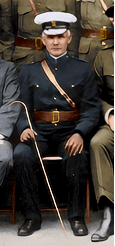
“Staff of the Quarter-master General—men who passed as Quarter-master instructors and are being drafted to the various districts, Colourised by Rairty Colour

To ensure consistency across districts, a conference of District Storekeepers was held in Wellington in August 1913. O’Sullivan noted their dedication to maintaining accountability for government property, highlighting their investment in their work.

Historically, annual military camps were managed ad hoc with inconsistent equipment scales. With the establishment of the Territorial Army, the Defence Stores Department introduced standardised camp equipment requirements in 1913.

To streamline supply chain management, temporary Ordnance Depots were established at brigade camps in 1913. Personnel received training under the Director of Equipment and Stores, and roles were assigned as follows:

  • Ordnance Officer: District Storekeeper Auckland (Lieutenant Beck)
  • Two clerks
  • Four issuers

Following the success of the 1913 camps, the system was expanded in 1914, with each regional storekeeper acting as an Ordnance Officer and staff numbers increasing to six clerks and twelve issuers.

Takapau Divisional Camp, 1914. Te Papa (1362454)

Strategic Assessment, Preparedness and Mobilisation

In early 1914, General Sir Ian Hamilton inspected New Zealand’s forces, assessing approximately 70% of personnel. He noted that the Territorial Force was “well-equipped and well-armed” but recommended looking to Australian models for future Ordnance development. O’Sullivan’s annual report for 1914 confirmed that the Defence Stores Department was in a strong position, with ample stocks of small arms, ammunition, clothing, and web equipment.

The 1914 mobilisation was the first test of the reorganised and reequipped New Zealand military forces since the South African War. The challenge was immense: raising, equipping, and dispatching an expeditionary force while maintaining the coastal defence garrisons and the Territorial Army for homeland security. O’Sullivan’s Defence Stores supported this effort, which, under his leadership, played a crucial role in successfully mobilising the New Zealand Expeditionary Force (NZEF).

The groundwork for the NZEF was laid in March 1914 when General Alexander Godley issued mobilisation regulations, adapted from British Army directives, to guide the formation of an expeditionary force. New Zealand’s commitment to supporting Britain in the event of war had been reinforced at the 1907 and 1911 Imperial Conferences, yet it was only in 1912 that Godley, confident in the growth of the Territorial Army, shifted focus to preparing for an overseas force.

As part of this preparation, Godley identified three likely tasks for the NZEF:

  1. Seizure of German Pacific possessions.
  2. Deployment to protect Egypt from a Turkish attack.
  3. Fighting in Europe alongside British forces.

By mid-1914, New Zealand’s military reorganisation was three years into an estimated seven-year process.

Although at full operational strength, confidence in the military’s preparedness was high. Annual training camps had been completed, and unit stores had been restocked. A major stocktake was planned for August 1914—marking the first such effort in two years, as the 1913 stocktake had been postponed due to industrial strikes.

The assassination of Archduke Franz Ferdinand on 28 June 1914 set off a chain of events leading to war. On 30 July, Defence Headquarters instructed District Headquarters to begin precautionary war preparations. By 1 August, partial mobilisation schemes were underway, and further instructions on the composition of the NZEF followed on 2 August.

Each military district contributed a fully equipped infantry battalion, a mounted rifle regiment, artillery, engineers, and medical subunits. These units were to be drawn from the permanent forces, Territorial Force, and reserves. District Storekeepers supported by unit Quartermasters were critical in equipping these units with stores drawn from existing regiments and regional mobilisation depots.

On 3 August, Quartermaster General (QMG) Colonel Alfred William Robin issued detailed instructions regarding individual equipment. Territorial soldiers were to report with their complete kit, while reservists would collect theirs from their regiments. Quartermaster staff were given guidance on recording the transfer of equipment in regimental ledgers.

With war declared, New Zealand’s government announced on 7 August that an Expeditionary Force of 7,000–8,000 men would be mobilised. The response was overwhelming, with thousands of volunteers rushing to enlist. Having had several days’ notice, District Headquarters swiftly implemented mobilisation plans.

Godley’s assumption that the NZEF’s first task would be the seizure of German Pacific territories was proven correct. By 11 August, the New Zealand force for German Samoa—comprising 1,413 personnel—was fully equipped by the Defence Stores and ready for deployment. Additional stores were assembled at Wellington’s wharf for embarkation. The force landed on 29 August, securing Samoa without resistance.

Meanwhile, mobilisation camps were established across New Zealand:

  • Auckland (Alexandra Park) – District Storekeeper Captain William Thomas Beck set up a mobilisation store, assisted by Sergeant Norman Joseph Levien.
  • Christchurch (Addington Park) – Captain Arthur Rumbold Carter White managed the Canterbury District mobilisation store.
  • Dunedin (Tahuna Park) – Captain Owen Paul McGuigan handled equipping recruits, many of whom had no prior military training.
  • Wellington (Awapuni Racecourse) – The Defence Stores in Wellington directly supported the mobilisation effort.

As the central hub for Defence Stores, Wellington managed the receipt and distribution of equipment nationwide. Public appeals were made for short-supply items like binoculars and compasses. On 14 August, approval was granted for each soldier to receive a second pair of boots—typically, the second pair had to be purchased at a reduced rate.

Mobilisation was not simply a matter of sending troops overseas; it also involved ensuring the ongoing reinforcement of the NZEF and maintaining the Territorial Army at home. Planning for NZEF reinforcements commenced alongside the main mobilisation effort to sustain the force in the field. It was determined that 20% reinforcements would be provided six weeks after the NZEF’s departure, with a further 5% arriving monthly thereafter.

Trentham Camp was selected as the primary training and equipping centre for reinforcement drafts, where the Camp Quartermaster Stores, under Lieutenant (Temporary Captain) Thomas McCristell, played a critical role in ensuring personnel were properly outfitted before deployment. The scale of this task was immense, with store personnel working late into the night to issue uniforms and equipment to the steady stream of reinforcements. While the focus remained on sustaining the NZEF, efforts were also required to maintain the Territorial Army at home, ensuring a trained force remained available for local defence and future deployments. Mobilisation was not a single event but a continuous process that demanded careful logistical planning and execution to sustain the war effort.

Beyond issuing equipment, the Camp Quartermaster Stores also served as a training ground for new Quartermasters destined for overseas service. Selected candidates underwent instruction in key logistical functions, including clothing and equipping troops, managing camp equipment, organising ammunition supplies, and overseeing water distribution and field kitchen setup. This training ensured that reinforcements were well-equipped and supported by skilled personnel capable of sustaining operations in the field.

By September 1914, the Defence Stores had successfully equipped the NZEF. On 24 September, General Godley thanked the Defence Stores staff for their efforts, acknowledging their crucial role in the mobilisation process. However, controversy soon followed.

On 26 October, after ten days at sea, Godley sent a note to Minister of Defence Colonel James Allen, alleging irregularities in Defence Stores operations and implying that O’Sullivan and his staff might be engaging in misappropriation. Despite recognising O’Sullivan’s significant contributions, Godley recommended auditing the Defence Stores’ accounting systems. This unfounded allegation ultimately led to O’Sullivan’s resignation, overshadowing the department’s achievements in successfully mobilising and equipping both the Samoa Expeditionary Force and the NZEF.

New Zealand’s largest military deployment to date placed immense logistical demands on the Defence Stores. The department leveraged pre-war procurement contracts while employing competitive tendering to secure uniforms, equipment, and supplies. This approach facilitated rapid expansion, with Buckle Street in Wellington emerging as a key logistical hub. However, the sheer volume of supplies soon exceeded capacity, necessitating the leasing of commercial storage facilities beyond the department’s central depots in Wellington, Christchurch, and Dunedin.

As military activity intensified, the establishment of the Palmerston North District Store in early 1915 significantly enhanced logistical capabilities, particularly for units stationed in the lower North Island. This expansion underscored the growing need for decentralised supply operations, improving the efficiency of equipment distribution.

The rapid wartime expansion placed immense strain on both personnel and logistics. Despite increasing responsibilities, the department received only minimal increases in permanent staff, forcing heavy reliance on temporary workers to meet operational demands.

As the war progressed, concerns over procurement methods and accounting procedures led to mounting external scrutiny. In 1915, a Commission of Inquiry was launched to examine the Defence Stores’ business practices, financial controls, and purchasing procedures. While the Commission found no evidence of misconduct, it recommended procedural improvements to enhance transparency and efficiency. In response, the government established the Ministry of Munitions, which took over procurement and supply chain management, streamlining logistical operations..

Supporting the NZEF (1915–1921)

The New Zealand Expeditionary Force (NZEF) formed its own New Zealand Army Ordnance Corps (NZAOC) in 1915, recognising the need for a more structured military logistics system. This corps provided dedicated logistical support for the NZEF and residual units until 1921. This development was critical as the demands of modern warfare required a more organised and professional approach to supply chain management, equipment maintenance, and ordnance distribution.

Initially, the NZEF relied heavily on British supply lines and logistical structures, with Quartermasters embedded within units managing day-to-day supply requirements. However, as operations expanded and the need for self-sufficiency grew, the establishment of the NZAOC provided a more formal system of procurement, storage, distribution, and maintenance of military stores. The Centre of mass for the NZAOC within the New Zealand Division was the Assistant Director of Ordnance Stores (DADOS) and his staff, who operated in concert with regimental quartermasters, who remained responsible for issuing and maintaining personal and unit equipment at the frontline.

Quartermasters played a pivotal role in ensuring that troops were properly equipped, fed, and clothed and worked closely with the NZAOC to ensure seamless logistical support across different theatres of war, from Gallipoli to the Western Front and the Middle East.

By 1918, the NZAOC had become a critical component of the NZEF’s supply chain, with depots in the UK and the DADOS operating dumps in key operational areas. As the war concluded, the Corps played a crucial role in the demobilisation process, managing the return of surplus equipment, disposal of unserviceable stores, and redistributing serviceable assets to remaining military units and government departments.

The NZAOC continued to support New Zealand’s post-war military commitments until 1921. The lessons learned during the Great War laid the foundation for future developments in ordnance and supply management, shaping the logistics framework of the post-war army.

The role of Quartermasters and the NZAOC in supporting the NZEF between 1915 and 1921 was instrumental in ensuring that New Zealand troops remained equipped and operationally effective throughout the war. Their contributions sustained the force in combat and established enduring logistical principles that continued influencing military store management in the following decades.

Home Service Stores Accounting

On the home front, military authorities pushed for the complete militarisation of stores accounting, aiming to align New Zealand’s system with British Army Ordnance practices. This led to a significant leadership change in 1916, with Major Thomas McCristell replacing James O’Sullivan as Director of Equipment and Stores. Under McCristell’s leadership, the department underwent a comprehensive reorganisation, transitioning into a formal military structure.

By 1 February 1917, the home service New Zealand Army Ordnance Department (NZAOD) and NZAOC were officially established, replacing the Defence Stores Department. This milestone ended 48 years of civilian-led military logistics, marking a shift towards a fully integrated, military-controlled Ordnance service.

Concurrent with the establishment of the Home Service NZAOC, formal Ordnance Procedures were published, and the Regulations for the Equipment of the New Zealand Military were updated. These replaced all previous instructions and formed the foundation for New Zealand’s modern military logistics system.

Conclusion: Towards a Modern Military Stores Accounting System

The period from 1845 to 1918 laid the foundational principles of New Zealand Army stores accounting, evolving from ad hoc militia supply practices to a structured, professional system aligned with British military standards. Early efforts, such as the 1867 Public Stores Act and the establishment of the Defence Stores Department, introduced much-needed oversight and accountability, ensuring military forces were adequately equipped for colonial conflicts and later global engagements.

The early 20th century saw increasing refinement in stores management, with greater formalisation under the Defence Act 1909, the creation of a structured supply organisation, and the introduction of rigorous accounting and inventory control measures. The mobilisation for World War I tested these systems on an unprecedented scale, demonstrating their strengths and the need for further development. The establishment of the NZEF NZAOC in 1915 and the home service New Zealand Army Ordnance Department and Corps in 1917 signified a pivotal transformation, shifting military logistics from civilian oversight to a dedicated military-run system. The experiences of World War I reinforced the importance of accurate, efficient, and adaptable stores accounting systems, setting the stage for continued evolution in the interwar and post-World War II periods. The next part of this study, New Zealand Army Stores Accounting: 1919–1945, will examine how the lessons learned from wartime operations influenced peacetime logistics, the modernisation of accounting frameworks, and the growing role of technology and centralised control in military supply chain management.


Notes

[1] Australian Defence Force, “Logistics Series – Supply,” Australian Defence Doctrine Publication 4.3  (2004): 1.1-1.16.

[2] “Colonial Defence Force Act 1862,” ed. General Assembly of New Zealand (1, Wellington, 1862). http://www.nzlii.org/nz/legis/hist_act/cdfa186226v1862n32291/.

[3] General Assembly of New  Zealand, “The Public Stores Act 1867,”  (1867), http://www.nzlii.org/nz/legis/hist_bill/psb1867831178.pdf.

[4]“The Public Stores Act 1871,” ed. General Assembly of New Zealand (Wellington, 1871).;”Lieut-Colonel Edward Gorton,” New Zealand Gazette, Issue 1, 26 January 1872, 619.

[5] “Reductions,” Thames Advertiser, Volume XI, Issue 2938, 30 May 1878, https://paperspast.natlib.govt.nz/newspapers/THA18780530.2.10.; “The Government Brander,” Saturday Advertiser, Volume 3, Issue 130 (Wellington), 5 January 1878, https://paperspast.natlib.govt.nz/newspapers/SATADV18780105.2.13.

[6] Archives New Zealand, “Robert George Vining Parker,” Personal File, Record no R23513898 (Wellington) 1885-1925, https://ndhadeliver.natlib.govt.nz/delivery/DeliveryManagerServlet?dps_pid=IE18683088.

[7] Archives New Zealand, “Frederick Silver,” Personal File, Record no R23513983 (Wellington) 1976-1900, https://ndhadeliver.natlib.govt.nz/delivery/DeliveryManagerServlet?dps_pid=IE19149654.

[8] “Defence Storekeeper Appointed,” New Zealand Gazette No 98 p. 2154., 29 November 1900, 4.

[9] Archives New Zealand, “Frederick Silver.”

[10] “Defence Act Amendment Act 1906 (6 EDW VII 1906 No 41),” 1906, accessed 30 December 2021, http://www.nzlii.org/nz/legis/hist_act/daaa19066ev1906n41250/.

[11] Peter Cooke and John Crawford, The Territorials (Wellington: Random House New Zealand Ltd, 2011), 153.

[12] Paul William Gladstone Ian McGibbon, The Oxford companion to New Zealand Military History (Auckland; Melbourne; Oxford: Oxford University Press, 2000, 2000), 369.

[13] “Regulations (Provisional) for the Military Forces of New Zealand “, New Zealand Gazette 5 May 1911.;


The RNZAOC Icon: A Symbol of Heritage and Functionality

The RNZAOC Icon, a proud symbol of the Royal New Zealand Army Ordnance Corps (RNZAOC), encapsulates the Corps’s heritage and functionality in a single design. Designed by Major T.D. McBeth (DOS 83-86) in 1971 at the direction of the sitting DOS Lieutenant Colonel GJH Atkinson (DOS 68-72), the cover design cleverly combined various aspects of the RNZAOC and was initially utilised as the cover design for the RNZAOC Newsletter the ‘Pataka’ and on unit plaques.

Description of the design

The design cleverly and meaningfully combines various elements that define the RNZAOC. Its foundation is the NATO map symbol for an ordnance unit, a stylised shield placed over two crossed swords, symbolising the core mission of the Corps: providing logistical and ordnance support to the New Zealand Army.

Design Colour

The icon incorporates the traditional ordnance colours of red, blue, and red, reflecting a heritage that dates back to the Board of Ordnance (1400s to 1855) and its historical connections with the Royal Artillery and Royal Engineers. In the New Zealand context, these red and blue colours were prominently used on the Corps’ flag, tactical patches and signs, stable belts, and other insignia.

Symbolic Quadrants: A Visual Narrative

At the centre of the shield lies the RNZAOC badge, a symbol representing the history and legacy of the RNZAOC. This badge is related to the Colonial Storekeeper and subsequent organisations responsible for managing the New Zealand Army’s stores since 1840. It also signifies the alliance of the RNZAOC with the Royal Army Ordnance Corps (RAOC) and its broader family membership of the Commonwealth Ordnance Corps family.

The RNZAOC badge is surrounded by four distinct quadrants, each representing a unique aspect of the Corps.

Top quadrant

The top quadrant of the icon features a Traditional Māori Pātaka storehouse, an elevated structure historically used by Māori, the indigenous people of New Zealand, to store food, tools, weapons, and other valuables. These intricately designed buildings were central to Māori culture, serving practical and symbolic purposes.

The Maori Pataka is a small elevated outdoor house used for storing food or provisions. Most were not carved. Carved Pataka were only used to store precious treasures such as greenstone, jewellery, weapons, and cloaks. The more elaborate the carvings, the more important the person whose possessions were stored within. Photo Credit: https://www.virtualoceania.net/newzealand/photos/towns/queenstown/nz2481.shtml

In the context of the RNZAOC Icon, the Pātaka symbolises the Corps’ heritage and emphasises the essential role of sustainment storage and resource management. The Royal New Zealand Army Service Corps (RNZASC) managed this function from 1910 until 1979, when responsibility for supply tasks such as rations and fuel was transferred to the RNZAOC.

Right quadrant

The right quadrant depicts a contemporary warehouse, symbolising the RNZAOC’s evolution into a modern organisation. This element reflects the Corps’ adoption of advanced infrastructure and practices to manage military supplies efficiently, demonstrating its commitment to meeting the demands of contemporary logistics.

The RNZAOC Award-winning warehouse at TGrentham was constructed for $1.6 million in 1988. In addition to the high-rise pallet racking for bulk stores, a vertical storage carousel capable of holding 12,000 detail items was installed later.

Bottom quadrant

The bottom quadrant features an RL Bedford truck, which was upgraded to the Unimog in 1984. This familiar workhorse of the New Zealand Army symbolises the Corps’ field operations. It highlights the vital role of the RNZAOC in efficiently ensuring that resources reach the front lines.

Left quadrant

The Left quadrant features the ‘Flaming A’ of the Ammunition Trade, representing the critical role of the Corps in handling, storing and supplying munitions, a responsibility that demands precision, expertise and dedication.

New Zealand Ammo Tech ‘Flamming A” Insignia with fern fonds adopted in 1988 to provide a unique New Zeland flavour to the insignia.

Central bar

The blue central bar of the icon is styled like a spanner, symbolising the RNZAOCs links as the parent Corps of the Royal New Zealand Electrical and Mechanical Engineers (RNZEME) and modern technical functions, including RNZAOC Workshops Stores Sections located within RNZEME Workshops, Tailors Shops, and Textile Repair Sections.

Variations of the Icon

Over the years, the RNZAOC Icon evolved. In 1984, the image of the RL Bedford truck was updated to feature the Mercedes-Benz Unimog, which replaced the RL Bedford after its retirement in 1989, following 31 years of service.

The Icon was also adopted as the base design for unit plaques, with some units placing the RNZAOC Crest above the Icon and substituting it in the centre of the icon with a symbol relevant to their specific unit.

A Long-term Legacy

The RNZAOC icon is a visual homage to the Corps’ diverse contributions and rich legacy. Blending traditional, modern, and operational elements highlights the RNZAOC’s steadfast dedication to supporting New Zealand’s defence capabilities. This emblem connects the past, present, and future, symbolising identity and pride for those who have served in the Royal New Zealand Army Ordnance Corps. As the icon of the ‘To the Warriors Their Arms’ website, it pays tribute to the RNZAOC and all the antecedent corps that now form part of the RNZALR, ensuring their memory and significance remain relevant.


Lessons from History: New Zealand Military Procurement and Logistics 1857-1861

The object is to make these forces (New Zealand Militia and Volunteer Forces) as effective as possible against irregular infantry, whose mode of warfare is skirmishing on broken ground, generally covered in fern and scrub”.

Memoradium Frederick Whittaker to Colonial Secertary, 27 April 1860

The military logistics history of New Zealand in the 19th century unfolds as a saga of strategic vision, administrative challenges, and coordination amidst escalating tensions and clashes between settlers and Māori in the mid-1800s. This era was characterised by legislative endeavours, notably marked by the passage of the Militia Act of 1858 by the New Zealand Parliament. At the heart of implementing this legislation were the logistical requisitions directed towards Hebbert and Co, a London-based military outfitter with extensive contracts across various British territories. These requisitions underscored the planning and resource allocation needed to equip New Zealand’s burgeoning militia and volunteer forces.

The initial requisition, initiated in June 1859, marked the first step towards enhancing the colony’s defensive capabilities. It encompassed a comprehensive array of arms, ammunition, and accoutrements, reflecting the latest standards utilised by the British Army and deemed essential for military readiness. Subsequent requisitions, driven by evolving strategic needs and logistical deficiencies, further highlighted the intricacies of managing the supply chain within a colonial context.

Recognising the broader implications for contemporary military logisticians is imperative for grasping the significance of these requisitions. Beyond their historical narrative, procurement, transportation, and inventory management complexities offer timeless insights into the enduring challenges logistics professionals face in ensuring operational readiness. As we delve deeper into the complexities of these requisitions and their outcomes, it becomes evident that the legacy of strategic foresight and logistical prowess perseveres. The lessons extracted from this historical chapter stand as a testament to the enduring relevance of effective logistical planning and execution in military operations, both past and present.

Preparing for conflict

The escalating tensions between settlers and Māori and the lessons of the conflicts of 1845/6 led to the acceptance that a robust force capable of deployment throughout New Zealand was necessary. In response, in May 1858, the New Zealand Parliament enacted the Militia Act of 1858. This legislation maintained the Militia’s role in defending fixed locations, obliging all eligible men to serve within their designated areas. However, it also introduced provisions for establishing volunteer units, granting them the flexibility to operate anywhere in the colony and exempting their members from militia duty. [1]

The Act restructured the country into militia districts supported by a small permanent training staff. It established a central command hub in Auckland, administered by Captain (later Lieutenant Colonel) Henry Colin Balneavis as the Deputy Adjutant General of Militia and Volunteers.[2]

Colonel Balneavis, circa 1900, by William Francis Gordon, Hartley Webster. Purchased 1916. Te Papa (O.011955/02)

Since the inception of the first New Zealand Militia units in 1845, the government had assumed responsibility for supplying arms and equipment to the Militia. The supply of Arms and equipment was initially sourced through commercial purchases and government sources such as the Colonial Store in Australia, the Ordnance Department and British Regiments, including 500 flint muskets acquired and distributed in 1845. However, as Militia units were disbanded, arms on distribution to the Militia were recalled and returned to the local magistrate, police or Ordnance Stores for safekeeping.[3] In August 1850, Major General George Dean Pitt, the Commander of the forces 1848-51, initiated a military enhancement program, which included upgrades to Wellington’s Mount Cook Barracks, Auckland’s Albert Barracks, and Fort Britomart. As part of this initiative, he also requested 500 percussion muskets from England to replace 500 flint muskets then stored by the Ordnance Store on behalf of the New Zealand Government. In May 1852, the 500 flint muskets were returned to England, while the new percussion weapons remained in the Ordnance Store.[4] However, many more Flint muskets inevitably remained in storage in the provinces.

While the Ordnance Store and British Regiments were naturally considered the primary source of military supplies for the colony, their capacity to provide stores during peacetime was constrained by an order issued by Lord Panmure, the Secretary of State for War, on 17th April 1856.[5] This directive stipulated that supplies could only be allocated to the colonial government following approval from the Secretary of State for War. However, in cases of emergency declared by the Governor, stores could be released under the condition that the colonial government reimbursed the British Government for the expenses incurred, including a 15% fee for packaging, transportation, warehousing, etc.

Panmure’s directive came into question in March 1857 when Colonel Robert Wynyard of the 58th Regiment imported 1,600 percussion rifles and 669,000 rounds of ball ammunition. Since these goods arrived before Balneavis assumed the role of Militia adjutant, the distribution of these arms remains somewhat ambiguous. Nevertheless, records indicate that 200 weapons were assigned to the Taranaki Militia, while the allocation of 1,000 rifles to Auckland was less transparent. This issue was eventually resolved, affirming the New Zealand Government’s responsibility for providing and supplying militia stores to its military and volunteer forces.

From May 1858, Balneavis began taking on charge government arms held in the 58th Regiment Armoury and the Ordnance Store, yielding varying results. During the handover of arms from the 58th armoury in May 1858, Balneavis only received 200 percussion muskets, 66 flint muskets, and 12 cases containing cutlasses, boarding spikes, old belts and other assorted accoutrements. However, the arms taken on charge from the Ordnance Store proved more fruitful. Balneavis acquired the 500 percussion muskets received in 1852 and four cases containing 120 percussion carbines with bayonets, scabbards, and additional equipment. The carbines, unused and in pristine condition, were of the same type utilised by the Auckland Police. However, there was no record of how they had been incorporated into Government service. It was speculated that they might have been included in a batch brought to New Zealand by Governor Grey in 1846 for settlers or friendly Māori. However, they were placed into the Ordnance Stores and remained unissued.

Fuelled by the potential of escalating conflict in Taranaki, the Militia experienced a resurgence, along with the formation of volunteer units, prompting the Legislative Council to place a requisition in June 1859 for arms and accoutrements on London merchants Messrs Hebbert and Co to meet its commitment to supply all militia and volunteer forces.

Messrs Hebbert and Co, a London-based military outfitter/contractor established in 1815, held contracts with Her Majesty’s Home, Indian, and Colonial Governments. Initially focused on army clothing, accoutrements, and cap-making, they also brokered contracts with external manufacturers for equipment they did not produce. In addition to their contracts with colonial governments like New Zealand, Messrs Hebbert and Co supplied items to the Confederate Navy during the United States Civil War.

First Requisition

Sent by the fastest mail to Britain in June 1859, the first requisition consisted of the following items:

  • 500 (increased to 1000) Rifles of the most improved type used by Her Majesty’s troops, with Sword Bayonets, Belts and Pouches
  • 100000 (increased to 200000) Rounds of Ball Cartridges
  • 200000 (increased to 400000) Percussion Caps, and
  • 25000 (increased to 50000) Blank rounds.

Hebbert and Co confirmed receipt of the requisition on 18 October 1859. Although, at this early stage, they could not confirm the manufacturing details, the suggestion was made that to mitigate any possible rejections taking place in Auckland and the inability to provide replacements prior to delivery, inspections under the direction of General Charles Hay, the Commander and Inspector General of Musketry be arranged and on the recommendation of the Deputy Adjutant General of Militia and Volunteers, the New Zealand Government approved this course of action.

Second Requisition

In January 1860, the issue of inadequate arms supply in the colony was brought to the attention of the Colonial Secretary. Given the burgeoning formation of Volunteer and Militia units, it became evident that the current order for rifles would not suffice. Moreover, while Cavalry Arms had been procured for 200 men, there was a pressing need for more to equip the additional Volunteer Cavalry Corps in the process of being established.

Believing that Percussion Muskets might be available in the Military or Government Stores in Australia, arranging for arms to be temporarily lent to New Zealand and returned once the rifles arrived was considered an option. Additionally, a small quantity of rifles and revolvers from Sydney and Melbourne were purchased at a reasonable cost. Ultimately, on 27th April 1860, a decision was made to supplement the initial requisition with a second rerquistions for additional arms, accoutrements and ammunition.:

  • 1000 Rifles and accoutrements to arm Militia and volunteers.
  • 300 arms and accoutrements for Cavalry Volunteers, the desired arms been.
    • 200 Revolving Carbines
    • 100 Revolving Pistols with movable shoulder stocks
  • 500000 Rounds of Ball Cartridges
  • 805000 Percussion Caps
  • 50000 Blank rounds

Additionally, separate from the primary requisition, an order for six Prize revolvers was placed on 28 April 1860.[6] These requisitions were acknowledged by Hebbert and Co on 19 May 1860, noting that communications with General Hay confirming that the Rifles were to be the same pattern as the ones to be supplied for the first order, the type of Carbines was yet to be decided.

Third Requisition

On 3 July 1860, a third request for an additional order of 1000 rifles and accoutrements was placed with Hebbert and Co, bringing the total purchase to 3000. Hebbert and Co acknowledged receipt of this third requisition on 26 September 1860, confirming that the order for rifles would be expedited without delay.

However, Hebbert and Co informed that, upon the advice of General Hay, work on manufacturing revolving carbines had ceased. It was determined that no existing model of revolving carbine was suitable for military purposes, and those produced for civilian use had been discontinued. Consequently, it was decided to replace revolving carbines with a superiorly manufactured breech-loading carbine.

The carbines eventually selected by General Hay were of the type then in use by the Indian Cavalry, resembling the pattern of artillery carbines issued by the British Government. These carbines offered several advantages, including compatibility with the bore, cartridges, and caps used for the rifles. Their sights were initially set for 300 yards but could easily be adjusted for 500 to 600 yards.

Cavalry Carbine. Terry Shattock Collection

The rifles produced by Hollis & Sheath of Birmingham for New Zealand were the latest .577-inch calibre rifles developed under General Hay’s direction. This updated design incorporated changes to the stock and barrel length and weight, rifling, and other specifications, resulting in a firearm that boasted improved accuracy and a more extended range compared to the earlier Enfield pattern. However, these modifications to the rifle design and the necessary adjustments to manufacturing machinery caused production delays. Consequently, instead of delivering the rifles in a single consignment for each requisition, the delivery schedule was divided into seven consignments. The first of these consignments was dispatched from England on 25 August 1860, with the final shipment reaching New Zealand on 19 October 1861.

Hay Pattern Rifle. Terry Shattock Collection

Logistics Preparation to receive arms

As the Deputy Adjutant General of Militia and Volunteers, Balneavis, with a small staff based in the Militia armoury at Albert Barracks, undertook multiple administrative and organisational tasks to establish the various units and satisfy the many requests for equipment submitted by unit commanders.

As the tempo of work in receiving and distributing equipment increased during 1860, assisting Balneavis as militia and volunteer storekeeper was his Sergeant Major and Clerk John Mitchell.[7] Initially employed in 1856, Mitchell was formally employed as a sergeant in May 1858. In recognition of the additional work required in organising and equipping the Militia and Volunteers, Mitchell was awarded an annual salary increase of £80 in 1861.[8] Additional assistance was provided to Balneavis and Mitchell by Mr T Gibbins, who had been employed as an arms cleaner and labourer since January 1859.[9] In October 1861, James Bloomfield joined Balneavis staff as a clerk, remaining part of the Defence Stores until December 1888. [10] To manage periods of increased activity, Balneavis regularly sought permission to hire additional arms cleaners to help with the upkeep of the Arms and Accoutrements in the Militia Armoury. For instance, on 5 December 1861, he submitted a request to employ three arms cleaners at a rate of five shillings per day (equivalent to approximately NZD $9.21 in 2024) for the month. This request was granted on 10th December.[11]

In anticipation of receiving Arms and Accoutrements, on 25th February 1861, Balneavis sought authorisation for the Colonial Secretary to inspect and mark arms arriving from England with a number and to carry out necessary alterations to accoutrements. Regarding the marking of arms, Balneavis obtained a quotation from Auckland gunsmith David Evitt, who proposed a cost of six shillings each (equivalent to approximately NZD $9.21 in 2024) to number up to 4000 arms, including Bayonets, Muzzle Stoppers, and ramrods. The Colonial Secretary sanctioned this proposal on 9th April 1861.[12]

Tawera Shipment

The initial batch of rifles comprised 410 units, with 200 being inspected on 10 August and 210 on 25 August by an armourer sergeant provided by General Hay. Each rifle underwent disassembly, with the locks examined and sights tested. Subsequently, 40 rifles underwent testing by General Hay himself. Throughout this process, 18 rifles were rejected, prompting a reduction of the consignment to 390 to avoid having a partial box of 2 rifles. The first consignment consisted of:

  • 390 Rifles, General Hay Pattern, Calibre .577 in
  • 390 Bayonets
  • 390 Bayonet Scabbards
  • 1000 Muzzle Stoppers
  • Extras for 1000 Rifles
    • 100 Lock Vice Nipple Keys
    • 100 Jags (Ball Drawer)
    • 1000 Nipples
    • 100 Snap Caps
    • 500 Snap Cap leather
    • 100 Muzzle Stoppers
  • Rifle Accoutrements
    • 360 Black Leather Pouches – 50 Rounds
    • 360 Black Leather Pouch Belts
    • 360 Black Leather waist Belts with Brass Snake hook Furniture
    • 180 Black Leather Frogs
    • 360 Black Leather Ball Bags with Oil Bottles
    • 360 Black Leather Cap Pockets
    • 360 Black Leather Gun Slings with Brass Buckles
  • Ammunition
    • 200000 Rounds Ball Cartridges
    • 50000 Rounds Blank Cartridges
    • 400000 Percussion Caps
Extracr from the Tawera Invoice

The consignment was packed into 51 cases for transport on the Brigantine Tawera, departing Gravesend on 5 September 1860. The Tawera arrived in Auckland on 22 December 1860.[13]

Included in this consignment was the order for the six Adams Pattern 54 Bore revolvers, with Bullet moulds, extra nipples, and cleaning rods specially engraved with names and inscriptions.[14]

A presentation Beaumont-Adams. Puke Ariki Accession number A57.362

On receipt in New Zealand, the consignment was inspected by Balneavis, who noted that the consignment had been received in good order except for some Bayonets, which required fitting, and some rifles required cleaning, which was done.

Sevilla Shipment

On 21 September, General Hay’s team inspected the second batch of 320 rifles, with 10 Rifles rejected. The consignment that was packed into 38 cases consisted of

  • 310 Rifled General Hay Pattern with Snap Caps
  • 310 Bayonets
  • 310 Bayonet Scabbards
  • Rifle Accoutrements
    • 180 Black Waxed leather frogs to complete 360 sets sent on the Tawera
    • 340 Black waxed Leather Pouches – 50 rounds
    • 340 Black waxed Leather Pouch Belts
    • 340 Black waxed Leather waist Belts
    • 340 Black waxed frogs
    • 340 Black waxed Ball bags and Oil Bottles
    • 340 Black waxed Leather Cap Pockets
    • 340 Black waxed Leather Gun Slings[15]
Extract from the Sevilla Invoice

In addition to  the Arms, accoutrements and ammunition associated with the existing requisitions, the Sevilla had also loaded an additional consignment of 76 cases of Breech-loading Carbines and ammunition ordered on behalf of the Government by Gilfillan and Company consisting of:

  • 45 Calisher & Terry Breech Loading Carbines
  • 34000 rounds of Breech-loading ammunition
  • 68000 Percussion Caps

These constituted part of a requisition placed on merchants Gilfillan and Company by the New Zealand Government on 4 April 1860 for One Hundred Revolving Carbines. [16] However, Gilfillan and Co failed to procure any Revolving Carbines and instead provided 100 Terry Breech Loading Carbines, which were delivered in three instalments.

  • First Instalment – 20 Calisher & Terry Breech Loading Carbines from Sydney on the Kate, received on 8 May 1860
  • Second Instalment – 45 Calisher & Terry Breech Loading Carbines from the United Kingdom on the Sevilla, received on 22 April 1861
  • Third Instalment – 35 Calisher & Terry Breech Loading Carbines from the United Kingdom on the Bosworth, received on 22 April 1861
Example of a Calisher & Terry .30 bore breech loading percussion carbine. Puke Ariki Accession number A76.911

Loaded onto the barque Sevilla, this consignment of Hay Rifles and accoutrements departed London and, as part of the build-up of Imperial troops in New Zealand, called into Queenstown (now Cork, Ireland) on 20 October to embark two officers and 110 men of the 14th Regiment, along with 20 saloon passengers. After a lengthy voyage of 128 days, the Sevilla anchored in Auckland Harbour on 25 February 1861.

After the unloading of the Sevilla, on 22 April, Lieutenant Colonel Balneavis chaired two inspection boards, with Captain Campbell, the Adjutant of the Auckland Militia, and Lieutenant Wayne of the Auckland Cavalry Guard serving as members. Their task was to thoroughly examine and report on the arms, accoutrements, and ammunition received from England on the Sevilla. [17]

The board’s inspection of the 310 rifles and accoutrements confirmed that the consignment was accurate and of satisfactory quality, noting that an earlier Board Consisting of Captain Campbell, Adjutant 1st Battalion Auckland Regiment and Captain Joyce Adjutant Auckland Volunteers had condemned five rifles on 14 March due to damage caused by rust.[18]

Inspecting the carbines, accoutrements, and ammunition, the board noted that, in comparison to a consignment of 20 Calisher & Terry Breech-loading carbines received from Sydney on the Kate on 8 May 1860, the carbines received from England, while serviceable, were of somewhat inferior quality, this indicates the consignment of carbines from England were Terry’s Breech-loading carbines. Nevertheless, they met the requirements for inspection. The ammunition was deemed suitable; however, it was observed that the inserts in the pouches designed for fitting cartridges were too small to accommodate the carbine ammunition adequately. Though still functional, they would require modification for optimal use.[19]

Bosworth Shipment

In October, General Hay’s team inspected the remaining rifles needed to fulfil the initial requisition of 1000 rifles. On 6 October, 300 rifles were inspected, but 12 were rejected. Another ten rifles underwent inspection on 15 October and passed. Together with the two rifles held over from the first consignment, this completed the consignment of 300 rifles.

The final consignment included the remaining equipment from the first requisition and the total amount of ammunition from the second requisition. These items were packed into 36 cases, comprising:

  • 300 Rifles General Hay Pattern
  • 300 Bayonets
  • 300 Bayonet Scabbards
  • Rifle Accoutrements
    • 300 Black waxed Leather Pouches – 50 rounds
    • 300 Black waxed Leather Pouch Belts
    • 300 Black waxed Leather waist Belts
    • 300 Black waxed frogs
    • 300 Black waxed Ball bags and Oil Bottles
    • 300 Black waxed Leather Cap Pockets
    • 300 Black waxed Leather Gun Slings
  • Ammunition
    • 500000 Rounds Ball Cartridges
    • 50000 Rounds Blank Cartridges
    • 805000 Percussion Caps[20]
Extract from the Bosworth Invoice

In addition to  the Arms, accoutrements and ammunition associated with the existing requisitions, the Bosworth had also loaded an additional consignment of 193 cases of Terry Breech-loading Carbines and ammunition ordered on behalf of the Government by Gilfillan and Company consisting of

  • 35 Terry Breech Loading Carbines contained in 5 cases
  • An unknown quantity of Breech Loading Carbine ammunition in 188 cases[21]

These consignments were transported on the vessel Bosworth, sailing from Gravesend and arriving in Auckland on 6 March 1861, making the passage from England in 108 days.

After the unloading process on the Bosworth, Lieutenant Colonel Balneavis chaired two inspection boards, with Captain Campbell, the Adjutant of the Auckland Militia, and Lieutenant Wayne of the Auckland Cavalry Guard serving as members. Their task was to thoroughly examine and report on the arms, accoutrements, and ammunition received from England on the Bosworth.

The board’s inspection of the 300 rifles, ammunition, and accessories confirmed that the consignment was accurate and satisfactory. However, it was noted that one keg of rifle ammunition, containing 700 rounds and caps, was missing, presumably lost during transit. The ship’s agent reimbursed the government for the missing keg with a cheque of £3.9.6. (2024 NZD $1067.55) [22]

Upon inspecting the carbines, accoutrements, and ammunition, the board noted that in comparison to a consignment of 20 Terry’s Breech-loading carbines received from Sydney on the Kate on 8 May 1860, the carbines received from England, while serviceable, were of somewhat inferior quality. Nevertheless, they met the requirements for inspection. The ammunition was deemed suitable; however, it was observed that the inserts in the pouches designed for fitting cartridges were too small to accommodate the carbine ammunition adequately. Though still functional, they would require modification for optimal use.[23]

African Shipment

As the Bosworth was midway through its voyage, preparations were underway to dispatch the first batch of rifles from the second requisition. On 21 December 1860, General Hay reported that 720 rifles had undergone testing and met the required standards; thus, they were accepted. The consignment, packed into 105 cases, was scheduled for shipment on the vessel African. It included additional stores and accoutrements for 1000 rifles and 300 carbines.:

  • 720 Rifles General Hay Pattern
  • 720 Bayonets
  • 1000 Bayonet Scabbards
  • 1000 Muzzle Stoppers
  • Extras for 1000 Rifles
    • 100 Lock Vice Nipple Keys
    • 100 Jags
    • 1000 Nipples
    • 100 Snap Caps
    • 500 Snap Cap leather
    • 100 Muzzle Stoppers
  • Rifle Accoutrements
    • 1000 Black waxed Leather Pouches – 50 rounds
    • 1000 Black waxed Leather Pouch Belts
    • 1000 Black waxed Leather waist Belts
    • 1000 Black waxed frogs
    • 1000 Black waxed Ball bags and Oil Bottles
    • 1000 Black waxed Leather Cap Pockets
    • 1000 Black waxed Leather Gun Slings
  • 300 Cavalry Swords, Steel Moulded with Steel Scabbard
  • Cavalry Accoutrements
    • 300 Patent Leather pouches – 20 Rounds
    • 300 Buff Leather Pouch Belt
    • 300 Buff Leather Carbine Swivel Heads and carriages
    • 300 Buff Leather Waist Belts
    • 300 Buff Leather Cap Pockets
    • 300 Brown Leather Ball Bags
    • 300 Brown Leather Ball Bag Slings
    • 300 Brown Leather Ball Bag Slings
    • 300 Brown Leather Carbine Pockets
    • 300 Brown Leather Carbine Pocket Straps
    • 300 Buff Leather Sword Knots[24]
Extract of the African Invoice

Scheduled to depart from Gravesend on 2 January 1861, the African encountered delays due to being icebound in St. Katherine’s Dock. Consequently, its departure was postponed until 8 February, arriving in Auckland on 7 June 1861. Alongside the transportation of New Zealand Arms and Accoutrements, the African also accommodated two officers from the 57th Regiment of Foot and a contingent of logistics personnel destined for New Zealand as part of the Imperial reinforcements. This contingent included Deputy Assistant Commissary General Innes, five Commissariat officers and their families, two members of the Armourers Corps, five Royal Artillery Conductors, two Stores Clerks, and one Purveyor’s Clerk.

Waterlily Shipment

Departing London on 11 February 1861 and arriving in Auckland on 18 June, the Schooner Waterlily carried the following items ordered on the second requisition.

  • 100 Best Plain Adams Revolvers with all the latest improvements, 54 Guage
  • 100 Movable Stocks with fittings
  • 10 Bullet Moulds to cast two conical Bullets
  • 10 Cleaning Rods with Jags
  • 10 Nipple Keys
  • 10 Turnscrews
  • 10 Powder Flasks with regulated tops
  • 200 Nipples
  • Revolver Ammunition
    • 30000 Pistol Cartridges
    • 45000 Caps Percussion[25]
Extract of the Waterlily Invoice
Beaumont-Adams with stock. Puke Ariki Accession number A73.333
A flat rectangular wooden case for an Adams patent revolver. The case is lined with green felt and contains the revolver, a wooden skeleton stock, a cleaning rod, two bags of bullets and a wooden percussion cap phial. Puke Ariki Accession number A73.334

Broadwater Shipment

On 4 January 1861, General Hay reported that 303 Rifles had been tested, with 21 rifles rejected, prompting a reduction of the consignment to 280 rifles to avoid having a partial box of 2 rifles. This batch of 280 completed the rifle order for the second requisition. Added to this was an additional batch of 290 rifles of the third requisition, which had also been tested and passed, making a total consignment of 570 rifles for dispatch on the Broadwater. The total consignment consisted of:

  • 570 Rifles General Hay Pattern
  • 570 Bayonets
  • 1000 Bayonet Scabbards
  • Accoutrements for 1000 Rifles
    • 1000 Black waxed Leather Pouches – 50 rounds
    • 1000 Black waxed Leather Pouch Belts
    • 1000 Black waxed Leather waist Belts
    • 1000 Black waxed frogs
    • 1000 Black waxed Ball bags and Oil Bottles
    • 1000 Black waxed Leather Cap Pockets
    • 1000 Black waxed Leather Gun Slings[26]
Extract from Broadwater Invoice

After departing Gravesend on 3 April and a voyage of 114 days, the Broadwater arrived in Auckland on 29 July.

Northumberland Shipment

Following the final acceptance tests by General Hay of the final batches of Rifles and Carbines, the consignment was prepared and included spare parts for the entire 3000 rifles and 300 Carbines supplied. Packed into 98 cases, the consignment consisted of:

  • 710 Rifles General Hay Pattern
  • 710 Bayonets
  • Extras for 1000 Rifles
    • 100 Lock Vice Nipple Keys
    • 100 Jags
    • 1000 Nipples
    • 100 Snap Caps
    • 500 Snap Cap leather
  • Extras for 3000 Rifles
    • 15 Rough Stock15 Stocks complete15 Sights60 Finished Hammers60 Hammers in the rough90 Tumbler Pins60 Main Springs60 Sears30 Forged Main Springs60 Sear Springs30 Tumblers15 Bridles60 Left Lock Pins60 Lock Swivels30 Left Bands60 Left Nail30 Rammers30 Bayonets60 Bayonet Rings9 Guards in the rough15 Trigger Plates30 Trigger Plates30 Butt Swivels30 Band Swivels30 Hammer Springs45 Sets Wood Screws
    • 150 Light slides
  • 300 Cavalry Carbines Rifled sighted to 300 yards, to pattern selected by General Hay
  • Extras for 300 Carbines
    • 30 Cramp Keys300 Nipples30 Jags30 Snap caps30 Muzzle stoppers150 Snap Cap Leather2 Finished Stocks2 Sights5 Hammers10 Hammers in the rough10 Tumbler Pins5 Sets Wood Screes8 Main Springs4 Main Springs in the rough8 Sear Springs8 Sears3 Tumblers2 Bridles8 Sets lock Pins10 Lock Swivels3 Bands5 Rammers5 Rammer Springs1 Guard and 2 Trigger Plates4 Triggers3 Slide Bars10 Rings for Bars
    • 3 Rough Stocks[27]
Extract from Northumberland Invoice

This shipment, delivering the final items of the three requisitions initiated in June 1859, departed London on 10 May 1861 on the vessel Northumberland, arriving in Auckland on 13 September 1861.

As with other shipments, on 19 October, Balneavis assembled a board consisting of Captain Campbell, the Adjutant of the 1st Battalion Auckland Militia and Captain Wilson, the Adjutant of the 2nd Battalion Auckland Militia, to examine and report on the stores landed from the Northumberland. Their report concluded that the consignment was of sound and serviceable quality and that the rifles and Carbines received bore the same as rifles received in previous shipments.[28]

Cost

As detailed in Table One, the aggregate expenditure for all arms and accoutrements procured from Hebbert and Co amounted to £22,272.16.1 (equivalent to 2024 NZD $6,797,770.77). While existing appropriations covered the expenses for the prize pistols, the remaining costs for arms and accoutrements were charged against the 1860 War Loan.

Table One: Arms, Accoutrements and Ammunition procured from Hebbert and Co

Given New Zealand’s constrained revenue, the government found the Taranaki conflict financially challenging. Consequently, in September 1860, a War Loan of £150,000 (2024 NZD $46,765,267.07) was raised to address expenses associated with the conflict, encompassing costs incurred from 1857 up to September 1860.[29]

Table Two: Expenditure on Arms, Accoutrements and Ammunition against the 1860 War Loan
 

Distribution

Since assuming the role of Deputy Adjutant General, Balneavis faced a significant challenge due to his lack of comprehensive information on the total inventory of arms belonging to the New Zealand government and their distribution. However, by September 1860, returns from the districts detailed in Table 3 revealed that 3,417 arms of various types were distributed across all districts.[31]

Table 3 – Distribution of Arms belonging to the Government of New Zealand, 1 September 1860

With this information in hand, Balneavis could confirm the following:

  • Militia units were adequately equipped.
  • Volunteer Cavalry in the Auckland Province were armed with revolvers, breech-loading rifles, and swords.
  • Volunteer Rifle Corps in Auckland and Taranaki were also equipped.
  • Apart from the Auckland and Taranaki units listed above, no other Volunteer Corps across New Zealand were armed.
  • Approximately 550 rounds of ball ammunition were available for every rifle in use, with Taranaki and Wellington holding stock of 2000 rounds each.
  • There was a much larger supply of percussion ammunition for every musket in use.

This information empowered Balneavis to prioritise the redistribution of arms between military and volunteer units, thus expediting the dispatch of new arms upon their arrival from England. With the arrival of the Tawera, Sevilla, and Bosworth, Balneavis issued instructions on 6 and 8 March 1861 to redistribute arms.

  • 200 1856 Pattern (Sword) Short Rifle in use by the Auckland Rifle Volunteers be issued to the different sergeants of all volunteer corps and those remaining to Bands
  • 100 Enfield Pattern 53 Rifles in use by the Auckland Rifle Volunteers be issued to the 1st Battalion Auckland Militia
  • 300 Hay Pattern Rifles to be issued to the Auckland Rifle Volunteers
  • 200 Hay Pattern Rifles be issued to the two companies of Onehunga Volunteers
  • 100 Hay Pattern Rifles be issued to the Southern Rifle Volunteers
  • Hay Pattern Rifles be issued to the Auckland Coast Guard Volunteers (No Qty Provided)
  • As many of the Enfield Pattern 53 Rifles and Enfield Pattern 1839/Pattern 1842 Muskets in possession of the Onehunga Volunteers that Lieutenant Colonel Kenny can spare be returned to the Store in Auckland
  • All further shipments of Hay Pattern Rifles be prioritised for the issue to Southern Volunteer units
  • 80 Terry Carbines be issued to the:
    • Royal Cavalry Volunteers
    • Auckland Cavalry Guard[32]

Summary

In the 19th century, New Zealand’s military logistics history was characterised by strategic foresight, administrative hurdles, and coordination efforts amidst rising tensions and conflicts between settlers and Māori. A significant turning point came with the implementation of the Militia Act of 1858, which led to extensive requisitions for arms, ammunition, and equipment from Hebbert and Co., a military outfitter based in London. Lord Panmura’s directive in 1855, placing constraints on the provision of British military stores to colonial forces, prompted New Zealand to develop a requisition program that relied less on British sources. This initiative, initiated in 1859 and expanded in 1860, aimed to outfit New Zealand’s growing militia and volunteer forces while adhering to the latest standards of the British Army as closely as possible.

The initial requisition in June 1859 marked the beginning of efforts to enhance the colony’s defensive capabilities, with subsequent requisitions driven by evolving strategic needs and logistical deficiencies. The introduction of modern Hays rifles and Calisher and Terry carbines showcased the planning and resource allocation required within a colonial context. Despite delays in production and transportation, the procurement process persisted, facilitated by the dedication of individuals like Lieutenant Colonel Balneavis and his team, who conducted the logistics preparation and organisational tasks, including inspection, marking, alteration and distribution of arms and equipment. The distribution of arms among militia and volunteer units was prioritised based on strategic considerations and the availability of existing inventory. Additionally, financial constraints necessitated raising a War Loan to address expenses associated with the Taranaki conflict and arms procurement.

The lessons from this historical chapter resonate with military logisticians’ enduring challenges, emphasising the significance of strategic foresight, administrative efficiency, and resource management in ensuring operational readiness. As New Zealand navigated the complexities of colonial defence, its military logistics history is a testament to the enduring relevance of effective logistical planning and execution in military operations.


Notes

[1] Parliamentary Counsel Office, “Militia Act 1858,”  http://www.nzlii.org/nz/legis/hist_act/ma185821a22v1858n8223/.

[2] Under-Secretary William Gisborne, Commission for Captain Balneavis as Deputy Adjutant General, Archives New Zealand Item Id  r24487365 (Wellington: New Zealand Archives, 1859).

[3] It remains unclear whether the 500 Flint muskets mentioned were intended for all the militias (Auckland, Wellington, Nelson, and Taranaki) or solely for the Auckland Militia.

[4] Major of Brigade, Arms and Ammunition Issued for New Plymouth Militia Are to Be Paid For, Archives New Zealand Item Id R24118692 (New Zealand Archives, 1858).

[5] Notice to Foreign Stations from War Department, 19 April 1856 ibid.

[6] It is probable that these prize pistols were for awarded for service associated with the Battle of Waireka on 28 March 1860. Hayden Hughes, “The Adams Percussion Revolver in New Zealand Wars.”

[7] Captain Balneavis, Requesting to Be Allowed Another Assistant to Keep Arms in Order, Archives New Zealand Item Id R24099683 (Wellington: New Zealand Archives, 1858).

[8] “Report of the Audit Committee of 1861,” Appendix to the Journals of the House of Representatives 1861 Session I, B-01a  (1861).

[9] “Nominal Return of All Officers in the Employ of the Governmant: Their Duties, Salaries, Location and Dates of Appointment,” Appendix to the Journals of the House of Representatives, 1866 Session I, D-03  (1866): 12.

[10] “Reductions in Civil Service,” Appendix to the Journals of the House of Representatives, 1888 Session I, H-30, 11 May 1888.

[11] Deputy Adjutant General to Colonial Secretary, Authority to employ Arms Cleaners 5 December 1861.  F.D Fell, “To Forward Return of Arms Issued and in Store,” Archives New Zealand Item No R24075932  (1861).

[12] Deputy Adjutant-General, “Authority to Mark Arms Received from England,” ibid.

[13] Hebbert and Co Invoice Tawera 25 August 1860. Acknowledging Instructions to Pay Hebbert and Company, Archives New Zealand Item Id R24133820 (Wellington: New Zealand Archives, 1862).

[14] Probable recipients were Beaumont Adams Patent: No 36204R “Presented by the N.Z. Government to John Phillips for gallantry at Taranaki AD 1860”  – (Puke Ariki Collection)

Beaumont Adams Patent: No 26174 “Presented by the N.Z. Government to James Ball for gallant conduct in the field at Taranaki, AD 1860” – (Puke Ariki Collection)

Beaumont Adams Patent: No 34367R “Presented by the N.Z. Government to member Frank Mace of the Taranaki Rifle Volunteers for gallantry in the field on 28 March 1860 at Waireka, New Plymouth, Taranaki.” – (Puke Ariki Collection)

Beaumont Adams Patent: No 33550R “Presented by the N.Z. Government to member Charles Messenger of the Taranaki Rifle Volunteers for gallantry in the field on 28 March 1860 at Waireka, New Plymouth, and Taranaki.” – (Puke Ariki Collection)

Beaumont Adams Patent: No 36203R “Presented by the N.Z. Government to Robert Old for gallant conduct in the field at Taranaki, AD 1860” (Auckland War Museum)

Beaumont Adams Patent: No ?????: “Presented by the N.Z. Government to member Edward Messenger of the Taranaki Rifle Volunteers for gallantry in the field on 28 March 1860 at Waireka, New Plymouth, Taranaki.” (Location unknown) Terry Shattock, 26 February 2024.   “Taranaki,” Wellington Independent, Volume XVII, Issue 1740, 15 July 1862.

[15] Hebbert and Co Invoice Sevilla 20 September 1860, Acknowledging Instructions to Pay Hebbert and Company.

[16] Gilfillan and Co, Have Ordered Carbines Etc from Sydney, Archives New Zealand Item Id R24487421 (New Zealand Archives, 1860).

[17] Deputy Adjutant General, Proceedings of a Board ‘Sevilla’, 310 Rifles, 180 Frogs, 340 Sets Accoutrements, Archives New Zealand Item Id R24488115 (Wellington: New Zealand Archives, 1861).

[18] Proceedings of a Board ‘Sevilla’, 5 Condemmed, Archives New Zealand Item Id R24488054 (Wellington: New Zealand Archives, 1861).

[19] Proceedings of a Board ‘Sevilla’, 45 Breech-Loading Carbines, Archives New Zealand Item Id R24488117 (Wellington: New Zealand Archives, 1861).

[20] Hebbert and Co Invoice Bosworth 10 October 1860. Acknowledging Instructions to Pay Hebbert and Company.

[21] Letter Gilfillan to Colonial Secretary 4 March 1861. John Alexander Gilfillan, Received Arms for the Govt by the “Bosworth”, Archives New Zealand Item Id R24131367 (New Zealand Archives, 1861).

[22] Deputy Adjutant General, Proceedings of a Board ‘Bosworth’, 300 Rifles,, Archives New Zealand Item Id R24488116 (Wellington: New Zealand Archives, 1861).

[23] Proceedings of a Board “Bosworth’, 35 Breech Loading Carbines, Ammunition, Accoutrements, Archives New Zealand Item Id R24488114 (Wellington: New Zealand Archives, 1861).

[24] Hebbert and Co Invoice African 31 December 1860. Acknowledging Instructions to Pay Hebbert and Company.

[25] Hebbert and Co Invoice Waterlily 13 January 1861. Ibid.

[26] Hebbert and Co Invoice Broadwater 19 March 1861. Ibid.

[27] Hebbert and Co Invoice Northumberland 22 April 1861. Ibid.

[28] Proceedings of a Board ‘Northumberland’ 710 Rifles, 300 Carbines  ibid.

[29] “Return of the Amount Expended out of the War Loan of 150000 from 1 October 1860 to 12 June 1861,” Appendix to the Journals of the House of Representatives, 1861 Session I, B-05  (1861).

[30] “Return of the Amount Expended out of the War Loan of 150000 from 13th June 1861 to 31st March 1862,” Appendix to the Journals of the House of Representatives, 1862 Session I, B-04  (1862).

[31] Schedule of Accounts and Papers Laid Upon the Table – Arms and Ammunition, a Return Showing the Distribution of Arms Belonging to the Government of New Zealand, Archives New Zealand Item Id  r17684521 (Wellington: New Zealand Archives, 1860).

[32] Deputy Adjutant General, Distribution of Rifles and Carbines, Archives New Zealand Item Id R24488026 (New Zealand Archives, 1861).


NZ Defence Stores July 1870 – June 1871

Consolidation after Imperial Withdrawal

The year from June 1870 to June 1871 was a formative period in the development of New Zealand’s Defence Stores system. By mid-1870, the withdrawal of Imperial forces from New Zealand was effectively complete, and with it ended the practical dominance of the British military storekeeping system that had supported Imperial operations in the colony. The responsibility for military stores, arms, ammunition, magazines, repairs, inspection, and accounting now rested with New Zealand’s own colonial defence administration.

This transition did not produce a large or elaborate organisation. The Defence Stores establishment remained small, dispersed, and heavily dependent on a limited number of experienced individuals. Yet it was now indispensable. The Armed Constabulary, Militia, and Volunteers all depended on arms, accoutrements, ammunition, magazines, repairs, and accountable issue systems. In this context, the Defence Stores were not merely warehouses. They were the technical and administrative mechanism that allowed New Zealand’s colonial forces to function.

Legislative and Financial Setting

The Militia Act 1870, passed on 12 September 1870, consolidated and amended the law relating to the Militia in New Zealand. It confirmed the Governor as Commander-in-Chief, provided for militia districts, battalions, and company divisions, and included provisions requiring arms and equipment to be returned when required. It also created penalties for losing, spoiling, selling, or pawning arms. These provisions are important because they show that the control of public arms was recognised as a matter of law, not simply routine administration.[1]

The financial setting was shaped by the Defence and other Purposes Loan Act 1870, which authorised the raising of £1,000,000, approximately NZ$180 million in 2026 values, for defence and other purposes. The Act allowed money to be borrowed in Great Britain or elsewhere and provided that the annual charge for interest and sinking fund was not to exceed six per cent.[2] A further Temporary Loan Act 1870 authorised the raising of up to £500,000, approximately NZ$90 million in 2026 values, in anticipation of monies to be raised under the larger loan legislation.[3]

Within this wider financial framework, the Store Department was provided for as a distinct defence function. The Appropriation Act 1870 funded an establishment that included an Inspector of Stores, clerks, storekeepers, sub-storekeepers, armourers, arms cleaners, magazine keepers, and operating expenses.[4]

For the modern equivalents used in this article, a working conversion of £1 in 1870 ≈ NZ$180 in 2026 values has been applied. The resulting figures are rounded and should be treated as indicative rather than exact.

Store Department Establishment, 1870–71

The following table places names against appointments where possible. Some identifications remain provisional, as the Appropriation Act lists positions and salaries rather than names. The named appointments have been drawn from the 1871 Civil Establishment nominal roll, the existing Defence Stores July 1870 to June 1871 article, the Auckland Defence Store article, and the compiled Defence Stores nominal roll.

Personnel Establishment

AppointmentProbable or confirmed incumbent, 1870–711870–71 amountApprox. 2026 NZD
Inspector of StoresLieutenant-Colonel Edward Gorton£500 0s. 0d.$90,000
Clerk, Head OfficeGeorge Simpson Lockie£150 0s. 0d.$27,000
Storekeeper, AucklandMajor William St Clair Tisdall£250 0s. 0d.$45,000
Storekeeper, WellingtonLieutenant-Colonel Henry Elmhirst Reader£100 0s. 0d.$18,000
Sub-storekeeper, WanganuiCharles Chalklin£150 0s. 0d.$27,000
Two clerks, AucklandJohn Blomfield and John Price£320 0s. 0d.$57,600
One clerk, WellingtonAlexander Crowe£150 0s. 0d.$27,000
Store Department clerk, WellingtonSam Cosgrave AndersonNot separately listed in this voteNot separately calculated
Sub-storekeeper, PateaC. A. Wray£150 0s. 0d.$27,000
Armourer, AucklandDavid Evitt£182 0s. 0d.$32,760
Armourer, WellingtonEdward Metcalf Smith and Edwin Henry Bradford£182 0s. 0d.$32,760
Arms cleaners, AucklandThomas Gibbons, John Penligen, Charles Phillips, William Cook Rockley£438 0s. 0d.$78,840
Arms cleaners, WellingtonWilliam Warren, John Shaw, James Smith, Walter Christie£438 0s. 0d.$78,840
Magazine keeper, AucklandJohn Broughton£83 10s. 0d.$15,030
Magazine keeper, WellingtonWilliam Corliss£63 17s. 6d.$11,498
Personnel establishment total £3,317 7s. 6d.$597,128

The appropriation and Public Accounts identify appointments and expenditure categories, but not always the individual recipients. Names have therefore been matched to appointments from nominal rolls, Gazette notices and related departmental research. Unless directly confirmed, the association should not be treated as proof that the individual drew the full annual amount from that vote.

Departmental Expenses

Expense1870–71 amountApprox. 2026 NZDNotes
Rent, advertising, and contingencies£150 0s. 0d.$27,000General operating costs of the Store Department.
Travelling expenses of inspecting officers£90 0s. 0d.$16,200Supported inspection of stores, arms, and local establishments.
Departmental expenses total£240 0s. 0d.$43,200 

Total Store Department Vote

Category1870–71 amountApprox. 2026 NZD
Personnel establishment£3,317 7s. 6d.$597,128
Departmental expenses£240 0s. 0d.$43,200
Total Store Department vote£3,557 7s. 6d.$640,328

This named establishment shows that the Store Department was more than a paper vote. By 1870–71, it included a recognisable network of storekeepers, clerks, armourers, arms cleaners, sub-storekeepers, and magazine keepers spread across Auckland, Wellington, Wanganui, and Patea. Separate from this personnel establishment were the department’s operating expenses, including rent, advertising, contingencies, and the travelling expenses of inspecting officers. Although modest, these expenses supported the inspection and accountability system that allowed the Defence Stores to supervise arms, ammunition, magazines, and equipment across several dispersed locations.

District Sub-storekeepers and the Dispersed Store System

In addition to the main stores at Wellington and Auckland, the Defence Stores system relied on a dispersed network of district sub-storekeepers. The existing return records district sub-storekeepers at Hamilton, Tauranga, Opotiki, Te Wairoa, Napier, Marton, Wanganui, Patea, New Plymouth, Blenheim, Nelson, Christchurch, Hokitika, Dunedin, and Invercargill. This demonstrates that the Store Department’s responsibilities extended well beyond the two principal depots. Arms, ammunition, camp equipment, tools, and accoutrements had to be held, issued, recovered, and accounted for across the colony.

The district sub-storekeeper role was often held alongside other duties. Often these appointments were combined with Militia Drill Instructor duties, Public Works sub-storekeeper duties, or Armed Constabulary sub-storekeeper responsibilities. This reflected both the small scale of the establishment and the practical need for local officials to serve multiple functions.

Public Accounts and Actual Store Department Expenditure

The Public Accounts for 1870–71 record actual Store Department expenditure of £3,458 17s. 3d., approximately NZ$622,598 in 2026 values. This was slightly below the authorised vote of £3,557 7s. 6d. The expenditure included salaries for the Inspector, storekeepers, and clerks, payments for armourers and arms cleaners, rent, advertising, contingencies, travelling expenses for inspecting officers, and the salaries of the Auckland and Wellington magazine keepers.[5]

This expenditure was modest when measured against the broader defence loans of the period, but it sustained the core mechanism of colonial military materiel management. The Store Department was responsible for ensuring that arms were maintained, ammunition was secured, stores were accounted for, and technical defects were identified and corrected.

Arms, Ammunition, Repairs, and Related Defence Expenditure

In addition to the Store Department establishment and operating expenses, the 1870–71 accounts record separate expenditure on arms, ammunition, repairs, targets, freight, insurance, and other defence-related costs. These were not listed as part of the Store Department personnel vote, but they directly affected the work of the Defence Stores, armourers, arms cleaners, and magazine keepers.

Under the Defence and other Purposes Loan Act 1870, the Government was authorised to apply loan funds to colonial defence expenditure. The First Schedule allowed up to £180,000 for colonial defence costs, charges, expenses, and liabilities for the year ending 30 June 1871, approximately NZ$32.4 million in 2026 values. A further £160,000, approximately NZ$28.8 million, was authorised for the year ending 30 June 1872.[6]

The Public Accounts for 1870–71 show that defence expenditure under Schedule I of the loan included the Armed Constabulary, miscellaneous defence expenditure, the steamer Luna, and Contingent Defence. Within those categories, several items related directly to the purchase, maintenance, carriage, and use of arms and ammunition.[7]

Arms, Ammunition, and Related Defence Costs, 1870–71

Item1870–71 amountApprox. 2026 NZDNotes
Armed Constabulary, arms, ammunition, etc.£563 15s. 3d.$101,477Arms and ammunition expenditure within Armed Constabulary contingent expenditure.
Purchase of arms£948 19s. 6d.$170,816Listed under miscellaneous defence expenditure.
Purchase of ammunition£593 6s. 6d.$106,799Listed separately from purchase of arms.
Repair of arms£21 13s. 6d.$3,902Small but significant evidence of ongoing armourer work.
Targets£61 1s. 6d.$10,994Supports rifle practice and prize firing.
Carriage and freight£227 15s. 7d.$41,000Movement of arms, ammunition, targets, or associated stores.
Insurance£150 0s. 0d.$27,000Likely associated with transport or storage risk.
Contingent Defence, ammunition and accoutrements£4,697 19s. 0d.$845,631The largest directly identifiable arms, ammunition, and equipment-related item.
Total directly related to arms, ammunition, repairs, targets, freight, insurance, and accoutrements£7,264 10s. 10d.$1,307,618 

The largest single item was £4,697 19s. for ammunition and accoutrements under Contingent Defence, approximately NZ$845,631 in 2026 values. This was significantly larger than the ordinary purchase of arms and ammunition listed under miscellaneous defence expenditure, suggesting that the most substantial equipment-related costs were associated with contingent or operational defence needs rather than routine store replacement.[8]

The accounts also recorded recoveries credited against colonial defence expenditure, including £98 10s. 5d. for arms and accoutrements and £344 1s. 11d. for ammunition. This was a combined recovery of £442 12s. 4d., approximately NZ$79,666 in 2026 values. These recoveries show that some costs were offset by repayments, returns, or credits, although the accounts do not provide enough detail to identify each transaction.[9]

This detailed expenditure adds an important dimension to the Defence Stores story. The Store Department’s own vote funded the people and machinery of storekeeping, but the broader defence accounts show the flow of materiel that those people had to receive, inspect, store, issue, repair, transport, and account for. Purchases of arms and ammunition, repairs of arms, provision of targets, carriage and freight, and the large contingent defence expenditure on ammunition and accoutrements all point to an active system of military supply rather than a dormant post-war storehouse.

Defence Stores Stock Holdings, August 1870

One of the most useful surviving snapshots of the Defence Stores system is the return of small arms, ordnance, ammunition, camp equipment, implements, and saddlery in military use as at 17 August 1870. This return gives scale to the Store Department’s task. It was not simply paying clerks and storekeepers. It was managing a large and mixed inventory of modern, obsolescent, and legacy weapons. The existing post cites this return as Edward Gorton’s report on the system of store accounts and returns of arms, ordnance, ammunition, and various stores.

Arms, Ordnance, and Ammunition in Store

CategoryItemQuantity
Small armsSnider, all patterns2,293
Small armsMedium Hay Pattern rifles7,726
Small armsEnfield Pattern 1853 rifles1,460
Small armsRifle, breech, Calisher & Terry26
Small armsShort Enfield sword rifles, Pattern 185333
Small armsSpencer rifles4
Small armsMont Storm rifles5
Small armsPercussion muskets, Pattern 1839222
Small armsCarbine, breech, Calisher & Terry284
Small armsMuzzle-loading Enfield artillery carbines67
Small armsColt revolving carbines4
Small armsPercussion carbines, various types12
Small armsRevolvers, various types215
Edged weaponsCavalry swords153
OrdnanceRBL 40-pounders2
OrdnanceRBL 6-pounders2
Ordnance24-pounder howitzers3
Ordnance4.2/5-inch mortars11
Ordnance6-pounder carronade1
Ordnance3-pounder smooth bore gun1
Small-arms ammunitionSnider rounds470,228
Small-arms ammunitionEnfield rounds1,804,983
Small-arms ammunitionBreech-loading carbine rounds251,324
Small-arms ammunitionRevolver rounds287,148
Small-arms ammunitionPercussion musket rounds160,152
Ordnance ammunitionCartridges14,145
Ordnance ammunitionShot and shell22,806

The in-store holdings alone show the complexity of the Defence Stores task. The department held modern Snider rifles alongside large numbers of older Enfield and Medium Hay Pattern rifles, specialist carbines, revolvers, swords, artillery pieces, mortars, and large quantities of ammunition. This mixture of current, ageing, and specialist equipment required careful accounting and technical oversight.

Arms and Ordnance on Issue

CategoryItemQuantity
Small armsSnider, all patterns208
Small armsMedium Hay Pattern rifles9,263
Small armsEnfield Pattern 1853 rifles6,473
Small armsRifle, breech, Calisher & Terry7
Small armsShort Enfield sword rifles, Pattern 1853224
Small armsSpencer rifles4
Small armsPercussion muskets, Pattern 18391,007
Small armsBreech-loading carbines1,271
Small armsMuzzle-loading Enfield artillery carbines218
Small armsColt revolving carbines2
Small armsPercussion carbines, various types267
Small armsRevolvers, various types934
Edged weaponsCavalry swords903
OrdnanceRBL 12-pounders6
OrdnanceRBL 6-pounders4
Ordnance6-pounder brass gun1
Ordnance24-pounder howitzers7
Ordnance32-pounder iron guns3
Ordnance24-pounder iron guns8
Ordnance12-pounder iron guns5

The quantities on issue are particularly important. They show that the principal challenge was not simply holding stores in depots, but accounting for thousands of weapons already dispersed to colonial forces. More than 9,000 Medium Hay Pattern rifles, 6,400 Enfields, 1,200 breech-loading carbines, 900 revolvers, and 900 cavalry swords were already away from the main stores and in the hands of units, posts, or local authorities.

Camp Equipment, Implements, and Saddlery

The August 1870 return also recorded camp equipment, implements, and saddlery. This broadens the understanding of the Defence Stores beyond arms and ammunition. The department also held the equipment needed for colonial forces to camp, dig, build, move, and sustain themselves in the field.

Camp Equipment, Implements, and Saddlery in Store

ItemQuantity
Circular tents326
Indian tents30
Field officer marquees13
Waterproof sheets523
Blankets647
Felling axes166
Pick axes1,036
Fern hooks115
Bill hooks91
Spades1,298
Shovels1,214
Wheelbarrows413
Mattocks111
Cross-cut saws41
Riding saddles285
Bridles262
Pack saddles101

Camp Equipment, Implements, and Saddlery on Issue

ItemQuantity
Circular tents130
Indian tents14
Waterproof sheets58
Blankets275
Felling axes235
Pick axes239
Fern hooks90
Bill hooks35
Spades400
Shovels291
Wheelbarrows85
Mattocks18
Cross-cut saws14
Riding saddles48
Bridles48
Pack saddles47

This material shows that the Defence Stores had a broader field support role. It managed not only weapons and ammunition but also tents, blankets, tools, saddlery, and pack equipment. These were the practical stores required to support movement, field works, camps, mounted activity, and local defence operations.

Gorton’s Inspection Circuit

The travelling expenses provided in the Store Department vote were not theoretical. During the year, Inspector of Stores Edward Gorton inspected Auckland in July 1870, Wanganui and Napier in August, Wanganui and Auckland in December, Christchurch in April 1871, Dunedin in May, and Auckland, Tauranga, and Thames in June. This inspection circuit demonstrates how the Store Department attempted to impose accountability across a dispersed system of depots, district stores, magazines, and issued arms.

These inspections are significant because they connect the financial vote to actual departmental activity. The Store Department was not sitting passively in Wellington and Auckland. It was inspecting, checking, and attempting to control stores across the colony.

The Albert Barracks Powder Magazine and the Move to Mount Eden

The management of powder was one of the most sensitive Defence Stores responsibilities. In February 1871, Auckland newspapers reported public concern about the powder magazine at Albert Barracks, including rumours of an attempt to ignite it and criticism that entry controls had relaxed since the departure of the British garrison. There was also concern that the quantity of powder held in the magazine exceeded what was recorded in official documents. Given the magazine’s position in a densely populated part of Auckland, this raised fears of a catastrophic explosion.

By March 1871, it was announced that the powder magazine would be transferred from Albert Barracks to Mount Eden, and by May tenders were being sought for construction of the new magazine. This episode is important because it shows that the Defence Stores’ responsibilities were not confined to accounting and issue. They included the safe custody of explosive stores, the accuracy of ammunition records, and the siting of magazines in relation to public safety.

Armourers, Arms Cleaners, and the Control of Rifles

During inspections conducted by armourers, unauthorised alterations to rifle backsights were identified, leading Lieutenant-Colonel Gorton in November 1870 to direct that altered rifles be returned to store. This incident is worth retaining and expanding, because it shows the Defence Stores acting as a technical authority, not simply as a storage office.

The issue was significant. In a militia and volunteer system, arms were widely distributed across local corps and districts. Without regular inspection, rifles could be modified, neglected, damaged, or retained without proper accountability. The presence of armourers at Auckland and Wellington, supported by arms cleaners at both centres, reflects the practical requirement to keep colonial weapons safe, serviceable, and standardised.

The wider history of New Zealand military armourers reinforces this point. Between the 1860s and 1900, New Zealand’s military armourers evolved from civilian gunsmiths and part-time artificers into a more professional group whose technical skills underpinned the readiness of the colony’s forces. The 1870–71 rifle-sight incident therefore illustrates a broader pattern: technical control of arms was becoming an essential part of colonial defence administration.

Edward Metcalf Smith and Iron-sand Experiments

Edward Metcalf Smith adds a useful technical dimension to the Defence Stores story. Smith had accumulated experience in the iron industry before undertaking a gunsmith apprenticeship at the Royal Small Arms factories in London and Enfield, followed by service at the Royal Arsenal, Woolwich. Arriving in New Zealand in 1861 as Garrison Armourer, he later served as armourer for the Taranaki Militia and Taranaki Rifle Volunteers.

By 1871, Smith had relocated to Wellington as Defence Armourer. Drawing on the resources of the armourers’ shop, he continued experimenting with Taranaki iron sand and refining his smelting process. His presence shows that the Defence Stores workshops were not merely places for routine cleaning and repair. They were also centres of practical technical knowledge, where experienced tradesmen applied workshop skills to broader colonial industrial problems.

Auckland Defence Store

The Auckland Defence Store remained one of the most important sites in the colonial storekeeping network. Auckland had been the main centre of Imperial and colonial military activity during much of the New Zealand Wars, and its storekeeping arrangements evolved from earlier Colonial Store and Militia Store systems. By 1870–71, the Auckland establishment included Major William St Clair Tisdall as Storekeeper, John Blomfield and John Price as clerks, George Evitt as armourer, Thomas Gibbins, John Penligen, Charles Philips, and William Cook Rockley as arms cleaners, and John Broughton as magazine keeper.

The later development of Auckland’s ordnance estate, including the movement of magazines to Mount Eden and the creation of more purpose-built facilities, shows that the improvised arrangements of the early 1870s were only the beginning of a longer process. New Zealand inherited a patchwork of armouries, magazines, depots, and barracks after Imperial withdrawal, and the gradual shift toward purpose-built logistics infrastructure began from this point.

Wellington Defence Stores, Mount Cook

At Wellington, the Defence Stores were centred on the Mount Cook Depot at Buckle Street. The named personnel for 1870–71 included Henry Elmhirst Reader as Storekeeper, Alexander Crowe as clerk, Edward Metcalf Smith and Edwin Henry Bradford as armourers, William Warren, John Shaw, James Smith, and Walter Christie as arms cleaners, and William Corliss as magazine keeper.

Mount Cook had previously been associated with Imperial military use, but by 1870–71 it was firmly part of the colonial defence system. Its use as a store, magazine, workshop, and later ordnance site connects the immediate post-Imperial Defence Stores establishment with the much longer history of Buckle Street as a centre of New Zealand military logistics.

The Joint Committee on Colonial Defence

In 1871, the Joint Committee on Colonial Defence examined both external and internal defence. For external defence, the committee considered the risk of sudden attack by a small cruiser or privateer against New Zealand’s harbours, but judged that the cost of large harbour defence works was too great for the time being. For internal defence, it identified the Armed Constabulary, Militia, and Volunteers as the available means of defence.[10]

Most importantly for this article, the committee recommended a reorganisation of the General Staff that included a Lieutenant-Colonel, Quartermaster-General and Colonial Storekeeper. This recommendation placed storekeeping and supply functions at the level of senior defence administration, alongside the Adjutant-General, Paymaster-General, and Inspecting Field Officer.

Although these were only recommendations, it shows that contemporaries understood the importance of stores, equipment, accounting, and supply to the effective management of colonial defence.

Armed Constabulary Readiness and Local Resources

The Armed Constabulary remained one of the main users of Defence Stores. In March 1871, the Defence Minister issued a circular to officers commanding Armed Constabulary posts, stressing that the efficiency of the standing force had to compensate for its numerical inferiority. Officers were instructed to know the country around their posts, including roads, tracks, streams, settlers, food, horses, and stores available in an emergency.[11]

This circular adds useful context to the Defence Stores story. Defence readiness was not simply a matter of men under arms. It required local knowledge, mobility, stores, transport, food, horses, ammunition, and serviceable weapons. The Defence Stores provided the materiel foundation for that system, while local officers were expected to understand how to use available resources in an emergency.

Volunteers and the Demand for Arms

The Inspector of Militia and Volunteers reported that Volunteer strength increased from 5,407 in June 1870 to 6,568 by 31 March 1871, with the number qualifying for capitation also increasing. He attributed this growth partly to increased capitation allowances and legislative encouragement.[12]

This increase placed additional pressure on the Defence Stores. More Volunteers meant more rifles, accoutrements, ammunition, inspections, repairs, accounting, and recoveries. The Store Department’s small establishment therefore supported a growing citizen-force system at the same time as New Zealand was reducing its reliance on Imperial troops.

Harbour Defence and the Limits of Resources

Papers relating to the defence of New Zealand harbours show that the Government was concerned about the risk of attack by small but heavily armed cruisers. In March 1871, Captain Hutton was asked to report on Auckland harbour defence, taking into account economy, efficiency, batteries, ordnance, and even torpedoes.[13]

This issue connects directly to the Defence Stores. Harbour defence, whether implemented immediately or deferred, required guns, carriages, ammunition, tools, storage, trained detachments, magazines, and repair capacity. Even where major expenditure was postponed, the debate reinforced the need for a reliable colonial store system capable of supporting whatever defence policy was adopted.

Conclusion

The period from June 1870 to June 1871 was a year of consolidation for New Zealand’s Defence Stores. With Imperial forces gone, New Zealand had to maintain its own arms, ammunition, stores, magazines, workshops, buildings, and accounting systems. The Store Department’s authorised vote of £3,557 7s. 6d., approximately NZ$640,328 in 2026 values, was modest, but it supported a small network of personnel whose work underpinned the readiness of the Armed Constabulary, Militia, and Volunteers.

When the wider defence accounts are included, the importance of the Defence Stores becomes even clearer. Its personnel establishment of just over £3,300 supported the management of arms, ammunition, repairs, freight, targets, magazines, and accoutrements valued at many thousands of pounds more, including over £7,200, approximately NZ$1.3 million in 2026 values, in directly identifiable arms, ammunition, repair, target, freight, insurance, and accoutrement-related expenditure during 1870–71.

The year also reveals the human foundations of the Defence Stores system. Edward Gorton provided inspection and oversight. Henry Elmhirst Reader and William St Clair Tisdall managed key store locations. Sam Cosgrave Anderson gained the experience that would later make him Defence Storekeeper. Edwin Henry Bradford, Edward Metcalf Smith, George Evitt, and Walter Christie represented the technical trades that kept weapons serviceable, while magazine keepers such as William Corliss and John Broughton provided custody of ammunition and powder.

This was not yet the New Zealand Army Ordnance Corps, but it was one of its direct administrative and technical ancestors. The Store Department inherited much from the Imperial system, including its stores, practices, responsibilities, and problems, but it also began adapting them to colonial needs. In this sense, 1870–71 was more than a quiet administrative year after the departure of Imperial troops. It marked the point at which New Zealand’s own defence storekeeping system became essential to the colony’s military independence..

Notes

[1] General Assembly of New  Zealand, “The Militia Act 1870,”  (1870), http://www.nzlii.org/nz/legis/hist_act/ma187033a34v1870n87223/.

[2] New Zealand, Defence and other Purposes Loan Act 1870 (33 and 34 Victoriae 1870 No 81) (New Zealand Parliamentary Counsel Office, 1870). https://www.nzlii.org/nz/legis/hist_act/daopla187033a34v1870n81428/.

[3] Zealand, Defence and other Purposes Loan Act 1870 (33 and 34 Victoriae 1870 No 81).

[4] Appropriation Act 1870 (33 and 34 Victoriae 1870 No 97),  (New Zealand Parliamentary Counsel Office, 1870). https://www.nzlii.org/nz/legis/hist_act/aa187033a34v1870n97312/.

[5] “Public Accounts of the General Government of New Zealand, for the Financial Year 1870-71, Commencing 1 July 1870 and ending 30 June 1874,” Appendix to the Journals of the House of Representatives 1872 Session I, B-01  (9 October 1872), https://paperspast.natlib.govt.nz/parliamentary/AJHR1872-I.2.1.3.1.

[6] Zealand, Defence and other Purposes Loan Act 1870 (33 and 34 Victoriae 1870 No 81).

[7] “Public Accounts of the General Government of New Zealand, for the Financial Year 1870-71, Commencing 1 July 1870 and ending 30 June 1874.”

[8] “Public Accounts of the General Government of New Zealand, for the Financial Year 1870-71, Commencing 1 July 1870 and ending 30 June 1874.”

[9] “Public Accounts of the General Government of New Zealand, for the Financial Year 1870-71, Commencing 1 July 1870 and ending 30 June 1874.”

[10] “Report by the Committees of the Legislative Council and House of Representatives, sitting in Conference, on the Defence of the Colony,” Appendix to the Journals of the House of Representatives 1871 Session I, H-09  (9 October 1871), https://paperspast.natlib.govt.nz/parliamentary/AJHR1871-I.2.2.5.12.

[11] “Annual Report on the State, Efficiency and Distribution of the Armed Constabulary Force,” Appendix to the Journals of the House of Representatives, 1871 Session I, G-05  (14 June 1871), https://paperspast.natlib.govt.nz/parliamentary/AJHR1871-I.2.2.4.7.

[12] “Annual Report of the Inspector of Militia and Volunteers,” Appendix to the Journals of the House of Representatives, 1871 Session I, G-05b  ( 1871), https://paperspast.natlib.govt.nz/parliamentary/AJHR1871-I.2.2.4.9.

[13] “Papers relative to Defence of the Harbours of New Zealand,,” Appendix to the Journals of the House of Representatives 1871 Session I, A-04  (9 October 1871), https://paperspast.natlib.govt.nz/parliamentary/AJHR1871-I.2.1.2.6.


New Zealand’s Flaming “A” Badge

In the New Zealand Army realm, there exists a group of exceptional individuals known as Ammunition Technical Officers (ATOs) and Ammunition Technicians (ATs). These brave men and women have adored a distinctive emblem since 1971—the Flaming “A” Badge—a symbol that embodies their trade’s hazardous and highly skilled nature. But this badge represents far more than just a visual representation of their profession. It is a tribute, recognising their trade’s extensive and illustrious heritage.

What began as the management of powder magazines in the 19th century has evolved into a responsibility encompassing the entire spectrum of ammunition and explosives available to the modern New Zealand Army. The AT trade has adapted and grown, keeping pace with the changing times and technologies. And since 1971, the Flaming “A” Badge has remained a constant, a badge of honour that signifies the dangerous nature of their work and the expertise required to execute it with precision.

Beyond its symbolism, the Flaming “A” Badge is a profound acknowledgement to those who wear it—a testament to the long and proud whakapapa (genealogy) of their trade. It is a reminder of the individuals who came before them, laying the foundation and forging the path they now tread. Each wearer of the badge carries the weight of history, embodying the spirit and dedication that has defined the AT trade over the years.

.

During the early colonial period in New Zealand, importing ammunition and explosives from the United Kingdom and Australia was necessary. Powder magazines were established at Mount Cook in Wellington and Mount Albert in Auckland to store and distribute these essential supplies safely. The responsibility of handling and storing these stocks fell upon qualified individuals from the British Military Stores Department and Royal Artillery and Engineer officers.

As the Imperial Forces gradually withdrew from New Zealand in 1870, the full responsibility for the country’s magazines and ammunition transferred to the Defence Stores Department. Subsequently, new facilities were constructed at Mount Eden in Auckland and Kaiwharawhara in Wellington, replacing the previous powder magazines at Mount Albert and Mount Cook. These new sites remained in use until the 1920s. Additionally, magazines were maintained by the Defence Stores Department in various provincial centres to support the dispersed Militia and Volunteer Forces.

In 1884, the permanent Garrison Artillery was formed, and two experienced individuals, Frederick Silver and Robert George Vinning Parker, were transferred from the Royal Marine Artillery and Royal Garrison Artillery to serve as instructors. Their expertise proved invaluable in mounting New Zealand’s Garrison Artillery, as they compiled books and manuals and managed artillery ammunition stocks in collaboration with the Defence Storekeeper.

Capitalizing on the government’s support, Major John Whitney established Whitney & Sons as an ammunition manufacturing company in Auckland. Later, with additional investors, the company evolved into the Colonial Ammunition Company (CAC) in 1888—the first ammunition manufacturer in New Zealand and Australasia. The CAC contracted with the New Zealand Government to produce Small Arms Ammunition (SAA). The agreement stipulated that the government supplied the powder while the CAC provided the components to manufacture complete cartridges. Each batch underwent government inspection and quality control checks before acceptance by the New Zealand Forces. The testing process involved firing a small percentage of the batch to determine its performance and whether it met the required standards.

By 1890, the production of .577 Snyder Ball Ammunition was underway, and the initial batches underwent testing, inspection, and acceptance under the supervision of Major John Pirie of the New Zealand Militia. Major Pirie, a former Major in the Guernsey Militia, had immigrated to New Zealand and assumed the Auckland District Musketry Instructor role in 1881. He continued to inspect manufactured ammunition until July 1891 when Major Goring, Officer Commanding the Auckland District, took over the responsibility. Lieutenant J E Hume of the Permanent Militia assumed the ammunition examination duties from 1893 while concurrently handling other responsibilities.

On 6 February 1898, a formal request was made to the United Kingdom to recruit a suitable Warrant Officer from the Royal Artillery to oversee the testing operations and supervise the manufacture of Small Arms Ammunition. Quartermaster Sergeant Instructor Arthur Duvall from the Artillery College in the Royal Garrison Artillery was selected as the Small Arms Testing Officer for the New Zealand Forces. Upon appointment, he was promoted to 3rd Class Master Gunner and engaged for three years at a rate of Nine Shillings per day, along with free quarters or a housing allowance of £50 per annum. Duvall arrived in New Zealand in July 1898 and began his work at the CAC premises in Mount Eden, Auckland. He extended his engagement every three years and completed twenty years of service with the British Army in 1911. Duvall then took his discharge in New Zealand, immediately enlisting in the New Permanent Staff as an Honorary Lieutenant on 26 April 1912, followed by a promotion to Honorary Captain on 1 April 1914.

In 1902, Frederick Silver transitioned from the Artillery and took on the role of Assistant Defence Storekeeper. While fulfilling his duties in this position, Silver managed all Artillery stores and ammunition. After implementing the Defence Act 1909 and subsequent reorganization, Silver transferred from the Defence Stores to the office of the Director of Artillery. He was appointed Quartermaster (Honorary Lieutenant) as Artillery Stores Accountant, retaining his responsibilities overseeing Artillery stores and ammunition. Silver retired in June 1913, and Robert George Vinning Parker succeeded him as Artillery Stores Accountant after being promoted from Warrant Officer to Quartermaster (Honorary Lieutenant).

Although the Colonial Ammunition Company (CAC) in Auckland provided self-sufficiency in Small Arms Ammunition (SAA) production, the same could not be said for artillery ammunition, which still had to be imported. Parker conducted a cost-benefit analysis and concluded that significant annual savings of £3,333 (2022 NZD$ 633,605) could be achieved by cleaning and refilling casings, inspecting and refurbishing propellant bags, and manufacturing new ones as needed. To realize these savings, Parker recommended the establishment of a specialized Royal New Zealand Artillery Ordnance Corps Section responsible for manufacturing and modifying ammunition. General Godley approved the proposal in mid-1914, and on 1 March 1915, under New Zealand Defence Forces General Order 90, the New Zealand Army Ordnance Section was authorized and established from 1 April 1915.

On 31 May 1917, regulations were approved and published, constituting the New Zealand Army Ordnance Department (NZAOD) and New Zealand Army Ordnance Corps (NZAOC), with retroactive effect from 1 February 1917. This marked the end of the forty-eight-year service the Defence Stores Department provided. Administrative control of the New Zealand Artillery Ordnance Section was transferred to the NZAOC, and Parker was commissioned as Captain in the NZAOD, serving as the Inspector of Ordnance Machinery. However, Parker’s tenure in this position was brief, as he retired on 30 September 1919.

On 10 January 1918, Arthur Duvall was transferred from the Permanent Staff to the NZAOD, assuming the role of Proof Officer SAA with the rank of Captain. The post of Proof Officer SAA would continue to be a continuous appointment in the New Zealand Army’s ammunition supply chain until 1968, when the CAC relocated its operations to Australia, concluding its longstanding association with the New Zealand Army.

The experiences of World War I emphasized the need for specialized officers with technical knowledge of ammunition. Captain William Ivory, RNZA, returned to New Zealand in 1919 after completing several courses of instruction in the United Kingdom and assumed the position of Inspecting Ordnance Officer (IOO). Lieutenant A de T Nevill, RNZA, served as Acting IOO in 1925, allowing Ivory to fulfil regimental duties within the RNZA. Ivory resumed the position of IOO on 2 January 1927. Upon Ivory’s retirement in 1933, Lieutenant Ivan Roberts Withell, RNZA, succeeded him as IOO, a role he held until his passing on 31 August 1946.

In 1917, the Royal New Zealand Artillery (RNZA) Ordnance Section at Fort Ballance came under NZAOC control upon the formation of the NZAOC. The section continued its responsibilities for storing, repairing, and refurbishing ammunition under the supervision of the RNZA. With the closure of the Kaiwharawhara Magazines in the early 1920s, Watts Peninsula on the north end of Wellington’s Miramar Peninsula became the primary ammunition depot of the NZAOC. This depot consisted of 19 magazines, one store, and a laboratory spread across Shelly Bay, Kau Point, Mahanaga Bay, Fort Ballance, and Fort Gordon. These facilities were repurposed submarine mining and coastal artillery fortifications dating back to the 1880s. The large six- and eight-inch disappearing guns had been removed in the early 1920s, and the gun pits were converted into makeshift magazines. However, these accommodations were not ideal as they lacked proper temperature and moisture control, posing potential risks to ammunition stocks.

A smaller Ammunition section was also maintained at Mount Eden in Auckland until 1929 when, along with some staff from Fort Ballance, the Mount Eden Ammunition Section was transferred to New Magazines at Hopuhopu Camp. Intended to serve as the principal ammunition depot for New Zealand, between 1925 and 1927, eleven magazines and a laboratory were constructed at Hopuhopu Camp. The magazines, built into the hillside to contain any blasts, were made of concrete with double walls, creating an inspecting chamber. The purpose of the inspecting chamber was to enable sentries to monitor thermometers and adjust ventilation to maintain the optimal temperature of the stocks by consulting a chart.

In 1931, the NZAOC Ammunition sections underwent civilianization, transferring nearly all the NZAOC military staff to the Public Service as civilian employees, usually at lower pay rates or placing them on superannuation due to government budgetary constraints.

When New Zealand entered the Second World War in September 1939, the responsibility for ammunition was shared between the RNZA and the NZAOC.

  • The Director of Artillery was responsible to the General Officer Commanding for.
    • The provision and allocation of gun ammunition,
    • The receipt, storage, and issue of gun ammunition and explosives other than small-arms ammunition
  • The Director of Ordnance Services, assisted by the IOO and the SAA Proof Officer, were responsible to the Quartermaster-General for.
    • The inspection and repair of gun ammunition,
    • The provision, receipt, storage and distribution of small arms ammunition.

NZAOC Ammunition facilities and personnel shared by the RNZA and NZAOC in September 1939 consisted of.

  • The IOO, Captain I.R Withell, RNZA
  • The Proof Officer, SAA Mount Eden Auckland, Honorary Lieutenant J.W Fletcher, NZPS
  • 19 Magazines, 1 Store, and an Ammunition Laboratory at Fort Ballance managed by
    • an RNZA WO1 seconded to the NZAOC
    • five members of the NZAOC civilian staff
  • 11 Magazines and an Ammunition Laboratory at Hopuhopu Camp managed by
    • an RNZA WO1 seconded to the NZAOC and
    • two members of the NZAOC civilian staff.
  • Single SAA Magazines at Trentham and Burnham Camps.

From 1940 as the New Zealand Army moved from a peacetime to a wartime footing, the Ammunition trade grew exponentially as new infrastructure was constructed to accommodate the extensive range of ammunition required for training and home defence, with Modern Explosive Store Houses built at.

  • Burnham – 8 Magazines
  • Ohakea – 6 Magazine
  • Papakura (Ardmore)- 28 Magazines
  • Hopuhopu and Kelms Road – 55 Magazines
  • Waiouru – 45 Magazines
  • Makomako – 39 Magazines
  • Trentham (Kuku Valley) – 22 Magazines
  • Belmont – 62 Magazines
  • Glen Tunnel – 16
  • Mount Somers – 10
  • Fairlie – 9
  • Alexandra – 9

In 1942 a conference of the QMG, DQMG2, AQMG5, COO, DCOO and IOO reset the wartime policy and organisation of New Zealand Military Ammunition services in which,

  • The COO and the Ordnance Ammunition Group were responsible for the management and storage of ammunition
  • the Chief IOO (CIOO) was responsible for all technical management and inspection of ammunition.

With the role of the IOO branch now defined, from January 1943, the establishment of the IOO Branch was steadily increased to more robust levels.

From mid-1945, discussions started taking place on the post-war shape of the NZAOC. Some thought was given to returning the NZAOC to its pre-war status as a predominantly civilian organisation. Reality prevailed, and the future of the NZAOC was assured as a permanent component of the post-war Army.

The Proposed establishment of NZAOC Ammunition units saw the first widespread use of Ammunition Examiner (AE) as the ammunition trade name. AEs had existed in the British Army since 1923, evolving from the trade of Military Laboratory Foreman that had been established in 1886. Although the Royal Army Ordnance Corps (RAOC) authorised the use of a specialist AE badge consisting of an ‘AE in Wreath’ in 1942, permission to wear this badge was not granted to New Zealand AEs.

RAOC Ammunition Examiner Trade Badge 1942 to 1950 with ‘homemade’ Brass Version.

The first New Zealand AE were in the 2nd New Zealand Expeditionary (2NZEF), where New Zealand Ordnance Corps (NZOC) AEs were included as part of the 2nd New Zealand Division NZASC Ammunition Company establishment. Little information is known about the 2NZEF AEs. They were likely recruited from within 2NZEF, given some rudimentary training by the RAOC and set to work.

From 1 June 1945, the Artillery Headquarters element responsible for managing Gun Ammunition, the Ammunition and Equipment Section, was transferred to the control of the Chief Ordnance Officer (COO), ending the RNZA roles in the management of ammunition that had existed since the 1880s and the employment of Parker and Silver. As a result of the transfer, 11 Officers and 175 Other Ranks of the Royal New Zealand Artillery were absorbed into the NZAOC establishment.

On 15 November 1945, the QMG directed that the care, maintenance, accounting and storage of all ammunition and explosives was the responsibility of the COO. Under the COO, these duties were to be undertaken by

  • The IOO Section
  • The NZAOC Ammunition Section

Under the CIOO, the IOO Section was responsible for.

  • The control of all work on ammunition for all purposes other than accounting and storage,
  • Maintenance of Ammunition and explosives in stock in a serviceable condition and ready for use,
  • Provision of personnel for inspection and repair and for working parties to carry out repairs,
  • Provision of all equipment and stores required for the inspection and repair of ammunition,
  • Provision and accounting for Motor Transport necessary for the transport of stock for inspection and repair,
  • Administration and control of Repair Depot Trentham,
  • Maintenance of buildings at Repair Depot Trentham.

The NZAOC Ammunition Section was responsible for.

  • The accounting, storage and care of ammunition and explosives,
  • Maintenance or magazines areas and of buildings and services connected with the storage of ammunition and explosives,
  • Administration of personnel of the IOO Section, while attached to ammunition depots concerning pay, rations, quarters, clothing and discipline,
  • Transport arrangements for the movement of ammunition not connected with the inspection and repair of ammunition at depots.

The provision of suitably trained personnel was a constant problem for the CIOO. A course for IOOs was conducted over November/December 1945 to provide sufficient Officers to fill the IOO establishment.

In December 1945, the results for No. 2 Course of Instruction—Inspection Ordnance Officers—were published. Of the thirty-five officers and other ranks who sat the written examination, eighteen achieved the qualifying mark of 50 per cent or better. Twelve officers were duly appointed as Inspection Ordnance Officers; from the ranks, two Warrant Officers Class I, a Staff Sergeant, a Sergeant, a Corporal, and a Private qualified as Ammunition Examiners.

On 1 September 1946, Army Headquarters “Q” Branch underwent a significant reorganisation that established the New Zealand Electrical and Mechanical Engineers (NZEME). New Zealand’s Ordnance Services were also restructured under the Director of Army Equipment (DAE), who became the senior NZAOC position.

The reorganisation led to the division of Ordnance Services under the DAE into the following roles:

  • COO: This role oversaw Headquarters New Zealand Ordnance Services, including the Provision Group.
  • CIOO: This role held responsibility for the IOO Group.

Following the retirement of Lieutenant Colonel C.S.J. Duff, DSO, RNZA, who served as the incumbent DAE, on 3 July 1947, the position was renamed Director of Ordnance Services (DOS). Lieutenant Colonel Andrew Huia Andrews, RNZAOC, assumed the role as the first post-war DOS on 1 October 1947.

By 1949 the Ammunition organisation had further evolved, combining the IOO and NZAOC Section into a single ammunition organisation, with

  • The CIOO and staff providing DOS with the required technical advice on ammunition
  • District IOOs appointed to each District Headquarters as the Ammo advisor to the District DADOS
  • District Ammunition Sections now renamed as
    • Northern District Ammunition Depot
    • Central District Ammunition Depot
    • Southern District Ammunition Depot
  • Army Ammunition Repair Depot
  • Army Ammunition Supply Depot

To facilitate the further reorganisation and refinement of the Ammunition functions, the DOS hosted the first conference of Senior Ammunition Officers at Trentham Camp from 21-24 June 1949.

RNZAOC IOOs and AEs 1949

As the role of Inspection Ordnance Officers and Ammunition Examiners became integrated into the structure of the New Zealand Army, the Ammunition trade continued to face challenges due to limited resources, despite operating at a high tempo. Throughout the 1950s, the trade supported various activities, including:

  • Continuous inspection of wartime ammunition held in depots.
  • Disposal of surplus and obsolete ammunition through methods such as dumping at sea, destruction within depots, sale to the public (SAA natures), and transfer to allied nations.
  • The Supply of ammunition to support Compulsory Military Training.
  • The Disposal of blinds and unexploded ammunition discovered in wartime training areas.
  • The conduct of trials and introduction of new types of ammunition into service.
  • The provision of technical ammunition support to the Fiji Military Forces.

Meanwhile, an exciting development occurred in the United Kingdom in 1948 when a competition was held to design a new badge for RAOC (Royal Army Ordnance Corps) Ammunition Examiners. Major Leonard Thomas Herbert Phelps submitted a design that was eventually accepted. The badge featured a 3″ x 2″ Flaming Grenade in red, black, and gold, with the letter “A” incorporated within the grenade. This symbolised the AE trade’s status as an “A” Class trade and became the British Army’s first three-colour trade badge. There were rumours that the Elizabeth Arden Cosmetics Company logo inspired the design.

.

Elizabeth Arden lipstick

The year 1950 marked a significant milestone as the British Army Dress Committee granted permission for Ammunition Examiners (AEs) with the rank of Sergeant and above to wear the esteemed ‘Flaming A’ Trade Badge as a distinguished ‘Badge of Appointment’. Although this recognition was granted, it took some time for the approval to extend to the Ammunition Trades within New Zealand. Nonetheless, the journey was underway to officially embrace the ‘Flaming A’ Badge within the ranks of New Zealand’s Ammunition Trades..

Large ‘Ammunition Examiner’ Badge c1950, Brass and Anodized ‘Flaming A’ Badges. https://raoc.websitetoolbox.com/post/ammunition-technicians-badge-1566875?highlight=ammunition%20technician%20badge

In 1959, a thorough evaluation of army dress embellishments was undertaken to establish a clear policy regarding the wear of various embellishments, including:

  • Shoulder titles
  • Formation Patches
  • Service Badges
  • Badges of Appointment
  • Instructors Badges
  • Skill-at-Arms Badges
  • Tradesmen’s badges


During the review of Badges of Appointment, it was noted that specific badges worn by the British Army were also authorised for wear by the New Zealand Army. These badges, such as the Gun for RNZE, Grenade for RNZA, Hammer and Pincers for RNZEME, and Lyre for Bandsmen, were worn by Warrant Officers, Staff Sergeants, and Sergeants in their respective units.
Regarding the flaming “A” badge of the RAOC AE, it was recognised that it held significance and merit for adoption by the ammunition trades of the RNZAOC. Consequently, the adoption of the flaming “A” badge was recommended.

Despite the numerous recommendations during the army dress embellishment review, only decisions regarding shoulder titles and formation patches were made. The Army Dress Committee requested the Adjutant General to prepare a paper on dress embellishments and develop a policy specifically addressing Badges of Appointment, Instructors Badges, Skill-at-Arms Badges, and Tradesmen’s badges. Unfortunately, the wait for a badge for AEs was set to continue.

As the RNZAOC organisation matured in the late 1950s, it became apparent that the system in place of having separate Ordnance, Vehicle and Ammunition Depots located in the same locations but under different command arrangements was impracticable and not an efficient use of resources. Starting in 1961, a reorganisation was undertaken to consolidate administrative, accounting and store functions under one headquarters. The restructuring resulted in only one RNZAOC depot in each district, which consisting of,

  • Headquarters,
  • Stores Sub-Depot,
  • Ammunition Sub-Depot,
  • Vehicle Sub-Depot
  • Traffic Centre.

To achieve this, all the existing District Ammunition Depots became sub-depots of a District Ordnance Depot, designated as.

  • Ammunition Sub-Depot, Northern Districts Ordnance Depot (NDOD) – Ngāruawāhia,
  • Ammunition Sub-Depot Central Districts Ordnance Depot (CDOD) – Linton,
  • Ammunition Sub-Depot Southern Districts Ordnance Depot (SDOD) – Burnham

Ammunition Sub-Depots now consisted of:

  • Ammunition Inspection Section.
  • Ammunition Repair Section.
  • Non-Explosive Store.
  • NDOD Ammunition Areas.
    • Ardmore
    • Kelm road
    • Ngāruawāhia
  • CDOD Ammunition Areas
    • Waiouru
    • Makomako
    • Belmont
    • Trentham
  • SDOD Ammunition Areas
    • Burnham
    • Glentunnel
    • Fairlie
    • Mt Somers

In 1960 the RAOC renamed their Ammunition Trades, and concurrent with the 1961 reorganisation, the RNZAOC decided to align the Ammunition Trade with the RAOC and adopt the same trade names, making the following changes.

  • Chief Inspecting Ordnance Officer became Chief Ammunition Technical Officer
  • Senior Inspecting Ordnance Officer became Senior Ammunition Technical Officer
  • District Inspecting Ordnance Officer became District Ammunition Technical Officer
  • Inspecting Ordnance Officer became Ammunition Technical Officer
  • Ammunition Examiner became Ammunition Technician

Up to 1961, Ammunition Technical Officers (ATOs) were usually only employed in Ammunition-related duties. However, as a result of this reorganisation, ATOs were now used across all of the RNZAOC and, as such, were required to balance their regular duties with their Ammunition responsibilities.

1968 saw further reorganisation with the Main Ordnance Depot at Trentham was renamed 1 Base Ordnance Depot and the District Ordnance Depots renamed

  • Northern District Ordnance Depot to 1 Central Ordnance Depot
  • Central District Ordnance Depot to 2 Central Ordnance Depot
  • Southern District Ordnance Depot to 3 Central Ordnance Depot

A significant aspect of the 1968 reorganisation was the Disestablishment of The Small Arms and Proof Office co-located at Mount Eden when the CAC closed down, ending the ammunition trades’ long relationship with the CAA. Additionally, the Ammunition Proof and Experimental Centre operations at Kuku Valley was closed down, and its operations moved to the new Joint Services Proof Establishment at Kauri Point in Auckland.

Keen to provide the Ammunition trade with a suitable trade identifier Major D.H Rollo, the CATO, sent a message to the New Zealand Defence Liaison Staff in London in September 1968 requesting the following information from the UK Chief Inspector of Land Service Ammunition (CILSA) on the RAOC AT Badge

  • Do other ranks and officers wear it
  • Conditions of entitlement to wear
  • Cost of badge
  • Possibility of procuring samples
  • Any other pertinent details which may guide in adopting a similar badge

By the end of November 1968, through the New Zealand Defence Liaison Staff, the UK CILSA provided the following information on the RAOC AT badge to the New Zealand CATO,

  • Worn by all Ammunition Technicians on No 1 and No2 Dress. It is not worn with any other form of dress.
  • Price
    • No1 Dress – 7/6d each,
    • No 2 Dress – 5.1/4d each
  • Samples of each badge to be provided

In April 1969, CATO submitted a proposal to the 77th meeting of the Army Dress Committee, seeking approval to introduce the Flaming “A” badge for New Zealand Ammunition Technicians (ATs). However, the submission was deemed insufficient and was ultimately declined, citing the following reasons:

  • Equality among trades: It was argued that other trades within the Army equally deserved a similar badge, and singling out ATs may not be justified.
  • Lower qualification standards: Concerns were raised regarding the perceived lower standards required to qualify for the badge than other trade badges.

The Dress Committee agreed to revisit the matter if additional justification could be provided.

During the same period, developments in the United Kingdom and the ongoing troubles in Northern Ireland led to the unofficially wearing of the RAOC AT badge by Ammunition Technical Officers (ATOs). Subsequently, in June 1971, an ATO badge was introduced through the DOS (Director of Ordnance Services) Bulletin. This badge featured a small ‘Flaming Circle’ without the superimposed letter A, distinguishing it from the badge worn by ATs.

Moving forward from Major Rollo’s initial submission, New Zealand’s CATO, Major Bob Duggan, reconsidered the earlier proposal and, on 13 July 1970, through the DOS, submitted the following for a combined AT/ATO Badge,

CONSIDERATIONS

6.            R & SO Vol II provides for the wearing of qualification badges, and a study of that publication reveals that a large proportion of Army Corps already have these. Many badges require less effort for qualification than would the exacting trade of Ammunition Technician. In addition, and supporting the acceptance of an ATO/AT Badge, these technicians are frequently required to deal with other services and members of the public.

7.            The low standard required to qualify for this badge has been reconsidered in light of information obtained on similar standards received from overseas. In addition, it was never the intention to cheapen the significance of this badge in the RNZAOC or those of any other Corps. The standard required to qualify for the ATO/AT badge would now be as follows:

a. Technical Officers who have practised for a minimum of one year.

b. All Ammunition Technicians, regardless of rank, who have qualified in all ways for four stars in their trade.

8.            The Public Relations side of the duties of ATO/Ats, as mentioned in paragraph 6 above, is further explained. This aspect concerns the collection and disposal of stray ammunition and explosives as well as involvement with the Police and other Government Departments in bomb scares. The average annual number of items, all natures and types of stray ammunition which have been collected over the last three years is 5750, which represents approximately 450 calls by ATOs or four-star ATs. ATO/ATs are requested by Police Stations throughout New Zealand

a. To visit many private homes to identify-stray ammunition.

b. Assess whether or not the items are in a dangerous state, and

c. Remove such items for disposal. If an item is in an armed state, it could mean disposal in situ’.

9.            The request is therefore not for a trade badge, but one of recognition and identification as to the dangerous and skilful nature of their specialist work.

With the Support of the Army Q Branch, the Army Dress committee approved the introduction of the AT Badge for qualified RNZAOC ATOs and ATs on 31 May 1971

The New Zealand AT badge adopted in 1971 was identical to the RAOC AT Badge. The criteria for being awarded was for Officers to have completed one year of practical experience after graduating from the ATOs Course in Australia or the United Kingdom. For ATs to qualify, they were required to be qualified in all aspects of the trade, which could take up to six years.

The New Zealand AT Badge was approved to be worn with the following orders of dress;

  • No 2 Dress Mess Kit, No 3 Dress Summer Mess Kit. On the left lower sleeve, 165mm above the bottom of the cuff
  • .No 4A Dress Service Dress. On the left lower sleeve, 165mm above the bottom of the cuff, except with warrant officers, it was worn immediately above the badge of rank on the left sleeve.

The United Kingdom continues to maintain different ATO and AT badges. The Australian Army utilises an RAOC style, ATO badge with a stylised Wattle for ATOs and ATs.

Australian Army Ammunition Technical Officer/Ammunition Technician Badge. Robert McKie Collection

Examples of New Zealand ATO/AT Badges

1st pattern Ammunition Technician Badge. Robert McKie Collection
1st pattern Ammunition Technician Badge Mess Kit Badge. Robert McKie Collection

On 24 May 1985, the Army Dress Committee endorsed a proposal that all New Zealand Army Qualification Badges eventually conform to a common heraldic motif as an initiative to develop insignia with a unique New Zealand flavour. The common heraldic motif consisted of the qualification badge surrounded by fern fronds providing a badge with a distinct national character.

Although a scroll could be included, if this was not necessary, the fronds continued and stopped just short of the centre point.

Approved for adoption by the CGS on 6 November 1985, the request went out to trade sponsors to prepare drawings of the current qualification badges encompassing a surround of fern fronds for consideration by the Army Dress Committee.

Although tasked with providing a design of the AT badge incorporating the common motif, on 1 April 1987, CATO provided a submission including the current AT Badge with the common motif, as well as an alternative design in keeping with the requirement to ‘New Zealandise’ qualification badges.

Design provided by CATO of current badge with fern fronds
Alternative design provided by CATO

At the Army Dress Committee meeting on 12 May 1987, it was agreed that to ensure uniformity of design, the AT badge design incorporating the fern fronds was recommended for approval by CGS. This badge was introduced into service in 1988.

In April 1987, the New Zealand AT Badge was approved for wear with Summer Dress (Dacrons) on the left arm 50mm below the point of the shoulder.

2nd pattern Ammunition Technician Badge. Robert McKie Collection

New Zealand ATOs and ATs matured into a highly specialised trade that, on the amalgamation of the RNZAOC into the Royal New Zealand Army Logistic Regiment (RNZALR) in 1996, had a wide range of responsibilities, including

  • The inspection, storage and maintenance of all ammunition and explosives used by the Army
  • The conduct of technical trials on new ammunition,
  • The conduct investigations into ammunition incidents and accidents,
  • The disposal of unserviceable or obsolete ammunition,
  • The management of Explosive Ordnance Devices and Improvised Explosive Devices.

New Zealand’s Ammunition trade has progressed from storing and managing black powder magazines in the 19th century to managing the many modern ammunition natures available to the 21st century New Zealand Army. Although introduced in 1971 to recognise and identify the specialist, dangerous and skilful nature of the Ammunition trade, the flaming “A” badge is a fitting symbol of the trade’s progress.


Defence Stores Staff and Quartermasters – November 1911

Of all the photos published on this website, this photo is one of the most significant. First published in the New Zealand Graphic on 29 November 1911, the picture is titled ”. This photo is significant in that it is

  • A photographic record of the first batch of New Zealand regular soldiers to be trained explicitly in Quartermaster duties, providing one of the foundation legs of the modern Supply Technician Trade of the Royal New Zealand Army Logistic Regiment.
  • It is the only know photo capturing the images of the principal staff of the Defence Stores Department, who in 1917 became the foundation officers of New Zealand’s Army Ordnance Services.

Following the South Africa War, New Zealand’s military forces began to undertake a transformation into a force better trained and equipped to participate in the Imperial Defence Scheme. Uniforms, weapons and equipment were standardised, and following the Defence Act of 1909, the Volunteer forces were replaced with a robust Territorial force maintained by Compulsory Military Training.

In 1910, Field Marshall Lord Kitchener, the British Empire’s foremost soldier, reviewed New Zealand’s military forces and made several recommendations, including establishing the New Zealand Staff Corps (NZSC) and the New Zealand Permanent Staff (NZPS). Established in 1911, the NZSC and NZPS were to provide a professional cadre of officers (NZSC) and men (NZPS) able to provide guidance and administration to the units of the Territorial Force.

Since the 1860s, the Defence Stores Department provided storekeeping and maintenance support to New Zealand’s military forces from its main Depot in Wellington, supported by District Stores in Auckland, Nelson, Christchurch and Dunedin. Since the 1880s, duties had been separated between the Defence Stores and the Permanent Militia, with the Artillery maintaining Artificers and Storekeepers to manage guns, stores and ammunition of New Zealand’s Garrison and Field Artillery units. Prior to implementing the Defence Act of 1909 and the transition to the territorial army, volunteer units had maintained Quartermaster Staff to receive and manage stores issued from the Defence Stores. However, in many units, quartermaster positions were elected and varied in the value they added to the maintenance and custody of military stores under their care. As the military transitioned from Volunteer Force to Territorial Army, the existing cadre of quartermaster staff inherited from the volunteer system was identified as not up to the task, and the need for a professional quartermaster cadre was identified.

Establishing a professional quartermaster cadre with the required knowledge became a priority. By late 1911, 29 soldiers with the right qualities from the Territorial Army and Permanent Forces had been selected for training in Quartermaster duties. Reporting to the Defence Stores Department, Buckle Street Depot in Wellington in November 1911, these soldiers undertook three weeks of practical and theoretical instruction in Quartermaster duties under the Director of Stores, Honorary Major James O’Sullivan and the senior staff of the Defence Stores Department.

The course curriculum included instruction on,

  • Weapon storage, inspection, maintenance and accounting, supervised by Chief Armourer of the New Zealand military forces, Armourer Sergeant Major William Luckman.
  • The correct storage methods, inspection and maintenance of leather items such as horse saddlery and harnesses were conducted by the Defence Stores Department Saddler Mr H McComish.
  • The correct storage methods, inspection and maintenance of canvas and fabric items such as tents, other camp canvas, and fabric camp equipment, conducted by the Defence Stores Department Sailmaker.
  • Stores Packing, provided by the Defence Stores Department Foreman, Mr D McIntyre.
  • Keeping accounts and maintaining documentation used throughout all the departments, conducted by the Defence Stores Department Accountant Mr R.H Williams and Defence Stores Department Clerks Mr C.P Hulbert and Mr J Hopkinson

The course was not just an attendance course but one where all students were required to complete examinations on all the subjects covered.

Records indicated that all candidates completed the examinations and, under General Order 112/10, were appointed as Quartermaster Sergeants in the NZPS and posted to each various regiments of the territorial army.

“Staff of the Quarter-master General—men who passed as Quarter-master instructors and are being drafted to the various districts, Colourised by Rairty Colour

The training graduates are the soldiers standing in the three rows behind the QMG and Defence Stores Staff sitting in the front row.

4th Row (Rear) Left to Right

  • Quartermaster Sergeant G.C Black – 5th Mounted Rifles (Otago Hussars)
  • Quartermaster Sergeant J.D Stewart – 11th (North Auckland) Mounted Rifles
  • Quartermaster Sergeant A Collins – 11th Regiment (Taranaki Rifles)
  • Quartermaster Sergeant B.E Adams – 15th (North Auckland) Regiment
  • Quartermaster Sergeant J.F Meade – 12th (Otago) Mounted Rifles
  • Quartermaster Sergeant F.T Bould – 3rd (Auckland) Regiment
  • Quartermaster Sergeant J.H Sharpe 5th Regiment (Wellington Rifles)

3rd Row

  • Quartermaster Sergeant H Robertson – 3rd (Auckland) Mounted Rifles
  • Quartermaster Sergeant W.N Bates – 12th (Nelson) Regiment
  • Quartermaster Sergeant E.M Finlayson – 2nd (South Canterbury) Regiment
  • Quartermaster Sergeant A Austin – 1st Canterbury Regiment
  • Warrant Officer L.F McNair – 9th Regiment (Wellington East Coast) Rifles
  • Warrant Officer F.W Kibblewhite – 10th Regiment (North Otago Rifles)
  • Quartermaster Sergeant W Bates – 13th (North Canterbury) Regiment
  • Quartermaster Sergeant C.G Davis – 2nd (Wellington West Coast) Mounted Rifles,
  • Quartermaster Sergeant T.J Denton – 10th (Nelson) Mounted Rifles
  • Quartermaster Sergeant E.J Butler – 6th (Manawatu) Mounted Rifles

2nd Row

  • Mr J Hopkinson -Clerk Defence Stores Department
  • Quartermaster Sergeant H.D Baddily – 4th (Waikato) Mounted Rifles
  • Quartermaster Sergeant G.D Dean – 6th (Hauraki) Regiment
  • Quartermaster Sergeant R.P Pearce – 16th (Waikato) Regiment
  • Quartermaster Sergeant D.P Pride – 14th Regiment (South Otago Rifles)
  • Quartermaster Sergeant J.S Muschamp – 4th (Otago Rifles) Regiment
  • Quartermaster Sergeant J.T Wilson – 9th (Wellington West Coast) Mounted Rifles
  • Quartermaster Sergeant H.G.V McKenzie – 8th (South Canterbury) Mounted Rifles
  • Quartermaster Sergeant J Spence – 7th Regiment (Wellington West Coast Rifles)
  • Quartermaster Sergeant R.P Robinson – 8th Regiment (Southland Rifles)
  • Quartermaster Sergeant L.S.D Graham – 7th (Southland) Mounted Rifles
  • Quartermaster Sergeant M.J Coffey – Royal New Zealand Artillery
  • Quartermaster Sergeant W.P Heald – 1st Mounted Rifles (Canterbury Mounted Rifles)
  • Mr H McComish – Saddler, Defence Stores Department

1st Row (Front)

  • – Clerk Defence Stores Department
  • Lieutenant A.R.C White – District Storekeeper, Defence Stores Department, Christchurch
  • Lieutenant O.P McGuigan – District Storekeeper, Defence Stores Department, Dunedin
  • Mr E.P Coady – Assistant Director of Stores, Defence Stores Department
  • Major J. O’Sullivan – Director of Stores, Defence Stores Department
  • Colonel H.O Knox, QMG
  • Captain H.H Browne – AQMG and Director of Supply and Transport
  • Lieutenant W.T Beck –    District Storekeeper, Auckland
  • Mr F.E Ford – Assistant Defence Storekeeper, Nelson
  • Mr R.H Williams – Accountant Defence Stores Department

Significant foundation members of New Zealand’s Ordnance Services

Lieutenant Arthur Rumbold Carter White – District Storekeeper, Defence Stores Department, Christchurch

  • Served in the Permanent Militia from 1897 to 1907
  • appointed as the Defence Storekeeper for the Canterbury District in 1906
  • granted the Honorary Rank of Lieutenant September 1911
  • Reclassified as the Assistant Director of Equipment and Ordnance Stores Canterbury Military District as an Honorary Captain in the NZSC in February 1916
  • Commissioned as Captain in the New Zealand Army Ordnance Department (NZAOD) in 1917.
  • 1921 Transferred the Canterbury Ordnance Stores from King Edward Barracks, Christchurch, to Burnham Camp, establishing the Southern Districts Ordnance Depot.
  • First Camp Commandant of Burnham Camp from 20 June 1921 until his retirement on 19 December 1930

Lieutenant Owen Paul McGuigan – District Storekeeper, Defence Stores Department, Dunedin

  • McGuigan was a West Coaster of considerable administrative ability, served in the Permanent Artillery from 1896 to 1908
  • Appointed as the District Storekeeper in Dunedin in 1908
  • Granted the Honorary Rank of Lieutenant in September 1911.
  • Reclassified as the Assistant Director of Equipment and Ordnance Stores Otago Military District as an Honorary Captain in the NZSC in February 1916,
  • Commissioned as Captain in the New Zealand Army Ordnance Department (NZAOD) in 1917.
  • Closed the Dunedin Ordnance Depot in 1921, transferring with its staff and stores to Burnham Camp.
  • Retired 15 October 1922

Major James O’Sullivan – Director of Stores, Defence Stores Department

  • Enlisted into the Armed Constabulary in 1878,
  • Transferred into the Defence Store as a clerk in 1884
  • Appointed as Defence Stores Chief Clerk in March 1886
  • Appointed as Defence Storekeeper in 1900
  • Confirmed as the Director of Stores in New Zealand’s military forces headquarters staff as Quartermaster and an Honorary Captain in the New Zealand Militia in 1906.
  • Promoted to Honorary Major as the Director of Equipment and Stores in September 1911 as a subordinate of the Quartermaster General
  • Appointment in the Quartermasters General department retitled as QMG-3
  • Appointed as Deputy Inspector, Equipment and Ordnance Stores in March 1916
  • Retired in January 1917

Lieutenant William Thomas Beck – District Storekeeper, Auckland

  • Entered the Torpedo Corps on 5 March 1891 and continued to serve in the Permanent Militia until 23 December 1903
  • Placed in charge of the Auckland Defence Stores in 1903
  • Appointed as the District Storekeeper in Auckland in 1908
  • Granted the Honorary Rank of Lieutenant in September 1911
  • Seconded to the NZEF as the Deputy Assistant Director of Ordnance Services in 1914 and sailed with the main body to Egypt
  • Was the first New Zealander of Godley’s force ashore at Gallipoli on 25 April 1915
  • Evacuated from Gallipoli and Repatriated to New Zealand in August 1915
  • Mentioned in Dispatches and awarded the DSO for his services in Gallipoli
  • Reclassified as the Assistant Director of Equipment and Ordnance Stores Auckland Military District as an Honorary Captain in the NZSC in February 1916
  • Commissioned as Captain in the New Zealand Army Ordnance Department (NZAOD) in 1917.
  • Retired from the NZAOC in March 1918.

Mr Frank Edwin Ford – Storekeepers Assistant, Nelson

  • Served in the Permanent Artillery from 1901 to 1908
  • Appointed as the Mobilisation Storekeeper Nelson in 1908
  • Reclassified as the Assistant Defence Storekeeper, Nelson in 1911
  • Appointed as District Storekeeper Wellington Military District, Palmerston North in 1915
  • Attached to the NZSC Corps as an Honorary Lieutenant on 13 February 1916,
  • Commissioned as Captain in the New Zealand Army Ordnance Department (NZAOD) in 1917.
  • Closed the Palmerston North Ordnance Depot and appointed as the Ordnance Officer Featherston Camp in 1921
  • The NZAOD was reconstituted into the NZAOC in 1924
  • Appointed as Ordnance Officer Northern Command at Mount Eden on 12 September 1926
  • Transferred the Norther Command Ordnance Depot from Mount Eden to Hopuhopu camp In the Waikato in1927
  • Remained as the first Commandant of Hopuhopu Camp until his retirement on 30 January 1931

Quartermaster General of New Zealand’s Military Forces, Colonel Henry Owen Knox.

Although an Army Service Corps Officer, Knox through his position as Quartermaster General influenced the development of New Zealand’s Army Ordnance Services. Knox was a British Army Service Corps officer seconded to New Zealand in 1911 to organise the New Zealand Army Service Corps (NZASC). Appointed as the first Director of Supply and Transport (DS&T), over the next three years, Knox laid the foundations of the NZASC so that by 1914 the NZASC was able to field ten companies and be in a position to provide a significant contribution to the NZEF. At New Zealand’s military reorganised in 1912, the position of Adjutant General and Quartermaster General was split with Knox in addition to his DS&T duties and assumed the role of Quartermaster General of New Zealand’s Military Forces.

Knox concluded his New Zealand secondment in April 1914, returning to the United Kingdom and retiring in August 1917. Still on the Reserve list, Knox was recalled for war service and was appointed as the AQMG for the Australian and New Zealand Army Corps during the Gallipoli Campaign, where he was responsible for the supply arrangement (Rations, Fuel and Forage) of the ANZAC Corps.

Following the Gallipoli Campaign, Knox served in several roles in the British Army ASC for the remainder of the war, attaining the rank of Honorary Brigadier General.

Many thanks to the relatives of Lieutenant Owen Paul McGuigan who provided me with the links to the original photo.


Auckland Defence Store, 1861 – 1903

Throughout the early 1860s, elements from the Militia and Volunteers supported the Imperial troops undertaking the bulk of the military operations in the early years of the New Zealand Wars. In 1861 as George Grey assumed the role of Governor for a second term, Grey undertook a policy of conciliation while also preparing for war.  As General Cameron built up his Imperial forces, Gray reviewed and overhauled the citizen forces of New Zealand. In January 1862, new regulations for the volunteer force were issued, followed on 18 September by the Colonial Defence Act of 1862.  This Act saw the formation of the Colonial Defence Force, the first regular Force in New Zealand. Under the Quartermaster General of the Colonial Defence Force, Captain Robert Collins, the Colonial Store Department and the Militia Store Department assumed the store’s responsibility for the Militia, Volunteer and Regular Forces of New Zealand.

In Auckland, the Colonial Store Department and the Militia Store Department initially operated out of offices on Princes Street. However, approval was granted in October 1863 for the erection of a store adjacent to the Imperial Armoury near the Symonds street entrance to the Albert Barracks.[1]  The two Store Departments essentially carried out the same functions, and in 1865 the post of Superintended of Militia Stores held by Mr E.D King was disestablished with the responsibility for colonial defence stores centralised under the Colonial Storekeeper, Captain John Mitchell.

Military Store Albert Barracks 1871

A review of colonial defence with a reliance on local forces taking over from Imperial Forces saw the passing of the Armed Constabulary Act of 10 October 1867. This Act combined police and military functions into the regular Armed Constabulary (AC) Force. The AC Force was supported by Maori loyal to the crown, Militia and Volunteer units, with Defence Storekeepers in Auckland, Whanganui and Wellington providing the required logistic support.[2]

In April 1869, Lieutenant Colonel Edward Gorton was appointed as the Inspector of Defence Stores, establishing his office at Molesworth Street in Wellington, bringing all New Zealand’s Defence storekeepers under his control.  By January 1869, as the withdrawal of Imperial units became imminent, the dismantling of their central logistic hub at Auckland’s Fort Britomart and Albert Barracks had commenced, with military stores, including guns and ammunition that were not auctioned off to the public or purchased by the New Zealand Government, shipped to the United Kingdom. The departure of the British Military Storekeeper Joseph Osbertus Hamley in July 1870 marked the final withdrawal of Imperial Forces from New Zealand, with the Auckland Defence Store taking over ownership of the Armoury and Magazines located in Albert Barracks.

In May 1869, Captain John Mitchell was suspended as the Auckland Storekeeper due to unauthorised absences. Resigning in July, Major William St Clair Tisdall replaced Mitchell as acting Storekeeper. A small staff assisted Tisdall, some of whom had served in the stores since 1861, including

  • John Blomfield, Clerk
  • John Price, Clerk
  • David Evitt, Armourer Sergeant
  • Arms Cleaners
    • Mr’s F Gibbons,
    • J Penligan and
    • C.C Rockley

Following the departure of Imperial units, the future of Albert Barracks came under debate. In addition to the Defence Stores, the only other military use of the former barracks was by the local Militia and Volunteers, who retained a drill hall and utilised the parade round. The Auckland Improvement (Albert Barrack Reserves) Act of 1872 repealed previous Acts relating to the status of Albert Barracks and placed responsibility for the management and disposal of the land under the Auckland Improvement Commissioners.[3] The Auckland Improvement Commissioners drew up and oversaw plans to develop the bulk of the Barracks into a recreational reserve, with other areas subdivided into roads and plots of land for further development.

By 1871 the growth of Auckland now placed the ageing powder magazine in the centre of a built-up area, raising concerns about its safety. New powder magazines were constructed at Mount Eden, with the first stocks transferred from Albert Park to Mount Eden in September, following which the Albert Barracks magazines were demolished.[4]  With the Auckland district’s supply of ammunition now safely stored at Mount Eden under the care of the Defence Stores magazine keeper, Tisdall and the remaining staff of Storemen and Armourers remained at Albert Barracks.[5] Initially located in the old Imperial Armoury building at the Symonds Street entrance of Albert Barracks, it was considered an obstruction to the Commissioner’s projected improvements.[6] To allow the extension of Princes Street and subdivision of the land between Princes and Symonds Street, in July 1873,  the Defence Stores had been moved into the well-constructed stone building that had previously been the Barracks hospital.[7] The new building included ample accommodation for warlike stores, including small workshops and a forge.[8] The only remnant of the site of the old Armoury were two Russian 18-pounder guns taken at the Crimea and presented by the Imperial Government to the colony of New Zealand in the late 1850s.[9]

The Defence Stores building in Albert Park was described by the Auckland Star as the “hideous eyesore in Albert Park’ and considered a blight on the skyline as it obstructed the view from the park that had been established to replace the Barracks.[10]  By 1883 an agreement was reached between the Auckland Council and the Government, with a plot of land in O’Rourke Street provided to allow the relocation of the Defence Stores.[11] 

Queen St with Albert Barracks on the left hillside C1870-1979. Auckland Libraries Heritage Collections 898-9969

When the proposal was first mooted to relocate the Defence Store, plans were prepared in the Auckland Public Works office for a three-storied building equal in space to the present location. However, as it intended to centralise the operations of the Defence Stores in Wellington, the original design was countermanded with a design for a smaller building substituted. Tenders for the erection of the new Defence Stores building were published on 10 May 1883 for a building meeting the following specifications,

  • to be constructed of brick, two storeys in height, with a concrete foundation,
  • to have a frontage of 25 feet with a depth of 36 feet.
  • the ground floor was to have
    • a passage seven feet wide,
    • two 18×18 apartments,
    • a staircase leading from the ground floor to the upper storey
  • The upper floor subdivided into
    • An 18×8 office, compartment with lift,
    • a 14 x18 room
    • an 11 x 18 room
  • To the rear of the building
    • a 14×25 shed with an asphalted floor for gun carriages
    • a 6×14 coal shed,
    • a 14×20 Armourer’s shop.

Due to the considerable amount of material accumulated in the old Defence Stores over its many years of operation, Captain Sam Anderson, the Chief Defence Storekeeper, assisted in a stocktake of the old store as it was decommissioned, ensuring only essential materials were transferred to the new building.  Surplus stores were disposed of by tender or redistributed, including over 2000 obsolete muzzle-loading muskets relocated to the Defence Store in Wellington.[12] The old Stores building was soon demolished with much of the material used in the construction of the new building, with the only reminder of the military’s residence of Albert Park being a small portion of the Barracks wall and a few old cannons on display in the new ornamental gardens.

The New Defence Store in O’Rourke Street was one of the earliest purpose-built Storehouses built for New Zealand’s Military. Up to this period, many of the buildings utilised by the Defence Stores were inherited from the Imperial Forces or requisitioned commercial premises.

By 1888, the cost of maintaining a peacetime military had reached the point where cutbacks and savings across the Defence budget had to be made. As part of several reductions across the Defence Department, the Auckland Defence Store was drastically downsized, resulting in the retirement or redundancy of most of the staff. The closure of the Auckland Defence Stores was met with dismay, with the press questioning it as an absurd decision, with the New Zealand Herald noting in an editorial that the closure of the Auckland Defence Store was” solely arising from the Wellington authorities having want of local knowledge and of the requirements of the place.” This pushback on the closure of the Auckland Defence Store resulted in a short reprieve for  James Bloomfield, the Defence Storekeeper in Auckland, who had served since 1861, was granted a reprieve from redundancy and allowed to extend his tenure, retiring in December 1888, handing over the responsibilities of Defence Storekeeper for Auckland to Major John William Gascoyne of the New Zealand Permanent Militia.[13] Following Gascoyne’s departure in 1891, the responsibilities of Auckland Defence Storekeeper were assumed by the Adjutant of the Auckland Brigade Office, who oversaw the duties of the Magazine Keeper at Mount Eden, Mr J Hawthorn.[14]

Concurrent with the Adjutant taking over the Defence Storekeepers’ responsibilities, the Auckland Brigade Office was moved from its offices in the Auckland Supreme Court into the Defence Store O’Rourke Street building, from where the Adjutant conducted his duties related to the Auckland Volunteers and the Defence Stores.[15] This shared arrangement remained in place into the early years of the twentieth century and even saw a telephone installed in 1902.

Routine activities conducted by the Auckland Defence Stores in O’Rourke Street included various tenders to provide uniforms and repair equipment. Following the bloodless Dog Tax War of 1898, the Defence Store in O’Rourke street took custody of the surrendered arms, including [16]

  • one Winchester repeating rifle
  • one Winchester carbine
  • two Green’s American patent Snider breech-loading rifles
  • one Snider rifle
  • one muzzle-loading carbine
  • one Lee Bolt shotgun, single barrel
  • three breech-loading single-barrel guns.
  • three double-barrel breech loaders (nearly new)
  • ten double-barrel muzzle-loading guns
  • two single-barrel guns
  • four bundles of ammunition (various)

 In 1903 the Police expressed an interest in taking over the building as accommodation for the Auckland Police Commissioner. Following an inspection by the Defence Storekeeper, Mr James O’Sullivan, arrangements were made to transfer the Defence Stores from the O’Rourke Street Property to Mount Eden and hand the building over to the Police.[17] In 1904, the Defence Stores building handover to the Police was concluded, ending the sixty-year relationship between Auckland’s Albert Park and the Military.

The Police fully refurbished the former Defence Store Building into a residential villa. The building survived into the 1960s when it was demolished to allow the construction of Auckland University.

1905 view of the refurbished Defence Store building(Center of the photo next to Police Station)

Despite the construction of new buildings for the Defence Stores in Wellington, Christchurch and Dunedin during the early 1900s, no new permanent buildings were constructed for the Auckland Defence Stores as the existing powder magazines at Mount Eden, constructed in 1871, were deemed sufficient to meet current and projected needs. Following the transition of the Defence Stores into the New Zealand Army Ordnance Corps in 1917, a new Ordnance Depot was constructed for the Northern Region to replace the infrastructure at Mount Eden in the late 1920s. However, it was not in Auckland but at Hopuhopu in the Waikato. Temporary Ordnance Stores were established in Auckland during World War Two, utilising rented commercial premises.  In the post-war era, ordnance warehouses established at Syliva Park utilised buildings constructed for the United States Forces. Besides Explosive Store Houses at Ardmore, no permanent dedicated storage infrastructure was ever constructed for the RNZAOC in Auckland. 

The significance of the Defence Store building in O’Rourke Street is that, excluding smaller unit storehouses and ammunition storehouses, it remains the only purpose-built military warehouse constructed for the New Zealand Army in Auckland.


Notes

[1] Queen’s Redoubt Assistant Military Secretary, “Correspondence Stating That There Is No Objection to the Erection of a Store for Colonial Purposes Adjoining Armoury Albert Barracks,” Archives New Zealand Item No R24075932 (1863).

[2] M. R. Wicksteed, The New Zealand Army: A History from the 1840s to the 1980s ([Ministry of Defence, 1982), Non-fiction, 2-3.

[3] Under the provisions of the Public Domains Act 1860, the Auckland Military Reserves Act 1871 established the land that Albert Barracks occupied as Crown land.

[4] “New Power Magazine at Mount Eden,” New Zealand Herald, Volume VIII, Issue 2377, 7 September 1871.

[5] The Magazine Keeper was Mr J Broughton; Tindall’s other staff consisted of his Clerk Mr J Blomfield. Armourer Mr D Evitt and Three Arms Cleaners Mr’s F Gibbons, J Penligan and C.C Rockley. “D-13 Nominal Roll of the Civil Establishment of New Zealand on the 1st July 1872,” Appendix to the Journals of the House of Representatives (1872); “Nominal Return of Officer in Defence Department and Armed Constabulary Force on 1 July 1872,” Appendix to the Journals of the House of Representatives, 1873 Session I, H-24a (1872).

[6] “Deputation from the Auckland Improvement Commissioners,” New Zealand Herald, Volume X, Issue 2859, 28 March 1873.

[7] “Militia Store Move,” Auckland Star, Volume IV, Issue 1087, 17 July 1873.

[8] “Wooden Building in Albert Barracks,” New Zealand Herald, Volume X, Issue 09, 30 September 1873.

[9] “Russian Guns,” New Zealand Herald, Volume XI, Issue 3927, 13 June 1874.

[10] “Albert Park Armoury,” Auckland Star, Volume XII, Issue 3523, 22 November 1881.

[11] Linking Princes and Symonds Streets, O’Rourke Street is now occupied by Auckland University, Captain Anderson, “Old Defence Store to Be Sold by Tender, All the Muzzle Loading Rifles to Be Sent by “Hinemoa”,” Archives New Zealand Item No R24280543 (1883).

[12] “Flashes,” Wanganui Herald, Volume XVII, Issue 5047, 27 April 1883.

[13] “Reductions in Civil Service,” Appendix to the Journals of the House of Representatives, 1888 Session I, H-30, 11 May 1888.

[14] A. H. McLintock, ” Frederick John William Gascoyne,” http://www.TeAra.govt.nz/en/1966/gascoyne-or-gascoigne-frederick-john-william.

[15] “Volunteer Gossip,” Observer, Volume XI, Issue 656, (1891).

[16] “The Maori Trouble,” Auckland Star, Volume XXIX, Issue 114, 16 May 1898.

[17] Wellington Defence Storekeeper, ” Subject: Report of Inspection of Defence Stores Auckland. Again Urges Removal of Store from O’Rourke [O’rorke] Street to Mount Eden Cost to Be Met by Police Department ” Archives New Zealand Item No R24743403 (1903).


Principle posts of the RNZAOC and its predecessors

The core responsibility of the Royal New Zealand Army Ordnance Corps and its predecessors was the supply and maintenance of arms, ammunition, accoutrements, clothing, and field equipment to New Zealand’s Military Forces. From 1840 the principal posts of the RNZAOC and its predecessors were.

Colony of New South Wales, Colonial Storekeeper for New Zealand

  • Mr C.H.G Logie                                                15 Jan 1840 – 1 Oct 1840

Colony of New Zealand, Colonial Storekeeper       

  • Mr H Tucker                                                    1 Oct 1840 – 30 Dec 1843

From 1844 the needs of the Militia were facilitated on an ad-hoc basis by the Colonial Secretary based upon requests from provincial magistrates.  

Colonial Secretaries of New Zealand (30 Dec 1843 to 28 May 1858)

  • Willoughby Shortland 3 May 1841 – 31 Dec 1943
  • Andrew Sinclair                                                 6 Jan 1844 – 7 May 1856
  • Henry Sewell                                                      7 May 1856 – 20 May 1856
  • John Hall                                                           20 May 1856 – 2 Jun 1856
  • William Richmond                                           2 Jun 1856 – 4 Nov 1856
  • Edward Stafford                                               4 Nov 1856 – 12 Jul 1861

Supporting the Imperial Forces in New Zealand since 1840, the Board of Ordnance had established offices in Auckland during 1842, ensuring the provision of Imperial military units in New Zealand with munitions, uniforms and necessities. The Board of Ordnance was reorganised on 1 February 1857 into a new organisation called the Military Store Department. Headquartered at Fort Britomart in Auckland, the Military Store Department principal role alongside the commissariat was to support the Imperial Garrison; however, it would support colonial forces on a cost-recovery basis when necessary.  With the departure of the British Military Storekeeper Joseph Osbertus Hamley in July 1870, the withdrawal of Imperial Forces was completed.

Board of Ordnance, Military Storekeeper

  • Deputy Ordnance Storekeeper W Plummer              1842 – 1 February 1857

Military Store Department

  • Deputy Superintendent of Stores W. Plummer          1 February 1857 – 4 March 1879(Deceased in office)
  • Deputy Superintendent of Stores J.O Hamley           4 March 1858 – 30 July 1870

The passing of the Militia Act of 1858 saw the Militia reorganised, and Volunteer units were authorised to be raised. The Deputy Adjutant General of Militia and Volunteers oversaw the administration, including the supply and distribution of arms, ammunition, accoutrements, clothing, and field equipment to the Militia and Volunteers.

Deputy Adjutant General of Militia and Volunteers

  • Capt H.C Balneavis                                                           28 May 1858 – 18 Sep 1862

On 18 September 1862, the Colonial Defence Act was passed, establishing the first regular military units in New Zealand.  Under the Quartermaster General of the Colonial Defence Force, Captain Robert Collins, the Colonial Store Department under the Colonial Storekeeper, and the Militia Store Department under the Superintended of Militia Stores maintained a separation between the Militia/Volunteers and Regulars absorbing the rudimentary stores’ organisation of the Deputy Adjutant General of Militia and Volunteers. The two departments would be amalgamated into the Colonial Store Department in 1865.

Militia Store Department

  • Superintendent of Militia Stores, Capt E.D King              18 September 1862 – 30 October 1865

Colonial Store Department

  • Colonial Storekeeper Capt J Mitchell                    18 September 1862- 1 April 1869

The Armed Constabulary Act was passed in 1867, which combined New Zealand’s police and military functions into a regular Armed Constabulary (AC) Force, supported by loyal natives, Militia and Volunteer units. The Inspector of Defence store appointment was created in 1869 to manage all New Zealand’s Defence Stores as the single New Zealand Defence Stores organisation.

Inspector of Defence Stores (Defence Stores)                                        

  • Lt Col E Gorton                                                                  1 Apr 1869 – 9 Jan 1877
Lieutenant Colonel Edward Gorton

Defence Storekeeper (Defence Stores)

  • Capt S.C Anderson                                                                9 Jan 1877 – 7 Dec 1899 (Deceased in office)
Captain Sam Anderson
  • Mr J O’Sullivan                                                                  7 Dec 1899 – 1 Jan 1907
CAPTAIN O’SULLIVAN (Storekeeper Defence Department, Wellington).,NZ Truth, Issue 304, 22 April 1911

During the 1880s, New Zealand undertook a rearmament and fortification program that was also a technological leap forward in terms of capability. The Defence Stores armourers and Arms Cleaners had maintained the colony’s weapons since 1861. However, the new equipment included machinery that functioned through pneumatics, electricity and steam power, requiring a skilled workforce to repair and maintain, resulting in a division of responsibility between the Defence Stores and Permanent Militia. The Defence Stores would retain its core supply functions with its armourers remaining responsible for repairing Small Arms.  With some civilian capacity available, the bulk of the repairs and maintenance of the new equipment would be carried out by uniformed artificers and tradespeople recruited into the Permanent Militia.

From October 1888, the Staff Officer of Artillery and Inspector of Ordnance, Stores and Equipment would be responsible for all Artillery related equipment, with the Defence Storekeeper responsible for all other Stores. However, during the late 1890s, the Defence Storekeeper would assume responsibility for some of the Artillery related stores and equipment of the Permanent Militia.

Inspector of Stores and Equipment

  • Maj A.P Douglas                                              24 Aug 1887 – 23 Jan 1891

In 1907 a significant command reorganisation of the Defence Forces defined the responsibilities of the Director of Artillery Services (Ordnance) and Director of Stores.

  • Director of Artillery Services (Ordnance): Responsible for:
    • Artillery armament,
    • Fixed coast defences,
    • Artillery ammunition, and
    • Supplies for ordnance.
  • Director of Stores: Responsible for:
    • Clothing and personal equipment,
    • Accoutrements,
    • Saddlery,
    • Harness,
    • Small-Arms,
    • Machine Guns,
    • Small-arms and Machine gun ammunition,
    • Material,
    • Transport,
    • Vehicles,
    • Camp Equipment,
    • All other stores required for the Defence Forces.

Director of Military Stores (Defence Stores)                                                 

  • Capt J O’Sullivan                                                               1 Jan 1907 – 30 Mar 1911

Director of Ordnance and Artillery

  • Maj G.N Johnston                                                            28 Feb 1907 – 31 May 1907
  • Capt G.S Richardson                                                        31 May 1907 – 31 Jul 1908

Director of Artillery

  • Maj J.E Hume                                                                     31Jul 1908 – 31 Mar 1911

In 1911, provisional regulations were promogulated further detailing the division of responsibilities between the Quartermaster Generals Branch (to whom the Defence Stores was subordinate) and the Director of Ordnance and Artillery.  Based on these new regulations, the Director of Artillery (Ordnance) assumed overall responsibility for managing Artillery stores and ammunition on 2 August 1911.

Director of Equipment and Stores (Defence Stores)                        

  • Maj J O’Sullivan                                                 30 Mar 1911 – 10 Apr 1916

Director of Ordnance and Artillery

  • Maj G.N Johnston                                                            11 May 1911- 8 Aug 1914

The Royal NZ Artillery established an Ordnance Section in 1915 to maintain and manufacture artillery ammunition. The section immediately transferred to the NZAOC in 1917, with the RNZA maintaining technical control. By 1929, most artificers and tradespeople had been transferred from the RNZA into the NZAOC. The final RNZA store’s function would be transferred to the NZAOC in 1946 when the RNZA Ammunition and Equipment Section based in Army Headquarters handed over responsibility for artillery ammunition, explosives, coast artillery and specialist equipment and stores, including some staffing to the NZAOC.

The Defence Stores would remain as New Zealand’s military storekeepers until 1 February 1917, when the New Zealand Army Ordnance Department (NZAOD) and the New Zealand Army Ordnance Corps (NZAOC) were established as part of the Permanent Staff of the Defence Forces of New Zealand, assuming the responsibilities Defence Stores.

The NZAOD would be reconstituted into the NZAOC on 27 June 1924.

Director of Equipment and Ordnance Stores (Defence Stores & NZAOC) 

  • Maj T McCristell                                                                10 Apr 1916 – 30 Jan 1920          
Major Thomas James McCristell, Director of Equipment and Ordnance Stores, 10 April 1916 – 20 January 1920.

Director of Ordnance Stores (NZAOC)

  • Lt Col H.E Pilkington                                                        30 Jan 1920 – 1 Oct 1924
Lt Col H.E Pilkington, CBE. Director of Ordnance Services, 30 Jan 1920 – 1 Oct 1924
  • Lt Col T.J King                                                                     1 Oct 1924 – 6 Jan 1940
Brigadier T J King, CBE, RNZAOC Regimental Colonel 1 Jan 1949 – 31 Mar 1961. RNZAOC School
  • Lt Col W.R Burge                                                              6 Jan 1940 – 22 June 1940

Chief Ordnance Officer (NZAOC)

  • Maj H.E Erridge                                                                 22 Jun 1940 – 3 Aug 1941
Major H.E Erridge
  • Lt Col E.L.G Bown                                                             5 Aug 1941 – 1 Oct 1947

In the Post-war era, the NZAOC would be granted Royal status on 12 July 1947, becoming the Royal New Zealand Army Ordnance Corps (RNZAOC). For the next forty-five years, the Director of Ordnance Services (DOS) would be responsible for the personnel, equipment and training of the RNZAOC.

Director of Ordnance Services (RNZAOC)

  • Lt Col A.H Andrews                                                         1 Oct 1947 – 11 Nov 1949
Lt Col A.H Andrews. OBE, RNZAOC Director of Ordnance Services, 1 Oct 1947 – 11 Nov 1949.
  • Lt Col F Reid                                                                       12 Nov 1949 – 31 Mar 1957
Lt Col F Reid, OBE. Director of Ordnance Services 12 Nov 1949 – 31 Mar 1957
  • Lt Col H Mck Reid                                                             1 Apr 1958 – 11 Nov 1960
Lt Col H McK Reid, Director of Ordnance Services , 1 Apr 1957 – 11 Nov 1960
  • Lt Col E Whiteacre                                                           12 Nov 1960 – 24 May 1967
Lt Col E Whiteacre, OBE, 12 Nov 1960 – 23 May 1967
  • Lt Col J Harvey                                                                 24 May 1967 – 28 Aug 1968
Lt COl J Harvey, Director of Ordnance Services, 24 May 1967 – 28 Aug 1968.
  • Lt Col G.J.H Atkinson                                                     29 Aug 1968 – 20 Oct 1972
Lt Col G.J.H Atkinson, Director of Ordnance Services. 29Aug 1968 – 20 Oct 1972.
  • Lt Col M.J Ross                                                                 21 Oct 1972 – 6 Dec 1976
Lt Col M.J Ross, Director of Ordnance Services, 21 Oct 1972 – 6 Dec 1976.
  • Lt Col A.J Campbell                                                          7 Dec 1976 – 9 Apr 1979
Lt Col A.J Campbell, Director of Ordnance Services, 7 Dec 1976 – 9 Apr 1979.
  • Lt Col P.M Reid                                                                 10 Apr 1979 – 25 Jul 1983
Lt Col P.M Reid, Director of Ordnance Services, 10 Apr 1979 – 25 Jul 1983.
  • Lt Col T.D McBeth                                                            26 Jul 1983 – 31 Jan 1986
Lt Col T.D McBeth, Director of Ordnance Services , 26 July 1983 – 31 Jan 1986.
  • Lt Col G.M Corkin                                                             1 Feb 1986 – 1 Dec 1986
Lt Col G.M Corkin, Director of Ordnance Services, 1 Feb 1986 – 1 Dec 1986.
  • Lt Col J.F Hyde                                                                   2 Dec 1986 – 31 Oct 1987
Lt Col J.F Hyde, Director of Ordnance Services, 2 Dec 1986 – 31 Oct 1987.
  • Lt Col E.W.G Thomson                                                  31 Oct 1987 – 11 Jan 1990
  • Lt Col W.B Squires                                                          12 Jan 1990 – 15 Dec 1992

During the early 1990s, the New Zealand Army underwent several “rebalancing” activities, which saw the formation of regional Logistic Battalions and included the demise of the individual Corps Directorates.  

Filling the void left by the demise of the Corps Directorates, the post of Regimental Colonel was approved on 12 December 1992. The role of the Regimental Colonel of the RNZAOC was to.

  • Provide specialist advice when called for
  • Maintain an overview of Corps personnel matters, and
  • Provide a link between the Colonel Commandant of the RNZAOC and the Corps and support the Colonel Commandant.

Regimental Colonel (RNZAOC)

  • Col T.D McBeth                                                                 15 Dec 1992 – 19 Sept 1994
  • Col L Gardiner                                                                   19 Sept 1994 – 9 Dec 1996

On 9 December 1996, the RNZAOC was amalgamated into the Royal New Zealand Army Logistic Regiment (RNZALR).

New Zealand Ordnance Corps during wartime

During the Frist World War, a New Zealand Army Ordnance Corps was established as a unit of the 1st New Zealand Expeditionary Force (NZEF)  

Officer Commanding NZEF NZAOC

  • Capt W.T Beck,                                                                  3 Dec 1914 – 31 Jan 1916
William Thomas Beck Circa 1921
  • Lt Col A.H Herbert,                                                          1 Feb 1916 – 31 Mar 1918
Lieutenant-Colonel Alfred Henry Herbert, NZAOC. aucklandmuseum/Public Domain
  • Lt Col H.E Pilkington, RNZA                                           30 Jun 1918- 22 Jan 20
  • Temp Capt W.H Simmons,                                             20 Feb 20 – 13 Oct 1920

During the Second World War, all the Ordnance functions of the 2nd NZEF were organised as the New Zealand Ordnance Corps (NZOC).

Officer Commanding 2nd NZEF NZOC in the Middle East and Europe

  • Lt Col T.J King                                                                     5 Jan 1940 – 10 Jul 1942
  • Maj A.H Andrews                                                             10 Jul 1942 – 1 Dec 1942
  • Lt Col J.O Kelsey                                                              1 Dec 1942 – 1 Feb 1946

Officer Commanding 2nd NZEF in the Pacific NZOC

  • Lt P.N Erridge                                                                   22 Nov 1940 – 9 May 1941
  • Lt S.A Knight                                                                       9 May 1941 – 8 Jan 1942
Lieutenant-Colonel Stanley Arthur Knight
  • Lt Col M.S Myers                                                              8 Jan 1942 – 24 Apr 1944
  • Lt Col S.A Knight                                                             24 Apr 1944 – 30 Oct 1944                                           

NZ Defence Stores July 1869 – June 1870

The year from July 1869 to June 1870 marked the beginning of a more formal Defence Stores system in New Zealand. Military storekeeping had existed since the earliest colonial militia arrangements, but this period saw the Defence Stores Department recognised as a permanent component of the New Zealand Forces, with a dedicated vote, named staff, and clearer responsibility for managing the large quantities of arms, ammunition, clothing, accoutrements and equipment accumulated during the New Zealand Wars.

Military storekeeping in New Zealand had roots reaching back to 1840, when Henry Tucker was appointed Colonial Storekeeper and became responsible for the arms, ammunition and accoutrements issued to the early militia. During the 1850s and 1860s, responsibility for equipping militia and volunteer forces remained closely linked to the Colonial Secretary and later to the Defence Department. The Militia Act 1858 allowed Volunteer units to be formed for service beyond strictly local defence, while the Colonial Defence Force Act 1862 created a small regular colonial force and formalised the role of the Defence Minister and Defence Department. These changes created a more distinct administrative framework for the colony’s regular, militia and volunteer forces.

This was also the moment when New Zealand’s policy of military self-reliance reached its practical conclusion. Imperial forces were in the final stages of withdrawal, colonial operations were still active in the North Island, and the Government was left to manage the material consequences of a decade of war. In that setting, the Defence Stores Department was not an administrative luxury. It was the mechanism by which the colony controlled, repaired, redistributed and accounted for the war material on which the Armed Constabulary, Militia and Volunteers depended.

In October 1867, the Colonial Defence Force was disbanded under the Armed Constabulary Act 1867, with its regular members transferred to the Armed Constabulary. At the same time, the Public Stores Act 1867 provided an important administrative foundation for government storekeeping. It established a more comprehensive policy for the custody, issue and accountability of public stores. As government organisations, the Armed Constabulary, Militia and Volunteers were therefore subject to the same broad expectations of public accountability that Lieutenant-Colonel Edward Gorton would soon attempt to apply to military stores.

A new system under Edward Gorton

In April 1869, Lieutenant-Colonel Edward Gorton was appointed Inspector of Stores.[1] His appointment did not create military storekeeping in New Zealand, but it did give the Defence Stores a stronger central authority. Gorton inherited a scattered and uneven system, with stores held at Auckland, Wellington, Whanganui, Patea, frontier posts, magazines and former campaign depots. Much of this material had been purchased in haste during the wars and was now required either for continued operations, for local defence, or for storage under more accountable arrangements.

The Defence Stores was not a new organisation in functional terms. It represented the consolidation of earlier Militia Stores and Colonial Stores arrangements that had emerged during the 1860s. The change in 1869 was that Defence Stores were now treated as a permanent part of the military system, with a dedicated establishment and a central Inspector of Stores.

The Department was funded under Class VIII, “Militia, Volunteers, and Armed Constabulary.” The 1869 Appropriation Act authorised total Defence expenditure of £230,799 14s 2d for the year ending 30 June 1870, equivalent to approximately $41.0 million in 2026 NZD. Within this, the Store Department was voted £3,180, equivalent to approximately $564,700 in 2026 NZD.[2]

Gorton’s early work was practical rather than ceremonial. He established his office in Wellington, assisted by his clerk, G. S. Lockie, and drafted new rules, regulations and forms for keeping store accounts. This was an essential first step in turning scattered wartime holdings into an accountable Defence Stores system.

Lieutenant Colonel Edward Gorton

 One of his early tours, in November 1869, took him from Auckland aboard the Government paddle steamer Sturt to military depots and garrisons on the East Coast, where he found stores accumulated for recent operations but not used.[3] This was the essential problem of the period: not simply a shortage of stores, but poor visibility, uneven distribution and insufficient central control.

The practical value of Gorton’s emphasis on stocktaking was demonstrated almost immediately. On 29 July 1869, he completed a stocktake and reorganisation of the Wellington Militia Store. Two days later the store was burgled and several items of clothing were stolen. Because the store had just been checked, Sergeant Crowe was able to identify the nature and quantity of the missing items, enabling an accurate report to be made to the Wellington Police. The offender and accomplices were soon apprehended, reportedly while wearing some of the stolen clothing.

Defence finance, 1869–70

The surviving official accounts are organised around the financial year ending 30 June 1870. They show the scale of the military burden still carried by the colony.

The Appropriation Act authorised £812,780 18s 5d for the year, including £230,799 14s 2d for Defence.[4] In the Defence vote, the Store Department was a modest item when compared with the Armed Constabulary and contingent defence expenditure, but its importance was out of proportion to its cost. Without storekeepers, armourers, arms cleaners, magazine keepers and clerks, the weapons, ammunition and stores purchased during the previous decade could not be controlled or maintained.

The Public Accounts for 1869–70 recorded Store Department expenditure of £2,953 8s 7d, equivalent to approximately $524,500 in 2026 NZD. This consisted of £1,621 10s for the salaries of the Inspector, Storekeepers and Clerks, £1,065 18s 6d for Armourers and Arms Cleaners, £229 0s 7d for rent, advertising and contingencies, and £36 19s 6d for travelling expenses of Inspecting Officers. The Department underspent its vote by £226 11s 5d, equivalent to approximately $40,200 in 2026 NZD.[5]

Store Department expenditure, 1869–70Original amountApprox. 2026 NZD
Inspector, Storekeepers and Clerks, salaries£1,621 10s 0d$288,000
Armourers and Arms Cleaners, salaries£1,065 18s 6d$189,300
Rent, advertising and contingencies£229 0s 7d$40,700
Travelling expenses of Inspecting Officers£36 19s 6d$6,600
Total Store Department expenditure£2,953 8s 7d$524,500
Carried to Reserve Account£226 11s 5d$40,200

A separate “Miscellaneous” defence vote also directly affected stores, arms and ammunition. It included expenditure on rifle prizes, passages for competitors, purchase of arms, purchase of ammunition, carriage and freight, insurance, repair of arms and contingencies. Actual expenditure under this heading was £6,547 0s 7d, equivalent to approximately $1.16 million in 2026 NZD.[6]

Selected defence stores-related miscellaneous expenditureOriginal amountApprox. 2026 NZD
Purchase of arms£623 5s 0d$110,700
Purchase of ammunition£1,768 5s 11d$314,000
Repair of arms£45 17s 6d$8,100
Carriage and freight£820 7s 11d$145,700
Miscellaneous contingencies£1,046 19s 5d$185,900

These figures show that Defence Stores was part of a wider material system. The formal Store Department paid the staff and operating expenses, while other defence votes funded the arms, ammunition, freight, repairs and support activities that gave the Department its workload.

Organisation and staff

The Defence Stores establishment for 1869–70 was small, but it was now sufficiently formal to identify both the appointments and, in many cases, the men holding them. The official accounts recorded the Store Department vote and expenditure by category, while later biographical and institutional research allows several appointments to be matched to named individuals.[7]

The following table combines the known authorised appointments, named holders where known, and approximate 2026 NZD equivalents.

LocationAppointmentNameAnnual salaryApprox. 2026 NZD
Head Office, WellingtonInspector of StoresLieutenant-Colonel Edward Gorton£500$88,800
Head Office, WellingtonClerk to Inspector of StoresG.S Lockie£150$26,600
AucklandActing Sub-StorekeeperMajor William St Clair Tisdall£250$44,400
AucklandClerkJohn Blomfield£160$28,400
AucklandClerkJohn Price£160$28,400
AucklandArmourer SergeantDavid Evitt£182$32,300
AucklandArms CleanerThomas Gibbons£109$19,400
AucklandArms CleanerCharles Phillips£109$19,400
AucklandArms CleanerWilliam Cook Rockley£109$19,400
AucklandArms CleanerJohn Penligen£109$19,400
AucklandMagazine Keeper, appointed January 1870J. Broughton£83$14,740
WellingtonStorekeeper, Armed Constabulary StoresSam Cosgrave Anderson£250$44,400
WellingtonStorekeeper, Militia and Volunteers / Defence StorekeeperLieutenant-Colonel H. E. Reader£100$17,800
WellingtonClerkAlexander Crowe£150$26,600
WellingtonArmourerArmourer Sergeant Edwin Henry Bradford£182$32,300
WellingtonArms CleanerJohn Shaw£109$19,400
WellingtonArms CleanerJames Smith£109$19,400
WellingtonArms CleanerWalter Christie£109$19,400
WellingtonArms CleanerW. Warren£109$19,400
WellingtonMagazine Keeper, appointed January 1870W. Corliss£63$11,188
WhanganuiSub StorekeeperCharles Chalkin£150$26,600
PateaSub-Storekeeper, from January 1870C.A Wray£150$26,600

This was a skeleton organisation for a national task. It had to support the Armed Constabulary, Militia and Volunteers, while managing stores from recent campaigns and the material legacy of Imperial withdrawal. These men were not yet members of an ordnance corps, but they performed many of the functions later associated with one: inspection, custody, repair, issue, receipt, magazine management and store accounting.

Auckland Defence Store

The Auckland Defence Store was located at Albert Barracks and remained the largest and most important Defence Store in New Zealand. Auckland had long been the principal military and stores centre, and although the Imperial presence was declining, the district still held large quantities of arms, ammunition and military equipment.

Captain John Mitchell, the former Colonial Storekeeper at Auckland, was suspended in May 1869 and resigned in July. Major William St Clair Tisdall was then appointed Acting Sub-Storekeeper of the Auckland Defence Stores. Tisdall was supported by clerks John Blomfield and John Price, Armourer Sergeant David Evitt, and arms cleaners Thomas Gibbons, Charles Phillips, William Cook Rockley and John Penligen. J. Broughton was appointed Magazine Keeper in January 1870.

The Auckland store was not merely a warehouse. It was responsible for arms, ammunition, magazines and repair support across a district where military stores had accumulated during years of war. Its importance was reinforced by the technical diversity of the weapons then in New Zealand service, including muzzle-loading arms, breech-loading conversions and Snider rifles.

Wellington Defence Stores and Mount Cook

In Wellington, the Defence Store was located at Mount Cook. The site was significant because it combined military, stores and Armed Constabulary functions. The Armed Constabulary Depot was also being developed at Mount Cook, and the Armed Constabulary Stores and Defence Store were closely associated, even where they remained technically distinct.

Sam Cosgrave Anderson controlled the Armed Constabulary Stores. Although his position was paid from within the Armed Constabulary budget and was technically part of the Armed Constabulary Depot, his work sat alongside the Defence Store system. Anderson had previously served as Clerk to the Militia Quartermaster at Patea and entered Gorton’s organisation in April 1869 before becoming Armed Constabulary Storekeeper late that year.

The Wellington Defence Store itself was under Lieutenant-Colonel H. E. Reader, who was also Commander of the Wellington District Militia. His staff included Sergeant Alexander Crowe as Clerk, Armourer Sergeant Edwin Henry Bradford, and arms cleaners John Shaw, James Smith, Walter Christie and W. Warren. W. Corliss was appointed Magazine Keeper in January 1870.

Whanganui and Patea

Whanganui had been a major military centre during the Tītokowaru War and retained a Defence Stores role into 1869–70. The Storekeeper position was held by Major Charles Chalkin, who was also Officer Commanding and Adjutant of the Whanganui Militia and Volunteers. By January 1870, as the immediate military situation changed, the Whanganui post was downgraded to that of Sub-Storekeeper.

Patea reflected the same pattern. With the main hostilities associated with the Tītokowaru War reduced, Patea became a regional hub rather than a forward campaign base. A Sub-Storekeeper was appointed there in January 1870 to manage Defence Stores affairs in the district, although the first holder of that appointment still requires confirmation.

These changes show that Defence Stores followed the geography of conflict. When fighting was active, stores were concentrated near the front. When operations declined, posts were reduced but not abandoned, because arms, ammunition and equipment still required custody, repair, issue and accounting.

The Armed Constabulary

The Armed Constabulary remained the main paid colonial force. In June 1870, the Commissioner reported that the force was being reorganised around a Depot of Instruction at Mount Cook Barracks, Wellington. The North Island was divided into districts, with one officer commanding the Armed Constabulary, Militia and Volunteers in each district. Officers commanding districts were required to pay the men and supervise messing, clothing and other internal arrangements.[8]

As at 15 June 1870, the Armed Constabulary was organised into six districts, Waikato, Taranaki, Hawke’s Bay, Turanganui, Whanganui-Patea and Bay of Plenty, supported by the Wellington Depot. Its detachments were spread across frontier stations, redoubts and regional centres, creating a wide and uneven demand for arms, ammunition, clothing, saddlery, transport stores and repair support.

New Zealand Armed Constabulary garrison at Ōpepe, near Taupō, early 1870s. Alexander Turnbull Library, Reference: 1/2-003116-F Artist: Samuel Carnell.

This reorganisation had direct stores implications. A smaller, more permanent and better-trained force still required reliable supply. Clothing, ammunition, rations, transport, forage, saddlery, barrack stores and arms maintenance were all essential to the Armed Constabulary’s effectiveness. The accounts show the scale of this commitment. The Armed Constabulary vote was £118,000, equivalent to approximately $21.0 million in 2026 NZD, while Contingent Defence was voted £82,000, equivalent to approximately $14.6 million in 2026 NZD.[9]

Militia and Volunteers

The Militia and Volunteers remained central to local defence. In November 1869, Lieutenant-Colonel Harington was directed to inspect Volunteer Corps and such Militia as were called out for training. His instructions required him to report on numerical strength, efficiency, parades, officer knowledge, target practice and the state of arms.[10]

This inspection requirement was closely linked to Defence Stores. Volunteer efficiency depended on having serviceable rifles, ammunition, accoutrements and stores. Poor arms maintenance, weak store accounting or uneven distribution would directly affect the ability of local corps to train and defend their districts.

Private of the New Zealand Militia in campaign dress. Harding, William James, 1826-1899 :Negatives of Wanganui district. Ref: 1/4-006785-G. Alexander Turnbull Library, Wellington, New Zealand. /records/22807152

The Volunteer movement was also geographically broad. By 31 May 1870, Volunteer Corps had been reorganised into cavalry, artillery, engineer, rifle, naval and cadet corps. Auckland Province had about 2,600 volunteers in 40 adult and 13 cadet corps, Wellington Province had 1,821 in 39 adult and eight cadet corps, Otago and Southland had 1,303, Canterbury 710, Hawke’s Bay 304, Nelson 295, Marlborough 235, Taranaki 166 and Westland 207. These figures explain why the Defence Stores problem was national, not simply centred on Auckland and Wellington.

Arms, ammunition and the armourer function

The technical demands on the Department were increasing. During the 1860s, New Zealand underwent a rapid sequence of firearms developments, from percussion muzzle-loaders to breech-loading conversions and Snider rifles. Armourers were no longer simply cleaning muskets. They were maintaining, repairing and inspecting a changing range of rifles, carbines, pistols, bayonets and other equipment.

One example from this period was the Hay-Snider Medium Rifle. In January 1869, 500 medium rifles were packed for shipment from Auckland to London for conversion to the Snider system. They departed Auckland aboard the Countess of Kintore in March 1869 and returned to Wellington aboard the Melita in December 1869. Their return fell within the period covered by this article and added another layer to the Department’s task of receiving, identifying, accounting for and issuing converted arms.

The Imperial withdrawal

The Defence Stores Department also had to operate in the shadow of the Imperial withdrawal. Since 1842, an Imperial storekeeping organisation had existed in New Zealand, with the Ordnance Department maintaining stores offices at Auckland and Wellington. In 1857 this became part of the British Military Store Department, with Fort Britomart in Auckland serving as a principal store location.

As Imperial regiments were withdrawn, this support system contracted. The Whanganui depot closed in 1867, followed by Tauranga, and the final Imperial regiment departed New Zealand in February 1869. The dismantling of Fort Britomart had already begun in January 1869, with Imperial guns, ammunition and stores from Fort Britomart and Albert Barracks being shipped to the United Kingdom on the SS Himalaya. The practical consequence was clear: the colonial Defence Stores under Gorton could no longer rely on the Imperial storekeeping system as a logistical backstop.

From improvised stores to a permanent logistics estate

The Defence Stores of 1869–70 operated in repurposed barracks, older military buildings and temporary accommodation. This was the beginning of a long pattern in New Zealand Army logistics: making do with inherited or improvised estate until purpose-built stores, magazines and workshops could be provided. The Mount Cook complex in Wellington and Albert Barracks in Auckland were part of this inherited system. Later developments at Buckle Street, Mount Eden and other sites would gradually turn the colonial store system into a more deliberate logistics estate.

In this respect, 1869–70 was more than an accounting year. It was the starting point for a long institutional journey from scattered wartime holdings to a permanent Defence Stores organisation, and eventually to the ordnance and logistics systems of the twentieth century.

Why 1869–70 matters

The period July 1869 to June 1870 matters because it captures the moment when New Zealand began to take full practical responsibility for its own military material. The Imperial backstop was disappearing, active operations continued, and the colony had to account for the arms, ammunition and stores it had purchased during years of conflict.

The Defence Stores Department was small but central to this transition. Gorton and his staff imposed inspection, accounting and repair disciplines on a scattered system. Auckland, Wellington, Whanganui and Patea became the visible nodes of a developing national storekeeping network. Armourers and arms cleaners maintained the weapons on which local defence depended. Storekeepers and clerks gave the Government visibility of what it owned, where it was held and how it was used.

In financial terms, the Department’s direct expenditure of £2,953 8s 7d, or about $524,500 in 2026 NZD, appears modest. In institutional terms, it was foundational. It was the practical beginning of the Defence Stores system that would support New Zealand’s military forces through the 1870s and provide one of the roots of the later New Zealand Army Ordnance organisation.

Cost conversion note

The 2026 equivalents above use a working conversion of:

£1 in 1870 ≈ $177.59 in 2026 NZD

This is based on the Reserve Bank of New Zealand inflation calculator approach. The RBNZ notes that its calculator converts pre-decimal values by treating £1 as $2 after decimalisation, and that it uses long-run price data, mostly from Stats NZ, with pre-1914 figures treated as estimates rather than official CPI data. The RBNZ calculator was last updated on 19 May 2026.²⁴

The figures should therefore be read as approximate purchasing-power equivalents, not exact wage or budget comparisons.

Notes

[1] “Arrival of Colonel Gorton in Wellington,” Wanganui Herald, Volume III, Issue 589, 23 April 1869, https://paperspast.natlib.govt.nz/newspapers/WH18690423.2.6.

[2] Appropriation Act 1869 (32 and 33 Victoriae 1869 No 76),  (New Zealand Parliamentary Counsel Office, 1869). https://www.nzlii.org/nz/legis/hist_act/aa186932a33v1869n76312/.

[3] “Arrival of the p.s. Sturt.,” Hawke’s Bay Herald, Volume 13, Issue 1103, 23 November 1869, https://paperspast.natlib.govt.nz/newspapers/HBH18691123.2.3.9.

[4] Appropriation Act 1869 (32 and 33 Victoriae 1869 No 76).

[5] “Public Accounts of the General Government of New Zealand, for the Financial Year 1869-70, Commencing 1 July 1869 and ending 30 June 1870,” Appendix to the Journals of the House of Representatives 1871 Session I, B-01  (9 October 1871), https://paperspast.natlib.govt.nz/parliamentary/AJHR1871-I.2.1.3.1.

[6] “Public Accounts of the General Government of New Zealand, for the Financial Year 1869-70, Commencing 1 July 1869 and ending 30 June 1870.”

[7] “Public Accounts of the General Government of New Zealand, for the Financial Year 1869-70, Commencing 1 July 1869 and ending 30 June 1870.”; Nominal Roll of Officers in the Store Department – August 1870 – for printing, Archives New Zealand Item ID R24174657, Record No CD1870/2744, (Wellington: New Zealand Archives, 9 August, 1870); “D-42 Nominal roll of the civil establishemnt of New Zealand on the 1st July 1870,” Appendix to the Journals of the House of Representatives  ( 1870), https://paperspast.natlib.govt.nz/parliamentary/AJHR1870-I.2.2.4.47.

[8] “Papers and reports relating to the Armed Constabulary,” Appendix to the Journals of the House of Representatives, 1870 Session I, D-07  (1870), https://paperspast.natlib.govt.nz/parliamentary/AJHR1870-I.2.2.4.8.

[9] Appropriation Act 1869 (32 and 33 Victoriae 1869 No 76).

[10] “Report by Colonel Harington on the Militia and Voluneteers,” Appendix to the Journals of the House of Representatives, 1870 Session 1, D-08  (1870), https://paperspast.natlib.govt.nz/parliamentary/AJHR1870-I.2.2.4.9.