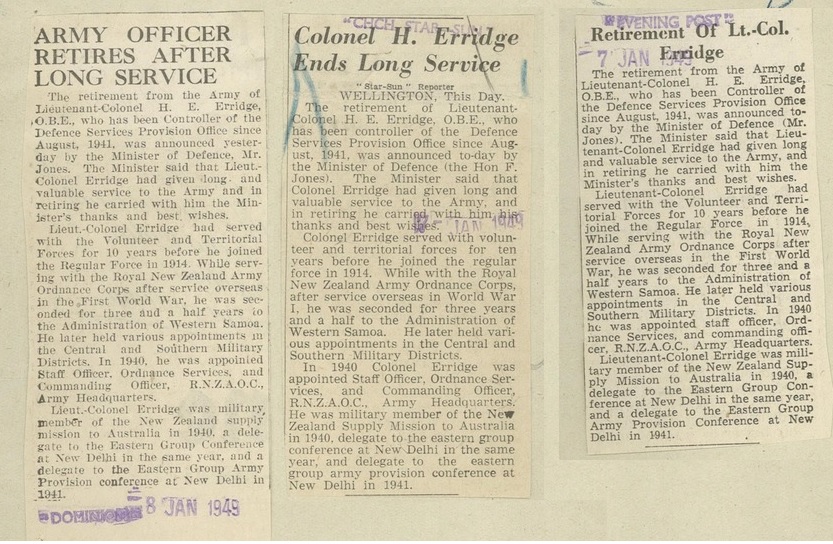
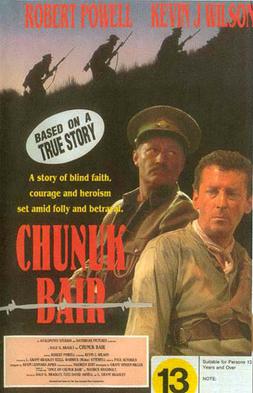
One of the New Zealand military’s functions is to assist civilian organisations where no viable civilian resources are available. One such example of this support was in 1991 when the NZ Army provided expertise and personnel to help produce the movie, Chunuk Bair.
The high point of the New Zealand effort at Gallipoli was the capture of Chunuk Bair, a key feature on the Gallipoli Peninsula. Captured by the Wellington Battalion under Lieutenant-Colonel William Malone on 8 August 1915, the New Zealanders would hold the position against violent counterattacks by a motivated and well-led opponent until relieved by British Battalions on 9 August. The latter were driven off Chunuk Bair in a counterattack led by Mustafa Kemal on the early morning of 10 August.
The anti-Vietnam protest movement of the 1960s and 70s had caused anything related to the ANZAC legend to become unpopular in New Zealand, with ANZAC day commemorations mainly attended by veterans and serving military personnel. The 1981 Australian movie Gallipoli, with its powerful anti-British theme,was released and considered an ‘event of national significance in Australia. This spike of interest across the Tasman was a turning point and provided the springboard for New Zealand playwright Maurice Shadbolt to provide his contribution in enhancing the notion of Gallipoli as the birthplace of New Zealand as a nation with the events at Chunuk Bair as a source of national pride.
Shadbolt’s play Once on Chunuk Bair would open to much praise from the theatre gong public on ANZAC Day 1982 at Auckland’s Mercury Theatre and would reinforce Shadbolt’s view that Chunuk Bair marked the birth of the nation freed from the shackles of British Colonialism. Once on Chunuk Bair gave the battle of Chunuk Bair the same national significance to New Zealand that the Australians place on their magnificent debacle at Lone Pine and the Nek. Despite a short theatrical run, Shadbolt’s play would become popular in schools and universities as it was taught and performed as part of the educational experience in a similar way that the Australians use the movie Gallipoli.
With the 75th anniversary of Gallipoli observed in 1990, a shift in public consciousness toward Gallipoli was revived, and Once on Chunuk Bair was made into a movie during 1991. Produced on a low budget and aimed at a New Zealand audience. The Army Museum provided much technical advice, uniforms and props, with the Army also providing significant assistance to the production, including expertise in explosives and many Men as extras. RNZAOC ammunition technical officer (ATO) Ian Juno would be listed in the credits as providing the special effects, and a sizable quantity of soldiers from 1 Base Supply Battalion would feature in many scenes as extras.
With production compressed within four weeks, many of the Large-scale battle scenes were filmed on Wellington’s south coast, a near facsimile of the terrain of Gallipoli, with the more detailed scenes filmed in a specially constructed set at the Avalon studios.
Although the final product was disappointing and did not have the same polished attributes as the earlier Australian movie Gallipoli, it complements Christopher Pugsley’s 1984 TVNZ documentary Gallipoli: The New Zealand Story, the Voices of Gallipoli in establishing the Gallipoli Campaign and the Chunuk Bair battle as the cornerstones of the national identity.
New Zealand Army Ordnance Corps Badge, 1916-1919 (Robert McKie Collection 2017)
From the turn of the twentieth century, the New Zealand Army had transformed from small permanent militia and volunteer force, into a modern citizen army, organised for integration with a much larger British Imperial Army. When New Zealand entered the First World War, the New Zealand Army did not have a Regular or Territorial Army Ordnance Corps from which to expand into a wartime Ordnance organisation. The creation of a New Zealand Army Ordnance Corps had remained a topic of discussion and indecision. Still, appetite to make a decision lacked until the war necessitated the formation of a New Zealand Army Ordnance Corps as a unit of the New Zealand Expeditionary Force (NZEF).
Ordnance functions in support of the New Zealand Forces had since 1907 been a civil/military responsibility under the control of the Defence Council with duties divided between the civilian Defence Store Department and the Royal New Zealand Artillery;[1]
The Director of Artillery Services (Ordnance): Responsible for Artillery armament, fixed coast defences, and supplies for Ordnance, and
The Director of Stores: Responsible for clothing and personal equipment, accoutrements, saddlery, harness, small-arms and small-arms ammunition, machine guns, material, transport, vehicles, camp equipment, and all stores required for the Defence Forces.
As this created a division of roles and responsibilities, there were many calls for the establishment of a New Zealand Army Ordnance Corps along the lines of;
The Army Ordnance Corps, established in Britain in 1895,
The Australian Army Ordnance Department, established in 1902, and
The Canadian Ordnance Corps, established in 1907.
On 27 December 1907, James O’Sullivan head storekeeper of the Defence Sores Department was confirmed as the Director of Stores, with the Rank of Honorary Captain in the New Zealand Staff Corps.[2][3] Further progress was made on the creation of an Army Ordnance Corps in 1913 with the selection and appointment of Brigade Ordnance Officers (Territorial) in each district with the intent of forming a Central Ordnance Depot to support each Brigade Camp during the 1913 camping season. Under the Director of Equipment and Stores,[4] a fortnight course of instruction on Ordnance duties was conducted at Alexandra Barracks in January 1913 for the selected Brigade Ordnance Officers. In the field during the 1913 Annual Camps, each Brigade Ordnance Officer was allocated a staff of 2 clerks and 4 issuers, who were also selected before the camps and had undertaken training on Ordnance duties.[5][6]]
From an Ordnance perspective, the1913 camps were a revolution in New Zealand’s Ordnance planning. For the first time, The issue of camp equipment was effectively managed with issues direct from Brigade Ordnance Depots directly to Regiments as they marched in. Issues were based against set scales, removing any doubt as to quantities taken into use and ensuring units were not holding excessive equipment and obviating any losses that were a feature of the previous system of direct consignment in small lots. On the completion of the camps, Regimental Quartermaster Sergeants assembled all equipment for return or made the necessary arrangements to rectify deficiencies without any delay. To facilitate the closing of camp stores accounts, Regimental Quartermaster Sergeants were placed under the orders of the Brigade Supply Officer. They would if necessary remain post the departure of their Regiments, remaining until the completion of checking and adjusting of accounts for rations and equipment. The Brigade Ordnance Officers would then ensure the return of all camp equipment to the respective mobilisation stores.[7] An organisational success, the 1913 Ordnance Depot concept was carried over for use in the 1914 camps. The significant difference between the 1913 and 1914 camp’s was that they were to be much larger Divisional camps. To manage the increase of dependency, the size of the Ordnance Depot Staff was increased to 6 clerks and twelve issuers.[8] Moreover, some of the regional Defence Storekeepers participated as the camp Ordnance Officers[9].
Based on many of the logistical lessons learned by the British Army in the Anglo/Boer war, the British Army published their doctrine for the provision of Ordnance Services to the British Army in the 1914′ Ordnance Manual (War)’. The concept of operations for British Ordnance Services was that they were to be organised depending upon the general nature of operations and lines of communication. Arranged within convenient distances of Corps and Divisions, Ordnance Depots would be located to allow units to draw their stores and ammunition from that source. If lines of communication became extended, the establishment of intermediate, advanced, and field depots on the lines of communication was authorised. The composition of Ordnance Depots was to consist of personnel of each trade, of sufficient numbers necessary for the operation of a small ordnance depot and workshop.[10] Assistant Directors Ordnance Services (ADOS) would be responsible for each Corps, with Deputy Assistant Directors Ordnance Services (DADOS) accountable for each Division.[11]
The doctrine Britain had in place at the beginning of the First World War was for forces to be fully equipped with everything necessary to enable them to undertake operations. [12] Included in the plan was the daily maintenance of Combat Supplies,[13][14] but no provision for the replacement of weapons, equipment or clothing was allowed. Re-equipment would happen upon the withdrawal of forces for rest[15]. New Zealand’s contribution as part of the British Empire was to be the NZEF based around an Infantry Division and a Mounted Infantry Brigade. Given the doctrine, New Zealand’s Ordnance requirements were minimal and would initially consist of no more than a DADOS, A Senior NCO clerk and a box of Stationary.[16]
Detailed in Section 5 of General Order 312 of August 1914, the initial establishment of the NZEF was; 1 Officer, 1 Clerk and a horse.[17] The NZEF DADOS was New Zealand Staff Corps Honorary Captain William Thomas Beck, Defence Storekeeper for the Northern Districts. [18][19] Beck was an experienced military storekeeper, who had been a soldier in the Permanent Militia before his appointment as Northern Districts Defence Storekeeper in 1904. Beck was the Officer in charge of the Camp Ordnance for the Auckland Divisional Camp at Hautapu near Cambridge in April 1914 so was well prepared for the role of DADOS.[20][21][22]
The Senior Non-Commissioned Officer assisting Beck was Norman Joseph Levien.[23] A general storekeeper, Levien enlisted into the 3rd Auckland Regiment immediately on the outbreak of war, appointed as a Temporary Sergeant and transferred to the Ordnance Department as the I.C. of Stores and Equipment, assisting in equipping troops for overseas service. Beck and Levien embarked with the main body of the NZEF, departing Wellington for England on the troopship TSS Maunganui on 3 December 1914.[24]
The main body of the NZEF was initially destined for England, but the Canadian Expeditionary Force had suffered an exceptionally bitter winter on Salisbury Plain resulting in a change of plans for the main body of the NZEF to spare them the rigours of an English winter. Diverted to Egypt and disembarking on 3 December 1914. The New Zealanders would join with the Australians as the ‘Australasian Army Corps’.[25] The Corps comprised two divisions; the 1st Australian Division, and the New Zealand and Australian Division. Based at Based Zeitoun Camp on the outskirts of Cairo, the New Zealanders trained and acclimatised to the local conditions, with preparations made for potential operations against the Ottoman Empire. The New Zealanders would see their first action in February 1915 when Ottoman forces raided the Suez Canal.
New Zealand Supply Depot Staff at Zeitoun Camp, 1915. Note Ordnance solder front row 3rd from left. National Army Museum of New Zealand
By 10 December Beck had established himself as the DADOS of the NZEF with an Ordnance office and a shared depot with the Army Service Corps at Zeitoun Camp. NZEF Order No 9 of 10 December 1914 stated that all indents for Ordnance Stores, including petrol and lubricants were to be submitted to the DADOS Ordnance Depot.[26] Beck and had much to work ahead to bring the New Zealand units to scale and come to terms with the British Ordnance Systems. Britain had maintained occupation forces in Egypt since the 1880s and as such had peacetime Ordnance depots in Alexandra and Cairo.[27] To understand the British systems and how best to utilise them Sergeant Levien was attached to the British Ordnance Corps Depot at the Citadel in Cairo to study the Ordnance systems in use and the Ordnance procedures the New Zealand Forces would have to adopt.[28]
Plan of Zeitoun Camp
Divisional Order 210 of 28 December transferred the following soldiers to the Ordnance Depot;
Rue de la, Porte Rosette, Alexandria, Egypt. Public Domain
By March 1915 Levien had secured premises for a New Zealand Ordnance Depot and warehouse at No. 12 Rue de la Porte Rosette and a warehouse at Shed 43, Alexandra Docks. From these premises, the New Zealand Forces would be provided support before and during the Dardanelles campaign. The Australians established a similar Depot at Mustapha Barracks and in No 12 Bond Store on Alexandra Docks.[35]
On 3 April 1915, Beck received a boost to his DADOS organisation. Commissioned to 2nd Lieutenant, Thomas Joseph King, a qualified accountant, transferred into the New Zealand Army Ordnance Corps.[36] King was appointed as the Officer in Charge of the Ordnance Depot at Zeitoun Camp,[37] and Levien, also promoted to 2nd Lieutenant assumed the position of Officer in Charge of Equipment, Small Arms and Accoutrements (SAA) and Clothing.
Order No 122 promoting King and Levien into the NZAOC on 4 April 1915
Lieutenant Thomas Joseph King, New Zealand Ordnance Corps in Egypt.National Army Museum of New Zealand
Early in January 1915 planning began for operations in the area around the Dardanelles, with the ambitious goal of forcing the Ottoman Empire out of the war. Now well known as the Gallipoli Campain, the Australians and New Zealanders were committed to being critical participants in the planned amphibious assault and ground offensive. The Ordnance plan for the campaign included the establishment of an Ordnance Base Depot in Alexandria, and a floating Ordnance Depot set up on the cargo ship the ‘SS Umsinga’. The Umsinga was fitted out in the U.K. with all the Ordnance Stores required, all carefully laid out by vocabulary with detailed plans produced to locate the stock quickly. With Lieutenant Colonel McCheane in command as the Chief Ordnance Officer, he had a complement of one hundred and fifty men of the AOC to manage the stocks.[38]
The invasion fleet loaded with the ANZAC, British and French concentrated off the Island of Lemnos from 10 April. The assault would be at two locations on the morning of 25 April. The British 29th Division would land at Cape Helles on the southern tip of the Gallipoli Penisula, and the ANZACs at locations on the west coast of the Peninsular that would become known as ANZAC Cove. The Division of the landing force made the concept of having the ‘Umsinga’ as the offshore ordnance Depot unworkable. To rectify the situation, the ‘S.S. Anglo Indian’ became the second floating Ordnance Depot. Half the stocks of the ‘Umsinga’ were cross-loaded to the ‘Anglo Indian’ on the night of 23/24 April, with British Ordnance Officer Major Basil Hill appointed as Chief Ordnance Officer on the Anglo Indian, along with haft the AOC men from the “Umsinga”.[39]
The 1st Australian Divison started landing at around 4 am on the morning of 25 April, followed by the Australian and New Zealand Division several hours later. Soon after the beachhead was secured but still under considerable enemy fire, the ‘Anglo Indian’ drew close to the shore and started to cross-load Ammunition and other Ordnance Stores for transfer to an Ordnance dump established at the southern end of the beach. Lt Col J.G Austin,[40] the 1st Australian Division DADOS, supervised the unloading of the lighters into the Ordnance dump and established forward ammunition dumps close to the front lines.[41]
Supplies on the beach at ANZAC Cove 1915. Athol Williams Collection, Alexander Turnbull Library
As DADOS of the Australian & New Zealand Division, Beck landed with Godley’s Headquarters at ANZAC Cove at Gallipoli on 25 April 1915.[42] Lieutenant Colonel Fenwick, ADMS, another New Zealander, was part of the Headquarters landing party describes the events on that day: [43]
“We were all ready to land but were kept waiting and waiting until about 9.00 a.m. Some barges were moored alongside and a string of boats outside of these on the starboard side. Colonels Braithwaite, Chaytor and Manders, Major Hughes and Captain Beck and I got into the first boat. We were frightfully hampered by our kit – overcoat, revolver, glasses, map case, haversack, three days rations, firewood, Red Cross satchel, water bottle – like elephants. It was a certainty that we would drown if we got sunk. After waiting, a steam picket boat came along in charge of a very fat rosy midshipman. He took our string of boats in tow, and we were off. Our boat grounded about 50 feet from the shore and we all hopped out. Of course, I fell into a hole up to my neck. I could hardly struggle ashore and when I did the first thing I saw was Beck sitting on a stone, roaring with laughter at us. Billy Beck was the first New Zealander of Godley’s force (New Zealanders were serving in the Australian Division) to get onto Gallipoli”.
The landings were not as successful as planned with the Ottoman troops providing a more robust defence than expected; the campaign soon developed into stalemated trench warfare. By July the Island of Lemnos 40 miles from the peninsula had become the logistics hub supporting the campaign. The Ordnance command structure underwent a shakeup, the DOS for the entire campaign was Colonel Perry of the AOD, ADOS’s were made responsible for Ordnance support in the individual Corps areas of Helles and ANZAC Cove, Lt Col Austin assumed the position of the ANZAC Corps ADOS. The much larger “S.S. Minnetonka” was charted to act as depot ship, making regular round trips from Lemnos, Helles and ANZAC. The “‘ Umsinga’ and ‘Anglo Indian’ continue to support their respective areas as ammunition tenders.
Ordnance Depot Shrapnel Gully, Gallipoli. Alexander Turnbull Libary
Beck remained as the DADOS of the Australian & New Zealand Division with staff Sergeant Major Elliot Purdom, Regimental Quartermaster Sergeant of the Auckland Mounted Rifles transferred into the division headquarters to be his assistant. For the next three months, Purdom would assist Beck with the strenuous work of landing and organising stores and managing the depot staff. It would appear that he was also a bit of a character and The Hawera & Normanby Star, 24 June 1916 had this to say about Captain Beck’s service at Gallipoli:[44]
“Finally, there was Captain William Beck, an ordinary officer. “Beachy Bill” was in charge of the store – a miserable little place – and whenever he put his nose out of the door bullets tried to hit it. The Turkish gun in Olive Grove was named after him, “Beachy Bill.” The store was simply a shot under fire, and Bill looked out and went on with his work just as if no bullets were about. He was the most courteous and humorous, and no assistant at Whiteley’s could have been more pleasing and courteous than the brave storekeeper on Anzac Beach. General Birdwood never failed to call on Captain Beck or call out as he passed on his daily rounds, asking if he were there, and they all dreaded that someday there would be no reply from a gaunt figure still in death. But Captain Beck was only concerned for the safety of his customers. He hurried them away, never himself.
Back in Egypt, with reinforcements arriving from New Zealand, King remained fully occupied at the Zeitoun Ordnance Depot. Ensuring new drafts of troops were brought up to scale and troops departing for ANZAC cove were fully equipped, on 2 May, King received additional assistance in the form of Trooper Reginald Pike. Pike 39 years old and a veteran of the Boer war was promoted to Temporary Sergeant and appointed as Ordnance Clerk. Pike would remain with Ordnance for the duration of the war.[45]
By mid-July, illness was taking its toll on Beck and Purdom. During August both men were transferred to the hospital in Alexandria, after some time in Alexandra, both would be invalided back to New Zealand.[46] Levien embarked for the Dardanelles on 2 August to replace Beck as DADOS, with King taking over the management of the Alexandra Depot on 12 August. At ANZAC Cove Private Arthur Gilmour transferred into the NZAOC as acting Sergeant on 24 August.[47]
On 6 October Levien and King, both received promotions to Lieutenant[48]. King took over as DADOS of the Division and Levien was appointed the Chief Ordnance Officer at Sarpi camp, with responsibility for re-equipping the depleted Australian & New Zealand Division. Having been in action since April, the Division required some rest and reorganisation. From mid-September 1915, most of the depleted division withdrew to the Island of Lemnos. Spending seven weeks at Sarpi Camp, the Division returned to the Gallipoli peninsula in early November with King remaining as DADOS. November also saw the promotion of Acting Sergeant Gilmour to Sergeant.
By mid-October, it was apparent that the situation in the Dardanelles had become hopeless, with operations against the enemy reaching a stalemate and offensive options exhausted. After extensive planning, evacuation orders were issued on 22 November. Starting on 15 December, withdrawing under cover of darkness, the last troops departed ANZAC Cove and Suvla Bay by dawn 20 December, with the final evacuations of the French and British forces at Helles completed by 9 January.
Returning to Egypt the Australians and New Zealand Division regrouped, and with enough New Zealand reinforcements now available to form a third Brigade, the NZEF became a standalone New Zealand Division. The bulk of the Australian and New Zealand forces separated, but the Mounted Rifle Brigade joined with the Australians to establish the Australian and New Zealand Mounted Division, which would remain in the Middle East for the remainder of the war. Elements of the New Zealand Division detached for operations against the Senussi in Western Egypt, returned to the Division in February and by March the New Zealand Division started to depart for France, joining the British Expeditionary Force on the Western Front.
Lieutenant-Colonel Alfred Henry Herbert, NZAOC. Auckland Museum/Public Domain
From late 1915 the need for a more robust NZAOC was recognised, and expansion of the NZAOC as a unit of the NZEF began in December with Private Frank Percy Hutton[49] and Sergeant Kenneth Bruce MacRae[50] transferred into the NZAOC. On 1 February 1916 Lieutenant-Colonel Alfred Henry Herbert, who had previously served as Commanding Officer of the Pioneer Battalion was transferred into NZAOC and appointed New Zealand Division, DADOS and Officer Commanding of the NZEF NZAOC.[51] Also on 1 January Staff Sergeant Geard who had been with Ordnance since December 1914 formally transferred into the NZAOC.[52]
The NZAOC would officially become a unit of the NZEF in February,[53] with a commensurate influx of personnel transferred into the NZAOC, including;
On 22 March Sergeant MacRae was commissioned as a 2nd lieutenant
A wounded Herbert with Lieutenant Colonel A.B. Chaytor April 1916.National Army Museum of New Zealand
King and Levien would not travel with the Division to France. King was struck down with Enteric (typhoid) fever and would be invalided back to New Zealand on 10 May. King would remain in the Military, initially taking up a posting in the Defence Stores and transferring into the NZAOC on its formation in New Zealand in 1917. Levien oversaw the closing down of the Alexandra depot, disposing of the vast stockpile of stores that had accumulated over the year. Levien would embark for England in May 1916, taking up the post of NZEF Chief Ordnance Officer in the U.K.
[1] “Defence Forces of New Zealand Report by the Council of Defence and by the Inspector-General of the New Zealand Defence Forces for the Year 1907.,” Appendix to the Journal of the House of Representives ( 1907).
[3] “Director of Ordnance Stores,” Dominion, Volume 9, Issue 2741 8 April 1916
[4] The Director of Stores title was changed to Director of Equipment and Stores early in 1911
[5] “H-19 Report on the Defence Forces of New Zealand for the Period 28 June 1912 to 20 June 1913,” Appendix to the Journal of the House of Representives (1913).
[6] “Territorials,” Evening Star, Issue 15018, 29 October 1912.
[7] “H-19 Report on the Defence Forces of New Zealand for the Period 28 June 1912 to 20 June 1913.”
[8] “H-19 Report on the Defence Forces of New Zealand Fir the Period 20 June 1913 to 25 June 1914,” Appendix to the Journals of the House of Representives (1914).
[9] “Auckland Territorials,” New Zealand Herald, Volume LI, Issue 15594 28 April 1915.
[10]Ordnance Manual (War), War Office (London: His Majesties Printing Office, 1914), Appendix 1.
[17] “Troopships; Embarkation Orders; Daily Field States; and a Large Chart of ‘New Zealand Expeditionary Forces – Personnel’ as at 1 June 1915),” Item ID R23486740, Archives New Zealand 1914-1915.
[18] “Main Expedition,” Evening Post, Volume LXXXVII, Issue 73, 23 September 1914.
[19] “Officers of Dominions Contingent,” Ashburton Guardian, Volume XXXIII, Issue 8951, 24 September 1914.
[21] “The Hautapu Camp,” Waikato Argus, Volume XXXV, Issue 5575, 4 April 1914.
[22] “Camp Preparations,” Evening Post, Volume LXXXVII, Issue 22 27 January 1914.
[23] “Norman Joseph Levien,” Personal File, Archives New Zealand 1914-1924.
[24] “William Thomas Beck,” Personal File, Archives New Zealand 1914.
[25] the ‘Australasian Army Corps’. The designation; Australian and New Zealand Army Corps’ was soon adopted and abbreviated to ANZAC, but would not enter the common vernacular until after the Gallipoli landings.
[26] “Appendices to War Diaries, I – Lxii,” Item ID R23486739, Archives New Zealand 1914-1915.
[27] Arthur Forbes, A History of the Army Ordnance Services (London: The Medici society, ltd., 1929), Page 211.
[29] Geard would remain with Ordnance for the duration of the war “Walter John Geard “, Personal File, Archives New Zealand 1914.
[30] Gilmour would remain with Ordnance for the duration of the war “Arthur Gilmour “, Personal File, Archives New Zealand 1914.
[31] Worked At Alexandra Depot until returned to New Zealand in October 1915 “Gavin Hamilton,” Personal File, Archives New Zealand 1914.
[32] Promoted to Sergeant 18 February 16, returned to NZ Aug 1917 “Lewis Crozier,” Personal File, Archives New Zealand 1914.
[33] Transferred to NZASC October 1917 “Horace Frederick Lofts,” Personal File, Archives New Zealand 1914.
[34] Transferred to NZASC 25 February 1916 “Joseph Roland Henderson,” Personal File, Archives New Zealand 1914.
[35] John D Tilbrook, To the Warrior His Arms: A History of the Ordnance Services in the Australian Army (Royal Australian Army Ordnance Corps Committee, 1989), Page 43.
[36] “Grants of Temporary Rank, Appointments and Promotion of Officers in the New Zealand Expeditionary Force,” New Zealand Gazette, No 81 8 July 1915.
[37] “Thomas Joseph King,” Personal File, Archives New Zealand 1914-1946.
[38] Forbes, A History of the Army Ordnance Services, Pages 221-23.
[40] Lt Col Austin was a British Army Ordnance Department officer on secondment to the Australian Army as DOS before the war and served with the AIF on Gallipoli as the DADOS 1st Australian Division.
[41] Tilbrook, To the Warrior His Arms: A History of the Ordnance Services in the Australian Army Page 45.
[42] Christopher Pugsley, Gallipoli: The New Zealand Story (Auckland [N.Z.]: Sceptre, 1990, 1990).
[43] Glyn Harper, Johnny Enzed: The New Zealand Soldier in the First World War 1914-1918, First World War Centenary History (Auckland, New Zealand: Exisle Publishing Limited, 2015, 2015).
[44] “Brave New Zealanders,” The Hawera and Normanby Star, Volume LXXI, Issue LXXI,, 24 June 1916.
[45] “Reginald Pike,” Personal File, Archives New Zealand 1914.
[48] “Grants of Temporary Rank, Appointments and Promotion of Officers in the New Zealand Expeditionary Force (Europe),” New Zealand Gazette, No 5, 20 January 1916.
[49] “Frank Percy Hutton,” Personal File, Archives New Zealand 1914.
[50] “Kenneth Bruce Macrae,” Personal File, Archives New Zealand 1914.
[51] “Alfred Henry Herbert “, Personal File, Archives New Zealand 1914.
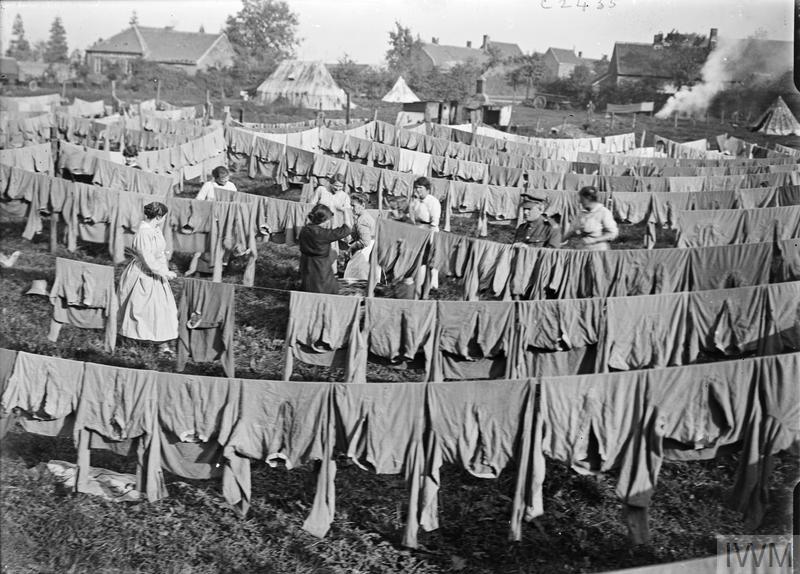
A significant function of the New Zealand Army Ordnance Corps as part of the New Zealand Expeditionary Force during the First World War was managing the New Zealand Divisional Laundries and Baths. The Laundry and Bath functions helped to maintain the New Zealand Division’s hygiene by providing the opportunity for regular bathing, the exchanging of underclothing and socks and the delousing of uniforms. Although the NZ Division s Laundry and Bath functions were interconnected with its neighbouring Divisions and supporting Corps, this article’s focus is on providing a snapshot of the NZ Divisions Laundry and Bath operations from October 1916 to June 1918.
At the onset of the First World War, partly due to the lessons learnt in the South African War and the more recent Balkan Wars, the British Army had a reasonable understanding of the importance of hygiene in the field and published The Manual of Elementary Military Hygiene in 1912.[1] However, as with any military doctrine, the practical application of the field hygiene lessons learnt took time to become effective in the early years of the War. However, by the time the New Zealand Division arrived at the Western Front in mid-1916, the British Army had a rudimentary Laundry and Bath system at the Corps and Divisional levels into which the New Zealand Division was integrated into.
Command and Control
Initially, as the New Zealand Division took over the existing Laundry and Baths from British units, these functions were initially vested as a responsibility of the New Zealand Medical Corps, who provided officers and men to supplement he existing civilian staff.[2] In line with British practice both the Divisional Laundry and Baths came under the control of the Division Headquarters “Q” Branch, and from 21 December 1916, the New Zealand Division, Deputy Assistant Director of Ordnance Services (DADOS) was the officer responsible for the running of the Divisional Laundry and Baths.[3]
Baths
The Bathing concept was that four Bathhouses were to be established in a Divisional area: usually one Bathhouse for each Infantry brigade and one Bathhouse for the rest of the Division. The concept was that Soldiers were to rotate through Bathhouse on a schedule to allow the entire Division to be bathed once every ten days. In the early years of the war, Bathing facilities were rudimentary, with Baths ranging from breweries or fabric processing plants to Beer barrels cut in half.[4]
Although initially built on an ad-hoc basis using whatever resources were available, by 1917 most Bathhouses in the New Zealand Division were built and operated on a uniform pattern: [5]
A typical Bathhouse was be operated as follows.
The men enter at 1, Undress and hand their Service Dress and valuables in at 2(Obtaining receipt) and dirty underclothes at 3.
They then have a hot shower in D
While the men are having their showers, the seams of their Service Dress Tunics and Trousers were ironed to kill lice, and small repairs were undertaken.
Upon completing the shower, the men enter F, collect a towel, clean underclothes at 4 and their Service Dress and valuables at 5. Dress and leave by 6.
All Towels and dirty underclothes are sent from the baths to the Divisional Laundry daily, and a supply of clean or new items received in exchange.
In June 1918, the system of delousing the soldier’s Service Dress clothing was improved using the Thresh Disinfector Delousing Chamber. As soldiers passed into the Bathhouse, the soldier’s Service Dress was turned inside out and handed over to the Thresh operators. The Garments were hung up inside the Thresh’s airtight chamber and sealed. Coke braziers then heated the airtight chamber, and after the garments had been treated by this method for 15 minutes, they were found to be entirely free form lice and eggs.[6]
Personnel employed in the Divisional usually consisted of
Locally employed civilian women for ironing and mending.
Depending on the ebb and flow of the battle and the New Zealand Division’s movement, between October 1916 and June 1918 the DADOS War Diary records that Bathhouses to support the NZ Division were established in over thirty-four separate locations.[8] On most occasions, existing bathhouses were taken over from other Divisions. If there were no existing Bathhouse or the ones taken over were not deemed suitable, NZ Engineers were employed to construct new bathhouses.[9]
Plan for the NZ Divisional Baths as Vauchelles. Archives New Zealand
By June 1918, the New Zealand Divisional Bathhouse system was operating effectively and bathing on average between 700 – 800 troops daily, with 46411 men passing through the Divisional Bathhouses in total.[10]
New Zealand soldiers recently in the trenches outside the Divisional Baths, France. Royal New Zealand Returned and Services’ Association :New Zealand official negatives, World War 1914-1918. Ref: 1/2-013160-G. Alexander Turnbull Library, Wellington, New Zealand. /records/23139145
Soldiers after leaving the line wait their turn for a bath. Royal New Zealand Returned and Services’ Association :New Zealand official negatives, World War 1914-1918. Ref: 1/2-012817-G. Alexander Turnbull Library, Wellington, New Zealand. /records/23097155
Laundry
On most occasions, as the Division relieved an existing Division in the area and took over the existing Divisional Laundry as a going concern. However, there were occasions when a Laundry needed to be established from the ground up, such as when the Division Laundry and Baths at Pont de Nieppe were destroyed by enemy shell fire in April 1917.[11]
The Divisional Laundry received dirty garments from the Baths, (underclothes, socks, and towels) they were disinfected, washed, and mended and placed into a reissue pool.[12]
Usually, the Divisional Laundry placed indents on the supply chain for new items to replace items beyond repair, however, in January 1918 authority was granted for the Divisional Baths to hold a pool of new clothing to me maintained consisting of: [13]
5000 shirts
13100 vests woollen
12450 Drawers Woollen
12700 Towels
19000 pairs of socks
By 1918 the average output from the New Zealand Divisional Laundry was 35,000 – 40,000 garments per week.
Personnel employed in the Divisional Laundry usually consisted of.
Between October 1916 and June 1918, as the NZ Division moved, the NZ Divisional Laundry was also relocated and established in new locations, some of the known sites were
October 1916 Located at Estaires.
Pont de Nieppe, Laundry destroyed by enemy shellfire, 12 April 1917
18 to 25 April 1917 Established at Steenwerck, Handed over to the 8th Division.
Before and during the German 1918 Spring Offensive, the Divisional Laundry was located at.
RenninghelstOuttersteene Westoutre
Abbeville
Socks
Socks were an unlikely enabler; in the extreme conditions found in the mud-filled trenches, clean, dry socks were often the difference between life and death. When feet are constantly wet, as they often were in the trenches, they begin to rot. Gangrene sets in, and often the only remedy is amputation. In the First World War, 75,000 British troops died due to complications caused by trench foot.[15]
Acutely aware of the need for clean socks, the New Zealand Division maintained a system where socks were exchanged daily. To facilitate the daily exchange, a dry sock store was run in conjunction with the Bathhouses. Here dry socks were drawn daily by units in the line in exchange for dirty socks. The dirty sock was then be backloaded to the Divisional Laundry and exchanged for clean socks.
Once received by the Divisional Laundry, the dirty socks if damaged, were mended, washed, and once dried, treated with camphor (as prevention against trench foot) before being placed into the exchange pool.
By May 1918, the disruption caused by the 1918 German Kaiserschlacht offensive had affected the supply routes with the railway service from the Laundry at Abbeville becoming irregular, and it was taking 6-7 days for trucks to travel the short distance to replenish Bathhouses with clean underclothing and socks. However, given the hygiene and morale benefits that clean socks brought, the need to maintain the sock exchange system to the forward troops was a priority. Therefore, close to the front, under the supervision of the NZAOC, a small sock washing depot was established with Sixteen men from the Divisional Employment Company in May 1918. Socks were sorted with torn or holey socks returned to the Laundry for mending, with the remainder of the socks washed by hand. In fine weather, the drying was done outside, if it was wet, the socks were hung on wires from the ceiling of a room and dried employing coke braziers. The men did excellent work, and output was 4 to 5 thousand pairs daily and kept up an adequate supply.[16]
Soldiers washing socks during World War I, Bus-les-artois, France. Royal New Zealand Returned and Services’ Association :New Zealand official negatives, World War 1914-1918. Ref: 1/2-013179-G. Alexander Turnbull Library, Wellington, New Zealand. /records/23052031
New Zealand soldiers washing socks in wooden tubs near the New Zealand Divisional Headquarters at Bus-les-artois, 7 May 1918. Photograph taken by Henry Armitage Sanders Nº H-563 Photo source – Alexander Turnbull collection at the National Library of New Zealand. (Colorized by Marina Amaral from Brazil) https://www.facebook.com/marinamaralarts/?fref=nf See less
Gumboots
As the western front settled down into the routine of trench warfare in the winter of 1915, the time spent in the saturated trenches by British troops was limited to thirty-six hours during which the wearing of gumboots became widespread in the water-soaked areas.[17] The use of gumboots helped minimise the effects of mud and water on exposed feet, thus limiting Trench foot occurrences. Based on the early success of gumboots, contracts were placed with the North British Rubber Company (now Hunter Boot Ltd) to manufacture over 1,185,000 pairs of Gumboots for the British army during WW1.[18]
Boots were classed as Trench Stores and usually only issued to a division when it was on the line. The NZ Division was typically provided with around 6000 pairs, pooled, and issued from a Gumboot Store. The Gumboot store was designed with drying racks and heaters to allow the wet gumboots to be dried and prepared for reissue.
Plan for Drying Apparatus for Rubber Boots. Australian Imperial Force Unit War Diaries, 1914-1919 – Australian Corps Baths and Laundries, 2 – June 1916 – April 1918.” Australian War Memorial Archives Collection No AWM4 18/1/1 PART 2 (1918)
This article provides a small snapshot of how the Laundry and Bath functions contributed to maintaining the New Zealand Division’s hygiene by providing the opportunity for regular bathing, the exchanging of underclothing and socks and the delousing of uniforms. Although the playing a small but significant role in maintaining the combat effectiveness of the New Zealand Division, the efforts of the NZ Division DADOS Staff, the men of the Divisional Employment Companies and the locally employed civilian staff in maintaining the Laundry and Bath operations are worthy of further study to expand the historiography of New Zealand’s First World War combat enablers.
Notes
[1] Martin C. M. Bricknell and Colonel David A. Ross, “Fit to Fight – from Military Hygiene to Wellbeing in the British Army,” Military Medical Research 7, no. 1 (2020).
[2] Major J.S Bolton, A History of the Royal New Zealand Army Ordnance Corps (Trentham: RNZAOC, 1992), 71-72.
[3] “2nd Australia & New Zealand Army Corps [2anzac], Assistant Director of Ordnance Services (Ados) – War Diary, 1 December – 31 December 1916,” Archives New Zealand Item No R23487340 (1916).
[4] Janet Macdonald, Supplying the British Army in the First World War, vol. , (Pen and Sword military, 2019), , 143.
[5] “An Account of the Working of the Baths Established in the Divisional Areas in France,” Archives New Zealand Item No R24428508 (1918).
[6] “Headquarters New Zealand and Australian Division – New Zealand Division – Deputy Assistant Director of Ordnance Services (Dados) – War Diary, 1 June – 30 June 1918,” Archives New Zealand Item No R23487667 (1918).
[7] From May 1917 drawn from No 1 NZ (Divisional) Employment Company.
[8] Based on the DADOS War Diaries Bathhouses were established at, Neuve-Eglise, Selles, Balinghem,Merck-Saint-Liévin, Watou Area, Vlamertinge, Poperinghe, Canal Bank, Bayenghem, Potijze, Hondichen, Staple, Halifax Camp, Caistre, Béthencourt, Louvencourt, Pas, Nauchelles, Pont de Nieppe, Blendecques, Café Belge
[9] Peter D. F. Cooke, Won by the Spade: How the Royal New Zealand Engineers Built a Nation (Exisle Publishing Ltd, 2019), Bibliographies, Non-fiction, 199.
[10] “Headquarters New Zealand and Australian Division – New Zealand Division – Deputy Assistant Director of Ordnance Services (Dados) – War Diary, 1 June – 30 June 1918”
[11] “Headquarters New Zealand and Australian Division – New Zealand Division – Deputy Assistant Director of Ordnance Services (Dados) – War Diary, 1 April – 30 April 1917,” Archives New Zealand Item No R23487653 (1917).
[12] “An Account of the Working of the Baths Established in the Divisional Areas in France.”
[13] “Headquarters New Zealand and Australian Division – New Zealand Division – Deputy Assistant Director of Ordnance Services (Dados) – War Diary, 1 January – 31 January 1918,” Archives New Zealand Item No R23487662 (1918).
[14] From May 1917 drawn from No 1 NZ (Divisional) Employment Company.
[16] “Headquarters New Zealand and Australian Division – New Zealand Division – Deputy Assistant Director of Ordnance Services (Dados) – War Diary, 1 June – 30 June 1918.”
[17] Susan Cohen, Medical Services in the First World War (Bloomsbury Publishing, 2014).
In the period between the world wars, Britain analysed the lessons of the Great War and, looking forward, realised that the next war was not to be one of attrition-based warfare but a war of speed, mobility and surprise utilising modern technologies such as armoured vehicles, motorised transport and communications. By 1939 the British Army had transformed from the horse-drawn army of the previous war into a modern motorised force fielding more vehicles than their potential opponents, the Germans. Britain’s modernisation was comprehensive with new weapons and equipment and robust and up-to-date doctrine, providing the foundation for the employment of the army. The modernisation of the British Army included Logistical services, with both the Army Service Corps and the Army Ordnance Corps on the path to becoming doctrinally prepared, equipped and organised for the upcoming conflict. New Zealand took Britain’s lead and, from the mid-1930s, began reorganising and reequipping New Zealand’s Military in tune with emerging British doctrine. New Zealand’s entry into the war in September 1939 initiated a massive transformation of New Zealand’s Ordnance Services with new units raised and personnel recruited to support New Zealand’s forces at home and overseas. In addition to Ordnance Deports and Workshops, the most numerous Ordnance unit was the Light Aid Detachments (LAD). Providing first-line repair to formations and Units, LADs provided the backbone of New Zealand repair and maintenance services keeping the critical material of war operational in often extreme conditions. This article provides background on the role and function of the LAD in overseas and home defence roles between 1939 and 1945.
Throughout the interwar years, the British Military establishment analysed the lessons of the previous war and interpreted contemporary developments. Updating doctrine throughout the 1930s, the British Military progressively transformed into a mechanised force armed with some of the era’s most advanced weapons and equipment. The tactical bible of British Commonwealth armies, the Field Service Regulations (FSR), was updated with at least four editions issued, proving that the British Army was willing to learn from the mistakes learned in the previous war.[1] Concurrent to the tactical doctrine of the FSR Anticipating, the Royal Army Ordnance Corps (RAOC) spent the 1930s creating the infrastructure and doctrine to support the mechanisation of the British Army by creating essential relationships with the British motor industry that smoothed the path to mobilisation.[2] In addition to the doctrine published in the FSRs, the wartime doctrine for the operation of British and Commonwealth Ordnance Services was detailed in the Ordnance Manual (War) 1939.
Authorised for use from 13 September 1939, the Ordnance Manual (War) 1939 was intended to “Guide all concerned and particularly to assist, at the beginning of a campaign, those who have no previous war experience of the duties that they are called upon to undertake.”[3] The Ordnance Manual (War) 1939 detailed all the responsibilities that were expected of the British and Commonwealth Ordnance Services, with the repair and maintenance responsibilities as follows;[4]
8. The organisation for carrying out, in the field, repairs (including replacement of component and complete assemblies) to units’ equipment (other than ammunition) consists of:- (a) Light aid detachments, which are attached to certain units and formations to advise and assist them with their
“first line” repair and recovery duties. (b) Mobile workshop units, equipped with machinery, breakdown and store lorries, which are allotted to certain
formations for carrying out “second line” repairs and recovery. (c) Stationary base ordnance workshops, which are established on a semi-permanent basis at, or adjacent to, the
base ordnance depot or depots. (d) Ordnance field parks from which replacement of components and complete assemblies can be effected. These
ordnance field parks also hold a proportion of replacement vehicles.
The Ordnance Manual (War) 1939 then details the role of the Light Aid Detachment:
2. In order to assist units with their first line repair and recovery work, and to provide- expert diagnosis and technical experience, light aid detachments are permanently attached to certain formations and units, for example: • Artillery regiments. • Cavalry regiments and Tank battalions, Royal Armoured Corps. • Infantry brigades. • Machine-gun battalions. • Tank battalions. • Royal Engineer field parks. • Divisional Signals. The LADs. attached to RE field parks and to divisional signals (whose establishments of vehicles are comparatively small) are required to look after other small mechanised units not provided with LADs.
3. The personnel of a LAD consists of an Ordnance Mechanical Officer (OME), an armament artificer (fitter), an electrician, and a few fitters, and the necessary storemen, driver mechanics, drivers, etc., for their vehicles. Its transport usually consists of two lorries (one store and one breakdown), a car and a motorcycle.
4. Its functions are: – (a) To advise units how best to keep their equipment and vehicles in a state of mechanical efficiency; to help them to
detect the causes of any failures or breakdowns, and to assist them in carrying out first line repairs up to their full
capacity. (b) To assist units with first-line recovery of breakdowns. (c) To maintain a close liaison between the unit and formation workshop.
During rest periods LADs may be able to carry out more extensive repairs. If the time is available, the necessary parts and material can be brought up from the ordnance field park to enable them to carry out jobs which would normally be beyond their capacity when on the move.
In such circumstances, repair detachments of recovery sections may be brought up to assist them).
5. LADs do not form part of the workshops in any sense. They are definitely an integral part of “B” echelon of the unit to which they are attached, and the OME. is directly under the orders of OC unit, in the same way as the regimental medical officer. The OC unit is the accounting officer for the vehicles and stores of the LAD. When an LAD serves more than one unit, as in the case of an infantry brigade, the OME. is the accounting officer for all purposes.
Members of 10 Light Aid Detachment, NZ Electrical and Mechanical Engineers, attached to 5 NZ Fd Park Coy, changing truck engine, probably at Burbeita. Man in peaked cap identified as Lt G D Pollock, later Col Pollock. Taken circa 1941 by an official photographer. Ref: DA-01035-F. Alexander Turnbull Library, Wellington, New Zealand. /records/22485028
The New Zealand LADs
When New Zealand committed forces to the war effort in 1939, the New Zealand Army Ordnance Corps, despite having the doctrinal foundations provided by the Ordnance Manual (War), did not have the Regular or Territorial Force personnel available to provide LADs immediately. Therefore, like the United Kingdom, New Zealand relied on its civilian motor industry to provide the bulk of the tradesmen for the LADs. However, despite the challenges in forming a specialised unit from scratch, the New Zealand Army raised fifty-six LADs in three distinct tranches between 1940 and 1943, consisting of
2nd New Zealand Expeditionary Force – Ninteen LADs
2nd New Zealand Expeditionary Force in the Pacific – Seven LADs
Home Defence – Thirty-One LADs
NZEF LADS
Created as part of the newly constituted 2NZEF in 1939, the 2NZEF NZOC was described in the Evening Post newspaper as consisting of “11 Light Aid Detachments of the New Zealand Ordnance Corps. These are numbered 9 to 19, and their part is to render assistance and effect repairs to mechanic transport and the anti-tank units”[5].
The was initially some confusion between the use of the designation NZAOC and NZOC in the context of the NZEF. This was clarified in NZEF Order 221 of March 1941, which set NZOC as the title of Ordnance in the NZEF.
1942 saw the separation of maintenance and repair functions from the Royal Army Ordnance Corps (RAOC) with the formation of the Electrical and Mechanical Engineers (EME) in the Brutish Army.[6] The New Zealand Division followed suit and formed the New Zealand Electrical and Mechanical Engineers (NZEME) on 1 December 1942, separating the repair, maintenance and ordnance stores functions of the NZOC.[7]
GMC CCKW Truck modelled with the Regimental Markings of 38 LAD, 18th Armoured Regiment. Craig Paddon
NZEF NZ Tank Brigade
Formation Sign 1 NZ Tank Brigade
The New Zealand Tank Brigade was an NZEF unit formed at Waiouru in October 1941 to be deployed to the Middle East after Training in New Zealand for six months. The entry of Japan into the war in December 1941 necessitated the rerolling of the NZ Tank Brigade into a home defence role. After reorganisations, the Brigade was ordered to be redeployed in April 1942, with its Headquarters and Battalions dispersed to the South Island, Northland, Manawatu and Pukekohe.
November 1942 saw further changes which saw the gradual disestablishment of the NZ Tank Brigade.[18]
No 1 Tank Battalion and 32 LAD remained in the home defence roll in the Auckland/Northland area.
No 2 Tank Battalion, the Army Tank Ordnance Workshop and Ordnance Field Park were dissolved and became part of the 3 NZ Division Independent Tank Battalion Group for service in the Pacific.
No 3 Tank Battalion and 33 LAD were deployed to the Middle East for service with the 2nd NZ Division, where it was dissolved, forming the nucleus of the 4th NZ Armoured brigade and 38, 39 and 40 LADs.
34 LAD was stationed with the Independent Tank Squadron at Harewood in the South Island.
By June 1943, the final units of the 1st NZ Army Tank Brigade, including 32 LAD and 34 LAD, were disbanded.
Army Tank Ordnance Workshops, OFP and LAD identifying patch. Malcolm Thomas Collection
NZEF in the Pacific
NZOC units also were formed for service with the NZEF in the Pacific (NZEFIP). Initially, 20 LAD was formed to support the 8 Infantry Brigade Group in Fiji in November 1940. 14 Infantry Brigade Group reinforced the force in Fiji with 36 and 37 LAD formed to provide additional support. With the redeployment of the New Zealand Brigade from Fiji in late 1942, 36 LAD remained as the LAD for the new Fiji Brigade that was about to be formed. In March 1943, eight members of 36 LAD deployed with the Fijian Brigade to Bougainville. On 1 May 1944, 36 LAD was renamed the Recovery Section, Brigade Mobile Workshops, Fiji Military Forces.[22]
The bulk of the NZEFIP was reorganised as the 3rd New Zealand Division, with the NZOC commitment expanding into 23 units and detachments, including six LADs serving in operations in New Caledonia, The Solomon Islands and Tonga.[22] The formation of the Electrical and Mechanical Engineers in 1942 was not followed through in New Zealand and the Pacific, with repair and Maintenance functions remaining part of the Ordnance Corps for the duration of the war.
On concluding successful campaigns in the Solomon Islands in 1944, 3 NZ Division and its equipment were returned to New Zealand and formally disbanded on 20 October 1944. On return to New Zealand, many NZOC members were graded unfit due to the rigours of the tropical campaign and returned to their civilian occupations. Those fit enough were redeployed as reinforcements to 2NZEF in Italy, with the LAD men joining NZEME units.
With the NZAOC and the New Zealand Permanent Army Service Corps (NZPASC) existing as part of the Permanent Army, only the NZPASC had a Territorial Army component, known as the New Zealand Army Service Corps (NZASC). From the 1930s, workshop sections had been included on the establishments of ASC unit for activation on mobilisation. With the onset of war in 1939 and the mobilisation of the Territorial Army in 1940, the Quartermaster General, Col H.E Avery, made the decision that LADs were an Ordnance responsibility, and the NZOC was established as the Ordnance Component of Territorial Army in December 1940.[29]
By late 1943 the mobilisation of the Territorial Forces had ceased to be necessary, and most units had been stood down and placed on care and maintenance status with a small RF Cadre. By 1 April 1944, all wartime home defence units had been disbanded.[30] Although not part of the pre-war Territorial Army, the NZOC remained on establishments. In 1946 a Reorganisation of New Zealand Military Forces removed the distinction between Regular and non-Regular soldiers, and the NZOC ceased to be a separate Corps with the supply functions amalgamated into the NZAOC and the Workshops functions, including the LADs (21, 23, 25, 28, 30 and 53) amalgamated into the NZEME.[31]
Photo of mechanics and motorcyclists repairing motorcycles at a field workshop during military manoeuvres in Northland.” Auckland Weekly News, 23 December 1942, p.14 Auckland Libraries Heritage Collections AWNS-19421223-14-03
[1] This compared with the two editions of German and French doctrine produced during the same period. Jonathan Fennell, Fighting the People’s War : The British and Commonwealth Armies and the Second World War, Armies of the Second World War (Cambridge University Press, 2019), Non-fiction, 32.
[2] P.H. Williams, War on Wheels: The Mechanisation of the British Army in the Second World War (History Press Limited, 2016).
[3]Ordnance Manual (War), ed. The War Office (London: His Majestys Stationery Office, 1939), 9.
[22] Robert A. Howlett, The History of the Fiji Military Forces, 1939-1945 (Published by the Crown Agents for the Colonies on behalf of the Government of Fiji, 1948), Non-fiction, Government documents, 257-8.
[22] Oliver A. Gillespie, The Tanks : An Unofficial History of the Activities of the Third New Zealand Division Tank Squadron in the Pacific (A.H. and A.W. Reed for the Third Division Histories Committee, 1947), Non-fiction, 137-227.
[23] Peter Cooke, Warrior Craftsmen, Rnzeme 1942-1996 (Wellington: Defense of New Zealand Study Group, 2017), 55.
[31] “H-19 Military Forces of New Zealand Annual Report of the General Officer Commanding, for Period 1 June 1949 to 31 March 1950 “, Appendix to the Journals of the House of Representatives (1950).;”Reorganisation of the Territorial Force,” New Zealand Gazette No 55, 21 October 1948.
[32] “Formation of New Units, Changes in Designation, and Reorganization of Units of the Territorial Force. ,” New Zealand Gazette, No 127, 19 December 1940, 3738-39.
[34] 3 Light Armoured Fighting Vehicle Regiment (Auckland East Coast Mounted Rifles) Plowman and Thomas, New Zealand Armour in the Pacific 1939-45, 5-7.
[35] “Formation of New Units and Disbandment of Uuits of the Territorial Force and National, Military Reserve. ,” New Zealand Gazette, No 8, 22 January 1942, 351.
[45] 2 Light Armoured Fighting Vehicle Regiment (Queen Alexandra’s Mounted Rifles)Plowman and Thomas, New Zealand Armour in the Pacific 1939-45, 5-7.
[46] “Parts of the Defence Forces Called out for Military Service,” New Zealand Gazette, No 128, 19 December 1940, 3777.
[47] 9 Light Armoured Fighting Vehicle Regiment (Wellington East Coast Mounted Rifles)Plowman and Thomas, New Zealand Armour in the Pacific 1939-45, 5-7.
[48] “Formation of New Units and Disbandment of Uuits of the Territorial Force and National, Military Reserve. ,” 351.
[49] 6 Light Armoured Fighting Vehicle Regiment ( Manawatu Mounted Rifles)Plowman and Thomas, New Zealand Armour in the Pacific 1939-45, 5-7.
[50] “Formation of New Units and Disbandment of Uuits of the Territorial Force and National, Military Reserve. ,” 351.
[51] “Formation of New Units, Changes in Designation, and Reorganization of Units of the Territorial Force. ,” 3738-39.
[59] 10 Light Armoured Fighting Vehicle Regiment ( Nelson Marlbough Mounted Rifles) Plowman and Thomas, New Zealand Armour in the Pacific 1939-45, 5-7.
[60] “Formation of New Units and Disbandment of Uuits of the Territorial Force and National, Military Reserve. ,” 351.
Taking a break from telling the story of the New Zealand Ordnance Services, this article examines how the loss of war is memorialised in many New Zealand communities.
The First World War was a traumatic and defining event for the young county of New Zealand with over one hundred thousand men and women serving during the war. The effects of the war would be felt across all sectors of New Zealand society as New Zealand suffered a fifty-eight per cent casualty rate. As the nation collectively grieved, one way it came to terms with the tremendous loss of life was in the erection and dedication of war memorials across the nation. One example of such a memorial is the St Andrew’s Presbyterian Church Memorial Sunday School building at Church Street in Palmerston North, a building dedicated to the memory of the thirty-six members of the congregation that did not return from the war. The building ceased to serve its original role many years ago and is now a bridal studio located in what is now a side street adjacent to Palmerston Norths only mall. However, the memorial plaque remains as a reminder of the losses inflicted onto the local community by the First World War. This article will focus on four of the men from the St Andrews congregation, and examine their’ life geography’ to tell their story of where they came from and the community that they lived-in.
The former St Andrews Church Sunday School, Palmerston North: Bruce Ringer, 2018
In the years from 1910 to 1923, the congregation of St Andrew’s Presbyterian Church maintained an average congregation of 306. So given that the church had lost 11.6 per cent of its congregation in the war, it was a fitting and appropriate memorial to those men that the new Sunday School building was dedicated in their memory in 1923. [1] The memorial plaque is a simple marble tablet with the dedication and the names of the fallen engraved and filled in with lead lettering, parts of which are starting to deteriorate. The Names are in alphabetical order with Surnames followed by post-nominals and then initials, unfortunately not all the initials are entirely correct, leading to a disconnect between the memorial and records.
St Andrews Church Sunday School, War Memorial Plaque. Palmerston North: Bruce Ringer, 2018
To determine the correct names and to construct the comparative table below (Table 1), verification of the names on the memorial was in the first instance checked against records held online by the Commonwealth War Graves Commission (CWGC).[2] From the data held by the CWGC, the individual’s service number was identified, which in turn was then used to extract the individual’s personnel file from either Archives New Zealand,[3] or the National Archives of Australia.[4] To simplify the reading and interpretation of the Individuals service record, a search of the records held in the Auckland War Memorial Cenotaph website would often provide a transcript of the individual’s service record.[5] Although the service record is robust and provides all the essential information on a serviceman’s military service but little on the service members his life outside of the military. Two useful websites offered additional information on the civilian life of the servicemen, the National Library of New Zealand Papers Past website,[6] and the pay for use website Ancestry.com, both these sites contribute in filling in many of the gaps found in the service records.
This combination of multiple sources, which in some cases provided useful cross-referencing of information and the inclusion of new information created the table at appendix 1; providing details on the thirty-six men including;
Date and place of birth,
civilian occupations,
previous military service,
marital status,
Location on enlistment,
Enlistment date, servicer umber, rank at time of death and unit they were serving in, and
age and places of death.
Given the range of information and geographic data that can be filtered from such a table, for this research, only four servicemen were examined in detail. Table 2 details four men who based on some simple criteria, became candidates for this study. The criteria are based on their situation at the time of their enlistment, in that they; were all living in suburban Palmerston North, they were between the ages of 20 and 26, and they all belonged to the same Territorial Army Unit.[7]
Robert Carville Bett
Robert Carville Bett joined the NZEF on 10 December 1914 as part of the initial surge of enthusiastic volunteers in the early years of the war. Born in Palmerston North, Bett was the older brother of three sisters. A coachbuilder by trade, Bett was an active member of St Andrews Church Presbyterian Church, where he contributed to the church as a lay preacher and secretary and sub-leader of the Bible Class. Bett would also fulfil his compulsory military service commitment by serving in J Battery of the New Zealand Field Artillery (NZFA). Deploying on the 2nd Reinforcements of the New Zealand Expeditionary Force (NZEF), Bett would serve with the Veterinary Corps in Egypt and be invalided home in November 1915 after contracting typhoid fever. During his time in Egypt, he continued his civic spirit by contributing to the work of the Egyptian YMCA organisation in providing welfare services to the New Zealand troops.[8]
Returning to New Zealand and regaining his fitness, Bett was back in camp in March 1916 and offered a commission in both the Veterinary and Army Service Corps, Bett, however, chose to join the infantry as a private soldier. Leaving with the Fourteenth Reinforcements in June 1916, Bett wold serve with the Otago Infantry Regiment of the New Zealand Division in the Battle of the Somme and would die as a result of wounds during the Battle of Messines on 14 June 1917. Bett’s death was felt hard in Palmerston North as he was a well-admired young man. Regretfully Bett was the sole male child of his family, leaving it without a representative for the future.[9]
James Henry Carson
James Henry Carson would be called up by Ballot in April 1917 and would serve in Trentham and Featherston camps, succumbing to the Influenza in November 1918. James was born in Wellington and was the third child in a family of four boys and a girl. The Carson family had moved to Palmerston North by 1907 when the fourth child, Sydney, died at the age of thirteen in a tragic shooting incident.[10] The Carson family patriarch James Senior was a Cordial Maker and proprietor of the business of ‘Carson and Son’ which James was an also an employee. James would also meet his compulsory military service commitments by serving in J Battery of the NZFA.[11]
James married Linda Edwards at St Andres Church on 14 October 1917.[12] James was called up for Military service by Ballot, and when serving on the Artillery Details at Featherston Camp, Linda passed away after a short illness on 29 June 1918.[13] The tragedy of this death would have only compounded the family’s pain as they had only received notification that John Carson, the Oldest of the Carson children, had died in France a month earlier.[14] James continued to train at Featherston, but sadly on the day after peace was declared, Carson died of Influenza at Featherston Camp on 12 November 1918.[15]
Vernard Clifton Liddell
Vernard Clifton Liddell was from a long-established Foxton family and was the second child in a family of four boys and one girl. A competent Hockey player, Vernard had played representative hockey for both the Manawatu and Wellington districts. Meeting his compulsory military service commitments, Liddell would serve in J Battery of the NZFA.[16] At the time of his enlistment, he was working as a clerk for the agricultural sales firm of Messrs Barraud and Abraham’s on Rangitikei Street. Liddell’s sister Rita would later be working for the same firm in 1939.[17] Liddell would enlist into the NZEF in October 1915 and see service with the New Zealand Division in France until 24 April 1918 when he died of wounds as a result of combat operations.[18] Two of Liddell’s brothers would also serve in the NZEF during the war.
Owen George Whittaker Priest
Owen George Whittaker Priest was the eldest son in a family of two boys and two girls, originally from Akaroa, the Priest family would move north, first to Inglewood and the settling in Palmerston North by 1910. Like his peers, Priest would also complete his compulsory Military service obligations with J Battery NZFA and at the time of his enlistment was working as a clerk for the Stock and Station agents, Abraham and Williams Ltd.[19] Liddell would be one of the earliest volunteers for the NZEF, enlisting on 11 August 1914. Liddell would see service at Gallipoli and France. Having survived Gallipoli, Liddell was killed in action in the early days of the N.Z. Divisions actions in France on 9 July 1916.[20]
Conclusion
In this small church community of about three hundred, it is certain that almost all of these thirty-six men were acquaintances of each other, and their families were connected in some manner, with the loss of these men was felt collectively across the community. This sense of community is highlighted in the examples of Bett, Carson, Liddell and Priest. As well as their connection to the church, they all lived and worked in proximity to each other, and as Territorial soldiers would have trained and socialised together. So next time you pass a memorial such as this, please don’t ignore it as a relic of an event long forgotten but instead take the time to reflect on the men and women listed on the memorial and the supreme sacrifice that they made.
[1] 1910 congregation was 253, 1919 congregation was 422, 1923 congregation was 343. They Ventured – Who Follows?: St Andrews Presbyterian Church, Palmerston North, 1876-1976., ed. St Andrew’s Presbyterian Church (Palmerston North1976), 33-34.
[5] The Auckland War Memorial Cenotaph is essentially a simplified transcript of the individual’s service record with the inclusion of additional information such as photos, documents and family research not included on the service records. Auckland War Memorial Museum, “Online Cenotaph Search,” http://www.aucklandmuseum.com/war-memorial/online-cenotaph.
[7] J (Howitzer) Battery of the New Zealand Field Artillery. A Palmerston North Territorial Army unit that was formed in 1912. Alan Henderson, David Green, and Peter D. F. Cooke, The Gunners: A History of New Zealand Artillery (Auckland, N.Z.: Reed, 2008, 2008), Non-fiction, 67.
[8] Archives New Zealand, “Bett, Robert Carville – Ww1 17/253 “Personal File, Record no R22276304 1914-1918.
[9] “Roll of Honour (Bett),” Manawatu Times, Volume XL, Issue 137278, 26 June 1917, 26 June 1917.
[10] “Sad Affair in Palmerston North,” Manawatu Herald, Volume XXIX, Issue 3769, 22 August 1907.
[11] “Carson, James Henry – Ww1 53956 “Personal File, Record no R121892583 (1914-1918).
The Second World War marked a period of immense growth for New Zealand’s Ordnance Services. Expanding from a strength of 6 Officers, 28 Permanent Other Ranks, and 113 Civilian Staff operating from limited infrastructure in Devonport, Hopuhopu, Trentham, and Burnham Camp in May 1939, New Zealand’s Ordnance Services had grown by 1944 into a diverse organisation supporting New Zealand’s forces both at home and abroad.
Armed with the 1939 Ordnance Manual (war), the New Zealand Expeditionary Force (NZEF) Ordnance units were established and adapted for their specific theatres of operation. In the Middle East, New Zealand Ordnance integrated into the Ordnance Services of the Royal Army Ordnance Corps. However, with a Brigade Group based in Fiji from late 1940, the Ordnance Services in the Pacific faced the most significant challenges. As the NZ Brigade Group transitioned and expanded from its garrison duties in Fiji into a Division conducting amphibious combat operations in the Solomon Islands, the supporting Ordnance Services had to anticipate the Division’s needs up to six months in advance. They also relied on fragile lines of communication stretching back to New Zealand for everyday items and to the United Kingdom for much of the military hardware held by the Division. Additionally, the tropical climate and indigenous fauna encountered in the area of operations posed additional hurdles to overcome.
After a series of actions in the Solomons, the burden of maintaining two Divisions became unsustainable for the limited resources New Zealand could provide. By October 1944, the Pacific Division had been disestablished. Its men were either demobilised to fill critical civilian roles or retained in the Army as reinforcements for the Division in Italy. Many of the Ordnance men were absorbed into New Zealand Ordnance Depots to receive and refurbish the large amounts of equipment returned from the Pacific.
3 NZ Division Tricks and Tanks parked at Main Ordnance Depot, Mangere Bulk Depot on their Return from the Pacific in 1944 (Colourised). Alexander Turnbull Library
3 NZ Division Tricks and Tanks parked at Main Ordnance Depot, Mangere Bulk Depot on their Return from the Pacific in 1944(Colourised). Alexander Turnbull Library
Based on the experience gained in operating the Base Ordnance Depot in New Caledonia and the Advanced Ordnance Depot in Guadalcanal, two Ordnance Officers who had served in the Pacific since 1940, Henry McKenzie Reid and Stanley Arthur Knight, produced reports in 1945 summarising Ordnance operations in these locations. Both Knight and Reid had been civilians in the Ordnance Corps before the war—Reid at Trentham and Knight at Hopuhopu—before being commissioned as officers in 1940. They both served in the Base Ordnance Depot in Fiji and later as Chief Ordnance Officer in the Base Ordnance Depot in New Caledonia. Knight also became the final Deputy Assistant Director of Ordnance Services (DADOS) of the 3rd NZ Division. After the war, both officers remained in the New Zealand Army Ordnance Corps (NZAOC), with Reid becoming the Director of Ordnance Services from April 1957 to November 1960.
The reports produced by Reid and Knight are similar in overall content, covering various points on storage, packing of stores, personnel, and ammunition, though each officer provides varying degrees of detail. The combined purpose of these reports is not only to provide a historical record of this aspect of New Zealand’s Ordnance Services in the Pacific but also to serve as a resource for the New Zealand Ordnance Services, aiding in planning for future operations in the tropics.
OPERATIONS OF ORDNANCE DEPOTS IN PACIFIC OBSERVATIONS AND RECOMMENDATIONS OF LIEUT-COL S.A.KNIGHT NZEFIP
Lieutenant-Colonel Stanley Arthur Knight
FORWARD
I was appointed Deputy Assistant Director of Ordnance Services immediately prior to the withdrawal of troops from forward areas to base areas in New Caledonia. Shortly after my arrival in Guadalcanal, units commenced preparations prior to evacuation, and my duties as D.A.D.O.S were not onerous since the demand for equipment had dropped to bare essentials. My observations must, therefore, be entirely concerned with an analysis of experiences gained while holding the appointment of Chief Ordnance Officer (COO), Base Ordnance Depot(BOD) New Zealand Expeditionary Force in the Pacific(NZEF IP).
ZONE OF OPERATIONS
The Base Ordnance Depor was established in New Caledonia at the beginning of the new year in 1943. Being situated some 30 miles for the port of Nepoui at which the bulk of our stores were unloaded and 100 miles from Noumea, fairly long hauls by road were necessitated.
In August of the same year, an Advanced Ordnance Depot was established in Guadalcanal, staffed by about 50% of the Base Ordnance Dept personnel. A few weeks later a Forward Ordnance Depot staffed by 2 officers and 25 ORs was established a Vella Lavella. The later depot was closed down and personnel withdrawn to Guadalcanal when Divisional Troops move forward to Green Island.
Due account must the taken of the type of operations to be undertaken, but it is my opinion that sub-division must be kept to a minimum. If the Base Depot is situated as close as possible to the fighting troops, then the necessity to establish Advanced Depots can be reduced to a minimum. Each time a Sub-Depot is established, additional personnel are required, and the total quantity of stores must necessarily be increased go provide working margins for each Depot.
STORAGE
It will be generally accepted that few if any permanent buildings will be available for the holding of ordnance store on Pacific Islands unless the Base is established at places such ad Noumea, Suva or Rabaul. Full provision must, therefore, be made for the temporary coverage to provide adequate protection for the initial shipments of stores when a Depot id being established.
Sufficient timber and tarpaulins for the erection of shelters should be forwarded with the first shipment of stores. Well constructed canvas shelters with good ventilation will give satisfactory accommodation for the storage, breaking down and issue of equipment for a period of 3 or 4 months. If the Depot is to remain in one site for a longer period, prefabricated buildings should be provided as early as possible if the loss of stores is to be kept to a minimum. Canvas coverings can only be considered a temporary measure as owing to the high humidity, together with tropical rain and cyclones, deterioration is very rapid.
The effects of a hurricane can be severe, and a poorly constructed Ordnance Depot might easily be completely wrecked with very heavy mortality to stores since hurricanes are usually accompanied by torrential downpours. I stress the fact that the best type of storage which can be procured, must go forward at the very earliest moment; otherwise, the Depot will be severely hampered, particularly in its infancy.
To meet the requirement of a Base Ordnance Depot serving a Division (including Ammunition) and to provide a small surplus for contingencies 2000 tarpaulins, preferably of the standard 180ft x 13-ft would be required.
In the initial stages of an operation, stores are usually carted to dumps from shops. Every effort should be made to provide dunnage for the stacks and tarpaulins should be arranged, allowing good air circulation.
Stacks of stores covered in this manner require constant attention. For instance, when a stack which has been properly covered allowing good air circulation, is partially broken down, the tarpaulin is allowed to drape on the ground. The air under the tarpaulin arranged in this manner is always saturated in a damp climate and rapid deterioration is the result. The same applies to tentage which should be properly erected, preferably with wooden floors, allowing free air circulation and the maximum benefit of dry sunny days used by removing and drying out damp walls.
Although 1200 Tarpaulins were placed on order for manufacture some weeks prior to the Divisions departure from New Zealand, only about 400 were to hand and available for use when the Ordnance Depot was established in New Caledonia. This number was insufficient to cover all Depot stocks and Ammunition with the result that much damage resulted. On instructions from the A.A. & Q.M.G, 80 tarpaulins had to be removed from ammunition stacks for the issue to A.S.C units. As a result of the Ammunition being exposed to heavy rains, considerable damage was done, and a repair party of 50 men was employed for many weeks at a later date, repairing and cleaning the Ammunition, while some had to be destroyed owing to its unserviceability.
When the Ammunition dump was established at Guadalcanal, every effort was made to provide the best possible storage. Ammunition was stacked on goof platforms with coconut poles for base and Tarpaulins were properly arranged, allowing free ait circulation. As a result, losses were negatable in a striking contrast to the losses in this Ammunition by U.S. Forces, who did not cover Ammunition stacks which were often in damp areas with no dunnage.
As it is not possible, without disastrous results, to open up and expose M.T parts, Signal Equipment and spares, Wireless Equipment and spares, M.G and S.A spares and certain Engineer Stores in other than dry storage, it is recommended that sufficient Stores wagons should be provided to house this equipment until such time s prefabricated buildings can be erected. It is estimated that not less than 24 well-appointed stores wagons would be required and theses should be stocked with spares, most likely to be in early demand.
I may appear to have dwelt on the question of storage, but when the Base Ordnance Depot commenced operations in NECAL, the only stores and office accommodation available in addition to Tarpau1ins, on which I have already documented were 8 I.P.P. Tents, being the balance of 110 shipped and 2 G.S Single Marquees. Although a considerable quantity of dunnage was unloaded from ships and made available to Units for camp construction, very little was made available for dunnage of stores. Timber ordered in NZ by B.O.D. for the dunnage of Ammunition was taken over by the Engineers and very little made available for Ammunition. By the same token, priority was given to the issue of I.P.P. tents for Messes, Orderly Rooms etc., 102 being used for this purpose, leaving a balance of 8 for use in our Depot as Stores and offices.
The construction of storage accommodation for Ordnance Depot should be the responsibility of the Works Construction Coy N.Z.E which in my opinion is an essential unit in any Army formation.
PERSONNEL
Personnel for an Ordnance Depot should be carefully selected to fill the various positions; the following are most suitable: –
Clerks: Men who have been clerks and accountants in civilian life are easily trained to carry out clerical duties in an Ordnance Depot. Qualified accountants are invaluable, and three or four of these in a Depot are worth their weight in gold.
Storeman-General: Men who have worked in retail stores and warehouses and who have good clerical training invariably make good storeman. Farm labourers and navvies are, almost with exception, useless as storemen and cannot be relied on to carry out other than labouring duties. It is agreed that there is a certain amount of labouring work in and Ordnance Depot, but this can be done very efficiently by an intelligent man, while on the other hand, a labourer cannot carry on with the onerous duties of a storeman, should the need arise.
Storeman-M.T: It is essential that M.T. Storeman should have had considerable experience at this trade in civilian life. It is desirable that Senior Storemen should have had at least 8 or 10 years experience in the handling of M.T spares.
Storeman-Wireless: Technical men who have a sound knowledge of wireless equipment appear to be very difficult to procure, but it is highly desirable that at least one very experienced man should be included in the staff of a Depot. It is likely that a Wireless Mechanic who could fill a storeman’s position would be more easily procured.
Storeman-Signals: Signal Storemen from the P&T Dept should prove the most suitable, but again these seem rare.
Storeman-Engineers, Arty & Armd: Key personnel to fill the positions of storemen in these sections should be from Ordnance Depots in NZ and should have some years’ experience. It is extremely unlikely that any suitable personnel could be obtained from other than Ordnance Depots to fill these positions in anything like a satisfactory manner.
The future Defence Policy of this country should include the training of men for Ordnance duties. Even if only an elementary training can be given, men so trained would he much more useful than those who had no training at all. It is also suggested that a good percentage of the men employed during peacetime in Ordnance Depots should be young men fit for Overseas Service should the need arise.
Care should be taken to ensure that the men selected for Ordnance Depots are trustworthy and of good character. It will be found that men who have filled positions of trust in civilian life can be depended upon to carry out their work in a satisfactory manner in the Army.
N.C.O.’s
Almost without exception, N. C. 0′ s are promoted on their technical ability, which naturally is of prime importance in an Ordnance Depot. Quite frequently, these N.C.O’s prove poor disciplinarians and have insufficient training in drill. It is highly desirable that all N.C.O’s should have a short course on discipline and drill, otherwise discipline within the Unit tends to become rather lax.
The importance is stressed, of making provision in the future for sufficient key personnel to be trained particularly in technical sections. In our Base Ordnance Depot with an establishment of 220 NCO’s and 0R’s, we did not have one storeman with any knowledge of Technical stores and had only two men with pre-war Ordnance training.
My experience has convinced me that No Ordnance Depot will function to its fullest capacity unless a D & E platoon is included in the establishment. This Section which should consist of 25 to 30 men including 2 carpenters, would be able to perform the following duties, Guards, Picquets, Camp Maintenance, Maintenance of Stores areas, General Fatigues, and providing working parties to relive pressure at rush periods. This would obviate the necessity of having to detail clerks and storemen, who are often key men, for such duties.
PACKING
The standard packing case used by Ordnance in New Zealand has proved quite satisfactory. A suggested improvement is that all cases should be constructed of tongue and groove timber.
Many of the cases, and in particular those constructed by Army contractors, proved unsatisfactory. Three-ply cases are poor for tropical conditions and should not be used. Cases carrying “every-ready” were not constructed stoutly enough to carry the weight packed in them, with the result that a high percentage arrived broken, with a resultant loss of the contents through pillage etc., which in some cases was very heavy. Old used cases should not be used for stores which may require many handlings. Timber used should not be less the ¾ inch, and in many cases, it is advisable to use 1-inch boards or heavier, if high weight – size ration is involved.
Waterproof lining for cases should be used wherever possible. In packing stores, it should be always born in mind that cases may have to withstand severe conditions during transit. Quite frequently during unloading of ships on beaches or in transit camps where no coverage is available, stores are subjected to torrential downpours of rain. The resultant damage is not always apparent from outside appearances when packages reach their final destinations. If not required for immediate use the total contents may be rendered unserviceable before being unpacked, perhaps some weeks later.
The use of packing such as wood-wool or straw, which retains moisture, causes rapid corrosion of metal articles, particularly if they have not been toughly treated with a rust preventive before packing. Stores packed out from Ordnance Depots in New Zealand, without any rust preventative have been received in an unserviceable condition owing to the ingress of water or moisture during transit. On occasions, the stores received unserviceable have been urgently required for maintenance. These remarks apply in the main to Artillery Stores, Small Arms parts, and tools.
The packing of Bubbles Spirt Glass, Thermometers and Artillery Packings, etc without protection from heavy articles in the same case, must be avoided at all costs. Fragile articles should be packed in a small wooden box before being included with heavy articles in a case. The use of straw or wool-wood as cushioning when packing instruments such as Binoculars, Telescopes, Periscopes, Rangefinders, etc., should be avoided. Any damage retained by such packing induces rapid mould growth.
STORES PROVISIONING
Having due regard to lines of communication, minimum require rents only should be carried forward and held until adequate storage can be arranged. This is of course entirely governed by lines of communication. During operations of 3 Div. the paucity of shipping, particularly during the first 9 months, made it essential that we should carry at least 6 months stock for all items. On some occasions, stores awaited shipment from N.Z. for 6 or 7 months owing principally to the higher priority placed on U.S. equipment.
It is recommended that in future operations where a full Division has to be maintained, consideration should be given to the chartering of a cargo ship solely for supplying such a force. A ship similar to the ‘Matua’ would do the job admirably. When making this recommendation, I am fully aware that there was a shortage of shipping during the period, but the position may not obtain on another occasion.
TENTS & TARPAULINS
Conditions in the Tropics made the lite of Tentage very short. I.P.P· and I.P. Tents were in general use and proved very suitable. However, due to the high humidity and heavy rainfall, the average life for the Outer Roof was only about 9 months and Inner Roof – 12 months. According to the location and care taken, there were variations. Tents pitched under trees were seldom, if ever, properly dried out and would be unserviceable in 6 months or less, while others pitched in dry exposed areas where the full benefit of drying breezes was obtained, would be serviceable for 12 months or even longer. In combat areas, subject to air attacks, full use has to be made of natural camouflage, and Tents have of necessity to be pitched under trees, where they are available.
Some G.S. Single Marquees which have only a single skin, were used for storage and these were not at all suitable. Besides being unbearably hot, they are not rainproof and should not be used in the Pacific.
The Pyramidal Tent, commonly used for housing troops, by the U.S. Forces is also unsuitable for the tropics, being unbearably hot.
The life of Tarpaulins is also considerably lessened, principally by the tropical heat. Waterproof dressing, which is normally wax bases, melts and runs out of the fabric with the result that frequent dressing is required.·
BOOTS
The Black R. & F. Boot used by the N.Z. Forces gave good service. Due to the conditions, wear on boots was very heavy and the average boot required re-soling every 3 or 4 weeks. Very little trouble was experienced with mould growth, except where boots had become damp during transit or through poor storage.
CLOTHING
Uniforms – Wear and tear on clothing was very heavy. In my opinion, the standard Khaki Drill shirt which can be worn with either shorts or long trousers is the most suitable. The Bush Shirt is not suitable for wear with the shorts and cannot be considered a utility garment such as the K.D. shirt is. The average soldier has to do his own laundering while on Active Service end Bush Shirts look very untidy unless they are well laundered.
Socks – Socks proved quite suitable and gave good service.
Hose, Footless – Footless Hose Proved most unsuitable being much too short and tight-fitting. Soldiers avoided wearing them whenever possible. If it is decided to continue the use of this article, liberal allowance should be made for shrinking.
Underclothing – Vests and Shorts Cotton Under gave good service, but it is suggested that for tropical use, these should be made lighter. The lighter weight garments as used by U.S. Forces are considered to be much more suitable.
Belts – A belt similar to that used by U.S. Forces for general purposes should be issued to each soldier.
Hats S.D – Due to the perspiration and rough conditions, the mortality was very high. However, this hat gave good service. The issue of a Tropical Sun Hat would be a more welcome addition to the kit of soldiers.
SMALL ARMS
I do not propose to report fully on the behaviour of S.A armament or other technical stores since a publication prepared by a Scientific Mission from Australia, who visited New Guinea, covers in detail all the difficulties which confront those who use Army Equipment in the tropics much more fully and scientifically than I could hope to do. I will refer to this publication at the conclusion of my report, but I desire to stress the heavy mortality inflicted on rifles, by the Mason Bee.
This small insect was responsible for the destruction of some hundreds of rifle barrels in the Division. The Mason. Bee will build a nest in a rifle overnight, and corrosion caused by acid immediately sets in and cannot be arrested.
To prevent the Bee entering the nuzzle of a rifle, a covering, preferably of mosquito netting or some such open texture material, should be used as this will allow breathing and thus not induce sweating of the barrel which will occur if it is completely sealed.
Mosquito netting was made available to Units in the Division, but in view of the heavy mortality, it is doubtful that the fullest use was made of this or the repeated warnings issued in Divisional Orders, rigidly enforced by all C.O’s.
LIFTING GEAR
The Depot was considerably handicapped by the total lack of lifting gear, until 3 months before the Depot closed, when a very useful Mobile Crane arrived from N.Z. This was in striking contrast to the U.S.Forces who always had an abundance of lifting gear of all types and sizes. The Depot staff had to manhandle such items as Speedway Stores weighing 1-ton and MT cases of assemblies weighing 1,100 lbs.
Every Ordnance Depot should have on its War Equipment Table three Finger Lifts and two Mobile Cranes. One of the latter should be capable of lifting 2-tons at least.
AMMUNITION
The use of other than steel boxes for the packing of Ammunition should be reduced to an absolute minimum. Wooden boxes, particularly those packed with 3.7 How. Shell and 25-pdr. Shell failed to stand up to the handling and transporting. This was mainly due of course to the deterioration caused to the woodwork by the damp, humid climate and accelerated in some instances by exposure to the weather when coverage was not available, but in any case, the life of wooden boxes is much less than that of steel boxes, which will withstand a good deal of rough handling.
AUTOMATIC MAINTENANCE
The principle of the supply of Automatic maintenance items is considered to be an excellent one. For conditions in the Pacific, there is no doubt that the scales would require a certain amount of revision but owing to the fact that supplies did not come to hand until some 6 months before the Division returned to N.Z, insufficient data was obtained, and time did not permit revision of the schedules. Had Automatic Maintenance been in operation during the whole period, some very valuable information would have been available.
LIASION WITH N.Z
It is considered that constant Liaison with N.Z. should be maintained. It is considered that an Ordnance Officer should visit the N.N Base from which supplies are drawn, every 3 or 4 months and that an Ordnance Officer from N.Z. should pay frequent visits to Depots overseas when they are so readily accessible by air transport.
GENERAL ADMINISTRATION
It is desired to place on record the valuable assistance rendered to the Base Ordnance Depot by the Officer I/C Administration, (Brig. W. W. Dove) and his staff at his H.Q. ·what was a very difficult job was made considerably lighter by the friendly co-operation and help and advice given at all times. No reasonable request was ever refused, and everything possible was done to promote efficiency in. the Depot.
The Main Depot was divided into Sections as follows:
H.Q.
General Stores and Clothing.
Armament, Engrs and Signals.
M.T.
Ammunition.
Returned Stores.
HQ was controlled by the C.O.O, assisted by an Adjutant and each Section was controlled by an Ordnance Officer.
This arrangement proved quite satisfactory and could well be adopted in future for an Ordnance Depot set up under similar circumstances with the addition of a Provision and Statistical Section, controlled by an Officer.
CONCLUSION
Following a survey carried out in New Guinea by a Scientific Mission from Australia, a pamphlet entitled “Condition of Service Material under Tropical Conditions in New Guinea” was published.
This publication deals exhaustively with the effects of tropical. Conditions or equipment in all its phases and is, in my opinion, applicable to all Pacific Islands to a greater or lesser degree.
It is recommended that the fullest possible use should be made of this publication and no Ordnance Officer proceeding to the Pacific should fail to read this valuable Pamphlet.
(sgd) S.A. KNIGHT
OPERATIONAL REPORT BASE ORDNANCE DEPOT MAJOR H.McK. REID NZEFIP
Major Henry Mckenzie Reid
The problems of the receipt, custody and issue of Ordnance Stores in the Pacific Area, is much greater than is imagined by the layman, and it is hoped that the following remarks may prove helpful should the occasion ever arise when an Ordnance Depot is again established in the Pacific.
One of the greatest problems which has to be overcome is the time lag which occurs between the placing of an order and the receipt of the stores. It was soon found that estimates had to be prepared covering supplies sufficient for six months, as this was the period which we could expect would elapse before stores would arrive. This occasionally brought about very large shipments which were more difficult to handle than would have been the case had stores arrived, say, at monthly intervals. The problem of shipping is one which would greatly improve, and I would suggest, that with a full Division to be serviced, there would be sufficient cargo to warrant the chartering of a small ship which would be at the sole disposal of NEW ZEALAND Forces. I mention this, as on numerous occasions, stores which were urgently required by us, were short shipped owing to priorities being placed on US Equipment. I would again point out, that any Ordnance Depot operating in the Island areas, should carry not less than six months supplies. For the information of any Ordnance Officers concerned, I will attach to this report, a schedule giving some idea of the quantities of popular items used by this Force. This may prove of some value both in the initial provisioning of a Depot and also in the preparation of maintenance demands.
STORAGE
Early coverage of stores after receipt is one of the greatest importance. I fully appreciate the difficulty in providing permanent or pre-fabricated buildings, but I would emphasise the fact that this type of storage is essential if the Depot is to function for any length of time. The provision of a permanent building for the handling of M.T spares and other technical stores should be an urgent priority, as, in a humid climate such as rules in the Islands, it is essential to have some areas in which these stores can be opened and handled. Loss of M.T stores through decoration was relatively light in NECAL, but this could only be attributed to the acquiring of storage space at the Gendarmerie. However, until this building became available, we found it impossible to open and supply spare parts which were urgently required for the repair of trucks which were suffering heavy damage due to the atrocious condition of the road. I would recommend the use of stores wagons both for M.T. parts and Artillery, Engineer and Signal parts. These wagons could be parked in NEW ZEALAND with a selection of parts which it could be assumed would be required soon after landing. These stores would be available for immediate issue, and when permanent storage space was available, they could be used for the distribution of small stores to Divisional units. Temporary coverage should be available immediately stores are landed, and I would suggest the 2000, 18’x13’ tarpaulins, together with a supply of timber, should be made available for the erection of temporary shelters and for the coverage of ammunition. Prior to leaving NEW ZEALAND, 1200 tarpaulins were ordered, 400 of these were received with an early consignment of stores, but the balance took many months to arrive, due either to the difficulty in obtaining these in NEW ZEALAND and the lack of shipping at that stage. Owing to this short delivery of tarpaulins, quite a quantity of precious stores suffered untold damage. This position was further aggravated by an order from a very responsible officer for the issue of a number of tarpaulins to A.S.C. It was pointed out that the only tarpaulins available were covering ammunition, with the result the considerable damage was done. Heavy repairs were necessary, and a certain amount of unserviceable ammunition had to be dumped.
Dependent on the availability of timber at the site where ammunition is to be stored, I would suggest that a large quantity of heavy dunnage should be provided from NEW ZEALAND for the purpose of correctly storing ammunition clear of ground contact. This dunnage could easily be used for the securing of M.T Trucks during the shipment.
When the Ordnance Depot arrived in NECAL, it was expected to establish itself and commence functioning with as little loss of time as possible, with the result that the Ordnance Depot was not well constructed as possible and that the men had insufficient opportunity to make themselves reasonably comfortable. Owing to the shortage of manpower, it took many months to have the same amenities as other units had in a few days. I would consequently suggest that the site for an Ordnance Depot should be levelled and roads prepared by the engineers so that the ordnance personnel could get on with the establishment their Depot. Assistance should be given by the Engineers in the erection of temporary shelters such as I have previously mentioned.
PACKING OF STORES
The packing and marking of stores received from NEW ZEALAND caused much concern to B.O.D whilst in NECAL. Some cases were much too light for the type of stores which they contained. These were mainly packages received directly from Contractors. As an example, Ever-ready Batteries invariably arrived in a damaged condition owing to the fact that they were packed in light cases. The ideal type of case is that used by the NZAOC for the packing of clothing. This is a standard case in three sizes which proved very satisfactory. The use of this principle should be extended to all types of stores being shipped overseas. It may appear costly to have to provide this type of case, but the amount of stores lost and damaged would be reduced, and would compensate for the outlay. Much damage was done to valuable stores due to faulty packing. For instance, where metal stores are being packed, care should be taken to see that bright surfaces are greased. Quite a number of shipments arrived from NEW ZEALAND in which Small Arms parts, Arty parts and other small items had been just put in a box, with the result that they arrived resembling a heap of rusty metal. Small part such as these, should be greased and packed in greased paper. Glass items such as Spirt Bubbles, should be carefully packed and not be permitted to roll in cases. The use of straw or wood-wool should not be permitted where metal items are being packed, as both of these substances attract moisture, with the result that they become damp and stores begin to sweat.
The marking of stores caused a lot of heartaches to B.O.D, the codesign “P” in a circle, was parked on each side of cases but the scheduled marking was, in many in instances only placed on the top of the case. From an identification point, the local method of marking is for the scheduled mark to be put on both ends of the case. If possible, this could also go on the top. In order to minimise the chance of pillage, I would suggest that the practice of indicating the contents on the outside of the case should cease.
Code signs were used, but were much too obvious to be misunderstood.
Good Paint should be used in marking, as cheap paint or stencil inks fade under tropical conditions. The position was complained of to D.M.T WELLINGTON and was rectified after the visit of D.M.T’s Representatives. Things such as this may appear trivial, but really important to an Ordnance man for the easy identification of stores.
SUB-DIVISION OF B.O.D
Taking into account the type of operations to expected in the Pacific where forces are liable to land on different islands, I am of the opinion that B.O.D. should not establish more than one forward base. In order to provide an Ordnance Detachment with both the 8th and 14th Brigades and to have maintained an Advanced Ordnance Depot at GUADALCANAL, it would have been necessary if these establishments were to function efficiently, to have provided approximately twice the amount of stores and 80% more men. I am of the opinion that prior to leaving NEW ZEALAND, all units should be allowed to carry a reserve stock of, say, 10 to 20% of items such as Boots, Clothing, Camp Equipment and any items considered necessary. The ideal method of supply with an Amphibious Force would be to establish an Advanced Depot such as A.O.D GUADALCANAL. From then on, all units would work on their reserve stocks. This would allow units to requisition stores and still be able to provide the immediate needs of the man. This principle was tried by the Force in GREEN ISLAND and proved very successful. Units were permitted to carry forward this reserve and from then on submitted demands back to A.O.D GUADALCANAL, which was able to forward the stores required. Any time factor due to shipping was cared for by the reserve stores held by the unit. Regarding a move from NEW ZEALAND of a Force, no unit should move without being completely equipped. If for any reason units have to move without full equipment, then it is imperative that Ordnance stores and the Ordnance unit should be one of the first to move. During the move into NECAL, Ordnance received a huge quantity of stores which were landed prior to the arrival of the main body of B.O.D. This entailed many difficulties for the two officers and 30 O.R’s of B.O.D. who had preceded the Main Body. Their worries were increased by units arriving incompletely equipped and requesting the delivery of stores direct from the Dump in the NEPOUI VALLEY. Some units arrived with men short of even clothing, and this alone should back my suggestion that, either unit’s proceed fully equipped, or that the complete Ordnance unit be one of the earliest to move.
TRANSPORT & LIFTING GEAR
Only in the later months of B.O.D’s existence was ample transport available. This in itself is inclined to hamper the activities of a Depot, and I would recommend that transport should be allowed on a very liberal scale. I would also stress the necessity of having some heavy lifting equipment such as the Mobile Crane which arrived at B.O.D about three months prior to its return to NEW ZEALAND. Such items as Speedway Stoves, M.T Engines and other heavy equipment ranging from 3 or 4 cwt, had to be manhandled and this was much more apparent under the conditions in the islands. A mobile Crane should be one of the first items on any Ordnance Depots War Equipment Table.
INSPECTING ORDNANCE OFFICER
I would strongly recommend the appointment of an Inspecting Ordnance Officer whose duties would take him to every unit, where he should be given the right to inspect equipment and report on it. A check could thus be kept on the state in which a unit kept its equipment and also on the fact that they had no more or less entitled to them.
I would also recommend that the return of unserviceable items to B.O.D should discontinue and that a travelling Board of Survey should visit units at pre-arranged times. The I.O.O could function on this board as a permanent member. Items od no Salvage value could be destroyed on the spot whilst items for repair or salvage could be returned to Ordnance. This would obviate the necessity of carting over many miles, large quantities of material whose only fate could be to end in fire. This would minimise the work of the Salvage Section of B.O.D. They would then be in a position to do more repair work than was ever accomplished.
LIASION WITH NEW ZEALAND
Liaison with NEW ZEALAND or source of supply is an extremely desirable thing, but it is suggested that from an Ordnance point of view this can most successfully be carried out by someone conversant with Ordnance. Quite apart from the Divisional Liaison Officer who made several trips to NEW ZEALAND, I am of the opinion that Ordnance should have had closer contact with NEW ZEALAND. I would suggest that an Ordnance Officer should visit NEW ZEALAND or source of supply, at least every three months. I stipulate an Ordnance Officer, as he would be conversant with the general needs of the Depot. For our dealings with U.S. Forces both in NECAL and GUADALCANAL, use was made of two excellent Warrant Officers, and their appointment was more than warranted. Being in close contact with the U.S Forces, they were many times able to procure stores which were urgently required by our Forces.
D&E SECTION
Much working time is lost in an Ordnance Depot due to the necessity of guards and fatigues. I would recommend that a D & E Section should be incorporated in the establishment. This Section need not be officered, but could be administered by Headquarters Section. under the Adjutant. The ideal section would be about 25 to 30 men strong and should include a carpenter and general maintenance man. This would allow Storemen and Clerks to continue with their duties, but I would suggest that any relief for the D & E Section should come from the general personnel during off duty periods.
AMMUNITION
The type of boxes used for the packing of ammunition could be revised. It is common knowledge now, that timber suffers more than anything in the damp, humid conditions found in the islands. I would recommend that all types of ammunition should be packed in metal containers. Not only do wooden boxes deteriorate, but in the number of times they are handled, they cannot stand up to the hard conditions. This is amply demonstrated by the condition in which small arms ammunition in particular, and 3.7 How Shell and some 25 pr Shell arrived back into NEW ZEALAND. Hardly any of the small arms ammunition is in fit condition to travel again.
SELECTION OF PERSONNEL
The selection of personnel for an Ordnance Depot should be given the greatest thought, and every endeavour should be made to ensure that the right type of personnel should be available prior to the Depot’s departure from NEW ZEALAND. The provision of a number of men to make up the full establishment is of no use if personnel with a knowledge of the duties they are expected to carry out are not available. This is stressed particularly in the Technical Sections of a Depot – namely, M. T, Arty, Sigs; Engs and Ammunition. The necessary knowledge to successfully carry out these jobs cannot be gained quickly enough whilst overseas, and an endeavour should be made to see that the bulk of each of these sections should be trained Ordnance personnel. In addition, care should be taken to ensure that men posted to an Ordnance Depot should be of good character and behaviour, as much trust has to be, of necessity, placed in them.
TRAINING OF NCO’S
Of necessity, N.C.O’s in an Ordnance unit are promoted for their ability to carry out the work which they are doing. This will sometimes result in an N.C.O. being extremely efficient at his work, but being a very poor disciplinarian. I would consequently recommend that N. C. 0’s in Ordnance be given a short course solely on drill and discipline.
AUTOMATIC MAINTENANCE
The supply of spare parts under the system of Automatic Maintenance, is, in itself, an excellent idea. The scales, however, require a certain amount of modification, in that some items are provided for in either too large or too small quantities. Unfortunately, we did not operate the scales for a long enough period to be able to correct them, but in a new Force, this could quite easily be done after, say, six months’ service. In the main, the principle is right, and only minor alterations are necessary.
CONCLUSION
I have read carefully the pamphlet prepared by the Australian Army on the “Condition of Service Material under Tropical Conditions in New Guinea”. Everything contained in this pamphlet is applicable in a greater or lesser degree to conditions as found in NEW CALEDONIA and GUADALCANAL, and I would suggest that this pamphlet should be consulted and acted upon prior to any further Force leaving NEW ZEALAND for service in the tropics. This pamphlet was prepared by a Scientific Mission for the Scientific Liaison Bureau, Melbourne, Australia.
As 2019 transitions into 2020, it is time to reflect on the past year and look forward to what is planned for the future.
In the three years that this website has been in existence, 108 articles examining the history if New Zealand Ordnance Services from 184 to 1996 have been published, to date these have been viewed 17347 times by 9358 visitors.
The page continues to grow, and it is becoming the go-to place of any question on New Zealand Ordnance, with posts cited in several academic articles.
As a result of these posts, the New Zealand Ordnance community now have a better understanding of the history of the Corps, its predecessors and their role and contribution that they played from the 1840s up to start of the Second World War.
The role of New Zealand Ordnance in the First World War was often overlooked and forgotten, but now there is a better understanding of the NZ Ordnance organisation, its structure and most importantly the men who made it happen. From a list of Twenty One names, there is now a nominal roll listing the names of Fifty Six men who served in the NZEF NZAOC, in Egypt, Turkey, France, United Kingdom and Palestine from 1914 to 1921.
Also, many of the older pages from 2017 and 2018 have been refreshed and updated as new research and information come to hand such as the posts detailing;
As 2019 transitions into 2020 if we take the time to look back, we can find many essential linkages to the past;
One Hundred Years ago, although the guns had fallen silent in November 1918, the New Zealand Ordnance Staff in England were still hard at work demobilising the NZEF and would be some of the last me to return tom New Zealand.
Eighty years ago, Captain A.H Andrews a Warrant Officer Class One and three Other Ranks had departed New Zealand on the 22nd of December as part of the 2nd NZEF advance party and would spend January and February working from the British Ordnance Depot at Abbassia laying the foundation for New Zealand’s Ordnance contribution in the Middle East and Italy that would endure until 1946.
Seventy-Nine Years ago, a full year before the entry of Japan into the war 8(NZ)Brigade was getting established in Fiji in preparation the expected Japanese onslaught. Support the Brigade was an Ordnance Depot and Workshops that would grow into a robust organisation supporting the 3rd New Zealand Division until 1944.
Over the next year and beyond many of the planned posts will be on the NZ Ordnance contribution to the Second World War, covering the Middle East, Greece, Crete, England, North Africa, Italy, The Pacific, India, Australia and at Home. Some research has already been undertaken, and a nominal role containing 2137 names of New Zealand who Served in the Ordnance Corps has been created, so far 167 have been identified as serving in the Middle East with 50 identified as serving in the pacific where1400 Ordnance men are known to have served.
The Second World War will not be the sole focus, and posts on New Zealand Ordnance in the years before and after the Second World War will continue to be published, with the following topics under research underway;
The formation of the RNZAOOC School.
The evolution of the Auto Parts trade.
Burnham’s Ordnance Depot.
The Black Day of 1931 and the long-term contribution and reintegration into the military of the men who were forced to assume civilian roles in the Ordnance Corps.
The rise and decline of the Ordnance Directorate.
It is a privilege and pleasure to produce these posts, but if anyone wishes to contribute, please message me, as a few more contributors can only enhance the page.
The role of the New Zealand Army Ordnance Corps (NZAOC) as part of the New Zealand Expeditionary Force (NZEF) during the First World War from of1914 to 1919 is one that has remained untold if not forgotten. While the contribution of the NZEF, its commanders, battles and significant units are recorded in many articles, books and websites, the NZAOC has been less fortunate. When it comes to a narrative which includes the Logistic Services of the NZEF, the narrative is universally biased towards the larger of the Logistic Services; the New Zealand Army Service Corps (NZASC), and the contribution of the NZAOC has been one of an unloved redhaired stepchild and seldom mentioned. From an initial mobilisation strength of an officer and a Senior Non-Commissioned Officer (SNCO) in 1914, the NZOAC matured into a modern and effective organisation providing Ordnance services to the NZEF on par with their counterparts in the British and other Commonwealth Divisions. Using Ian McGibbon’s 2016 New Zealand’s Western Front Campaign and Peter Hamlyn Williams’s 2018 Ordnance: Equipping the British Army for the Great War, this essay will examine the representation of the NZAOC in the historiography of the NZEF from 1914 to 1919.
The official New Zealand War histories published in the 1920s often are criticised for their “inadequacy” and “turgid prose”.[1] Ian McGibbon’s 2016 book New Zealand’s Western Front Campaign goes a long way in providing a comprehensive and easy-to-read account of New Zealand’s forces on the Western Front. Although McGibbon’s focus is on the New Zealand Division on the Western Front, he does provide some broader context on the NZEF, but in a similar vein to H Stewarts, The New Zealand Division of 1921, [2] McGibbon does not acknowledge the role of the NZAOC. McGibbon cannot be faulted for neglecting to mention the NZAOC, as the NZAOD was one of several NZEF units identified at a conference of NZEF Senior Officers in 1919 as requiring the recording of their war history.[3] Despite the prompt from the wartime leaders of the NZEF, the NZAOC missed the opportunity and never followed through in the production of the NZAOC war history, leaving a significant gap in New Zealand’s historiography of the First World War.
The NZAOC was not a feature of the pre-war New Zealand Army, and on the mobilisation of the NZEF in 1914, a small Ordnance Staff consisting of the Deputy Assistant Director of Ordnance Services (DADOS) and an SNCO Clerk was formed as part of the NZEF Headquarters Administrative and Services Branch, becoming the foundation staff of the NZAOC.[4]The Ordnance Manual (War) of 1914 details the role of the DADOS as to “deal with all matters affecting the Ordnance services of the division. The DADOS would manage the state of the clothing and equipment on the charge of the units composing the division and would from time to time advise the officers in charge of the stores which in all probability would be required for operations”.[5] As the NZEF arrived in Egypt and settled down to the business of preparing itself for war, the need for a larger New Zealand Ordnance organisation must have been recognised, leading to the commissioning from the ranks of the first NZAOC officers on 3 April 1915.[6] Soldiers and NCOs were also attached to the nascent Ordnance Depots at Zeitoun, Alexandra and Gallipoli throughout 1915 and into 1916. McGibbon describes the early 1916 formation of the New Zealand Division in Egypt,[7] and although providing a paragraph on the NZASC, fails to mention the expansion of the NZAOC as a unit of the NZEF.[8] The expansion of the NZAOC in early 1916 was as a result of organisational changes across the British Army Ordnance Corps(AOC) as the scale of the war, and the support required became apparent.[9] In line with all British Divisions, the DADOS of the NZ Division assumed responsibility for a small Ordnance organisation complete with integral transport.[10]
In his brief section on Logistics, McGibbon states that “The New Zealand Division slotted into the BEF’s vast Logistic system.”[11] While this statement is correct, it does understate the role of the NZAOC in providing the linkages which enabled the NZ Division to integrate and become part of the vast and evolving British logistical system. However, the misunderstanding of the NZAOC’s contribution is one echoed in many New Zealand Histories of the First World War, including Major J.S Bolton’s A History of the Royal New Zealand Army Ordnance Corps. [12] McGibbon’s omissions of the NZAOC do not detract from the overall quality of his book but instead continues an unintentional tradition across New Zealand’s historiography of the First World War of forgetting the NZAOC. Bolton’s history of the RNZAOC, which dedicates close to ten pages to the First World War, provides few details of NZAOC activities in the NZEF. Bolton instead bases much of his narrative on Major General Forbes’s A History of the Army Ordnance Services [13] and Brigadier A. H Fernyhough’s A short history of the Royal Army Ordnance Corps [14] which, overlaid with some material from the NZ Division DADOS war diaries provide a broad overview of the NZAOC during the First World War. Likewise, Peter Cape’s Craftsmen in Uniform and Peter Cooke’s Warrior Craftsmen, both histories of the Royal Electrical And Mechanical Engineers (RNZEME), a corps that grew out of the NZAOC, fail to record the story of the NZAOC craftsmen who served in the NZEF.[15][16] The authoritative work to date on British Logistics during The First World War is Ian Malcolm Brown’s British Logistics on the Western Front 1914-1914.[17] Outstanding as Brown’s work is, it focuses on the larger logistical picture, and it is not until 2018 with Philip Williams Ordnance: Equipping the British Army for the Great War that a work dedicated to the activities the AOC during the First World War provided a narrative relatable to the NZAOC.
Although Williams’s work examines the activities of the AOC from the Ordnance factories of the United Kingdom to the trenches in all the British theatres of war, it has much relevance to the NZAOC as the New Zealand Division was just one of sixty Infantry Divisions of the British Army and therefore part of the Ordnance system that Williams describes. Williams who draws upon a combination of Forbes and Fernyhough’s histories and personal diaries to provide valuable insights into the activities of the NZAOC, which along with the Australians and Canadian Ordnance Corps, were cogs in the imperial logistical machine that was the wartime AOC.[18][19]
Britain’s war effort was vast and unprecedented, requiring a Logistical effort that grew from the pre-war industrial base to one of total war. From the Ordnance perspective, Williams lays out the Ordnance contribution from the factory to the foxhole in an uncomplicated and engaging style providing the reader with an appreciation of the scale of the Ordnance commitment to the war effort. Similarly, McGibbon also discusses the resources required to support the NZ Division on the Western Front and discusses the establishment of the NZEF Headquarters in London and training depots for reinforcements, hospitals and convalescent homes across the United Kingdom. However, McGibbon follows the established template and fails to mention the NZAOC contribution in the United Kingdom. In addition to all the other administrative branches established as part of the NZEF Headquarters, there was also an Ordnance Department responsible for “the purchase of Ordnance supplies”.[20] Under the Chief Ordnance Officer for the NZEF in the United Kingdom, Captain (later Major) Norman Levien, the NZAOC, played a significant role in supporting the NZEF. Levien introduced into the NZEF standardised stores accounting systems and reviewed purchase contracts leading to the introduction of competitive tendering for the provision of stores and services to the NZEF, leading to considerable savings.[21] To provide dedicated Ordnance Support to the NZEF, a New Zealand Ordnance Depot was also established in London.[22]
Where McGibbon’s primary effort is on the NZ Division on the Western Front, Williams provides an overview of the Ordnance support provided to all the campaigns that New Zealand participated in, which, when read in conjunction with the limited material on the NZAOC, such as the DADOS war dairies can be extrapolated to tell the story of the NZAOC. For example, Williams details the Ordnance preparations for the Mediterranean Expeditionary Force (MEF) operations at Gallipoli, the challenges faced during the campaign and how Ordnance was never to get fully organised, which corresponds to and fills out the few accounts of New Zealand’s Ordnance contribution to that campaign.[23] It is in Williams’s chapter on the Somme where he highlights the anonymity of Ordnance in the Divisional Order of Battle, which has contributed to the NZAOCs absence from the historiography. Williams finds it intriguing that despite the Order of Battle for a Division listing Divisional Headquarters, Artillery, Engineers, Infantry Brigades, Army Service Corps and all other types of integral units, Ordnance is not mentioned as such.[24] Glyn Harpers Johny Enzed does help to lift the veil of anonymity of the NZAOD in the NZEF Order of Battle for 1916 and lists Ordnance three times but provides little other information on the NZAOC.[25] Williams unpacks the role of Ordnance within an Infantry Division, explaining how under the DADOS, the Ordnance staff had multiple responsibilities. The DADOS had the responsibility of ensuring that the Divisions requirement for the accurate and precise management of Ordnance Stores, including boots, uniforms, guns and camp equipment. For example, Williams discusses the process that a DADOS followed to replace a Lewis gun buried in a mine explosion. Reporting the loss of the gun to Corps and Army Headquarters, to Ordnance Headquarters and the Quartermaster General (QMG) at General Headquarters (GHQ) and on receipt of the replacement gun, how the reporting process was repeated to acknowledge the receipt of the gun.[26] In addition to the DADOS’s stores accounting responsibilities, Williams also explains how the operation of the Divisional Laundry and Baths fell under the DADOS remit. Maintenance is another area in which the DADOS had some responsibility. Initially, craftsmen such as armourers and bootmakers belonged to the individual Regiments within the Division, but as units went into action, these men became redundant, so they were often transferred to ordnance and placed into Divisional Workshops under the DAODS. Given the broad responsibilities of the NZAOC, a hypothesis for the NZAOC’s anonymity in the historiography of the NZEF could be as simple as a case of unrecognised success. Success in that the NZAOC fulfilled its role so well with no major errors affecting the operations of the NZEF that it went unnoticed, and their continual anonymity, therefore, is a measure of the success of the NZAOC.
In conclusion, one hundred years after the end of the First World War the NZAOC remains an anonymous unit of the NZEF, and despite its small size, it is time to reconsider its place in the historiography of the NZEF. McGibbon’s New Zealand’s Western Front Campaign reinforces the anonymity of the NZAOC, but McGibbon’s omission is not intentional but a continuation of the belief that the NZEF just slotted into the British logistic system without questioning the mechanisms and the men that enabled the NZEF to do so. Williams Ordnance: Equipping the British Army for the Great War, which is an examination of the British Ordnance system, provides useful insights on how the NZEF not only received Ordnance support but provides an example of how the DADOS within the NZ Division managed the Ordnance functions within the Division, a linkage which has long been missing from the historiography.
New Zealand Army Ordnance Corps Badge, 1916-1919 (Robert McKie Collection 2017)
Notes
[1] Steven Loveridge, “New Zealand’s Bloodiest Campaign,” New Zealand Books 27, no. 118 (2017).
[2] Stewarts’ only mention of New Zealand’s Ordnance contribution to the NZ Division is on the Organisational Tables on pages 15 and 603, where he lists the DADOS as part of the organisation. H. Stewart, The New Zealand Division, 1916-1919: A Popular History Based on Official Records, Official History of New Zealand’s Effort in the Great War: V. 2 France (Whitcombe & Tombs, 1921), Non-fiction.
[3] In the Senior Officer Conference of November 1919, 22 units of the NZEF had convenors of Regimental Committees appointed with the responsibility to appoint a writer of the unit’s War History. Lt Col Herbert, who had been the NZ Division DADOS from 1916 to 1918, was appointed as the convenor for the NZAOC, but no official wartime history of the NZAOC was ever published. Conference of Senior Officers, New Zealand Expeditionary Force, (Archives New Zealand, R22550177, 1919).
[4] “Appendices to War Diaries, I – Lxii,” Item ID R23486739, Archives New Zealand 1914-1915.
[5]Ordnance Manual (War), War Office (London: His Majesties Printing Office, 1914).
[6] “Grants of Temporary Rank, Appointments and Promotions of Officers of the New Zealand Expeditionary Force,” New Zealand Gazette 8 July 1915.
[7] I. C. McGibbon, New Zealand’s Western Front Campaign (Bateman, 2016), Non-fiction, 30-31.
[8] “Road to Promotion,” Evening Post, Volume XCI, Issue 29, 4 February 1916.
[9] Arthur Forbes, A History of the Army Ordnance Services (London: The Medici society, ltd., 1929), 151.
[10] Records of the exact manning and organisation of the New Zealand Division DADOS branch have not been seen but were similar to the organisation of the Australian DADOS Divisional Ordnance Staff, which was comprised of:
1 Officer as DADOS (Maj/Capt)
1 Conductor of Ordnance Stores per Divisional HQ
1 Sergeant AAOC per Divisional HQ
1 Corporal AAOC per Divisional HQ
3 RQMS (WO1) AAOC
3 Sergeants AAOC, 1 to each of 3 Brigades
3 Corporals AAOC, 1 to each of 3 Brigades
As the war progressed, additional Ordnance Officers were included in the DADOS establishment who, along with the Warrant Officer Conductor, managed the Ordnance staff and day-to-day operations allowing the DADOS the freedom to liaise with the divisional staff, units and supporting AOC units and Ordnance Depots. John D Tilbrook, To the Warrior His Arms: A History of the Ordnance Services in the Australian Army (Royal Australian Army Ordnance Corps Committee, 1989), 78.
[11] McGibbon, New Zealand’s Western Front Campaign, 176.
[12] Major J.S Bolton, A History of the Royal New Zealand Army Ordnance Corps (Trentham: RNZAOC, 1992), 69.
[13] Forbes, A History of the Army Ordnance Services.
[14] Brigadier A H Fernyhough, A Short History of the Royal Army Ordnance Corps (First Edition) (RAOC Trust 1965), 22-26.
[15] Peter Cape, Craftsmen in Uniform: The Corps of Royal New Zealand Electrical and Mechanical Engineers: An Account (Corps of Royal New Zealand Electrical and Mechanical Engineers, 1976), Non-fiction, 13.
[16] Peter Cooke, Warrior Craftsmen, RNZAME 1942-1996 (Wellington: Defence of New Zealand Study Group, 2017), 10-13.
[17] I.M. Brown, British Logistics on the Western Front: 1914-1919 (Praeger, 1998).
[18] Colonel W.R Lang, Organisation, Administration and Equipment of His Majestys Land Force in Peace and War, Part Ii of the Guide – a Manual for the Canadian Militia (Infantry) by Major-General Sir William D Otter, KCB, CVO (Toronto: The Copp, Clarke Company Limited, 1917), 91-93.
[19] Tilbrook, To the Warrior His Arms: A History of the Ordnance Services in the Australian Army 40-95.
[20] H. T. B. Drew, The War Effort of New Zealand: A Popular (a) History of Minor Campaigns in Which New Zealanders Took Part, (B) Services Not Fully Dealt within the Campaign Volumes, (C) the Work at the Bases, Official History of New Zealand’s Effort in the Great War: V.4 (Whitcombe & Tombs, 1923), Non-fiction, 248.
[21] “Norman Joseph Levien,” Personal File, Archives New Zealand 1914-1924.
[22]Equipment and Ordnance Depot, Farringdon Road, London – Administration Reports Etc., 18 October 1916 – 8 August 1918 Item Id R25102951, Archives New Zealand (1918).
[23] P.H. Williams, Ordnance: Equipping the British Army for the Great War (History Press, 2018), 64-75.
[25] NZ Army Ordnance Details as part of the Division, An NZ Ordnance Section as part of the administrative Headquarters of NZEF in Egypt and NZ Ordnance Section as part of the administrative Headquarters of NZEF in the United Kingdom. Glyn Harper, Johnny Enzed: The New Zealand Soldier in the First World War 1914-1918, First World War Centenary History (Exisle Publishing Limited, 2015), Non-fiction, Appendix 3.
[26] Williams, Ordnance: Equipping the British Army for the Great War, 124.
Bibliography
Primary Sources
“Appendices to War Diaries, I – Lxii.” Item ID R23486739, Archives New Zealand, 1914-1915.
Conference of Senior Officers, New Zealand Expeditionary Force. Archives New Zealand, R22550177, 1919.
Equipment and Ordnance Depot, Farringdon Road, London – Administration Reports Etc., 18 October 1916 – 8 August 1918 Item Id R25102951, Archives New Zealand. 1918.
“Grants of Temporary Rank, Appointments and Promotions of Officers of the New Zealand Expeditionary Force.” New Zealand Gazette, 8 July 1915.
“Norman Joseph Levien.” Personal File, Archives New Zealand, 1914-1924.
Ordnance Manual (War). War Office. London: His Majesties Printing Office, 1914.
“Road to Promotion.” Evening Post, Volume XCI, Issue 29, 4 February 1916.
Secondary Sources
Bolton, Major J.S. A History of the Royal New Zealand Army Ordnance Corps. Trentham: RNZAOC, 1992.
Brown, I.M. British Logistics on the Western Front: 1914-1919. Praeger, 1998.
Cape, Peter. Craftsmen in Uniform: The Corps of Royal New Zealand Electrical and Mechanical Engineers: An Account. Corps of Royal New Zealand Electrical and Mechanical Engineers, 1976. Non-fiction.
Colonel W.R Lang. The Organisation, Administration and Equipment of His Majestys Land Force in Peace and War. Part Ii of the Guide – a Manual for the Canadian Militia (Infantry) by Major-General Sir William D Otter, KCB, CVC. Toronto: The Copp, Clarke Company Limited, 1917.
Cooke, Peter. Warrior Craftsmen, RNZEME 1942-1996. Wellington: Defense of New Zealand Study Group, 2017.
Drew, H. T. B. The War Effort of New Zealand: A Popular (a) History of Minor Campaigns in Which New Zealanders Took Part, (B) Services Not Fully Dealt within the Campaign Volumes, (C) the Work at the Bases. Official History of New Zealand’s Effort in the Great War: V.4. Whitcombe & Tombs, 1923. Non-fiction.
Fernyhough, Brigadier A H. A Short History of the Royal Army Ordnance Corps (First Edition). RAOC Trust, 1965.
Forbes, Arthur. A History of the Army Ordnance Services. London: The Medici society, ltd., 1929.
Harper, Glyn. Johnny Enzed: The New Zealand Soldier in the First World War 1914-1918. First World War Centenary History. Exisle Publishing Limited, 2015. Non-fiction.
McGibbon, I. C. New Zealand’s Western Front Campaign. Bateman, 2016. Non-fiction.
Stewart, H. The New Zealand Division, 1916-1919: A Popular History Based on Official Records. Official History of New Zealand’s Effort in the Great War: V. 2 France. Whitcombe & Tombs, 1921. Non-fiction.
Tilbrook, John D. To the Warrior His Arms: A History of the Ordnance Services in the Australian Army Royal Australian Army Ordnance Corps Committee, 1989.
Williams, P.H. Ordnance: Equipping the British Army for the Great War. History Press, 2018.
To sustain and maintain the New Zealand Division on the Western Front during the First World War, New Zealand established a network of training camps, hospitals and other administrative facilities in the United Kingdom. At Sling Camp in the centre of Salisbury Plain, the New Zealand Army Ordnance Corps (NZAOC) established an Ordnance Depot to provide Ordnance Support to all the Units of the New Zealand Expeditionary Force (NZEF) located in the Southern Command area of the United Kingdom. Comprised of a small number of NZAOC soldiers, the Sling Ordnance Depot performed all its duties from its inception in 1916 until final demobilisation in 1920.
Officially called the 4th New Zealand Infantry Brigade Reserve Camp, Sling Camp is the most well-known of the NZEF training camps in England. Throughout the war, Sling Camp housed up to 5000 men undergoing training and recuperation at any one time.[1] To provide ordnance support to Sling Camp, the NZEF Chief Ordnance Officer, Captain Norman Joseph Levien, established the Sling Ordnance Depot during the period May-July 1916[2] The Sling Ordnance Depot was not only responsible for NZEF units in Sling Camp but also for all the NZEF units located in the Southern Command Area, including;
the New Zealand Command Depot and No 3 General Hospital at Codford,
the Artillery and Medical Corps at Ewshot;
the Signals at Stevenage;
the Engineers, Tunnellers and Māori’s at Christchurch,
The Sling Depot was under the command of the Ordnance Officer NZEF in Southern Command, aided by a small staff of NZAOC Non-Commissioned Officers (NCOs). Additional manpower to assist in the handling and management of stores was provided by supported units, with up to eighty other men attached to the depot during periods of high activity.[3] Eighteen miles from Sling and with over three thousand men based at Codford, an auxiliary ordnance depot was also established there under the control of an NCO.
Second Lieutenant A.J Bond
Second Lieutenant Alfred James Bond was appointed as the first Ordnance Officer at Sling in July 1916. Bond had been attached to the NZ Ordnance Depot at Alexandra from 30 April 1915 and was promoted to Second Lieutenant on19 January 1916, followed by his transfer into the NZAOC on 2 March 1916. Moving with the NZ Division to France, Bond was eventually transferred to the HQ of the NZEF in June 1916 and appointed as the Ordnance Officer for NZEF Units in the Southern Command in July 1916. Bond remained at Sling until June 1917, when he was seconded for duty with No 5 Light Railway Section in France.[4] Bond had been under scrutiny since March 1917 when a court of inquiry had found fault with his leadership, which had led to the death of NZAOC Armourer Sergeant John William Allday as the result of a self-inflicted gunshot wound on 9 January 1917.[5]
Bond was replaced as Ordnance Officer by Second Lieutenant William Henchcliffe Simmons. Simmons had initially served in the Samoa Expeditionary Force after which he saw service at Gallipoli before transferring to the NZAOC. At the time of Bonds secondment to the Light Railway Section, Simmons was serving as a Conductor in the NZ Division in France. Promoted to Second Lieutenant, Simmons served as the Ordnance Officer at Sling until August 1917, when Bond returned from his secondment.[6]
Captain H.H Whyte
Bond remained as Sling Ordnance Officer until January 1918, when Captain Herbert Henry Whyte, MC arrived for temporary duty as the Sling Ordnance Officer. Whyte was an NZ Artillery officer who along with NZAOC Officer Lieutenant Charles Ingram Gossage had completed a course of instruction in Ordnance duties at the Woolwich Arsenal.[7] Whyte alternated between the Sling depot and Headquarters in London until 8 May 1918, when he took up the full-time appointment of Sling Ordnance Officer. Whyte remained as the Ordnance Officer of the Sling Depot until January 1920 when he was appointed as the acting NZEF Assistant Director of Ordnance Services.[8]
All units in the NZEF Southern Command raised indents on the Sling Depot, which after checking by the Ordnance Officer, were satisfied from existing stock or sourced from the appropriate supply source for direct delivery to units. The primary source of supply for general ordnance stores was the British Ordnance Depot at Tidworth, which was conveniently located only five miles from Sling. Occasionally stores were drawn from the British Ordnance Depots at Hilsea and Warminster. The relationship with the Tidworth Depot was close, with an NZAOC SNCO seconded there to manage the New Zealand indents.[9] Clothing and Textiles were drawn from the New Zealand Ordnance Depot at Farringdon Road in London, or directly for the Royal Army Clothing Department (RACD) Southampton Depot.[10]
In addition to the provision of general ordnance stores, clothing and textiles, the Sling Ordnance Dept also managed an Armourers Group and a Salvage Depot. The Armourers Group was equipped with all the tools and accessories necessary for the repair of small arms, machine guns, bicycles, primus stoves, steel helmets and other like items [11]
The Salvage Depot had developed during 1917as a measure to recycle unserviceable stores to minimise waste and ensure financial savings. All UK NZEF units returned their part-worn and unserviceable clothing and textile items to the Salvage Depot for sorting and further action.
All Serviceable and repairable Service Dress Clothing was sent to the Farringdon Road Depot in London for cleaning, repair, and holding for further issues. Serviceable garments such as socks and underwear were sent to the Steam Laundry Company at Salisbury, where, after cleaning were returned to the Sling Depot and held as stock. Unserviceable textile stores, such as web gear, were forwarded to the Imperial Salvage Depot at Dewsbury.
The Salvage Depot graded Boots as either repairable or unserviceable. Repairable boots were sent to either the Farringdon Road Depot or the Southern Command Boot Repair Depot at Southampton for repair and reintegration back into stock. Unserviceable boots were sold by auction in Southampton.
Unserviceable general stores that were not repairable on-site were placed onto a Board of Survey, of which the Ordnance Officer was a member, classed as unserviceable and returned to the British ordnance Depot from where they were initially sourced, either Tidworth, Hilsea or Warminster.
In addition to the processing of clothing, textiles and general stores, the Salvage Dept also collected wastepaper and tin cans for recycling.
On the signing of the armistice, Sling switched from training camp to a demobilisation centre for all “A Class” men, and the role of the Ordnance Depot became one closing units and disposing of equipment, while also equipping men returning to New Zealand. The demobilised plan called for little equipment used by the NZEF during the war to be backloaded to New Zealand. The exception was rifles and web equipment. Ordnance inspected, overhauled and reconditioned the Rifles with the best twenty thousand returned to New Zealand as transports became available. Web Equipment was cleaned, reconditioned and returned to New Zealand as space became available. The NZAOC Staff in NZEF Headquarters in London oversaw the purchase of enough equipment to equip two Infantry Divisions and One Mounted Rifle Brigade. Again, as transport became available, this was dispatched to New Zealand. The plan was for key NZAOC men to accompany each consignment to assist with its receipt in New Zealand. In addition to closing units and disposing of equipment, the primary role of the NZAOC was to issue men returning to New Zealand with New Uniforms.[12]
The demobilisation process required holding a larger stock of clothing. On 23 November 1918, the existing Sling Ordnance Depot was closed and relocated to larger premises a short distance away in the middle area of Bulford Camp.[13] The NZ Ordnance Depot at Bulford became the central reception depot for all Ordnance and Salvage for NZEF units in the UK. The Salvage Depot became the busiest and most important branch of the Bulford Depot, with up to eighty additional men added to its staff. In the six months leading up to June 1919, the Bulford disposal depot enabled credits of £38000 (2019 NZD$ 4,12,9535.50) to be made on behalf of the NZEF.
Ceasing activities with the departure of the last New Zealand soldiers repatriated to New Zealand. The Sling Ordnance Depot ceased operations after three years of service. Its final administrative functions were taken over by the NZAOC Headquarters in London, which from February 1920 were under the command of Captain William Simmons, who remained as the Officer in Charge of NZ Ordnance in England until October 1920.
No nominal roll of NZAOC soldiers who served in the Sling Depot has survived, but the following men are now known to have served at the depot.
23/1318 Armourer Sergeant John William Allday
12/689 Lieutenant Alfred James Bond
2/3001 Sergeant Herbert William Grimes
10/1251 Staff Sergeant Henry Richard Harnett
10/921 Sergeant Leslie Vincent Kay
23/659 Temporary Capitan William Henchcliffe Simmons
2/284 Captain Herbert Henry Whyte
6/572 Sergeant Henry Wilkinson
Notes:
[1] H. T. B. Drew, The War Effort of New Zealand: A Popular (a) History of Minor Campaigns in Which New Zealanders Took Part, (B) Services Not Fully Dealt within the Campaign Volumes, (C) the Work at the Bases, Official History of New Zealand’s Effort in the Great War: V.4 (Whitcombe & Tombs, 1923), Non-fiction, 249-53.
[2] “Levien, Norman Joseph “, Personal File, Archives New Zealand 1914.
[3] “New Zealand Army Ordnance Corps – War Diary, Summary, 23 November 1918 – 9 June 1919 “, Archives New Zealand Item No R23856659 (1919).
[4] “Bond, Alfred James,” Personal File, Archives New Zealand 1914.
[5] “Allday, John William “, Personal File, Archives New Zealand 1914.
[6] “Simmons, William Henchcliffe “, Personal File, Archives New Zealand 1914.
[7] Gossage went on to be the NZ Division DADOS “Gossage, Charles Ingram,” Personal File, Archives New Zealand 1914.
[8] “Whyte, Herbert Henry,” Personal File, Archives New Zealand 1914.
[9] “Harnett, Henry Richard,” Personal File, Archives New Zealand 1914.
[10] “New Zealand Army Ordnance Corps – War Diary, Summary, 29 July 1918 “, Archives New Zealand Item No R23856657 (1918).
[11] P.H. Williams, Ordnance: Equipping the British Army for the Great War (History Press, 2018).
[12] “New Zealand Army Ordnance Corps – War Diary, Summary, 23 November 1918 – 9 June 1919 “.
[13] The Ordnance Depot occupied buildings that had formally been used by the NZEF Base Kit Stores which had vacated the premises a few weeks previously. Ibid…
When New Zealand entered the First World War and an Expeditionary Force was raised for overseas service, no Ordnance Corps was in place to support the Force. The subsequent formation and operations of the New Zealand Army Ordnance Corps (NZAOC) to support the New Zealand Expeditionary Force (NZEF) is an area that is overlooked in all the contemporary New Zealand histories of the First World War. As part of this historical oversight, the stories of the men who served in the NZAOC have remained untold and forgotten to all but a few distant family members. This article will tell the story of the Deputy Assistant Director of Ordnance Services (DADOS) of the New Zealand Division for the bulk of the war, Lieutenant Colonel Alfred Henry Herbert. Herbert was an experienced Territorial Force Officer and shopkeeper from Eketahuna who built up the NZAOC from the ground up to ensure that the NZ Division was provided with all of its Ordnance needs from February 1916 to March 1919.
New Zealand Army Ordnance Corps Badge, 1916-1919 (Robert McKie Collection 2017)
Alfred Henry Herbert was born at Newbury, Berkshire, England, on 4 October 1867 to William and Kathrine Herbert. The Herbert family emigrated to New Zealand in 1877, settling in Wellington. Herbert attended Mount Cook School and, upon completing his studies, found his calling in the grocery, plumbing and drapery trades, where he gained clerical and accounting experience.[1]
Herbert gained his first military experience in October 1885 when he joined the New Zealand Volunteer unit, the Wellington Guards. As a private soldier, Herbert excelled in shooting, gaining prizes in several of the shooting competitions that were a popular aspect of the volunteer experience. Herbert remained in the Wellington Rifles until February 1888. [2]
July 1887 found Herbert working at the Cuba Street Branch of the Wellington Meat Preservation Company. Herbert also participated in several charitable and civic activities during 1887, such as becoming a member of the Loyal Antipodean Lodge of Oddfellows [3] and Secretary of the Wellington Tradesmen’s Aetheric club.[4] In later years Herbert also became a Freemason and a Justice of the Peace.[5]
Herbert relocated to the growing North Wairarapa town of Eketahuna, sixty kilometres north of Masterton, where he became an active and respected community member. At the time, Eketahuna did not have a volunteer unit, but it did have the Eketahuna Rifle Club, which Herbert joined in 1891 as a member and treasurer, where he continued to maintain his skill in shooting.[6]
On 14 August 1894. Herbert married Lizzie Toohill, the eldest daughter of Mr D. E. Toohill, the Eketahuna chemist.[7] On 2 March 1895, Herbert’s only child Arthur Lancelot was born. Having spent three years as a General Storekeeper with Jones and Company of Eketahuna, Herbert branched out in 1895 with his brothers Lancelot and Marcus, establishing the business of Herbert Brothers with their anchor store in Eketahuna and branches in Pahiatua and Alfredton.[8]
The South Africa War that began in 1899 encouraged a wave of militarist enthusiasm to sweep across New Zealand, and Eketahuna wanted to play its part. Seventy men from Eketahuna banded together and formed the Eketahuna Mounted Rifle Volunteers and applied to the Defence Department for recognition, which was declined, with the men encouraged to join Masterton or Pahiatua units. The Eketahuna locals persisted, and despite many of the original seventy men already seeing service or serving in South Africa, the Eketahuna Mounted Rifle Volunteers gained acceptance into service as part of the New Zealand Volunteer Force on 10 September 1900.[9] Fifty-Seven men were sworn into the unit on 8 November 1900, and officers were elected, including Herbert as a Second Lieutenant.[10] The Eketahuna Mounted Rifles became C Squadron of the Second Regiment, Wellington (Wairarapa) Mounted Rifles in 1901 but were still referred to as the Eketahuna Mounted Rifles.[11]
Herbert was promoted to Captain in 1903 and assumed the role of Officer Commanding of the Eketahuna unit. Herbert remained as the Officer Commanding until 5 April 1907 when he resigned and transferred into the Reserve of Officers on the active list as Unattached. Herbert unsuccessfully attempted the Captain to Majors promotion examination in September1909, but successfully re-sat the examination in December 1909 and was promoted to Major as at 1 December 1909.
Taking an interest in local politics and furthering the prosperity of Eketahuna, Herbert was one of several local business owners who banded together to establish the Eketahuna Town Board on 19 July 1905. With Herbert elected as the Chairman, Herbert continued to lead the town board until 1907, when despite not having the required population base, Eketahuna gained the status of a Borough. In the elections of the Eketahuna Borough Council held on 25 April 1907, Herbert was elected as the first Mayor of Eketahuna, a position he held until 1909, followed by a term as a Borough councillor from 1912 to 1914.[12]
With the formation of the Territorial Army in 1911, the Eketahuna Mounted Rifles were amalgamated into the 9th (Wellington East Coast) Mounted Rifles, and Herbert transferred into the 9th (Wellington East Coast) Mounted Rifles as the Second in Command on 15 March 1911.[13]
Appointed to the NZEF on 16 January 1915, Herbert took command of the 9th (Wellington East Coast) Mounted Rifles as part of the third reinforcements departing New Zealand on 14 February 1915. Included in the third reinforcements was the first Māori Contingent under the command of Major Henry Peacock. During the voyage to Egypt, Peacock contracted typhoid and was hospitalised in Albany and then repatriated to New Zealand. Herbert was selected as the replacement Commanding Officer of the Māori contingent and granted the temporary rank of Lieutenant Colonel on 26 March 1915.
Unlike Peacock, who had trained with the Marois, understood their needs, and had their confidence, Herbert was an outsider. Like many Pakeha of his era, Herbert had had little or no contact with Māori, and his relationship with the Māori contingent was to be a difficult one. Despite the enthusiasm of the Māori contingent, there were still many in command who still doubted the utility and usefulness of the Māori troops, and the Māori Contingent was initially side-lined undertaking training and Garrison roles in Egypt and Malta, and it was not until late June that they were called forward for service in Gallipoli. Landing in Gallipoli on 3 July 1915, the Marois participated in much of the hard fighting that took place during July and August. As the Marois fought hard and impressed many with their martial prowess, their relationship with Herbert deteriorated and came to a head-on in early August. A series of incidents and allegations saw three Māori Officers suspended and later returned to New Zealand but reinstated into the NZEF in December. By the end of August, the Māori Contingent was broken up, and the men were distributed throughout the other New Zealand units, with Herbert seconded to a British unit.
On 20 August, Herbert took up temporary command of a British Battalion, the 9th (Service) Battalion Worcestershire Regiment and then was placed in command of the Otago Infantry Battalion on 30 August. Herbert remained with the Otago’s on Gallipoli during their period of rest and reconstitution on Mudros, and on their return to Gallipoli in the final weeks leading up the final Gallipoli evacuation. Herbert’s service with the Otago’s was, according to Godley, “with great success”.[14]
Herbert’s future was uncertain; the Māori Committee of the House of Representatives had made it clear in a letter to the Minister of Defence that “Herbert was not to have anything more to do with the Marois in the future”, so Herbert returning to command the Marois was out of the question. Therefore, Herbert was struck off the strength of the Māori Contingent and posted to the Headquarters of the NZEF as the Officer Commanding of the Cairo Base Depot. Herbert’s tenure in this role was short as a DADOS for the NZ Division was required. The previous incumbent Captain W.T Beck’s service at Gallipoli had taken its toll, and in November, a Medical Board found him “incapacitated for military duty”, resulting in his repatriation to New Zealand. The NZAOC had two other officers: Lieutenants King and Levien. These officers had both performed the duties of the DADOS after Beck’s evacuation from Gallipoli, but a more experienced officer was required to fill the vacant position of DADOS and Herbert, with his military and civilian experience, was a good match for the role.
Despite being on active service, Herbert was promoted to Lieutenant Colonel, and Commanding Officer of the 9th (Wellington East Coast) Mounted Rifles on 22 November 1915, a position he did not fill until his demobilisation from the NZEF in 1919.
On 1 February 1916, Herbert was transferred into NZAOC and appointed as the NZ Division, DADOS and Officer Commanding of the NZEF NZAOC. The NZAOC that Herbert was taking command of was an organisation that was in its infancy and one that he was to build from the ground up. The NZAOC was not a feature of the pre-war New Zealand Military, and on the mobilisation of the NZEF in 1914, a small Ordnance Staff consisting of the Deputy Assistant Director of Ordnance Services (DADOS) and an SNCO clerk became the foundation staff of the NZAOC.[15]The Ordnance Manual (War) of 1914 detailed the role of the DADOS as to “deal with all matters affecting the Ordnance services of the division. The DADOS would manage the state of the clothing and equipment on the charge of the units composing the division and would from time to time advise the officers in charge of the stores which in all probability would be required for operations”.[16] As the NZEF arrived in Egypt and settled down to the business of preparing itself for war, the need for a larger New Zealand Ordnance organisation must have been recognised, leading to the commissioning from the ranks of the first NZAOC officers on 3 April 1915.[17] Soldiers and NCOs were also attached to the nascent Ordnance Depots at Zeitoun, Alexandra and Gallipoli throughout 1915 and into 1916. The expansion of the NZAOC in early 1916 resulted from organisational changes across the British Army Ordnance Corps (AOC) as the scale of the war and the support required became apparent.[18] In line with all British Divisions, the DADOS of the NZ Division assumed responsibility for a small Ordnance organisation complete with integral transport.[19]
A wounded Herbert with Lieutenant Colonel A.B. Chaytor April 1916.National Army Museum of New Zealand
Herbert spent February to March 1916 coming to grips with the roles and responsibilities of the DADOS and preparing the NZ Division for service in France. Herbert departed for France on 6 April 1916. On arriving in France, the task ahead for Herbert and his men must have been tremendous. Much of the Division’s original equipment that had survived the Gallipoli campaign remained in Egypt. The NZ Division was re-equipped against new scales that had evolved to meet the conditions on the Western Front. The Divisions DADOS Staff spent hours compiling indents based upon returns furnished by Regimental Quartermasters. Once raised, Herbert checked the indents to ensure that no unit was exceeding their requirements and then forwarded to the supporting Ordnance in the Corps Area. Herbert soon learnt the responsibilities of Ordnance were more than the ordering, accounting, and management of stores but also the management of the Divisional Baths and Laundries, the Divisional Salvage Company, Divisional boot repair shops and Divisional Armourers Shops.[20]
An indication of the success of Herbert’s efforts in managing the diverse Ordnance functions in the NZ Division is recorded in the citations for his two Mentioned in Dispatches (MID) and Distinguished Service Order (DSO).[21]
MID citation 4 January 1917
“Has practically organised this Department from the bottom and has done very good work. At all times, he has spared no pains to satisfy the demands made on him.”
MID Citation 1 June 1917 (Field Marshal Haig Dispatch)
“For distinguished and gallant services and devotion to duty.”
DSO Citation 4 June 1917
“This officer has paid the greatest attention to his work and by his care and attention to detail has very considerably reduced the wastage in the Division, thereby effecting very material economy.”
Like many New Zealand families, Herbert was directly affected by the war. On 30 December 1915, Herbert’s brother Frank was lost at sea when the P&O vessel the SS Persia, which he was an officer, was torpedoed and sunk without warning off the island of Crete by the German U-boat U-38.[22] A further loss struck the Herbert family when Herbert’s only son Edward Lancelot Herbert was Killed in Action on 16 November 1916.[23] Soon after the notification of their son’s death, Herbert’s wife travelled to London and set up a flat which became a home away from home for many of the homesick soldiers from the Eketahuna District.[24]
Herbert remained with the NZ Division until late March 1918, when in the wake of the German Spring Offensive, or Kaiserschlacht (“Kaiser’s Battle”) of March 1918, Herbert was seconded to XI Corps of the British Fifth Army. The Fifth Army had borne the brunt of the German Spring Offensive and took the blame for failing to hold the German advance. Relinquishing the appointment of NZ Division DADOS and Officer Commanding of the NZAOC on 31 March 1918, Herbert Transferred into XI Corps as the Deputy Director of Ordnance Services (DDOS). The Fifth Army, including the XI Corps, rebuilt and had its reputation vindicated by its actions in the 100-day offensive.
On the war competition, Herbert returned to New Zealand relatively fast, sailing from Plymouth on 17 March 1919. Herbert’s return to Eketahuna was a festive affair with most of the community gathering at the railway station to greet him with an observer noting, “He was the best known soldier in the district and on his return from the front he dismounted the train to be with his wife, who was known in the war areas for her services to the troops, to a tumultuous welcome, the school children all being allowed to join the crowd at the station”.[25]
Lieutenant-Colonel Alfred Henry Herbert, NZAOC. aucklandmuseum/Public Domain
With his return to civilian life and resumption of his Territorial Army career as Commanding Officer of the 9th (Wellington East Coast) Mounted Rifles, Herbert’s association with the NZAOC seems to have ended. However, at the NZEF Senior Officer Conference of November 1919, Herbert was appointed as the convenor for the NZAOC war history.[26] It seems out of character for Herbert to not follow through on the task of convening the NZAOC War History, but no official wartime history of the NZAOC was ever published, leaving a significant gap in New Zealand’s historiography of the First World War. An explanation as to why this occurred is that Herbert had a falling out with the Army over his placement on the retired list. The New Zealand Gazette of 18 March 1920 published a notice that Herbert had relinquished command of the 9th (Wellington East Coast) Mounted Rifles and posted to the retired list. This notice came as a surprise to Herbert, who subsequently submitted an objection through the command chain. Ultimately Herbert’s complaint was dismissed by the Commander of New Zealand’s Military Forces on 8 April 1920. It was considered that Herbert had already exceeded his time in the position, and although his service as the DADOS of the NZ Division was well recognised and appreciated, it did not give him the experience in handling troops during a war which was essential in the role of Regiment Commanding Officer.[27]
With this dispute behind him, Herbert returned to manage his business concerns and remain an active member of the community with an appreciation, stating that “He certainly did not bring back to his business any show of army rank …… he was a gentleman …. and well-known as he owned three stores in the district. He was thoughtful, business-like and strict”.[28] Herbert took an interest in the welfare of returned soldiers and spent time as President of the Eketahuna Returned Servicemen’s Association (RSA). Herbert was also a speaker for many public functions where he reminisce on his experiences as DADOS, providing humorous accounts of the trials and tribulations he endured in France in trying to see that all units were adequately equipped, at the same time endeavouring to ensure that no one ” put it across him ” for extra issues.[29]
For his military service since 1885, Herbert was awarded the following medals and awards;[30]
Companion of the Distinguished Service Order (DSO)
1914-1915 Star
British War Medal (1914-1920)
Victory Medal with oak leaf
Colonial Auxiliary Forces Long Service Medal
New Zealand Long and Efficient Service Medal
Herbert remained a stalwart of the Eketahuna community for the remainder of his life and passed away on 14 May 1946 at the age of 77 years and now rests in the Mangaoranga Eketahuna cemetery.
Notes
[1]The Cyclopedia of New Zealand [Taranaki, Hawke’s Bay & Wellington Provincial Districts], (Victoria University of Wellington, 1908), 726.
[2] “Alfred Henry Herbert “, Personal File, Archives New Zealand 1914.
[3] “Advertisements,” Evening Post, Volume XXXIII, Issue 76, 31 March 1887.
[4] “Advertisements,” Evening Post, Volume XXXIV, Issue 58, 6 September 1887.
[5]The Cyclopedia of New Zealand [Taranaki, Hawke’s Bay & Wellington Provincial Districts], 726.
[7] “Masterton,” New Zealand Times, Volume LVI, Issue 2285, 15 August 1894.
[8] Alfred managed the Eketahuna store, and his brothers Lancelot and Marcus managed Pahiatua and Alfredton stores. Herbert Brothers was incorporated as A.H Herbert and Company Limited on 6 March 1905 and dissolved on 1 July 1992.
[9] Peter Best, Eketahuna: Stories from Small Town New Zealand (Wairarapa Archive, 2001), Non-fiction, 30-31.
[10] “The Eketahuna Mounted Rifles,” Wairarapa Daily Times, Volume XXVI, Issue 6703, 8 November 1900.
[11] D. A. Corbett, The Regimental Badges of New Zealand: An Illustrated History of the Badges and Insignia Worn by the New Zealand Army (Auckland, N.Z.: Ray Richards, 1980, Revised enl. edition, 1980), Non-fiction, 160.
[12] Irene Adcock, A Goodly Heritage; Eketahuna and Districts 100 Years, 1873 – 1973 (Eketahuna Borough and County Councils, 1973), Non-fiction, 315-16.
[14] M. Soutar, Whitiki! Whiti! Whiti! E!: Māori in the First World War (Bateman Books, 2019), 185.
[15] Captain W.T Beck and Sergeant N.J Levien. “Appendices to War Diaries, I – Lxii,” Item ID R23486739, Archives New Zealand 1914-1915.
[16]Ordnance Manual (War), War Office (London: His Majesties Printing Office, 1914).
[17] Sergeants King and Levien to 2nd Lieutenant “Grants of Temporary Rank, Appointments and Promotions of Officers of the New Zealand Expeditionary Force,” New Zealand Gazette 8 July 1915.
[18] Arthur Forbes, A History of the Army Ordnance Services (London: The Medici society, ltd., 1929), 151.
[19] Records of the exact manning and organisation of the NZ Division DADOS branch have not been seen, but was similar to the organisation of the Australian DADOS Divisional Ordnance Staff, which was comprised of:
1 Officer as DADOS (Maj/Capt)
1 Conductor of Ordnance Stores per Divisional HQ
1 Sergeant AAOC per Divisional HQ
1 Corporal AAOC per Divisional HQ
3 RQMS (WO1) AAOC
3 Sergeants AAOC, 1 to each of 3 Brigades
3 Corporals AAOC, 1 to each of 3 Brigades
As the war progressed, additional Ordnance Officers were included in the DADOS establishment who, along with the Warrant Officer Conductors, managed the Ordnance staff and day-to-day operations allowing the DADOS the freedom to liaise with the divisional staff, units and supporting AOC units and Ordnance Depots. John D Tilbrook, To the Warrior His Arms: A History of the Ordnance Services in the Australian Army (Royal Australian Army Ordnance Corps Committee, 1989), 78.
[20] “Deputy Assistant Director of Ordnance Services (Dados) – War Diary, 1 August 1916 – 31 June 1918,” Archives New Zealand Item No R23487667 (1916-1918).
[21] Wayne McDonald, Honours and Awards to the New Zealand Expeditionary Force in the Great War 1914-1918, 3rd edition ed. (Richard Stowers, 2013), Directories, Non-fiction, 113.
[22] “Lost on the Persia,” New Zealand Herald, Volume LIII, Issue 16127, 15 January 1916.
[23] “Fallen New Zealanders,” New Zealand Times, Volume XLI, Issue 9521, 1 December 1916.
[24] Adcock, A Goodly Heritage; Eketahuna and Districts 100 Years, 1873 – 1973, 225.
[25] Wesley Parker, It Happened in Eketahuna: Four Years in the Life of a Boy (Mount St. John Press, 1990), Non-fiction, Autobiography, 95.
[26]Conference of Senior Officers, New Zealand Expeditionary Force, (Archives New Zealand, R22550177, 1919).
“Advertisements.” Evening Post, Volume XXXIII, Issue 76, 31 March 1887.
“Advertisements.” Evening Post, Volume XXXIV, Issue 58, 6 September 1887.
“Alfred Henry Herbert “. Personal File, Archives New Zealand, 1914.
“Appendices to War Diaries, I – Lxii.” Item ID R23486739, Archives New Zealand, 1914-1915.
Conference of Senior Officers, New Zealand Expeditionary Force. Archives New Zealand, R22550177, 1919.
The Cyclopedia of New Zealand [Taranaki, Hawke’s Bay & Wellington Provincial Districts]. Victoria University of Wellington, 1908.
“Deputy Assistant Director of Ordnance Services (Dados) – War Diary, 1 August 1916 – 31 June 1918.” Archives New Zealand Item No R23487667 (1916-1918,).
“The Eketahuna Mounted Rifles.” Wairarapa Daily Times, Volume XXVI, Issue 6703, 8 November 1900.
“Fallen New Zealanders.” New Zealand Times, Volume XLI, Issue 9521, 1 December 1916.
“Grants of Temporary Rank, Appointments and Promotions of Officers of the New Zealand Expeditionary Force.” New Zealand Gazette 8 July 1915.
“Lost on the Persia.” New Zealand Herald, Volume LIII, Issue 16127, 15 January 1916.
“Masterton.” New Zealand Times, Volume LVI, Issue 2285, 15 August 1894.
Ordnance Manual (War). War Office. London: His Majesties Printing Office, 1914.
“Returned Soldiers.” Evening Post, Volume CIII, Issue 136, 12 June 1922.
Adcock, Irene.A Goodly Heritage; Eketahuna and Districts 100 Years, 1873 – 1973.Eketahuna Borough and County Councils, 1973. Non-fiction.
Best, Peter. Eketahuna: Stories from Small Town New Zealand. Wairarapa Archive, 2001. Non-fiction.
Corbett, D. A. The Regimental Badges of New Zealand: An Illustrated History of the Badges and Insignia Worn by the New Zealand Army. Auckland, N.Z. : Ray Richards, 1980, Revised enl. edition, 1980. Non-fiction.
Forbes, Arthur. A History of the Army Ordnance Services. London: The Medici society, ltd., 1929.
McDonald, Wayne. Honours and Awards to the New Zealand Expeditionary Force in the Great War 1914-1918. 3rd edition ed.: Richard Stowers, 2013. Directories, Non-fiction.
Parker, Wesley. It Happened in Eketahuna: Four Years in the Life of a Boy. Mount St. John Press, 1990. Non-fiction, Autobiography.
Soutar, M. Whitiki! Whiti! Whiti! E!: Māori in the First World War. Bateman Books, 2019.
Tilbrook, John D. To the Warrior His Arms: A History of the Ordnance Services in the Australian Army Royal Australian Army Ordnance Corps Committee, 1989.