
While visiting Trentham Camp recently, I came across this old “Camp Fire Alarm Points” board, a quiet but telling reminder of how seriously fire protection was once treated within the camp.

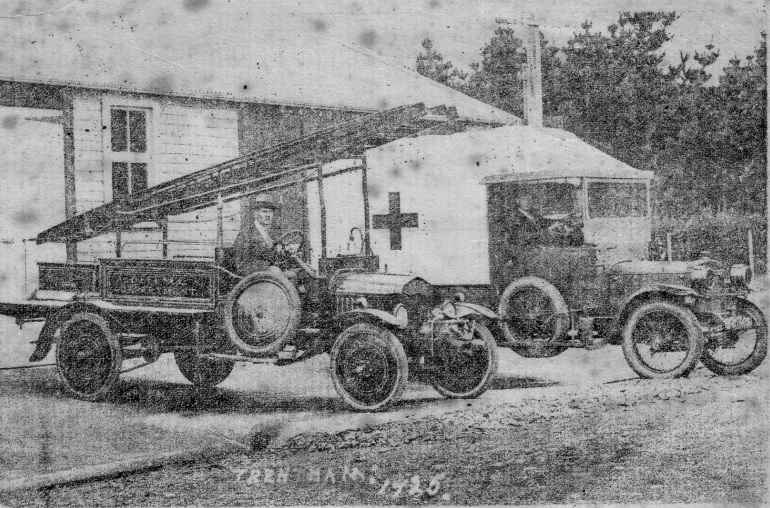
The sign lists numbered fire alarm points positioned throughout Trentham Camp. The exact form of the alarm system is not entirely clear. It may have been a telephone-based circuit, a mechanical system, or something as simple and robust as a suspended shell case, all of which were common in military installations of the period. Regardless of the technology used, the critical function was the same: when an alarm was activated, the number transmitted or displayed would immediately identify the incident’s precise location, allowing the Trentham Camp fire brigade to respond without delay.
The list includes key sites such as:
- Rangimaere Road
- Store Compound
- A & G Workshops Compound
- Junctions of Liverpool, Anzac, Gallipoli, Marne, Messines, Somme, Bapaume and other roads
- Gaba Tepe Road
- Suvla Road
- Prison Reserve
The road names themselves strongly reflect the First World War heritage of Trentham Camp, with many commemorating Gallipoli and major Western Front battlefields. They also provide a snapshot of the camp’s layout at a particular moment in time.

Since the Second World War, the evolving shape of Trentham Camp has seen several roads listed on this board disappear altogether, with some junctions and intersections ceasing to exist as the camp was reconfigured. Others were likely renamed during the post-war period as new facilities were constructed, older barracks were removed, and the camp’s overall footprint changed. As a result, this sign now serves not only as a fire safety artefact but also as a historical map of a long-altered landscape.
Operational Significance in the Inter-War Years
This sign was not merely administrative; it was critical infrastructure.
During the inter-war period, large quantities of New Zealand’s war material were not stored in purpose-built, fire-resistant depots. Instead, much of it remained in repurposed First World War barracks and accommodation blocks. These timber structures were highly vulnerable to fire. A rapid and accurate response was therefore essential to prevent catastrophic loss of equipment, ammunition, uniforms, and other defence stores.
A clearly numbered alarm system ensured:
- Immediate identification of the fire location
- Faster mobilisation of the camp fire brigade
- Reduced confusion in a sprawling military installation
- Protection of valuable and often irreplaceable stores
Fire and Security Routines
New Zealand Army Ordnance Corps Orders from the 1920s detail how Trentham Camp was divided into three patrol routes: A, B, and C. Junior Non-Commissioned Officers (JNCOs) were rostered onto these routes from:
- 1500 hrs on weekdays
- 1000 hrs on weekends
Those on duty were responsible not only for the physical security of buildings along their route but also for vigilance against fire hazards. In effect, they formed an early-warning system that supplemented the fixed alarm points listed on the board.
This layered approach, alarm points, roving security personnel, and a dedicated camp fire brigade, reflected the serious risk posed by fire in a predominantly timber military camp storing significant quantities of defence materiel.
In short, this board is a practical and vital element of Trentham’s internal defence system, a reminder that, in the years between the wars and during the wars, safeguarding stores from fire was as important as guarding them from theft or sabotage.
