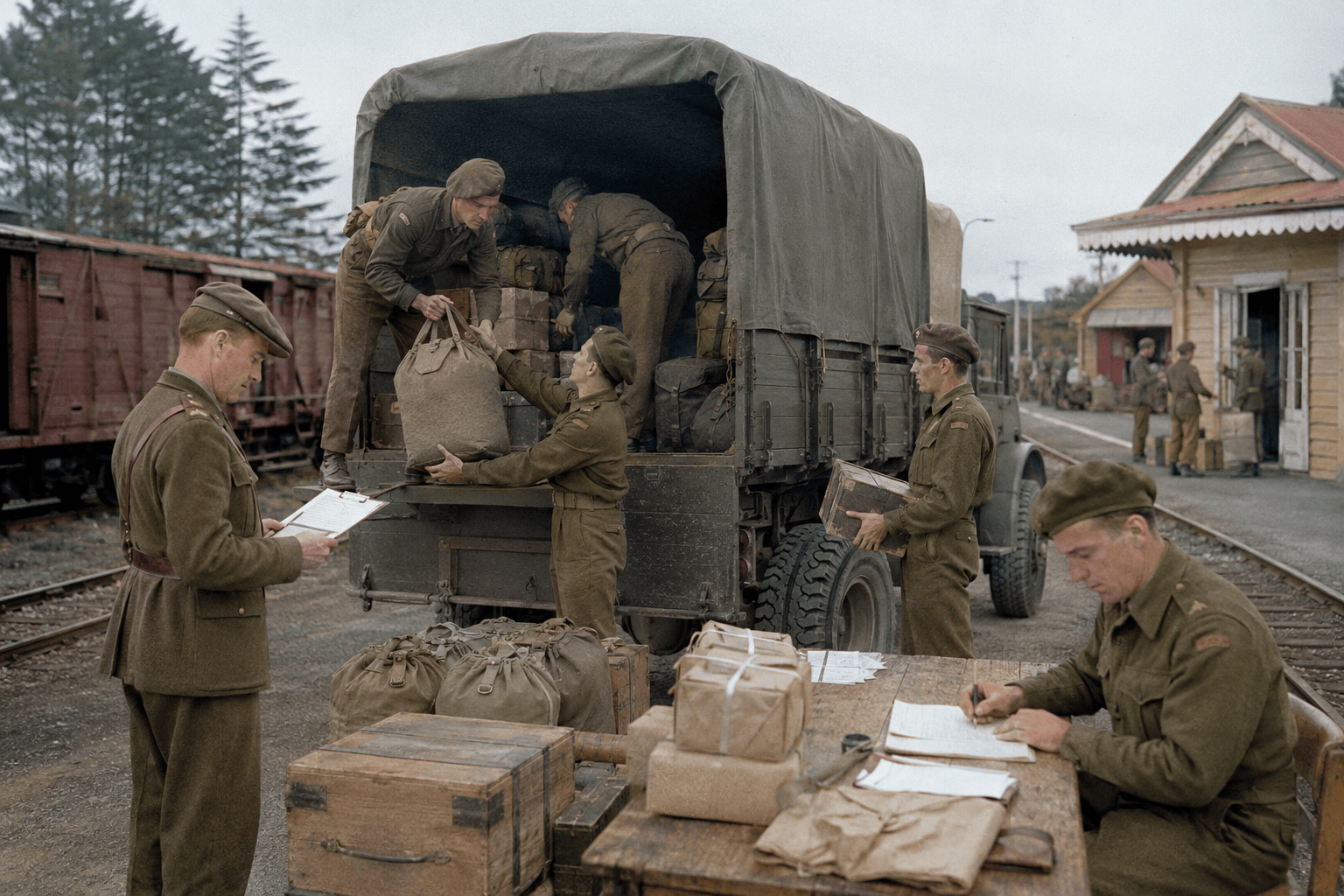
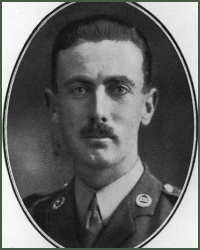
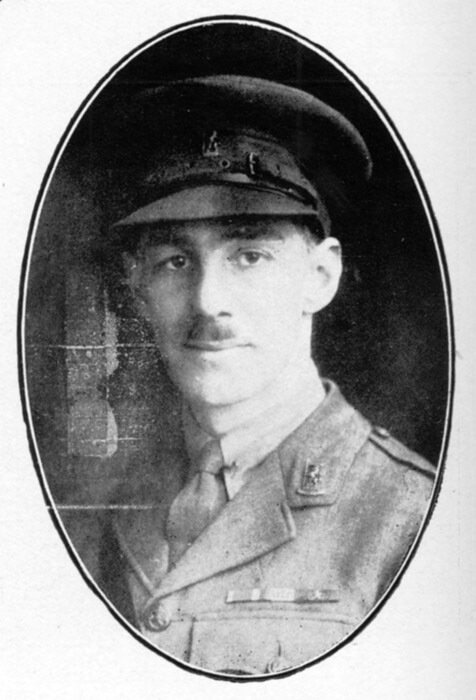
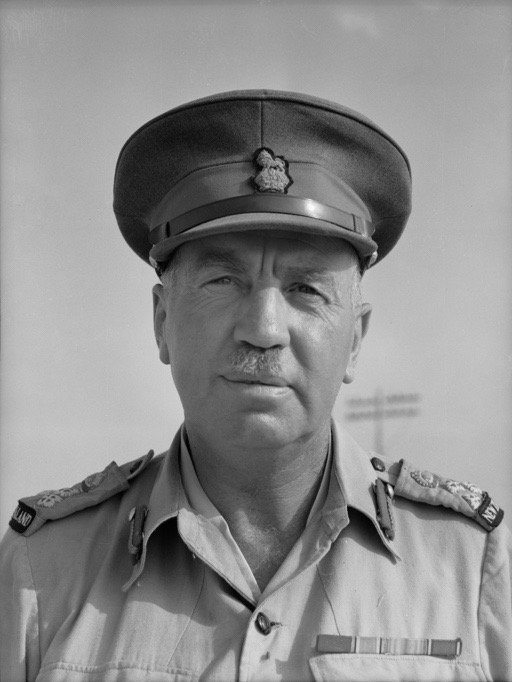
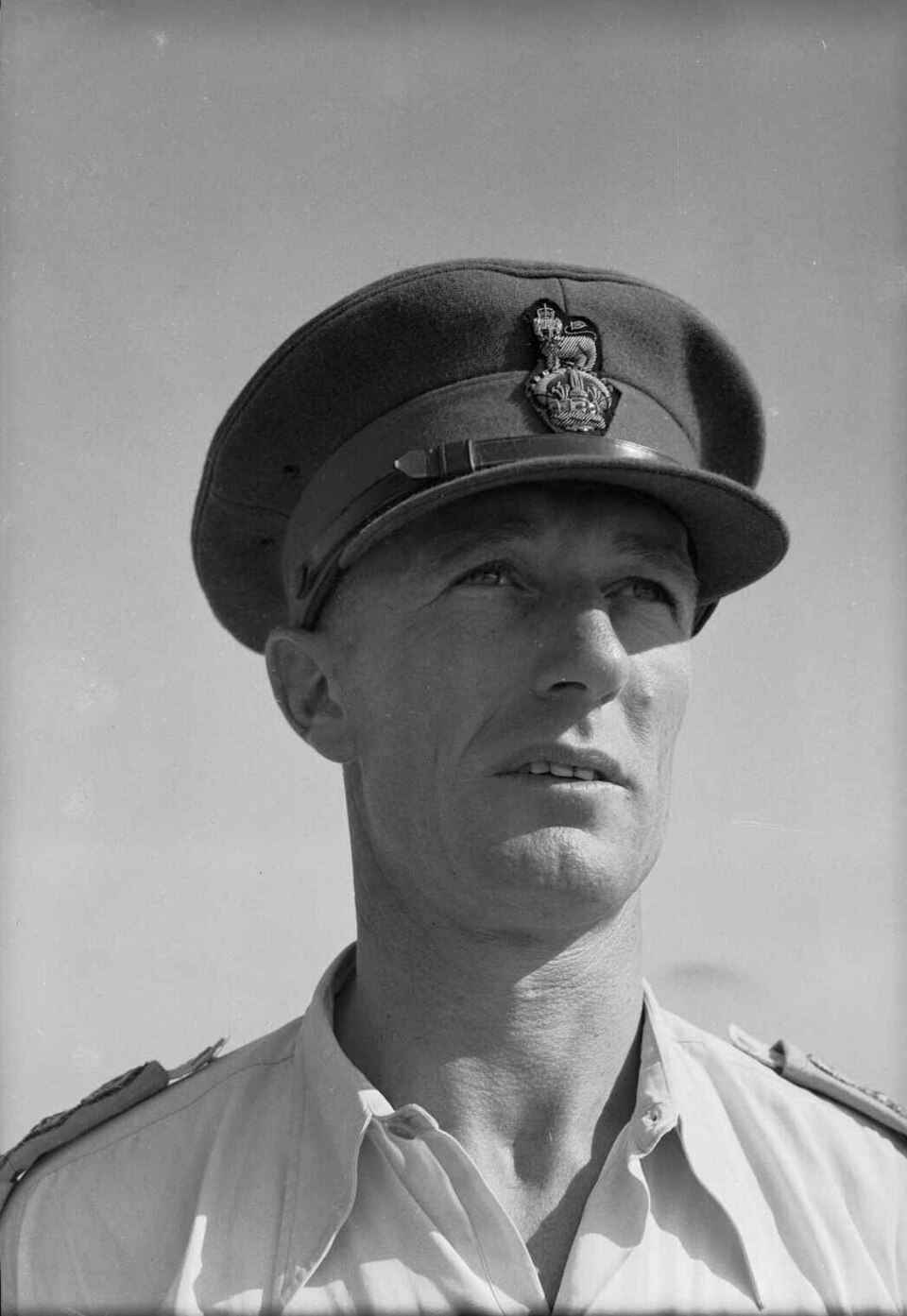
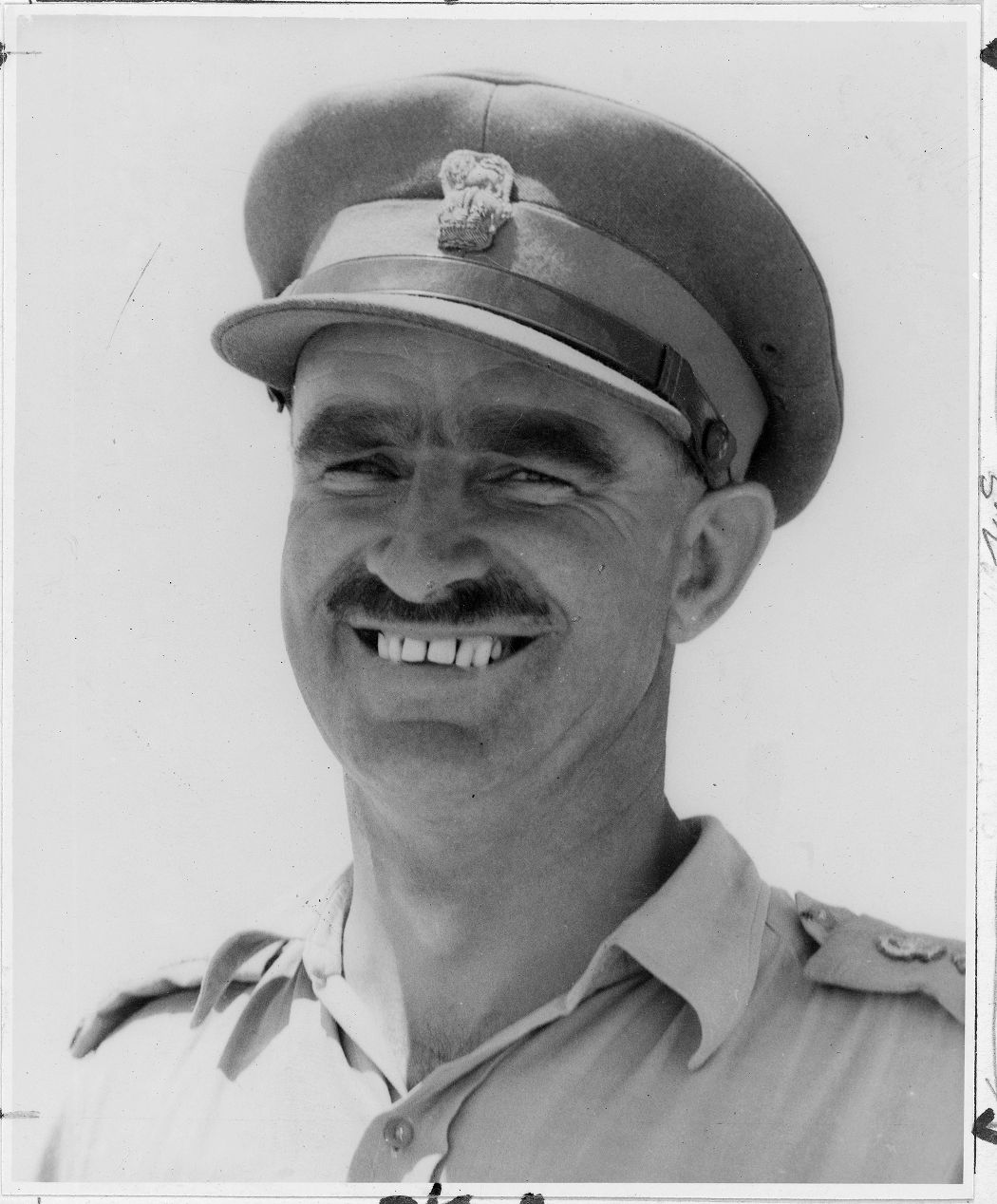
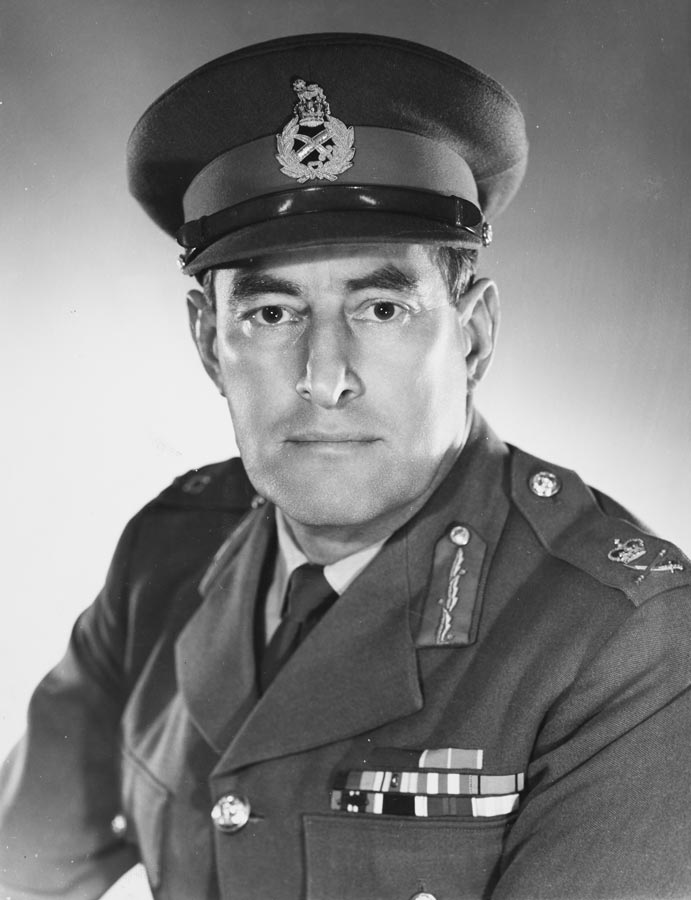
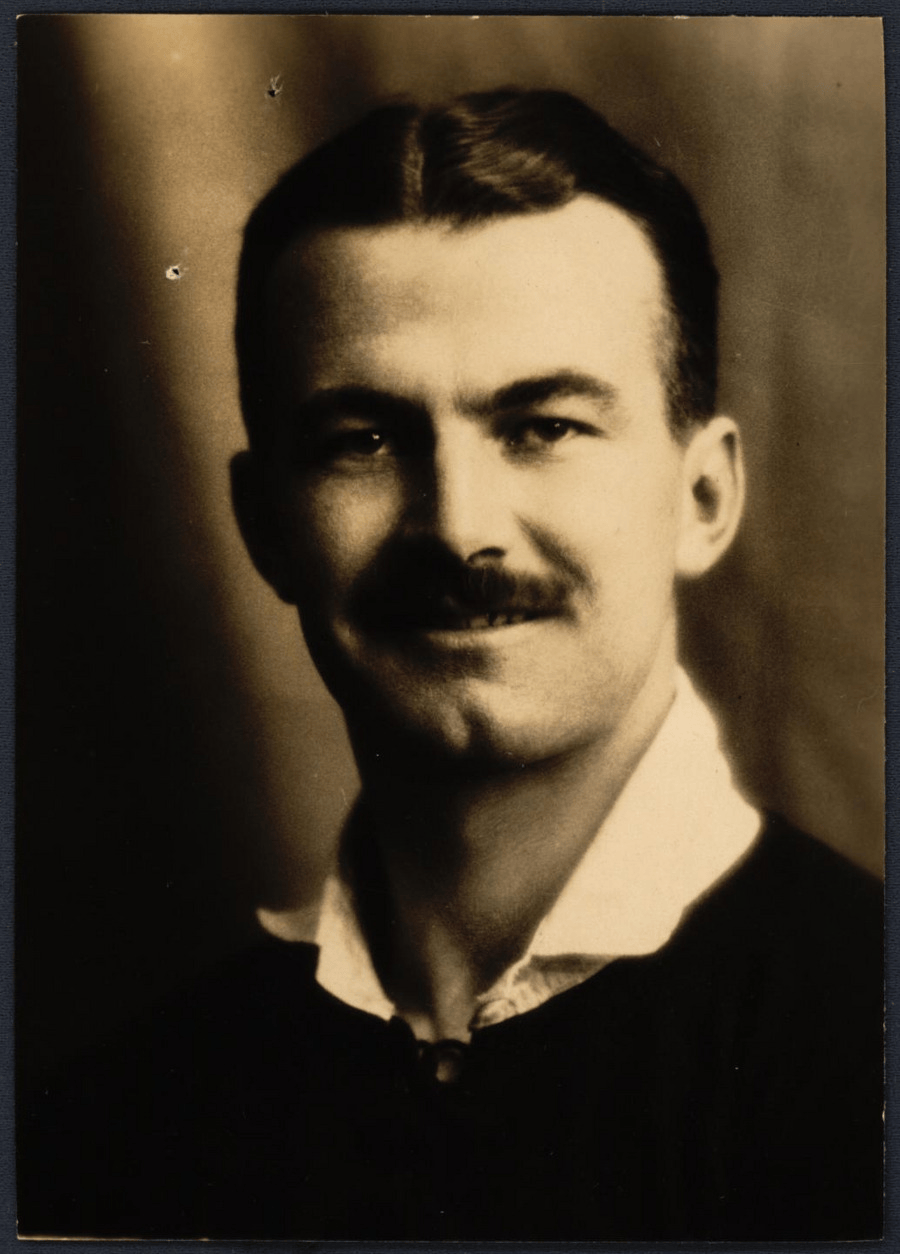
Major William Ivory’s Proposed Ordnance Workshop Company, 1931.
In October 1931, Major William Ivory, RNZA, proposed forming an Ordnance Workshop Company in Wellington. Ivory held the combined appointments of Inspecting Ordnance Officer and Ordnance Mechanical Engineer. His proposal addressed a practical weakness in New Zealand’s defence arrangements: the New Zealand Army Ordnance Corps (NZAOC) had no Territorial element from which it could draw trained technical personnel on mobilisation.[1]
The company was never formally raised. Nevertheless, the proposal reveals how Ordnance officers understood the problem of technical mobilisation in the inter-war period. Weapons, vehicles, instruments and other equipment could be held in store, but their serviceability depended on trained artificers, fitters and tradesmen. Those skills could not be created quickly after mobilisation.
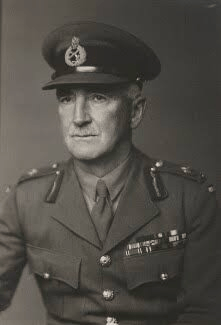
Major William Ivory, RNZA, whose October 1931 proposal sought to establish a Territorial Ordnance Workshop Company at Wellington. Photograph: S. P. Andrew, published in the Evening Post, 11 January 1933.
A trained base for mobilisation
Before the Second World War, New Zealand did not maintain a standing field force ready for immediate overseas deployment. The Territorial Army existed principally to provide a trained base for mobilisation. In war, it would expand into the force required for national defence or overseas service.
The New Zealand Army Service Corps (NZASC) reflected this model. It was essentially a reserve force, prepared to provide the supply and transport services a mobilised Army required. These responsibilities included rations, forage, fuel and ammunition, together with the transport needed to move them. A smaller permanent NZASC element provided continuity, administration, training and specialist expertise.
Trentham Camp and racecourse, looking east in 1920. The camp housed the Main Ordnance Depot and workshops, providing permanent facilities for maintaining the equipment needed on mobilisation. Originally published in the Auckland Weekly News. Photograph courtesy of Upper Hutt City Library.
The NZAOC had no equivalent Territorial structure. The 1931 reorganisation sharpened the problem. The Corps’ uniformed establishment fell from 120 personnel in 1930 to only 21 in 1931. The reduction did not remove the work of maintaining mobilisation equipment, workshops and stores. Instead, it created a hybrid organisation: a small military cadre, with officers and artificers retained in uniform, working alongside a substantially civilian staff.[2]
Civilianisation preserved much practical knowledge, but it did not create a reserve of trained soldiers who could be called up as technical reinforcements. The Corps therefore retained specialist expertise while losing much of its uniformed depth. Ivory’s workshop-company proposal sought to address that gap.
The proposed company
The proposed company was to be based at Wellington and composed of men with relevant civilian technical skills. Ivory specifically identified the potential value of tinsmiths, coppersmiths and motor mechanics, while also seeing value in drawing on experienced engineers in civilian employment.
The machine shop at Hutt Railway Workshops, about 1929. Civilian industry provided the technical skills that Ivory hoped to connect with military mobilisation through his proposed workshop company. Photograph: Albert Percy Godber, Godber Collection, Alexander Turnbull Library, APG-0920-1/2-G.
It was not intended to be a second permanent workshop. Rather, it would create a body of technically skilled men with a connection to military service and enough familiarity with military requirements to be useful without delay on mobilisation.
Ivory argued that the Ordnance Workshops would immediately have to function “at high pressure” in war. Their work would include overhauling and conditioning equipment, as well as instructing the artificers and fitters needed by forces raised in New Zealand or sent overseas. If skilled personnel had to be recruited only after mobilisation, valuable time would be lost, not only in technical training but also in teaching the elementary principles of military life and procedure.[3]
That was the central problem. Civilian New Zealand had technical skill, but the NZAOC had no formal Territorial mechanism to connect that skill to military mobilisation.
Peacetime utility, wartime purpose
Ivory did not claim that the proposed company would transform workshop capacity immediately. He accepted that its value in the first years might be limited. Once established, however, it could assist with peacetime work. He suggested, for example, that it might support the annual overhaul of camp motor vehicles after other units’ training periods.
This was useful, but it was not the decisive argument. The proposal focused primarily on mobilisation. A workshop company would provide a trained base of men who could expand the permanent workshops, undertake technical tasks, and help preserve the serviceability of the equipment on which a mobilised force would depend.
The proposal therefore applied the Territorial principle to an area in which the NZAOC was particularly exposed. The Corps could not afford a large permanent technical organisation, but neither could it expect to recruit and train all the specialist personnel it needed after war had begun.
The 1939 NZAOC Reserve proposal
The same issue remained unresolved in 1939. In August, shortly before the outbreak of the Second World War, the Director of Ordnance Services proposed an NZAOC Reserve based on apprentices from the New Zealand Railways Workshops. The concept was to give groups of six prospective Armament Artificers and six Armourers three months of specialist training.[4]
Railway apprentices prepare for examinations at the Hutt Workshops in 1930. In 1939, the Army proposed drawing on the Railways apprenticeship system to train an NZAOC technical reserve. Photograph: Albert Percy Godber, Godber Collection, Alexander Turnbull Library, APG-1803-1/2-G.
New Zealand Railways accepted the proposal in principle. It was prepared to release up to twelve apprentice fitters at a time, provided they had completed at least three years of apprenticeship and were between seventeen and twenty years of age. The apprentices would receive leave without pay from Railways for the training period, while the Army would select suitable volunteers and pay their wages.[5]
This was a practical way to build the technical mobilisation base Ivory had envisaged eight years earlier. Instead of maintaining a full Territorial Ordnance organisation, the Army would establish a pipeline from a major civilian technical employer.
War overtakes the scheme
The outbreak of war prevented the plan from maturing. By late September 1939, the Ordnance Workshops could not spare the instructors or time necessary to train a reserve. The immediate priority was to recruit fitter and turner tradesmen directly into the Special Force and train them as rapidly as possible on the equipment they would have to support.
The Ordnance Mechanical Engineer recommended that the NZAOC Reserve question be held in abeyance. Army Headquarters subsequently advised New Zealand Railways that, although it appreciated the department’s agreement, the expanded duties resulting from war prevented the scheme from being implemented at that time.[6][7]
The proposal had not failed because its rationale was unsound. The very emergency it was designed to address overtook it.
Bren carriers under assembly at Hutt Railway Workshops in 1941. Although the proposed NZAOC Reserve scheme did not proceed, civilian tradesmen and railway workshops became important contributors to wartime military production. Photograph: New Zealand Railways Department, Wellington City Libraries
Significance
Major Ivory’s proposed Ordnance Workshop Company was an early attempt to give the NZAOC a trained technical base for mobilisation. It recognised that operational equipment required more than stocks, buildings and plans. It required skilled people who could repair, maintain, modify and return equipment to service.
The NZASC already had a reserve base from which its wartime supply and transport functions could expand. The NZAOC did not. Civilianisation in 1931 helped retain workshop and depot knowledge, but it also underlined the distinction between holding technical expertise within the Defence Department and possessing trained military personnel available to expand on mobilisation.
The 1931 workshop-company proposal, followed by the 1939 Railway apprentice scheme, sought to bridge that divide. Neither produced a recognised Territorial Ordnance unit before war began. Both, however, demonstrate that the NZAOC had identified the central challenge correctly: technical capability could not be summoned instantly on mobilisation. It had to be developed in peace through people, trades, training and durable relationships with civilian industry.
Notes
[1]“Ordnance Workshop Company,” memorandum from Ordnance Workshops, Trentham, to the Director of Ordnance Services, 8 October 1931, in Ordnance Workshops 1928 to 1940, p. 46; New Zealand Defence Department, “Military: Annual Report,” Appendices to the Journals of the House of Representatives, 1933, H-19.
[2]New Zealand Defence Department, “Military: Annual Report,” Appendices to the Journals of the House of Representatives, 1931, H-19, 2; G. J. Clayton, The New Zealand Army: A History from the 1840s to the 1990s (Wellington: New Zealand Army, 1990), 105–6; J. S. Bolton, A History of the Royal New Zealand Army Ordnance Corps (Trentham: Royal New Zealand Army Ordnance Corps, 1992), 84.
[4]Director of Ordnance Services to Deputy Quartermaster-General, “N.Z.A.O.C. Reserve,” 8 August 1939, in Ordnance Workshops 1928 to 1940, p. 336.
[5]General Manager, New Zealand Government Railways, to Army Secretary, “N.Z.A.O.C. Reserve,” 1 September 1939, in Ordnance Workshops 1928 to 1940, p. 347.
[6]Ordnance Mechanical Engineer to Director of Ordnance Services, “Re – N.Z.A.O.C. Reserve,” 23 September 1939, in Ordnance Workshops 1928 to 1940, p. 348.
[7]Army Secretary to General Manager, New Zealand Railways, “Re: N.Z.A.O.C. Reserve,” October 1939, in Ordnance Workshops 1928 to 1940, p. 354.
The Early Roots of RNZEME and Today’s RNZALR Maintenance Support Trades
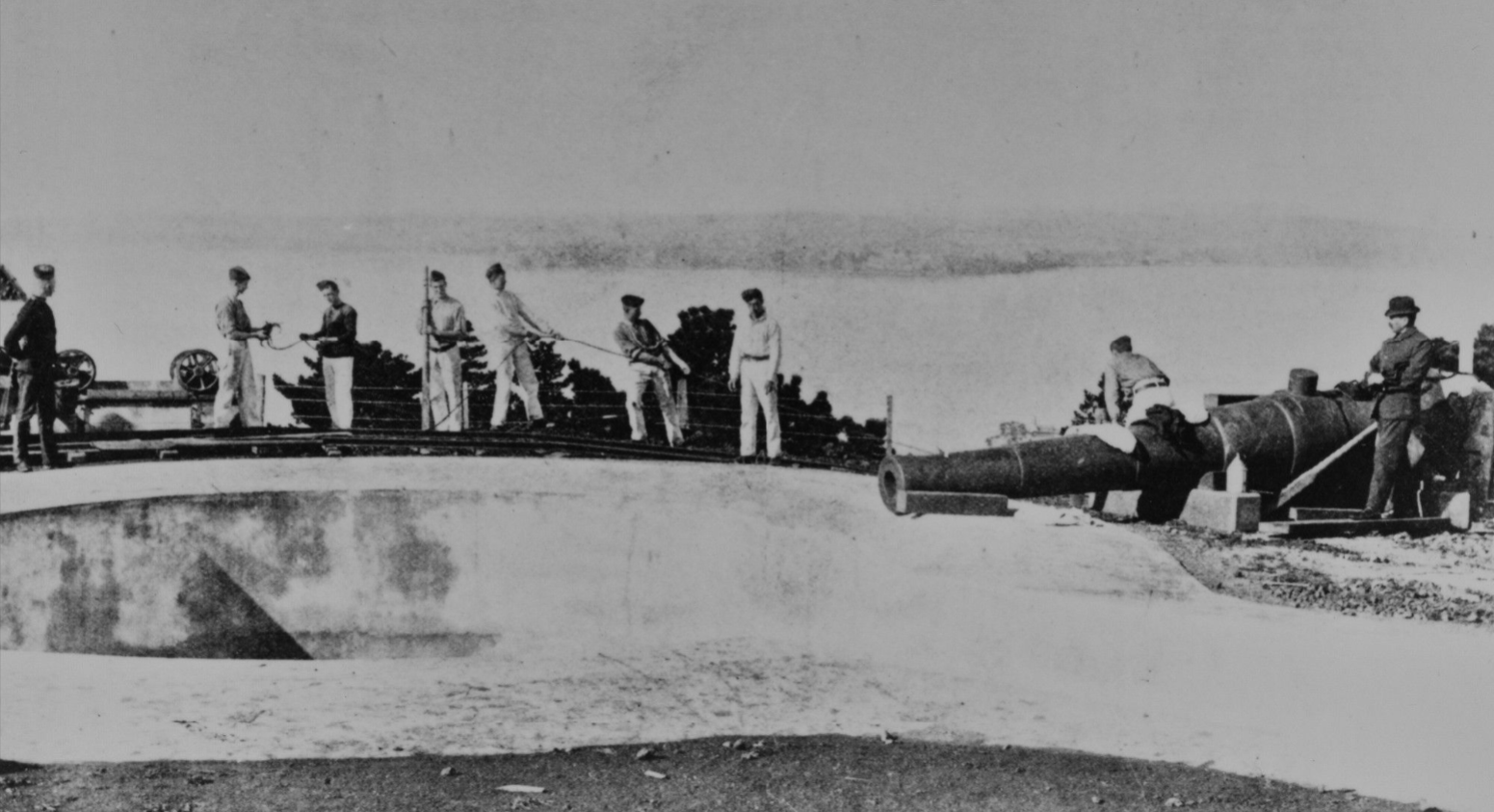
Hauling a 13-ton disappearing gun into position on Mount Victoria, Devonport, 1899. Installing coastal artillery required substantial lifting equipment, careful handling and coordinated labour: Auckland Libraries Heritage Collections T2306. Photographer unknown. Catalogue records no known copyright restrictions.
Today’s Royal New Zealand Army Logistic Regiment (RNZALR) Maintenance Support tradespeople carry forward the military engineering work associated with RNZEME. When the RNZALR was formed in 1996, it brought together RNZEME, RNZAOC and RNZCT within an integrated logistic organisation.[1] Its workshop trades include Armourers, Automotive Technicians, Electrical Fitters, Electronics Technicians and Maintenance Fitters.[2] Their equipment has changed considerably, but their purpose remains recognisable: keeping the Army’s equipment serviceable and returning it to use when it fails.
For these tradespeople, the nineteenth-century maintenance story remains practically relevant. It records successive generations learning new technologies, maintaining different equipment types, training their replacements and making the case for adequate workshops and technical staffing. These recurring demands provide a contemporary perspective on the service’s foundations before 1917.
The Challenge of Early History
Peter Cape’s Craftsmen in Uniform and Peter Cooke’s Warrior Craftsmen cover the history of the Royal New Zealand Electrical and Mechanical Engineers and its immediate Ordnance predecessors from 1917 onwards. The earlier foundations are harder to trace. They lie among civilian armourers, Defence Stores employees, military artificers and the specialists who maintained the machinery of New Zealand’s coastal defences. Their work crossed administrative boundaries and appeared in records created for purposes other than preserving a corps history.
Cape recognised the problem. Writing in 1976, he described a “curious grey period” in the nineteenth century and reproduced an Archives response explaining that no separate record of armourers and artificers had been identified. Cooke subsequently challenged the familiar account that began with three Wellington artificers in 1892, pointing to a larger technical workforce already serving in the Permanent Militia during the 1880s.[3]
Surviving expenditure records, official reports, and histories of individual armourers help define this earlier service. Read together, they suggest that the foundations of RNZEME developed through the gradual accumulation of skilled personnel, workshops, inspection duties and training arrangements. This was also part of the ancestry of RNZAOC: the provision, custody and maintenance of military equipment developed in close association long before separate corps assumed responsibility for supply and engineering.
British Military Precedents
British forces brought established military trades to New Zealand. Armourers, wheelwrights and blacksmiths supported regiments and batteries, while workshops employed both soldiers and civilians. Cooke describes workshop facilities at Albert Barracks in Auckland and Mount Cook in Wellington during the late 1840s, together with mobile forges used on campaign. These provided an early setting for the military employment of technical skills.[4]
Experience also passed into colonial service through individuals. Cape identifies Patrick Gorman, a former soldier of the 58th Regiment who took his discharge in New Zealand and became an arms cleaner with the Auckland Militia. Such appointments linked the practical maintenance of weapons to the emerging colonial organisation responsible for holding and issuing them.[5]
The Civilian Foundation
The civilian armourers deserve particular attention. Wellington’s maintenance service included Edwin Henry Bradford, Edward Metcalf Smith, and Walter Christie, while David Evitt and, later, George Evitt served in Auckland. They gained experience through several routes: British military service, arms manufacture, commercial gunsmithing, and training in government workshops. Christie’s progression from arms cleaner to assistant armourer is a useful example of practical training within the service. Civilian gunsmiths also repaired government weapons in the districts and supported Volunteer units.[6]
Plan of the Auckland Defence Stores armourers’ shop, 1883—a purpose-built workplace supporting the inspection and repair of military small arms.
These men worked through a period of substantial change in firearms. Muzzle-loading weapons gave way to breech-loaders, followed by magazine rifles and machine guns. New mechanisms increased the demands on inspection, fitting and repair, while older weapons remained in circulation. The service therefore required both familiarity with successive equipment types and continuity of experience within its workshops.
Early Formal Organisation (1880–81)
By 1880–81, the estimates clearly recognised maintenance as a continuing government function. Under Stores and Magazines, Auckland had provision for an armourer and three arms cleaners. Wellington had an armourer, an assistant and three arms cleaners. These appointments sat alongside storekeepers, clerks and magazine staff.[7] The organisation responsible for weapon custody also provided the people who kept them serviceable.
Coastal Defences Expansion (1880s)
The expansion of coastal defences during the Russian scares of the 1880s greatly widened this technical requirement. The batteries formed part of a harbour-defence scheme in which guns, submarine mines, torpedo boats and, increasingly, electric searchlights had complementary roles. At Wellington, Fort Ballance was intended to cover the harbour approaches and a proposed wartime minefield between Point Gordon and Ward Island; searchlights would illuminate the channel and minefield.[8] These schemes developed over years. Their intended arrangement should not be mistaken for a complete, continuously operational system at every port in 1885.
The guns themselves brought substantial machinery into military service. Rifled muzzle-loaders remained alongside the newer breech-loading weapons. Taiaroa Head’s armament over 1885–1905 included 64-pounder and 7-inch muzzle-loaders, a 6-inch disappearing gun, and smaller quick-firing guns.[9] North Head’s 8-inch disappearing guns illustrate the additional complexity of the new mountings: recoil drove the gun down behind cover, compressing air through a system using water and a pressure vessel; the stored energy then raised it again.[10] The engineering requirement extended from the barrel and breech to the carriage, moving joints and pressure machinery.
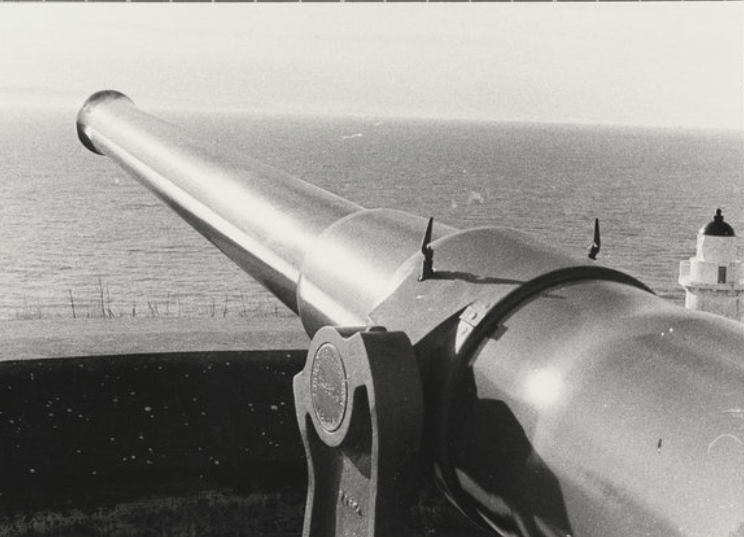
Taiaroa Head’s six-inch Armstrong gun in its raised position. Its hydro-pneumatic mounting illustrates the increasingly complex machinery supporting coastal defence. Hocken Collections P2014-014/6-017-002
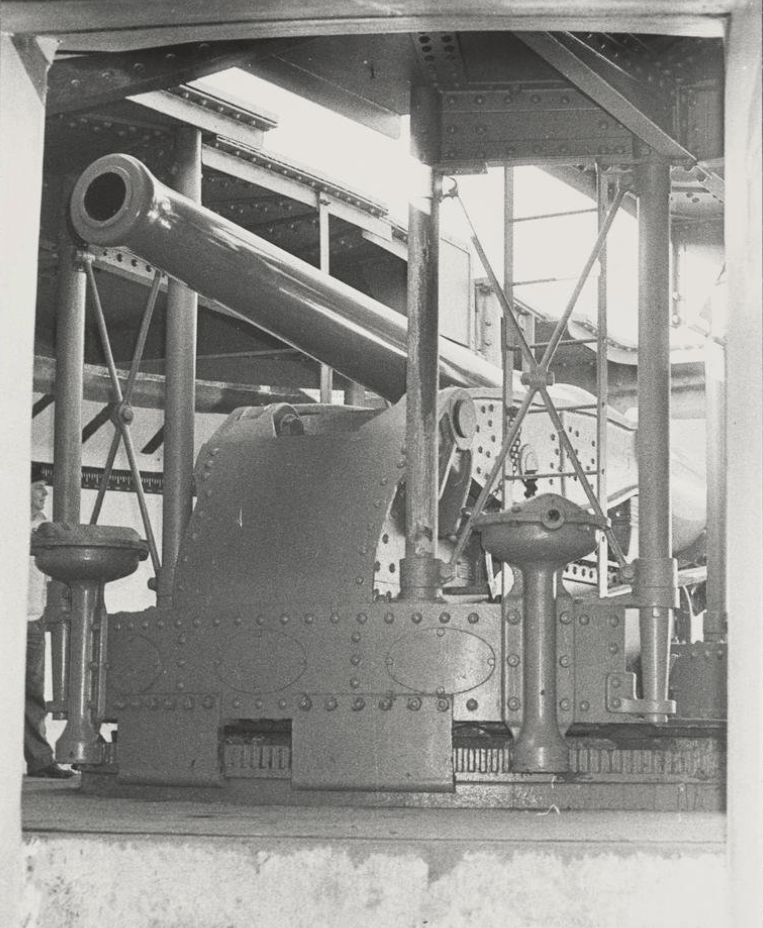
Taiaroa Head’s six-inch Armstrong gun in its lowered position. Its hydro-pneumatic mounting illustrates the increasingly complex machinery supporting coastal defence. Hocken Collections P2014-014/6-017-003.
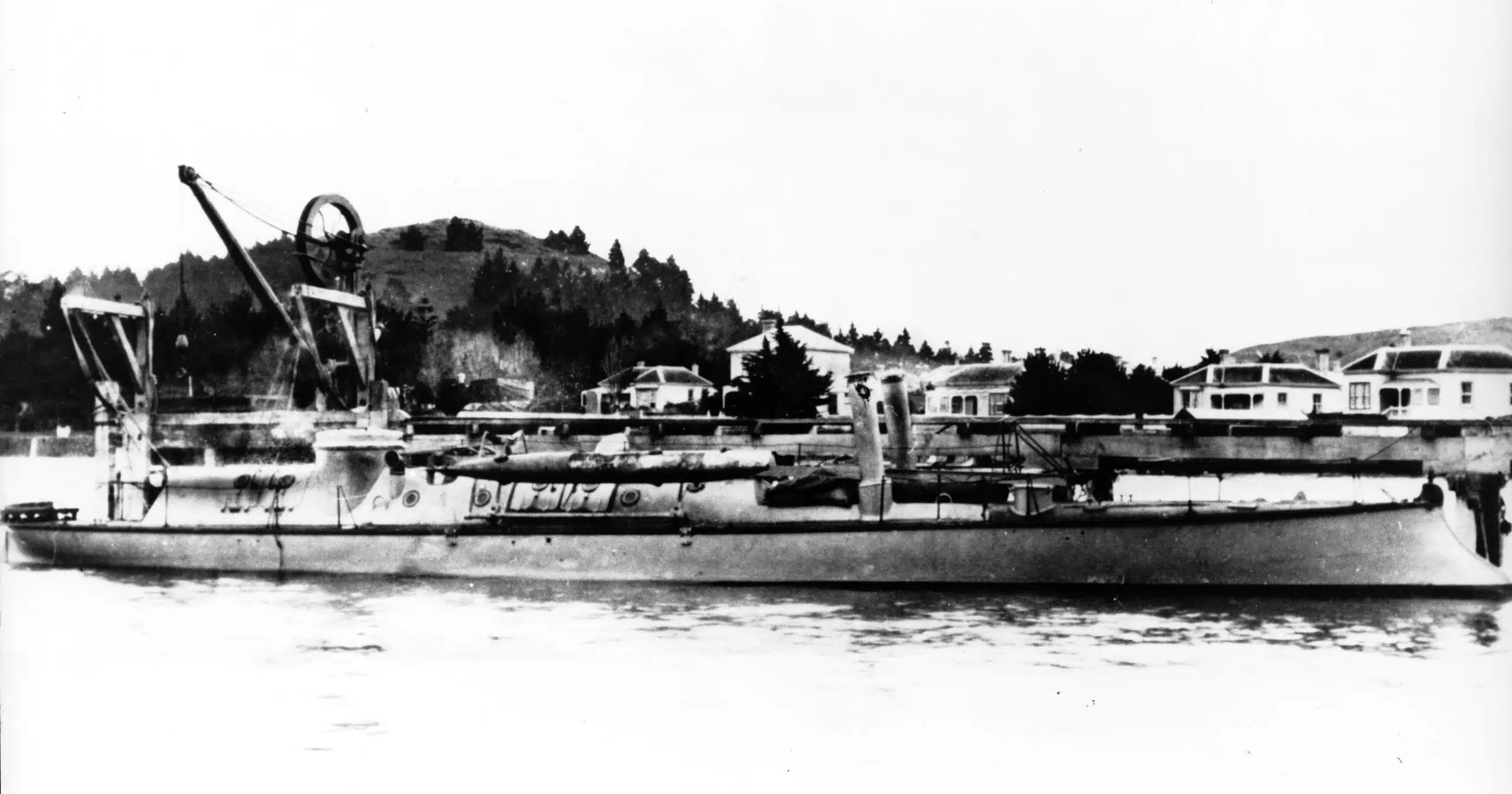
Another branch of this machinery went afloat. Four Thornycroft spar torpedo boats arrived in 1884 and became associated with the names Waitemata at Auckland, Poneke at Wellington, Defender at Lyttelton and Taiaroa at Port Chalmers. At Magazine Bay, Lyttelton, a purpose-built boatshed and slipway supported Defender from 1885.[11] Cape describes the boats’ compound condensing engines, supplied with steam from locomotive-type boilers, and their single-screw propulsion. Their weapon was an explosive charge carried on a projecting spar.[12] Maintaining this equipment required marine engineering and metalworking skills, as well as knowledge of the weapon itself.
A spar torpedo boat alongside the wharf at Torpedo Bay, Devonport. Steam-powered craft added marine machinery to the equipment supporting New Zealand’s harbour defences.” National Museum of the Royal New Zealand Navy, AAA 0007.
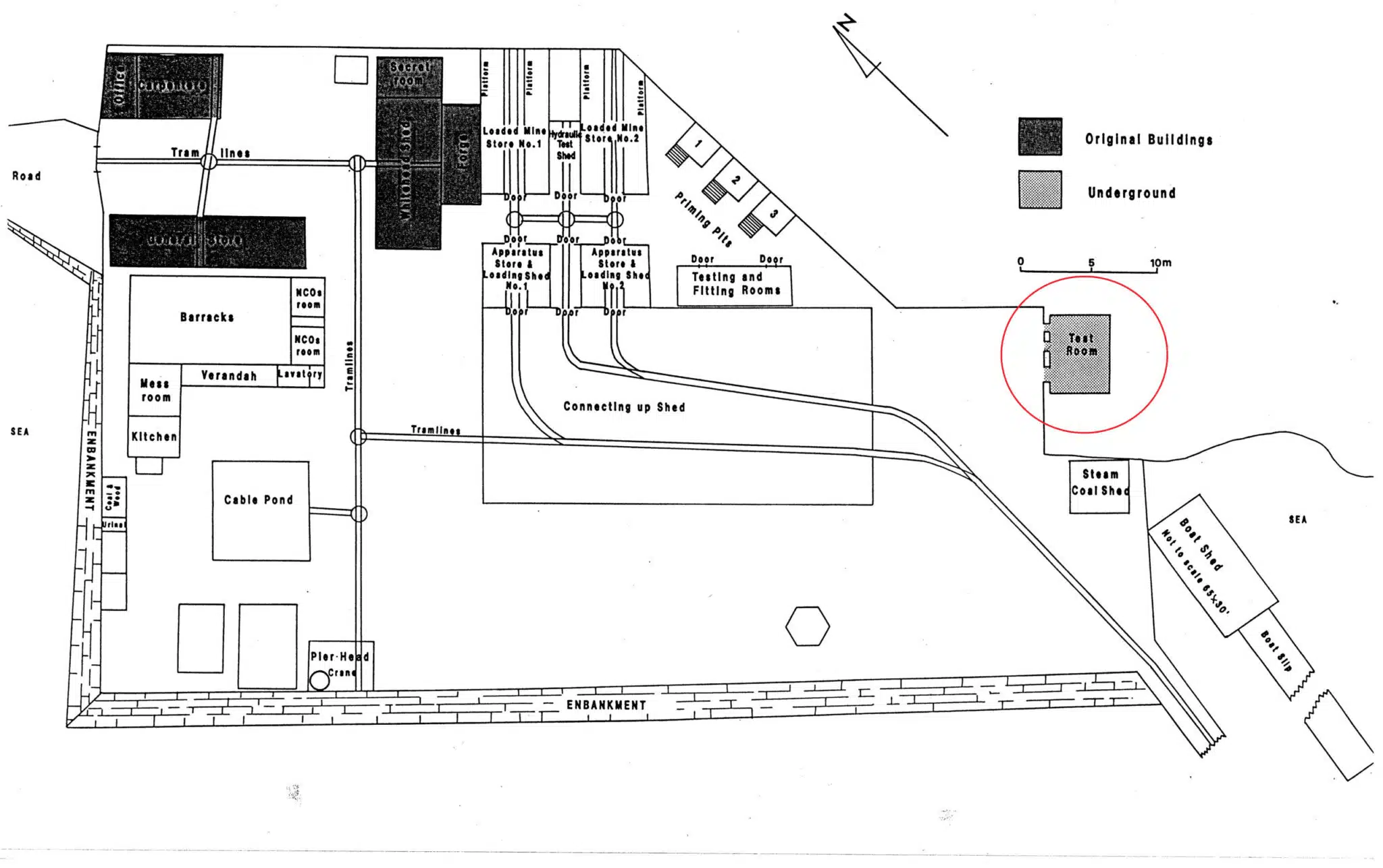
Submarine mining added electrical work to the harbour-defence service. Here, submarine meant underwater mines, rather than underwater vessels. Shore-controlled minefields depended on cables, electrical testing and firing apparatus, batteries and observation arrangements. At Torpedo Bay, the developing depot included workshops, fitting rooms and a forge, followed by a connecting-up shed in 1897 and a new test room in 1898. Its test and firing equipment included shutter indicators, while telephones and voice pipes supported communication.[13] The mine was only one part of an installation whose readiness depended on machinery and electrical connections ashore and afloat.
Torpedo Bay mining establishment, 1899. The site plan shows the specialised facilities supporting the preparation, handling and testing of harbour-defence equipment.” National Museum of the Royal New Zealand Navy
The site’s technical role continued long after submarine mining ceased. The former Torpedo Yard subsequently housed the Devonport Ordnance Workshop from 1925 to 1941, followed by No. 12 Ordnance Workshop from 1941 to 1946. This continued use provides a tangible connection between the nineteenth-century harbour-defence establishment and the Army’s twentieth-century maintenance and repair organisation.
Equipment Range and Maintenance Demands
The following examples show the breadth of equipment encountered before 1917. The equipment and installations are documented; the maintenance demands in the final column are inferred from their construction and function, except where contemporary reports expressly describe the work. They are not a complete allocation of duties to particular trades or units.
Equipment
Documented New Zealand examples
Maintenance demands
Small arms and machine guns
Martini-Henry and .303 rifles in the 1899 report; Maxim inspection and repair training in 1914.[14]
Inspection and repair of actions, firing and feed mechanisms, barrels and fittings; keeping armourers familiar with successive patterns.
Coastal guns and mountings
Rifled muzzle-loaders, 6-inch and 8-inch disappearing guns, and smaller quick-firing weapons.[15]
Fitting and metalwork on gun mechanisms and carriages; attention to bearings, traversing gear, recoil and pressure components.
Rangefinders and pressure gauges
Taiaroa Head’s 1886 depression rangefinder; Fox’s explicit account of instrument repairs by fitter artificers.[16]
Care of optical and mechanical parts; accurate adjustment and repair of instruments used for ranging and machinery checks.
Steam engines, dynamos and searchlights
Fort Takapuna’s engine room and searchlight, added in 1899, with a steam engine driving a dynamo.[17]
Engine and boiler upkeep; lubrication and mechanical adjustment; attention to generators, wiring, connections and lamps.
Controlled submarine mines
Torpedo Bay’s batteries, cables, test and firing apparatus and connecting-up facilities.[18]
Testing electrical continuity and insulation; maintaining connections, indicators and associated apparatus.
Spar torpedo boats
Thornycroft boats with compound engines, locomotive-type boilers, propellers and spar equipment.[19]
Upkeep of steam plant, propulsion and steering; repair of hull fittings and weapon-handling mechanisms.
Ammunition handling machinery
Magazine rails and trolleys at Fort Takapuna; powered ammunition hoists associated with North Head’s 6-inch Mk VII battery, operational by 1911.[20]
Keeping running gear and lifting machinery serviceable; mechanical repairs and attention to corrosion and wear.
Communications
Fort Ballance’s ten-line telephone exchange, installed in 1899; telephone and voice-pipe arrangements at the mining base.[21]
Maintaining instruments, lines, connections and fittings through which observers and operators communicated.
Technical Expertise and Organisational Development (1886–1912)
This range helps explain the employment of fitters, engineers, electricians, carpenters and other artisans within the permanent forces. A serviceable gun barrel alone could not make a battery effective if its mounting, ammunition supply or supporting equipment failed. The later engineering corps’ association with electrical and mechanical work therefore had substantial precedents in the harbour-defence service, even though the men concerned served under different organisations.
Cape’s account of the 1886 organisation places Artillery, Engineers and the Torpedo Corps within the developing permanent forces. The Defence Act transferred the relevant elements of the Armed Constabulary into the Permanent Militia. In his 1887 report, Colonel Sir George Whitmore described the Engineer Corps as skilled military artificers and artisans employed on defence works.[22]
The estimates make the range of appointments particularly clear:
Financial year
Organisation
Technical appointments provided for
1880–81
Stores and Magazines, Auckland
One armourer and three arms cleaners
1880–81
Stores and Magazines, Wellington
One armourer, one armourer’s assistant and three arms cleaners
1886–87
Engineer Corps
Seventeen artificers, one sergeant-major/foreman and two sergeants
1886–87
Torpedo Corps
Four engineers, five artificers, an electrician and lecturer, and a Whitehead and submarine instructor
1891–92
Garrison Artillery
Twelve artificers at seven shillings a day
1898–99
No. 1 Service Company
Twelve artificers at eight shillings a day
These were funded appointments, rather than a return proving that every position was occupied throughout each year. They should also be read as separate establishments, not combined into a single corps total. Their importance lies in the continuing recognition of specialist technical employment within both civilian and military organisations.[23]
Technical oversight developed alongside these establishments. Cape records the appointment of Lieutenant A. P. Douglas, RN, in August 1887 to inspect guns, ammunition, equipment and associated stores in the forts. Lieutenant J. Falconer became Inspector of Submarine Mining Stores and Establishments the following month.[24] Inspection responsibilities were becoming more clearly defined alongside operating and repairing the equipment.
Reorganisation altered where the tradesmen served. Cape records that, when the Engineer and Rifle branches were abolished in 1888, qualified personnel could transfer into the remaining branches. Four artificers;T. E. Bryce, W. E. Moore, J. Trainor and H. D. James, transferred from the Engineers to the Garrison Artillery.[25] Their movement is a useful example of continuity through administrative change: the disappearance of a branch did not mean that its skills disappeared from military service.
Beyond the 1892 Myth
This wider picture changes how we should understand the often-repeated 1892 starting point. The short corps histories identify two fitter artificers and one wheeler artificer at Wellington in that year. That local group cannot represent the beginning or the full extent of New Zealand’s military maintenance service. Civilian armourers were already established, other technical trades were funded during the 1880s, and the artillery estimates provided for twelve artificers across the opening years of the 1890s.[26]
Contemporary reports also describe their actual work. The 1892 report on the New Zealand forces credited battery artificers with overhauling guns and mountings, making repairs and improving fittings. Their efforts saved expense and improved efficiency. It also highlighted the limited advancement available to men with substantial technical responsibilities.[27]
Colonel F. J. Fox’s report, presented in 1893, distinguished fitter artificers from wheeler artificers. Fitters required knowledge of fitting, turning and blacksmithing, and repaired instruments such as rangefinders and pressure gauges. He valued their work highly and recommended graded promotion and pay. He also considered ordinary drill and parades an unnecessary demand on men already occupied by specialist duties.[28]
Fox separately proposed teaching artillery artificers selected gunsmithing tasks and using them for annual district inspections of small arms, with necessary repairs charged to the corps holding the damaged weapons. This remained a proposal. It nevertheless shows how training, inspection, repair and accountability were being considered together.[29]
The civilian service continued alongside these military arrangements. Wellington’s armourer and assistant recur through the decade’s expenditure summaries. The 1898–99 provision included salaries of £201 and £156 respectively, together with two arms cleaners at £120 each.[30] These posts help explain why the history cannot be reconstructed from artillery establishments alone.
Not every technical-looking description should be read as a distinct trade. The 1891–92 Torpedo Branch estimates included fourteen men in the combined category of first-class torpedomen and artificers. That is not evidence of fourteen artificers. It records an establishment in which operating duties and technical employment overlapped.[31]
The supporting facilities continued to expand during the 1890s. The 1898 Public Works Statement recorded two concrete cable tanks at Auckland, together with work on the mining depot’s stores, tramway and test room. At Shelly Bay, Wellington, a torpedo-boat shed had been built and its slipway was almost complete; electric-light emplacements were also under construction.[32] Cable storage, workshops, rails, sheds and slipways all enlarged the physical establishment requiring upkeep. They also show that the technical consequences of the 1880s defence programme extended well into the following decade.
By 1899, this small service faced an expanding burden. Colonel A. P. Penton reported that armaments, electric searchlights and installations had increased without a corresponding increase in staff. His report also described the uneven replacement of infantry weapons: North Island forces had received .303 rifles, while the South Island still awaited replacement of its Martini-Henry arms.[33] Equipment development was increasing the demands on the men responsible for maintenance, even where their numbers changed little.
The maritime equipment also changed. The submarine-mining steamers Janie Seddon and Lady Roberts arrived at Wellington in January 1902.[34] These vessels belong to the next stage of development, rather than to the original acquisition of spar torpedo boats in 1884. They extended the story of steam-powered craft serving the harbour defences, with the continuing need to maintain their machinery and hulls.
The opening years of the twentieth century brought further specialisation. Cape records Armourer Sergeants J. Hunter and B. Buckley at Wellington and Lyttelton respectively in 1902, and the arrival of Armourer Staff Sergeant W. E. Luckman at Wellington in August 1903. These appointments strengthened the armourer service’s technical leadership. Workshop accommodation also improved: a Wellington artificers’ workshop was authorised in 1903 and completed in 1905, and an armourers’ workshop was erected at Christchurch in 1907.[35]
The artillery trades were broader than the general term artificer might suggest. Cape records a 1905 establishment of sixteen, comprising nine armament artificers, five carpenters and two painters. By 1913, the authorised total remained sixteen, but actual strength was thirteen.[36] Supporting the weapons and installations required several trades, and the number authorised still exceeded the number available.
Electrical work also passed through successive organisational arrangements. Cape traces the former submarine-mining organisation through No. 2 Service Company into the Royal New Zealand Engineers in 1902. In 1907 it became the Electric Light section of the Royal New Zealand Artillery.[37] This places electrical expertise within the pre-war maintenance story, alongside the more familiar work on guns and small arms. It also illustrates why later corps boundaries cannot simply be projected backwards onto the nineteenth-century service.
Formalising the Armourer Service (1912–1913)
A particularly significant development occurred on 1 May 1912. General Order 118 placed armourers, apart from regimental armourers, in the New Zealand Ordnance Corps. It provided a defined trade organisation and progression for the armourer service. The distinction in title and scope matters: this NZOC preceded the broader New Zealand Army Ordnance Department, and the New Zealand Army Ordnance Corps was constituted in 1917.[38]
The 1913 annual report shows this professional structure taking shape in practice. It listed a senior armourer, an armourer quartermaster-sergeant, five armourer sergeants, an assistant and four apprentices. Five assistants had qualified for appointment as sergeants, while four apprentices began a five-year course, initially on probation. The senior armourer remained at Wellington for technical work and training; district armourers undertook inspection and repair throughout the year.[39]
The following year’s report recorded further technical instruction. Senior district armourers attended a machine-gun course in Wellington under the Chief Armourer and passed examinations in inspecting and repairing Maxim guns. They could then train their assistants. Armourer cadets were also attached to districts to gain field experience.[40] This was a developing system of trade education, examination and supervised practical work before the First World War.
The scope of the RNZA artificers’ work was equally tangible. The 1913 report recorded that they moved and re-erected a former Defence Stores building at Dorset Point to accommodate Garrison Artillery Territorials. The exposed location made the shelter particularly useful during camp.[41] Work of this kind helps explain the presence of carpenters and other trades alongside armament specialists.
These developments did not create one unified maintenance organisation. Armourers, artillery artificers, electrical specialists and regimental tradesmen still worked within different structures. Civilian and military responsibilities also remained interdependent. The efforts to establish a wider Ordnance service therefore concerned how existing work and personnel should be organised, as well as how the service should expand.
Cape traces recommendations for an Ordnance Corps through Babington’s reports in 1904–05 and Kitchener’s visit in 1910. Temporary ordnance depots and training for selected personnel at the 1913 camps were further steps towards a more systematic organisation.[42] The practical experience accumulated in stores, workshops and camp administration supplied a foundation for the demands of wartime mobilisation.
The separate RNZA Army Ordnance Corps Section established in April 1915 illustrates the variety of work gathered under the term ordnance. Its initial establishment of one non-commissioned officer and six gunners at Mahanga Bay was principally concerned with making up artillery ammunition.[43] It formed part of the wider development of Ordnance, but should not be treated as the origin of all repair and maintenance activity: the armourers and artificers discussed here had already been working for decades.
The 1917 Formalisation
The 1917 regulations provided the formal endpoint to this account’s early organisational history. Published in the New Zealand Gazette on 7 June and effective from 1 February, they constituted the NZAOD and NZAOC as permanent military organisations. The Corps establishment separately recognised clerical and stores personnel, armourers and armament artificers.[44] These categories reflected responsibilities with substantial pre-war foundations.
Workshop development continued alongside that reorganisation. The 1917 report recorded an ordnance workshop at Trentham standardising musketry equipment and the Mount Cook armament workshop being used for ordnance work.[45] Established skills and facilities were being adapted to the scale and requirements of the wartime Army.
Legacy: From 1917 to Today
Viewed from 1917, the earlier history is therefore one of accumulated capability. Civilian armourers sustained small arms; military artificers maintained guns, machinery and installations; inspectors checked equipment; and experienced tradesmen trained their successors. The permanent coastal-defence forces of the 1880s were a major stage in that development, while the Defence Stores armourers reveal an older foundation. Together, these overlapping services supplied the people, practices and technical experience inherited by Ordnance and, in time, RNZEME.
Modern Maintenance Support: Continuity and Evolution
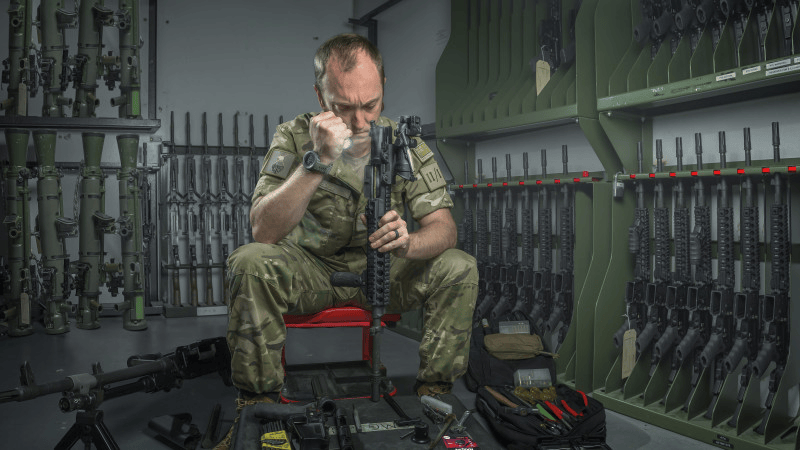
That inheritance continues within RNZALR Maintenance Support. The connection is evident in the relationship between established engineering skills and new methods. Today’s Maintenance Fitters use machining, welding and hydraulic fault-finding alongside computer-aided design and 3D printing. Their training covers equipment such as field kitchens, water pumps and fuel dispensing systems.[46] Electronics Technicians maintain communications and night-vision equipment and use automatic test equipment to diagnose faults.[47] The technological range has expanded, but the need to understand equipment, identify faults, and restore serviceability remains central.
Corporal Ash Peden inspecting a rifle at Burnham Military Camp, 2023. Skilled inspection remains central to keeping military weapons serviceable.” New Zealand Defence Force. Image filename: 20230403_P1024180_NZDF_002.
New equipment also creates an ongoing obligation to train the people who maintain it. After the Bushmaster fleet was delivered in 2023, instructor training covered both operation and maintenance; work integrating enhanced communications equipment has added another technical dimension.[48] The parallel with disappearing guns and electrical harbour defences is the need to develop technical knowledge as equipment enters service. Today’s tools and systems demand their own qualifications and experience.
Developing that experience still takes significant time. The modern Maintenance Fitter apprenticeship takes approximately four years and combines practical work with theoretical study.[49] Electronics Technician development similarly combines formal courses with unit experience and can lead to supervisory and instructional appointments.[50] The early armourer apprenticeships and specialist courses described above therefore have a recognisable contemporary counterpart. Maintaining a technical workforce requires a continuing supply of learners, experienced supervisors and instructors, and people available for immediate repair tasks.
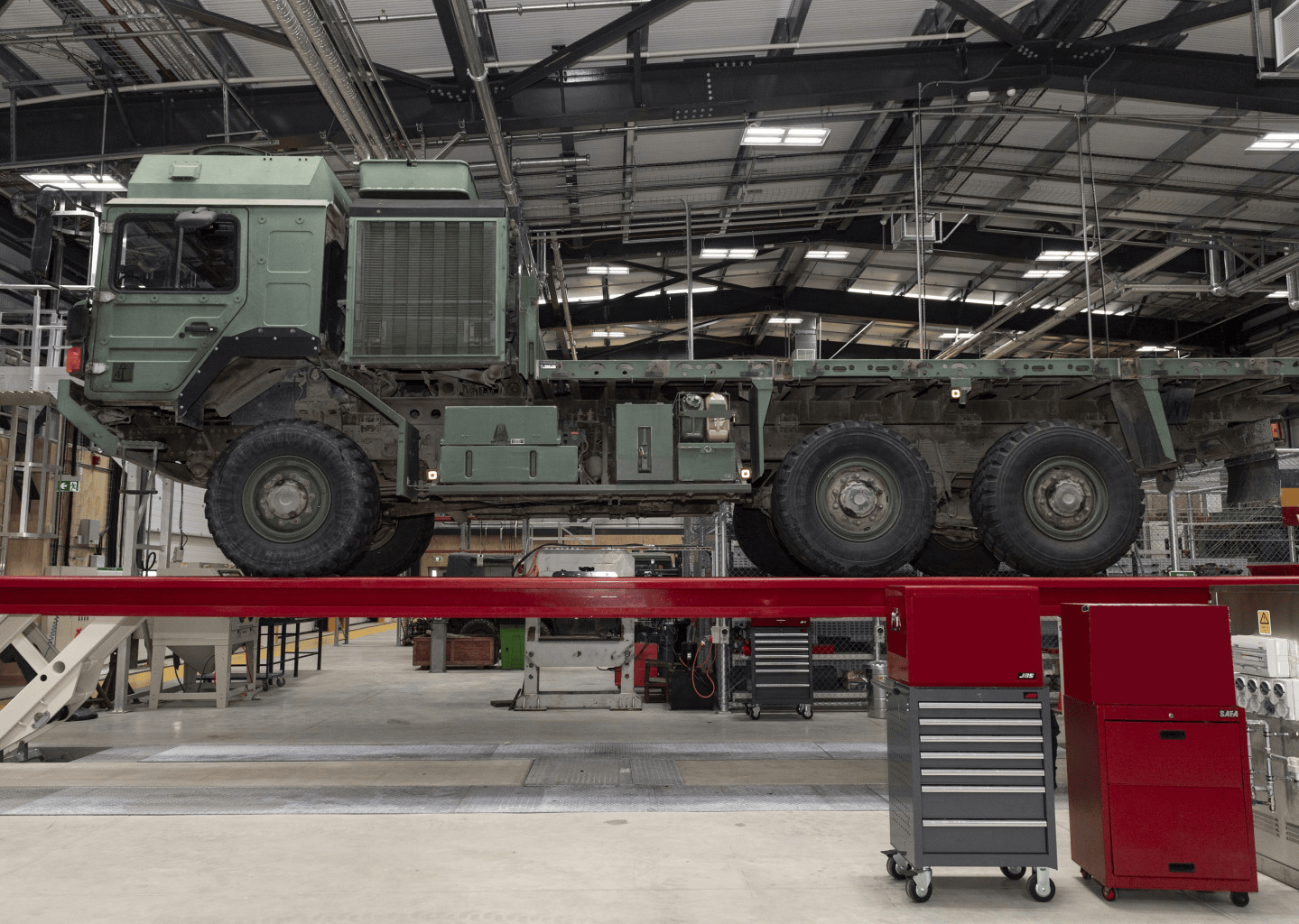
Workshop provision has also continued to evolve. Farrier Lines, opened at Linton in December 2023, includes vehicle lifts, rolling roads, a gantry crane and a range for testing repaired small arms.[51] Burnham’s Te Toki / The Forge followed in November 2025, replacing maintenance accommodation dating from the 1940s.[52] These developments give a modern expression to the problem faced by the earlier service: workshop facilities must suit the equipment, working methods and volume of work expected of their occupants.
Inside Farrier Lines, Linton’s Maintenance Support Facility, opened in December 2023. Modern workshops continue the longstanding requirement for facilities matched to increasingly sophisticated equipment.” New Zealand Defence Force.
The relationship between trade proficiency and soldiering also remains important. Fox’s concern about the demands of ordinary drill on busy artificers reflected the circumstances of the 1890s. Today’s Maintenance Support personnel must apply their skills in the field as well as in equipped workshops. The 2024 Farriers Trophy explicitly tested expedient repairs under operational pressure in austere conditions, alongside all-arms, technical and recovery skills.[53] Protecting time for trade development and maintaining military readiness are both necessary parts of preparing a deployable maintenance service.
Read as a comparison of responsibilities, the recurring challenges are clear:
Recurring challenge
Evidence before 1917
Contemporary relevance
Keeping pace with technology
Disappearing mountings, electrical mine systems and searchlights broadened the work beyond small-arms repair.
Electronic diagnosis and computer-aided manufacture add to established mechanical and electrical skills.[54]
Developing technical experience
Apprenticeships, district inspections and specialist instruction trained armourers for increasingly demanding work.
Formal qualifications require practical experience and supervision before they produce an experienced tradesperson.[55]
Providing suitable workshops
Dedicated workshops and depot facilities developed as maintenance responsibilities expanded.
The Linton and Burnham facilities demonstrate the continuing need to renew maintenance infrastructure.[56]
Applying skills under military conditions
Artificers combined technical employment with responsibilities within the permanent forces.
Maintenance Support training includes field repairs, recovery and soldiering under pressure.[57]
Matching support to the equipment held
Penton reported growing equipment responsibilities without a corresponding staff increase in 1899.[58]
His warning remains a useful question for capability planning: do trained personnel, tools, spares, facilities and training capacity keep pace with equipment demands?
The enduring lesson is that technical support must develop with the force it sustains. Acquiring equipment creates a continuing requirement for maintenance knowledge, facilities and practical experience throughout its service life.
For today’s RNZALR Maintenance Support tradespeople, this earlier history extends their professional inheritance beyond RNZEME’s own formation. The armourer inspecting a rifle, the artificer repairing a gun mounting and the electrical specialist testing a harbour-defence installation were addressing versions of a familiar problem: how to keep military equipment dependable when it was needed. Their successors work with different tools and far more complex systems, but the Army’s reliance on skilled people to turn equipment into usable capability endures.
[3] Peter Cape, Craftsmen in Uniform: The Corps of Royal New Zealand Electrical and Mechanical Engineers, an Account (Wellington: Corps of Royal New Zealand Electrical and Mechanical Engineers, 1976), 3–4; Peter Cooke, Warrior Craftsmen: Royal New Zealand Electrical & Mechanical Engineers, 1942–1996 (Wellington: Defence of New Zealand Study Group, 2017), 6–7. The supplied extracts cover Cape, pp. 1–15, and Cooke, pp. 6–9.
[8] Heritage New Zealand Pouhere Taonga, “Fort Ballance,” List no. 5074, https://www.heritage.org.nz/list-details/5074/Listing. Used for the intended minefield, searchlight coverage and the 1899 telephone exchange; the proposed wartime minefield is not treated as continuously laid in peacetime.
[9] Royal Albatross Centre, “Fort Taiaroa Tours,” https://albatross.org.nz/fort-taiaroa-tours/. The site’s custodians identify the gun types used during 1885–1905 and the surviving 1886 depression rangefinder.
[15] Royal Albatross Centre, “Fort Taiaroa Tours.” Department of Conservation, North Head: Self-guided Walk; Engineering New Zealand, “Armstrong Disappearing Gun.”
[20] Department of Conservation, “Fort Takapuna History.” D. G. Veart, North Head: The Development of a Fort, Science and Research Internal Report no. 79 (Department of Conservation, August 1990), 26, 29, https://www.doc.govt.nz/globalassets/documents/science-and-technical/srir79.pdf. The report describes the Mk VII battery’s ammunition hoists and dates its operational readiness to 1911, after arrival of the guns in 1905 and mountings in 1910.
[21] Heritage New Zealand Pouhere Taonga, “Fort Ballance.” National Museum of the Royal New Zealand Navy, “Torpedo Bay Mining Base.”
[23] Supplied research summaries: Mil Expenditure 1881(4).docx, Stores and Magazines; Mil Expenditure 1887(2).docx, Engineer and Torpedo Corps establishments; Mil Expenditure 1892.docx, Garrison Artillery; and Mil Expenditure 1899.docx, No. 1 Service Company, citing Estimates B-7, p. 76. Financial years in the table are shown as spans; filenames use the ending year.
[25] Cape, Craftsmen in Uniform, 9, citing General Order 7, 31 March 1888. Names are reproduced as Cape prints them; their individual service files have not been examined.
[26] “History of the Corps of Royal New Zealand Electrical and Mechanical Engineers,” undated typescript in Adobe Scan 14 Sept 2026.pdf, PDF p. 8; supplied annual expenditure summaries from Mil Expenditure 1891(1).docx onwards. Cape, Craftsmen in Uniform, 9–10, associates a twelve-man group with an order dated 7 December 1898. The earlier estimates already provide for twelve artillery artificers, so 1898 is not used here as the first appearance of that establishment.
[35] Cape, Craftsmen in Uniform, 10; “History of the Corps,” Adobe Scan 14 Sept 2026.pdf, PDF p. 8, for the 1903 authority and 1905 completion of the Wellington artificers’ workshop. These dates concern that workshop project, not the earliest military workshop facilities at Mount Cook.
[38] New Zealand Military Forces, General Order 118, “New Zealand Armourers,” 1 May 1912, reproduced in Robert McKie, “Unappreciated Duty: The Forgotten Contribution of New Zealand’s Defence Stores Department in Mobilising the New Zealand Expeditionary Force in 1914” (MA thesis, Massey University, 2022), 70, https://mro.massey.ac.nz/bitstream/10179/17653/1/McKieMAThesis.pdf. The reproduced order, attributed there to John Boyce’s personnel file, has been visually checked. Its title is New Zealand Ordnance Corps (NZOC).
[40]Defence Forces of New Zealand, AJHR, 1914, H-19, para. 53, “Armourers.”
[41]Defence Forces of New Zealand, AJHR, 1913, H-19, 24, para. 68, “Permanent Fortifications and Works.”
[42] Cape, Craftsmen in Uniform, 14–15. The recommendations and camp arrangements are successive developments; they are not treated as evidence that all Ordnance functions were newly created at that time.
[43] “History of the Corps,” Adobe Scan 14 Sept 2026.pdf, PDF p. 8. The section’s ammunition role is distinguished from the existing small-arms and armament-repair services.
[44] “New Zealand Army Ordnance Department and New Zealand Army Ordnance Corps Regulations,” New Zealand Gazette, no. 95, 7 June 1917, 2292–93, https://gazette.howison.co.nz/nzg/1917/issue/95/page/2292. February 1 is the effective date, rather than the publication date. The reproduced establishment also appears in Adobe Scan 14 Sept 2026.pdf, PDF pp. 8–10.
[45] Cape, Craftsmen in Uniform, 15, reproducing the 1917 report, item 66; corroborated by “Local and General,” Evening Post, 8 August 1917, https://paperspast.natlib.govt.nz/newspapers/EP19170808.2.41. The report records the workshop as established by 1917; no more precise opening date is inferred here.
[54] New Zealand Defence Force, Defence Careers, “Maintenance Fitter.” New Zealand Defence Force, Defence Careers, “Electronics Technician.”
[55] New Zealand Defence Force, Defence Careers, “Maintenance Fitter.” New Zealand Defence Force, Defence Careers, “Electronics Technician.”
[56] New Zealand Defence Force, “Linton Military Camp Opens State-of-the-art Maintenance Facility.” New Zealand Defence Force, “Major Milestone for South Island Logistic Resilience.”
[57] New Zealand Defence Force, “Specialist Trade Skills Celebrated at Trade Competition,” Farriers Trophy section.
[58] Penton, report on the Defence Forces, AJHR, 1899, H-19.
How the 1978 to 1979 Reorganisation Reshaped RNZAOC Supply.
Military logistics must adapt to new equipment, changing force structures, financial constraints and operational demands. The practical test of any change, however, is whether it sustains support to the force throughout. The 1978 to 1979 reorganisation of the Royal New Zealand Army Ordnance Corps (RNZAOC) is a clear New Zealand example. It changed the Corps’ responsibilities, units, establishments, stock accounts, and training role, while food, fuel, and stores still had to reach the Army.
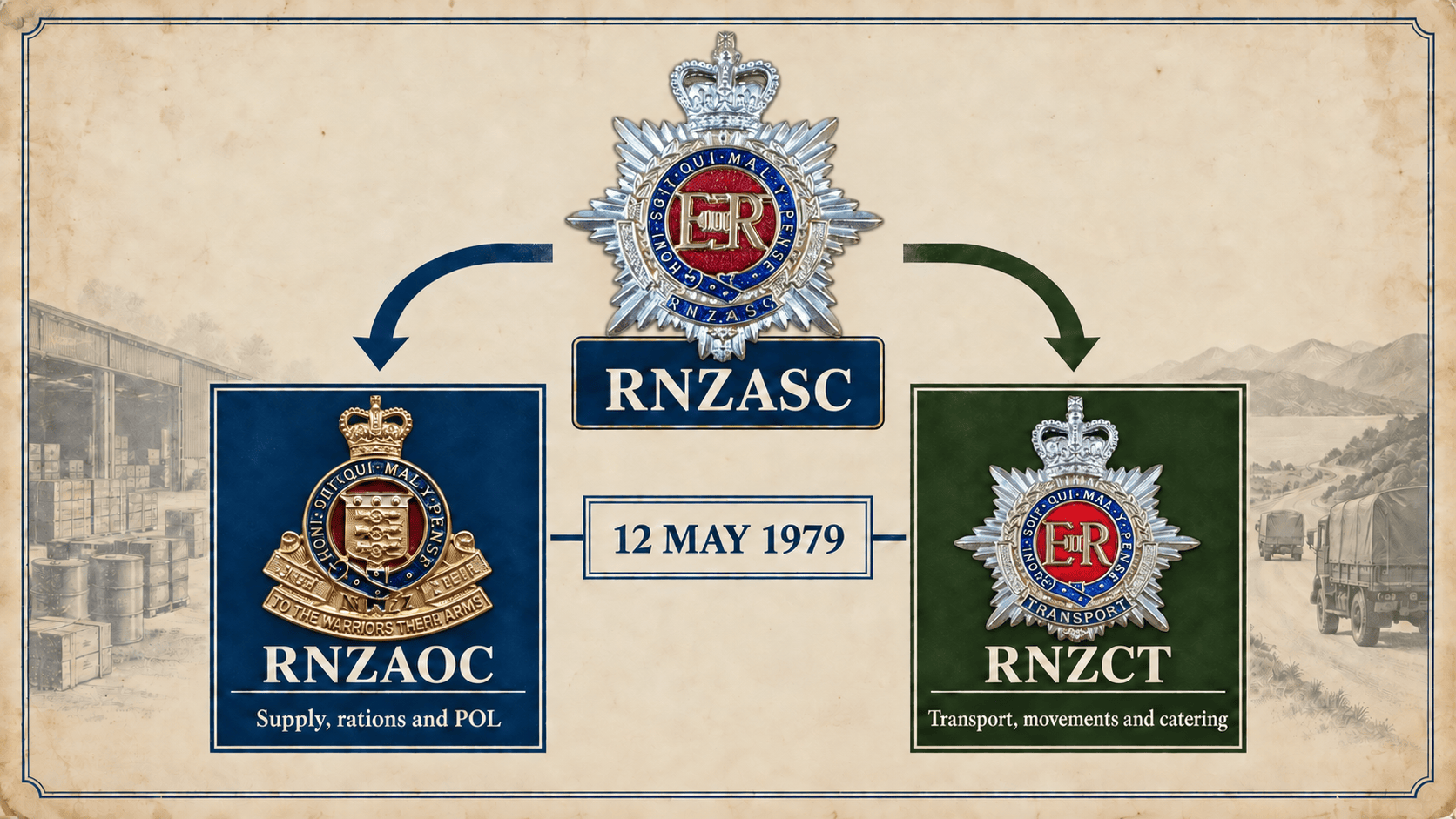
The change made the RNZAOC the Army’s principal supply Corps. From 12 May 1979, it became responsible not only for ordnance stores, ammunition, and technical materiel, but also for foodstuffs, rations, and petroleum, oils and lubricants (POL).[1]
Change was already underway
The formal 1979 transfer was the second stage of a process already underway within the RNZAOC. In July 1978, Pataka described a proposed reorganisation intended to “rationalise the supply chain”. Central Ordnance Depots and Ordnance Field Parks were to be grouped into regional organisations, reducing duplicated stockholding and simplifying the movement of stores from demand to delivery.[2]
The proposal did not promise large Regular Force savings. Its main benefits were expected to be fewer stocking points, lower inventory and storage costs, simpler accounting and better use of people and infrastructure. In October 1978, former RNZASC supply organisations began coming under RNZAOC command for command purposes, and the February 1979 Pataka recorded the practical changes: new titles, altered establishments, repainted signs and the arrival of new personnel.[3]
Why the Army reorganised
The 1978 Defence Review required a rearrangement of Army logistic functions. New Zealand followed the broad direction already adopted in Australia: transport, movements and catering would be grouped in a Corps of Transport, while supply would sit with the RNZAOC.[4]
The date itself carried deliberate symbolism. Major W. Fraser recommended 12 May 1979 because it coincided with the anniversary of the 1910 New Zealand Gazette notice that established the Army Service Corps. The change was therefore both an organisational break and a carefully marked transition from a long-standing corps tradition.[5]
Organisation from 12 May 1979
Principal responsibilities
Royal New Zealand Corps of Transport
Transport, Defence movements, catering and postal functions.
Royal New Zealand Army Ordnance Corps
Supply, including food, rations, POL, ordnance stores, ammunition and related technical responsibilities.
This division did not separate supply from transport in the field. The RNZAOC held, managed and provided the stocks; the RNZCT provided transport and much of the distribution capability. The implementation order expressly allowed RNZAOC Combat Supplies Platoons to be placed under command of an RNZCT unit when operational circumstances required supplies to be distributed from second-line transport.[6]
What the RNZAOC gained
From 12 May 1979, responsibility for the provision and storage of all foodstuffs and POL, together with the development, evaluation and provision of ration packs, passed from the RNZASC to the RNZAOC. The accompanying equipment sponsorship was broad: refrigeration and air-conditioning equipment, packaging and packing materials, POL storage and quality-control equipment, water containers, agricultural supplies, and specialist camp and religious stores.[7][8]
The transfer also made clerk/storekeeper and butcher training an RNZAOC School responsibility. It affirmed that food, rations and fuel were technical supply functions requiring professional knowledge, not simply commodities to be bought and issued.
The RNZAOC after 12 May 1979
The new directorates at Headquarters New Zealand Land Force were implemented on 9 April 1979, before the field transfer on 12 May. This enabled the Director of Ordnance Services to assume the necessary policy, technical-control and force-management responsibilities before the new unit structure took effect.[9]
The RNZAOC Directorate controlled a national supply system comprising a base supply battalion, four regional Supply Companies, the New Zealand Advanced Ordnance Depot in Singapore and the RNZAOC School.
This table shows the principal RNZAOC supply organisation following the 1979 reorganisation. It does not attempt to list every RNZAOC technical, ammunition or workshop-stores appointment and element.
The structure combined static and regional supply, base-level bulk holdings and deployable field capability. It was therefore more than a renaming of RNZASC camp supply depots.
The units transferred to the Corps
Former RNZASC sub-unit
New RNZAOC sub-unit
Location
Composite Platoon, 1 Transport Company
13 Combat Supplies Platoon, 1 Supply Company
Papakura
Supply Section, Papakura Platoon, Northern Company
14 Supply Platoon, 1 Supply Company
Papakura
Headquarters 21 Supply Company
Headquarters 21 Supply Company, 4 Supply Company
Waiouru
4 Platoon, 21 Supply Company
43 Combat Supplies Platoon, 4 Supply Company
Waiouru
Supply Platoon, Waiouru Company
44 Supply Platoon, 4 Supply Company
Waiouru
7 Platoon, 21 Supply Company
47 Petroleum Platoon, 4 Supply Company
Waiouru
New sub-unit
23 Combat Supplies Platoon, 2 Supply Company
Linton
Supply Section, Linton Platoon, Central Company
24 Supply Platoon, 2 Supply Company
Linton
Wellington Supply Platoon, Central Company
54 Supply Platoon, 1 Base Supply Battalion
Trentham
Composite Platoon, 3 Transport Company
33 Combat Supplies Platoon, 3 Supply Company
Burnham
Burnham Supply Platoon, Southern Company
34 Supply Platoon, 3 Supply Company
Burnham
Supply Platoon, New Zealand Transport Company
New Zealand Supply Platoon, NZAOD
Singapore
The revised numbering made the national pattern clearer. The 14, 24, 34, 44 and 54 Supply Platoons corresponded to Papakura, Linton, Burnham, Waiouru and Trentham. The specialist exception was 47 Petroleum Platoon, which retained the petroleum function of former 7 Platoon, 21 Supply Company, while adopting the Waiouru prefix. Headquarters 21 Supply Company remained as a Territorial Force sub-unit of 4 Supply Company, capable of commanding up to five supply sub-units for training and exercises.[10]
People and capability transferred with the units
The establishment papers show that the reorganisation was not merely an exercise in moving existing posts. Eighty Regular Force supply posts and two civilian posts were transferred to the RNZAOC. There was no increase in the Regular Force establishment, but the Territorial Force supply establishment rose from 123 to 158 posts, a net gain of 35. The increase was required to establish 23 Combat Supplies Platoon at Linton, an entirely new sub-unit.[11]
This demonstrates that rationalisation and capability growth occurred together. Former RNZASC composite platoons became RNZAOC Combat Supplies Platoons; the existing combat-supply and petroleum capabilities of 21 Supply Company were retained, and a new platoon was raised for 2 Task Force Region.
Continuity of expertise was protected. RNZASC personnel employed in supply units were to remain in those units until the RNZAOC had sufficient trained personnel to replace them. They were also required to indicate whether they wished to join the RNZCT or RNZAOC.[12]
The transfer was also a lived transition, not merely an establishment change. Contemporary accounts suggest that some RNZASC and RNZAOC personnel expected difficulties, particularly in the continued supply of rations. In practice, the handover of tasks and the incorporation of transferees proceeded smoothly. The result supports the central lesson of the reorganisation: adaptation was judged not by creating new titles or badges, but by whether the Army continued to receive essential support without interruption.[13]
Accounts, responsibility and continuity
The change was embedded in the accounting system. Northern Company RNZASC’s supply-depot bulk-stock account became that of 1 Supply Company; Waiouru Company’s became 4 Supply Company; the Linton and Trentham Central Company accounts transferred to 2 Supply Company and 1 Base Supply Battalion; and Southern Company’s became 3 Supply Company.[14]
This mattered because stock accounts represented formal custody and accountability. New badges and unit titles could be introduced quickly; transferring account responsibility changed the organisation answerable for receipt, storage, demand, issue and reconciliation of the stores that sustained the Army.
Adaptation without interruption
The 1978 to 1979 reorganisation fundamentally widened the RNZAOC’s role. It placed food, fuel, rations and supply support alongside ordnance stores, ammunition and technical materiel. At the same time, it preserved the interdependence of supply and transport, retained specialist knowledge during the transfer and added a new Territorial Force combat-supply capability at Linton.
The contemporary details differ, but the lesson remains relevant. Logistics must adapt to new systems, new equipment and new operating demands while continuing to sustain the force. In 1979, the decisive measure was not whether the chart changed; it was whether the Army could still feed, fuel and equip its units. That remains the proper measure of logistic adaptation today.[15]
Notes
[1] Army General Staff, Army Reorganisation Instruction No. 11: RNZASC Reorganisation, Army 209/1/142/SD, 24 April 1979, paras. 1-5
[2] The RNZAOC Reorganisation,” Pataka, July 1978, 10-12.
[4] Julia Millen, Salute to Service: A History of the Royal New Zealand Corps of Transport and Its Predecessors, 1860-1996 (Wellington: Victoria University Press, 1997), 415-16
[5] Julia Millen, Salute to Service: A History of the Royal New Zealand Corps of Transport and Its Predecessors, 1860-1996 (Wellington: Victoria University Press, 1997), 415-16
[9] Headquarters New Zealand Defence Force, Army General Staff, Army Reorganisation Establishments, Volume 3, Army 1920/1, April 1979, paras. 3 and 10-15
[10] Army General Staff, Army Reorganisation Instruction No. 11, Annexes D and F, paras. 6-7.
[11] Headquarters New Zealand Defence Force, Army General Staff, Army Reorganisation Establishments, Volume 3, Annex F, “Supply Posts for RNZAOC.”
[12] Army General Staff, Army Reorganisation Instruction No. 11, para. 6c.
[13] Major J. S. Bolton, A History of the Royal New Zealand Army Ordnance Corps (Trentham: RNZAOC, 1992), 224-25
[14] Army General Staff, Army Reorganisation Instruction No. 11, Annex F, para. 8.
[15] Ministry of Defence, Defence Capability Plan 2025 (Wellington: Ministry of Defence, 2025), 39.
Two recently located photographs offer a rare glimpse of Roy’s Log Cabin, a beer hall in Hiro, near Kure, Hiroshima Prefecture. Although little documentary information about the establishment has yet been found, the photographs and a surviving veteran’s recollection confirm that it catered to Allied servicemen during the early 1950s.
One photograph shows a large display of Commonwealth regimental and corps insignia inside the premises. An identifiable Royal New Zealand Army Ordnance Corps badge is included, while what appears to be a Royal New Zealand Artillery badge can be seen in ther lower right of the board. Other badges may possibly represent the Royal New Zealand Army Service Corps and Royal New Zealand Electrical and Mechanical Engineers, although these identifications remain provisional.
The display provides tangible evidence that New Zealand servicemen were among the patrons of Roy’s Log Cabin and probably contributed insignia to its collection.
From occupation to the Korean War
The British Commonwealth Occupation Force arrived in Japan during 1946. Comprising formations and personnel from Australia, Britain, India and New Zealand, it supervised demilitarisation and maintained military control across a large area of western Japan. Its headquarters and principal administrative facilities were centred upon Kure, while substantial Army camps were established at nearby Hiro.
New Zealand’s contribution was known as Jayforce. More than 4,200 New Zealand soldiers arrived in Japan during March 1946, accompanied by approximately 280 personnel of No. 14 Squadron RNZAF. Jayforce was principally stationed in Yamaguchi Prefecture, but its personnel arrived through Kure and operated within the wider Commonwealth network of bases, transport routes and administrative organisations.
New Zealand withdrew Jayforce in 1948, but Hiro’s military importance did not end with the occupation. Following the outbreak of the Korean War in June 1950, the Kure–Hiro area became an important rear base supporting Commonwealth operations in Korea.
Kayforce established its New Zealand base at Hiro in June 1951. New Zealand personnel passed through the camp while travelling to and from Korea, receiving reinforcements, taking leave, undergoing treatment or awaiting repatriation. The expansion of Kayforce also included 10 Company RNZASC, which joined the Commonwealth Division in Korea during October 1951.
Hiro also housed the Japan Reinforcement Base Depot, or JRBD, which received and prepared British reinforcements for service in Korea. The depot occupied the former camp of 3rd Battalion, Royal Australian Regiment and operated alongside separate Australian and New Zealand reinforcement organisations.
Hiro consequently became a crossroads for British, Australian, Canadian and New Zealand servicemen. Around the military camps developed a collection of shops, laundries, restaurants and beer halls catering to this transient Commonwealth population.
Roy’s Log Cabin at Hiro, Japan. Its sign identifies the establishment as “Roy’s Log Cabin for Allied Forces”, confirming that it catered specifically to military personnel stationed in or passing through the Kure–Hiro area. Photographer and date unknown.
The exterior photograph shows a plain, two-storey, timber-clad building. Despite its name, it was not a log cabin in the conventional architectural sense. Its identity and intended clientele were proclaimed in large English lettering.
A badge or emblem appears above the lettering, although it cannot be identified confidently from the available image.
Roy’s Log Cabin was probably a Japanese-owned commercial beer hall close to the military camp rather than an official service canteen. Establishments of this kind offered servicemen somewhere to drink and socialise beyond the more regulated surroundings of their camps.
British Royal Signals soldier John Boyd provides the clearest surviving description. Boyd arrived in Japan in September 1952 and was taken to A Company, JRBD, at Hiro-machi. When he returned approximately a year later, he remembered:
“Nearby was the ‘Uncle Roys Log Cabin’ beer hall, with a laundry alongside which had the mispelt ‘Lanudry’ down its side.”
Boyd also recalled visiting other beer halls in Hiro and Kure, where he and his companions drank Kirin beer and Akadama wine.
His reference to “Uncle Roy’s Log Cabin” may preserve the establishment’s colloquial name, while the exterior photograph shows that its formal sign read simply “Roy’s Log Cabin”. His account confirms that the beer hall operated during 1952 and probably remained open in 1953.
It may have existed during the earlier occupation period, but no evidence has yet been located that securely places it in the late 1940s.
A wall of Commonwealth badges
The Commonwealth Forces badge board displayed at Roy’s Log Cabin. An identifiable New Zealand Artillery badge confirms a New Zealand connection. What appears to be an RNZAOC badge can be seen towards the upper-right, while other insignia may represent the RNZASC and RNZEME. These latter identifications remain provisional. Photographer and date unknown.
The interior photograph shows a large shield-shaped display headed “Roy’s Logcabin”. The words “Commonwealth Forces” surround an oversized central crown, while an assortment of cap badges, collar badges, shoulder titles and buttons fills the board.
Several British and Australian badges are recognisable. The words “Australia”, “REME” and “KSLI”—the King’s Shropshire Light Infantry—are visible, together with insignia belonging to artillery, engineer, infantry and service corps.
The identifiable New Zealand Artillery badge accords with Hiro’s role as Kayforce’s rear base. Personnel of 16th Field Regiment and its supporting organisations passed through the camp while travelling between New Zealand and Korea.
Towards the upper-right of the display is a badge that appears consistent with that of the Royal New Zealand Army Ordnance Corps. Less distinct insignia may represent the Royal New Zealand Army Service Corps and Royal New Zealand Electrical and Mechanical Engineers.
Caution is required because New Zealand corps badges were frequently derived from, and closely resembled, their British equivalents. Until a higher-resolution copy or the original display can be examined, the possible RNZASC and RNZEME badges should not be regarded as conclusively identified.
The origin of the collection is unknown. The badges may have been donated by visiting servicemen, exchanged as souvenirs or collected by the proprietor to decorate the establishment. Whatever the method, the board became an informal record of the regiments, corps and national contingents represented among Roy’s customers.
The logisticians behind Kayforce
Although the 16th Field Regiment was New Zealand’s principal combat formation in Korea, it depended upon a logistic system extending from New Zealand through Japan and into the Korean Peninsula. Guns, vehicles, ammunition, fuel, rations, clothing and technical stores all had to pass through this network.
The RNZASC connection is particularly credible because 10 Company RNZASC formed part of Kayforce’s expanded contribution to the Commonwealth Division. RNZAOC personnel provided ordnance stores, clothing, equipment and ammunition support, while RNZEME tradesmen maintained and repaired vehicles, weapons and technical equipment.
Members of these corps had ample reason to pass through the camps, depots and workshops of Hiro and Kure. The possible presence of their badges at Roy’s Log Cabin would therefore reflect the range of combat and supporting organisations required to sustain New Zealand’s contribution to the Korean War.
The badge display also illustrates an aspect of service life rarely captured in official histories. Soldiers did not exist only within unit lines, workshops and depots. They also occupied a wider social world of canteens, cinemas, restaurants and local bars. Roy’s Log Cabin was one such meeting place.
An informal military archive
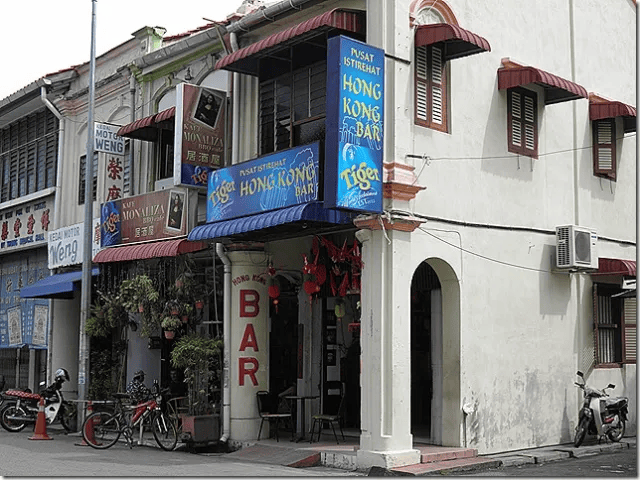
The display at Roy’s Log Cabin can be compared with the better-known Hong Kong Bar in Chulia Street, George Town, Penang. The two establishments were separated by distance and circumstance, but both became drinking places for generations of British and Commonwealth servicemen.
The Hong Kong Bar opened in 1920 and became particularly associated with personnel serving at RAF and RAAF Butterworth, as well as visiting soldiers and sailors. The same family has operated it since the 1950s, and it has long displayed plaques, photographs, badges, medals, postcards, and other items left by its military patrons.
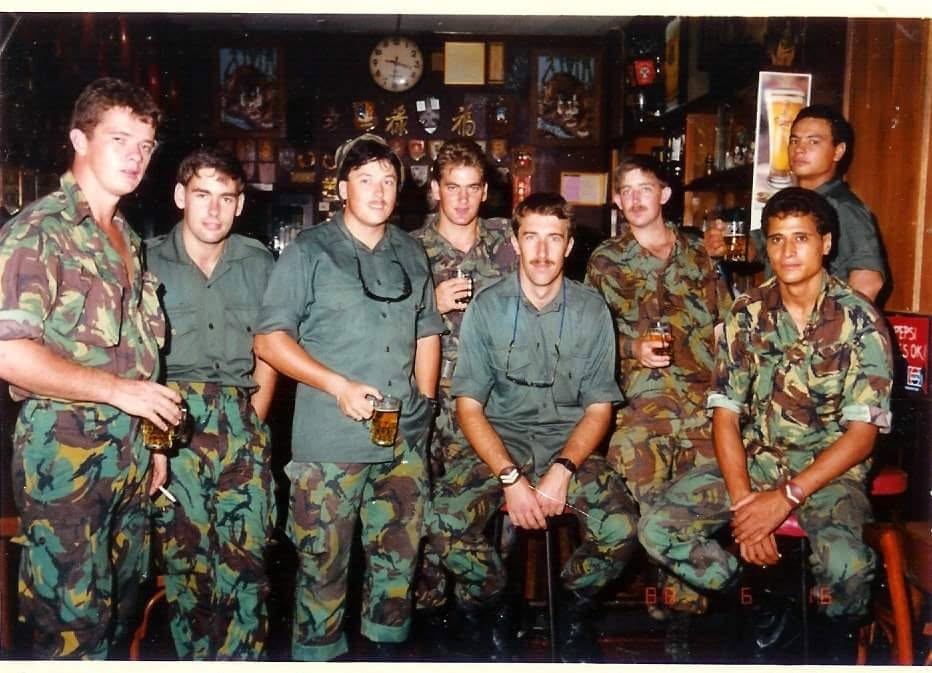
The proprietors of the Hong Kong Bar also created a photographic record of visiting groups. Thousands of photographs of servicemen and their families were collected, arranged in albums and displayed alongside unit plaques and other mementoes. Although many were lost when fire damaged the bar in 2004, the surviving collection has led to the establishment being described as an unofficial museum of the military presence in Penang.
For more than eighty years, the Hong Kong Bar has marked the passage of military visitors not through formal nominal rolls but through photographs, plaques and objects left behind. Personnel returned years later to find their younger selves, former comrades or unit insignia preserved within the bar.
Members of the New Zealand Advanced Ordnance Depot, Hong Kong Bar Penang, June 1988.
Roy’s Log Cabin appears to have served a comparable purpose on a smaller scale. Its badge board did not simply decorate the premises. It created a visual record of the Commonwealth units whose members had visited Hiro. Each badge represented an individual or group that had passed through the establishment, even though their names and the circumstances of their visits were not recorded.
The comparison demonstrates how an ordinary drinking establishment can unintentionally become an archive. Official records document formations, movements and operations; places such as Roy’s Log Cabin and the Hong Kong Bar preserve something different: the social memory of service, comradeship and time spent away from home.
A place between two worlds
To its customers, Roy’s Log Cabin was probably remembered primarily as somewhere to drink, meet friends and escape temporarily from military routine. Yet establishments of this kind occupied an important social space between the Allied forces and the local population.
Many of the servicemen passing through Hiro were young, far from home and either preparing for war or returning from active operations. Inside Roy’s Log Cabin, distinctions between regiments, corps and national contingents became temporarily less important. British, Australian, Canadian and New Zealand soldiers could meet beneath a shared display of badges in a Japanese establishment only a few years after the end of the Pacific War.
Beer halls were an established part of servicemen’s recreational life in the Kure–Hiro area. Veterans recalled visiting establishments in both towns, while official BCOF installations also contained regulated canteens, recreation rooms and beer halls. Kure, as the larger centre, offered restaurants, cinemas, shops and Kure House, whereas Hiro possessed its own smaller entertainment district serving the military camps.
Roy’s badge board captures the transition from occupation to alliance. The insignia represented armed forces assembled first to occupy a defeated Japan and subsequently to fight together in Korea. Arranged around the words “Commonwealth Forces”, they became an unofficial monument to the servicemen who passed through its doors.
A surviving fragment of social history
The later history of Roy’s Log Cabin is presently unknown. It is not known who “Roy” was, whether he was Japanese or a Commonwealth national, when the beer hall opened, or when it closed. Its exact location within Hiro has also yet to be established.
The photographs nevertheless confirm that Roy’s Log Cabin existed near the Commonwealth military camps, openly catered to Allied personnel and contained an extensive collection of military insignia. John Boyd’s recollection establishes that it operated during the early 1950s, while the New Zealand Artillery badge provides a direct connection to New Zealand service at Hiro.
Like the Hong Kong Bar in Penang, Roy’s Log Cabin preserved the memory of its military patrons through objects left behind. The Penang establishment survived to become a recognised repository of Commonwealth service memories; Roy’s appears to have disappeared, leaving only these photographs and scattered recollections.
That makes the surviving images particularly valuable. They record one of the informal places in which Commonwealth military life was lived during the transition from the occupation of Japan to the Korean War. They also provide a rare reminder that history survives not only in official files and unit war diaries, but on the walls of the bars where servicemen met, drank and left small traces of their passing.
The Royal New Zealand Army Ordnance Corps did not deploy a formed unit to South Vietnam. There was no RNZAOC depot, field park or company bearing the Corps’ badge. Instead, small numbers of RNZAOC officers, warrant officers, non-commissioned officers and soldiers served throughout the New Zealand and Australian command and logistic systems.
They worked at Headquarters New Zealand V Force in Saigon, Headquarters 1st Australian Task Force at Nui Dat, the 1st Australian Logistic Support Group at Vung Tau, and in the Logistic Support Element originally attached to 161 Battery, Royal New Zealand Artillery. At any one time, the RNZAOC presence was usually only a handful of personnel—approximately two officers and four other ranks—but their responsibilities connected New Zealand units with an extensive multinational supply network.[1]
This was a corps without a unit, but not without a function. Its personnel helped manage the flow of weapons, ammunition, vehicles, technical stores, clothing, equipment and distinctly New Zealand items through a logistic system spanning New Zealand, Australia, South Vietnam and the vast American supply establishment.
Designing the support system
When 161 Battery was selected for service in South Vietnam in 1965, one option considered was to re-equip the battery completely from United States Army stocks. That would have simplified some aspects of supply, but it would also have required the battery to abandon much of its established equipment and procedures.[2]
The arrangements negotiated in Saigon during May and June 1965 instead produced a hybrid system. Colonel Leo Kermode and the Director of Equipment, Lieutenant-Colonel Ron Hassett, worked with Australian and American authorities to divide responsibility for supporting the New Zealand force.[3]
Broadly, the system operated as follows:
Supply source
Principal responsibilities
New Zealand
New Zealand-owned weapons and vehicles, national items, badges, shoulder titles, distinctive clothing and equipment not available from allied sources
United States
Most ammunition, petrol, oils and lubricants, rations, medical supplies, fire-control equipment and other commonly used operational stores
Australia
Clothing, vehicle spares, general stores, technical support, medical support and access to Australian supply and maintenance organisations[4]
A sixteen-man Logistic Support Element was formed under Lieutenant Piers Martin Reid. It contained personnel from several New Zealand corps and was intended to connect 161 Battery with the Australian logistic company supporting the 1st Battalion, Royal Australian Regiment, at Bien Hoa.[5]
The arrangement gave the small New Zealand force access to a logistic establishment far beyond anything it could have deployed independently. It also created an enduring administrative challenge: responsibility for an item depended on who owned it, who normally supplied it, whether it was common to allied forces and which nation was expected to pay for it.
Bien Hoa: making the system work
The New Zealand Logistic Support Element was divided between Saigon and Bien Hoa. Some personnel served at Headquarters New Zealand V Force, while the remainder formed a battery section of the Light Aid Detachment and an augmented stores section supporting 161 Battery.
The original intention was to integrate the New Zealand element with the Australian Logistic Support Company. This did not happen immediately. The stores and workshop personnel initially moved into the Australian area but were subsequently accommodated with the battery, creating a small and comparatively independent New Zealand support organisation.
That arrangement was not entirely satisfactory. On 9 January 1966, the original policy was restored: the New Zealand element was placed under the Australian company’s operational and technical control, its personnel moved into the Australian area, and its stores were amalgamated with Australian holdings.[6]
The integration was important because 161 Battery arrived with several items that were not standard Australian or American equipment. Its Land Rovers, for example, were too small and underpowered for some of the tasks demanded of them, while replacement parts generally had to come from New Zealand. An American depot might hold thousands of vehicle components, but it could not supply a part for a vehicle that the United States Army did not use.
There were also substantial differences in scale. American depots operated in tons, pallet loads and large standard packs. New Zealand might require only a carton or a single component. The American system increasingly relied on computerised accounting, while New Zealand procedures remained largely manual. Requisitions therefore had to be translated not only between national organisations, but between fundamentally different concepts of scale and stock control.[7]
The L5 105-mm pack howitzer created further demands. It was light enough to be carried by helicopter, but tropical conditions reduced helicopter lifting capacity. Trials established that four sorties were required to move one gun, its detachment and twenty-five rounds. The weapon’s light construction also made it susceptible to damage when repeatedly fired at high charges. Maintaining the battery’s operational availability consequently depended upon an effective combination of engineering maintenance and ordnance supply.[8]
From Bien Hoa to Vung Tau and Nui Dat
The Australian commitment expanded from a battalion group into the brigade-sized 1st Australian Task Force during 1966. The task force established its operational base at Nui Dat in Phuoc Tuy Province, while its main logistic base was built approximately thirty-five kilometres away at Vung Tau.
161 Battery moved to Nui Dat on 16 May 1966. Its Logistic Support Element was detached and established within the 1st Australian Logistic Support Group at Vung Tau.[9]
Vung Tau offered port facilities, an airfield and a comparatively secure location, but the logistic base had to be developed on sand hills and a former rubbish tip. From primitive beginnings it grew into a large complex containing more than 1,300 service personnel and approximately 500 locally employed civilians.
Entrance to 1st Australian Logistic Support Group, Vung Tau.
The sand was a constant adversary. Tent pegs worked loose, trenches collapsed, vehicles bogged down and furniture sank into the ground. Fine sand entered weapons, engines, typewriters, stores, food, clothing and bedding. Maintaining an accurate and serviceable stockholding in such conditions required continual preservation, inspection and housekeeping.
At Nui Dat, second-line ordnance support was provided by an Ordnance Field Park. The initial element became the 6th Ordnance Field Park Detachment and, on 1 February 1968, was redesignated as the 1st Ordnance Field Park.
Ordnance Field Park (Det) location on Hill ‘Nui Dat 2’
1967 – New Store Sheds and Control Office HQ Building OFP Nui Dat
At Vung Tau, third-line support was provided successively by the 1st Composite Ordnance Company, the 2nd Composite Ordnance Depot and, from 16 November 1967, the 2nd Advanced Ordnance Depot.[10]
The 2nd Advanced Ordnance Depot included supply-control, stores, ammunition, vehicle, laundry and bath elements. It held approximately 15,000 line items, generally based on ninety days of operating stock together with theatre reserves. New Zealand ordnance personnel posted to the Australian system could therefore find themselves working within an organisation of a scale not encountered at home.[11]
1st Australian Logistic Support Group, Vung Tau, 1971. The former improvised base had developed into a large theatre logistic complex.
The supply chain
New Zealand’s supply system in Vietnam was not a single pipeline. It was a network.
Headquarters New Zealand V Force in Saigon managed national requirements, financial arrangements, local purchase and liaison with allied headquarters. New Zealand-specific stores were forwarded through national channels, while Australian and American organisations supplied most common operational requirements.
Members of V Force HQ in Saigon, 1971. Back row (Left to Right): Sgt Derek Cain RNZEME, Cpl Alby Bron RNZEME, LBdr Bruce Tutauha RNZA, LCpl A Rendell RNZASC, Cpl Bruce Isbister RNZIR, Bdr Tony Hulme? RNZA, Dvr Greg Hutton RNZASC, LCpl Terry Burch RNZSigs, Cpl Pat Cranston RNZIR, Cpl Doug Waugh RNZAOC Front row (Left to Right): Ssgt Ces Hughes RNZIR, WO2 Jack Bingham RNZE, WO2 Cliff Lindsay RNZIR, Capt Buster Hornbrook RNZIR, Lt Col Val Brown RNZIR, Maj Bruce Meldrum RNZAC, WO A. McAsey RNZAF, WO2 Lofty Keys RNZIR
Urgent stores, mail and personnel could be moved by air. RNZAF and allied aircraft connected New Zealand, Singapore, Saigon and Vung Tau. Routine Australian flights also linked Saigon, Vung Tau and Nui Dat.
The principal daily connection between the logistic base and the task force was the road convoy from Vung Tau to Nui Dat. Priority demands, ice and perishables normally moved each day. Ammunition and petroleum products were carried forward three times a week, while ordnance and engineer stores generally moved twice weekly. Including the various classes of supply, 1st Australian Logistic Support Group could be tasked with approximately forty-six truckloads each day, seven days a week.
Each convoy was affected by road conditions, vehicle availability and enemy activity. Daily logistic conferences at Vung Tau considered demands, priorities, transport, road closures, intelligence and the back-loading of salvage. Operationally urgent items could be carried by special vehicle, aircraft, helicopter or watercraft when the normal system was too slow.[12]
Bulk resupply arrived by sea. HMAS Jeparit normally visited at intervals of about six weeks and was frequently loaded close to its 4,300-ton capacity. Ammunition, explosives and vehicles were discharged into barges before the ship came alongside to unload the remainder of its cargo. Other vessels, including HMAS Sydney, supplemented this service during unit rotations and major movements.
The system was vast compared with the number of New Zealanders it supported. Its size offered considerable advantages, but it also made New Zealand-owned equipment difficult to track. An item might pass through a New Zealand headquarters, an Australian depot, an American support unit and a forward Australian ordnance installation before reaching its user.[13]
Ammunition
Ammunition supply was one of the clearest examples of coalition dependence. Approximately ninety per cent of Australian and New Zealand ammunition requirements came from United States sources. The remainder came from Australia and included 105-mm artillery ammunition, 20-pounder ammunition for Centurion tanks and some small-arms ammunition.
Australian ammunition was initially held at a sub-depot at Vung Tau. It was later moved to the United States ammunition establishment at Long Binh, allowing both American- and Australian-supplied ammunition to be issued through one location. Australian and New Zealand ammunition technicians were attached at various times to undertake identification, safety, quality surveillance and disposal duties.
The United States Army logistics complex at Long Binh, 1967. Australian and New Zealand ammunition supply increasingly drew on the American depot system.
American road transport delivered ammunition for the task force directly to the Task Force Maintenance Area at Nui Dat. This reduced double handling, but it did not remove the need for ordnance oversight. Different manufacturers, markings, lots, fuzes and national accounting arrangements still had to be reconciled.[14]
Ammuniton stored in the 1 ALSG by the American bunker system, which was used throughout Vietnam. The ammunition point at Nui Dat contained seven such bunkers cut into the side of a hill. Ammunition was stored in two-point dispersion, and usually only vulnerable items such as pyrotechnics were stored covered because the turnover of stock was rapid. Photo RNZAOC School
Payment arrangements were equally complex. New Zealand initially paid a fixed monthly charge for American support. From 1967, artillery ammunition was charged according to recorded expenditure. A 105-mm round was priced at US$25.62, increasing to US$31.49 in March 1969.
Fuzes became the subject of separate negotiation. New Zealand was presented with a retrospective account of approximately $567,000, but the United States agreed not to charge for the fuzes fitted to more than 120,000 shells fired between 1965 and 1968. At approximately nine dollars per fuze, this represented a substantial saving. The episode nevertheless demonstrated that coalition logistics involved finance and accounting as well as the physical delivery of ammunition.[15]
The wider Australian ordnance framework
The Royal Australian Army Ordnance Corps provided the organisational framework within which most New Zealand ordnance personnel worked. The system included the 2nd Advanced Ordnance Depot at Vung Tau, the Ordnance Field Park at Nui Dat and numerous specialist stores sections supporting workshops, engineer units, armoured units and communications organisations.
Ordnance soldiers did not remain permanently behind wire. Field Park personnel provided forward detachments during major operations, operated bath and water-point equipment, assisted with patrols and perimeter defence, guarded stores and accompanied convoys. At Fire Support Base Coral in May 1968, the forward Task Force Maintenance Area group operated in a position repeatedly attacked by rockets and mortars. Stores and records were damaged, and a complete stocktake was required after the detachment returned.
Even fixed installations remained within range of enemy action. The Ordnance Field Park area at Nui Dat came under mortar fire, while personnel at both Nui Dat and Vung Tau were required to maintain defensive positions and perform sentry and local-security duties. Logistic service in Vietnam could not be separated completely from the operational environment.[16]
New Zealanders in the wider system
Approximately five per cent of New Zealand V Force was employed in the supply chain. At the peak of the New Zealand commitment in November 1968, thirty of the 543 New Zealand personnel in South Vietnam were serving with the 1st Australian Logistic Support Group. Across the entire deployment, 137 New Zealanders from all corps and services served with the group.
These figures must not be mistaken for RNZAOC strength. New Zealanders in 1st Australian Logistic Support Group included personnel from many corps and services. The RNZAOC component was only one part of that wider national contribution.
Some RNZAOC personnel also served at American installations. Corporal Frankie Te Waru Hohepa, for example, worked at the United States Army depot at Long Binh. Such attachments provided direct access to the American supply system and gave New Zealand personnel experience with methods, stock levels and accounting procedures far larger than those normally encountered in New Zealand.[17]
A contemporary Corps newsletter provides a particularly clear picture of this dispersed presence. In 1970, Major Malcolm Ross was serving at Headquarters 1st Australian Logistic Support Group; Lieutenant Maxwell Newnham and Sergeants Rex Pennell and Terence Morrissey were attached to the 2nd Advanced Ordnance Depot at Vung Tau; Corporal Brian Moore was attached to 161 Battery at Nui Dat; and Corporals Ronald Henderson and Joseph Bolton were at Headquarters New Zealand V Force in Saigon. They did not constitute an RNZAOC unit, but collectively formed a small network of ordnance specialists distributed across the principal New Zealand and Australian logistic organisations.[18]
The surviving reports also reveal what these arrangements meant at the individual level. Corporal Joseph Bolton reported that he was attached to the Australians as a local-purchase clerk in the United States Supply Office in Saigon. The appointment placed him at the intersection of the New Zealand, Australian and American supply systems. He also hoped to gain an attachment to the United States Army ammunition sub-depot at Long Binh so that he could return to ammunition work.[19]
The New Zealand headquarters in Saigon underwent several changes of title:
Headquarters New Zealand Army Detachment, 29 June 1964–1 July 1965
Headquarters New Zealand V Force, 2 July 1965–5 March 1972
Headquarters New Zealand Army Training Group Vietnam, 6 March–21 December 1972
Published nominal rolls sometimes combine these headquarters under the general title ‘HQ V Force’. The distinction is nevertheless useful when establishing when and under what organisation an individual served.[20]
RNZAOC personnel in the ordnance and logistic system
The following register is confined to personnel who served in South Vietnam as members of the RNZAOC, in RNZAOC appointments or in direct ordnance-support roles.
It does not include soldiers who served in the New Zealand rifle companies or Army training teams as members of other corps and transferred to the RNZAOC after their Vietnam service. Those personnel are covered in the earlier V Force Ordnance article.
Headquarters New Zealand V Force
Corporal Joseph Seymour Bolton
Sergeant John Walter ‘Boots’ Byrom
Corporal Ronald John Henderson
Warrant Officer Class Two John Edward Hancox
Corporal James Nelson Harvey
Corporal Frankie Te Waru Hohepa
Lance Corporal Kevin Gerard Moriarty
Lance Corporal Colin William Roulston
Lieutenant Mark David Stuart
Sergeant Bruce Raymond Swain
Corporal Barry James Taylor
Corporal William Douglas Waugh
Headquarters 1st Australian Task Force
Corporal Michael Maurice Barker
Private Colin Robert Von Richenbach
1st Australian Logistic Support Group
Corporal Brian William Calvey
Major Arthur John Campbell
Corporal Ernest Reichter Clegg
Captain Gary Malcolm Corkin
Lieutenant Ronald Leslie Cross
Staff Sergeant Alfred Stephenson Day
Captain Kevin John Dreyer
Lieutenant James Bernard Finnerty
Sergeant Dennis Leslie Goldfinch
Corporal Laurence Roy Hawkins
Staff Sergeant Tamamarakau Te Kingi Hiini
Sergeant Arthur James Keeler
Staff Sergeant Derek John Keen
Lieutenant Terence David McBeth
Corporal Phillip Ross Miller
Sergeant Terence Norman Morrissey
Lieutenant Maxwell Frederick Newnham
Staff Sergeant Rex Pennell
Lieutenant Piers Martin Reid
Major Malcolm John Ross
Staff Sergeant Roy Harold Staniford
Sergeant Barry Thomas Thompson
Sergeant Darrell Samuel Todd
Staff Sergeant James William Twist
The New Zealand Governor-General Sir Arthur Porritt chats with Staff Sergeant Rex Pennell during his visit to New Zeland troops in Vung Tau. Captain M.F Newnham is to the right of SSgt Pennell. RNZAOC School
161 Battery Logistic Support Element and attachments
Corporal Laurence Charles Collier
Staff Sergeant Ronald Albert Eveleigh
Lieutenant David Ralph Hughes
Sergeant Maurice John Lynch
Corporal Brian David Moore
Corporal Wilford Stuart Neshausen
Private Stephen Rex Shepherd
Private Stephen Shepherd was an RNZAOC storeman attached to 161 Battery. Although he has sometimes been recorded as a gunner because of that attachment, he remained a member of the RNZAOC throughout his service.
The register reflects the dispersed nature of RNZAOC service in South Vietnam. These personnel did not belong to a single corps unit. They occupied appointments across headquarters, depots, field installations and the logistic element supporting the New Zealand artillery battery.[21]
Withdrawal
The withdrawal of 161 Battery in May 1971 began another demanding phase for the logistic system. Weapons, vehicles, technical equipment and stores had to be identified as New Zealand-owned, Australian-supplied, American-supplied, leased, expendable or suitable for disposal in theatre.
The work could also extend an individual’s service in Vietnam. Sergeant John Byrom’s one-year tour was prolonged specifically so that he could assist with the withdrawal of stores from South Vietnam. His extended tour provides a personal example of the additional accounting, identification and disposal work generated as the New Zealand commitment contracted.[22]
The battery’s non-standard and borrowed holdings, including its M2A2 105-mm howitzers, had to be returned through the appropriate channels. Serviceable New Zealand equipment was prepared for shipment, while surplus and unserviceable stores were accounted for, transferred or disposed of.
The Australian withdrawal required ordnance personnel to maintain support while simultaneously reducing the organisation that provided it. During 1971, the 1st Ordnance Field Park moved most of its organisation from Nui Dat to Vung Tau, leaving a detachment to operate controlled stores, the self-service store, the monthly bulk break and the equipment wash point.
Quarantine regulations required vehicles and equipment returning to Australia to be thoroughly cleaned. Tanks, vehicles and stores exposed to Vietnamese soil had to pass inspection before loading. Other material, including deteriorated tentage, webbing and tarpaulins, could be written off, destroyed or transferred rather than shipped home.
On 15 September 1971, the 1st Ordnance Field Park at Vung Tau assumed responsibility for supporting the remaining Australian forces from the 2nd Advanced Ordnance Depot. Its personnel had to determine a final stock scaling that would meet every remaining operational demand without leaving a large surplus when the force closed.
This required continuous stocktaking, outscaling and reconciliation. The field park still received and issued stores, but its holdings had to decline in step with the force. It closed for business on 31 January 1972. Personnel and equipment then returned to Australia, where the final reconciliation of stock and records continued until June.[23]
New Zealand’s headquarters and training commitment continued until December 1972. Personnel who served with the training teams as members of other corps and subsequently transferred to the RNZAOC fall outside the scope of this article.
Conclusion
The RNZAOC contribution in South Vietnam cannot be measured by unit titles or the size of a formed deployment. There was no New Zealand ordnance depot and no RNZAOC field park. Instead, individual corps personnel were inserted into a multinational system and expected to make it work for a small national force.
They translated New Zealand requirements into Australian and American supply procedures, maintained national accountability, handled technical and general stores, supported ammunition supply, assisted with local purchase and helped sustain 161 Battery and the wider New Zealand contingent.
The arrangement offered New Zealand access to a supply chain of immense capacity, but it also exposed the difficulties of relying on allies whose equipment, accounting systems, stock scales and administrative practices differed from its own.
The achievement of the RNZAOC personnel in Vietnam was therefore one of professional adaptability. Dispersed across Saigon, Vung Tau, Nui Dat and allied installations, they ensured that New Zealand soldiers received the stores, weapons, ammunition and equipment they required. The Corps went to Vietnam without a unit of its own, yet its purpose—providing the warrior with the means to fight—remained unmistakable.
Notes
[1]J. S. Bolton, A History of the Royal New Zealand Army Ordnance Corps (Trentham, New Zealand: Royal New Zealand Army Ordnance Corps, 1992), 193; Ministry for Culture and Heritage, ‘Unit Notes—Vietnam Veterans List,’ VietnamWar.govt.nz, accessed 1 September 2026, https://vietnamwar.govt.nz/unit-notes-vietnam-veterans-list.
[2]Ian McGibbon, New Zealand’s Vietnam War: A History of Combat, Commitment and Controversy (Auckland: Exisle Publishing, 2010), 80–81.
[6]Ian R. Finlayson, Supporting the Commitment: Australian Army Logistics in South Vietnam, 1962–1973 (Cambridge: Cambridge University Press, 2026), 72–73; McGibbon, New Zealand’s Vietnam War, 95–97.
[7]Bolton, History of the Royal New Zealand Army Ordnance Corps, 194.
[11]Bolton, History of the Royal New Zealand Army Ordnance Corps, 194–96.
[12]Bolton, History of the Royal New Zealand Army Ordnance Corps, 196–98; Ordnance Field Park Vietnam Association, ‘About Us,’ accessed 1 September 2026, https://ofpvietnam.wordpress.com/about-us/.
[13]Bolton, History of the Royal New Zealand Army Ordnance Corps, 196–98.
[14]Bolton, History of the Royal New Zealand Army Ordnance Corps, 196.
Regimental and Corps days are more than dates in an Army calendar. They preserve the moments when a corps acquired its identity, acknowledge the people who built it, and give serving and former members an opportunity to recognise a shared professional inheritance.
For the Royal New Zealand Army Service Corps (RNZASC), that inheritance was founded on an elementary military truth: an army cannot operate without food, transport and systematic arrangements for supply. The RNZASC Corps Day, originally set for 1 March, recalled the decisive step taken in 1913 towards turning that truth into an organised New Zealand Army capability.
The long road to a Service Corps
The creation of a New Zealand supply and transport organisation was not sudden. Annual defence reports from the early twentieth century repeatedly warned that the Defence Forces lacked the trained personnel and arrangements needed to sustain troops in the field.
In 1903, it was proposed that each military district should have a small company trained in supply and transport. The intention was not to create a large permanent organisation, but a trained nucleus able to expand in war. The following years showed how difficult that was to achieve. Reports noted that a force could not live without food, nor be fed without arrangements made during peace; that mobility would make supply still more difficult; and that realistic manoeuvres were being constrained by the absence of trained supply and transport resources.¹
By 1905, the case was put even more directly: a supply and transport corps was “an absolute necessity if a Force is to act in the field”. Yet the proposed organisation did not immediately materialise. In 1906, the authorities still reported that no transport or supply corps existed, despite repeated requests to establish one. By 1908 and 1909, plans remained focused on raising small district companies capable of meeting peacetime training requirements and expanding on mobilisation.²
These reports are striking because they describe a problem familiar to later generations of logisticians. Operational ambition, training activity and plans for deployment all depended on a sustainment system that could not be improvised after a crisis began.
1 March 1913
The event chosen to commemorate RNZASC Corps Day occurred on 1 March 1913, when four Army Service Corps non-commissioned officers arrived from Britain to help organise the Army Service Corps within the New Zealand Defence Forces.
Appointment
Name
Company Quartermaster Sergeant
J. J. Wass
Company Sergeant Major
J. W. F. Cahill
Staff Quartermaster Sergeant
P. M. Petty
Staff Sergeant
F. E. Ostler
The 1912-13 annual report recorded that the four men had been lent from Britain to assist with forming and instructing the necessary companies of the Dominion Army Service Corps. Pending its formal establishment, they were employed on supply and transport duties during annual training camps.³
That year also saw the establishment of brigade supply depots and the commencement of specialist instruction for selected officers and non-commissioned officers. The report judged this a “great step” towards the formation and training of the Corps: the principles of Service Corps control of supplies and transport had at last been put into practice.⁴
The four ASC NCOs returned to Britain at the outbreak of the First World War. By then, however, the Corps had been sufficiently established to carry forward its own work.
Establishing Corps Day
In May 1963, Army Headquarters authorised 1 March to be recognised annually as RNZASC Corps Day. The date was deliberately selected to mark the fiftieth anniversary of the 1913 arrival of the four British ASC NCOs and the practical beginning of the New Zealand Army Service Corps organisation.⁵
This was a thoughtful choice. It did not merely commemorate an administrative order or badge. It recognised the moment when an acknowledged capability gap began to be filled by trained people, doctrine, organisation and practical field experience.
At a time when the RNZASC was serving across New Zealand and Southeast Asia, Corps Day also provided an opportunity to connect contemporary supply, transport, catering, movements and petroleum personnel with the Corps’ formative purpose: ensuring that New Zealand soldiers could move, be fed and remain operational.
From RNZASC to RNZCT and RNZALR
The Corps Day tradition continued through later organisational change, although dates and emphases evolved.
The RNZASC was disbanded in 1979, with its responsibilities divided principally between the Royal New Zealand Corps of Transport (RNZCT) and the Royal New Zealand Army Ordnance Corps (RNZAOC). The RNZCT observed its Corps Day on 12 May, marking the 1910 formation of the New Zealand Army Service Corps and retaining the transport and movement strand of the Service Corps inheritance.⁶
The RNZAOC observed 12 July, the anniversary of the 1947 grant of the Royal prefix to the New Zealand Army Ordnance Corps. Its Corps Day recognised the distinct ordnance tradition of accounting for, storing, maintaining and issuing the Army’s weapons, ammunition, equipment and general stores.⁷
The Royal New Zealand Electrical and Mechanical Engineers (RNZEME) observed its Corps Day on 1 December. The date became associated with the Corps’ proud and distinctive culture of skilled maintenance, recovery, technical tradecraft and repair in support of the field force.⁸
With the formation of the Royal New Zealand Army Logistic Regiment (RNZALR) in 1996, the RNZAOC, RNZCT and RNZEME ceased to exist as separate corps. Their people, trades, units and traditions were brought together with Quartermaster functions into a single logistic regiment. The RNZALR observes Corps Day on 4 April.⁹
Corps
Corps Day
Significance
RNZASC
1 March
Arrival of four British ASC NCOs in 1913 to organise the Corps in New Zealand
RNZCT
12 May
Commemoration of the 1910 formation of the New Zealand Army Service Corps
RNZAOC
12 July
Grant of Royal status to the NZAOC in 1947
RNZEME
1 December
RNZEME Corps Day and its maintenance tradition
RNZALR
4 April
The modern Regiment’s annual day of recognition
A continuing inheritance
The separate corps have gone, but their central purpose has not. The RNZALR inherits the RNZASC understanding that an Army must be supplied and moved; the RNZCT tradition of transport and movement control; the RNZAOC responsibility for materiel, ammunition and supply; and the RNZEME commitment to repair, recovery and technical readiness.
Remembering the RNZASC Corps Day therefore does more than recall an early twentieth-century event. It reminds present-day logisticians that the foundations of sustainment endure: trained people, clear responsibility, practical preparation, and the professional determination to ensure that the force can move, fight, and endure.
Notes
1 “Corps Day – RNZASC,” Army Headquarters memorandum and historical enclosure, 1963, 1-2.
2 Ibid., 2.
3 Ibid., 1, 3.
4 Ibid., 3.
5 Ibid., 1, 3.
6 Robert McKie, “RNZAOC Days of Significance,” To the Warriors Their Arms, 11 July 2022.
7 Ibid.
8 “Army Engineers Get Noisy,” Ruapehu Bulletin, 12 December 1995, 10.
9 “RNZALR Corps Day,” Army News, no. 387 (2007), 22; Robert McKie, “Central Districts, RNZAOC Corps Day 2017,” To the Warriors Their Arms, 16 July 2017.
Eighty Years of Supporting New Zealand’s Infantry Firepower.
New Zealand has contracted Saab to supply 26 Carl-Gustaf M4 weapon systems to replace the Army’s existing M3 systems, which have reached the end of their scheduled service life. Delivery is expected during the first quarter of 2027, with the new weapons intended for the units currently operating the M3, including 1 RNZIR, 2/1 RNZIR, 16 Field Regiment and the Combat School. The contract value has not been publicly disclosed.[1]
Put simply, the acquisition replaces an ageing launcher with a lighter, more capable model. Historically, however, it represents the latest stage in a New Zealand support-weapon lineage extending back to the Second World War—from the Boys anti-tank rifle and the two-pounder and six-pounder guns, through the PIAT, the Wasp-type Universal Carrier flame-thrower, M20 3.5-inch rocket launcher, No. 94 Energa rifle grenade, BAT-family and M40 106 mm recoilless rifles, to the M72, Javelin and successive generations of the 84 mm Carl-Gustaf.
This is a functional rather than strictly linear lineage. The two-pounder and six-pounder were artillery weapons; the Boys, PIAT, Energa and M72 placed anti-armour weapons progressively closer to the individual infantry soldier; the Wasp-type flame carrier provided a short-range incendiary effect from a tracked vehicle; the 120 mm BAT family and M40A1 106 mm recoilless rifle combined substantial firepower with vehicle mobility; and Javelin added a guided, medium-range precision capability. The 17-pounder also formed part of New Zealand’s wider anti-armour capability. These systems frequently overlapped rather than directly replacing one another, but together they reveal how each technological advance created a corresponding logistical transformation.
The post-war record makes that overlap especially clear. New weapons could be held back for lack of training, ammunition, or pamphlets; an infantry battalion could hold five six-pounders alongside one BAT; and allied commonality could determine whether a system was retained, restricted to one unit, or abandoned. Obsolescence was therefore not merely a question of battlefield performance. It could be created by unaffordable training, deteriorating ammunition, disappearing overseas support or insufficient storage and disposal capacity.
The enduring lesson is that introducing a weapon is never simply a matter of purchasing the launcher. The launcher is only the visible element of a much larger system encompassing ammunition, transport, storage, maintenance, technical information, training, simulation, accounting and eventual disposal.
At the beginning of the Second World War, New Zealand intended to form an anti-tank regiment but lacked sufficient anti-tank guns with which to train it. Personnel therefore had to be trained in Britain and Egypt while equipment was progressively obtained. The resulting 7th Anti-Tank Regiment initially operated 40 mm two-pounder guns, some carried on 30-cwt trucks as portées.[2]
The 40 mm two-pounder anti-tank gun on its wheeled carriage. Supporting the weapon required a complete transport system for the gun, detachment, ammunition, tools and spare parts.
The scale of the subsequent expansion was considerable. New Zealand’s equipment and ammunition return for 31 March 1944 recorded 219 two-pounder guns and 423,259 complete rounds.[3] The gun fleet was therefore only the visible element of a much larger holding whose cartridges required depot space, transport, inspection, accounting and distribution.
Logistically, the two-pounder was not merely a gun. Each weapon required a trained detachment, sights, tools, spare parts, ammunition, a towing vehicle or portée, fuel, tyres and workshop support. Moving an anti-tank troop therefore meant moving a small fleet rather than an individual weapon.
The system also depended upon a supply chain capable of delivering heavy ammunition to gun positions. Although the guns were allocated in support of infantry brigades, their mobility and sustainment remained tied to vehicles and artillery supply arrangements. The weapon could not be separated from the transport system that carried it, its crew and its ammunition.
The .55-inch Boys anti-tank rifle provided New Zealand infantry with one of its earliest man-portable anti-armour weapons. New Zealand troops were training with the Boys in Egypt by 1940, and the weapon could also be mounted on carriers and light vehicles. Its bolt-action mechanism was fed from a five-round magazine, but the rifle was heavy, awkward to carry and punishing to fire.
Two views of the .55-inch Boys anti-tank rifle, with its specialised cartridge illustrated separately. The weapon brought anti-armour firepower to infantry units while adding a distinct ammunition requirement to their supply chain.
The Boys represented a different support problem from the two-pounder. It did not require a gun tractor or artillery detachment, but it introduced a specialised armour-piercing cartridge into the infantry ammunition chain. By 31 March 1944, New Zealand’s returns recorded 2,662 Boys rifles and 521,000 rounds of .55-inch armour-piercing ammunition.[4] Magazines, cleaning equipment, spare parts and cartridges had to be distributed to infantry and other units rather than concentrated solely in anti-tank artillery organisations.
Its rapid obsolescence taught another logistical lesson. As enemy armour became thicker, the Boys lost much of its effectiveness against tanks, although it retained some utility against light armour, vehicles and firing positions. A specialised weapon can therefore become operationally marginal before its physical service life or ammunition stocks have been exhausted. The supply system must then manage not only replacement equipment, but the withdrawal, storage and disposal of an ammunition type for which there was no alternative use.
The transition from the two-pounder to the more powerful 57 mm six-pounder during 1942 provides a particularly valuable logistical lesson.
By 31 March 1944, New Zealand’s holdings had grown to 226 six-pounders supported by 650,997 complete rounds. This new family existed alongside the 219 two-pounders and their remaining ammunition rather than immediately displacing them. Expansion consequently multiplied the calibres, cartridge types, ballistic data, spares and storage lines requiring support.
When 7th Anti-Tank Regiment was ordered back into action during the crisis in Egypt, it was part-way through re-equipping. Some two-pounders had already been returned to the ordnance depot, but the replacement six-pounders had not arrived and the associated training had not been completed. Five weapons had to be obtained from an anti-tank training school. Twelve more arrived during the fighting around Minqar Qaim, still covered in protective grease, with many lacking sights. For a time, the regiment had to operate both two-pounders and six-pounders. A photograph taken at El Alamein in October 1942 described the six-pounder as the regiment’s “new” gun.[5]
The 57 mm six-pounder anti-tank gun. Its introduction increased anti-armour capability but required new ammunition, sights, spares and training, while remaining two-pounder weapons and stocks continued to require support.
This was more than an inconvenient equipment change. Two ammunition families had to be supported simultaneously, while crews, maintainers and supply personnel adjusted to the new weapon. Sights, spares, tools and instructional material had to reach the same units as the guns. New equipment arriving without its complete range of ancillaries could not immediately deliver its intended capability.
The six-pounder remained part of the post-war infantry structure. A battalion support company’s anti-tank platoon was authorised six towed guns, while PIATs supplied close anti-armour defence within the rifle platoons. The arrangement placed two very different ammunition systems at separate echelons of the same battalion and shows why weapon lineage should be studied as overlapping layers rather than a single replacement chain.[6]
The experience demonstrates a principle still relevant to the M4 introduction: the outgoing system cannot safely be withdrawn merely because the replacement has been purchased. Withdrawal should be based on the new system achieving a defined level of operational capability, supported by ammunition, trained personnel, technical support and deployable stocks.
The Projector, Infantry, Anti-Tank—or PIAT—represented a significant organisational and logistical change. New Zealand infantry battalions received the weapon as they prepared for operations in Italy during late 1943. Rather than depending entirely on specialist anti-tank artillery, infantry units now possessed their own close-range anti-armour weapon.
Projector, Infantry, Anti-Tank (PIAT). Its introduction gave infantry units close-range anti-armour firepower, along with responsibility for carrying and supplying its specialised bombs.
This decentralisation brought firepower closer to the soldier, but it also moved part of the anti-tank supply problem into the infantry battalion. PIAT bombs had to be stored, transported and issued through unit ammunition systems down to the companies and platoons most likely to require them. The return for 31 March 1944 recorded 190 PIAT projectors and 6,700 Mk I HEAT bombs, alongside substantial quantities of other anti-tank grenades and mines.[7]
Compared with a towed gun, the PIAT greatly reduced the requirement for specialised vehicles. It did not, however, eliminate the logistical burden. Its ammunition was bulky compared with ordinary small-arms ammunition, and every bomb carried reduced the soldier’s capacity to carry food, water, personal equipment or other ammunition.
The PIAT therefore marked an enduring shift: the infantry gained greater independence from supporting artillery, but the weight and complexity of anti-armour sustainment moved forward with it.
The PIAT formed only part of New Zealand’s wartime anti-tank system. The March 1944 return also recorded 58,000 No. 68 rifle-launched anti-tank grenades, 33,000 No. 74 sticky bombs and 98,000 No. 75 Hawkins grenades or mines. These were supplemented by 124,300 anti-tank mines of Mk I, Mk II, Mk V, Mk VC, local-pattern and American M1A1 types.[8]
These figures reveal an ammunition family rather than a simple progression of weapons. A soldier, section, platoon, battalion anti-tank detachment and specialist regiment could each employ different equipment against the same general target category. Their ammunition differed in method of initiation, explosive filling, packaging, employment, inspection and storage compatibility.
Taken together, the recorded two-pounder and six-pounder cartridges, Boys ammunition, PIAT bombs, anti-tank grenades and mines amounted to approximately 1.9 million individual items by March 1944. That total is not a measure of explosive quantity or storage volume: a rifle cartridge, PIAT bomb and anti-tank mine cannot be treated as equivalent units. Its significance lies in the number and scale of the distinct stock lines that ordnance personnel had to receive, identify, inspect, segregate, account for and eventually dispose of.
The reconstructed post-war infantry battalion retained a specialised incendiary close-support capability. Its assault-pioneer platoon was authorised three Universal Carriers fitted with flame-throwers. New Zealand’s locally produced LP2 and LP2A carriers were adapted into machine-gun, mortar, six-pounder tractor and flame-carrier configurations. Contemporary New Zealand descriptions use both “flame carrier” and “Wasp” for a Universal Carrier fitted with a flame-thrower; because the surviving evidence does not consistently identify the exact Wasp mark installed in every post-war vehicle, “Wasp-type LP2A flame carrier” is the most defensible description.[9]
A New Zealand Army Wasp flame-thrower carrier in action during a display at Papakura, 1953. Its incendiary capability required a dedicated supply of flame fuel, together with maintenance of the carrier, pressure system and ignition equipment.
The carrier gave pioneers a short-range weapon for supporting infantry against defended buildings, field works and other positions that were difficult to clear with small arms alone. Its effect was incendiary and psychological rather than a simple extension of the anti-tank chain. The vehicle provided mobility and some protection, but the short engagement range made coordination with infantry, smoke and supporting fire essential.
From an ammunition-support perspective, the Wasp sat awkwardly between vehicle, weapon and hazardous-material system. Its consumable load was not a conventional cartridge. Depending on the fitted pattern, it comprised petroleum-based flame fuel—potentially thickened to improve range and adhesion—together with a pressure system and an ignition arrangement. Correct fuel identification, freedom from contamination, leak-free tanks and hoses, sound pressure components and serviceable igniters all affected whether the system could function safely.[10]
Responsibility consequently crossed trade boundaries. Petroleum and supply personnel had to hold and issue the flame fuel; vehicle and workshop staff maintained the carrier, tanks, valves and lines; and ordnance or ammunition personnel controlled any energetic ignition components and advised on their condition and safe handling. The interface between those responsibilities was itself a risk: a complete carrier could be unserviceable because of degraded fuel, a leaking line, an expired pressure component or an unavailable igniter.
The system also fragmented storage capacity. Bulk flame fuel belonged in controlled flammable-liquid storage rather than in a conventional ammunition magazine, while compressed-gas and ignition components required their own appropriate arrangements. Units needed protected space for filled and empty tanks, safe filling and draining, fire response, quarantine of leaking or contaminated equipment, and separation from ignition sources. Residual fuel made returned vehicles and components a continuing hazard during maintenance and disposal. When the Universal Carrier fleet was phased out between 1956 and 1958, the Army therefore had to retire not only a vehicle but a distinct fuel, pressure and ignition support chain.[11]
New Zealand began seeking a PIAT replacement in March 1952 and received 57 American-designed M20 Mk 2 3.5-inch rocket launchers in 1953. PIAT training ceased in late November that year and the older weapon was withdrawn. Eight M20s reached the Regular Force Depot in February 1954, but the District Training Camps and Territorial infantry could not receive their launchers until the required pamphlets and training ammunition arrived. Those conditions were not met until March 1955. The episode is a precise New Zealand example of equipment delivery preceding usable capability.[12]
The M20 3.5-inch rocket launcher, shown assembled above and separated into its two main sections below. Its portability depended on an accompanying supply of serviceable rockets, training ammunition and technical publications.
The launcher was a lightweight, two-piece tube employing a magneto-type firing mechanism. Its apparent simplicity could obscure the scale of its ammunition requirement. The rocket was a complete propulsion and warhead system and therefore required protection from rough handling, moisture and temperature extremes. Technical instructions specified individual fibre or metal containers, with three rockets packed in a wooden box weighing approximately 54 pounds—about 24.5 kilograms.[13]
Consequently, a relatively light launcher could generate a disproportionately large transport and storage burden once sufficient rockets were included. The weapon also introduced American-pattern terminology, publications, spares and ammunition into a force still largely based on British equipment.
The end of the M20’s life was equally instructive. By the early 1970s it was used mainly as a lead-in training weapon. Overseas ammunition and spare parts were becoming unavailable, approximately 1,150 of the 1,500 rounds remaining in New Zealand were reported unserviceable, and the launchers had an estimated misfire rate of 40 per cent. The 39 surviving launchers were disposed of in June 1978, five being retained for the Army Museum and the remainder scrapped.[14]
The 3.5-inch launcher demonstrated that reducing launcher weight does not necessarily reduce the total system burden. The decisive measurement is not the weapon alone, but the weight, volume and condition of the complete operational load—including ammunition, sights, spares, publications and training equipment. Unsupported or unserviceable stocks can continue to occupy storage and technical effort long after their operational value has disappeared.
The 75 mm No. 94 Energa anti-tank rifle grenade was introduced alongside the M20 and provided another way to place anti-armour capability directly within the infantry. Rather than requiring a separate launcher, the shaped-charge grenade fired from an adapter fitted to the No. 4 rifle or L1A1 SLR used a special grenade cartridge. Although its theoretical maximum range was about 100 yards, the low velocity made a first-round hit unreliable and the preferred range was 25 to 50 yards.
No. 94 Energa anti-tank rifle grenade and No. 4 rifle launching adaptor. Using the service rifle as the launcher still required a dedicated grenade, adaptor and special launching cartridge.
This appeared to offer considerable logistical economy because the soldier’s rifle also became the launcher. In practice, the system still required the correct projector, grenade, special launching cartridge, sights or aiming method, technical instructions and training. The grenade and its initiating components also remained an ammunition-management responsibility even though the launcher was an ordinary rifle.
The intended distribution shows the resulting ammunition burden. Two soldiers in each of an infantry platoon’s three sections carried two grenades each, while further grenades were held in the company reserve. The weapon avoided issuing a complete second launcher to every user, but depended upon the compatibility of several relatively small components. A missing cup or shortage of launching cartridges could make otherwise serviceable grenades unusable. It also spread anti-armour ammunition across more users, vehicles and storage locations, increasing the need for correct identification, accounting and handling.
A soldier demonstrates a No. 4 rifle fitted with a No. 94 Energa anti-tank grenade and launching adaptor. The system gave individual infantrymen an anti-armour capability using their service rifle, but required specialised grenades, adaptors and launching cartridges.
The transition to the M72 did not remove the Energa everywhere at once. The Army decided to replace it in late 1968 and formally introduced the M72 in late 1970, but 1 RNZIR initially retained Energa for commonality with other forces in 28 Commonwealth Brigade. Tactical standardisation with allies could therefore prolong an ammunition line even after selecting a replacement.
New Zealand’s post-war anti-armour inventory included the British 120 mm BAT family: the BAT L1, L4 MOBAT and L6 WOMBAT recoilless rifles. BAT—Battalion Anti-Tank—provided infantry battalions with heavy direct-fire capability without the recoil system of a conventional gun. Successive MOBAT and WOMBAT developments sought to improve mobility by reducing the weight of the mounting and carriage.
The 120 mm L4 MOBAT recoilless anti-tank gun on its wheeled carriage. Developed as a lighter version of the BAT, it improved weapon mobility while retaining bulky 120 mm ammunition that required substantial transport, handling and storage support.
The School of Infantry received one BAT for evaluation in 1954. Approval to order 18 more followed in February 1955 at a total cost of £68,994 (approximately NZ$4.7 million in June 2026 purchasing power), but staggered shipping delayed full distribution until January 1956.[15][16] Each infantry battalion initially received only one and returned one six-pounder, leaving a mixed holding of five six-pounders and one BAT. That arrangement demanded concurrent 57 mm and 120 mm ammunition, separate technical knowledge, different handling equipment and duplicated training support—an excellent example of how transition fragments storage capacity before it produces a simpler fleet.
The system remained substantial in scale. When 1st Battalion, New Zealand Regiment trained with a 120 mm recoilless anti-tank gun in 1960, a contemporary report described each round as approximately 1.15 meters long and weighing 27 kilograms. Even if the weapon itself became lighter, a useful operational allocation of ammunition still demanded vehicles and significant handling effort.
The family therefore provides an important counterpoint to the later Carl-Gustaf. Reducing the gun’s weight improved tactical movement, particularly when the weapon could be carried or fired from a vehicle, but it did not change the physical burden of the 120 mm ammunition. BAT, MOBAT and WOMBAT also required sights, spotting weapons, mountings, specialist tools and trained crews. Their evolution shows how designers can progressively reduce one part of a system while ammunition and the support chain continue to determine its practical deployability.
In 1961, the New Zealand Army introduced the American M40A1 106 mm recoilless rifle. Despite the designation, its bore was actually 105 mm; the 106 mm title distinguished its ammunition from an earlier, incompatible 105 mm recoilless rifle. Eighteen of the new weapons were checked by the Royal New Zealand Army Ordnance Corps at Trentham before distribution to infantry units for training. Although considerably lighter than the British 120 mm BAT-family weapons then in service, the M40A1 still weighed more than 200 kilograms and was carried on—and normally fired from—a utility vehicle.
The M40A1 106 mm recoilless rifle on its ground mounting, with the spotting rifle above the main barrel. In New Zealand service, its mobility and sustainment depended on the supporting vehicle, mounting, crew and supply of main-armament and spotting ammunition.
The 106 mm RCL combined substantial direct-fire effect with greater tactical mobility than a conventional anti-tank gun. Its logistics nevertheless resembled a small vehicle-mounted weapons system rather than those of a shoulder-fired launcher. The capability depended upon the rifle, vehicle, mounting, sights, tools, crew equipment and large rounds all reaching the same place in serviceable condition. The associated spotting rifle added another weapon, ammunition nature and maintenance requirement to the system.
Mounting the recoilless rifle on a Land Rover reduced the need for a separate gun tractor, but made the vehicle integral to the capability. A vehicle fault, damaged mounting, or fuel shortage could remove the weapon from action even when the rifle itself remained serviceable. Its ammunition was also too large and heavy to be carried forward in useful quantities by the crew alone. The 106 mm RCL therefore demonstrated that vehicle mounting could increase tactical responsiveness while creating a tightly coupled weapon–vehicle–ammunition support chain.
The family transition was not immediate. In March 1968, the Army replaced the WOMBATs held by 1 RNZIR with four M40A1s. The remaining MOBATs and BATs were returned to the Main Ordnance Depot and disposed of, while use of the WOMBAT continued into 1969. The M40A1 then became the Army’s sole heavy anti-tank weapon, concentrating the heavy recoilless-rifle ammunition burden into the 106 mm system.[17]
The Carl-Gustaf M2—designated the L14A1 in New Zealand and wider Commonwealth service—was approved in principle in June 1965, but it did not enter New Zealand service that year. The proposed package of 120 weapons, maintenance parts and two years’ training ammunition was estimated at £304,078 (approximately NZ$16.1 million in June 2026 purchasing power) and was delayed by financial constraints before Treasury vetoed it. Only 22 weapons were eventually acquired, at £560 each (approximately NZ$26,800 in June 2026 purchasing power), and issued in September 1967 solely to 1 RNZIR for commonality with the Commonwealth brigade.[18]
Even this limited introduction brought an important change. The reloadable 84 mm weapon could fire HEAT, high-explosive, smoke, flare, or illumination ammunition. In contrast, New Zealand’s 3.5-inch launcher was restricted to HEAT. The Carl-Gustaf’s smoke and illumination effects could also assume functions previously carried by the 2-inch mortar. One launcher therefore offered a broader infantry-support system, but only if it could procure and sustain several ammunition types.
Logistically, the common launcher offered considerable flexibility. One weapon could deliver several different effects without requiring a separate launcher for every task. However, this shifted complexity into ammunition management. Commanders and logisticians now had to balance anti-armour, high-explosive, smoke, illumination, and training ammunition.
A shortage of the correct nature could leave a unit with ammunition that was technically compatible with its launcher but unsuitable for the target it faced. Supporting the Carl-Gustaf therefore required more sophisticated demand planning than simply counting “84 mm rounds”. Each type had its own tactical purpose, stockholding requirement and expenditure pattern.
The original proposal’s inclusion of two years’ training ammunition was therefore significant. Training stock was not an optional accessory; it was part of the mechanism by which weapon handling and marksmanship could be developed without consuming the war reserve or delaying issue after the launchers arrived.
The first Carl-Gustaf era also demonstrates the risks of a small, ally-dependent fleet. When 28 ANZUK Brigade was disbanded in 1974, the New Zealand system lost much of the British and Australian support it had depended on. Fenton records that a plan to withdraw the weapon was confirmed in March 1976 and was expected to be completed by 1978. That intention should not, however, be treated as evidence of complete retirement. A 1987 inventory still listed the Carl Gustaf M2, and the 2004–05 Military Balance recorded 42 84 mm Carl Gustafs in New Zealand Army service. The surviving evidence therefore suggests that use may have paused, been reduced, or later revived, but that the M2 remained in the Army’s equipment holdings until the M3 replaced it in the early 2010s. The M3 acquisition was consequently a generational replacement within an enduring 84 mm capability, rather than a reintroduction after a three-decade absence.[19]
The 66 mm M72 Light Anti-Armour Weapon introduced another model of support. The Army decided in late 1968 to replace the Energa with the single-shot system and formally introduced it in late 1970. New Zealand troops used the M72 in South Vietnam, where weapons designed for use against armour could also be employed against bunkers and field fortifications. Later versions have remained in New Zealand service as a short-range anti-armour and direct-fire weapon.
Unlike the reloadable Carl-Gustaf, the M72 is a self-contained, single-shot weapon. The rocket is issued inside its disposable telescoping launcher, and New Zealand formally classified the complete item as ammunition rather than as a weapon. This greatly simplifies unit-level maintenance: there is no reusable barrel to inspect after firing and no empty launcher awaiting its next round.
The 66 mm M72 Light Anti-Armour Weapon, with its telescopic launcher extended and rocket displayed separately. Issued as a complete round, it combined ammunition, a protective container, and a disposable launcher, requiring supply planning to account for replacing the entire weapon after each firing.
The apparent simplicity produces its own logistical demands. Every live firing consumes both rocket and launcher. At introduction, each live M72 cost about NZ$45 (approximately NZ$890 in June 2026 purchasing power)—too expensive to meet the minimum practice requirement—so a sub-calibre device was fitted to spent launchers and fired 21 mm rockets costing about NZ$4 each (approximately NZ$80 in June 2026 purchasing power). This conserved operational ammunition but added another calibre, training round, adaptor configuration and accounting problem. Readiness still depended upon holding complete serviceable weapons by lot, shelf life and condition; after firing, the discarded tube became a recovery, safety and disposal issue.
The M72 illustrates the importance of classifying equipment correctly. It looks like a weapon, but in supply terms it is also ammunition, packaging and launcher combined. Forecasting must therefore be based on anticipated expenditure rather than merely the number of soldiers or units to be equipped.[20]
New Zealand selected the Javelin Medium Range Anti-Armour Weapon to provide a guided capability against tanks and other armoured threats at ranges beyond those of its short-range systems. Cabinet approved 24 systems in December 2003, with an approval-to-commit estimate of NZ$23.9 million (approximately NZ$43.1 million in June 2026 purchasing power), and the weapons were delivered in 2006. The acquisition included launchers, missiles, basic support equipment, spares, special tools, training material and indoor and outdoor simulators.[21]
The Javelin anti-armour missile system, showing its launch tube and reusable Command Launch Unit. Its precision capability introduced support requirements for guided missiles, electronic sights, power supplies, software compatibility, and specialist training, alongside conventional ammunition storage and surveillance.
Javelin did not simply replace the M72 or Carl-Gustaf. It added another layer to the anti-armour system. The reusable Command Launch Unit provides sighting, thermal imagery and target acquisition, while each missile is carried in its own launch tube. Once fired, the missile guides itself to the selected target, allowing the crew to move or prepare another round.
The logistical burden is correspondingly different. Javelin requires managing expensive guided missiles, reusable electronic launch units, software and configuration status, power sources, specialist test equipment, spares, and simulator-based training. The thermal sight also gives the system value as a surveillance and target-identification device, which means launch-unit availability matters even when no missile is fired.
Its introduction also demonstrated the vulnerability of a sophisticated weapon to global supply constraints. A manufacturing defect delayed delivery and disrupted the international missile supply. A proposed comprehensive maintenance-support arrangement was judged prohibitively expensive, so additional spares were purchased instead.[22] The episode showed that precision weapons may reduce the number of rounds needed to achieve an effect, but increase dependence upon overseas manufacturers, specialist components and long-lead support arrangements.
Javelin is now itself entering another lifecycle phase. Current plans provide for replacement launch units that can fire newer, longer-range missiles. The system therefore demonstrates that obsolescence in modern weapons may arise not only from barrel wear or structural age, but from electronics, software, interfaces and compatibility with future ammunition.
New Zealand introduced the M3 during the early 2010s. The M3 retained the 84 mm calibre and multi-role characteristics of the earlier Carl-Gustaf while reducing the launcher’s weight through the use of lighter materials. The replacement did not recreate an extinct capability; it renewed the existing 84 mm system with a lighter launcher. The NZDF lists the M3 at approximately 10 kilograms and identifies high explosive, illumination, high-explosive anti-tank and sub-calibre training ammunition among the natures operated with it.[23]
The 84 mm Carl-Gustaf M3 recoilless rifle. Its lighter construction improved infantry mobility while retaining the M2’s multi-role ammunition capability. Supporting the weapon placed greater emphasis on inspection, accurate firing records and barrel-life management.
The reduction in weight improved dismounted mobility, but composite construction placed greater emphasis on inspection, weapon history and barrel-life management. Unlike a simple steel launcher that might be judged largely through physical inspection, the safe life of a modern recoilless weapon also depends upon knowing how it has been used.
The M3’s replacement because it has reached the end of its scheduled life illustrates the lifecycle nature of weapons logistics. A weapon may remain outwardly serviceable while approaching a technical limit established through age, rounds fired or material condition. Accurate configuration and usage records are therefore as important as the physical spare parts held in a depot.
The M4 is shorter than one metre and weighs less than seven kilograms, making it approximately three kilograms lighter than New Zealand’s M3. It remains compatible with legacy Carl-Gustaf ammunition and can also support advanced sights and programmable ammunition.[24]
The 84 mm Carl-Gustaf M4, illustrated from both sides. Its shorter, lighter design retains the multi-role 84 mm ammunition family, while an integrated round counter and provision for advanced sights and programmable ammunition bring new requirements for tracking weapon life and managing configuration.
A particularly important logistical feature is its integrated fired-round counter. Earlier systems depended upon manual logbooks to record full-calibre firings. The M4 automatically records those firings and can distinguish them from sub-calibre training rounds, providing maintainers with more reliable information about remaining weapon life. The counter itself does not require a battery.[25]
This apparently small feature represents a major development in ordnance management. Weapon usage can be based on recorded evidence rather than estimates or incomplete paperwork. It should reduce the risk of either retaining a launcher beyond its safe life or prematurely withdrawing one because its firing history cannot be established.
Nevertheless, backward ammunition compatibility should not be mistaken for complete logistical commonality. The M4 will still require:
New equipment codification and configuration records.
Updated technical publications and maintenance procedures.
M4-specific spares, ancillaries and inspection requirements.
Training for operators, armourers, ammunition personnel and instructors.
Management of sights, interfaces and any associated electronic systems.
Confirmation of the compatibility and remaining life of each ammunition nature and lot.
A controlled plan for withdrawing, preserving, cannibalising or disposing of the M3 fleet.
Integration of the supplied training and simulation systems into enduring training arrangements.
Including training and simulation capabilities in the New Zealand acquisition is therefore especially important. It recognises that the operational capability is created not by the launcher alone, but by the combination of weapon, ammunition, competent personnel and a sustainable training system.
The history of these weapons can also be read as a history of increasingly diverse ammunition. The two-pounder was initially sustained principally with armour-piercing shot. Wartime returns already distinguished complete rounds from separately accounted shells, projectiles, charges, tubes and fuzes, while small-arms ammunition could also be recorded by belt or specialised nature. By the time of the Carl-Gustaf and Javelin, the ammunition family included anti-armour, anti-structure, high-explosive, smoke, illumination, anti-personnel and training effects, together with mechanical or electronic fuzes, rocket motors, spotting cartridges, launch tubes and simulation systems.
Anti-armour ammunition compared, left to right: .55-inch Boys anti-tank rifle cartridge; 84 mm Carl-Gustaf round; 120 mm BAT round; and 106 mm recoilless-rifle round. The substantial size differences illustrate the varied transport, handling, and storage demands of these weapons.
This distinction is important because calibre alone does not identify the nature of ammunition. Two rounds of the same calibre may have different projectiles, explosive fillings, propelling charges, fuzes, hazard classifications, shelf lives and storage requirements. Conversely, an ammunition system may include several calibres: the 106 mm RCL, for example, also required special .50-inch spotting ammunition, while Carl-Gustaf training could involve 7.62 mm or 20 mm sub-calibre systems. The following table is a comparative technical synthesis rather than a list of every nature ever held in New Zealand service.[26]
The table below identifies the principal ammunition families associated with each system. It does not imply that New Zealand procured every international nature or mark listed. The dated totals quoted above come from compiled equipment and ammunition returns; confirming their underlying archival provenance and establishing individual lot histories would require examining the original returns, ammunition ledgers, vocabulary records, technical publications, and disposal files.
Weapon or ammunition system
Principal ammunition natures associated with the system
Ammunition technical challenge
Two-pounder
Fixed 40 mm quick-firing cartridges with armour-piercing tracer, higher-velocity armour-piercing and capped armour-piercing shot; practice shot; and, in later catalogues, high-explosive shell.
Ammunition Technicians had to distinguish solid shot from explosive shell. Solid armour-piercing shot normally had no explosive filling or conventional projectile fuze, although the complete round still contained a primer, propellant and often a tracer. High-explosive shell introduced a filled, fuzed projectile with different hazards and inspection requirements. Marks, charges and ballistic performance also had to match the gun and sighting data.
Boys anti-tank rifle
.55-inch armour-piercing cartridges, including improved projectile marks; armour-piercing tracer; ball or practice cartridges; proof, drill and dummy rounds.
The Boys was managed more like specialised small-arms ammunition than artillery ammunition, but its cartridges were large, heavy and unique to the weapon. Technicians needed to identify projectile marks and distinguish live, proof, practice, drill and dummy cartridges. Ageing primers and propellant, cartridge corrosion and deteriorating packaging could remain concerns after the weapon had become tactically obsolete.
Six-pounder
Fixed 57 mm cartridges with armour-piercing, capped armour-piercing, capped ballistic-cap and later discarding-sabot shot; high-explosive shell; and practice ammunition.
Several visually similar armour-piercing natures had different penetration and ballistic characteristics. The later discarding-sabot round introduced additional components and a different performance envelope, while high-explosive ammunition introduced a fuzed shell. Identification by complete nomenclature, mark, lot and package—not merely “six-pounder”—was essential.
Seventeen-pounder
Armour-piercing tracer, capped ballistic-cap, discarding-sabot, high-explosive and practice ammunition.
The 17-pounder reinforced the need to manage ammunition by effect and ballistic family. APDS offered greatly improved penetration but had different accuracy and ballistic characteristics from conventional armour-piercing ammunition. The addition of high-explosive shell required separate understanding of its explosive filling and fuze.
PIAT
HE/AT service bombs in successive marks; practice-inert bombs; drill bombs; reusable practice shot; propelling cartridges; and separately packed fuzes.
The PIAT was a component ammunition system. Service bombs were issued with the propelling cartridge installed but the fuze carried separately in a container attached to the bomb. Technicians had to manage the condition and compatibility of bomb, cartridge and fuze; recognise the different live, inert, drill and reusable practice configurations; and protect the damp-proof cardboard carriers. Changes to bomb filling and fuze design between marks complicated identification and surveillance.
Wartime anti-tank grenades and mines
No. 68 rifle-launched anti-tank grenades; No. 74 sticky bombs; No. 75 Hawkins grenades or mines; British Mk I, Mk II, Mk V and Mk VC anti-tank mines; locally produced mines; and American M1A1 mines.
Items intended for the same anti-tank role functioned very differently. Ammunition personnel had to distinguish impact-initiated rifle grenades, adhesive charges, pressure-operated mines and their training or inert equivalents. Different fuzes, safety devices, explosive fillings, package sizes and compatibility requirements prevented the family from being managed as one generic stock.
Wasp-type LP2A flame carrier
Bulk petroleum flame fuel, potentially thickened; pressure or propellant-gas components; and an ignition system, with the exact configuration depending on the fitted pattern.
This was not one conventional round but a cross-trade hazardous-material system. Technicians had to distinguish fuel formulations and ignition components while coordinating tank, valve, line, and pressure-system conditions with vehicle and petroleum specialists. Flammable-liquid storage, compressed-gas control, leak quarantine, residual fuel and contaminated returns consumed capacity outside the conventional explosives magazine.
M20 3.5-inch launcher
New Zealand’s operational holding is recorded as HEAT; the wider M20 family included M28-series HEAT, M29-series practice and M30 white-phosphorus smoke rockets, together with inert and sub-calibre training systems.
Each complete rocket combined warhead, fuze, motor, propellant and igniter. A defect in any component could make the entire round unserviceable. The reported deterioration of about 1,150 of New Zealand’s last 1,500 rounds shows the scale of the surveillance and disposal problem created by ageing motors, energetic components and packaging. Any white-phosphorus nature, if held, would have introduced separate fire, leakage and segregation requirements.
No. 94 Energa
HEAT rifle grenades; practice, practice-marker and drill grenades; and the dedicated grenade-launching cartridges required to project them.
The system depended upon the correct combination of rifle, adapter, grenade and launching cartridge. The normal platoon scale—two soldiers in each section, each carrying two grenades—distributed both ammunition and identification risk widely. Special grenade cartridges could be confused with blank or drill cartridges if package and marking controls failed. Service, practice and drill grenades also required positive differentiation.
BAT, MOBAT and WOMBAT
120 mm HESH service ammunition; canister or flechette anti-personnel natures; practice rounds; and ammunition for the associated spotting weapon.
HESH relied upon the correct functioning of a base fuze after the explosive filling spread across the target surface, whereas canister operated in a fundamentally different manner. The large 120 mm cartridges used recoilless-rifle case arrangements that allowed propellant gases to escape through the breech. Damaged cases or closures therefore required careful assessment. The separate spotting-weapon ammunition added another nature, calibre and lot family to account for and store.
M40A1 106 mm RCL
M344-series HEAT; M346-series HEP-T; M581 anti-personnel flechette; M368 dummy ammunition; and special M48/M48A1 .50-inch spotter-tracer cartridges.
The 106 mm cartridges used perforated cases with internal liners and specialist fuzes. HEAT, high-explosive plastic and flechette projectiles operated differently and could not be treated as one generic nature. The special .50-inch spotter-tracer cartridge was ballistically matched to the main armament and was not ordinary .50-calibre ammunition. Case-liner condition, projectile markings, fuze type and matched spotting ammunition all required technical control.
Carl-Gustaf M2/L14A1
New Zealand’s documented service family included 84 mm HEAT, high-explosive, smoke and flare or illumination ammunition; the wider family also included practice and sub-calibre training systems.
A common launcher could fire rounds producing very different effects. Technicians had to identify the projectile, cartridge, primer and fuze fitted to each nature and ensure that the correct mark was authorised. Smoke and illumination introduced pyrotechnic fillings and storage considerations different from HEAT or high-explosive rounds. If operational use paused while the M2 remained in holdings, preservation, surveillance and stock accounting still continued. Its small fleet and changing allied support arrangements also created orphan-stock risks before its eventual replacement by the M3.
Carl-Gustaf M3
New Zealand publicly identifies HEAT, high-explosive, illumination and sub-calibre training ammunition; the wider family also includes HEDP, smoke and anti-structure rounds.
Retaining the same calibre did not remove the need for compatibility control. Each ammunition mark had to be checked against the launcher, sight, technical publications and approved employment. Different lots could also have different shelf-life or surveillance status. The mix of operational and training natures increased the number of stock lines and minimum holdings required.
M72
The original system was a complete 66 mm HEAT round; later variants include enhanced anti-armour, blast-optimised, multi-purpose and anti-structure effects. New Zealand used 21 mm sub-calibre rockets fired from a device fitted to spent launchers for economical training.
The complete launcher is issued as ammunition: warhead, fuze, rocket motor, firing mechanism and protective tube form one round. Each variant is therefore a separate nature even when all are called “M72”. The training system added a second calibre and reusable adaptor to control. Tube damage, broken seals, corrosion, ageing propellant or unclear markings may condemn the complete live item, which also consumes considerable storage volume relative to its explosive content.
Javelin
Legacy missile rounds with tandem HEAT warheads; later missile variants with improved or multi-purpose warheads; inert, field-handling and simulator systems.
A Javelin round combines a guided missile, launch-tube assembly and battery-coolant unit, while the reusable Command Launch Unit is controlled separately. Ammunition management therefore extends beyond explosives into seekers, electronics, software, connectors, power and cooling components. Missile lot surveillance, environmental history, security classification and launcher–missile software compatibility are as important as visual inspection.
Carl-Gustaf M4
Compatible legacy 84 mm natures plus newer HEAT, HEDP, high-explosive, smoke, illumination, anti-structure, anti-personnel and training rounds. Advanced ammunition includes programmable functions supported by modern fire-control systems.
Backward compatibility creates a broad rather than a simple ammunition family. Ammunition Technicians must know which legacy and new natures are authorised, how programmable or selectable functions are set and verified, and whether ammunition, sight and launcher configurations are compatible. Electronic or programmable fuzes add configuration data and functional status to the traditional checks of filling, fuze, cartridge, primer and packaging.
For Ammunition Technicians, terminology is not simply historical language; it is part of the safety system. A shot is generally a solid projectile and may contain no high-explosive filling or conventional fuze, although it can still contain a tracer. A shell normally contains an explosive, smoke, illuminating or other payload. A fixed cartridge combines the projectile, cartridge case, propelling charge and primer as one loadable item. A bomb, grenade or rocket may combine these functions differently, while a guided missile adds seekers, control electronics, actuators and software.
The PIAT demonstrates the importance of this vocabulary. Its service bomb was not a single sealed round in the modern sense: it included a propelling cartridge but was transported with its fuze separate. The M72 sits at the opposite end of the spectrum. The rocket and disposable launcher together form the issued round, so no enduring weapon remains after firing. Javelin expands the definition further because the ammunition includes a guided missile in a disposable launch tube and a battery-coolant unit, but not the reusable Command Launch Unit.
Markings, colour schemes and nomenclature also changed over time and between British, American, Swedish and NATO systems. Colour provides a useful first indication, but cannot safely be the sole means of identification. The full designation, mark or model, lot number, manufacture date, filling, fuze and package markings must agree with the applicable technical publication. This becomes especially important when live, practice, drill and inert items deliberately reproduce the handling characteristics of service ammunition.
The technical progression was not simply from smaller to larger warheads. It also progressed in initiation and function.
The early armour-piercing shot of the two-pounder and six-pounder relied primarily upon kinetic energy and generally did not require an explosive projectile fuze. Nevertheless, the complete cartridge still contained energetic components in its primer, propellant and tracer. The addition of high-explosive shell required Ammunition Technicians to understand projectile fillings, fuze types, arming arrangements and the effects of deterioration upon both safety and performance.
Shaped-charge ammunition such as the PIAT bomb, Energa grenade, 3.5-inch rocket, M72 and HEAT rounds for the recoilless rifles depended upon the warhead being initiated at the correct stand-off from the target. Fuze design was therefore inseparable from effectiveness. The successive PIAT bomb marks, for example, included changes intended to improve fuze functioning and reliability. A projectile could be physically complete and still fail to deliver its intended effect if the wrong fuze, deteriorated components or an incompatible mark were fitted.
HESH and HEP ammunition introduced a different mechanism. The explosive filling first spread against the target before the base fuze initiated it, producing damaging shock and spalling within the armour or structure. Flechette and canister rounds created yet another functioning sequence, dispersing large numbers of projectiles rather than forming an armour-penetrating jet or blast effect.
Modern programmable ammunition increases the burden again. The Ammunition Technician must understand not only the physical round but also the relationship between the fuze, fire-control unit, programming interface, launcher and software configuration. For Javelin, the seeker, guidance system, missile electronics and battery-coolant unit become part of ammunition serviceability. Traditional knowledge of explosives remains essential, but it must now be combined with configuration management and electronic systems assurance.
Each new ammunition nature also creates a storage problem. A magazine may appear to have sufficient physical space yet still lack legal or safe capacity for the proposed stock. Explosives storage is controlled by the hazard presented by the ammunition, its Net Explosive Quantity, the Hazard Division and Compatibility Group assigned to the packaged configuration, and the quantity-distances separating the magazine from people, buildings and other explosive stores.
This means that different natures of the same calibre may not consume storage capacity in the same way. Solid armour-piercing shot presents a different hazard from fuzed high-explosive shell. Rocket motors, white-phosphorus smoke, illumination rounds, separately packed fuzes, guided missiles and damaged or suspect ammunition may have different compatibility or segregation requirements. The classification may also change depending on whether the fuze is fitted, packed separately in the same container, or held in an independent package.
New ammunition can therefore require one or more of the following:
A new or amended explosive-limit licence and supporting safety assessment.
Confirmation of the Hazard Division, Compatibility Group, Net Explosive Quantity and UN transport classification for each packaged configuration.
A separate magazine, compartment or segregated stack for incompatible natures, pyrotechnics, white phosphorus, separately stored fuzes or other special-risk items.
Controlled temperature or humidity, environmental monitoring or sealed specialist containers for missile and electronic components.
Additional space for serviceable operational stocks, training stocks, proof or surveillance samples, returned ammunition, quarantined lots, damaged items and ammunition awaiting disposal.
New handling equipment, stillages, pallets or racking because the package dimensions and weights differ from existing stocks.
Updated fire plans, emergency response information, security controls and transport documentation.
The practical effect is fragmentation of capacity. A partially empty magazine cannot necessarily accept a new nature if the compatibility rules prohibit mixing, if adding the new Net Explosive Quantity exceeds the licensed limit, or if the required separation from another stack cannot be maintained. Guided weapons may add heightened physical-security requirements, while smoke and illumination natures may require arrangements different from those for conventional HEAT ammunition. The Wasp adds a useful historical reminder that a close-support system can consume hazardous-substance capacity outside the explosives estate as well as magazine space within it.[27]
The March 1944 anti-tank return provides an early example of this fragmentation. More than a million two-pounder and six-pounder cartridges coexisted with over half a million Boys rounds, 6,700 PIAT bombs, 189,000 anti-tank grenades and sticky or Hawkins bombs, and 124,300 mines of six different patterns. Even where aggregate magazine space existed, these articles could not be treated as one interchangeable holding. Each nature required its own identification, packaging, lot control, surveillance, issue arrangements and provision for segregation or separation where necessary.
Unserviceable ammunition consumes capacity too. The late M20 holding—about 1,150 unserviceable rounds within a total of approximately 1,500—is an unusually clear historical example. Until formally condemned, segregated and disposed of, those rounds still demanded secure storage, lot records, technical inspection and space that could not automatically be reassigned to a new nature. The same pressure arises from quarantined lots, misfires, returned rounds, obsolete training stocks and orphaned ammunition for which overseas support has ceased.
Transition between weapons compounds the problem. During the change from the two-pounder to the six-pounder, both ammunition families had to be held concurrently. In 1956 a battalion’s five six-pounders and one BAT required simultaneous 57 mm and 120 mm support; in 1970 Energa stocks were retained for 1 RNZIR even as the M72 entered service. The M3-to-M4 transition should benefit from 84 mm compatibility, but it may still require separate control of older and newer lots, natures cleared only for particular sights or configurations, training ammunition, and M3 stocks awaiting consumption or disposal. At the same time, the M72 and Javelin continue to occupy storage space because they provide different ranges and effects rather than being replaced by the M4.
For the Ammunition Technician, the introduction of a new weapon begins well before its first live firing and continues after the launcher has been withdrawn. The technical workload includes:
Establishing the correct nomenclature, codification, explosive classification and accounting unit for every service, practice, drill and inert nature.
Confirming compatibility among projectile, cartridge, fuze, launcher, sight, software and training system.
Designing storage plans around licensed explosive capacity, compatibility and segregation rather than calibre or physical volume alone.
Conducting surveillance by lot and condition, including inspection of packaging, seals, propellant, fuzes, rocket motors, pyrotechnic fillings, electronics and environmental indicators.
Advising commanders and logisticians on the correct mixture of natures for the expected target set and expenditure rate.
Controlling returns from exercises, particularly opened packages, extended disposable launchers, unused fuzed ammunition, suspect misfires and ammunition exposed to adverse environments.
Planning technical disposal for obsolete, life-expired, damaged or unsupported stocks and their associated components.
Identifying orphan-system risk when a small national holding depends upon allied ammunition, spares, publications, proof facilities or technical advice that may be withdrawn.
The M4 introduction should therefore include a formal ammunition-support workstream. Existing 84 mm stocks need to be identified by complete nature, mark, lot, age, condition and launcher compatibility—not simply counted as “Carl-Gustaf ammunition”. Proposed new natures should be assessed for storage classification, space, surveillance, transport, training and disposal requirements before they arrive. Otherwise, New Zealand could possess a lighter and more capable launcher but lack either the correct mix of rounds or the licensed and segregated magazine capacity needed to sustain it.
Across this lineage, the technology has changed considerably, but the fundamental logistical lessons have remained remarkably consistent.
First, replacement systems must be introduced as complete capability packages. The six-pounders arriving without sights during the fighting in Egypt remain a powerful warning against treating delivery of the principal equipment as the completion of introduction into service. The Javelin acquisition similarly shows why simulators, special tools, spares and support arrangements must be planned with the launcher and missiles rather than added later.
Second, old and new systems will normally coexist during transition. That overlap requires duplicate ammunition, spares, training and technical support. It may appear inefficient, but it provides insurance against the operational gap experienced when two-pounders were returned before sufficient six-pounders were available.
Third, portability transfers rather than eliminates the supply burden. Successive BAT, MOBAT and WOMBAT designs reduced weapon weight, yet their 120 mm rounds remained large and heavy. The Wasp had earlier shown the opposite trade: a carrier could move a large close-support load, but only by coupling the weapon to a tracked vehicle and a distinct flame-fuel chain. The later move from vehicle-mounted recoilless rifles to the Energa, M72 and other shoulder-fired weapons reduced dependence upon gun tractors, portées and dedicated weapon vehicles, but pushed increasingly powerful and varied ammunition into infantry vehicles, carriers and soldiers’ loads.
Fourth, a multi-role launcher requires ammunition planning by effect. Anti-armour, anti-structure, high-explosive, smoke and illumination rounds are not interchangeable simply because they share the same calibre. The value of the Carl-Gustaf lies in its range of effects, but that value exists only when the right mixture of ammunition reaches the user.
Fifth, disposable weapons require a different accounting model. With the M72, expenditure removes both the rocket and the launcher from stock. Demand forecasting, war-reserve calculations, training allocations and disposal planning must therefore treat the entire weapon as a consumable item.
Sixth, precision creates new dependencies. Javelin reduces the need to guide a missile after launch and may achieve an effect with fewer rounds, but it adds electronic launch units, thermal sights, software, power sources, specialist training and exposure to a narrow international supply chain.
Seventh, assess storage capacity by hazard and compatibility rather than floor space alone. A new nature may require a separate stack, compartment or magazine even when existing stores appear partly empty. Old and new stocks, training ammunition, pyrotechnics, separately packed fuzes, suspect lots and ammunition awaiting disposal can rapidly consume the usable rather than the apparent capacity of an ammunition depot.
Eighth, allied commonality is a support resource but also a dependency. Retaining Energa for brigade commonality simplified coalition operations, while the first Carl-Gustaf fleet became difficult to sustain after its British and Australian support network disappeared. Its apparent pause, reduced use or later revival also shows that a capability can remain on the equipment account even when its operational employment changes. Before adopting a nature held only in small quantities, planners need an assured route for resupply, surveillance data, technical advice and eventual disposal.
Finally, information has become part of the weapon system. For Javelin and the M4, configuration status, software and ammunition compatibility are critical; for the M4, round counts and electronic sight information will be as important to sustainment as traditional workshop tools and spare parts.
The Carl-Gustaf M4 is the latest expression of a requirement New Zealand soldiers have carried since the Second World War: the ability to defeat armour, fortified positions and other difficult targets with firepower available close to the infantry.
What has changed is the logistical structure surrounding that requirement. The two-pounder depended upon vehicles, gun crews and an artillery ammunition chain. The Boys, PIAT, rifle grenades and mines dispersed specialised anti-tank ammunition throughout the infantry system, while the Wasp-type flame carrier added a separate vehicle, fuel and ignition chain for close support and the Energa continued the movement of anti-armour capability towards individual soldiers after the war. The 120 mm BAT family and M40A1 106 mm RCL provided heavier recoilless firepower tied to vehicles, while the M72 made the complete launcher a consumable item. The limited L14A1 fleet introduced the multi-role possibilities of the 84 mm family. Although a withdrawal was planned after its allied support base disappeared, the M2 remained within the Army’s holdings—possibly through periods of paused or reduced use—until the lighter M3 replaced it in the early 2010s. Javelin added a guided precision layer, and the M4 adds digital lifecycle information, advanced sighting potential and simulation to the support system.
The history suggests that the success of the M4 acquisition will not ultimately be measured by the number of launchers delivered. It will be measured by whether New Zealand can maintain trained teams, position the correct ammunition natures, manage weapon and ammunition life accurately, provide sufficient licensed and appropriately segregated storage, and sustain the capability when it is deployed.
That is the logistical lineage connecting the Boys rifle and two-pounder of 1940 with the Carl-Gustaf M4 of today.
[1] Janes, “New Zealand to Procure Carl Gustaf M4 Recoilless Rifle,” accessed September 1, 2026; Defensehere, “Saab Secures New Zealand Order for Carl-Gustaf M4,” August 17, 2026. Janes reports 26 systems, first-quarter 2027 delivery, the M3’s scheduled-life status, receiving units and the undisclosed contract value; Defensehere confirms that training and simulation capabilities form part of the procurement.
[2] W. E. Murphy, 2nd New Zealand Divisional Artillery (Wellington: Historical Publications Branch, Department of Internal Affairs, 1966), 8–22.
[3] R”QMG (Quartermaster-Generals) Branch – September 1939 to March 1944,” Archives New Zealand Item No R25541150 (1944).. The file records 219 two-pounder guns and 423,259 complete two-pounder rounds.
[4] “QMG (Quartermaster-Generals) Branch – September 1939 to March 1944.”; Murphy, 2nd New Zealand Divisional Artillery, 8–22.
[5] Murphy, 2nd New Zealand Divisional Artillery, 256–75. The official history describes the incomplete transition during the 1942 crisis, including guns obtained from the training school and six-pounders arriving without all sights fitted.
[6] Damien Marc Fenton, A False Sense of Security: The Force Structure of the New Zealand Army 1946–1978, Occasional Paper no. 1 (Wellington: Centre for Strategic Studies: New Zealand, Victoria University of Wellington, 1998), 18–21.
[7] “QMG (Quartermaster-Generals) Branch – September 1939 to March 1944.”; Fenton, A False Sense of Security, 18–21.
[8] “QMG (Quartermaster-Generals) Branch – September 1939 to March 1944.”. The total comprises 2,100 Mk I, 55,000 Mk II, 39,000 Mk V, 2,000 Mk VC, 19,000 local-pattern and 7,200 M1A1 mines.
[9] Fenton, A False Sense of Security, 18, 21, 26; National Library of New Zealand, “British Commonwealth Occupation of Japan: New Zealand, J Force,” photographic collection, PAColl-4161-01-121, accessed September 1, 2026. Fenton calls the post-war New Zealand configuration a flame-thrower Universal Carrier or flame carrier and records three in the assault-pioneer platoon. The National Library caption describes a J Force demonstration by a “Wasp or Bren carrier with a flame thrower.” The exact mark should therefore not be asserted without a vehicle record or technical schedule.
[10] The Tank Museum, “Fraser Flamethrower Donation,” October 18, 2024; The Tank Museum, “Fraser Flamethrower Collection,” accessed September 1, 2026. The museum identifies the Wasp as a Universal Carrier flame-thrower variant and describes the development of thickened flame fuels and transportable, vehicle-mounted systems. The New Zealand support analysis here is functional: fuel, pressure, ignition and vehicle components had to remain compatible and serviceable even when organisational responsibility was divided among trades.
[11] Fenton, A False Sense of Security, 51. Fenton states that the Universal Carrier was phased out between 1956 and 1958.
[13] United States Department of the Army, Operator and Organizational Maintenance Manual Including Repair Parts and Special Tool Lists for Launcher, Rocket, 3.5-Inch M20A1 W/E and M20A1B1 W/E, TM 9-1055-201-12 (Washington, DC: Headquarters, Department of the Army, 1968), 38–50, especially para. 4-9.
[16] All 2026 equivalents use the Reserve Bank of New Zealand’s all-groups consumers price index through the June 2026 quarter. For amounts before decimalisation on July 10, 1967, the Reserve Bank convention treats £1 as NZ$2. The historical amount was converted at that rate where necessary and adjusted by the CPI ratio for the relevant year or quarter; results are rounded. These figures indicate general purchasing power, not defence-sector price escalation, foreign-exchange value or a replacement-cost estimate. Reserve Bank of New Zealand, “Inflation Calculator,” updated July 21, 2026; Reserve Bank of New Zealand, “Prices (M1),” released August 19, 2026.
[17] Fenton, A False Sense of Security, 119–23, 166–71.
[19] Fenton, A False Sense of Security, 173–74, records a plan confirmed in March 1976 to withdraw the Carl Gustaf by 1978, but not the completion of that plan. Peter Jennings, New Zealand Defence Policy under Labour (MA sub-thesis, Australian National University, 1987), appendix 2, still listed the Carl Gustaf M2 among Army equipment; International Institute for Strategic Studies, The Military Balance 2004–2005 (London: Routledge, 2004), 181, recorded 42 Carl Gustafs; and Janes, “New Zealand to Procure Carl Gustaf M4 Recoilless Rifle,” records that the M3 entered service in the early 2010s. Taken together, these sources support continuity of the type in Army holdings, while leaving open whether operational use was continuous, paused or later revived.
[20] Fenton, A False Sense of Security, 173–74; Nammo, “M72-Series,” accessed September 1, 2026. Nammo’s current product material confirms the continuing 66 mm single-use family and 21 mm sub-calibre training system; the New Zealand introduction costs and classification come from Fenton.
[21] Office of the Auditor-General, Reporting the Progress of Defence Acquisition Projects: Interim Report (Wellington: Office of the Auditor-General, June 2008), 21, 51–52; New Zealand Government, “Goff Announces New Army Capability,” June 29, 2006. The Auditor-General records an approval-to-commit estimate of NZ$23.9 million and two Foreign Military Sales agreements covering launchers, ammunition, basic support, simulators, training material and special tools.
[22] Office of the Auditor-General, Reporting the Progress of Defence Acquisition Projects, 21, 51–52. The report attributes the missile delay to a manufacturing defect affecting worldwide supply and records that comprehensive maintenance support was judged prohibitively expensive, leading to the purchase of additional spares.
[23] New Zealand Defence Force, “Carl Gustaf M3,” accessed September 1, 2026.
[24] Saab, “Carl-Gustaf M4,” product brochure, accessed September 1, 2026; Saab, “Saab’s Latest Carl-Gustaf M4 System Impresses Customers in Live Fire Demonstration,” September 26, 2014.
[25] Saab, “Shot Counter for Carl-Gustaf M4—What Is It?” September 4, 2017. Saab states that the maintenance-free counter requires no batteries, records full-calibre firings and distinguishes sub-calibre training rounds.
[26] Technical synthesis based on Fenton, A False Sense of Security; War Office, Text Book of Ammunition (London: His Majesty’s Stationery Office, 1936, with wartime amendments); United States Department of the Army, TM 9-1055-201-12; New Zealand Defence Force, “Carl Gustaf M3” and “Javelin Medium Range Anti-Armour Weapon”; Nammo, “M72-Series”; and Saab, “Carl-Gustaf M4.” Exact authorised natures, marks and storage classifications are time- and configuration-dependent and must be confirmed against the controlling technical publications.
[27] Environmental Protection Authority, Guide to Classifying Hazardous Substances in New Zealand (Wellington: EPA, 2025), pt. 2.1; WorkSafe New Zealand, “Separation Distances,” accessed September 1, 2026; Health and Safety at Work (Hazardous Substances) Regulations 2017. The article applies these principles analytically; military explosives facilities remain subject to their own approved classifications, licences, safety cases and defence instructions.
Among the practical training papers produced for New Zealand’s post-war Territorial Force, this 1949 Northern Military District Logistic Precis is a particularly revealing survival. Prepared for a Territorial Force Officers Refresher Course, it was not a statement of grand strategy. It was a working guide to the everyday business of keeping a unit equipped, fed, accountable and ready to move.
Its value lies precisely in that practicality. The document shows how the New Zealand military expected officers to translate Second World War experience into peacetime routines: responsibility for stores, correct demand procedures, secure storage, ammunition safety, movement planning, and unit messing. Much has changed in the seventy-seven years since it was issued, but its central proposition remains recognisable: logistics is a command responsibility, supported by specialists and made reliable through disciplined systems.
Not a peripheral force
Because the précis was written for Territorial Force officers, it could be dismissed as having limited relevance to the modern Regular Force. That would be a mistake. In 1949, the Territorial Force was intended to form the principal field army on mobilisation; the Regular Force was comparatively small and existed largely as a permanent training and administrative cadre. The competence of Territorial Force officers in stores, movement, ammunition, feeding and field administration was therefore central to the Army’s ability to expand and operate in war.
This gives the document a significance beyond reserve-force routine. It records the practical logistics expectations placed upon the officers who would lead the bulk of New Zealand’s wartime Army. Its insistence that command responsibility could be delegated but not avoided was directed at precisely that challenge: ensuring that a rapidly expanded force would possess officers able to account for, safeguard, maintain and employ its resources effectively.
The organisational setting is different today. The Regular Force now provides the Army’s principal full-time capability, supported by the Reserve Force. Yet the underlying lesson is, if anything, more direct for modern officers. Logistics cannot be left solely to specialists, headquarters staff or digital systems. Commanders at every level must understand the resources their people require, the controls governing them, and the risks created when those controls fail.
A post-war handbook for “Q” administration
The precis opens with a clear purpose. Administrative training was intended to adapt wartime experience to peacetime conditions and develop a sense of administrative responsibility in the new Territorial Force. It insists that administration was an essential part of every officer’s duties, rather than the exclusive preserve of Regular Force staff.¹
The use of the term “Q” reflects the contemporary language of quartermaster administration. In British and Commonwealth armies, “Q” covered the broad field of supply, accommodation, transport, equipment and administrative support. The paper’s intended audience was therefore not simply storemen or clerks. It was unit officers who would command, authorise, supervise and be responsible for the resources placed at their disposal.
This is important. The document does not treat logistics as a separate technical activity occurring somewhere behind the unit. It treats it as an integral part of command.
What the document contains
The 38-page compilation brings together several course précis and specimen forms:
Precis Q.1: Stores Accounting – responsibilities, Peace Equipment Tables and the interpretation of command responsibility.
Precis Q.2: Stores Accounting – procurement, financial authorities, storeholding, maintenance, loss and damage.
Precis Q.2.5: Storage, Care and Handling of Ammunition on Unit Charge.
Movement in Peace – movement control, rail and road movement, entraining, meals en route and movement reports.
Precis Q.5: Unit Messing, Duties of Mess Committees and Bivouacs.
Examples of the forms that made the system work, including indents, issue and receipt vouchers, ration indents, discrepancy reports and workshop repair documentation.²
The compilation is therefore best understood as a compact unit logistics syllabus. It covers the life cycle of resources: forecasting a requirement, demanding it, receiving it, recording it, storing it, maintaining it, moving it, accounting for loss, repairing it and, where necessary, writing it off.
Command responsibility could be delegated, but not avoided
The strongest theme in the first précis is accountability. Commanding Officers were responsible for ensuring that unit stores were maintained, held to authorised scales, correctly accounted for and supervised by properly instructed personnel. Accounting Officers had direct responsibilities for stock accuracy, storage, security, fire precautions, custody of keys, voucher control and the prevention of loss or misuse. Inspecting Officers were required to inspect and audit accounting units at least annually.³
The document accepts that a Territorial Force Commanding Officer could not personally conduct every routine transaction. Authority could be delegated to the Regular Force Adjutant, assisted by the Regimental Quartermaster Sergeant. But it makes the enduring principle explicit: delegation of authority did not absolve the Commanding Officer of general responsibility.⁴
That distinction remains highly relevant. Modern enterprise systems can provide workflow approvals, audit trails, stock visibility and exception reports, but they cannot transfer command accountability to the system itself. A digital transaction may record who approved a demand, issued an item, or confirmed receipt; it does not remove the obligation to ensure the decision was sound, the data accurate, and the equipment ready when needed.
From ledgers and vouchers to digital traceability
The 1949 system was paper-heavy by necessity. It relied upon ledgers, registers, issue vouchers, receipt vouchers, inventories, arms registers, indent registers, land cards and building cards. The process was deliberately redundant: a transaction was recorded, receipted, posted to the ledger and retained in a numbered file.⁵
It would be easy to dismiss this as cumbersome bureaucracy. That would miss the point. Each form performed a control function:
1949 control
Modern logistics equivalent
Numbered indent
Digital requisition and approval workflow
Correct nomenclature and indent details
Master data management and data quality controls
Issue and receipt voucher
Goods issue, proof of delivery and confirmation of receipt
Ledger card
Digital inventory and asset master record
Arms register
Armoury receipt and Issue book
Non-conformance / discrepancy process
Non-conformance / discrepancy process
Audit stamp and annual inspection
Audit trail, stocktake and governance assurance
Repair indent and voucher
Maintenance work order and asset history
The medium has changed; the information requirement has not. Modern systems should reduce duplicate entry and improve visibility, but they still need an enduring relationship between the demand, authorisation, consignment, receipt, asset or stock record, and any subsequent maintenance or disposal action.
The paper also makes an especially modern point about data quality. It directs that stores be correctly described in accordance with the vocabulary of the day, and that indents contain the correct nomenclature, authority and explanatory remarks.⁶ In current terms, this is master-data discipline. Poor descriptions, incomplete addresses, incorrect units of measure and ambiguous item identities still create delay, rework and weak assurance.
The growth of digital systems has heightened the importance of information quality. Accurate data, standardised records and disciplined information management are now recognised as essential to operational effectiveness. In this respect, the precis’ insistence on correct descriptions, proper documentation and careful record keeping appears remarkably modern.
Forecasting, authorised scales and controlled local purchase
The procurement section defines an indent as a demand for stores, materials or services based on authorised scales or specific authority. It tells officers to appreciate the time factor in forecasting requirements; stores required in May should be demanded in April. Urgent demands were to be accompanied by an explanatory memorandum.⁷
This simple advice remains sound. Readiness is not created by raising an urgent requisition at the point of need. It depends on demand forecasting, realistic lead times, known stock positions and an understanding of what must be prepared before a deployment, exercise or routine activity begins.
The precis also provides for local purchase when the normal Ordnance system could not meet a legitimate requirement. That flexibility was not uncontrolled. It was bounded by delegated financial authority, restricted to immediate needs, required a fair market price and demanded that the purchases be brought to account immediately.⁸
The modern lesson is that agility and governance are not competing ideas. A force needs mechanisms for rapid procurement and operational exception, but these must retain delegated authority, evidence, financial control and subsequent reconciliation.
From unit administration to capability support
A notable difference between the 1949 précis and contemporary logistics practice is the breadth of the modern logistics enterprise. The precis focused primarily on unit administration and immediate equipment holdings. Contemporary logistics extends across the entire life of military capability, encompassing acquisition, sustainment, maintenance, modification and disposal.
What was once largely a unit responsibility is now part of a much wider system of capability management. The fundamental purpose remains unchanged: ensuring that people have the equipment, supplies and support they require to perform their tasks. What has evolved is the scale and complexity of the systems used to achieve that outcome.
Modern logistics also places greater emphasis on integrating support functions. Engineering support, maintenance planning, supply chains, technical information, training, infrastructure and personnel management are increasingly understood as interconnected parts of a single support system. What was implicit in the 1949 logistics syllabus has become a formal discipline concerned with sustaining capability throughout its entire life.
Storeholding: security, orderliness, accessibility and maintenance
One of the most useful parts of the document reduces good storeholding to four headings:
Security
Orderliness
Accessibility
Maintenance⁹
This is an admirably concise statement of warehouse management. The document then expands it into practical measures: protection from damp, dust, heat and pests; restricted access; controlled keys; fire precautions; stock arranged so items could be seen and checked; frequently demanded items placed in accessible locations; and regular maintenance of equipment not in constant use.¹⁰
These are not obsolete principles. Modern facilities may use barcode scanning, automated storage systems, environmental monitoring and electronic access control, but their purpose is still to achieve the same outcomes: preserve material condition, enable safe and rapid issue, prevent unauthorised access and maintain reliable inventory records.
The warning about equipment not in routine use is particularly relevant to reserve holdings and contingency stocks. Vehicles, generators, communications equipment and other technical systems cannot be assumed to be ready merely because they remain on a register. They require scheduled inspection, preservation, maintenance and functional testing.
Modern logistics also places greater emphasis on standardisation and interoperability. Equipment, supply systems and information are increasingly managed within common frameworks that allow organisations to share data, exchange support and operate together more effectively. The requirement remains the same as in 1949: accurate identification of items, consistent records, and clear accountability for resources.
Ammunition: classification, segregation and specialist advice
The ammunition precis reminds us that ammunition logistics has always been distinct from ordinary storekeeping. It emphasises storage classification, segregation, package condition, safe stacking, ventilation, temperature, handling, safety distances and explosive limits. It also directs that leaking, dropped, wet or damaged packages be set aside for action by an Inspector of Ordnance.¹¹
The particular classifications and regulations in the 1949 paper have long been superseded. It must not be used as contemporary ammunition policy or technical direction. Its continuing relevance lies in its approach:
ammunition requires specialised controls;
storage and transport risk depend on the nature and quantity of the explosive;
packaging, environmental conditions and physical handling matter;
unit personnel must recognise when an issue exceeds their authority or competence; and
specialist technical advice must be sought early.
For a modern force introducing new munitions, loitering munitions, energetic components, counter-uncrewed-aircraft systems or novel battery and propulsion technologies, the same discipline applies. New natures cannot simply be treated as another line item in a warehouse. Their hazard classification, compatibility, storage capacity, transport arrangements, inspection regime, maintenance responsibility and disposal route must be understood before routine issue.
Movement and feeding are logistics, not administrative afterthoughts
The movement precis begins with a statement that remains apt: many details of staff work result in the movement of personnel or stores, and all officers should understand movement control and provide early, adequate warning of requirements.¹²
Its immediate context was rail movement. It discusses movement control, warrants, entraining, baggage, discipline en route, meals, detraining and a formal train report. Yet the core lesson applies equally to contemporary road, air and sea movements. A movement requires early notification, a named organiser, confirmed timings, an accurate manifest, suitable loading arrangements, welfare planning and reporting.
The inclusion of unit messing and bivouacs makes the same point from another direction. Feeding troops, providing water, siting a camp, arranging drainage and sanitation, and managing daily ration demands were treated as part of unit readiness.¹³ Sustainment was not an activity that began after the tactical plan was complete; it was one of the conditions that made the plan feasible.
A human lesson at the end
The first précis closes with a small but revealing section on personal contact. It says that good administration was impossible without contact with the organisations supplying the unit, and offers four “B’s”: be friendly, helpful and affable; do not be unapproachable.¹⁴
This is more than period advice on manners. Logistics is a network of relationships: users, unit headquarters, warehouses, transport providers, maintainers, finance staff, dangerous-goods specialists, contractors and supporting headquarters. Systems matter, but so do the people who identify a problem, clarify a requirement, correct poor data or make an urgent movement work.
Conclusion
The 1949 Logistic Precis is a product of its time. Its language, forms, organisations and regulations belong to the immediate post-war Territorial Force. Its procedures have been overtaken by successive policy, safety, financial and information-system reforms.
But its underlying philosophy is not outdated. It presents logistics as a command function founded on accountability, accurate records, disciplined forecasting, proper custody, maintenance, specialist advice and constructive relationships. Modern logistics systems should not be judged simply by whether they replace paper forms. They should be judged by whether they strengthen those enduring outcomes.
The most significant change since 1949 is not the replacement of ledgers with computers, but the expansion of logistics into a comprehensive discipline that supports military capability throughout its entire life. Yet the underlying principles described in the précis remain familiar. Successful logistics still depends upon accountability, planning, stewardship, accurate information, technical competence and professional relationships. The methods have evolved; the fundamentals endure.
The document’s central message is still worth repeating: readiness is built in peacetime, through the daily care, accounting, preparation and movement of the resources a unit will need when it matters.
Notes
1. Precis Q.1, Stores Accounting, Northern Military District Training Camp, Territorial Force Officers Refresher Course, 1949, pp. 1-2, “1949 Logistic Precis,” private collection.
Purpose, appointments and a working chronology, 1906–1971.
For much of the twentieth century the Quartermaster-General was the Army Headquarters officer responsible for turning policy into material capability. The title sounded traditional, but the task was practical and wide-ranging: troops had to be housed, clothed, fed, moved, equipped and maintained. A force was not operational merely because units existed on paper; it had to be sustained.
The Quartermaster-General is an appointment frequently referred to in New Zealand military histories, official reports and organisational records, but rarely explained and consequently not always well understood. This article seeks to rectify that omission by bringing together, for the first time, an explanation of the office, its changing responsibilities and a working chronology of its New Zealand holders.
The appointment did not remain static. It appeared first within the Defence Council’s combined Adjutant and Quartermaster-General organisation, was separated when the workload became too large, and later became one of the senior military appointments on the Army Board. Nor should the Quartermaster-General be confused with the quartermaster of a battalion or regiment. The two shared an administrative tradition, but they operated at very different levels of command.
This article is deliberately institutional in scope. It asks who coordinated the Army’s material-support system, what authority the appointment possessed and how the role evolved. The detailed operation of supply systems in particular campaigns, the development of equipment and ration systems, depot histories and the experiences of individual logisticians are addressed elsewhere on RNZAOC.com and are not repeated here except where they help explain the office.
Before 1907: a divided system
The 1907 appointment did not emerge from a vacuum. Quartermaster work was already being performed, but not through a single Army Headquarters branch. Responsibility was divided between the civilian Defence Department under the Under-Secretary for Defence, the Commandant’s small military headquarters, the Defence Stores and Magazines establishment, military districts, mobilisation storekeepers and unit quartermasters. New Zealand therefore possessed stores administration, but not an integrated quartermaster system.[1]
The Defence Stores organisation was substantial by the standards of the small colonial force. The 1905–06 estimates provided for a Storekeeper for the whole colony in Wellington, an Assistant Storekeeper, clerks, armourers, storemen, a saddler, arms cleaners and magazine keepers. Auckland had a combined Magazine Keeper and Defence Storekeeper, while mobilisation storekeepers served in the districts. Separately, the military headquarters establishment comprised the Commandant, artillery and engineer staff officers, other staff officers and an inspecting officer. The machinery could purchase, hold, repair and issue equipment, but responsibility remained divided between civil administration, technical storekeeping and military command.
Major-General James Babington repeatedly criticised this division. In 1904 he argued that stores and equipment would inevitably come under the Commandant in wartime and should therefore do so in peace. He also warned that supply, transport, ordnance and medical organisations had to be established and trained before a force could take the field.[2]
By 1906 the central weakness remained unresolved. Babington reported bluntly that “No transport or supply corps exists” and warned against relying on mixed, locally raised transport that could not be effectively controlled. The A&QMG system introduced in 1907 should therefore be understood not as the sudden creation of Army logistics, but as an attempt to bring military direction and coordination to functions that had previously existed in dispersed form.[3]
What was the Quartermaster-General for?
The Defence Council established in 1907 placed the Adjutant and Quartermaster-General as its Second Military Member. The Adjutant-General side dealt principally with personnel, discipline and general administration. The Quartermaster-General side handled movements, tenders, transport, quarters, supplies and contracts. Specialist directors retained responsibility for such fields as stores, engineer services and artillery or ordnance services. The arrangement therefore combined central authority with technical execution by specialist branches.[4]
That division of labour is the key to understanding the office. The Quartermaster-General was not expected personally to be the Army’s expert on every ration scale, vehicle, weapon, workshop, barrack or supply ledger. He was expected to set priorities, represent administrative requirements at the highest level, reconcile competing claims and ensure that the specialist services worked towards the Army’s operational plan.
Why the titles changed
Adjutant and Quartermaster-General (A&QMG)
In the early Defence Council system, the A&QMG combined two major administrative functions under one senior officer. This reflected the small size of the pre-war Permanent Force and the desire to keep the central staff compact. As mobilisation planning, Territorial Force administration and supply work expanded, the combined portfolio became increasingly difficult for one officer to supervise.
A separate Quartermaster-General
In 1912 the work was divided. Lieutenant-Colonel Henry Owen Knox became the separate Quartermaster-General, and the supply-and-transport function was absorbed into his responsibilities. The change was not merely a new title: it recognised that the material business of the Army had become a distinct senior staff task.[5]
Deputy and Assistant Quartermasters-General
The abbreviations DQMG and AQMG described subordinate staff appointments within higher headquarters. Their holders prepared policy, plans, scales, instructions and staff advice for particular formations or functions. The titles were part of the general staff system inherited from the British Army and should not be read as unit quartermaster appointments.
The unit quartermaster
At unit level, the quartermaster was normally a commissioned officer with detailed practical knowledge of the unit’s stores and domestic administration. He worked closely with the Regimental Quartermaster Sergeant and company or squadron staff. His concerns included receipt and issue, accounting, accommodation, messing, clothing, equipment and the recovery of stores. He made the unit function from day to day; the Quartermaster-General shaped the system within which all units were supported.
From reform to world war, 1906–1945
The first phase of the office was marked by organisational experiment. Colonel Harry Denison Tuson arrived in 1907 to take the combined A&QMG appointment. Major-General Sir Alfred Robin later held the portfolio, and the 1912 separation placed Knox over the distinct Quartermaster-General function. During the First World War Robin again carried the Quartermaster-General title while also serving as General Officer Commanding in New Zealand. This unusual combination reflected the small senior establishment and the pressures of wartime expansion.
The previously uncertain period after 1919 can now be described more precisely. The December 1921 Army List records a distinct ‘Q’ Branch within General Headquarters. Lieutenant-Colonel N. W. B. B. Thoms, DSO, MC, was the General Staff Officer in charge, with his appointment dated from 5 July 1920. Major Edward Puttick, DSO, served as the branch’s GSO2, with his appointment dated from 1 January 1920. Neither officer was styled Quartermaster-General, but the entry demonstrates that quartermaster work continued through an identifiable headquarters branch rather than disappearing altogether.
By April 1924, the formal Quartermaster-General’s Staff had reappeared. Lieutenant-Colonel Henry Esau Avery was recorded as Quartermaster-General from 1 June 1922, with Puttick as Assistant Quartermaster-General. The same Army List placed the Directors of Works, Railways and Ordnance Services, the Officer in Charge of the Army Service Corps, and the Director of Veterinary Services and Remounts within the wider Quartermaster-General’s staff. Herbert Edward Pilkington, who would succeed Avery as QMG in October 1924, was then serving as Director of Ordnance Services.[6]
This was more than an administrative list. It reveals the nature of the appointment. The Quartermaster-General did not personally undertake every specialist activity. Rather, his staff provided the coordinating framework within which works, transportation, ordnance, supply and other administrative services were brought together.
The inter-war story nevertheless remained untidy. Economy measures, changes in Army Headquarters and shifting staff titles created later intervals in which no separately titled Quartermaster-General has yet been verified. Avery and Pilkington provided substantial continuity from 1922, followed by Edward Puttick and Robert Amos Row. Row’s tenure, from 12 July 1936 to 26 July 1937, is important because it is easily missed in abbreviated lists.[7]
In late 1937 the combined A&QMG title reappeared under Owen Mead and then Puttick. With mobilisation in 1939 the separate Quartermaster-General again became a central wartime appointment. Reginald Miles and Peter Bell held short tenures during the first year, followed by Henry Avery and Norman Weir. The office had to coordinate an Army that was expanding at home while raising, equipping and reinforcing forces overseas. Its concerns ranged from contracts and camps to shipping, vehicles, ammunition, workshops and the disposal or redistribution of matériel.[8]
Post-war reconstruction and new commitments
After 1945 the Quartermaster-General’s problem was not simply demobilisation. The Army had to dispose of wartime surpluses, support J Force in Japan, rebuild Regular and Territorial structures and then sustain Kayforce in Korea. The headquarters remained organised around specialist directorates and corps, including the Royal New Zealand Army Service Corps, Royal New Zealand Army Ordnance Corps and Royal New Zealand Electrical and Mechanical Engineers, as well as engineers and works staff. These organisations supplied the professional knowledge that the Quartermaster-General’s broad portfolio required.[9]
The demands kept changing. Compulsory military training required the reception, accommodation, clothing, feeding, transport and equipping of large annual intakes. Korea demanded support to a force operating within a Commonwealth and United Nations system. Malaya and Borneo required sustained activity in a tropical theatre. Vietnam added a small but complex national commitment integrated into an allied operational network. The Army’s logistical arrangements evolved in response to each commitment rather than remaining a frozen copy of the Second World War system.[10]
Generalists and specialists: a balanced assessment
Most New Zealand Quartermasters-General were experienced commanders and staff officers rather than professional logisticians in the modern sense. Many had artillery, infantry, cavalry or general staff backgrounds. That was not unusual in a small army, where senior officers were deliberately employed across several fields and the Quartermaster-General needed influence at Army Board level as much as technical knowledge.
Their breadth of command experience could be a real advantage. A Quartermaster-General who understood training, mobilisation and operations could judge where limited transport, accommodation, workshops, personnel and equipment would have the greatest effect. He could also arbitrate among competing corps and present the Army’s material needs to government and other services.
There was nevertheless a corresponding weakness. Because the senior appointment did not form the summit of a dedicated logistics profession, much technical responsibility fell on the Directors of Supplies and Transport, Ordnance Services, Electrical and Mechanical Engineering, Works and related branches. The arrangement could encourage dependence on inherited procedures or on the personal effectiveness of individual directors. It could also make it harder to develop a single, integrated logistics doctrine across supply, transport, maintenance and infrastructure.[11]
It would therefore be too harsh to say that the Quartermasters-General merely prepared the Army for the last war, but too generous to ignore the institutional limits of the system. The better judgement is that it worked as a partnership. The Quartermaster-General supplied authority, priorities and operational judgement; the specialist corps supplied professional depth and converted policy into working systems. Where that partnership was strong, the Army adapted. Where coordination was weak, divided responsibilities and old assumptions were more difficult to overcome.
From stores administration to operational sustainment
The post-war office evolved alongside the Army itself. Successive reorganisations shifted attention from a large mobilisation base towards a smaller Regular Field Force and the support needed for forces deployed in South-East Asia.
The August 1960 Army List provides a particularly useful snapshot of the system under Colonel Robert Boyd Dawson, then holding the temporary rank of brigadier. The Office of the Quartermaster-General included a Deputy Quartermaster-General and assistant appointments concerned with organisation, movements and quartering, plans and mobilisation, and other administrative and equipment functions. Equipment and disposal appointments were represented, while the Chief Engineer and Directorate of Supplies and Transport also appeared within the wider Quartermaster-General’s Branch.[12]
The branch was therefore not the headquarters of any single logistics corps. It was the coordinating level above several specialist functions. By the mid-1960s, the Quartermaster-General’s Branch was increasingly concerned with procurement, distribution, movements, maintenance planning, works and accommodation as related parts of one operational problem.
The 1967 senior appointments illustrate both continuity and change. Harold Purcell relinquished the Quartermaster-General appointment to become Adjutant-General, while Richard James Holden Webb became Quartermaster-General and a Military Member of the Army Board. Leslie Pearce succeeded Webb in January 1968. Under this late form of the office, the headquarters was moving towards a more integrated understanding of logistics: equipment had to be acquired, stored, distributed, moved, repaired and accounted for as one system, not as a collection of unrelated administrative activities.[13]
The Quartermaster-General title disappeared as the wider restructuring of defence administration was consolidated through the Defence Act 1971. The Act did not specifically abolish the appointment. Rather, it confirmed the three Services within a single Ministry of Defence, placed responsibility for commanding and administering the Armed Forces under the Defence Council, and made the Chief of Defence Staff and Secretary of Defence jointly responsible for coordinating policies, plans and programmes governing the maintenance, equipping and management of the Armed Forces. Within this more integrated structure, the Army’s support responsibilities were redistributed among Service, joint and functional staffs rather than remaining concentrated in one traditional Quartermaster-General appointment. The disappearance of the title therefore reflected a change in organisation and administrative language, not a reduction in the importance of logistics. Its historical significance lies in the way it connected nineteenth-century concepts of quartermastering with the modern practice of sustainment.[14]
Quartermasters-General of the New Zealand Army, 1906–1971
The following is a working chronology of the senior Army Headquarters appointment. It includes combined A&QMG appointments and clearly marks intervals where a substantive holder has not yet been verified. Those intervals are research cautions, not proof that quartermaster work ceased or that the office was formally vacant. Appointment, relinquishment, promotion and Army Board membership were not always recorded on the same date, so some ranges remain approximate. Post-nominals are included for identification and may include distinctions awarded after the tenure shown.
Period
Officer or status
Appointment and note
1906–27 Jul 1907
Appointment pending
Defence Council scheme prepared; no substantive A&QMG yet verified.
27 Jul 1907–26 Jul 1910
Col Harry Denison Tuson
A&QMG; Second Military Member.
27 Jul–Dec 1910
Colonel Richard Hutton Davies
Substantive appointment-holder not yet verified.
Dec 1910–Feb 1912
Col Alfred William Robin
A&QMG.
Feb 1912–13 Feb 1914
Lt-Col Henry Owen Knox
Separate QMG; supply and transport.
13 Feb 1914–5 May 1919
Maj-Gen Sir Alfred William Robin
QMG while General Officer Commanding.
5 May 1919–31 May 1922
No separate QMG verified
By 1920–21, quartermaster work was being conducted through the identifiable GHQ ‘Q’ Branch.
1 Jun 1922–1 Oct 1924
Lt-Col Henry Esau Avery, CMG, DSO
QMG; appointment date confirmed by the April 1924 Army List.
1 Oct 1924–31 Jul 1934
Lt-Col Herbert Edward Pilkington
QMG; long inter-war tenure.
1 Aug 1934–11 Jul 1936
Lt-Col Edward Puttick
QMG.
12 Jul 1936–26 Jul 1937
Lt-Col Robert Amos Row, DSO
QMG; appointment and relinquishment gazetted.
26 Jul–5 Nov 1937
Administrative transition
No separate appointment yet verified.
6 Nov 1937–31 Jan 1938
Col Owen Herbert Mead
A&QMG; Second Military Member.
1 Feb 1938–1 Jan 1939
Col Edward Puttick
A&QMG; Second Military Member.
1 Jan–11 Sep 1939
Transition
Appointment-holder not yet verified.
12 Sep 1939–29 Feb 1940
Col Reginald Miles, DSO, MC
QMG; Third Military Member.
29 Feb–14 Oct 1940
Col Peter Harvey Bell
QMG; Third Military Member.
14 Oct 1940–18 Sep 1944
Brig Henry Esau Avery
QMG; Third Military Member.
18 Sep 1944–31 Dec 1945
Brig Norman William McDonald Weir, CBE
QMG; Third Military Member.
1 Jan–Dec 1946
Brig Graham Beresford Parkinson, CBE, DSO
QMG.
Dec 1946–30 Apr 1948
Brig Frank Leslie Hunt, CBE
QMG.
1 May 1948–Nov 1951
Brig Raymond Candlish Queree, CBE
QMG.
Nov 1951–Aug 1955
Brig Stephen Cyril Ettrick Weir, CBE, DSO
QMG; later Chief of the General Staff.
1955–7 Mar 1956
Brig Leonard Whitmore Thornton, CBE
QMG; later Chief of the General Staff.
7 Mar 1956–10 Jan 1960
Brig James Russell Page, CBE, DSO
QMG; appointment date recorded in the 1958 Army List.
11 Jan 1960–1962
Col (T Brig) Robert Boyd Dawson, CBE, DSO
QMG; appointment from 11 January 1960 confirmed by the August 1960 Army List; later Chief of the General Staff.
1962–31 Mar 1965
Brig Walter Sneddon McKinnon, CBE
QMG; later Chief of the General Staff.
1 Apr 1965–11 Jan 1967
Brig Harold Albert Purcell, DSO, ED
QMG; then Adjutant-General.
11 Jan 1967–7 Jan 1968
Brig Richard James Holden Webb, MBE
QMG; Military Member of the Army Board.
8 Jan 1968–1971
Brig Leslie Arthur Pearce, OBE
QMG; later Chief of the General Staff.
1971
Appointment recast
Responsibilities redistributed in defence and Army reorganisation.
The early appointments and functions are drawn from Defence Council reports, contemporary Army Lists and the New Zealand Gazette. The inter-war sequence is checked against Army Lists, Gazette notices and annual defence reports. The Second World War and immediate post-war appointments are taken from Army reports and appointment notices.[15]
For the post-war sequence, published biographies and senior appointment notices confirm the principal succession from Hunt through Pearce. The annotated 1958 Army List and the printed August 1960 Army List now confirm that Dawson succeeded Page as Quartermaster-General on 11 January 1960. Dawson remained QMG during 1960, but the evidence presently available does not establish his precise relinquishment date or identify the holder for the remaining 1961–62 interval. That portion of the chronology should therefore remain open pending confirmation in later Army Lists, Army Board minutes or the Quartermaster-General’s Branch files.[16]
The officers who held the appointment
The following short biographies are arranged by each officer’s first appointment. They show the variety of professional backgrounds brought to the office and explain why the Quartermaster-General was normally selected for command standing, staff ability and administrative judgement rather than membership of a particular logistics corps. Officers who served more than once appear only once.
Colonel Harry Denison Tuson
Tuson was a British regular infantry officer seconded to New Zealand with the local rank of colonel. Arriving in 1907, he became the first Adjutant and Quartermaster-General and the Second Military Member of the new Council of Defence. He returned to his British regiment in 1910. During the First World War he served on active service, was twice mentioned in despatches and was appointed a Companion of the Order of St Michael and St George before ill health ended his career.[17]
Major-General Sir Alfred William Robin
Robin rose from New Zealand’s volunteer mounted rifles and commanded the First New Zealand Contingent in the South African War. He became Chief of the General Staff in 1906, A&QMG in 1910 and, after returning from service at the War Office, Quartermaster-General again in 1914. Throughout the First World War he combined that office with command of the forces in New Zealand, overseeing mobilisation, reinforcement and the supply of the home training camps.[18]
Alfred Robin
Brigadier-General Henry Owen Knox
Knox was a British Army Service Corps officer sent to New Zealand in 1911 to organise supply and transport. As Director of Supplies and Transport and, from 1912, the separate Quartermaster-General, he laid the organisational foundations of the New Zealand Army Service Corps and brought experienced British warrant officers and officers into its training system. He later served as Assistant Quartermaster-General of the ANZAC Corps at Gallipoli and as a senior logistic staff officer in Mesopotamia.[19]
Henry Owen Knox
Brigadier Henry Esau Avery
Avery began in the field artillery and Staff Corps before transferring to supply and transport work with the NZEF. He served at Gallipoli and on the Western Front, becoming Assistant Adjutant and Quartermaster-General of the New Zealand Division. After staff training at Camberley, he served as New Zealand’s Quartermaster-General from 1 June 1922 until 1 October 1924. Recalled in 1940, he again held the appointment through the Army’s great wartime expansion before applying his administrative experience to the disposal of surplus assets.[20]
Henry Esau Avery
Lieutenant-Colonel Herbert Edward Pilkington
Pilkington was a long-serving Royal New Zealand Artillery officer whose headquarters experience included appointment as Adjutant-General during the opening phase of the First World War. He later served overseas with the NZEF and was appointed CBE. The April 1924 Army List records him as Director of Ordnance Services, an appointment he had held since 30 January 1920. In October 1924 he succeeded Avery as Quartermaster-General. His decade in office provided unusual continuity during a period of retrenchment, reduced establishments and frequent changes in Army organisation.[21]
Lieutenant-General Sir Edward Puttick
A Territorial officer and Public Works draughtsman before the First World War, Puttick served in Samoa and on the Western Front, where he commanded an infantry battalion and was awarded the DSO. He joined the New Zealand Staff Corps after the war and was serving in the headquarters ‘Q’ Branch by January 1920. The April 1924 Army List records him as Assistant Quartermaster-General. He later served as QMG from 1934 to 1936 and A&QMG in 1938. During the Second World War he commanded 4th Infantry Brigade in Greece and briefly the division on Crete, before becoming Chief of the General Staff from 1941 to 1945.[22]
Edward Puttick
Brigadier Robert Amos Row
Row was a Canterbury Territorial infantry officer who commanded a company at Gallipoli and later a battalion on the Western Front. Awarded the DSO, he entered the New Zealand Staff Corps after the war and held a succession of training and staff appointments. His QMG tenure in 1936–37 was brief but substantive. In the Second World War he commanded 8th Brigade in the Pacific, including during the Treasury Islands operation, and received a bar to his DSO and the United States Legion of Merit.[23]
Robert Amos Row
Major-General Owen Herbert Mead
Mead left civilian banking to serve with the Canterbury Infantry Battalion at Gallipoli and on the Western Front. Wounded in both theatres, he remained in the Army after the war, joined the Staff Corps and attended the Staff College at Camberley. His senior appointments included A&QMG and Second Military Member in 1937–38 and command of military districts. In 1942 he took command of the Pacific Section of 2NZEF in Fiji, but was lost when an RNZAF Hudson disappeared during an inspection journey to Tonga.[24]
Owen Herbert Mead
Brigadier Reginald Miles
A member of the first New Zealand intake at Duntroon, Miles became one of the country’s most distinguished artillery officers. He was wounded at Gallipoli and earned the MC and DSO on the Western Front. After specialist artillery and staff training, he became QMG at the outbreak of the Second World War. He soon left for overseas service as Commander, Royal Artillery, 2nd New Zealand Division. Captured in North Africa in 1941, he escaped from Italy in 1943 and died in Spain while attempting to return to Allied service.[25]
Reginald Miles
Major-General Peter Harvey Bell
Bell served with the New Zealand Rifle Brigade during the First World War and was awarded the DSO and the French Croix de Guerre. He joined the Staff Corps in 1919 and developed a broad background in staff work and district command. Bell was QMG and Third Military Member for several months in 1940 before taking command of the Northern Military District, where he remained during the threat of Japanese attack. His later honours included the CB and the United States Legion of Merit.[26]
Peter Harvey Bell
Major-General Sir Norman William McDonald Weir
Weir was another member of Duntroon’s first New Zealand intake. He served at Gallipoli, where he was wounded, and then built a career in the Staff Corps. During the Second World War he commanded the Central Military District and a home-defence division before joining 2NZEF headquarters in the Middle East, where he oversaw administrative requirements. He returned as QMG in 1944 and became Chief of the General Staff in 1946, directing demobilisation and the Army’s difficult transition to peacetime.[27]
Norman William McDonald Weir
Brigadier Graham Beresford Parkinson
A Duntroon graduate and artillery officer, Parkinson served in both world wars. In the Second World War he commanded 4th Field Regiment in Greece, the 6th Infantry Brigade in Italy and, temporarily, the 2nd New Zealand Division during the battle for Cassino. He became QMG on returning to New Zealand late in 1945 and held the appointment during the first stage of demobilisation. Later service as military liaison officer in London and commandant of the Southern Military District completed a career combining operations, training and senior administration.[28]
Graham Beresford Parkinson
Brigadier Frank Leslie Hunt
Hunt was a First World War infantry veteran who was wounded at Gallipoli and joined the regular Staff Corps after returning to New Zealand. During the Second World War he held both command and administrative appointments, including command of 33rd Battalion and a New Zealand brigade group in Tonga. As QMG from late 1946 to April 1948 he helped manage the transition from wartime mobilisation to a smaller post-war Army. He later served as Deputy Secretary-General of the South Pacific Commission.[29]
Brigadier Raymond Candlish Queree
Sandhurst-trained, Queree transferred from the Staff Corps to the artillery and served in Greece, Crete, North Africa and Italy. He commanded field regiments, served as a senior divisional staff officer and directed the artillery of 2nd New Zealand Division during the closing stages of the Italian campaign. Appointed QMG in 1948, he helped rebuild the post-war Army and prepare the force sent to Korea. He later served as Adjutant-General, Vice Chief of the General Staff and Director of Civil Defence.[30]
Raymond Candlish Queree
Major-General Sir Stephen Cyril Ettrick Weir
Weir was a professional artillery officer whose wartime service included command of 6th Field Regiment, the artillery of 2nd New Zealand Division and, temporarily, the division itself. He later commanded the British 46th Infantry Division. His appointment as QMG in the early 1950s again placed an experienced operational commander over a broad administrative system. As Chief of the General Staff from 1955 to 1960 he oversaw growing involvement in South-East Asia, before serving as ambassador to Thailand and New Zealand’s representative to SEATO.[31]
Stephen Cyril Ettrick Weir
Lieutenant-General Sir Leonard Whitmore Thornton
Thornton graduated first in his class at Duntroon and combined wartime artillery command with high-level operational staff work. After the war he was closely involved in planning the Army’s reorganisation and the introduction of compulsory military training. His period as QMG was brief, but he subsequently became Adjutant-General, Chief of the General Staff and Chief of Defence Staff. He was a central figure in shifting New Zealand’s military attention from the Middle East towards South-East Asia and later served as ambassador to South Vietnam.[32]
Leonard Whitmore Thornton
Brigadier James Russell “Rusty” Page
Page was a Sandhurst-trained infantry officer and former All Black. He commanded 26th Battalion in Greece and North Africa, was wounded at Sidi Rezegh and received the DSO. His later appointments included Inspector of Training, commandant of the Northern Military District and Adjutant-General. The 1958 Army List records his appointment as QMG from 7 March 1956. He remained in the office until Dawson succeeded him on 11 January 1960. Page brought substantial command, training and headquarters experience to the appointment, although—like most holders—his career had not been rooted in a technical logistics corps. He later became New Zealand’s joint-services liaison officer in Canberra.[33]
James Russell “Rusty” Page
Major-General Robert Boyd Dawson
Dawson was a Duntroon graduate who served with 2NZEF during the Second World War and was awarded the DSO. The August 1960 Army List records him as a colonel holding the temporary rank of brigadier, serving on the Colonels List, and appointed Quartermaster-General from 11 January 1960. The entry provides contemporary confirmation that he succeeded Page and occupied the office during 1960. Dawson’s subsequent appointments included senior planning work with SEATO in Bangkok and command of a brigade in Malaysia. He became Chief of the General Staff in April 1967 and served until March 1970, a period dominated by New Zealand’s commitments in South-East Asia. After leaving the Army he became Director of Civil Defence in August 1970. Dawson was appointed CBE in 1965 and CB in 1969.[34]
Robert Boyd Dawson
Major-General Walter Sneddon McKinnon
An artillery officer with a science degree, McKinnon served with 3rd New Zealand Division in the Pacific and 2nd New Zealand Division in Italy. In Japan he was the chief administrative officer of the New Zealand occupation force, giving him unusually direct experience of overseas sustainment. Later appointments included armed-forces attaché in Washington, district command and Adjutant-General. He became QMG in 1962 and Chief of the General Staff in 1965, linking Army administration with wider joint-service and allied relationships.[35]
Brigadier Harold Albert Purcell
Purcell served with 2NZEF and commanded the 20th Armoured Regiment during the Italian campaign, for which he was awarded the DSO. His post-war career included senior training, liaison and planning appointments, including work in Singapore and within the SEATO system. He therefore entered the QMG appointment in 1965 with direct experience of coalition operations and the emerging strategic importance of South-East Asia. In January 1967 he moved from QMG to become Adjutant-General.[36]
Lieutenant-General Sir Richard James Holden Webb
Webb was a Duntroon-trained artillery officer who served during the Second World War, with the British Commonwealth Occupation Force in Japan and with Kayforce in Korea. His Korean service brought a mention in despatches and the United States Legion of Merit. Appointed QMG and a Military Member of the Army Board in January 1967, he helped carry through the headquarters reorganisation that gave greater emphasis to procurement, maintenance coordination and overseas support planning. He later served as Chief of the General Staff and Chief of Defence Staff.[37]
Richard James Holden Webb
Major-General Leslie Arthur Pearce
Pearce enlisted as a private and rose through the ranks during the Second World War. His post-war service included command of 1st Battalion, New Zealand Regiment, in Malaya and study at the Imperial Defence College. He became QMG in January 1968 as the 1967 reforms were being implemented and the Army was sustaining commitments in both Malaysia and Vietnam. In 1971 he became the first New Zealand soldier to rise from private to Chief of the General Staff, a career that reflected the increasingly professional Regular Army.[38]
Conclusion
The Quartermaster-General was never simply the Army’s senior storekeeper. The office existed to make strategy and force structure materially possible. Its holders supervised a changing collection of movement, supply, transport, ordnance, maintenance, works and accommodation functions, while the specialist corps and directors supplied the expertise needed to carry them out.
The surviving Army Lists provide especially useful snapshots of this relationship. In 1924, the Quartermaster-General’s staff brought together works, railways, ordnance, supply and transport, and veterinary and remount responsibilities. In 1960, the structure under Dawson incorporated organisation, movements, quartering, mobilisation planning, engineering, equipment, disposals, supply and transport. The titles and internal arrangements had changed, but the coordinating purpose remained recognisable.
The appointment’s history also cautions against simple verdicts. Generalist officers brought command authority and operational perspective, but the arrangement could diffuse professional logistics responsibility. Even so, the Army did adapt to the demands of Korea, Malaya, Borneo and Vietnam. The result was an imperfect but increasingly integrated system that helped carry the New Zealand Army from the administrative language of “quartermastering” towards the modern practice of sustainment.
Notes
[1] New Zealand, “Appropriations Chargeable on the Consolidated Fund and Other Accounts for the Year Ending 31 March 1906,” Appendices to the Journals of the House of Representatives (AJHR), 1905, B-7, 101–5.
[2] New Zealand, “Defence Forces of New Zealand (Report of the), by Major-General J. M. Babington, Commandant of the Forces,” AJHR, 1904, H-19.
[3] New Zealand, “Defence Forces of New Zealand (Report of the), by Major-General J. M. Babington, Commandant of the Forces,” AJHR, 1906, H-19, 9.
[4] New Zealand, “Defence Forces of New Zealand: Report by the Council of Defence for the Year Ended 28 February 1907,” Appendices to the Journals of the House of Representatives (AJHR), 1907, H-19, 1–2.
[5] New Zealand, “Defence Forces of New Zealand: Report of the General Officer Commanding the Forces for the Period from 7 December 1910 to 27 July 1912,” AJHR, 1912, H-19, section on Army Headquarters.
[6]New Zealand Military Forces, Army List of the New Zealand Military Forces, December 1921 (Wellington: Government Printer, 1921), 3; and New Zealand Military Forces, Army List of the New Zealand Military Forces, April 1924 (Wellington: Government Printer, 1924), 4.
[7] New Zealand Gazette, no. 64 (1924), appointment of Herbert Edward Pilkington; New Zealand Gazette, no. 49 (1936), 1407, appointment of Robert Amos Row; and New Zealand Gazette, no. 54 (1937), 1849, relinquishment by Row.
[8] New Zealand, “Defence Forces of New Zealand: Report of the General Officer Commanding the Forces,” AJHR, 1938, H-19; and New Zealand, “Defence Forces of New Zealand,” AJHR, 1940, H-19.
[9] New Zealand, “Defence Forces of New Zealand,” AJHR, 1946, H-19; New Zealand, “Defence Forces of New Zealand,” AJHR, 1947, H-19; and Archives New Zealand, “Establishments—Peace: Regular Force: Army Headquarters: Quartermaster General’s Branch,” R17188368, 1947–1967.
[10] Damien Fenton, A False Sense of Security: The Force Structure of the New Zealand Army 1946–1978, Occasional Paper no. 1 (Wellington: Centre for Strategic Studies, Victoria University of Wellington, 1998).
[11] Archives New Zealand, “QMG (Quartermaster-General’s) Branch—September 1939 to March 1944,” R25541150; Archives New Zealand, “Establishments—Peace,” R17188368; and Fenton, A False Sense of Security.
[12]New Zealand Army, The New Zealand Army List: Active List and Regimental Reserve, 1958 (Wellington: Government Printer, 1958), Quartermaster-General’s Branch, annotated Army Headquarters Library copy; and New Zealand Army, The New Zealand Army List, August 1960, NZP 64 (Wellington: Army Headquarters, 1960), 107.
[13] New Zealand Gazette, no. 10 (1967), 222, appointments of Harold Albert Purcell and Richard James Holden Webb; and “Army Appointments,” Press, 6 January 1968, 12.
[14] New Zealand Defence Department, Review of Defence Administration (the Hunn Report) (Wellington, 1960), annex F, 56; Defence Act 1964, 1964 No. 67, ss. 9–10; and Defence Act 1971, 1971 No. 52, ss. 17, 21, 24 and 26–27.
[15] New Zealand, ‘Report by the Council of Defence,’ AJHR, 1907, H-19; New Zealand, ‘Report of the General Officer Commanding,’ AJHR, 1912, H-19; New Zealand Military Forces, Army List, December 1921, 3; New Zealand Military Forces, Army List, April 1924, 4; New Zealand Gazette, no. 64 (1924); New Zealand, ‘Report of the General Officer Commanding,’ AJHR, 1935, H-19; New Zealand Gazette, nos. 49 (1936) and 54 (1937); New Zealand, ‘Report of the General Officer Commanding,’ AJHR, 1938, H-19; New Zealand, ‘Defence Forces of New Zealand,’ AJHR, 1940, H-19; New Zealand Army, Army List, 1958, Quartermaster-General’s Branch; and New Zealand Army, Army List, August 1960, 107.
[16] New Zealand Gazette, no. 28 (1948), 504; Ian McGibbon, ed., The Oxford Companion to New Zealand Military History (Auckland: Oxford University Press, 2000), 287; New Zealand Army, Army List, 1958, Quartermaster-General’s Branch, annotated Army Headquarters Library copy; New Zealand Army, Army List, August 1960, 107; New Zealand Gazette, no. 10 (1967), 222; ‘Army Appointments,’ Press, 6 January 1968, 12; Ministry for Culture and Heritage, ‘Brigadier Leslie Arthur Pearce,’ VietnamWar.govt.nz; and Archives New Zealand, ‘Establishments—Peace: Regular Force: Army Headquarters: Quartermaster General’s Branch,’ R17188368, 1947–1967.
[17] New Zealand, “Defence Forces of New Zealand: Report by the Council of Defence for the Year Ended 29 February 1908,” Appendices to the Journals of the House of Representatives (AJHR), 1908, H-19, 1; New Zealand, “Defence Forces of New Zealand: Report by the Council of Defence for the Year Ended 28 February 1910,” AJHR, 1910, H-19, 1; “Auckland Weekly News,” December 27, 1917.
[18] Phillip O’Shea, “Robin, Alfred William,” Dictionary of New Zealand Biography, first published 1996, Te Ara—The Encyclopedia of New Zealand.
[19] Archives New Zealand, “Henry Owen Knox—Major, New Zealand Staff Corps [Army Service Corps],” R22203157; Julia Millen, Salute to Service: A History of the Royal New Zealand Corps of Transport and Its Predecessors, 1860–1996 (Wellington: Victoria University Press, 1997), 44–47; Australian War Memorial, “Lieutenant Colonel Henry Owen Knox.”
[20] Archives New Zealand, ‘Avery: Henry Esau—WWI 5/420A, WWII 800237, 30280—Army’; Ian McGibbon, ed., The Oxford Companion to New Zealand Military History (Auckland: Oxford University Press, 2000); and New Zealand Military Forces, Army List, April 1924, 4.
[21] New Zealand Official Year-Book, 1907, ‘Royal New Zealand Artillery’; New Zealand, ‘Defence Forces of New Zealand,’ AJHR, 1916, H-19; New Zealand Military Forces, Army List, April 1924, 4; and ‘Personal Items,’ Press, 8 September 1924, 8.
[22] W. David McIntyre, ‘Puttick, Edward,’ Dictionary of New Zealand Biography, Te Ara—The Encyclopedia of New Zealand; New Zealand Military Forces, Army List, December 1921, 3; and New Zealand Military Forces, Army List, April 1924, 4.
[23] Toitū Te Whenua Land Information New Zealand, “Mount Row, Arthur’s Pass National Park”; McGibbon, Oxford Companion, 369; O. A. Gillespie, The Pacific (Wellington: Historical Publications Branch, 1952), 148–58.
[25] Garry James Clayton, “Miles, Reginald,” Dictionary of New Zealand Biography, first published 2000, Te Ara—The Encyclopedia of New Zealand.
[26] “Whangarei Soldier Included in New Year’s Honours List,” Northern Advocate, January 3, 1944, 4; New Zealand Gazette, 1944, honours and appointment notices for Peter Harvey Bell.
[27] “New Year Honours,” Otago Daily Times, January 2, 1942, 2; McGibbon, Oxford Companion, 597–98.
[28] J. A. B. Crawford, “Parkinson, Graham Beresford,” Dictionary of New Zealand Biography, first published 2000, Te Ara—The Encyclopedia of New Zealand.
[29] National Library of New Zealand, “Hunt, Frank Leslie, 1890–1989”; New Zealand Gazette, no. 28 (1948).
[30] Alan Henderson, David Green, and Peter Cooke, The Gunners: A History of New Zealand Artillery (Auckland: Reed, 2008), 301–2; W. E. Murphy, 2nd New Zealand Divisional Artillery (Wellington: Historical Publications Branch, 1966).
[31] J. A. B. Crawford, “Weir, Stephen Cyril Ettrick,” Dictionary of New Zealand Biography, first published 2000, Te Ara—The Encyclopedia of New Zealand.
[32] Chris Pugsley, “Thornton, Leonard Whitmore,” Dictionary of New Zealand Biography, Te Ara—The Encyclopedia of New Zealand.
[33] New Zealand Army, The New Zealand Army List: Active List and Regimental Reserve, 1958 (Wellington: Government Printer, 1958), Quartermaster-General’s Branch, annotated Army Headquarters Library copy; Auckland War Memorial Museum, ‘James Russell Page,’ Online Cenotaph; and Lindsay Knight, ‘Rusty Page,’ New Zealand Rugby.
[34]New Zealand Army, The New Zealand Army List, August 1960, NZP 64 (Wellington: Army Headquarters, 1960), 107; Archives New Zealand, ‘Establishments—Peace: Regular Force: Army Headquarters: Quartermaster General’s Branch,’ R17188368, 1947–1967; Ministry of Civil Defence, Civil Defence in New Zealand: A Short History (Wellington: Ministry of Civil Defence, 1990), 15; New Zealand Gazette, no. 1 (1965), 13; New Zealand Gazette, no. 29 (1967), 812; and Ministry for Culture and Heritage, ‘Maj Gen Robert Boyd Dawson,’ VietnamWar.govt.nz.
[35] National Library of New Zealand, “McKinnon, Walter Sneddon (Major General), 1910–1998”; McGibbon, Oxford Companion, 287.
[36] National Library of New Zealand, “Purcell, Harold Albert, 1915–2003”; Murphy, 2nd New Zealand Divisional Artillery; New Zealand Gazette, no. 10 (1967), 222.
[37] Auckland War Memorial Museum, “Richard James Holden Webb,” Online Cenotaph; New Zealand Gazette, no. 10 (1967), 222.
[38] Gregg Wycherley, “Army Chief Rose from the Ranks,” New Zealand Herald, December 24, 2002; “New Quartermaster-General,” Press, January 6, 1968.
What Earlier Ammunition Revolutions Reveal about Sustaining Uncrewed Systems in a Small and Dispersed Force.
RQ-11B Raven complete system. “An unmanned aircraft system is more than its air vehicle: this Raven system includes aircraft, controllers, payloads, batteries, chargers, repair equipment and spares—each potentially requiring a different supply identity.”Credit: U.S. Army.
Recent RNZAOC.com articles have examined two sides of the drone problem. The first reviewed the rise of uncrewed systems as instruments of war in Ukraine, where reconnaissance, strike and electronic attack have become routine features of the battlefield.[1] The second considered drones as logistics enablers for New Zealand’s small, motorised and widely dispersed land force.[2] This paper turns the lens around. It asks what happens when the drone itself, and the network of batteries, payloads, software, spares, launchers and countermeasures around it, becomes an item of supply.
That is not a narrow cataloguing question. Classification determines who demands an item, who may hold it, where it may be stored, how it is inspected, what technical records follow it, how it is issued, when it is counted as expended and how it is recovered or disposed of. A drone can be an aircraft, a weapon platform, a sensor, a communications node, an expendable effector or a guided munition. Its batteries may be ordinary stores for one purpose and dangerous goods for another. Its payload may be ammunition even when the airframe is not. A counter-drone capability may combine radars, electronic-warfare equipment, gun ammunition, interceptor drones and missiles within one tactical system.
The question for the New Zealand Defence Force is therefore not simply, ‘Which class of supply contains drones?’ It is whether existing ammunition, equipment and stores policies can express the several identities of modern uncrewed systems clearly enough to support safe, rapid and accountable operations. The answer should be sought before mass introduction, because history suggests that organisational and technical consequences arrive soon after the new weapon, and usually sooner than the paperwork.
The historical pattern
Ordnance history is full of technologies that first appeared to be a new nature of store and then altered the surrounding logistics system. Quick-firing artillery introduced cartridge cases, more complex fuzes and new inspection and repair work. Mortars created families of bombs, propelling charges and specialised accessories. Wartime expansion turned ammunition supply into a question of magazines, depots, transport, labour and risk. Responsibility moved between artillery and ordnance organisations until duplication and ambiguity could no longer be tolerated.
Historical transition
Logistics consequence
Contemporary drone parallel
Quick-firing and breech-loading artillery ammunition
Specialist inspection, cartridge-case recovery, local repair and refurbishment
Modular repair, battery management, software control and technical data
Rifle grenades to light and medium mortars
New weapons, ammunition natures, training, production and distribution
Movement from commercial systems to standardised drone families
Mackesy’s 1939 modernisation and mobilisation review
Equipment, ammunition, reserves, storage, transport, workshops and trained personnel treated as one capability problem
Acquire drones and countermeasures with the complete support system, not as stand-alone items
Wartime expansion of anti-aircraft, anti-tank and artillery ammunition
More magazines, depots, people, transport and risk-managed storage
Distributed operational holdings and much higher consumption rates
Artillery and ordnance responsibility changes
Duplication, blurred boundaries and eventual consolidation
Potential overlap among aviation, ammunition, signals, engineering and logistics authorities
Inspection and repair of returned ammunition
Recovery, segregation, refurbishment, condemnation and disposal
Post-mission recovery, data sanitisation, battery disposal, technical investigation and demilitarisation
Synthesis of historical and contemporary logistics patterns.
The comparison is not exact. A lithium battery is not a cordite charge, and a software-defined flight controller is not a mechanical fuze. The useful historical point is institutional: each leap created new interfaces between supply, safety, maintenance, training and command. The burden was seldom carried by a single ledger category.
The First World War lesson: new technology creates a technical trade
The Royal New Zealand Artillery’s Army Ordnance Corps Section grew from the need to manage increasingly technical ammunition work. The shift to quick-firing ammunition did more than increase the rate of fire. It created recoverable cartridge cases, inspection tasks and repair activity requiring trained personnel, specialist tools and defined responsibility.[3] The ammunition remained ammunition, but the organisation supporting it acquired characteristics of a technical service.
Modern uncrewed systems pose the same organisational pressure in a different medium. Units may be able to replace a propeller or motor in minutes, but a damaged battery, corrupted flight controller, compromised datalink or unauthorised firmware build carries consequences beyond simple mechanical serviceability. The technical trade must understand configuration, electromagnetic compatibility, data security, airworthiness where applicable, payload integration and the boundary between repair and unsafe improvisation.
The lesson is not that every drone should be handed to an ammunition technician. It is that a new family of stores becomes sustainable only when technical authority, training, inspection standards, repair levels and records mature together. If those elements are separated among different branches, the interfaces must be designed rather than assumed.
The mortar lesson: standardisation eventually defeats proliferation
New Zealand’s experience with grenades and mortars during the Second World War illustrates the transition from improvisation to standardisation. Mortars offered a comparatively simple means of delivering high explosive, smoke and illumination, but their apparent simplicity concealed a system of barrels, bipods, baseplates, sights, bombs, fuzes and propelling increments.[4] A weapon family had to be selected, produced or imported, taught, distributed and supported as a whole.
Early drone adoption commonly begins in the opposite direction: many commercial makes, rapid local modification, small batches and enthusiastic unit-level experimentation. That is useful for learning. It is also the beginning of a proliferation problem. Every additional motor, battery connector, controller, datalink, camera, firmware version and payload interface multiplies the demand for spares, tools, chargers, training and technical knowledge.
The mortar experience suggests that enduring military utility arrives when the force standardises enough of the system to sustain it without extinguishing adaptation. Common interfaces, controlled software baselines, approved payloads and interchangeable consumables matter more than cosmetic uniformity. The policy aim should be disciplined modularity: a limited number of supported families with enough open architecture to accept operationally necessary change.[5]
Local production and the limits of self-sufficiency
New Zealand’s wartime manufacture of munitions demonstrated both the value and the limits of local capacity. Domestic industry could reduce dependence on vulnerable overseas supply, respond to regional demands and build useful competence. Yet production was constrained by machine tools, gauges, energetic materials, skilled labour, quality assurance and access to components.[6] Capacity was not created by declaring an item locally producible; it depended on the entire industrial chain.
New Zealand munitions-factory workers during the Second World War. “Local production required skilled labour, tooling, quality assurance and industrial organisation—not simply a decision to manufacture.”Alexander Turnbull Library record, reference PAColl-5936-43
Drones can create a misleading impression of easy sovereignty because airframes can be printed, cut or assembled locally. The most important components may still be imported: cells, magnets, semiconductors, processors, cameras, radio-frequency components, navigation devices and specialist explosives. Local assembly can provide resilience, faster modification and repair, but it does not remove external dependencies. It changes where those dependencies sit.[7]
A realistic New Zealand policy would distinguish between what must be sovereign, what should be repairable, what can be stockpiled and what will remain dependent on trusted partners. The objective is not autarky. It is the ability to understand chokepoints, substitute components deliberately and continue essential functions when normal commercial supply is interrupted.
Mackesy’s warning: procurement is not capability
Major-General P. J. Mackesy’s May 1939 review of the Military Forces of New Zealand offers a particularly useful bridge between technological modernisation and logistics policy. The Army was not starting from nothing: modern equipment had been ordered and mobilisation planning was already under way. Mackesy’s concern was that partial modernisation did not yet amount to a force that could operate confidently in war. He treated equipment, ammunition, personnel, training, reserves, accommodation, transport and ordnance services as connected parts of one military system.[8]
The response to his Recommendations 42 and 43 is instructive. Modern fighting and technical equipment was considered alongside ammunition reserves and the magazines, garages and storage accommodation needed to support it. The later expansion of the Ordnance Depot and Ordnance Workshops establishments demonstrated the practical consequence: once modern equipment and technical stores entered service, the support organisation beneath them had to grow as well.[9]
The drone parallel is direct without being exact. Buying air vehicles, interceptors or missiles is not the same as creating a sustainable capability. Supply chains, technical data, configuration control, storage, charging, maintenance, trained personnel, repair capacity, transport and reserves must be designed before a crisis. For a small force, the support system is not an administrative attachment to the weapon; it is what makes the weapon operationally real.
The Second World War lesson: quantity becomes infrastructure
Between shortage and surplus lies a logistics problem. Wartime New Zealand had to expand magazines, depots, transport and staffing as the volume and variety of ammunition increased. Once quantities rose, the supporting infrastructure—not only the item—became the limiting factor.[10] The same effect will apply if drones move from boutique capability to mass consumption.
Hopuhopu Military Camp from the air, 1961. “Rail-served warehouses and dispersed magazines at Hopuhopu illustrate how new classes and quantities of materiel create a supporting estate—not merely additional stock.” Whites Aviation Ltd, reference WA-55339-F, Alexander Turnbull Library.
A force may be able to buy a thousand small drones faster than it can create safe charging areas, technical inspection capacity, secure software management, spares holdings, trained maintainers and transport packaging. Counter-drone interceptors and missiles intensify the problem because some are explosive stores requiring established ammunition controls, while others rely on batteries, sensors or radio-frequency components with different storage and maintenance needs.
Quantity also exposes hidden labour. Batteries must be cycled, inspected and recorded. Firmware and cryptographic material must be controlled. Payloads may need separate custody. Training losses must be forecast. Returned items must be quarantined or assessed. Damaged systems may contain sensitive data even when they have little material value. These are infrastructure and workforce demands, not merely procurement line items.
Storage has always been governed by risk rather than space
Ammunition policy traditionally begins with the hazard presented by the store: explosive classification, compatibility, quantity-distance, environmental requirements, security and surveillance. Drone systems add hazards that do not align neatly with their supply identity. A reusable reconnaissance drone may be equipment, its spare lithium batteries dangerous goods, its pyrotechnic recovery device ammunition, and its detachable warhead an explosive store. A one-way attack drone with an integral charge may need to be treated as a complete munition even though much of its body resembles commercial electronics.
Lithium batteries require particular care in transport, state-of-charge management, damaged-battery segregation and fire response. International air-transport guidance treats them through a dedicated dangerous-goods framework, independent of whether the host equipment is military or civilian.[11] That is a useful reminder: supply classification should support demand and accounting, while hazard classification should govern safe handling. The two systems must connect, but they should not be confused.
The practical requirement is a component-level hazard profile linked to the configured system. Stores personnel should be able to answer not only ‘What is this item?’ but ‘What is fitted to it now, what state is the battery in, what software and cryptographic material does it contain, and what restrictions follow from that configuration?’
Dispersion as resilience
New Zealand’s geography and small force structure favour dispersion, but dispersion trades concentration risk for control complexity. Historical ammunition systems distributed holdings through magazines and depots to keep weapons supplied and reduce vulnerability. The creation and movement of those holdings demanded accurate records, inspection routines, transport discipline and clear responsibility.[12]
For drones, dispersed holdings may be essential. A unit that depends on a single central pool of batteries, controllers or payloads is fragile even if the national inventory appears adequate. Yet uncontrolled distribution creates another vulnerability: incompatible fleets, unmanaged software, exhausted batteries, unrecorded losses and technical knowledge concentrated in a few individuals.
A resilient model would combine central assurance with decentralised execution. National or formation authorities would set supported families, configuration rules, safety standards, data requirements and repair policy. Units would hold usable scales, conduct authorised field repair, manage charging and submit reliable consumption and failure data. Distribution would be planned as part of the capability rather than added after procurement.
The 1945 lesson: complexity eventually forces organisational clarity
The evolution of New Zealand Army ammunition responsibilities between 1939 and 1945 shows how growth can expose awkward boundaries. Responsibilities split across artillery, ordnance and administrative organisations produced duplication and uncertainty until wartime experience drove clearer arrangements.[13] Organisational charts eventually caught up with operational reality.
Uncrewed systems sit across similarly awkward boundaries. Aviation authorities may govern airworthiness and airspace. Signals organisations may control spectrum, datalinks and electronic protection. Engineers may support repair and fabrication. Intelligence staffs may own sensor requirements and collected data. Ammunition authorities may govern warheads, initiators and explosive interceptors. Logistics organisations must forecast, store, distribute, recover and dispose of the whole system.
No single branch needs to own every aspect. Someone must, however, own the interfaces. A useful governance model would identify a lead capability authority, supported by named technical authorities for aviation, explosives, spectrum, cyber security, batteries and maintenance. Supply policy should make those relationships visible at the item and configuration levels.
One name, several supply identities
The word ‘drone’ is too broad to function as a supply classification. NATO’s generic classes of supply place ammunition and explosives in Class V, but reusable aircraft, repair parts, fuel and general stores sit elsewhere.[14] A modern uncrewed capability can span several of those identities at the same time. Classification should therefore follow function, configuration, recoverability and hazard—not the popular name of the object.
System or component
Illustrative supply identity
Principal logistics consideration
Reusable reconnaissance or logistics drone
Equipment or major end item
Fleet management, repair, software, batteries and recovery
Reusable armed or delivery drone
Weapon platform and equipment
Platform accountability plus separate control of payloads
One-way attack drone with integral high explosive
Guided munition; Class V
Explosive safety, custody, surveillance, issue and expenditure
Non-explosive one-way kinetic system
Expendable weapon or controlled effector
Authorisation, configuration, loss and expenditure accounting
Reusable counter-drone interceptor
Weapon-system equipment
Turnaround, repair, battery condition and capture risk
Explosive interceptor or surface-to-air missile
Ammunition
Hazard division, compatibility, storage, inspection and life management
Electronic-warfare or directed-energy countermeasure
Equipment
Power, spectrum, software, cooling and technical maintenance
Chaff, flares and pyrotechnic decoys
Ammunition or expendable countermeasure
Explosive controls, issue, carriage and expenditure
Batteries, motors, propellers, sensors and controllers
General stores or repair parts
Compatibility, shelf life, dangerous goods and configuration
Inert, drill or training system
Training equipment or inert representation
Clear marking, segregation and realistic but safe handling
Synthesis of historical and contemporary logistics patterns.
A modular system may change identity when configured. The air vehicle might be reusable equipment in reconnaissance service, an expendable effector when fitted for a one-way mission, and part of an explosive munition after a warhead and initiator are installed. Policy must state which authority approves each configuration and when the corresponding controls begin.
Supply classification is not hazard classification
Three separate questions should be asked of every system. First, what is its supply identity for cataloguing, demand, ownership and financial accounting? Second, what hazards govern storage, handling and transport? Third, what operational controls govern arming, release, spectrum use, data and employment? A single label cannot answer all three.
This distinction prevents two equal and opposite errors. The first is to call every drone ‘ammunition’, thereby applying explosive-store processes to reusable equipment and ordinary components. The second is to call drones ‘commercial off-the-shelf equipment’, thereby overlooking warheads, initiators, pyrotechnics, hazardous batteries, controlled technology and the fact that some systems are intended to be expended on a target.
The appropriate policy instrument may be a classification matrix supported by configuration codes. It should allow a system to be catalogued coherently while generating the additional handling, security, technical and operational controls that its current configuration requires.
Expendable, consumable, attritable and recoverable
Traditional accounting often distinguishes durable equipment from consumable stores. Drones introduce an important middle ground: the attritable item. An attritable system is expected to survive some missions but may be lost at a rate that would be unacceptable for conventional aircraft. It is neither a permanent fleet asset in the traditional sense nor a round of ammunition guaranteed to disappear when used.
Policy should define at least four states. Reusable items are expected to return and remain individually accountable. Recoverable items are intended for retrieval even if not immediately reusable. Attritable items are expected to return when practicable but are planned and funded for significant loss. Expendable items are intended to be consumed in use. The same airframe family may contain more than one state depending on configuration and mission.
These definitions matter because loss does not always mean expenditure. A drone that fails to return may be destroyed, captured, abandoned, missing or awaiting recovery. Each condition has different implications for security, sensitive data, stock records, investigation and replenishment.
Forecasting for attrition and obsolescence
Ammunition forecasting is shaped by rates of fire, scales, training allowances and operational reserves. Drone forecasting must add platform loss, component failure, battery degradation, software obsolescence, training damage and enemy adaptation. Ukrainian reporting has frequently described very high monthly drone losses; such estimates illustrate wartime turnover but should not be adopted as a planning figure for New Zealand without context.[15]
The important planning change is that demand may be driven by iteration as much as consumption. A technically serviceable stock can become operationally obsolete when its control links are defeated, its navigation is jammed or its software cannot accept a required payload. Holding more of one frozen design may create apparent depth without usable resilience.
Forecasts should therefore separate airframes, payloads, batteries, repair parts and mission-system configurations. They should include an innovation allowance, authorised substitution rules and production lead times. Operational data on losses, faults, repair time and mission effectiveness must feed the demand model quickly enough to change purchasing decisions.
The drone supply chain
The apparent simplicity of small drones masks a global supply chain concentrated in batteries, motors, magnets, semiconductors, cameras, processors and radio-frequency components. Recent analysis describes a contest not merely over airframes but over the chokepoints that determine whether they can be produced at scale.[16] For a distant market such as New Zealand, transport time and supplier concentration magnify those risks.
Procurement should map critical components below the level of the finished system. Approved alternatives, second sources, software escrow where appropriate, technical data rights and test procedures may be more valuable than a large holding of proprietary airframes. A component that cannot be authenticated or integrated safely is not a useful substitute merely because it fits mechanically.
The supply chain also includes knowledge. A small force cannot afford a capability whose maintenance logic, diagnostic tools or configuration data remain entirely outside Defence. Contracts should be judged partly by the degree to which they create freedom of action after delivery.
Accounting for configuration
Serial-number accounting remains necessary for valuable, sensitive or reusable systems, but serial numbers alone will not describe operational state. The record must connect the airframe to its battery condition, approved software, radio configuration, payload interface and any controlled components fitted. A practical status model should distinguish:
held but unconfigured stock;
training configuration;
operational configuration;
issued to a unit or detachment;
launched on a mission;
recovered serviceable;
recovered unserviceable;
quarantined for technical, battery, cyber or explosive reasons;
lost, abandoned or captured;
expended; and
demilitarised or disposed of.
The aim is not to create administrative friction around every inexpensive component. It is to apply proportional control at the points where safety, security, operational value or replenishment decisions depend on accurate status. Policy should permit aggregated accounting for low-risk consumables while retaining individual control of critical systems and configured weapons.
Maintenance and the right to repair
A drone force that cannot repair at the edge will consume transport and replacement stock at an unsustainable rate. At the same time, unrestricted modification can introduce airworthiness, electromagnetic, cyber and explosive risks. The solution is a tiered repair policy: authorised operator replacement of selected modules; unit-level diagnosis and exchange; specialist workshop repair; and controlled contractor or depot intervention for tasks beyond Defence competence.
Recent United States Army discussion of a drone-dominant future emphasises rapid learning, realistic training and the practical hurdles of fielding systems at scale.[17] New Zealand should expect the same tension between central assurance and local adaptation. The repair system must be fast enough to preserve operational tempo and disciplined enough to prevent untraceable configurations.
Technical data rights are therefore a logistics requirement. Defence should know whether it can diagnose faults, obtain or manufacture selected spares, load approved software, integrate payloads and continue operating if a vendor disappears. A cheap platform with no repair pathway may be more expensive in readiness terms than a costlier system designed for modular support.
Counter-drone and missile countermeasures
Counter-uncrewed-aircraft systems make the classification problem more visible because one defensive effect can be produced through several supply chains. Detection and identification may rely on radar, electro-optical sensors, acoustic arrays and command software. Defeat may use electronic attack, cyber effects, directed energy, conventional gunfire, reusable interceptor drones, expendable kinetic drones or guided missiles. Protection may include camouflage, hardening, decoys, dispersion and emission control.
Counter-drone defence is a system of systems: detect, identify, decide and defeat. Its logistics therefore extend across sensors, software, networks, effectors and replacement interceptors. Credit: Graphic by Major Anthony R. Padalino, U.S. Army
Each method creates a different logistics signature. Electronic warfare consumes power, spectrum access, cooling capacity, software support and intelligence about threat waveforms. Directed-energy systems exchange ammunition tonnage for electrical generation, thermal management and specialist maintenance. Guns require conventional ammunition, barrels and fire-control support. Interceptor drones may be reusable, attritable or explosive. Missiles remain ammunition-intensive weapons with surveillance, storage-life and magazine requirements. Pyrotechnic decoys, chaff and flares are themselves controlled expendables.
Air and missile defence programmes demonstrate why acquisition must integrate the weapon, sensor, command system, training and sustainment plan rather than treating the interceptor as an isolated purchase.[18] For New Zealand, this is especially important because a small inventory can create a credible capability only if the complete kill chain is available and supportable. A launcher without serviceable missiles, a jammer without current threat libraries or an interceptor without charged batteries is not a partial capability; at the point of need it may be no capability at all.
Counter-drone policy should therefore avoid creating a separate administrative island. It should share a common architecture with the policy for friendly drones: configuration control, spectrum management, battery safety, software assurance, technical investigation, training expenditure and repair. Where an interceptor or missile contains explosives, established ammunition controls should apply. Where the effect is electronic or directed energy, equipment and technical-support rules should govern—but operational authorisation and reporting must still connect to the wider defensive system.
Does New Zealand need a new class of supply?
Probably not. A new universal class labelled ‘drones’ would recreate the ambiguity it seeks to solve. It would place reusable aircraft, explosive munitions, batteries, repair parts, software and electronic-warfare equipment together because they share a popular name rather than a logistics character. Existing equipment, ammunition and general-store categories can remain useful if they are connected by a coherent uncrewed-systems policy.
The stronger case is for an update to policy and process across those categories. The update could establish a common taxonomy; define reusable, recoverable, attritable and expendable states; link supply identity to hazard and operational controls; introduce configuration-aware accounting; set authorised repair levels; manage software and technical data; specify battery and damaged-item procedures; and integrate counter-drone systems and missile countermeasures into the same capability framework.
Controlled trials and policy design should answer that question, not terminology alone. A useful review would map representative systems from purchase to disposal, test the treatment of mixed configurations and identify every hand-off among capability, aviation, ammunition, signals, engineering, security and logistics authorities. The result should be simple at unit level because the complexity has been resolved in policy, data and support design.
Conclusion: the next ordnance transition
The history of New Zealand ammunition support does not provide a ready-made classification for drones. It provides something more useful: a warning about the institutional effects of new weapons. Quick-firing artillery created technical inspection and repair work. Mortars required standardised families of weapons and natures. Mackesy’s 1939 review showed that equipment orders were not capability until matched by ammunition reserves, storage, transport, workshops, trained personnel and mobilisation depth. Wartime quantities demanded depots, magazines, people and transport. Complexity forced clearer organisational responsibility.
Modern drones repeat that pattern across electronics, software, batteries, data and explosives. The central logistics error would be to treat them as either ordinary equipment or ammunition in all circumstances. They are systems whose components and configurations assume different supply, hazard and operational identities.
For a small and dispersed force, clarity matters more than administrative novelty. New Zealand does not necessarily need a new class of supply. It does need policies and processes that can recognise when a drone is equipment, when it is a munition, when its payload changes its status, when its battery creates a separate hazard, and when its loss is an expenditure, a security event, or both. The next ordnance transition will be measured not by how quickly the force buys drones, but by how reliably it can sustain, adapt, control and replace them.
[8]“NZ Forces – Army – Report on the Military Forces of NZ by Major-General Mackesy (22 May 1939),” Archives New Zealand, R18871665 (1939).
[9]“Organisation for National Security, Chiefs of Staff Committee – Recommendations Nos. 42–43 of Mackesy Report – Supply of Modern Equipment for the Army and the Provision of Reserves of Ammunition, September 1939,” Archives New Zealand, R16640388 (1939); “Establishments – Ordnance Corps,” Archives New Zealand, R22441743 (1937–1968).
[18]United States Government Accountability Office, Army Modernization: Air and Missile Defense Efforts Would Benefit from Applying Leading Practices, GAO-25-107491 (Washington, DC: GAO, 2025), https://www.gao.gov/products/gao-25-107491.