When Britain declared war on Germany on 4 August 1914, New Zealand’s response was immediate and unequivocal. With a telegram from the Governor confirming that war had commenced, New Zealand pledged support to the Empire. But this was no symbolic gesture: within ten days, a force was deployed to seize German Samoa; within two months, New Zealand’s main contribution to the war effort—the New Zealand Expeditionary Force (NZEF)—was fully raised, equipped, and en route to war. This seemingly seamless mobilisation was the product of years of systemic reform and logistical groundwork. It was a moment that tested the capabilities of New Zealand’s small, professional cadre of military logisticians and civilian staff, marking a defining chapter in the nation’s military support systems.
The rapid mobilisation of New Zealand’s military in 1914 was not spontaneous. It was the result of reforms begun in 1909, when the Defence Act abolished the fragmented volunteer system and replaced it with a modern, structured Territorial Force sustained by compulsory military training. Guided by Lieutenant General Alexander Godley and supported by a cadre of experienced Imperial officers, New Zealand’s army was transformed into a capable, British-modelled force prepared to contribute to imperial operations.
Key to this transformation was Colonel Alfred Robin, the Quartermaster General. A veteran of the South African War and the first New Zealander to serve as Chief of General Staff, Robin was a logistician of rare foresight. Having travelled to Britain in 1912 to study mobilisation planning, transportation, and ordnance systems, Robin returned with a comprehensive understanding of what would be required in a future European conflict. He resumed his role as QMG in early 1914 with a clear vision: ensure that New Zealand could deploy an expeditionary force of at least 10,000 men with minimal disruption.
The Machinery of Mobilisation
By the time war broke out, the New Zealand Military Forces had grown to 54,843 personnel, including the Regular Cadre, Territorial Force, Senior Cadets, and rifle club affiliates. Supporting this force was a modest but highly organised logistical apparatus comprised of fewer than 200 permanent staff: officers of the New Zealand Staff Corps, soldiers of the New Zealand Permanent Staff, the Defence Stores Department, and emerging corps such as the New Zealand Army Service Corps (NZASC) and New Zealand Ordnance Corps (NZOC).
The organisational architecture for logistics was clearly delineated. Robin, as QMG, held overall authority. Reporting to him were the Director of Supplies and Transport (DST) and the Director of Equipment and Stores (DoES). While the DST focused on the provisioning of rations, forage, fuel, and transport (including civilian wagons and horses), the DoES—Honorary Major James O’Sullivan—was responsible for uniforms, weapons, camp equipment, and general stores. These functions were coordinated across four military districts, each with Assistant Quartermasters General, District Storekeepers, and supply officers working in tight concert.
Mobilisation in Action: July–October 1914
The countdown to war began in earnest on 28 June 1914 with the assassination of Archduke Franz Ferdinand. As diplomatic tensions rose, the New Zealand Defence Headquarters quietly initiated precautionary planning. On 30 July, district headquarters were alerted to begin preparing mobilisation schemes. When war was officially declared, Robin and his team acted swiftly.
The Defence Stores had already printed 1,000 copies of the Mobilisation Regulations earlier that year—adapted from British Army doctrine and distributed across districts and units. These instructions detailed every phase of mobilisation: from calling up men, issuing equipment, and drawing rations to recording transfers of kit and managing railway logistics. On 3 August, final mobilisation orders were issued: each district would raise a full infantry battalion, mounted rifles regiment, artillery and engineers, all equipped to war establishment standards.
The Wairarapa contingent departing via Wellington’s Basin Reserve, accompanied by military bands—a scene highlighting community involvement in mobilisation. Source: WW100 New Zealand
The Role of the Defence Stores and Logistics Staff
Behind the scenes, the Defence Stores Department under James O’Sullivan proved indispensable. Based in Wellington but operating nationwide, O’Sullivan’s team managed inventories of arms, uniforms, tents, and accoutrements, many of which had been stockpiled or ordered in the years prior. His leadership ensured that even in the absence of a standing army, the Territorial Force could be swiftly converted into an expeditionary force ready for war.
District Storekeepers in Auckland, Christchurch, and Dunedin oversaw the draw and issue of equipment from local mobilisation stores. Artillery and engineer supplies were managed through separate channels, but coordinated with the central Quartermaster staff. Horses were registered and requisitioned, rail transport timetabled, rations sourced, and ammunition checked for quality and quantity. The precision of this undertaking cannot be overstated.
The Departure of the NZEF and the Samoa Expeditionary Force
Perhaps the most significant measure of New Zealand’s logistical success was the speed with which it deployed forces. The Samoa Expeditionary Force—a smaller contingent sent to capture German Samoa—departed just ten days after the war was declared. This rapid deployment was made possible entirely by pre-war logistical preparations.
By mid-October, the main body of the NZEF—8,500 men with artillery, horses, and all necessary equipment—was loaded onto transports and departed from Wellington. Despite the complexities of coordinating embarkation across multiple ships and railheads, the operation proceeded without major delay. The expeditionary force was, by contemporary standards, exceptionally well provisioned and trained.
Local residents gathered to bid farewell to the advance guard at Wellington on 14 August 1914 at the Basin Reserve—highlighting early stages of mobilisation. Courtesy of NZHistory / WW100
Legacy and Lessons
The logistics achievements of 1914 laid the foundation for a professional logistics corps within the New Zealand Army. In time, the NZASC and NZOC would be formally established, playing vital roles through two world wars and beyond. But their roots lay in the efforts of Colonel Robin, James O’Sullivan, and their small cadre of clerks, storekeepers, instructors, and officers.
These men operated in relative obscurity, yet they enabled the visible face of New Zealand’s war effort—the soldiers who marched, sailed, and fought. The transformation of New Zealand’s military logistics between 1900 and 1914 is one of the outstanding administrative achievements in the country’s early military history. It reveals that victory does not begin on the battlefield, but in the warehouses, ledgers, and transport schedules of those who sustain the fight.
Reflecting on the mobilisation of 1914 from the vantage point of today’s strategic landscape, one cannot help but recognise the profound contrast—and the urgent relevance. Fiscal constraint, recruitment shortfalls, and increasing geopolitical complexity in the Indo-Pacific shape New Zealand’s modern defence environment. In 1914, a small, under-resourced logistic force achieved immense outcomes through unity of effort, clarity of purpose, and deliberate planning. In contrast, today’s New Zealand Defence Force, though more technologically capable, often finds itself constrained by fragmented processes and underinvestment. The 1914 experience serves as a reminder: effective defence is not simply about platforms or personnel numbers—it is about institutional preparedness, inter-agency cohesion, and the political will to invest early in the unseen structures that sustain operations. Colonel Alfred Robin and his team demonstrated that foresight, not size, can be the decisive factor in national readiness. It is a lesson well worth revisiting.
In the shadowed groves and ordered plots of Wellington’s Karori Cemetery lie men who changed the course of New Zealand military history—not by storming trenches or leading charges, but by ensuring those who did were fed, clothed, armed, and supported. These are not the generals whose names ring in history books, but the logisticians, armourers, storekeepers, and quartermasters—the architects of military sustainment.
Services section at Karori Cemetery
From the mud-soaked marches of the New Zealand Wars to the vast supply chains of the First and Second World Wars, these men represent a unique and vital lineage in New Zealand’s defence story. They operated behind the scenes, yet their influence extended across continents, shaping how the nation fought, survived, and recovered from conflict.
Buried at Karori Cemetery, they now rest together, forming a silent but powerful testimony to the enduring importance of military logistics. This narrative traces how their combined efforts established the logistical backbone that sustained generations of New Zealand soldiers through peace and war.
Lawn section at Karori Cemetery
Edwin Henry Bradford (1829–1901)
Plot: Public/L/28
New Zealand’s first Government Armourer, Edwin Bradford was appointed in 1864 during the New Zealand Wars. Trained at the Royal Small Arms Factory at Enfield, he brought with him technical expertise in weapon maintenance. Serving as Armourer Sergeant during Tītokowaru’s campaign, he ensured arms were fit for purpose in some of New Zealand’s most difficult conflicts. Bradford kept the colony’s armoury functioning for nearly four decades, a quiet sentinel of colonial firepower. His work laid the foundation for the professional military armourer trade in New Zealand. He died in service in 1901, still committed to maintaining the colony’s arsenal, and his grave at Karori is the resting place of a founding figure in New Zealand’s defence support history.
Walter Laurie Christie (1833–1917)
Plot: Ch Eng 2/A/268
Christie joined the Colonial Defence Force in 1863 and served in campaigns including Wereoa and Pātea. He was later posted to the Chatham Islands during Te Kooti’s exile and oversaw prisoner infrastructure there. After transferring to the Defence Stores Department in 1868, as Assistant Armourer, Christie became a central figure in maintaining Volunteer and early Territorial Force weapons. Rising to Foreman of Stores, he worked tirelessly to support the defence force until his retirement in 1908. In 1909, he became the first New Zealander to be awarded the Imperial Service Medal. His grave symbolises the long-serving backbone of New Zealand’s logistics and technical support personnel.
John Henry Jerred (1860–1902)
Plot: Public/N/77
An engineer turned Defence Storekeeper, Jerred joined the Armed Constabulary in 1880 but lost a leg in an accidental shooting. Undeterred, he transitioned to the Defence Stores where he contributed significantly to mobilising New Zealand’s South African War contingents. He became Assistant Defence Storekeeper and was key in outfitting troops during one of the Defence Department’s most intense periods. His death in 1902 during this mobilisation effort was a loss felt deeply by his colleagues, and his grave now stands as a reminder of the pressures borne by support staff during times of national emergency.
James O’Sullivan (1855–1925)
Plot: ROM CATH/Q/12
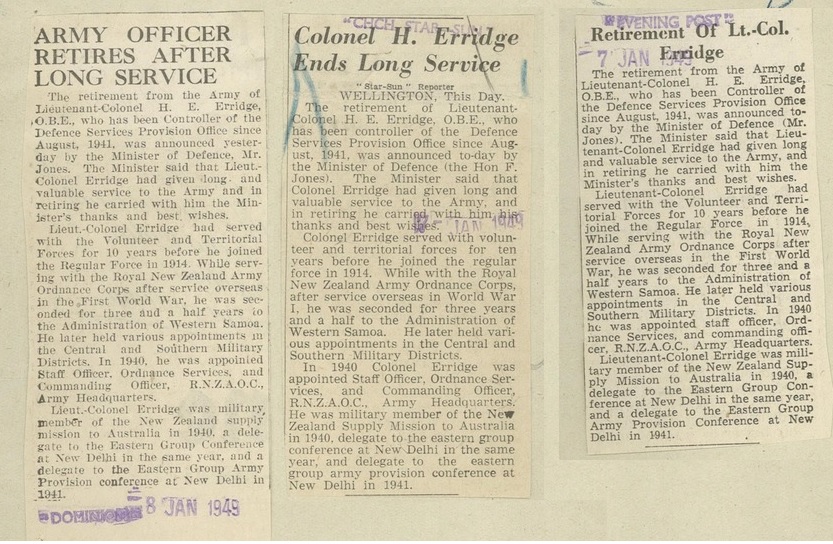
Beginning his military career as a trooper in the Armed Constabulary, Major James O’Sullivan rose to become Director of Military Stores, spearheading the transformation of New Zealand’s military logistics between the late 19th and early 20th centuries. Joining the Defence Stores Department in 1885, he led it through modernisation, standardising stores, improving accountability, and introducing professional quartermaster training. During the South African War, he ensured the rapid equipping of New Zealand contingents and laid the groundwork for the Territorial Force’s sustainment. O’Sullivan was instrumental in enabling New Zealand’s rapid mobilisation of the NZEF in 1914, making it the first dominion to dispatch a fully equipped expeditionary force. Despite his tireless service, he became the focus of political blame during wartime scrutiny but was later vindicated. Retiring in 1918 after over three decades of service, O’Sullivan’s legacy lives on in the professional systems and structures he helped build.
Major James O’Sullivan, November 1911
Frederick Silver (1849–1925)
Plot: Ch Eng 2/F/335
A Royal Marine Artillery veteran of the Ashanti War, Frederick Silver brought valuable British military experience to New Zealand when he emigrated in the 1870s. Joining the Permanent Militia, he helped mount and manage the colony’s first coastal defence guns, trained personnel, and ensured readiness during rising imperial tensions. In 1902, he transferred to the Defence Stores Department, becoming Assistant Director of Military Stores and later Artillery Stores Accountant. Silver was responsible for managing, accounting for, and issuing artillery supplies to an expanding territorial force. His systematic approach to ordnance helped New Zealand adopt more standardised artillery logistics. He retired in 1913, having played a significant part in the professionalisation of Defence logistics and artillery supply systems.
William Thomas Beck, DSO (1865–1947)
Plot: Soldiers/P/3/11
Captain William Beck was a seasoned Defence Storekeeper who had served as the District Storekeeper in Auckland since 1903. When the First World War began, he was appointed Deputy Assistant Director of Ordnance Services in 1914. He deployed with the NZEF and became the first New Zealander of Godley’s force ashore at Gallipoli. Known for his bravery under fire, Beck maintained the Anzac Cove beach supply point in near-constant danger from Turkish artillery. His leadership and calm demeanour earned him the Distinguished Service Order. After returning to New Zealand, he continued to serve in ordnance capacities until his retirement. Beck’s career exemplifies frontline logistics leadership, resilience, and adaptability under extreme conditions.
John Francis Hunter (1878–1967)
Plot: Ch Eng/C/253
John Hunter joined the Royal New Zealand Artillery in 1898, later transferring to the newly formed Artillery Ordnance Section in 1915. Tasked with managing ammunition manufacturing, testing, and safety, he worked to improve the reliability of New Zealand’s coastal defence munitions during and after the First World War. In 1917, he transferred to the New Zealand Army Ordnance Corps and was appointed to run the Dominion’s largest ammunition depot at Mahanga Bay. There, he implemented new ammunition storage and safety procedures that became standard across the force. Retiring in 1931 as Warrant Officer Class Two, Hunter helped usher in a modern and technically competent ammunition logistics framework in New Zealand.
Alfred William Robin, KCMG, CB (1860–1935)
Plot: Public 2/L/282
Major General Alfred Robin was pivotal in New Zealand’s transition from colonial militia to a modern expeditionary force. Commander of the First Contingent to South Africa in 1899, he returned to serve as Chief of the General Staff and later Quartermaster-General during the First World War. In these roles, Robin was responsible for the entire domestic military effort: recruitment, training, equipping, and despatch of reinforcements to the NZEF abroad. A tireless administrator, he worked without leave for the entire war and was a linchpin in ensuring New Zealand’s soldiers received the support they needed. Robin’s influence reached beyond logistics—he was an institutional leader, shaping the New Zealand Military Forces for the interwar years. He retired in 1920 and contributed to youth and veterans’ organisations until his death.
Thomas Joseph King, CBE (1891–1971)
Plot: Soldiers/W/5/19
Brigadier Thomas King began his military service in the Pay Department during the First World War before transferring to the New Zealand Army Ordnance Corps. He served as Deputy Assistant Director of Ordnance Services at Gallipoli and later became Director of Ordnance Services between 1924 and 1940. King was responsible for shaping the peacetime logistics systems that would later support wartime mobilisation. During the Second World War, he was deployed as Deputy Director of Ordnance Services for the 2nd NZEF. From 1942, he was the Deputy Director of Ordnance Services for the Ninth Army in the Middle East, managing critical supply operations across several Allied campaigns. In 1944, he led a UNRRA mission to deliver humanitarian aid to Greece. He retired as a brigadier in 1947, having served for over three decades, and was later appointed Colonel Commandant of the RNZAOC.
Henry Esau Avery, CMG, CBE, DSO (1885–1961)
Karori Crematorium and Chapels: Cremated
A Gallipoli and Western Front veteran, Brigadier Henry Avery was the NZ Division Assistant Adjutant & Quartermaster-General and remained in the UK post-war, attending the Staff College, Camberley. On return to New Zealand, he was Quartermaster-General until his retirement in 1924. Returned to high office during the Second World War, Avery served as Quartermaster-General and Third Military Member of the Army Board. In these roles, he oversaw the logistical sustainment of New Zealand’s forces at home and abroad. Avery’s command ensured that the rapid expansion of the wartime army was matched with efficient provisioning, infrastructure development, and strategic planning. He also led the post-war drawdown, managing the War Assets Realisation Board and helping repurpose military assets for civilian use. Decorated for gallantry and administration alike, Avery’s career bridged combat experience and senior strategic leadership, making him one of New Zealand’s foremost military logisticians.
Peter McIntyre painting of H E Avery, Public – Wellington museum NZ archives No known copyright restrictions.
Conclusion: A Legacy Forged in Quiet Service
Karori Cemetery holds within its grounds the quiet heartbeat of New Zealand’s military past—a lineage of logisticians whose names may not grace battlefield monuments, but whose deeds ensured those monuments could exist. These men moved the wheels behind the war effort, worked in the shadows to sustain campaigns, train forces, manage depots, and modernise the very systems by which New Zealand’s military functioned.
Their careers span the South African War through two World Wars and mirror the evolution of military logistics in New Zealand: from colonial improvisation to professionalised, global-scale sustainment. Whether maintaining arms in frontier outposts, coordinating supply landings under fire at Gallipoli, or masterminding wartime logistics from General Headquarters, they represent generations of commitment, technical skill, and leadership.
Their resting places at Karori form more than a collection of headstones—they constitute a collective chapter of military heritage written not in the language of glory but endurance, systems, foresight, and service. In remembering them, we honour the past and reaffirm that victory in war and security in peace depend as much on those who supply and sustain as on those who fight.
They were the architects of readiness. Their legacy remains the scaffold upon which today’s Defence logisticians still stand.
ANZAC Day is a sacred day of remembrance and gratitude in New Zealand. It is a day when we pause to honour the breadth of military service—those who stormed the beaches and scaled the ridgelines, and those who sustained them from behind the lines. Among these often-unsung heroes are the men and women of the Ordnance Corps. Ordnance soldiers have provided the New Zealand Army with the weapons, ammunition, equipment, and logistical support necessary to fight, survive, and succeed for over a century. Their role has always been vital, even if it has been carried out of the limelight.
But what exactly is an Ordnance soldier?
At their core, Ordnance soldiers are Logistics Specialists and Ammunition Technicians—responsible for ensuring that every frontline soldier has what they need, when they need it. They manage everything from the smallest screw in a field weapon to the vast stocks of food, clothing, and ammunition that sustain entire armies. Their work includes storage, distribution, accounting, repair, salvage, and technical inspection. In short: if it moves, fires, feeds, or protects, it likely passed through the hands of Ordnance personnel.
The roots of military ordnance stretch deep into history. The first recorded Ordnance Officer in the British military was appointed in 1299 to manage siege equipment, such as catapults and battering rams. Over time, these responsibilities evolved into a professional and structured system of military storekeeping and supply, one that reached New Zealand in the 1840s with the arrival of British Imperial forces.
By the 1860s, as the Imperial presence waned, the responsibility for military logistics was gradually handed over to New Zealand personnel. The Defence Stores Department was formally established in 1869 to oversee the nation’s military stores. This marked the beginning of New Zealand’s independent ordnance tradition. In 1917, during the First World War, the New Zealand Army Ordnance Corps (NZAOC) was officially formed, taking over duties from the Defence Stores Department. The Corps provided critical support throughout the war and maintained the Army through the interwar years.
With the Second World War outbreak, the Ordnance Corps expanded dramatically. To support 2NZEF, the New Zealand Ordnance Corps (NZOC) was raised for overseas service, while a separate NZOC served as the NZAOCs Territorial element. In 1942, the engineering and maintenance functions of the NZOC operating in the Middle East were separated to form the New Zealand Electrical and Mechanical Engineers (NZEME). This change was mirrored in New Zealand in 1946, when workshops were transferred from the NZAOC to the newly created NZEME.
In recognition of its wartime service, King George VI granted the “Royal” prefix to the Corps on 12 July 1947, making it the Royal New Zealand Army Ordnance Corps (RNZAOC). That same year, the territorial and regular elements were merged into a single corps that would serve with distinction for the next half-century.
Every ANZAC Day, we reflect on the legacy of the Ordnance soldier—from the dusty cliffs of Gallipoli and the battlefields of North Africa to the supply depots of World War II, the jungles of Southeast Asia, and the humanitarian missions of the late 20th century. Their story did not end with the close of the Cold War. In 1996, the RNZAOC was amalgamated with the Royal New Zealand Corps of Transport (RNZCT) and the Royal New Zealand Electrical and Mechanical Engineers (RNZEME) to form the Royal New Zealand Army Logistic Regiment (RNZALR)—a unified, modern logistics formation designed to meet the evolving demands of military operations in the 21st century.
The legacy of the Ordnance soldier lives on today in every RNZALR Logistic Specialist and Ammunition Technician. Their story is not just a historical record—it is the very foundation of the RNZALR. Their values of resilience, quiet courage, and professional excellence continue to shape the New Zealand Army’s ability to sustain and succeed at home and abroad.
Gallipoli and the First World War: The Storekeeper on Anzac Beach
The story of the New Zealand ordnance soldier begins amid the brutal landing at Gallipoli on 25 April 1915. Captain William Beck, a New Zealand Staff Corps officer, was appointed Deputy Assistant Director of Ordnance Services (DADOS) for the New Zealand and Australian Division. According to several accounts, Beck was the first New Zealander ashore at ANZAC Cove, leading the landing of Godley’s divisional headquarters under intense fire.
His task was immense. Amid the beachhead’s chaos, confusion, and carnage, Beck quickly set about establishing a makeshift ordnance dump right on the shoreline—improvising with salvaged crates, scattered supplies, and a growing stream of urgently needed materiel. As soldiers surged inland and casualties mounted, Beck and his small team organised the distribution of ammunition, rations, clothing, and basic field stores to units already under fire in the hills above. Without shelter, maps, or proper infrastructure, this operation became a lifeline to the forward troops.
Supplies on the beach at ANZAC Cove 1915. Athol Williams Collection, Alexander Turnbull Library
Beck worked under relentless fire, including from a remarkably accurate Turkish artillery piece that pounded the beachhead daily. Nicknamed “Beachy Bill” by the troops, the gun became infamous for zeroing in on the supply areas, and Beck’s improvised depot was one of its most frequent targets. The name, according to some accounts, was given in ironic tribute to Captain Beck himself, whose unwavering presence under fire seemed to draw the enemy’s attention as reliably as the tides. Despite the danger, Beck remained calm and courteous, continuing to perform his duties in conditions that would have driven many to cover. His efforts earned him the enduring moniker “the brave storekeeper on Anzac Beach.” He became a quiet legend among his peers. General Sir William Birdwood, commanding the ANZAC forces, was said to personally check on Beck during his rounds, out of admiration and concern. Beck’s courage and composure under fire became emblematic of the Ordnance Corps’ ethos: professionalism in adversity, and mission before self.
Though he was later evacuated due to illness caused by the stress of battle in August 1915, Captain Beck’s role at Gallipoli demonstrated how critical logistics were to the survival and sustainment of fighting troops—and that the Ordnance soldier was not a rear-echelon presence, but a frontline enabler in every sense.
Following the Gallipoli campaign, the New Zealand Expeditionary Force (NZEF) was reorganised and redeployed to the Western Front in France and Belgium, as well as to the Sinai and Palestine campaigns in the Middle East. What began in 1914 as a two-man effort—Beck and Sergeant Norman Levien—expanded rapidly into a structured logistics organisation. In 1917, the New Zealand Army Ordnance Corps (NZAOC) was formally established as a dedicated branch of service, recognising its work’s increasingly specialised and essential nature.
On the Western Front, Ordnance personnel established and managed supply dumps and armourers’ workshops across the scarred landscapes of the Somme, Messines, and Passchendaele. They worked in trenches, mud, and snow—often within range of enemy artillery—ensuring that troops had the bullets, boots, tools, and trench stores required to sustain a static war of attrition.
Their responsibilities went well beyond basic supply. Ordnance units also operated salvage sections to recover, repair, and repurpose battlefield equipment—a critical function in conserving resources and maintaining operational tempo. They ran mobile repair facilities and oversaw essential services like bath and laundry units, which not only preserved hygiene in the harsh conditions of trench warfare but also boosted morale and prevented disease. These services reflected the Ordnance Corps’ holistic approach to sustaining soldiers, not just with materiel, but with cleanliness, comfort, and care in brutal circumstances.
In the Middle East, NZAOC detachments supported mounted operations across the harsh deserts of Sinai and Palestine. Operating in support of the New Zealand Mounted Rifles Brigade, Ordnance soldiers adapted their methods to suit long, exposed supply lines and the mobile nature of desert warfare. They managed camel trains, improvised field depots, and operated forward repair points—often little more than canvas shelters in the sand—to keep men and animals in the fight. Salvage and maintenance tasks were equally essential here, where resupply could be days away and every item had to be made to last.
By the end of the First World War, the NZAOC had grown into a compact, disciplined, and highly respected corps. From the mud of Flanders to the sands of Beersheba, their work underpinned New Zealand’s military effort. Though rarely seen in official war photographs or commemorated in mainstream histories, their contributions were vital. They demonstrated that logistics was not a sideline to combat—it was its backbone. They also laid the foundation for a professional military logistics tradition in the RNZALR today.
The Second World War and Beyond: Backbone of the Battlefield
During the Second World War, the NZAOC matured into a seasoned and indispensable pillar of military capability. Whether supporting the fight abroad or maintaining the war effort at home, Ordnance personnel were the engine behind the Army’s ability to project and sustain force across multiple theatres of war.
North Africa and Italy: Desert Sands and Mountain Passes
In the North African campaigns of 1941–42, Ordnance units operated across Egypt and Libya’s vast, unforgiving deserts, supplying the 2nd New Zealand Division during pivotal battles such as Operation Crusader and El Alamein. Supply depots were often under canvas, exposed to enemy air raids and desert winds. Light Aid Detachments worked tirelessly in the blistering heat to keep tanks, trucks, and artillery in the fight, repairing on the move and recovering damaged equipment under fire.
A dedicated Ordnance Convoy Section was raised to support the increasing volume and complexity of operations. Its task was to move stores and equipment from rear areas to forward supply points, filling a critical gap when the New Zealand Army Service Corps (NZASC) could not meet demand. These convoys ensured a continuous flow of tools, spare parts, and personal equipment to the front, often through contested or poorly marked desert tracks.
The NZ Divisional Salvage Company also operated until late 1941, recovering and repurposing valuable battlefield materials—everything from damaged vehicles to discarded equipment. This function saved resources and contributed to operational sustainability by rapidly recycling assets back into the supply chain.
Ordnance support also extended to troop welfare. Mobile Bath and Laundry Sections accompanied the Division to provide frontline hygiene services, which were essential in preventing disease, exchanging clothing, maintaining morale, and improving the force’s overall combat effectiveness. Their presence in forward areas helped ensure that troops remained as healthy and combat-ready as conditions allowed.
Fred Kreegher, New Zealand Ordnance Field Park, sorting out stores in the rear of his Bin Truck. The Noel Kreegher collection
When the Division redeployed to Italy in late 1943, the harsh desert gave way to snow-covered mountains and treacherous river valleys. But the demands on Ordnance personnel did not ease. During gruelling campaigns at Monte Cassino and through the Po Valley, the NZOC once again delivered. Ordnance Field Parks and dumps were established within range of enemy guns, and equipment was recovered, repaired, and reissued under complex and often perilous conditions.
These layered capabilities—convoy operations, salvage and recovery, technical maintenance, and personal support—ensured the Division could manoeuvre and fight confidently, knowing its logistical tail was secure. The Ordnance Corps wasn’t simply supporting the fight—it was integral to sustaining it.
The Pacific Theatre: Islands of Sustained Effort
While New Zealand’s main expeditionary force focused on Europe and the Mediterranean, many New Zealand troops were also deployed to the Pacific. Here, the NZAOC supported the 3rd New Zealand Division across island bases in New Caledonia, the Solomon Islands, Tonga, and Fiji. These were remote and logistically challenging environments—characterised by tropical diseases, heavy rain, mud, and dense jungle.
Ordnance detachments established supply points, maintained stores, repaired equipment, and ensured operational readiness across scattered islands. These locations often lacked established infrastructure, requiring personnel to be resourceful and adaptable. Camp maintenance, local procurement, and even salvaging enemy materiel became part of the day-to-day tasks.
Although the 3rd Division never saw major set-piece battles like those in North Africa or Italy, it did undertake several opposed amphibious operations and complex island-clearing operations, most notably in the Solomon Islands campaigns at Vella Lavella, Treasury Islands, and Green Island. These landings were tactically complex and logistically demanding, requiring close coordination between combat troops and supporting elements. The Division’s presence helped safeguard New Zealand’s Pacific interests and contributed meaningfully to the broader Allied campaign in the South-West Pacific Area. The Ordnance Corps was instrumental in keeping this contribution viable—its soldiers operated under arduous conditions, far from public view but never from operational necessity.
The Home Front: Sustaining the War Machine
Back in New Zealand, the Ordnance Corps played an equally vital—if often overlooked—role in sustaining the nation’s war effort. Depots at Trentham, Hopuhopu, Burnham, Palmerston North and Waiouru became crucial hubs for receiving, inspecting, storing, and distributing supplies to deployed units. The scale of this effort was immense: weapons, uniforms, vehicle parts, ammunition, and medical supplies flowed in and out of these depots on a daily basis.
Ordnance staff oversaw procurement, stock accounting, and quality control, ensuring that New Zealand’s contribution to the global conflict was met efficiently and precisely. In addition to servicing the expeditionary forces, these depots supported the Home Guard, Territorial units, and mobilisation centres. When new battalions were raised or re-equipped, Ordnance issued the kit and ensured everything was fit for purpose. This included the units of the 2nd New Zealand Expeditionary Force deployed overseas, as well as the three Divisions and supporting arms raised for home defence. These domestic formations—charged with protecting New Zealand from possible invasion—required full logistical support, from uniforms and webbing to weapons, ammunition and transport. Ordnance Corps personnel were central to ensuring these forces were ready to respond, maintaining a continuous flow of supplies while adapting to changing wartime demands.
“Repairing despatch riders’ motor-cycles. Photo of mechanics and motorcyclists repairing motorcycles at a field workshop during military manoeuvres in Northland.” Auckland Weekly News, 23 December 1942, p.14
Auckland Libraries Heritage Collections AWNS-19421223-14-03
The wartime workforce also included women, with members of the New Zealand Women’s Army Auxiliary Corps (NZWAAC) taking on duties in Ordnance depots, handling clerical tasks, managing stores, and supporting logistics operations nationwide. Their involvement further highlights the adaptability and inclusivity of the Ordnance mission in meeting the demands of total war.
Post-war Transition
Post-war deployments saw Ordnance personnel serve in Japan, Korea, Malaysia, Vietnam, and beyond—often integrated within British, Australian, or Commonwealth logistics formations. Though New Zealand’s contribution to these conflicts was modest in size, the professionalism and impact of its Ordnance soldiers were significant. In the Korean War (1950–53), New Zealand’s primary combat force—16th Field Regiment—was supported by a small but capable number of logistics specialists. Ordnance staff embedded within allied supply chains, managing stores, issuing ammunition, and repairing equipment under the demanding conditions of the Korean Peninsula’s harsh winters and mountainous terrain.
During the Malayan Emergency (1948–1960) and the subsequent Indonesian Confrontation (1962–1966), New Zealand troops operated in dense jungle environments that tested their combat and logistics capabilities. Ordnance soldiers were seconded as individuals to the New Zealand Battalion or British units, where they maintained supply lines through monsoon rains, oppressive humidity, and remote jungle bases. Their tasks ranged from maintaining small arms and issuing jungle kit to managing the complex movement of stores between staging areas and patrol bases—a vital function in an environment where regular resupply was challenging and sometimes depended on airdrops or riverine transport.
Although New Zealand did not deploy a complete Ordnance unit in Vietnam, RNZAOC personnel were seconded individually to Australian and United States forces. These included roles such as supply officers, ammunition controllers, and non-commissioned officers (NCOS) stationed at key logistics hubs like Nui Dat and Vung Tau. Working in a high-tempo combat zone, they handled everything from weapons and clothing to fuel, spare parts, and ammunition—often under the threat of enemy attack. The complexity of the Vietnam conflict demanded rapid response times, adaptability, and technical proficiency, all of which the Ordnance soldiers delivered in spades.
Beyond direct deployments, Ordnance personnel were also deeply involved in supporting the considerable effort required to sustain a deployable division maintained under New Zealand’s national service and conscription scheme during the Cold War. This mobilisation model meant that the RNZAOC was responsible for equipping, maintaining, and provisioning a standing force-in-being that could be rapidly expanded in times of crisis. Warehouses and mobilisation stores across the country were stocked with weapons, webbing, clothing, communications equipment, and general supplies—ready to be issued to citizen-soldiers if called upon. The planning, accounting, and logistical foresight required to maintain this latent capability were immense, and it stood as a testament to the professionalism of the Corps.
Across these theatres and responsibilities, Ordnance personnel served in austere and unpredictable environments. Whether embedded with an allied supply unit in the jungle or managing stockpiles for national mobilisation, they maintained the flow of materiel that kept New Zealand’s military effort credible and ready. Though they rarely received public recognition, their contribution was the vital connective tissue that made readiness a reality.
Peacekeeping and Modern Missions: From Mogadishu to the Pacific
In the late 20th century, as New Zealand’s defence priorities shifted toward peacekeeping and international humanitarian support, Ordnance soldiers once again rose to meet the challenge—this time under the flag of the United Nations. The 1992 deployment to Somalia marked a pivotal moment in New Zealand’s operational history and the modern evolution of the RNZAOC. In response to a deteriorating humanitarian crisis fuelled by civil war and famine, the UN launched a multinational intervention to secure aid routes and stabilise the region. New Zealand’s initial contribution to this effort—the New Zealand Supply Detachment—consisted primarily of 28 RNZAOC personnel, marking the first time in decades that an Ordnance-led contingent was deployed operationally in its own right.
Arriving in Mogadishu in December 1992 as part of the Unified Task Force (UNITAF), the detachment was tasked with establishing a functioning logistics capability in a highly hostile and volatile environment. Somalia’s capital had no functioning government, no stable infrastructure, and was riddled with armed factions. Despite the risks, the RNZAOC personnel immediately began establishing supply chains, securing local procurement channels, and distributing food, water, and stores to support the broader UN mission. They set up New Zealand’s main camp at the now well-known base called “Taniwha Hill,” which would symbolise Kiwi resilience amid chaos.
New Zealand soldiers leave their camp to conduct a patrol. NZDF Offical
Working out of hastily converted shipping containers and tents in the sweltering heat, the team operated under constant threat of gunfire, looting, and militia activity. Despite the mission’s peacekeeping label, it quickly became apparent that they were operating in a conflict zone. Convoys were escorted, personal weapons were always carried, and supply runs often meant travelling at high speed through hostile streets to avoid ambush. One RNZAOC NCO recalled travelling with a rifle propped between his knees, ready to return fire if necessary—a stark contrast to the logistics roles typically performed at home.
As the situation deteriorated, a second and larger contingent of 43 logistics personnel (including reinforcements from the RNZAOC and other corps) deployed in 1993 as the New Zealand Supply Platoon. This platoon was accompanied by an infantry protection element from 1 RNZIR, marking New Zealand’s first combat deployment of infantry since the Vietnam War. This reinforced the seriousness of the mission and highlighted the increasing danger and the blurred lines between combat and combat service support. Operating as an integrated platoon, the team performed with professionalism and efficiency, earning the respect of allied forces for their adaptability, calm under pressure, and ability to keep essential supplies flowing under fire.
The New Zealanders remained through some of the mission’s most violent episodes, including the events surrounding the infamous “Black Hawk Down” incident in October 1993. Positioned nearby, the RNZAOC soldiers bore witness to the heavy fighting yet carried on their duties with unwavering determination. When many international contingents began withdrawing, the New Zealand logistics team continued to operate until mid-1994, one of the last Western elements to depart the theatre.
The Somalia deployment reaffirmed the modern Ordnance soldier’s place at the heart of New Zealand’s deployable military capability. It demonstrated that RNZAOC personnel were not only logisticians, but also frontline enablers—capable of operating in fluid, high-risk environments and delivering under extreme pressure. “Taniwha Hill,” New Zealand’s base in Mogadishu, was regularly subjected to gunfire and mortar attacks, and Kiwis operated in volatile zones with little margin for error. Yet the RNZAOC platoon carried out their duties with quiet professionalism and resolve, ensuring UN and coalition forces remained supplied and mission capable.
This ongoing legacy of service continues under a new banner. In 1996, the RNZAOC was formally disestablished as part of an Army logistics reorganisation. Its personnel, functions, and traditions were integrated into the newly formed RNZALR, uniting the RNZAOC, RNZCT, RNZEME, and Quartermaster staff into a single, cohesive regimental structure. This transformation ensured that the enduring values and capabilities of the Ordnance Corps would carry forward into a modern, agile logistics force aligned with contemporary operational requirements.
Since then, RNZALR Logistic Specialists and Ammunition Technicians have continued to support peacekeeping and humanitarian operations in theatres such as Bosnia, the Sinai, East Timor, and Afghanistan. During the East Timor operation (1999–2002), logistics units played a crucial role in sustaining one of New Zealand’s largest overseas deployments since the Korean War. Their work—whether managing supply convoys, setting up field depots, or coordinating humanitarian assistance—underscored the critical importance of logistics as an enabler and a key factor in mission success.
Domestically, RNZALR Logistics personnel have remained indispensable. From supporting civil defence during the Canterbury earthquakes to managing logistics and providing personnel to support Managed Isolation and Quarantine (MIQ) facilities during the COVID-19 pandemic, and maintaining daily sustainment across Defence camps and bases, they remain central to New Zealand’s readiness and resilience. In every setting, whether at home or abroad, the legacy of the Ordnance soldier lives on through the actions and professionalism of the RNZALR.
Roll of Honour: Service Remembered, Sacrifice Recognised
The story of the Ordnance Corps is also one of loss. The New Zealand Ordnance Roll of Honour lists 63 names of those who died while serving in our logistics and stores organisations—from the Defence Stores Department of 1862 to the RNZAOC’s integration into the RNZALR in 1996. Among them:
Captain Sam Anderson (1899), Defence Storekeeper
Captain Arthur Duvall (1919), New Zealand Army Ordnance Department
Temporary Major William Knox (1941), Divisional Ordnance Field Park, North Africa
Private Russell John Casey (1994), 1 Logistic Regiment, RNZAOC
Each of these individuals—and the many others on the Roll—represents a life dedicated to service, often given in conditions far from home and with little fanfare.
Remembrance and Honour
Each ANZAC Day, we renew our vow: “We will remember them.” In remembering, we broaden our gaze to include those who served without seeking recognition—those who issued the boots, drove the convoys, repaired the radios, and ensured that the warriors had their arms.
The Ordnance Corps soldiers were not mere auxiliaries but the enablers of victory, the sustainers of peace, and the standard-bearers of discipline and duty. Their legacy is not just one of historical interest, but a living ethos that endures in the RNZALR.
As the Last Post echoes and the nation falls silent, let us remember the battles won and the thousands of acts behind the lines that made those victories possible. The story of the Ordnance soldier is one of dedication, innovation, and unheralded bravery.
At the going down of the sun, and in the morning— We will remember them. Lest we forget.
The evolution of New Zealand Army stores accounting from 1845 to 1963 reflects the broader transformation of the nation’s military logistics from its colonial origins to a modern, structured system. This study is not a deep dive into the intricate details and complexities of New Zealand military stores accounting but rather an introductory overview of a system that has incrementally evolved over 180 years.
Initially modelled on British military accounting principles, New Zealand’s unique defence requirements—shaped by its geographical isolation, force structure, and operational demands—necessitated continuous refinement. Accounting practices have continuously evolved since the first musket was issued to the militia in 1845. However, it wasn’t until The Public Stores Act of 1867 that structured inventory control and accountability measures were formally introduced. This legislation laid the foundation for military store accounting, marking a significant step towards the professionalisation of the Defence Stores Department. These measures ensured crucial oversight and efficiency in military logistics, particularly highlighted by the demands of the South African War and the two World Wars, underscoring the need for a robust and adaptable system capable of sustaining large-scale military operations.
By the mid-20th century, New Zealand had developed a sophisticated store accounting framework. The introduction of NZP1: Volume I—Stores Accounting in 1951 marked a milestone, formalising the policy regulating the army’s store management. The subsequent 1962 revision further streamlined procedures, ensuring the system remained relevant amid evolving logistical complexities.
New Zealand’s innovations in stores accounting did not go unnoticed. In 1963, the Australian Army sought guidance from New Zealand to modernise its system, acknowledging the effectiveness of the NZ Army’s approach. This recognition underscored New Zealand’s competence in military logistics, demonstrating that despite its smaller size, its expertise had broader strategic significance.
Structure of this Study
Part One will examine the period from 1845 to 1918, tracing the evolution of New Zealand’s military stores accounting system from its British colonial origins to a structured, modern framework comparable to those of New Zealand’s allies by 1914. The demands of the First World War tested the system’s efficiency and resilience, exposing strengths and weaknesses that would shape post-war reforms.
Part Two will cover the period from 1918 to 1945, during which the lessons learned from the First World War were applied to improve inventory control, procurement efficiency, and financial oversight. Economic constraints of the interwar years prompted refinements to stores accounting, leading to the introduction of cost accounting in 1921 and the formalisation of logistical procedures in 1927. The rapid mobilisation for the Second World War tested these systems on an unprecedented scale, accelerating the adoption of modernised inventory tracking and decentralised supply chain management. By 1945, these wartime adaptations had laid the foundation for a more sophisticated and accountable military logistics system.
Part Three will examine the period from 1946 to 1963, focusing on the transition from wartime supply chains to a peacetime military logistics infrastructure. The post-war period saw efforts to streamline surplus disposal, re-establish long-term procurement strategies, and integrate emerging technologies into stores accounting. By 1963, the system had matured into a mature manual store accounting framework, ensuring greater efficiency, accountability, and interoperability.
Military Stores Accounting and Its Distinctions from Commercial Stores Accounting
The primary goal of military stores accounting is to ensure that soldiers on the frontlines, tradesmen in workshops, and medical staff in field hospitals have the necessary tools and equipment to carry out their duties effectively. This involves managing administrative burdens through the command and supply chains and ensuring all required controls are in place for the long-term sustainment and capability maintenance.
Military stores accounting is a specialised system designed to manage and track the acquisition, storage, distribution, and disposal of military supplies. Unlike commercial stores accounting, which primarily focuses on cost control and financial profitability, military stores accounting prioritises accountability, operational readiness, and the efficient utilisation of resources to meet operational outputs.[1]
Differences Between Military and Commercial Stores Accounting
Feature
Military Stores Accounting
Commercial Stores Accounting
Objective
Ensuring operational readiness and accountability
Maximising profit and minimising costs
Nature of Inventory
Includes depreciable assets, expendable, consumable, repairable, and non-expendable items
Primarily consumable and depreciable assets
Accounting System
Uses strict regulatory frameworks and controlled issue systems
Focuses on balance sheets and profit margins
Lifespan of Items
Items can remain in service for decades with periodic refurbishment
Items are typically depreciated and replaced
Valuation
Based on operational utility rather than market price
Based on market valuation and depreciation
Security and Control
Strict control due to security concerns
Less stringent control mechanisms
Classification of Military Stores
Military stores are classified into several categories based on their usage, longevity, and maintenance requirements:
Expendable Stores – Items that are used once and cannot be reused (e.g., ammunition, medical supplies, fuel). These are issued as required and accounted for under strict consumption controls.
Consumable Stores – Items that are used over time and require replenishment (e.g., rations, lubricants, batteries). While they are used up gradually, they still require accountability and stock rotation.
Repairable Stores – High-value equipment that, when damaged or worn, can be repaired and reissued rather than disposed of (e.g., weapons, radios, vehicles). These items are often tracked using maintenance logs and servicing records to maximise their lifespan.
Non-Expendable Stores – Permanent assets that remain in service for extended periods (e.g., buildings, infrastructure, large-calibre weapons). These items require detailed asset management and condition assessments.
The Long-Term Use of Military Equipment
Unlike commercial organisations, where items are often replaced once they end their economic life, military assets— from clothing to high-value or technologically complex equipment—are maintained, refurbished, and upgraded to extend their service life. For example:
Small Arms: Some rifles and sidearms remain in service for decades through regular maintenance and upgrades.
Vehicles: Military transport vehicles, such as trucks and armoured vehicles, can be refurbished multiple times before decommissioning.
Aircraft and Naval Assets: Large defence assets, including ships and aircraft, are often modernised with new technology and systems rather than being replaced outright.
Uniforms and Gear: Certain clothing items and equipment are subject to phased replacement cycles, where only components are updated as needed.
The Importance of Accountability in Military Stores Accounting
Military regulations are always subservient to Government legislation and regulations, especially Treasury rules regarding the expenditure of public monies. Military stores accounting is not a single system, but a collection of specialised accounting frameworks developed to manage different commodities such as ammunition, rations, fuel, vehicles, and technical spares. As military technology has advanced, these systems have evolved parallel to meet modern armed forces’ complex logistical demands.
Accountability is central to military stores accounting, ensuring that every piece of issued equipment is tracked to guarantee:
Proper usage and maintenance,
Prevention of loss or theft,
Compliance with operational requirements,
Efficient resource allocation during deployments.
Military store personnel are responsible for maintaining detailed records, conducting audits, and ensuring strict adherence to regulations. These rigorous accounting and inventory control measures ensure that military resources remain available and serviceable when required. Beyond merely tracking financial transactions, military stores accounting is a critical function that underpins military operations’ effectiveness, security, and sustainability.
Early Developments in Stores Accounting
From 1845, Quartermaster staff managing militia stores and then Volunteer stores from 1858 followed British military procedures. The Defence Stores were formally established in 1862, predating Lieutenant Colonel Edward Gorton’s appointment as Inspector of Defence Stores in 1869. Although Gorton assumed leadership in 1869, the Defence Stores had already been functioning, supporting the colonial military effort.[2]
Lieutenant Colonel Edward Gorton
The 1867 Public Stores Act, implemented under Gorton’s administration, introduced structured accounting procedures.[3] The Defence Stores Department issued circulars and administrative guidelines to ensure proper accountability and management of military supplies. Gorton’s rigorous approach laid the foundation for the 1871 Public Stores Act, which regulated government-wide stores management and standardised accounting practices.[4]
1870-ammunition-stocktake
Despite Gorton’s achievements in strengthening accountability, his strict enforcement and meticulous oversight drew criticism, leading to the abolition of the Stores Inspection Department in 1877.[5] However, his Defence Stores procedures remained robust, and a culture od accountability was established within Defence Stores. Thirty years later, Colonel George Macaulay Kirkpatrick of General Kitchener’s staff validated them in 1910, finding them comparable to British military standards.
Stores records were maintained by a system of indents and vouchers, with balances maintained in ledger books. The Defence Stores were required to provide annual reports of stocks on an annual basis, ensuring accountability and transparency in military logistics. These practices laid the foundation for the modern systematic inventory control and efficient stores management.
Example of a Ledger book
Development of the Artillery Stores (1880s Onwards)
As New Zealand expanded its Garrison Artillery and introduced new guns, equipment, and ammunition, additional accounting and management procedures became necessary. This was beyond the scope of the existing Defence Stores Department, requiring the expertise of military professionals.
In conjunction with Defence Storekeeper Captain Sam Anderson, Sergeant Major Robert George Vinning Parker, formerly of the Royal Garrison Artillery, developed a system of Artillery Stores Accounting. Parker was in charge of artillery ledgers and stores at Auckland, Wellington, and Lyttelton, ensuring the proper tracking and maintenance of artillery supplies. He continued in this role until 1889 when he was reassigned to Dunedin.[6]
Replacing Parker as the Artillery Ledger Keeper was Regimental Sergeant Major and Instructor in Gunnery Frederick Silver. Silver’s expertise in artillery logistics positioned him as a key figure in the continued refinement of artillery accounting systems. Following the death of Captain Sam Anderson in December 1899, Silver applied for the role of Ledger Keeper in the Defence Stores. Given his extensive experience and close working relationship with Anderson, Silver believed he was the ideal candidate.[7] However, due to his seniority, James O’Sullivan, the Chief Clerk of the Defence Stores, was awarded the role of Defence Storekeeper.[8]
Despite this, Silver was appointed as a temporary clerk in the Defence Stores, transitioning from the Permanent Militia on 25 June 1900. While his new role introduced additional responsibilities, Silver managed Artillery Ledgers seamlessly within the Defence Stores framework.[9]
The relationship between the Defence Stores and the Artillery was cooperative, with both functions operating as a single organisation. The Defence Stores was crucial in supporting the artillery’s logistical needs, ensuring that munitions, equipment, and essential supplies were readily available. The interconnected nature of these two functions allowed for a streamlined approach to military logistics, where artillery-specific requirements were integrated within the broader supply framework managed by the Defence Stores.
This integration led to an efficient system that balanced military necessity with stringent logistical oversight.
Organisational Reforms and the Defence Council (1906)
With the passage of the Defence Act Amendment Act 1906 on 28 October 1906, the Defence Council was established, providing the New Zealand Military Forces with a structured headquarters for the first time. The Act introduced specific staff functions, including:
Director of Artillery Services (Ordnance): Responsible for artillery armament, fixed coastal defences, and ordnance supplies.
Director of Stores: Responsible for clothing, personal equipment, accoutrements, saddlery, harnesses, small arms, ammunition, machine guns, transport, vehicles, camp equipment, and all stores required for the Defence Forces.[10]
As part of this reform, James O’Sullivan was confirmed as Director of Stores for New Zealand and appointed Quartermaster and Honorary Captain in the New Zealand Militia. Silver was designated as Assistant Defence Storekeeper, continuing to oversee Artillery Ledgers, which—despite falling under the purview of the Director of Artillery Services (Ordnance)—remained under Defence Stores control.
Despite these improvements, officers and Quartermaster staff in volunteer units were still elected annually, leading to inconsistency in stores management. Many units functioned more like social clubs than military organisations, resulting in disorganised stores accounts. This led to frequent discrepancies between supplies provided by the Crown and actual inventory.
The continued reliance on part-time and volunteer Quartermasters highlighted the need for further professionalisation of the quartermaster within the New Zealand Military, a challenge that would persist as the New Zealand Military transitioned into the modern era.
The Defence Act 1909 and the Transition to a Citizen Army
The Defence Act 1909 marked a significant transformation in New Zealand’s military organisation, laying the groundwork for a citizen-based Territorial Army and ending the Volunteer System.[11] This fundamental shift required extensive adjustments within the Defence Stores Department to support the expanding force structure.
For O’Sullivan, Silver, and the Defence Stores Department, the challenge was to continue modernising stores and logistics to meet the demands of a rapidly growing army. As the Territorial Force expanded, so did the logistical requirements, necessitating a more structured and professional approach to store management.
On 1 June 1910, Silver’s position was redesignated as Assistant Director of Military Stores, and he was appointed a Quartermaster with the rank of Honorary Lieutenant in the New Zealand Militia. His expertise and leadership played a crucial role in ensuring the Defence Stores Department could support the evolving needs of the New Zealand Military.
Guidance on the duties related to the management of stores
In 1910, Lord Kitchener, renowned as “The Empire’s foremost soldier,” visited New Zealand and thoroughly reviewed its military forces.[12] His assessment led to significant reforms within the NZ Military, including establishing the New Zealand Staff Corps (NZSC) and the New Zealand Permanent Staff (NZPS) in 1911. These changes aimed to create a professional cadre of officers (NZSC) and enlisted personnel (NZPS) capable of providing expert guidance and efficient administration to the Territorial Force units.
Lord Kitchener’s visit critically evaluated the military’s capabilities, revealing deficiencies in equipment care, maintenance, and overall responsibility. The existing Regimental Quartermaster Sergeants (RQMS) lacked the necessary skills, underscoring the need for a professional RQMS cadre.
The Regulations (Provisional) for the Military Forces of New Zealand, which came into effect on 5 May 1911, established the command and administrative structure of the Forces.
The overall responsibility for military stores and equipment was placed under the Commandant of the Forces, with specific duties delegated to key officers and commanders at various levels.
Senior Officers Responsible for Stores and Equipment
Quartermaster General
Managed mobilisation stores, including policies on reserves of clothing, equipment, and general stores.
Determined scales of clothing, equipment, and stores needed for troops.
Oversaw mobilisation arrangements for food, forage, clothing, stores, and equipment.
Director of Supplies and Transport
Managed the supply of food, forage, fuel, and lighting.
Responsible for Army Service Corps technical equipment.
Director of Equipment and Stores
Oversaw clothing, equipment, and general stores.
Managed supplies of stationery, forms, and books.
Provided vehicles and technical equipment, except those for Artillery and Engineers.
Supervised the storage and distribution of small arms and ammunition.
Director of Ordnance and Artillery
Established reserve scales for arms, ammunition, and technical equipment for Artillery and Engineer units.
Managed the provision and inspection of guns, small arms, and ammunition.
Oversaw machine guns, Artillery and Engineer vehicles, and technical stores.
Director of Medical Services
Provided advice on and inspected all medical equipment to ensure it met operational standards.
Director of Veterinary Services
Provided expert advice on veterinary stores and equipment.
District and Unit Responsibilities
At a regional level, Commanders of Districts were responsible for maintaining the efficiency of forts and armaments, including all associated buildings, works, stores, and equipment. They also played a key role in ensuring financial prudence by overseeing officers responsible for spending and stores management.
At the unit level, the Commanding Officer had a broad set of responsibilities, including:
Maintaining discipline, efficiency, and proper administrative systems within the unit.
Ensuring accountability for public equipment, clothing, and stores.
Overseeing the maintenance and cleanliness of all issued arms.
Managing the proper receipt and distribution of rations and fuel.
Ensuring daily ration inspections were conducted in the presence of an officer.
Other Regimental Officers, such as Company Commanders, even those in temporary appointments, were also responsible for:
The equipment, ammunition, clothing, and stores assigned to their company.
Ensuring soldiers maintained personal cleanliness and proper care of their uniforms, arms, and accoutrements.
Supervising the quality and adequacy of rations provided to troops.
Finally, the 1911 Regulations clearly stated that any officer or individual responsible for public stores was strictly forbidden from lending any article under their charge unless expressly sanctioned by their Commanding Officer (CO). This regulation reinforced strict accountability and control over military stores, ensuring that all equipment, clothing, and supplies were used solely for authorised military purposes. [13]
To maintain proper accountability and management of military stores, Defence Stores personnel and unit Quartermasters followed detailed policies and procedures outlined in official publications, including:
Regulations (Provisional) for the Military Forces of New Zealand
Financial Instructions and Allowances Regulations for NZ Military Forces
Regulations for Clothing and Equipment of NZ Military Forces
NZ Dress Regulations
Prices Vocabulary of Stores
NZ Mobilisation Regulations
Additional guidance was also found in operational reference materials, such as:
Field Service Regulations
Training Manuals
Field Service Pocket Books
The responsibilities established in 1911 laid the foundation for the structured management of military stores, setting a precedent for all future stores accounting procedures. These early frameworks ensured accountability, efficiency, and operational readiness, embedding core logistical principles underpinning military supply chain management today. While titles and organisational structures have evolved, the fundamental tenets of logistical oversight, resource management, and financial accountability have remained steadfast. Successive iterations of Defence Orders, regulations, and policies have refined and expanded these responsibilities, ensuring their continued relevance and adaptability to the evolving operational and strategic needs of the New Zealand Defence Force in the modern era.
Standardising Stores Management and Training
In November 1911, thirty young men from military districts attended an intensive three-week training course at the Defence Stores Department in Wellington to address this. This comprehensive training, overseen by O’Sullivan, included:
Weapon storage, inspection, maintenance, and accounting
Storage, inspection, and maintenance of leather items (e.g., saddlery and harnesses)
Storage and upkeep of canvas and fabric equipment
Packing procedures for stores
Maintenance of records and documentation
The candidates successfully passed the examinations and were appointed as RQMS under General Order 112/10. Notably, this was the first military trade-related stores course conducted in New Zealand.
“Staff of the Quarter-master General—men who passed as Quarter-master instructors and are being drafted to the various districts, Colourised by Rairty Colour
To ensure consistency across districts, a conference of District Storekeepers was held in Wellington in August 1913. O’Sullivan noted their dedication to maintaining accountability for government property, highlighting their investment in their work.
Historically, annual military camps were managed ad hoc with inconsistent equipment scales. With the establishment of the Territorial Army, the Defence Stores Department introduced standardised camp equipment requirements in 1913.
To streamline supply chain management, temporary Ordnance Depots were established at brigade camps in 1913. Personnel received training under the Director of Equipment and Stores, and roles were assigned as follows:
Ordnance Officer: District Storekeeper Auckland (Lieutenant Beck)
Two clerks
Four issuers
Following the success of the 1913 camps, the system was expanded in 1914, with each regional storekeeper acting as an Ordnance Officer and staff numbers increasing to six clerks and twelve issuers.
Takapau Divisional Camp, 1914. Te Papa (1362454)
Strategic Assessment, Preparedness and Mobilisation
In early 1914, General Sir Ian Hamilton inspected New Zealand’s forces, assessing approximately 70% of personnel. He noted that the Territorial Force was “well-equipped and well-armed” but recommended looking to Australian models for future Ordnance development. O’Sullivan’s annual report for 1914 confirmed that the Defence Stores Department was in a strong position, with ample stocks of small arms, ammunition, clothing, and web equipment.
The 1914 mobilisation was the first test of the reorganised and reequipped New Zealand military forces since the South African War. The challenge was immense: raising, equipping, and dispatching an expeditionary force while maintaining the coastal defence garrisons and the Territorial Army for homeland security. O’Sullivan’s Defence Stores supported this effort, which, under his leadership, played a crucial role in successfully mobilising the New Zealand Expeditionary Force (NZEF).
The groundwork for the NZEF was laid in March 1914 when General Alexander Godley issued mobilisation regulations, adapted from British Army directives, to guide the formation of an expeditionary force. New Zealand’s commitment to supporting Britain in the event of war had been reinforced at the 1907 and 1911 Imperial Conferences, yet it was only in 1912 that Godley, confident in the growth of the Territorial Army, shifted focus to preparing for an overseas force.
As part of this preparation, Godley identified three likely tasks for the NZEF:
Seizure of German Pacific possessions.
Deployment to protect Egypt from a Turkish attack.
Fighting in Europe alongside British forces.
By mid-1914, New Zealand’s military reorganisation was three years into an estimated seven-year process.
Although at full operational strength, confidence in the military’s preparedness was high. Annual training camps had been completed, and unit stores had been restocked. A major stocktake was planned for August 1914—marking the first such effort in two years, as the 1913 stocktake had been postponed due to industrial strikes.
The assassination of Archduke Franz Ferdinand on 28 June 1914 set off a chain of events leading to war. On 30 July, Defence Headquarters instructed District Headquarters to begin precautionary war preparations. By 1 August, partial mobilisation schemes were underway, and further instructions on the composition of the NZEF followed on 2 August.
Each military district contributed a fully equipped infantry battalion, a mounted rifle regiment, artillery, engineers, and medical subunits. These units were to be drawn from the permanent forces, Territorial Force, and reserves. District Storekeepers supported by unit Quartermasters were critical in equipping these units with stores drawn from existing regiments and regional mobilisation depots.
On 3 August, Quartermaster General (QMG) Colonel Alfred William Robin issued detailed instructions regarding individual equipment. Territorial soldiers were to report with their complete kit, while reservists would collect theirs from their regiments. Quartermaster staff were given guidance on recording the transfer of equipment in regimental ledgers.
With war declared, New Zealand’s government announced on 7 August that an Expeditionary Force of 7,000–8,000 men would be mobilised. The response was overwhelming, with thousands of volunteers rushing to enlist. Having had several days’ notice, District Headquarters swiftly implemented mobilisation plans.
Godley’s assumption that the NZEF’s first task would be the seizure of German Pacific territories was proven correct. By 11 August, the New Zealand force for German Samoa—comprising 1,413 personnel—was fully equipped by the Defence Stores and ready for deployment. Additional stores were assembled at Wellington’s wharf for embarkation. The force landed on 29 August, securing Samoa without resistance.
Meanwhile, mobilisation camps were established across New Zealand:
Auckland (Alexandra Park) – District Storekeeper Captain William Thomas Beck set up a mobilisation store, assisted by Sergeant Norman Joseph Levien.
Christchurch (Addington Park) – Captain Arthur Rumbold Carter White managed the Canterbury District mobilisation store.
Dunedin (Tahuna Park) – Captain Owen Paul McGuigan handled equipping recruits, many of whom had no prior military training.
Wellington (Awapuni Racecourse) – The Defence Stores in Wellington directly supported the mobilisation effort.
As the central hub for Defence Stores, Wellington managed the receipt and distribution of equipment nationwide. Public appeals were made for short-supply items like binoculars and compasses. On 14 August, approval was granted for each soldier to receive a second pair of boots—typically, the second pair had to be purchased at a reduced rate.
Mobilisation was not simply a matter of sending troops overseas; it also involved ensuring the ongoing reinforcement of the NZEF and maintaining the Territorial Army at home. Planning for NZEF reinforcements commenced alongside the main mobilisation effort to sustain the force in the field. It was determined that 20% reinforcements would be provided six weeks after the NZEF’s departure, with a further 5% arriving monthly thereafter.
Trentham Camp was selected as the primary training and equipping centre for reinforcement drafts, where the Camp Quartermaster Stores, under Lieutenant (Temporary Captain) Thomas McCristell, played a critical role in ensuring personnel were properly outfitted before deployment. The scale of this task was immense, with store personnel working late into the night to issue uniforms and equipment to the steady stream of reinforcements. While the focus remained on sustaining the NZEF, efforts were also required to maintain the Territorial Army at home, ensuring a trained force remained available for local defence and future deployments. Mobilisation was not a single event but a continuous process that demanded careful logistical planning and execution to sustain the war effort.
Beyond issuing equipment, the Camp Quartermaster Stores also served as a training ground for new Quartermasters destined for overseas service. Selected candidates underwent instruction in key logistical functions, including clothing and equipping troops, managing camp equipment, organising ammunition supplies, and overseeing water distribution and field kitchen setup. This training ensured that reinforcements were well-equipped and supported by skilled personnel capable of sustaining operations in the field.
By September 1914, the Defence Stores had successfully equipped the NZEF. On 24 September, General Godley thanked the Defence Stores staff for their efforts, acknowledging their crucial role in the mobilisation process. However, controversy soon followed.
On 26 October, after ten days at sea, Godley sent a note to Minister of Defence Colonel James Allen, alleging irregularities in Defence Stores operations and implying that O’Sullivan and his staff might be engaging in misappropriation. Despite recognising O’Sullivan’s significant contributions, Godley recommended auditing the Defence Stores’ accounting systems. This unfounded allegation ultimately led to O’Sullivan’s resignation, overshadowing the department’s achievements in successfully mobilising and equipping both the Samoa Expeditionary Force and the NZEF.
New Zealand’s largest military deployment to date placed immense logistical demands on the Defence Stores. The department leveraged pre-war procurement contracts while employing competitive tendering to secure uniforms, equipment, and supplies. This approach facilitated rapid expansion, with Buckle Street in Wellington emerging as a key logistical hub. However, the sheer volume of supplies soon exceeded capacity, necessitating the leasing of commercial storage facilities beyond the department’s central depots in Wellington, Christchurch, and Dunedin.
As military activity intensified, the establishment of the Palmerston North District Store in early 1915 significantly enhanced logistical capabilities, particularly for units stationed in the lower North Island. This expansion underscored the growing need for decentralised supply operations, improving the efficiency of equipment distribution.
The rapid wartime expansion placed immense strain on both personnel and logistics. Despite increasing responsibilities, the department received only minimal increases in permanent staff, forcing heavy reliance on temporary workers to meet operational demands.
As the war progressed, concerns over procurement methods and accounting procedures led to mounting external scrutiny. In 1915, a Commission of Inquiry was launched to examine the Defence Stores’ business practices, financial controls, and purchasing procedures. While the Commission found no evidence of misconduct, it recommended procedural improvements to enhance transparency and efficiency. In response, the government established the Ministry of Munitions, which took over procurement and supply chain management, streamlining logistical operations..
Supporting the NZEF (1915–1921)
The New Zealand Expeditionary Force (NZEF) formed its own New Zealand Army Ordnance Corps (NZAOC) in 1915, recognising the need for a more structured military logistics system. This corps provided dedicated logistical support for the NZEF and residual units until 1921. This development was critical as the demands of modern warfare required a more organised and professional approach to supply chain management, equipment maintenance, and ordnance distribution.
Initially, the NZEF relied heavily on British supply lines and logistical structures, with Quartermasters embedded within units managing day-to-day supply requirements. However, as operations expanded and the need for self-sufficiency grew, the establishment of the NZAOC provided a more formal system of procurement, storage, distribution, and maintenance of military stores. The Centre of mass for the NZAOC within the New Zealand Division was the Assistant Director of Ordnance Stores (DADOS) and his staff, who operated in concert with regimental quartermasters, who remained responsible for issuing and maintaining personal and unit equipment at the frontline.
Quartermasters played a pivotal role in ensuring that troops were properly equipped, fed, and clothed and worked closely with the NZAOC to ensure seamless logistical support across different theatres of war, from Gallipoli to the Western Front and the Middle East.
By 1918, the NZAOC had become a critical component of the NZEF’s supply chain, with depots in the UK and the DADOS operating dumps in key operational areas. As the war concluded, the Corps played a crucial role in the demobilisation process, managing the return of surplus equipment, disposal of unserviceable stores, and redistributing serviceable assets to remaining military units and government departments.
The NZAOC continued to support New Zealand’s post-war military commitments until 1921. The lessons learned during the Great War laid the foundation for future developments in ordnance and supply management, shaping the logistics framework of the post-war army.
The role of Quartermasters and the NZAOC in supporting the NZEF between 1915 and 1921 was instrumental in ensuring that New Zealand troops remained equipped and operationally effective throughout the war. Their contributions sustained the force in combat and established enduring logistical principles that continued influencing military store management in the following decades.
Home Service Stores Accounting
On the home front, military authorities pushed for the complete militarisation of stores accounting, aiming to align New Zealand’s system with British Army Ordnance practices. This led to a significant leadership change in 1916, with Major Thomas McCristell replacing James O’Sullivan as Director of Equipment and Stores. Under McCristell’s leadership, the department underwent a comprehensive reorganisation, transitioning into a formal military structure.
By 1 February 1917, the home service New Zealand Army Ordnance Department (NZAOD) and NZAOC were officially established, replacing the Defence Stores Department. This milestone ended 48 years of civilian-led military logistics, marking a shift towards a fully integrated, military-controlled Ordnance service.
Concurrent with the establishment of the Home Service NZAOC, formal Ordnance Procedures were published, and the Regulations for the Equipment of the New Zealand Military were updated. These replaced all previous instructions and formed the foundation for New Zealand’s modern military logistics system.
Conclusion: Towards a Modern Military Stores Accounting System
The period from 1845 to 1918 laid the foundational principles of New Zealand Army stores accounting, evolving from ad hoc militia supply practices to a structured, professional system aligned with British military standards. Early efforts, such as the 1867 Public Stores Act and the establishment of the Defence Stores Department, introduced much-needed oversight and accountability, ensuring military forces were adequately equipped for colonial conflicts and later global engagements.
The early 20th century saw increasing refinement in stores management, with greater formalisation under the Defence Act 1909, the creation of a structured supply organisation, and the introduction of rigorous accounting and inventory control measures. The mobilisation for World War I tested these systems on an unprecedented scale, demonstrating their strengths and the need for further development. The establishment of the NZEF NZAOC in 1915 and the home service New Zealand Army Ordnance Department and Corps in 1917 signified a pivotal transformation, shifting military logistics from civilian oversight to a dedicated military-run system. The experiences of World War I reinforced the importance of accurate, efficient, and adaptable stores accounting systems, setting the stage for continued evolution in the interwar and post-World War II periods. The next part of this study, New Zealand Army Stores Accounting: 1919–1945, will examine how the lessons learned from wartime operations influenced peacetime logistics, the modernisation of accounting frameworks, and the growing role of technology and centralised control in military supply chain management.
Notes
[1] Australian Defence Force, “Logistics Series – Supply,” Australian Defence Doctrine Publication 4.3 (2004): 1.1-1.16.
[4]“The Public Stores Act 1871,” ed. General Assembly of New Zealand (Wellington, 1871).;”Lieut-Colonel Edward Gorton,” New Zealand Gazette, Issue 1, 26 January 1872, 619.
[11] Peter Cooke and John Crawford, The Territorials (Wellington: Random House New Zealand Ltd, 2011), 153.
[12] Paul William Gladstone Ian McGibbon, The Oxford companion to New Zealand Military History (Auckland; Melbourne; Oxford: Oxford University Press, 2000, 2000), 369.
[13] “Regulations (Provisional) for the Military Forces of New Zealand “, New Zealand Gazette 5 May 1911.;
“If you were an army cook on leave and met some of the troops accompanied by their girlfriends, wives or mothers, which would you rather hear them say: “There’s the chap who turns out the great meals I’ve told you about”; or, “That’s the bloke who murders good food?”
Question placed to trainee cooks by Sergeant-Cook Instructor Bourke (Paddy to all the camp) at Waikato Camp, 1942
Over the last two hundred years, the adage attributed to Napoleon, “An army marches on its stomach,” underscored the paramount importance of sustenance in military operations. In the annals of the New Zealand army, this principle has been diligently upheld, with meticulous attention paid to ensuring soldiers are well-fed, notwithstanding the challenges posed by varying locations and conditions. Establishing the New Zealand Army Service Corps (NZASC) units during the tumultuous periods of the First and Second World Wars is a testament to this commitment. NZASC units were principally charged with baking bread, butchering meat, and procuring and distributing fresh and packaged provisions to frontline units, playing a pivotal role in sustaining the morale and effectiveness of New Zealand forces during these conflicts. Even in more recent conflicts, such as those in Southeast Asia during the 1950s and 60s, New Zealand troops operated on ration scales notably more generous than their British counterparts, a testament to the nation’s dedication to the well-being of its service members. However, despite the recognition of logistical efforts in military history, a notable gap remains in the literature concerning the contributions of New Zealand Army cooks. While Julia Millen’s comprehensive work, Salute to Service: A History of the Royal New Zealand Corps of Transport, acknowledges the significance of Cooks from when they became part of the RNZASC in 1948, scant attention has been paid to the preceding 103 years, from 1865 to 1948.
This article draws upon primary sources and aims to redress this oversight by delving into the hitherto unexplored realm of New Zealand Army catering. By shedding light on the endeavours of these unsung culinary heroes, it seeks to enrich our understanding of the multifaceted efforts required to sustain a fighting force, thereby honouring their indispensable contributions to New Zealand’s military heritage.
Since the first New Zealand Militias were created in 1845, there was always a need to feed the militias when called out for service. Given the nature of Militia service and the fact that they would not serve far from their home location, their messing requirements would have been minimal. Some individuals would likely have been selected from within the ranks to collect any rations provided and prepare meals.
With the advent of the volunteer era in 1858, the New Zealand military became a mixed force of Infantry, Cavalry and artillery who, on occasion, would assemble for annual camps where units within a district would assemble and conduct combined training. While rations were paid through District Headquarters and Defence Stores, messing arrangements would be rudimentary, with men selected from within the ranks preparing the meals from the rations sourced from local vendors. This situation was mirrored in the Permanent Militia, which had staffed coastal defence forts and the military depot at Mount Cook in Wellington since the 1880s.
During New Zealand’s involvement in the war in South Africa, the issue of messing arose as large numbers of mobilising men were stationed in camps. Messing arrangements involved a combination of civilian contractors and regimental cooks. However, an inquiry into soldiers’ comfort, housing, and victualling at the Newtown Park Camp and Volunteer Billets revealed widespread dissatisfaction. Numerous complaints were lodged regarding the quality and quantity of rations provided, the low standard, and, at times, the lack of meals prepared by contractors and regimental cooks.[1] In South Africa, rations, following the British scale, were supplied by the British Army Service Corps (ASC), supplemented by fresh mutton acquired from the enemy and cooked by members of the contingent.[2]
After the conclusion of the South Africa War, interest in the military surged, prompting a reorganisation of the volunteer movement into a more robust and structured system of regiments and battalions. Despite discussions in 1904 regarding establishing a New Zealand Army Service Corps (NZASC), no decision was indicated in the Commandant of the Forces’ annual report on its formation.[3]
Further reorganisation in 1908 saw the ASC matter addressed by the Adjutant General, with discussions continuing into 1909. The Defence Act of 1909 disbanded volunteer forces and established the Territorial Force, supported by conscription. Major General Alexander Godley’s appointment as Commandant of the New Zealand Military Forces in December 1910 provided momentum for reform. In his first year, Godley revitalised the military’s organisational structure, made crucial command and staff appointments, and laid plans to develop the NZASC, which, though officially designated in May 1910, remained only a force on paper.[4]
Despite the Defence Stores Department’s existence since 1869, an ASC nucleus was lacking for forming new units. The proposed NZASC envisioned eight Transport and Supply Columns, divided into Mounted and Mixed Brigade units allocated to each of New Zealand’s four Military Districts and was to be organised by British ASC officer Henry Owen Knox, who arrived in New Zealand in June 1911 and later supported by four ASC officers and Warrant Offices from early 1913. While the NZASC would handle the procurement and distribution of rations, receipt and cooking remained a Regimental responsibility.
Under Godley’s command, the Territorial Army underwent rapid organisation, culminating in the inaugural brigade camps held in 1913. During these camps, the newly established NZASC established its initial depots, receiving supplies previously ordered by the Quartermaster General based on expected strength states and ration scales.
Forty-seven candidates across the Territorial Army were selected in October 1912 to undergo a comprehensive month-long training at Trentham. This pioneering catering course encompassed kitchen work and cooking techniques for field conditions, including practical exercises such as constructing and operating field ovens, fry pans, 8 and 20-gallon boilers and camp kettles.
Of the initial candidates, thirty-eight successfully qualified to supervise cooking for a regiment, with an additional seven attaining certification as company cooks. Unfortunately, two candidates were unable to qualify due to illness. For the 1913 camp, the establishment allowed for a Sergeant Cook per regiment, each granted an additional allowance of 1 Shilling 6 Pence a day (equivalent to 2024 NZD $16.16), while qualified company cooks received 1 Shilling a day (equivalent to 2024 NZD $10.10). Those who served as cooks during the camps were excused from further military training for the rest of the year.[5]
At Trentham, an additional course of instruction was conducted in October 1913, attended by sixty-two territorial soldiers. Thirty-two qualified as competent to supervise cooking for a regiment, making them eligible for appointment as sergeant cooks if vacancies existed within their units. Twenty-seven soldiers qualified as assistant or company cooks; unfortunately, three did not meet the qualifications.
By the end of 1913, this initiative provided the New Zealand Military with a potential pool of 104 trained cooks. However, it was recognised that further efforts were necessary to ensure a sufficient number of cooks would be available to meet the messing needs of the Territorial Force in the event of mobilisation.[6]
The declaration of war and subsequent mobilisation halted any plans for further peacetime training of cooks, as all efforts shifted towards providing trained personnel for the New Zealand Expeditionary Force. The NZASC expanded its role at home and as part of the NZEF, taking on responsibility for bakeries and butcheries. However, despite ensuring the provision of necessary food items to units, cooking remained the responsibility of each unit. Cooks were trained at the Army School of Instruction at Trentham, with further training conducted at NZEF camps in the United Kingdom.In New Zealand, military and civilian cooks fulfilled the necessary messing functions at various mobilisation and Territorial Camps, while unit cooks supported units in the field.
Cooks with first frozen mutton received in the desert during WWI. Hood, D : Photographs relating to World War I and II. Ref: 1/2-067444-F. Alexander Turnbull Library, Wellington, New Zealand. /records/23212994
Wellington Regiment cooker, and men, within 1000 yards of the front line, Colincamps, France. Royal New Zealand Returned and Services’ Association :New Zealand official negatives, World War 1914-1918. Ref: 1/2-013209-G. Alexander Turnbull Library, Wellington, New Zealand. /records/22604005
During the interbellum period, the Army School of Instruction in Trentham ceased operations in 1921, with few records of formal training for Army cooks until 1938.
In 1937, the Special Reserve Scheme was introduced to provide personnel for the coast defence batteries and three infantry battalions of Fortress troops. Under this scheme, single soldiers underwent three months of continuous training, followed by a three-year commitment to attend training for 10 days annually, with an obligation to report for service within New Zealand in the event of a national emergency. During their three months of training, they were also allowed to attend technical college, free of charge, on a course of their choice. Facilitating the necessary training, the Army School of Instruction (ASI) was re-established at Trentham, supported by District Schools of Instruction (DSI) at Narrow Neck, Trentham, and Burnham.[7]
The first account of cooks participating in this training scheme saw a batch of seventy-two, nine of whom were cooks, enter Trentham in August 1938 for their initial military training, beginning their vocational training in January 1939 with three of the cooks going to Narrow Neck in Auckland and the other six to Fort Dorset.[8] Reviewing the work of the officers and men under his command, the Officer Command the Central Military District, Colonel E Puttick, commented in April 1939 that “there had never been any complaint about the food, and it was clear that the special reservists who had taken cookery training as their vocational course in the Army Training School at Trentham had received excellent instruction”.[9]
While Colonel Puttick may have been satisfied with the catering arrangements in his district, there was dissatisfaction with the quality of rations and cooks in the northern and Southern Districts. In May 1939, reports of sub-standard rations, the performance of civilian cooks at territorial Camps resulting in their packing up and walking out mid camp and the refusals of Territorial soldiers to work on mess fatigue parties led the District Commander, Colonel P.H Bell to call an all-day conference with his Quartermaster and Quartermaster Sergeants to consider the Army’s food problems, including the quality of rations and most importantly how to resolve the fundamental problem that the Army had no cooks of its own, engaging civilians for the period of camps. [10] In the Northern District, a deputation of civilian cooks led by Mr W. R Connolly, a cook with 37 years’ experience of cooking in military camps, went directly to the officer of the Star Newspaper with their grievances following a ten-day camp with A Squadron of the 4th Mounted Regiment. Joining the squadron on 3 May at Cambridge, they deployed to Rotorua, Tauranga, and Paeroa, finishing up at Narrow Neck on 12 May. The cook’s issue was that they were civilians contracted to work in a fixed camp and not on the march, and they were at much reduced rates than they had received before the depression.[11]
Despite these challenges, the outbreak of the Second World War in September 1939 prompted a renewed focus on army catering. On the declaration of war, it was decided that New Zealand would contribute an Expeditionary Force. Initially, a “Special Force” was planned, with one battalion in each of the three military districts. The Special Force was later expanded into the 2nd New Zealand Expeditionary Force (2 NZEF).
Three weeks before the Special Force encamped at Trentham, Acting Prime Minister Mr Peter Fraser and Minister of Defence Mr Frederick Jones visited the site to inspect preparations for the new mobilisation camp. During their visit, the Commandant of the ASI, Major J I Brook, hosted them for lunch. Impressed by the meal, they specifically requested the Regular Force Mess diet sheet and received positive feedback from regular soldiers on the meal quality. The Ministers inquired about the possibility of providing similar meals to the men of the Special Force. In response, Major Brook suggested that providing the same meals to the Special Force could be achieved if cooks were available and ample rations were provided. Following this discussion, permission was granted to establish an Army School of Cookery under the ASI.[12]
By December 1939, under the tutelage of a fully qualified army cookery instructor, the first batch of thirty-two men had completed their training at the Army School of Cookery, with a second batch completing their training on 8 December. Initial training was on the standard equipment found in any camp, typically three ovens able to bake for 120 men. Once qualified in the basics of camp cooking, training on the Portable Cooker No. 1 and other field cookery followed.[13]
As the 2NZEF established itself in Egypt, the significance of quality cooking was duly recognised. Although the Cooks selected for the First Echelon underwent training courses at the Trentham School of Cookery, they were not qualified cooks under Middle East conditions. They required instruction on breaking down bulk rations and handling food in the field, so arrangements were made to train New Zealand cooks at the Army School of Cookery in Cairo. Additionally, the services of a non-commissioned officer (NCO) from the 7th British Armoured Division was enlisted as an instructor to the 2 NZEF under the supervision of the Divisional Supply Column officer. With the second Echelon diverted to England, General Freyberg consulted the manager of the Lyons chain of restaurants, who was an adviser to the War Office on army catering, with arrangements made with the War Office in London for the secondment of four NCOs to the 2 NZEF to form the nucleus of the 2 NZEF cookery school. These NCOs accompanied the Second Echelon troops from England to Egypt.[14]
A typical New Zealand field cookhouse in the desert during World War II. New Zealand. Department of Internal Affairs. War History Branch :Photographs relating to World War 1914-1918, World War 1939-1945, occupation of Japan, Korean War, and Malayan Emergency. Ref: DA-00798-F. Alexander Turnbull Library, Wellington, New Zealand. /records/23050225
With this reorganisation and expansion, the NZEF cookery school conducted thorough training and testing for cooks. Starting from February 1941, all cooks were required to be qualified either at the NZEF school or the Middle East school before being eligible for extra-duty pay.[15]
As the war progressed, the Army School of Cookery at Trentham continued to run regular courses. However, the demand for cooks necessitated the DSIs to conduct cookery instruction to train men as they were called up for the NZEF and Home Defence. In addition to male soldiers training as cooks, from 1939, the first females from Auckland Womans Service Corps were employed as cooks in Papakura Camp to supplement the civilian and military cooks. Although on the Army payroll, the initial female cooks were not considered serving soldiers. By June 1941, fifteen female cooks were working across all the Military districts. However, it was not until July 1942 that approval was given for the New Zealand Women’s Army Auxiliary Corps (WAAC) in New Zealand, formally establishing these female cooks as part of the military establishment.[16]
Cook from the Women’s Army Auxiliary Corps putting meat in an oven to roast, for men at a World War II military camp in New Zealand. New Zealand Free Lance : Photographic prints and negatives. Ref: PAColl-8602-40. Alexander Turnbull Library, Wellington, New Zealand. /records/22895614
By October 1942, three hundred men of the Territorial Force had received training at Ngawahiwaha Camp. The established ratio for cooks to troops was one cook for every 50 men, two for 100, three for 150, and an additional cook for every 100 additional men. Throughout the Army, the standard of cooking, in terms of variety and quality, had seen significant improvement. It was widely acknowledged that a properly trained army cook could secure employment in a civilian hotel or restaurant upon demobilisation.[17]
Sergeant “Paddy” Bourke, veteran army cook, turns the roast. He was in Egypt with the Expeditionary Force of a generation ago; (Evening Post, 13 April 1940). Alexander Turnbull Library, Wellington, New Zealand. /records/17717327
In May 1944, the use of WACs as cooks had become a normalised and essential function of the war effort, with an article in the Dominion newspaper detailing the work of the 65 WAACs on the messing staff of Trentham Camp and providing details of the training of the latest batch of eighteen female cooks who had just completed a three-week cooking course the Trentham ASI.[18]It’s essential to recognise that New Zealand was not operating in isolation but rather observing developments across the armies of the British Empire as they transitioned from the regimental cook system to a more centralised and professional model. In the United Kingdom, the Cook trade was under the control of the Army Catering Corps (ACC) upon its creation in March 1941, forming as a subsidiary element of the Royal Army Service Corps Supply Branch. Australia followed suit in 1943, establishing the Australian Army Catering Corps. Canada took a similar approach, forming the Royal Canadian Army Service Corps (RCASC) Catering Wing at No. 1 Reinforcement Unit in Britain in August 1942 to train cooks for the Army.
A cook with the 22 New Zealand Battalion, stokes up his fire in the forward areas near Rimini, Italy, 21 September 1944 during World War II. New Zealand. Department of Internal Affairs. War History Branch
The Canadian Army’s experience was that many cooks had previously been members of their unit. However, experience revealed that they were not necessarily skilled soldiers and often functioned as poor cooks tasked with feeding their comrades. Consequently, starting in 1942, all cooks were transferred to the RCASC, which then assigned them to the various units they were to serve. This change resulted in a rapid improvement in cooking standards.[19] Although New Zealand had adopted other British logistical organisational changes, such as the formation of the Electrical and Mechanical Engineers, with enthusiasm, it was more reserved about any changes to its cooks, combining cooks into a single corps was not a wartime priority.
In 1944, New Zealand commenced the demobilisation process, which included disbanding the Home Guard and the standing down of elements of the Territorial Force. By the war’s conclusion in 1945, most of the forces stationed at home underwent rapid demobilisation. The 2NZEF was disbanded by 1946, aligning with the downsizing trend seen in many Western militaries. However, despite this size reduction, the Government and the Army hesitated to revert the military to its pre-war dimensions and structure. Instead, they opted to reorganise it into what became known as the Interim Army.
New Zeland Army Order 60/1947 of 1 August 1947 detailed the trade classification and promotion requirements of the Regular Force. This order retained cooks as two specific All Arms trades;
Cooks, Hospital. A Group A trade applicable to All Arms, including the New Zealand Army Nursing Service (NZANS)
Cooks (other than hospital cook). A Group B trade applicable to All Arms, including the NZWAAC
The Commandant of the ASI set the syllabus for the Cooks, hospital, and Cooks (other than hospital cooks). During his period, there was no steward’s trade.[20]
In 1947, three officers and four NCOs were brought out from Britain to raise the standards of catering in the New Zealand Army. This task included providing training and instruction in cooking and catering and guidance on ration scales and meal planning. With the New Zealand Army perceived as too small for a stand-alone Catering Corps, considering that the NZASC was responsible for the Supply function, Butchers and Bakers, it made sense to emulate the Canadian model and bring all cooks under the umbrella of the RNZASC.
To facilitate this transition, the Army Board approved the formation of a Catering Group as a section of the RNZASC. It issued New Zealand Army Instruction (NZAI) 2049 on 15 February 1948 detailing the Supplies and Transport Catering Group (STCG) formation. Initially, the STCG comprised of;
A Staff Officer (Catering) in the Directorate of Supplies and Transport at Army Headquarters.
District Catering advisers (NC0s) on the staff of the Districts Assistant Director Supply and Transport (ADST)
Instructors on the staff of the Army School of Instruction to operate a Catering Wing.
Cooks and kitchenhands on unit peace establishments.
The function of the STCG was to
To train and provide unit cooks and kitchen hands.
Instruction in and supervision of the management of the Army ration scale.
Improvement of standard of food preparation and cooking.
Advice on the installation and instruction in the operation of cooking appliances and kitchen equipment.
Despite NZAI 2049 bringing all army catering services under the jurisdiction of the RNZASC, the Cooks trade remained dispersed among various units. However, this issue was addressed with the implementation of NZAI 2147 in September 1948.[22]
No 2147. SUPPLIES AND TRANSPORT CATERING GROUP, RNZASC NZAI 1319 and 2049 are hereby cancelled.
Approval has been given for the formation of a catering Group in RNZASC. This group will be known as the Supplies and Transport Catering Group (abbreviated title STCG).
The functions of the STCG are – a. To train and provide unit, &c, cooks and messing staffs. b. Instruction in and supervision of the management of the Army Ration Scale. c. The preparation, cooking and serving of all rations. d. Advise on the installation and instruction in the operation of cooking appliances and kitchen equipment. e. Advise on the layout of mess buildings.
Initially the STCG will comprise- a. A Staff Officer (Catering) on the Directorate of Supplies and Transport at Army HQ. b. District catering advisers (NCOs) on the staff of ADs ST District. c. Instructors on the staff of ASI to operate a “Catering Wing”. d. Messing Staff of all units
In order to implement para 3 above, the following action will be taken:- a. From the date of publication of this instruction soldiers classified as “kitchen hands” or “Mess Orderly” will be classified as “probationer cook” or “mess steward” respectively. The terms “kitchen hands” or “mess orderly” will no longer be used. NOTES: – (i) For star classification purposes “probationer cooks” will form the “learner: class of the group “B” trade of cook and will be treated as Group “D” tradesmen (ii) Whenever the term “messing staffs” is used in this instruction, it will included “cooks,” “probationary cooks,” and “mess stewards” b. All cooks, probationer cooks, and mess stewards, other than of the NZWAC, will be posted to RNZASC. c. All messing staffs. including NZWAC messing staffs, in districts will be carried on the establishments of district ASC Coys under the sub heading of STCG. d. OsC Districts will allot messing staffs to units on the recommendations of DA DsST. e. Messing staffs, including NZWAC messing staffs, of Army HQ units will be carried on the establishments of the respective units under the sub heading STCG.
STCG messing staff strengths will be assessed according to unit messing strengths as follows:- a. Unit messing strengths will be taken as establishment strength less 20 per cent (to allow for personnel Living out). b. Cooks. – Cooks will be allocated to units on the following scale: i. One cook per unit all ranks (or portion thereof) on unit messing strength up to a total of 650. ii. One extra cook p er 90 all ranks (or portion thereof) on unit messing strength in excess of 650. iii. One extra cook for each cookhouse in excess of one. iv. In addition, one chief cook (WO or NCO) for each unit. The rank of this WO or NCO shall be dependent on the strength of the messing staff serving in the unit concerned, in accordance with the scale laid down in para 6 below. c. Probationer Cooks:- i. Two probationer cooks to each kitchen where cooking is carried out for messing strength of 65 or under. ii. Four probationer cooks to each kitchen where cooking is carried out for messing strength in excess of 65 d. Mess Stewards: i. One mess steward for each 25 all ranks (or portion thereof) on unit messing strength. ii. In addition, one mess steward for each 6 officers (or portion thereof) on unit messing strength up to a total of 42 officers. iii. When the number of officers exceeds 42, one extra mess steward for each 9 officers ( or portion thereof) on unit strength in excess of 42). iv. Mess stewards in any mess to include at least one NCO, except when total number of mess stewards is less than 3.
In calculating ranks of messing staff, the following guide will be used: In every 69 messing staff OR’s carried on establishment under STCG there may be 21 NCOs from Corporal upwards on the following scale: One Warrant Officer. Two Staff Sergeants. Six Sergeants. Twelve Corporals.
The chief cook in any unit will rank as the senior member of the messing staff, irrespective of the rank of the senior mess steward. He will be responsible for: a. The proper functioning of the messing staff. b. Close co-operation with the unit messing officer. c. Training of probationer cooks.
Amended establishments will be issued shortly.
New Zealand Army Instruction 2147, 15 September 1948
With this new directive, New Zealand Army cooks (NZWAC cooks and stewards, which remained a separate corps but were under technical control of the RNZASC for catering purposes, until 1977 when they joined the RNZASC) were finally consolidated into a single corps, allowing for a standardised training syllabus. Additionally, to enhance the catering function and provide a comprehensive messing service, the Stewards trade was formalised as part of the RNZASC. By the end of 1948, the groundwork had been laid for the RNZASC Catering trade to support the evolving New Zealand army.
In conclusion, the evolution of Army catering in New Zealand from 1845 to 1948 reflects a journey marked by adaptability, innovation, and a commitment to sustaining the morale and effectiveness of New Zealand’s military forces. During this period, New Zealand’s military catering underwent a significant transformation from rudimentary messing arrangements in the early militia days. However, the importance of well-fed troops was consistently recognised, as evidenced by the efforts to improve messing arrangements, the establishment of training programs for cooks, and the integration of civilian and military personnel into the catering function. Despite challenges such as dissatisfaction with rations and the shortage of trained cooks, the New Zealand Army continually sought to enhance its catering capabilities, particularly in response to the demands of wartime mobilisation. The establishment of the Army School of Cookery, the integration of female cooks into the military establishment, and the adoption of international best practices, such as those observed in the British and Canadian armies, demonstrate New Zealand’s commitment to modernising its catering services and ensuring the provision of quality meals for its troops. By consolidating army catering services under the RNZASC umbrella and formalising the Cooks and Stewards trades, the New Zealand Army laid the groundwork for a more structured and professional catering function as the country transitioned into the post-war era. By 1948, the stage was set for the RNZASC Catering trade to play a pivotal role in supporting the evolving needs of the New Zealand army, reflecting a legacy of culinary excellence and dedication to service.
Notes
[1] “Newtown Park Camp (Inquiry into Conduct of),” Appendix to the Journals of the House of Representatives, 1901 Session I, H-19a (1901).
[2] “New Zealand Contingent (No 1): Extracts from Reports by Major Robin, Commanding New Zealand Contingent, to Officer Commanding Forces,” Appendix to the Journals of the House of Representatives, 1900 Session I, H-06a (1900).
[3] J Babington, “Defence Forces of New Zealand (Report on the) by Major General J.M Babington, Commandant of the Forces.,” Appendix to the Journals of the House of Representatives, 1904 Session I, H-19 (1904).
[4] Based on the British logistics system the NZASC was to be responsible for the Transport and the supply of forage, rations and fuel. The supply and maintenance of all small-arms, ammunition, accoutrements, clothing, and field equipment Stores was to remain a responsibility of the Defence Stores Department which in 1917 became the New Zealand Army Ordnance Corps. Robert McKie, “Unappreciated Duty: The Forgotten Contribution of New Zealand’s Defence Stores Department in Mobilising the New Zealand Expeditionary Force in 1914: A Thesis Presented in Partial Fulfilment of the Requirements for the Degree of Master of Arts in History at Massey University, Manawatu, New Zealand” (Massey University, 2022).
[5] “H-19 Report on the Defence Forces of New Zealand for the Period 28 June 1912 to 20 June 1913,” Appendix to the Journals of the House of Representatives (1913).
[6] “Military Forces of New Zealand (Report by the Inspector General of Ther Overseas Forces on the),” Appendix to the Journals of the House of Representatives, 1914 Session I, H-19a (1914).
[7] “H-19 Military Forces of New Zealand, Annual Report of the Chief of the General Staff,” Appendix to the Journals of the House of Representatives, (1938).
[8] “Vocational Training,” Wairarapa Times-Age, , 17 January 1939.
[9] “Military Camps,” Evening Post, Volume CXXVII, Issue 80, , 5 April 1939.
[11] “Walked out Army Cooks,” Auckland Star, Volume LXX, Issue 114, , 17 May 1939.
[12] “Soldier Cooks,” King Country Chronicle, Volume XXXIII, Issue 4856,, 1 November 1939.
[13] “Diet for Troops,” King Country Chronicle, Volume XXXIII, Issue 4856,, 1 December 1939.
[14] William Graham McClymont, To Greece, vol. 4 (War History Branch, Department of Internal Affairs, 1959), 23.
[15] Thomas Duncan MacGregor Stout, New Zealand Medical Services in Middle East and Italy, vol. 12 (War History Branch, Department of Internal Affairs, 1956), 47.
[16] Iris Latham, The Waac Story (Wellington, New Zealand1986), 1-4.
[17] “Moral Builders NZ Army Cooks,” Bay of Plenty Times, Volume LXXI, Issue 13760,, 1 October 1942.
[18] “Waac’s New Role,” Dominion, Volume 37, Issue 207, , 30 May 1944.
[19] Arnold Warren, Wait for the Waggon: The Story of the Royal Canadian Army Service Corps (McClelland, 1961).
[20] “Special New Zealand Army Order 60/1947 – the Star Classification and Promotion of Other Ranks of Ther Regular Force,”(1947).
[21] “New Zealand Army Instruction 2049 – Supplies and Transport Catering Group, Rnzasc,”(1948).
[22] “New Zealand Army Instruction 2147 – Supplies and Transport Catering Group, Rnzasc,”(1948).
As a result of service during the First World War, twelve Warrant Officers, Norn-Commissioned Officers and Men of the New Zealand Army Ordnance Corps (NZAOC) were awarded the Meritorious Service Medal.
The Meritorious Service Medal was initially instituted by British Royal Warrant on 28 April 1898 as an award for Warrant Officers and Senior Non-Commissioned Officers. Nearly all recipients of this medal have been of the rank of Sergeant or above. However, in the early 20th Century, some awards were made to lower ranks.
In the London Gazette of 9 December 1919, it was announced that His Majesty the King was graciously pleased to approve the awarding of the Meritorious Service Medal (MSM) to fifty-six Warrant Officers, Norn-Commissioned Officers and Men of the New Zealand Forces, including two men of the NZAOC.
Conductor John Goutenoire O’Brien, and
Conductor Mark Leonard Hathaway
O’Brien’s service would be with the NZEF, serving at Gallipoli, France and the United Kingdom from 1916 until 1920. In contrast to O’Brien’s long service, Hathaway would only serve in Home Service for one year and 274 days, but with his conduct and character described as “Very Good”, he had been recognised for his contribution.
John Goutenoire O’Brien
John O’Brien left New Zealand with the New Zealand Expeditionary Force (NZEF) 6th Reinforcements on 14 August 1915. After service in the Dardanelles, O’Brien was transferred into the NZAOC in February 1916. Serving in France for two years, O’Brien was assigned to London Headquarters in March 1918 as the Chief Clerk. Staff Sergeant John O’Brien was Promoted to Temporary Warrant Officer Class 1 with the Appointment of Acting Sub-Conductor on the 18 October 1918. Gaining Substantive rank as a Warrant Officer Class 1 with Sub-Conductor appointment on 25 November 1918. O’Brien was appointed as a Conductor on 1 February 1919. O’Brien was awarded the MSM and was the senior Warrant Officer NZEF NZAOC when he was demobilised in March 1920. His final duties included indenting new equipment for two divisions and a Mounted brigade that would equip the New Zealand Army until the late 1930s.
After a short stint serving in the NZAOC in New Zealand, O’Brien would return to his pre-war trade of banker. Immigrating to the United States, O’Brien attended De Paul University Law School in Chicago from 1921 to 1924. In 1926 O’Brien took up the appointment of vice-president of the Commercial National Bank in Shreveport, Louisiana. During the Second World War, O’Brien, then a US Citizen, served in the United States Army Air Force as a Lieutenant Colonel in the South-West Pacific Theatre of Operations.
Mark Leonard Hathaway
Little is known of Mark Leonard Hathaway’s early life. Born at St Pancras, Middlesex, England, on 31 August 1875, Hathaway married Ethel Ellen Davis in 1903. Census records show that Hathaway was still residing in England in 1911, migrating to New Zealand with his family prior to1915.
On the outbreak of World War One, Hathaway attempted to join the NZEF. However, he was rejected as unfit due to heart troubles. Hathaway then joined the Defence Department as a civilian clerk/typist in the Defence Stores on 5 February 1915. When the Defence Stores Department transitioned into the New Zealand Army Ordnance Corps (NZAOC) in 1917, Hathaway was allotted the Regimental number of NZAOC 48 and appointed a Staff Quartermaster Sergeant. His NZAOC enlistment document states that he had no other previous military service.
Promoted to (Temporary) Conductor on 1 November 1918, Hathaway service file indicated that he was awarded the MSM in 1918. However, his award was not gazetted until 1919. Hathaway was released at his request on 31 March 1919. Working as an accountant, Hathaway passed away on 10 July 1928. Following his death, his wife made inquiries about eligibility to get a military pension and how to apply for a replacement MSM as her husband’s original medal had been lost.
Meritorious Service Medal (Obverse) awarded to 48 Conductor M.L Hathaway, NZAOC. Courtesy of the Trembath CollectionMeritorious Service Medal (Reverse) awarded to 48 Conductor M.L Hathaway, NZAOC. Courtesy of the Trembath Collection
Serving the nation for 44 years, Henry Erridge served at Gallipoli before being invalided back to New Zealand. Continuing to serve throughout the interbellum, Erridge assisted in shaping the New Zealand Army Ordnance Corps for the Second World War. During the war, Erridge played a significant role in providing New Zealand’s contribution to the collective logistics efforts of the British Commonwealth
Henry Earnest Erridge was born in Dunedin on 18 December 1887 to Henry and Jane Erridge. The fifth of seven children, Henry was educated in Dunedin and received commercial training. A keen military volunteer Erridge had joined the Dunedin Engineer Volunteers as a Cadet in 1904, transferring into the Otago Hussars in 1909, gaining Non-Commissioned Officer (NCO) Rank. On 6 April 1914, Erridge joined the New Zealand Permanent Staff (NZPS) with the rank of Staff Sergeant Instructor as the Orderly Room and Quartermaster (QM), No 15 Area Group, Oamaru.[1]
On the outbreak of war in August 1915, Erridge was seconded for duty with the NZEF and left New Zealand with the Main Body, Otago Infantry Battalion. As a Signals Sergeant in the Otago’s, Erridge saw service during the Turkish attack on the Suez Canal in February 1915 and later took part in the landings at Gallipoli. Stuck down with enteric fever, Erridge was evacuated from Gallipoli to Alexandria in June and, in August, invalided back to New Zealand for further convalescence.
Returning to duty as a Warrant Officer in the QM Department at Featherston Camp on 10 January 1916, Erridge was appointed Stores Forman responsible for managing the QM Stores accounts for Featherston and its subsidiary camps. Reclassified as Class “A” fit for overseas service on 5 July 1918, it was intended to attach Erridge to a reinforcement draft and returned to the front. Deemed as essential, the Director of Equipment and Ordnance (DEOS) Stores appealed to the Chief of the General Staff, stating that
The accounts of the Camp Quartermaster, Featherston Camp, have not been completed and balanced. The principle causes for this state of affairs are:
(1) The inferior class of clerks posted for Home Service duties. (2) And ever-changing staff, thus throwing the bulk of work on SSM Erridge, who has been employed in the capacity of foreman.
It is essential that SSM Erridge be retained until 1 November at least
Director of Equipment and Ordnance Stores to Chief of the General Staff. 14 August 1918
The DEOS appeal was successful, and Erridge was granted authority to delay his placement into a reinforcement draft until November on the proviso that every endeavour was to be made to have all accounts in connection with the QM Branch Featherston and subsidiary camps completed to the satisfaction of the proper authority. Following the Armistice of 11 November 1918, Erridge’s employment was reassessed, and he was provided orders to remain with the QM Department at Featherston. Seconded to the Ordnance Stores in Wellington in June 1919, Erridge was permanently transferred into the New Zealand Army Ordnance Corps (NZAOC) with Conductor rank on 1 October 1919.
Recommended for the Supplies and Purchasing Officer position with the civil administration in Samoa, Erridge was accepted for service with the Samoan Administration for three years from 24 May 1920. Due to a misunderstanding of the secondment rules, Erridge was discharged from the New Zealand Military. However, this was reviewed, and the discharge was rescinded, allowing Erridge to retain his rank and seniority on his return to New Zealand.
`Administration Headquarters. “Apia”‘. Moore, Robert Percy, 1881-1948 :Panoramic photographs of New Zealand. Ref: Pan-0422-F. Alexander Turnbull Library, Wellington, New Zealand. /records/32050069
Completing his service in Samoa in August 1923, Erridge returned to New Zealand and, following three months leave, resumed duty with the NZAOC, where he was posted to the Main Ordnance Depot (MOD) and placed in charge of the Stores on 1 December 1923. In an example of his experience and utility, Erridge temporarily relieved Captain F.E Ford, the Ordnance Officer of Featherston Camp, from 4-31 Jan 1924.
During the 1920s, the Quartermaster General (QMG) vested command of the NZAOC to the Director of Ordnance Service (DOS). Assisted by the Chief Ordnance Officer (COO), the Inspecting Ordnance Officer (IOO), and the Ordnance Mechanical Engineer (OME), the DOS was responsible for:[2]
The provision, receipt, storage, distribution, repair, examination, and maintenance of small-arms, machine guns, vehicles, clothing and necessaries, equipment and general stores (including medical and veterinary), and camp and barrack equipment,
The inspection and repair of armament and warlike stores, and the inspection of gun ammunition.
The provision, receipt, storage, and distribution of small arms ammunition.
The receipt, storage, issue, and repair of fixed armament, field armament, and artillery vehicles.
The organisation and control of ordnance workshops
The preparation and periodic revision of Equipment Regulations and barrack and hospital schedules
The organisation, administration, and training of the NZ Army Ordnance Corps Forces
The maintenance of statistics of the Ordnance Department.
The DOS was also the Commanding Officer (CO) of the NZAOC and was responsible for the interior economy, including enlistment, training, pay, promotion, postings transfers, clothing, equipment, and discharges within the unit.
In 1924, the incumbent DOS, Lt Col Pilkington, was appointed QMG in Army Headquarters. Major T.J King, then acting COO, was appointed DOS, with Major William Ivory as the IOO and OME. By 1925, King recognised that he could not provide complete justice to the DOS and COO posts. Still, with no Ordnance Officers immediately available to fill the COO position, he recommended that the QMG give some relief by granting Erridge an officer’s commission. In his recommendation to the QMG, King noted that
Conductor Erridge is a man of wide experience in Ordnance duties and stores works generally and is eminently fitted for appointment as Ordnance Officer with the rank of lieutenant. He is a man of unblemished character, with a very high regard for the interests of the Corps and the services, and in the last few months gained sufficient insight into the duties I propose transferring him to.
Director of Ordnance Stores to Quartermaster General 11 December 1925
The QMG supported King’s recommendation on the proviso that Erridge pass all the required commissioning examinations. After passing the examinations, Erridge was commissioned as a lieutenant in the NZAOC on 23 July 1926.[3] However, the question arose of where to place Erridge on the Army List. Technically, the COO appointment was still vacant, with Erridge, for all intents, acting as King’s assistant and only performing part of the COO duties, with the work of the COO divided between King and Erridge. It was not desired that an Assistant COO be added to the establishment, so it was decided to show Erridge as Ordnance Officer (Provision). After several years as the Ordnance Officer (Provision), Erridge was appointed to the dual roles of Ordnance Officer MOD and Ordnance Officer Central Military District (CMD) on 14 May 1929.[4]
In December 1930, the incumbent Ordnance Officer Southern Military District (SMD)and Camp Commandant of Burnham Camp, Captain A.R.C White, faced compulsory retirement. To allow some continuity while White’s replacement was decided, Erridge was temporarily sent to Burnham. Although initially only a temporary posting, Erridge remained at Burnham until 1934 in the dual roles of Ordnance Officer SMD and Officer in Charge Burnham Camp (Camp Commandant).[5]
By 1935 in his role of DOS, King was looking forward and preparing his organisation for war. In a submission to the General Headquarters, King requested authority to reorganise his staff. Regarding Erridge, King started.
Owing to the large amount of new equipment that is on order and is likely to be ordered soon, it is essential that the staff of the Ordnance Depot, Trentham, be strengthened to the extent that I should again have the assistance of my most experienced Ordnance Officer.
There is a great deal of work of a technical nature in connection with mobilisation, rewriting of Regulations, etc., which I am unable to find time to carry out myself, and which Mr Erridge, by virtue of his long experience and training, is well qualified to undertake. This work is most necessary and should be put in hand as soon as possible; I have no other Officer to whom I could delegate it.
Again, King’s recommendations were accepted, and on 30 June 1934, Erridge relinquished his Burnham appointments and was appointed as the Ordnance Officer (Provision) at the MOD, with promotion to Captain following on 1 December 1934.[6]
When the war was declared in September 1939, the NZAOC underwent a significant transformation as its mobilisation plans were implemented. The DOS, Lieutenant Colonel King, was seconded to the 2nd NZEF as the Deputy Director of Ordnance Services (DDOS). Accompanying King was a small staff drawn from the military and civilian staff of the NZAOC who formed the nucleus of the Ordnance Corps in the 2nd NZEF. Kings’ responsibilities of DOS and COO were handed over to the Ordnance Officer CMD, Lt Col Burge.
On 2 December 1939, Erridge relinquished the appointment of Ordnance Officer (Provision), was granted the Rank of temporary Major and posted to Army HQ with substantive Major confirmed in February 1940.[7] In June 1940, the NZAOC underwent further reorganisation when Lt Col Burge relinquished the appointment of DOS when he was appointed as Deputy QMG in Army HQ with the position of DOS placed into abeyance for the duration of the war. Appointed as Staff Officer Ordnance and CO of the NZAOC, Erridge took over responsibility for the NZAOC.[8]
With the national economy transitioning from peacetime to a war footing, the Government took a series of initiatives to ensure international trade and commerce security. Representing the New Zealand Military, Erridge accompanied the New Zealand Minister of Supply and a small entourage of officials of the New Zealand Munitions and Supply Delegation on a tour of Australia for a series of talks with their Australian counterparts in July/August 1940.[9]
While the mission of the New Zealand Munitions and Supply Delegation to Australia was focused on strengthening cooperation between New Zealand and Australia, the Eastern Group Conference held in Delhi in October 1940 had the broader goal of organising a joint war supply policy for the countries of the “Eastern Group.” The countries represented at the Eastern Group Conference included the United Kingdom, Australia, India, South Africa, New Zealand, East Africa, Palestine, Ceylon, Burma, Malaya, and Hong Kong, with the Government of the Netherlands East Indies attending as observers.[10] The New Zealand delegation included.
The Chief of the General Staff, Major-General Sir John Duigan,
Major H. E. Erridge,
Mr F. R. Picot, Director of the Internal Marketing Department,
Mr J. R. Middleton, assistant-Secretary of supply,
Mr B. Taylor, assistant to the chief investigating officer of the Treasury Department.
As a result of the October conference, the Eastern Group Supply Council (EGSC) was established to coordinate and optimise the production and distribution of war materiel in the British colonies and dominions in the Eastern Hemisphere. The New Zealand members of the council who were to be based in New Delhi were.
Mr F.R Picot, Director of Internal Marketing and Food Controller,
Mr W.G.M Colquhoun (Munitions Department).
Mr R.J Inglis (Supply Department).
Mr R.H. Wade (of the Treasury).
A Central Provisions Office (Eastern) was also set up in Delhi, with national offices established in Australia, New Zealand, South Africa, East Africa, Southern Rhodesia and the Middle East. The Central Provision Office (Eastern) was a military organisation consisting of about 40 to 50 Army officers from all countries constituting the Eastern Group. Headed by the Controller-General of Army Provisions, who was also the military member of the EGSC and acted as the agent of the Imperial General Staff and various Commanders in Chief. The role of the Central Provision Office (Eastern) was coordinating with the controllers of the national provision offices to obtain military stores to maintain the British and Commonwealth war effort.[11] From March 1941, Two NZAOC Officers, Temporary Major D. L. Lewis and Lieutenant D.I Strickland were attached to the Central Provision Office (Eastern) staff in New Delhi.[12]
Before the Central Provision Office (Eastern) assumed complete provision control, it was necessary for all the controllers of the national provision offices to meet to ensure that uniform procedures were adopted. A coordination conference for the various Provision Group Controllers was held at New Delhi in July 1941, with Erridge attending as New Zealand’s military representative. Based on this conference, on 5 August 1941, the New Zealand War Cabinet approved the establishment of the New Zealand Defence Servicers Provision Officer (DSPO), with Erridge appointed as its Controller with the rank of Temporary Lieutenant Colonel. Relinquishing the appointment of Staff Officer Ordnance and handing over the Commanding Officer NZAOC duties to Major E.L.G Bown, the COO MOD.[13]
By April 1945, the DSPO thought Central Provision Group (Eastern) had shipped for the British Ministry of Supply equipment to the value of £10,000,000 (2021 NZD $8,988,577,362.41) with additional equipment to the value of £8,520,761 (2021 NZD $765,895,194.35) that was surplus to the requirements of NZ Forces overseas transferred to the War office.[14] During a visit to New Zealand in January 1946, Major-General R.P Pakenham-Walsh, CB, MC., a member of the Eastern Group Supply Council and the Central Provision Office(Eastern), stated that “Stores from New Zealand which had been made available to the Eastern Group Supply Council had been of great importance in the prosecution of the war” adding that “the Dominion’s contribution had compared more than favourably with that of various larger countries.”[15] Following the surrender of Germany in April and Japan’s defeat in August 1945, the Eastern Group Supply Council and Central Provision Office, although serving their purpose well, had become irrelevant and were dissolved on 31 March 1946.[16] However, it took two years for the DSPO to transition to a peacetime footing. Seconded to the War Asset Realisation Board (WARB) on 1 May 1947, Erridge started to wind down the work of the DSPO while also coordinating the disposal of equipment through the WARB. On 17 December 1948, Erridge handed over the remaining stocks to the WARB and closed the DSPO.
At 62 years of age and following 45 years of volunteer, Territorial and Regular service, Erridge retired from the New Zealand Army and was placed onto the Retired List with the rank of Lieutenant Colonel on 29 May 1949.[17] Never marrying, Erridge spent his retirement in his hometown of Dunedin. On 30 March 1962, a resident of the Dunedin’s Ross Home, Erridge, passed away at 74. Following his wishes, he was cremated, and his ashes scattered.
Throughout his service, Erridge was awarded the following decorations
OBE (1946)
NZ Long Service and Efficient Service (1925)
1914-15 Star
British War Medal
Victory Medal
War Medal 1939-45
NZ War Medal, 193-45
Notes
[1] Archives New Zealand, “Henry Earnest Erridge- Ww1 8/1004, NZAOC 888, Ww2 800245, 30293,” Personal File, Record no R24097640 (1904-1948): 2708.
[2] “Regulations for the Military Forces of the Dominion of New Zealand,” New Zealand Gazette, May 19, 1927.
[3] “Appointments, Promotions, Resignations and Transfers of Officers of the NZ Military Forces,” New Zealand Gazette No 61, 19 July 1926.
[4] “Appointments, Promotions, Resignations and Transfer of Officers of the New Zealand Military Forces,” New Zealand Gazette No 48, 27 June 1929.
[5] “Appointments, Promotions, Transfers and Retirements of Officers of the NZ Forces “, New Zealand Gazette No 16, 5 March 1931.
[6] “Appointments, Promotions, Transfers and Retirements of Officers of the NZ Forces “, New Zealand Gazette No 55, 19 July 1934.;”Appointment, Promotions, Transfers and Retirements of Officers from the NZ Forces,” New Zealand Gazette No 87, 29 November 1935.
[7] “Appointments, Promotions, Transfers and Retirements of Officers of the NZ Forces “, New Zealand Gazette No 1, 11 Jan 1940.;”Appointments, Promotions, Transfers and Retirements of Officers of the NZ Forces “, New Zealand Gazette No 75 (1940).
[8] “Appointments, Promotions, Transfers and Retirements of Officers of the NZ Forces “, New Zealand Gazette No 70 (1940).
[9] “Unity in War Effort,” Evening Star, Issue 23622, 8 July 1940.
[10] East Africa consisting of the territories of (Kenya, Uganda, Tanganyika, Zanzibar, Northern and Southern Rhodesia, Nyasaland; Bertram Stevens, “The Eastern Group Supply Council,” The Australian Quarterly 13, no. 3 (1941).
[11] “Eastern Group Supply Council,” Otago Daily Times, Issue 24640, 23 June 1941.
[12] “Appointments, Promotions, Transfers, and Retirements of Officers of the New Zealand Military Forces.,” New Zealand Gazette, No 30, 9 April 1941.
[13] “Appointments, Promotions, Transfers, and Retirements of Officers of the New Zealand Military Forces.,” New Zealand Gazette, No 74, 11 September 1941.
[14] “War Supplies,” Evening Post, Volume CXXXIX, Issue 126, 30 May 1945.
[15] “Production Problems,” Evening Star, Issue 25690, 14 January 1946.
[16] “Supplies – the Eastern Group Supply Council,” Northern Advocate, 1 April 1946, 1 April 1946.
[17] “Appointments, Promotions, Transfers, and Resignations, of Officers of the New Zealand Army “, New Zealand Gazette No 37, 16 June 1949.
One of the New Zealand military’s functions is to assist civilian organisations where no viable civilian resources are available. One such example of this support was in 1991 when the NZ Army provided expertise and personnel to help produce the movie, Chunuk Bair.
The high point of the New Zealand effort at Gallipoli was the capture of Chunuk Bair, a key feature on the Gallipoli Peninsula. Captured by the Wellington Battalion under Lieutenant-Colonel William Malone on 8 August 1915, the New Zealanders would hold the position against violent counterattacks by a motivated and well-led opponent until relieved by British Battalions on 9 August. The latter were driven off Chunuk Bair in a counterattack led by Mustafa Kemal on the early morning of 10 August.
The anti-Vietnam protest movement of the 1960s and 70s had caused anything related to the ANZAC legend to become unpopular in New Zealand, with ANZAC day commemorations mainly attended by veterans and serving military personnel. The 1981 Australian movie Gallipoli, with its powerful anti-British theme,was released and considered an ‘event of national significance in Australia. This spike of interest across the Tasman was a turning point and provided the springboard for New Zealand playwright Maurice Shadbolt to provide his contribution in enhancing the notion of Gallipoli as the birthplace of New Zealand as a nation with the events at Chunuk Bair as a source of national pride.
Shadbolt’s play Once on Chunuk Bair would open to much praise from the theatre gong public on ANZAC Day 1982 at Auckland’s Mercury Theatre and would reinforce Shadbolt’s view that Chunuk Bair marked the birth of the nation freed from the shackles of British Colonialism. Once on Chunuk Bair gave the battle of Chunuk Bair the same national significance to New Zealand that the Australians place on their magnificent debacle at Lone Pine and the Nek. Despite a short theatrical run, Shadbolt’s play would become popular in schools and universities as it was taught and performed as part of the educational experience in a similar way that the Australians use the movie Gallipoli.
With the 75th anniversary of Gallipoli observed in 1990, a shift in public consciousness toward Gallipoli was revived, and Once on Chunuk Bair was made into a movie during 1991. Produced on a low budget and aimed at a New Zealand audience. The Army Museum provided much technical advice, uniforms and props, with the Army also providing significant assistance to the production, including expertise in explosives and many Men as extras. RNZAOC ammunition technical officer (ATO) Ian Juno would be listed in the credits as providing the special effects, and a sizable quantity of soldiers from 1 Base Supply Battalion would feature in many scenes as extras.
With production compressed within four weeks, many of the Large-scale battle scenes were filmed on Wellington’s south coast, a near facsimile of the terrain of Gallipoli, with the more detailed scenes filmed in a specially constructed set at the Avalon studios.
Although the final product was disappointing and did not have the same polished attributes as the earlier Australian movie Gallipoli, it complements Christopher Pugsley’s 1984 TVNZ documentary Gallipoli: The New Zealand Story, the Voices of Gallipoli in establishing the Gallipoli Campaign and the Chunuk Bair battle as the cornerstones of the national identity.
New Zealand Army Ordnance Corps Badge, 1916-1919 (Robert McKie Collection 2017)
From the turn of the twentieth century, the New Zealand Army had transformed from small permanent militia and volunteer force, into a modern citizen army, organised for integration with a much larger British Imperial Army. When New Zealand entered the First World War, the New Zealand Army did not have a Regular or Territorial Army Ordnance Corps from which to expand into a wartime Ordnance organisation. The creation of a New Zealand Army Ordnance Corps had remained a topic of discussion and indecision. Still, appetite to make a decision lacked until the war necessitated the formation of a New Zealand Army Ordnance Corps as a unit of the New Zealand Expeditionary Force (NZEF).
Ordnance functions in support of the New Zealand Forces had since 1907 been a civil/military responsibility under the control of the Defence Council with duties divided between the civilian Defence Store Department and the Royal New Zealand Artillery;[1]
The Director of Artillery Services (Ordnance): Responsible for Artillery armament, fixed coast defences, and supplies for Ordnance, and
The Director of Stores: Responsible for clothing and personal equipment, accoutrements, saddlery, harness, small-arms and small-arms ammunition, machine guns, material, transport, vehicles, camp equipment, and all stores required for the Defence Forces.
As this created a division of roles and responsibilities, there were many calls for the establishment of a New Zealand Army Ordnance Corps along the lines of;
The Army Ordnance Corps, established in Britain in 1895,
The Australian Army Ordnance Department, established in 1902, and
The Canadian Ordnance Corps, established in 1907.
On 27 December 1907, James O’Sullivan head storekeeper of the Defence Sores Department was confirmed as the Director of Stores, with the Rank of Honorary Captain in the New Zealand Staff Corps.[2][3] Further progress was made on the creation of an Army Ordnance Corps in 1913 with the selection and appointment of Brigade Ordnance Officers (Territorial) in each district with the intent of forming a Central Ordnance Depot to support each Brigade Camp during the 1913 camping season. Under the Director of Equipment and Stores,[4] a fortnight course of instruction on Ordnance duties was conducted at Alexandra Barracks in January 1913 for the selected Brigade Ordnance Officers. In the field during the 1913 Annual Camps, each Brigade Ordnance Officer was allocated a staff of 2 clerks and 4 issuers, who were also selected before the camps and had undertaken training on Ordnance duties.[5][6]]
From an Ordnance perspective, the1913 camps were a revolution in New Zealand’s Ordnance planning. For the first time, The issue of camp equipment was effectively managed with issues direct from Brigade Ordnance Depots directly to Regiments as they marched in. Issues were based against set scales, removing any doubt as to quantities taken into use and ensuring units were not holding excessive equipment and obviating any losses that were a feature of the previous system of direct consignment in small lots. On the completion of the camps, Regimental Quartermaster Sergeants assembled all equipment for return or made the necessary arrangements to rectify deficiencies without any delay. To facilitate the closing of camp stores accounts, Regimental Quartermaster Sergeants were placed under the orders of the Brigade Supply Officer. They would if necessary remain post the departure of their Regiments, remaining until the completion of checking and adjusting of accounts for rations and equipment. The Brigade Ordnance Officers would then ensure the return of all camp equipment to the respective mobilisation stores.[7] An organisational success, the 1913 Ordnance Depot concept was carried over for use in the 1914 camps. The significant difference between the 1913 and 1914 camp’s was that they were to be much larger Divisional camps. To manage the increase of dependency, the size of the Ordnance Depot Staff was increased to 6 clerks and twelve issuers.[8] Moreover, some of the regional Defence Storekeepers participated as the camp Ordnance Officers[9].
Based on many of the logistical lessons learned by the British Army in the Anglo/Boer war, the British Army published their doctrine for the provision of Ordnance Services to the British Army in the 1914′ Ordnance Manual (War)’. The concept of operations for British Ordnance Services was that they were to be organised depending upon the general nature of operations and lines of communication. Arranged within convenient distances of Corps and Divisions, Ordnance Depots would be located to allow units to draw their stores and ammunition from that source. If lines of communication became extended, the establishment of intermediate, advanced, and field depots on the lines of communication was authorised. The composition of Ordnance Depots was to consist of personnel of each trade, of sufficient numbers necessary for the operation of a small ordnance depot and workshop.[10] Assistant Directors Ordnance Services (ADOS) would be responsible for each Corps, with Deputy Assistant Directors Ordnance Services (DADOS) accountable for each Division.[11]
The doctrine Britain had in place at the beginning of the First World War was for forces to be fully equipped with everything necessary to enable them to undertake operations. [12] Included in the plan was the daily maintenance of Combat Supplies,[13][14] but no provision for the replacement of weapons, equipment or clothing was allowed. Re-equipment would happen upon the withdrawal of forces for rest[15]. New Zealand’s contribution as part of the British Empire was to be the NZEF based around an Infantry Division and a Mounted Infantry Brigade. Given the doctrine, New Zealand’s Ordnance requirements were minimal and would initially consist of no more than a DADOS, A Senior NCO clerk and a box of Stationary.[16]
Detailed in Section 5 of General Order 312 of August 1914, the initial establishment of the NZEF was; 1 Officer, 1 Clerk and a horse.[17] The NZEF DADOS was New Zealand Staff Corps Honorary Captain William Thomas Beck, Defence Storekeeper for the Northern Districts. [18][19] Beck was an experienced military storekeeper, who had been a soldier in the Permanent Militia before his appointment as Northern Districts Defence Storekeeper in 1904. Beck was the Officer in charge of the Camp Ordnance for the Auckland Divisional Camp at Hautapu near Cambridge in April 1914 so was well prepared for the role of DADOS.[20][21][22]
The Senior Non-Commissioned Officer assisting Beck was Norman Joseph Levien.[23] A general storekeeper, Levien enlisted into the 3rd Auckland Regiment immediately on the outbreak of war, appointed as a Temporary Sergeant and transferred to the Ordnance Department as the I.C. of Stores and Equipment, assisting in equipping troops for overseas service. Beck and Levien embarked with the main body of the NZEF, departing Wellington for England on the troopship TSS Maunganui on 3 December 1914.[24]
The main body of the NZEF was initially destined for England, but the Canadian Expeditionary Force had suffered an exceptionally bitter winter on Salisbury Plain resulting in a change of plans for the main body of the NZEF to spare them the rigours of an English winter. Diverted to Egypt and disembarking on 3 December 1914. The New Zealanders would join with the Australians as the ‘Australasian Army Corps’.[25] The Corps comprised two divisions; the 1st Australian Division, and the New Zealand and Australian Division. Based at Based Zeitoun Camp on the outskirts of Cairo, the New Zealanders trained and acclimatised to the local conditions, with preparations made for potential operations against the Ottoman Empire. The New Zealanders would see their first action in February 1915 when Ottoman forces raided the Suez Canal.
New Zealand Supply Depot Staff at Zeitoun Camp, 1915. Note Ordnance solder front row 3rd from left. National Army Museum of New Zealand
By 10 December Beck had established himself as the DADOS of the NZEF with an Ordnance office and a shared depot with the Army Service Corps at Zeitoun Camp. NZEF Order No 9 of 10 December 1914 stated that all indents for Ordnance Stores, including petrol and lubricants were to be submitted to the DADOS Ordnance Depot.[26] Beck and had much to work ahead to bring the New Zealand units to scale and come to terms with the British Ordnance Systems. Britain had maintained occupation forces in Egypt since the 1880s and as such had peacetime Ordnance depots in Alexandra and Cairo.[27] To understand the British systems and how best to utilise them Sergeant Levien was attached to the British Ordnance Corps Depot at the Citadel in Cairo to study the Ordnance systems in use and the Ordnance procedures the New Zealand Forces would have to adopt.[28]
Plan of Zeitoun Camp
Divisional Order 210 of 28 December transferred the following soldiers to the Ordnance Depot;
Rue de la, Porte Rosette, Alexandria, Egypt. Public Domain
By March 1915 Levien had secured premises for a New Zealand Ordnance Depot and warehouse at No. 12 Rue de la Porte Rosette and a warehouse at Shed 43, Alexandra Docks. From these premises, the New Zealand Forces would be provided support before and during the Dardanelles campaign. The Australians established a similar Depot at Mustapha Barracks and in No 12 Bond Store on Alexandra Docks.[35]
On 3 April 1915, Beck received a boost to his DADOS organisation. Commissioned to 2nd Lieutenant, Thomas Joseph King, a qualified accountant, transferred into the New Zealand Army Ordnance Corps.[36] King was appointed as the Officer in Charge of the Ordnance Depot at Zeitoun Camp,[37] and Levien, also promoted to 2nd Lieutenant assumed the position of Officer in Charge of Equipment, Small Arms and Accoutrements (SAA) and Clothing.
Order No 122 promoting King and Levien into the NZAOC on 4 April 1915
Lieutenant Thomas Joseph King, New Zealand Ordnance Corps in Egypt.National Army Museum of New Zealand
Early in January 1915 planning began for operations in the area around the Dardanelles, with the ambitious goal of forcing the Ottoman Empire out of the war. Now well known as the Gallipoli Campain, the Australians and New Zealanders were committed to being critical participants in the planned amphibious assault and ground offensive. The Ordnance plan for the campaign included the establishment of an Ordnance Base Depot in Alexandria, and a floating Ordnance Depot set up on the cargo ship the ‘SS Umsinga’. The Umsinga was fitted out in the U.K. with all the Ordnance Stores required, all carefully laid out by vocabulary with detailed plans produced to locate the stock quickly. With Lieutenant Colonel McCheane in command as the Chief Ordnance Officer, he had a complement of one hundred and fifty men of the AOC to manage the stocks.[38]
The invasion fleet loaded with the ANZAC, British and French concentrated off the Island of Lemnos from 10 April. The assault would be at two locations on the morning of 25 April. The British 29th Division would land at Cape Helles on the southern tip of the Gallipoli Penisula, and the ANZACs at locations on the west coast of the Peninsular that would become known as ANZAC Cove. The Division of the landing force made the concept of having the ‘Umsinga’ as the offshore ordnance Depot unworkable. To rectify the situation, the ‘S.S. Anglo Indian’ became the second floating Ordnance Depot. Half the stocks of the ‘Umsinga’ were cross-loaded to the ‘Anglo Indian’ on the night of 23/24 April, with British Ordnance Officer Major Basil Hill appointed as Chief Ordnance Officer on the Anglo Indian, along with haft the AOC men from the “Umsinga”.[39]
The 1st Australian Divison started landing at around 4 am on the morning of 25 April, followed by the Australian and New Zealand Division several hours later. Soon after the beachhead was secured but still under considerable enemy fire, the ‘Anglo Indian’ drew close to the shore and started to cross-load Ammunition and other Ordnance Stores for transfer to an Ordnance dump established at the southern end of the beach. Lt Col J.G Austin,[40] the 1st Australian Division DADOS, supervised the unloading of the lighters into the Ordnance dump and established forward ammunition dumps close to the front lines.[41]
Supplies on the beach at ANZAC Cove 1915. Athol Williams Collection, Alexander Turnbull Library
As DADOS of the Australian & New Zealand Division, Beck landed with Godley’s Headquarters at ANZAC Cove at Gallipoli on 25 April 1915.[42] Lieutenant Colonel Fenwick, ADMS, another New Zealander, was part of the Headquarters landing party describes the events on that day: [43]
“We were all ready to land but were kept waiting and waiting until about 9.00 a.m. Some barges were moored alongside and a string of boats outside of these on the starboard side. Colonels Braithwaite, Chaytor and Manders, Major Hughes and Captain Beck and I got into the first boat. We were frightfully hampered by our kit – overcoat, revolver, glasses, map case, haversack, three days rations, firewood, Red Cross satchel, water bottle – like elephants. It was a certainty that we would drown if we got sunk. After waiting, a steam picket boat came along in charge of a very fat rosy midshipman. He took our string of boats in tow, and we were off. Our boat grounded about 50 feet from the shore and we all hopped out. Of course, I fell into a hole up to my neck. I could hardly struggle ashore and when I did the first thing I saw was Beck sitting on a stone, roaring with laughter at us. Billy Beck was the first New Zealander of Godley’s force (New Zealanders were serving in the Australian Division) to get onto Gallipoli”.
The landings were not as successful as planned with the Ottoman troops providing a more robust defence than expected; the campaign soon developed into stalemated trench warfare. By July the Island of Lemnos 40 miles from the peninsula had become the logistics hub supporting the campaign. The Ordnance command structure underwent a shakeup, the DOS for the entire campaign was Colonel Perry of the AOD, ADOS’s were made responsible for Ordnance support in the individual Corps areas of Helles and ANZAC Cove, Lt Col Austin assumed the position of the ANZAC Corps ADOS. The much larger “S.S. Minnetonka” was charted to act as depot ship, making regular round trips from Lemnos, Helles and ANZAC. The “‘ Umsinga’ and ‘Anglo Indian’ continue to support their respective areas as ammunition tenders.
Ordnance Depot Shrapnel Gully, Gallipoli. Alexander Turnbull Libary
Beck remained as the DADOS of the Australian & New Zealand Division with staff Sergeant Major Elliot Purdom, Regimental Quartermaster Sergeant of the Auckland Mounted Rifles transferred into the division headquarters to be his assistant. For the next three months, Purdom would assist Beck with the strenuous work of landing and organising stores and managing the depot staff. It would appear that he was also a bit of a character and The Hawera & Normanby Star, 24 June 1916 had this to say about Captain Beck’s service at Gallipoli:[44]
“Finally, there was Captain William Beck, an ordinary officer. “Beachy Bill” was in charge of the store – a miserable little place – and whenever he put his nose out of the door bullets tried to hit it. The Turkish gun in Olive Grove was named after him, “Beachy Bill.” The store was simply a shot under fire, and Bill looked out and went on with his work just as if no bullets were about. He was the most courteous and humorous, and no assistant at Whiteley’s could have been more pleasing and courteous than the brave storekeeper on Anzac Beach. General Birdwood never failed to call on Captain Beck or call out as he passed on his daily rounds, asking if he were there, and they all dreaded that someday there would be no reply from a gaunt figure still in death. But Captain Beck was only concerned for the safety of his customers. He hurried them away, never himself.
Back in Egypt, with reinforcements arriving from New Zealand, King remained fully occupied at the Zeitoun Ordnance Depot. Ensuring new drafts of troops were brought up to scale and troops departing for ANZAC cove were fully equipped, on 2 May, King received additional assistance in the form of Trooper Reginald Pike. Pike 39 years old and a veteran of the Boer war was promoted to Temporary Sergeant and appointed as Ordnance Clerk. Pike would remain with Ordnance for the duration of the war.[45]
By mid-July, illness was taking its toll on Beck and Purdom. During August both men were transferred to the hospital in Alexandria, after some time in Alexandra, both would be invalided back to New Zealand.[46] Levien embarked for the Dardanelles on 2 August to replace Beck as DADOS, with King taking over the management of the Alexandra Depot on 12 August. At ANZAC Cove Private Arthur Gilmour transferred into the NZAOC as acting Sergeant on 24 August.[47]
On 6 October Levien and King, both received promotions to Lieutenant[48]. King took over as DADOS of the Division and Levien was appointed the Chief Ordnance Officer at Sarpi camp, with responsibility for re-equipping the depleted Australian & New Zealand Division. Having been in action since April, the Division required some rest and reorganisation. From mid-September 1915, most of the depleted division withdrew to the Island of Lemnos. Spending seven weeks at Sarpi Camp, the Division returned to the Gallipoli peninsula in early November with King remaining as DADOS. November also saw the promotion of Acting Sergeant Gilmour to Sergeant.
By mid-October, it was apparent that the situation in the Dardanelles had become hopeless, with operations against the enemy reaching a stalemate and offensive options exhausted. After extensive planning, evacuation orders were issued on 22 November. Starting on 15 December, withdrawing under cover of darkness, the last troops departed ANZAC Cove and Suvla Bay by dawn 20 December, with the final evacuations of the French and British forces at Helles completed by 9 January.
Returning to Egypt the Australians and New Zealand Division regrouped, and with enough New Zealand reinforcements now available to form a third Brigade, the NZEF became a standalone New Zealand Division. The bulk of the Australian and New Zealand forces separated, but the Mounted Rifle Brigade joined with the Australians to establish the Australian and New Zealand Mounted Division, which would remain in the Middle East for the remainder of the war. Elements of the New Zealand Division detached for operations against the Senussi in Western Egypt, returned to the Division in February and by March the New Zealand Division started to depart for France, joining the British Expeditionary Force on the Western Front.
Lieutenant-Colonel Alfred Henry Herbert, NZAOC. Auckland Museum/Public Domain
From late 1915 the need for a more robust NZAOC was recognised, and expansion of the NZAOC as a unit of the NZEF began in December with Private Frank Percy Hutton[49] and Sergeant Kenneth Bruce MacRae[50] transferred into the NZAOC. On 1 February 1916 Lieutenant-Colonel Alfred Henry Herbert, who had previously served as Commanding Officer of the Pioneer Battalion was transferred into NZAOC and appointed New Zealand Division, DADOS and Officer Commanding of the NZEF NZAOC.[51] Also on 1 January Staff Sergeant Geard who had been with Ordnance since December 1914 formally transferred into the NZAOC.[52]
The NZAOC would officially become a unit of the NZEF in February,[53] with a commensurate influx of personnel transferred into the NZAOC, including;
On 22 March Sergeant MacRae was commissioned as a 2nd lieutenant
A wounded Herbert with Lieutenant Colonel A.B. Chaytor April 1916.National Army Museum of New Zealand
King and Levien would not travel with the Division to France. King was struck down with Enteric (typhoid) fever and would be invalided back to New Zealand on 10 May. King would remain in the Military, initially taking up a posting in the Defence Stores and transferring into the NZAOC on its formation in New Zealand in 1917. Levien oversaw the closing down of the Alexandra depot, disposing of the vast stockpile of stores that had accumulated over the year. Levien would embark for England in May 1916, taking up the post of NZEF Chief Ordnance Officer in the U.K.
[1] “Defence Forces of New Zealand Report by the Council of Defence and by the Inspector-General of the New Zealand Defence Forces for the Year 1907.,” Appendix to the Journal of the House of Representives ( 1907).
[3] “Director of Ordnance Stores,” Dominion, Volume 9, Issue 2741 8 April 1916
[4] The Director of Stores title was changed to Director of Equipment and Stores early in 1911
[5] “H-19 Report on the Defence Forces of New Zealand for the Period 28 June 1912 to 20 June 1913,” Appendix to the Journal of the House of Representives (1913).
[6] “Territorials,” Evening Star, Issue 15018, 29 October 1912.
[7] “H-19 Report on the Defence Forces of New Zealand for the Period 28 June 1912 to 20 June 1913.”
[8] “H-19 Report on the Defence Forces of New Zealand Fir the Period 20 June 1913 to 25 June 1914,” Appendix to the Journals of the House of Representives (1914).
[9] “Auckland Territorials,” New Zealand Herald, Volume LI, Issue 15594 28 April 1915.
[10]Ordnance Manual (War), War Office (London: His Majesties Printing Office, 1914), Appendix 1.
[17] “Troopships; Embarkation Orders; Daily Field States; and a Large Chart of ‘New Zealand Expeditionary Forces – Personnel’ as at 1 June 1915),” Item ID R23486740, Archives New Zealand 1914-1915.
[18] “Main Expedition,” Evening Post, Volume LXXXVII, Issue 73, 23 September 1914.
[19] “Officers of Dominions Contingent,” Ashburton Guardian, Volume XXXIII, Issue 8951, 24 September 1914.
[21] “The Hautapu Camp,” Waikato Argus, Volume XXXV, Issue 5575, 4 April 1914.
[22] “Camp Preparations,” Evening Post, Volume LXXXVII, Issue 22 27 January 1914.
[23] “Norman Joseph Levien,” Personal File, Archives New Zealand 1914-1924.
[24] “William Thomas Beck,” Personal File, Archives New Zealand 1914.
[25] the ‘Australasian Army Corps’. The designation; Australian and New Zealand Army Corps’ was soon adopted and abbreviated to ANZAC, but would not enter the common vernacular until after the Gallipoli landings.
[26] “Appendices to War Diaries, I – Lxii,” Item ID R23486739, Archives New Zealand 1914-1915.
[27] Arthur Forbes, A History of the Army Ordnance Services (London: The Medici society, ltd., 1929), Page 211.
[29] Geard would remain with Ordnance for the duration of the war “Walter John Geard “, Personal File, Archives New Zealand 1914.
[30] Gilmour would remain with Ordnance for the duration of the war “Arthur Gilmour “, Personal File, Archives New Zealand 1914.
[31] Worked At Alexandra Depot until returned to New Zealand in October 1915 “Gavin Hamilton,” Personal File, Archives New Zealand 1914.
[32] Promoted to Sergeant 18 February 16, returned to NZ Aug 1917 “Lewis Crozier,” Personal File, Archives New Zealand 1914.
[33] Transferred to NZASC October 1917 “Horace Frederick Lofts,” Personal File, Archives New Zealand 1914.
[34] Transferred to NZASC 25 February 1916 “Joseph Roland Henderson,” Personal File, Archives New Zealand 1914.
[35] John D Tilbrook, To the Warrior His Arms: A History of the Ordnance Services in the Australian Army (Royal Australian Army Ordnance Corps Committee, 1989), Page 43.
[36] “Grants of Temporary Rank, Appointments and Promotion of Officers in the New Zealand Expeditionary Force,” New Zealand Gazette, No 81 8 July 1915.
[37] “Thomas Joseph King,” Personal File, Archives New Zealand 1914-1946.
[38] Forbes, A History of the Army Ordnance Services, Pages 221-23.
[40] Lt Col Austin was a British Army Ordnance Department officer on secondment to the Australian Army as DOS before the war and served with the AIF on Gallipoli as the DADOS 1st Australian Division.
[41] Tilbrook, To the Warrior His Arms: A History of the Ordnance Services in the Australian Army Page 45.
[42] Christopher Pugsley, Gallipoli: The New Zealand Story (Auckland [N.Z.]: Sceptre, 1990, 1990).
[43] Glyn Harper, Johnny Enzed: The New Zealand Soldier in the First World War 1914-1918, First World War Centenary History (Auckland, New Zealand: Exisle Publishing Limited, 2015, 2015).
[44] “Brave New Zealanders,” The Hawera and Normanby Star, Volume LXXI, Issue LXXI,, 24 June 1916.
[45] “Reginald Pike,” Personal File, Archives New Zealand 1914.
[48] “Grants of Temporary Rank, Appointments and Promotion of Officers in the New Zealand Expeditionary Force (Europe),” New Zealand Gazette, No 5, 20 January 1916.
[49] “Frank Percy Hutton,” Personal File, Archives New Zealand 1914.
[50] “Kenneth Bruce Macrae,” Personal File, Archives New Zealand 1914.
[51] “Alfred Henry Herbert “, Personal File, Archives New Zealand 1914.
The role of the New Zealand Army Ordnance Corps (NZAOC) during the First World War is one that has remained untold, if not forgotten. While the contribution of the New Zealand Expeditionary Force (NZEF), its commanders, battles and significant units is well recorded, the narrative on the Logistic Services of the NZEF has been universally biased towards the larger of the Logistic Services; the New Zealand Army Service Corps (NZASC), with the contribution of the NZAOC, seldom mentioned. The significance of the NZAOC is that from 1914 to 1919, the NZAOC was the body charged with supplying and maintaining the weapons, ammunition, clothing and equipment of the NZEF and, as such, was a key enabler towards the success of the NZEF. The main NZAOC functions were within the NZ Division under the control of the NZ Division Deputy Assistant Director of Ordnance Services (DADOS). Additionally, as part of the NZEF Headquarters in London, the NZAOC managed a range of ordnance functions in support of the NZEF. This article examines the role of the NZAOC as it grew from an initial mobilisation strength of two men in 1914 into a small but effective organisation providing Ordnance services to the NZEF.
New Zealand Army Ordnance Corps Badge, 1916-1919 (Robert McKie Collection 2017)
Unlike the Australians, who were in the early stages of establishing their Ordnance Corps under with the assistance of a British Ordnance Officer in 1914, New Zealand was without a uniformed Ordnance Corps on the declaration of war in 1914.[1] The formation of the NZAOC had been a topic of discussion and indecision from as early as 1900, and despite the transformational reforms of the New Zealand Defence Act of 1909, there was little appetite to decide on formation of the NZAOC.[2] However, the need for personnel trained in Ordnance duties was understood, with some training and experimentation in the provision of Ordnance Services carried out in the Brigade and Divisional Camps of 1913 and 1914, laying the foundation for the mobilisation of August 1914.[3]
Section 5 of General Order 312, issued in August 1914, established Ordnance Services as part of the NZEF. This order authorised as part of the Division Headquarters establishment; a DADOS, one clerk and a horse.[4] Appointed to the position of DADOS was Honorary Captain William Thomas Beck of the New Zealand Staff Corps,[5] with the position of Clerk filled by Sergeant Norman Joseph Levien, a general storekeeper who had enlisted into the 3rd Auckland Regiment on the outbreak of war.[6] Beck and Levien both assisted in equipping troops for overseas service at the Avondale camp before embarking with the main body of the NZEF.[7]
Disembarking in Egypt on 3 December 1914 and armed with The Ordnance Manual (War) of 1914, Beck was provided with the following guidance on his role as DADOS;
“To deal with all matters affecting the Ordnance services of the division. The DADOS would manage the state of the clothing and equipment on the charge of the units composing the division and would from time to time advise the officers in charge of the stores which in all probability would be required for operations”.[8]
NZAOC Captain W T Beck, Ordnance Depot Shrapnel Gully Gallipoli 1915
One of Becks first tasks was to establish a shared depot with the NZASC at Zeitoun, with NZEF Order No 9 of 10 December 1914 detailing the instructions for submitting demands to the DADOS Ordnance Depot.[9] Working alongside their Australian and British counterparts, Beck and Levien had their staff enhanced with the addition of six soldiers from 28 December 1914.[10] With no experience of the British Ordnance systems and procedures, Levien was attached for a short period to the British Army Ordnance Corps Depot at the Citadel in Cairo to study the ordnance systems in use and adapt them for use by the New Zealand Forces.[11] As the preparations for the Dardanelles campaign began to unfold, the NZAOC begin to take shape with Levien, and Sergeant King from the Wellington Regiment commissioned from the ranks to be the first NZAOC officers on 3 April 1915.[12]
To support the upcoming Dardanelles operation and ensure the flow of stores forward, Alexandra was to be the main Ordnance Base Depot. The cargo ship ‘SS Umsinga’, which had been fitted out in the United Kingdom with many of the Ordnance Stores anticipated to support the operation, acted as the forward Ordnance Depot.[13] As part of the New Zealand preparations, Beck was the DADOS for the New Zealand & Australian Division (NZ & A Div). At Alexandra, Levien secured premises at No. 12 Rue de la Porte Rosette and Shed 43, Alexandra Docks, for a New Zealand Ordnance Depot. The Australians also established a similar Depot at Mustapha Barracks and at No 12 Bond Store on Alexandra Docks.[14] King remained at Zeitoun as the Officer in Charge of the Ordnance Depot at Zeitoun Camp to manage the reception of reinforcements and bring them up to theatre scales as they arrived from New Zealand.
Rue de la, Porte Rosette, Alexandria, Egypt. Public Domain
Concentrating off the Island of Lemnos from April 10, the ANZAC, British and French invasion fleets invaded Turkey at three locations on the morning of April 25. The 1st Australian Division landed first at around 4 am on 25 April, with Godley’s Headquarters leading the NZ & A Div ashore at around 9 am, with Beck, according to Christopher Pugsley, the first New Zealander ashore as part of Godley’s Force.[15]
As Beck landed, the 1st Australian Division DADOS Lt Col J.G Austin was supervising the cross-loading of ammunition and Ordnance stores in a rudimentary Logistics Over-the-Shore (LOTS) operation using a small fleet of lighters.[16] As the lighters unloaded and the stores transferred to a hastily established ordnance dump just off the beach, issues of ammunition had begun to be issued to replenish the men fighting in the hills,[17] and Beck was immediately committed to establishing his domain as DADOS of the NZ & A Div. Under Austin, who had taken control of the Ordnance operations in the ANZAC sector,[18] Beck remained as the DADOS of the NZ & A Div until August.
Supplies on the beach at ANZAC Cove 1915. Athol Williams Collection, Alexander Turnbull Library Ordnance Depot Shrapnel Gully, Gallipolli. Alexander Turnbull Libary
Assisting Beck with the more onerous physical work and the management of the depot staff was Staff Sergeant Major Elliot Puldron.[19] Beck’s service at Gallipoli was reported in the Hawera & Normanby Star on 24 June 1916.
“Finally, there was Captain William Beck, an ordinary officer. “Beachy Bill” was in charge of the store – a miserable little place – and whenever he put his nose out of the door bullets tried to hit it. The Turkish gun in Olive Grove was named after him, “Beachy Bill.” The store was simply a shot under fire, and Bill looked out and went on with his work just as if no bullets were about. He was the most courteous and humorous, and no assistant at Whiteley’s could have been more pleasing and courteous than the brave storekeeper on Anzac Beach. General Birdwood never failed to call on Captain Beck or call out as he passed on his daily rounds, asking if he were there, and they all dreaded that someday there would be no reply from a gaunt figure still in death. But Captain Beck was only concerned for the safety of his customers. He hurried them away, never himself”.[20]
As a result of the rigours of the campaign, Beck was evacuated from Gallipoli in August, with Levien replacing him as DADOS. From mid-September, the exhausted New Zealanders withdrew to Lemnos for rest and reconstitution. King and Levien switched roles, with Levien appointed the Chief Ordnance Officer (COO) of Sarpi camp with the responsibility for re-equipping the depleted NZ & A Div. Returning to Gallipoli in November, King remained with the NZ & A Div as the DADOS and Levien remained on Lemnos. Both men returned to Egypt in December after the NZ & A Div withdrew from Gallipoli.
Now with sufficient New Zealand reinforcements available, the NZEF was expanded and reorganised into an Infantry Division, which served on the Western Front and a Mounted Rifle Brigade, which remained in the Middle East.[21] As a consequence of the logistical lessons learnt on the Western Front by the British Army Ordnance Corps(AOC), the existing NZ Ordnance cadre expanded into a modest unit of the NZEF.[22] In the NZ Division, the Staff of the DADOS expanded from the original officer, clerk and horse in 1914 into a staff of several officers, warrant officers, SNCOs, men and dedicated transport.[23] The NZAOC in the Mounted Rifle Brigade worked under the Australian DADOS of the ANZAC Mounted Division, with the Ordnance establishment for each Mounted Brigade Headquarters consisting of a warrant officer, sergeant clerk and corporal storeman.[24]
Beck had been identified to continue as the NZ Division DADOS, but continual ill-health had resulted in his return to New Zealand in November. Godley selected Lieutenant-Colonel Alfred Henry Herbert as an officer with the right business acumen to replace Beck. Herbert was the first Mayor of Eketahuna and a successful business owner who ran a chain of general stores in north Wairarapa, the challenge of managing the NZAOC well suited to his experience.[25] Herbert had previously commanded the Maori Contingent and then the Otago’s on Gallipoli, and in January 1916, was transferred into NZAOC as the NZ Division, DADOS and Officer Commanding of the NZEF NZAOC.[26] As Herbert took command, additional officers and soldiers were transferred to the NZAOC to complement the men already serving in the NZAOC.[27]
Lieutenant-Colonel Alfred Henry Herbert, NZAOC. aucklandmuseum/Public Domain
As Herbert prepared his men for the move to France, he had the formidable task of instructing them in the necessary ordnance procedures and duties that they were expected to carry out in France. Almost all of Herbert’s men had seen service on Gallipoli and adapted themselves to their new circumstances to provide their mates on the front with the best possible service. Not all the original NZAOC officers remained with the NZ Division; King became ill with enteric fever and was invalided back to New Zealand to become a foundation member of the NZAOC in New Zealand on its formation in 1917.[28] Levien (and two Other Ranks) remained in Egypt attached to NZEF Headquarters, where he closed the Alexandra Depot and disposed of the vast stockpile of stores that the NZEF had accumulated over the past year. Departing Egypt in May 1916, Levien did not rejoin the NZ Division but remained with the Headquarters NZEF as the NZEF COO in the United Kingdom.[29]
A significant duty of the DADOS and his staff was to vet all indents submitted by NZ Division units. Herbert and his staff were to check on these indents and keep records of the receipt and issues of stores to prevent placing excessive demands. Herbert’s role was not to obstruct legitimate demands but to accelerate their processing and see that the stores, when received, were issued without delay. Herbert later reminisced at a Returned Servicemen’s meeting that his role was “to see that all units were properly equipped, at the same time endeavouring to ensure that no one ” put it across him ” for extra issues”.[30] The DADOS did not typically hold stocks of any kind, but as experience grew, the DADOS held a small reserve of essential items.[31] An example of the items held by the DADOS were gumboots and socks.[32]
A crucial role of the DADOS was to ensure that all damaged or worn stores that were fit for repair were exchanged for new or refurbished items and the damaged items returned to the appropriate repair agency. Under the responsibility of the DADOS, an Armourer Staff Sergeant was attached to each infantry battalion in the early years of the war. It was later found to be a much better plan to remove the armourers from Battalions and form a division armourers shop equipped with all the tools and accessories necessary for the repair of small arms, machine guns, bicycles, primus stoves, steel helmets and other like items, allowing them to be repaired and reissued with much higher efficiency than if left with an individual Battalion armourer.[33] Also under the supervision of the DADOS were the Divisional boot repair shop and Divisional Tailors shops. These shops saved and extended the life of hundreds of pairs of boots and clothing suits.
In May 1916, shortly after arriving in France, the DADOS was directed to provide one officer, one sergeant and two corporals for the Divisional Salvage Company, with the OC of the Pioneer Battalion providing four Lance Corporals and 24 Other ranks. The duties of the NZ Divisional Salvage Company were;
“The care and custody of packs of troops engaged in offensive operations; The care of tents and canvas of the Division; The salvage of Government property, and also enemy property, wherever found; The sorting of the stuff salved, and dispatch thereof to base.”[34]
Although initially reporting to the Corps Salvage Officer, entries in the DADOS war diaries indicate that the Divisional Salvage Company was an integral part of the DADOS responsibilities.[35]
The appointment of Divisional Baths and Laundry Officer was another DADOS responsibility from December 1916.[36] The Division endeavoured to maintain facilities to provide the entire Division with a Bath and a change of clothing every ten days.[37] The Divisional Baths and Laundry provided a welcome respite for soldiers from the front; soiled clothing was handed in as soldiers arrived and undressed, provided a hot bath or shower, and soldiers were then issued a clean uniform. The soiled uniform was inspected, cleaned and repaired if necessary and placed into stock, ready for the next rotation of soldiers to pass through.[38]
9/39 Temporary Major Charles Gossage OBE. National Library of New Zealand/public domain
Herbert remained as DADOS until 31 March 1918, when he relinquished the appointment of OC NZAOC and DADOS NZ Division to be the Assistant Director of Ordnance Services (ADOS) of XI Army Corps.[39] Herbert was replaced as DADOS by Lieutenant Gossage, who had recently completed an Ordnance course at Woolwich and was granted the rank of Temporary Captain while holding the position of DADOS. The appointment of OC NZAOC was taken up by Lieutenant Colonel Herbert Edward Pilkington. Pilkington was a New Zealand Artillery Officer with a flair for administration. Pilkington had acquitted himself well as the ADOS of XIX Corps during the retreat of the British 5th Army in March 1918 and was considered the most experience Ordnance Officer in the NZEF and was appointed NZEF ADOS on 30 June 1918.[40]
Before the arrival of Pilkington as NZEF ADOS, the headquarters of the NZEF in London had evolved into a self-contained administrative unit, with capably managed departments providing the full range of medical, pay, postal, and other administrative services to maintain the NZEF training camps in the United Kingdom as well as the NZEF units in France and the Middle East.[41] In his role as the NZEF COO, Levien undertook several initiatives to improve the logistical situation of the NZEF. Levien’s initial work included the establishment of the Sling Ordnance Depot and smaller sub-depots at all of the NZEF Training Camps and Hospitals throughout the United Kingdom.[42] Levien also established an Ordnance Depot at Farringdon Road, London to support these Depots.[43] Levien was always keen to reduce costs, and an example of his cost-saving efforts is that by a combination of switching clothing suppliers from the Royal Army Clothing Department (RACD) at Pilimlco to commercial suppliers and by repairing damaged clothing, these changes resulted in savings of 2019 NZD$9,788,232.00 in the period leading up to December 1917.[44]
Levien also studied the stores accounting procedures employed by the Australians and Canadians, and after discussions with Battalion Quartermasters and the Ordnance Officer at Sling, Levien submitted a modified stores accounting system that was adopted across the NZEF to provide a uniform and efficient method of accounting for stores. So successful was this system that it was adopted by the post-war NZAOC and proved very successful, with losses becoming comparatively negligible against the previous systems.[45] Levien also instigated the establishment of an independent NZEF audit department and a purchasing board to supervise purchasing by the NZEF. Levien, who finished the war a Major, was awarded an MBE and OBE for his efforts.[46]
The armistice of 11 November 1918 brought a sudden end to the fighting on the Western Front leading to the NZ Division marching into Germany to take up occupation duties at Cologne soon afterwards. Gossage and his staff were initially concerned with closing down or handing over the ordnance stores and infrastructure in France and Belgium and establishing the ordnance mechanisms required to support the NZ Division in Germany. The New Zealand occupation was short, and the NZ Division had disbanded by 26 March 1919.[47] With all of the NZ Division’s equipment requiring disposal, Gossage and his men were ordered to remain in Germany to manage the handing back of the Divisions equipment to British ordnance and dispose of the items unable to be returned by sale or destruction. Gossage eventually marched out for England on 2 May 1919.[48] Concurrent with the mobilisation activities undertaken by Gossage in Germany, the NZAOC in the United Kingdom swiftly switched activities from equipping the NZEF to demobilising the NZEF and all the ordnance activities associated with that task.
Army clothing at a New Zealand military ordnance store, England. Alexander Turnbull Library
Additionally, the NZAOC managed the return to New Zealand of the considerable amount of war trophies that the NZEF had accumulated [49] and the indenting of new equipment to equip the New Zealand Army into the early 1940s.[50] Under Captain William Simmons, the final OC Ordnance from 20 Feb 1920, the final remnants of the NZEF NZAOC were demobilised in October 1920, closing the first chapter of the NZAOC.[51]
In conclusion, this article provides a snapshot of the role of the NZAOC and its place within the NZEF. Charged with the responsibility of supplying and maintaining the weapons, ammunition, clothing and equipment of the NZEF, the NZAOC provided the NZEF with a near-seamless link into the vast Imperial ordnance system. The responsibilities of the NZAOC as part of the NZ Division extended from the traditional ordnance supply and maintenance functions to the management of the Divisional Baths, Laundries and Savage. In the United Kingdom, the NZAOC not only provided ordnance support to the troops undertaking training and casualties in hospitals but, under a process of continual improvements, streamlined logistics procedures and processes to enable the NZEF to make considerable savings. However, despite its success as a combat enabler for the NZEF, the legacy of the NZAOC was one of anonymity. The anonymity of the NZAOC was a consequence of its small size and its place in the organisational structure as part of the NZEF and Division Headquarters.
Bibliography
Primary Sources
Australia & New Zealand Army Corps [2ANZAC], Assistant Director of Ordnance Services (ADOS) – War Diary, 1 December – 31 December 1916.” Archives New Zealand Item No R23487340 (1916). “An Account of the Working of the Baths Established in the Divisional Areas in France.” Archives New Zealand Item No R24428508 (1918). Allied and Associated Powers, Military Board of Allied Supply. Report of the Military Board of Allied Supply. Washington: Govt. Print. Off., 1924. “Appendices to War Diaries, I – Lxii.” Item ID R23486739, Archives New Zealand, 1914. “Beck, William Thomas.” Personal File, Archives New Zealand, 1914. Bond, Alfred James.” Personal File, Archives New Zealand, 1914.| “Brave New Zealanders.” The Hawera and Normanby Star, Volume LXXI, Issue LXXI, , 24 June 1916. “Coltman, William Hall Densby “. Personal File, Archives New Zealand, 1914. “Crozier, Lewis “. Personal File, Archives New Zealand, 1914. “Deputy Assistant Director of Ordnance Services (DADOS) – War Diary, 1 April – 30 April 1918.” Archives New Zealand Item No R23487665 (1918). Drew, H. T. B. The War Effort of New Zealand: A Popular (a) History of Minor Campaigns in Which New Zealanders Took Part, (B) Services Not Fully Dealt with in the Campaign Volumes, (C) the Work at the Bases. Official History of New Zealand’s Effort in the Great War: V.4. Whitcombe & Tombs, 1923. Non-fiction. Equipment and Ordnance Depot, Farringdon Road, London – Administration Reports Etc., 18 October 1916 – 8 August 1918 Item Id R25102951, Archives New Zealand. 1918. “Geard, Walter John.” Personal File, Archives New Zealand, 1914. “Gilmore, Arthur “. Personal File, Archives New Zealand, 1914. “Gossage, Charles Ingram.” Personal File, Archives New Zealand, 1914. “Grants of Temporary Rank, Appointments and Promotions of Officers of the New Zealand Expeditionary Force.” New Zealand Gazette 8 July 1915. “H-19 Defence Forces of New Zealand, Annual Report of the General Officer Commanding the Forces from 1 July 1922 to 30 June 1923.” Appendix to the Journals of the House of Representatives (1923). “H-19 Report on the Defence Forces of New Zealand for the Period 28 June 1912 to 20 June 1913.” Appendix to the Journal of the House of Representives (1 January 1913). “Hamilton, Gavin “. Personal File, Archives New Zealand, 1914. “The Hautapu Camp.” Waikato Argus, Volume XXXV, Issue 5575, 4 April 1914. Headquarters New Zealand and Australian Division. “New Zealand Division – Administration – War Diary, 1 May – 26 May 1916.” Archives New Zealand Item No R23487546 (1916). “Henderson, Joseph Roland.” Personal File, Archives New Zealand, 1914. “Herbert, Alfred Henry “. Personal File, Archives New Zealand, 1914. “Hutton, Frank Percy.” Personal File, Archives New Zealand, 1914. “King, Thomas Joseph.” Personal File, Archives New Zealand, 1914. “Levien, Norman Joseph “. Personal File, Archives New Zealand, 1914. “Little, Edward Cullen “. Personal File, Archives New Zealand, 1914. “Lofts, Horace Frederick “. Personal File, Archives New Zealand, 1914. “Macrae, Kenneth Bruce “. Personal File, Archives New Zealand, 1914. “New Zealand Army Ordnance Department and New Zealand Army Ordnance Corps Regulations.” New Zealand Gazette No 95, June 7 1917, 2292. “New Zealand Expeditionary Force – Army Ordnance Corps Daily Order No. 1 “. Archives New Zealand Item No R25958433 (1916). “O’brien, John Goutenoire “. Personal File, Archives New Zealand, 1914. “Oldbury, Charles Alfred.” Personal File, Archives New Zealand, 1914. Ordnance Manual (War). War Office. London: His Majesties Printing Office, 1914. “Pilkington, Herbert Edward “. Personal File, Archives New Zealand, 1914. “Puldron, Elliot “. Personal File, Archives New Zealand, 1914. “Returned Soldiers.” Evening Post, Volume CIII, Issue 136, 12 June 1922. “Road to Promotion.” Evening Post, Volume XCI, Issue 29, 4 February 1916. “Seay, Clarence Adrian “. Personal File, Archives New Zealand, 1914. “Simmons, William Henchcliffe “. Personal File, Archives New Zealand, 1914. “Territorials.” Evening Star, Issue 15018, 29 October 1912. “Troopships; Embarkation Orders; Daily Field States; and a Large Chart of ‘New Zealand Expeditionary Forces – Personnel’ as at 1 June 1915).” Item ID R23486740, Archives New Zealand, 1914. “Trophies and Historical Material – [War] Trophies – New Zealand Expeditionary Force [NZEF] – Shipment of to New Zealand, 21 September 1917 – 24 November 1919.” Archives New Zealand Item No R25103019 (1919).
New Zealand Ordnance Corps demobilisation Staff at Mulheim, Germany, Febuary1919. Alexander Turnbull Library/Public Domain
Secondary Sources
Australian Army. “Logistics.” Land Warfare Doctrine 4.0 (2018). Bolton, Major J.S. A History of the Royal New Zealand Army Ordnance Corps. Trentham: RNZAOC, 1992. Cooke, Peter D. F. Won by the Spade: How the Royal New Zealand Engineers Built a Nation. Exisle Publishing Ltd, 2019. Bibliographies, Non-fiction. Drew, H. T. B. The War Effort of New Zealand: A Popular (a) History of Minor Campaigns in Which New Zealanders Took Part, (B) Services Not Fully Dealt within the Campaign Volumes, (C) the Work at the Bases. Official History of New Zealand’s Effort in the Great War: V.4. Whitcombe & Tombs, 1923. Non-fiction. Forbes, Arthur. A History of the Army Ordnance Services. London: The Medici society, ltd., 1929. Harper, Glyn. Johnny Enzed: The New Zealand Soldier in the First World War 1914-1918. First World War Centenary History. Exisle Publishing Limited, 2015. Non-fiction. McGibbon, I. C. New Zealand’s Western Front Campaign. Bateman, 2016. Non-fiction. McDonald, Wayne. Honours and Awards to the New Zealand Expeditionary Force in the Great War 1914-1918. 3rd edition ed.: Richard Stowers, 2013. Directories, Non-fiction. Pugsley, Christopher. Gallipoli: The New Zealand Story. Auckland [N.Z.] : Sceptre, 1990, 1990. Soutar, M. Whitiki! Whiti! Whiti! E!: Māori in the First World War. Bateman Books, 2019. Tilbrook, John D. To the Warrior His Arms: A History of the Ordnance Services in the Australian Army Royal Australian Army Ordnance Corps Committee, 1989. Williams, P.H. Ordnance: Equipping the British Army for the Great War. History Press, 2018.
Notes
[1] Arthur Forbes, A History of the Army Ordnance Services (London: The Medici society, ltd., 1929), 229. [2] Major J.S Bolton, A History of the Royal New Zealand Army Ordnance Corps (Trentham: RNZAOC, 1992), 52-53. [3] Under the Director of Equipment and Stores, a fortnight course of instruction on ordnance duties was conducted at Alexandra Barracks in January 1913 to train selected Officers in Ordnance Duties. During the Brigade and Divisional camps of 1913 and 1914, each Brigade Ordnance Officer was allocated a staff of 2 clerks and 4 issuers, who had also undertaken training on Ordnance duties. , “Territorials,” Evening Star, Issue 15018, 29 October 1912.; “H-19 Report on the Defence Forces of New Zealand for the Period 28 June 1912 to 20 June 1913,” Appendix to the Journal of the House of Representives (1913). [4] “Troopships; Embarkation Orders; Daily Field States; and a Large Chart of ‘New Zealand Expeditionary Forces – Personnel’ as at 1 June 1915),” Item ID R23486740, Archives New Zealand 1914. [5] Beck was an experienced military storekeeper who had been a soldier in the Permanent Militia before his appointment as Northern Districts Defence Storekeeper in 1904. Beck was the Officer in charge of the Camp Ordnance for the Auckland Divisional Camp at Hautapu near Cambridge in April 1914, so he was well prepared for the role of DADOS “Beck, William Thomas,” Personal File, Archives New Zealand 1914.; “The Hautapu Camp,” Waikato Argus, Volume XXXV, Issue 5575, 4 April 1914. [6] “Levien, Norman Joseph “, Personal File, Archives New Zealand 1914. [7] “Beck, William Thomas.” [8]Ordnance Manual (War), War Office (London: His Majesties Printing Office, 1914). [9] “Appendices to War Diaries, I – Lxii,” Item ID R23486739, Archives New Zealand 1914. [10]Divisional Order 210 of 28 December transferred the following soldiers to the Ordnance Depot;
• Private Walter John Geard, Geard remained with Ordnance for the duration of the war • Private Arthur Gilmore, Gilmour remained with Ordnance for the duration of the war| • Private Gavin Hamilton, Worked At Alexandra Depot until returned to New Zealand in October 1915 • Private Lewis Crozier, Promoted to Sergeant 18 Feb 16, returned to NZ August 1917 • Private Horace Frederick Lofts, Transferred to NZASC October 1917 • Private Joseph Roland Henderson, Transferred to NZASC 25 February 1916
“Geard, Walter John,” Personal File, Archives New Zealand 1914; “Hamilton, Gavin “, Personal File, Archives New Zealand 1914; “Crozier, Lewis “, Personal File, Archives New Zealand 1914; “Lofts, Horace Frederick “, Personal File, Archives New Zealand 1914; “Henderson, Joseph Roland,” Personal File, Archives New Zealand 1914; “Gilmore, Arthur “, Personal File, Archives New Zealand 1914.[11] “Levien, Norman Joseph “. [12]Thomas Joseph King was a qualified accountant and was to be the Corps Director in the interwar period and served in the 2nd NZEF as ADOS, “King, Thomas Joseph,” Personal File, Archives New Zealand 1914.: “Grants of Temporary Rank, Appointments and Promotions of Officers of the New Zealand Expeditionary Force,” New Zealand Gazette 8 July 1915. [13] Forbes, A History of the Army Ordnance Services, 221-23. [14]“Levien, Norman Joseph “; John D Tilbrook, To the Warrior His Arms: A History of the Ordnance Services in the Australian Army (Royal Australian Army Ordnance Corps Committee, 1989), 43. [15] Christopher Pugsley, Gallipoli: The New Zealand Story (Auckland [N.Z.]: Sceptre, 1990, 1990), 111. [16] Australian Army, “Logistics,” Land Warfare Doctrine 4.0 (2018): 7. [17] Lt Col Austin was a British Army Ordnance Department officer on secondment to the Australian Army as DOS before the war and served with the AIF on Gallipoli as the DADOS 1st Australian Division and later ADOS of the ANZAC Corps. Tilbrook, To the Warrior His Arms: A History of the Ordnance Services in the Australian Army 45. [18] Forbes, A History of the Army Ordnance Services, 229-30. [19] “Puldron, Elliot “, Personal File, Archives New Zealand 1914. [20] “Brave New Zealanders,” The Hawera and Normanby Star, Volume LXXI, Issue LXXI, 24 June 1916. [21] I. C. McGibbon, New Zealand’s Western Front Campaign (Bateman, 2016), Non-fiction, 30-31. [22] “Road to Promotion,” Evening Post, Volume XCI, Issue 29, 4 February 1916.; Forbes, A History of the Army Ordnance Services, 151.[23] The NZAOC Establishment was published in the NZEF Orders of 18 Feb 1916. “New Zealand Expeditionary Force – Army Ordnance Corps Daily Order No. 1 “, Archives New Zealand Item No R25958433 (1916). [24] Tilbrook, To the Warrior His Arms: A History of the Ordnance Services in the Australian Army 55. [25] “Herbert, Alfred Henry “, Personal File, Archives New Zealand 1914. [26] M. Soutar, Whitiki! Whiti! Whiti! E!: Māori in the First World War (Bateman Books, 2019), 185. [27] The officers and men transferred into the NZAOC in the period January/March 1916 included;
• Private Frank Percy Hutton • Sergeant Kenneth Bruce MacRae • 2nd Lieutenant Alfred James Bond • Company Sergeant Major William Henchcliffe Simmons • Company Sergeant Major William Hall Densby Coltman • Temp Sergeant Edward Cullen Little • Corporal John Goutenoire O’Brien • Corporal John Joseph Roberts • Private Clarence Adrian Seay • Sergeant Charles Ingram Gossage • Armourer Charles Alfred Oldbury
“Gossage, Charles Ingram,” Personal File, Archives New Zealand 1914; “Oldbury, Charles Alfred,” Personal File, Archives New Zealand 1914; “Seay, Clarence Adrian “, Personal File, Archives New Zealand 1914; “O’Brien, John Goutenoire “, Personal File, Archives New Zealand 1914; “Little, Edward Cullen “, Personal File, Archives New Zealand 1914; “Coltman, William Hall Densby “, Personal File, Archives New Zealand 1914; “Simmons, William Henchcliffe “, Personal File, Archives New Zealand 1914; “Bond, Alfred James,” Personal File, Archives New Zealand 1914; “Macrae, Kenneth Bruce “, Personal File, Archives New Zealand 1914; “Hutton, Frank Percy,” Personal File, Archives New Zealand 1914.
[28] The New Zealand Army Ordnance Department and Corps were established as a permanent unit of the New Zealand Military Forces from 1 Feb 1917 “New Zealand Army Ordnance Department and New Zealand Army Ordnance Corps Regulations,” New Zealand Gazette No 95, June 7 1917. [29] “Levien, Norman Joseph “; “New Zealand Expeditionary Force – Army Ordnance Corps Daily Order No. 1 “. [30] “Returned Soldiers,” Evening Post, Volume CIII, Issue 136, 12 June 1922. [31] Military Board of Allied Supply Allied and Associated Powers, Report of the Military Board of Allied Supply (Washington: Govt. Print. Off., 1924). [32] Peter D. F. Cooke, Won by the Spade: How the Royal New Zealand Engineers Built a Nation (Exisle Publishing Ltd, 2019), Bibliographies, Non-fiction, 199. [33] P.H. Williams, Ordnance: Equipping the British Army for the Great War (History Press, 2018). [34] Headquarters New Zealand and Australian Division, “New Zealand Division – Administration – War Diary, 1 May – 26 May 1916,” Archives New Zealand Item No R23487546 (1916). [35] Items Salved by the NZ Div Salvage Company in April 1918 included:
• One Bristol Airplane, • One Triumph Norton Motorcycle, • Three Douglas Motorcycles, • The following enemy stores; • 285 Rifles, • 10 Bayonets and scabbards, • 25 Steel Helmets, • Four Pistol Signal, • Three Mountings MG, • 62 Belts MG, • 32 Belt boxes MG, • 95 Gas respirators
“Deputy Assistant Director of Ordnance Services (Dados) – War Diary, 1 April – 30 April 1918,” Archives New Zealand Item No R23487665 (1918).
[36] “2nd Australia & New Zealand Army Corps [2anzac], Assistant Director of Ordnance Services (Ados) – War Diary, 1 December – 31 December 1916,” Archives New Zealand Item No R23487340 (1916). [37] Ideally, baths were established for each Brigade and one for the remainder of the Division; these baths were supported by a central Laundry “An Account of the Working of the Baths Established in the Divisional Areas in France,” Archives New Zealand Item No R24428508 (1918). [38] Glyn Harper, Johnny Enzed: The New Zealand Soldier in the First World War 1914-1918, First World War Centenary History (Exisle Publishing Limited, 2015), Non-fiction, 351-54. [39] “Herbert, Alfred Henry “. [40] “Pilkington, Herbert Edward “, Personal File, Archives New Zealand 1914. [41] H. T. B. Drew, The War Effort of New Zealand: A Popular (a) History of Minor Campaigns in Which New Zealanders Took Part, (B) Services Not Fully Dealt with in the Campaign Volumes, (C) the Work at the Bases, Official History of New Zealand’s Effort in the Great War: V.4 (Whitcombe & Tombs, 1923), Non-fiction, 248. [42] “Levien, Norman Joseph “. [43]Equipment and Ordnance Depot, Farringdon Road, London – Administration Reports Etc., 18 October 1916 – 8 August 1918 Item Id R25102951, Archives New Zealand (1918). [44] Ibid. [45] “H-19 Defence Forces of New Zealand, Annual Report of the General Officer Commanding the Forces from 1 July 1922 to 30 June 1923,” Appendix to the Journals of the House of Representatives (1923). [46] Wayne McDonald, Honours and Awards to the New Zealand Expeditionary Force in the Great War 1914-1918, 3rd edition ed. (Richard Stowers, 2013), Directories, Non-fiction, 146. [47] McGibbon, New Zealand’s Western Front Campaign, 355. [48] “Gossage, Charles Ingram.” [49] “Trophies and Historical Material – [War] Trophies – New Zealand Expeditionary Force [Nzef] – Shipment of to New Zealand, 21 September 1917 – 24 November 1919,” Archives New Zealand Item No R25103019 (1919). [50] “O’brien, John Goutenoire “. [51] Simmons had served on the Samoa Advance party in 1914 and demobilised in October 1920, possibly one of the longest-serving members of the NZEF. “Simmons, William Henchcliffe “.