On 4 December each year, soldiers, gunners, and explosive specialists around the world pause to mark Saint Barbara’s Day. For New Zealand’s military ammunition community, the day has a special resonance. Saint Barbara was the patron saint of the Royal New Zealand Army Ordnance Corps (RNZAOC). Although the Corps was disestablished in 1996, she remains the spiritual patron of those whose work brings them closest to explosive risk, especially the current generation of Royal New Zealand Army Logistic Regiment (RNZALR) Ammunition Technicians.
This commemoration is not about imposing religious belief or expecting devotion in a modern, pluralist Army. Instead, it is about recognising shared values. Saint Barbara’s story, whether read as faith, legend, or metaphor, offers a powerful way of talking about courage, duty of care, and professionalism in dangerous work.
From Heliopolis to the Ordnance Corps
According to tradition, Barbara lived in the late Roman Empire at Heliopolis in Phoenicia, now associated with Baalbek in modern Lebanon. Born into a wealthy pagan household, she questioned the gods she had been taught to worship when she looked out from the tower in which her father kept her secluded and reflected on the ordered beauty of the world around her. In time, she converted to Christianity in secret. When her father discovered this, he handed her over to the authorities and ultimately carried out her execution himself.
Her refusal to renounce her convictions, even under torture, and the lightning that, according to legend, later killed her father and the official who condemned her, led to Barbara being associated with sudden death, lightning, and fire. As warfare evolved and gunpowder weapons became central to battle, she was adopted as patroness of artillerymen, armourers, military engineers, miners, tunnellers, and anyone whose livelihood involved explosives and the possibility of instant, catastrophic harm. The Legend of Saint Barbara
When the Royal Army Ordnance Corps (RAOC) adopted Saint Barbara as its patron, that tradition passed into the wider family of Commonwealth ordnance corps. The RNZAOC, with its own responsibility for ammunition supply, storage, and maintenance in New Zealand, in turn adopted her as patron saint.
Beyond 1996: Saint Barbara and the RNZALR
The disestablishment of the RNZAOC in 1996 and the formation of the RNZALR did not diminish Saint Barbara’s relevance to New Zealand soldiers. The work did not change; only the cap badge did. Ammunition Technicians, in particular, continue to live daily with the realities that made Barbara a symbolic figure in the first place: sudden danger, technical complexity, and the need for calm, disciplined action when things go wrong.
On paper, Saint Barbara is a figure from late antiquity. In practice, her patronage captures something very contemporary about the RNZALR Ammunition Technician trade:
Technical mastery under pressure – handling, inspecting, and disposing of explosive ordnance where a single lapse can have irreversible consequences.
Quiet, unshowy bravery – the kind that rarely makes headlines but underpins every live-fire activity, every range practice, and every deployment where ammunition is moved, stored, or rendered safe.
Duty of care to others – ensuring that everyone else can train and fight in relative safety because someone has accepted responsibility for the dangerous end of the supply chain.
In that sense, Saint Barbara’s Day is as much about the living as it is about any distant martyr. It is an opportunity for the wider Army to pause and acknowledge that the safe availability of ammunition, which is often taken for granted, depends on a small community of specialists and their support teams.
A Day Of Tradition, Not Testimony
In a modern New Zealand Army, not everyone is religious, and fewer still are likely to be familiar with the details of early Christian hagiography. That is not the point. Commemorations like Saint Barbara’s Day function as regimental and professional traditions, not as tests of personal belief.
Marking the day can mean different things to different people:
For some, it may be a genuine act of faith, honouring a saint whose story inspires them.
For others, it is a way of respecting the heritage of their trade and the generations of RNZAOC and now RNZALR personnel who have done this work before them.
For many, it is simply a moment to reflect on the risks inherent in explosive work, to remember colleagues injured or killed in training and operations, and to recommit to doing the job as safely and professionally as possible.
In that sense, the story’s religious origins are less important than the shared meaning it has acquired over time. Saint Barbara becomes a symbol of the values that matter in ammunition work: integrity, courage, vigilance, and loyalty to those you serve alongside.
Contemporary Relevance: Commitment In A Dangerous Trade
In the modern world, the management of ammunition and explosives is governed by detailed regulations, sophisticated science, and digital systems, ranging from hazard classifications and compatibility groups to electronic inventory control and safety management frameworks. Yet, at its core, it still depends on human judgment and ethical commitment.
Saint Barbara’s Day offers a valuable lens for talking about that commitment:
Commitment to safety – understanding procedures not as bureaucracy, but as the accumulated lessons, sometimes paid for in blood, of those who went before.
Commitment to team – recognising that no Ammunition Technician works alone, and that a strong safety culture depends on everyone feeling empowered to speak up, check, and challenge.
Commitment to service – remembering that, whether in training at home or on operations overseas, the work is ultimately about enabling others to succeed and come home alive.
When Ammunition Technicians and their colleagues mark Saint Barbara’s Day, they are not stepping out of the modern world into a medieval one. They are taking a moment within a busy, technologically advanced, secular military environment to acknowledge that some fundamentals have not changed: courage, conscience, and care for others still matter.
Keeping The Flame Alive
Although the RNZAOC passed into history in 1996, its traditions did not vanish. They were carried forward into the RNZALR and live on in the customs, stories, and professional identities of those who wear the uniform today. Saint Barbara is one of those enduring threads.
On 4 December, when a small group gathers in an Ammuniton depot, unit lines, a mess, or a deployed location to raise a glass or share a few words in her honour, they are standing in continuity with generations of ordnance soldiers, armourers, gunners, and explosive specialists across time and across the Commonwealth. They are also quietly affirming something vital about themselves.
In the end, Saint Barbara’s Day is less about religion and more about recognition: recognition of a demanding craft, of the people who practise it, and of the responsibility they carry on behalf of the wider Army. For the RNZALR Ammunition Technicians of today, as for the RNZAOC of yesterday, she remains a fitting patron for those who work, quite literally, at the explosive edge of military service.
“Wars are won by logistics.” – General Omar Bradley, United States Army
Lightsabers and Supply Chains
Every saga needs heroes. In the Star Wars universe, our gaze is drawn to the Jedi’s calm resolve, the roar of X-Wings in formation, and the clash of empires in the stars. But behind every act of heroism lies a less glamorous, often invisible force—logistics. Whether it’s fuelling starfighters, feeding battalions, or evacuating casualties under fire, logistics is the backbone of every conflict in the galaxy.
This reality mirrors our own. Logistics has always underwritten armies ‘ success from ancient campaigns to modern joint operations. Star Wars, while fantastical, often reflects the unspoken truth of warfare: that victory depends not just on courage and firepower but also on the capacity to sustain the fight.
Galactic Warfare Demands Galactic Logistics
Star Wars operates on a staggering scale. Fleets traverse parsecs in seconds. Planetary invasions occur with blitzkrieg speed. Yet such operations imply a logistical tail that’s as complex as it is colossal.
Star Destroyers the size of cities require fuel, oxygen, food, and spare parts.
Stormtrooper legions need rations, ammunition, transport, and medical support.
Rebel bases operate in secrecy but still need to power life support, fabricate equipment, and plan for evacuation.
Without the effort of countless anonymous logisticians—pilots, engineers, technicians, clerks, and droids—the machinery of war grinds to a halt. The unsung heroes of Star Wars are not only those who fly or fight, but those who fix, move, and sustain.
The Empire: Industrial Efficiency and Fragile Overreach
The Galactic Empire reflects the classic paradigm of a centralised military machine—impressive in might, but vulnerable in complexity. Its logistics system is massive, standardised, and heavily dependent on control of infrastructure.
Centralised Production: Planets like Kuat, Fondor, and Corellia are naval shipyards, constructing capital ships on assembly lines.
Fleet Supply Chains: Star Destroyers often act as autonomous bases, capable of deploying TIE squadrons, supporting troops, and conducting repairs. Yet they still rely on regular resupply convoys, garrison worlds, and fuel stations.
Clone and Conscription Models: The transition from the clone army to a conscripted stormtrooper corps signals a shift from precision to scale. Training, equipping, and deploying millions requires standardised logistics, but at the cost of adaptability.
Ultimately, the Empire’s strength is also its weakness. Like any overstretched power, it struggles with local unrest, regional shortages, and bureaucratic inflexibility. The Death Star—icon of ultimate control—was a logistical black hole, requiring vast resources to build, man, and maintain. Its destruction at Yavin wasn’t just symbolic—it devastated Imperial supply planning and morale.
The Rebellion: Logistics by Necessity
The Rebel Alliance, by contrast, is a textbook case in asymmetric logistics. Operating with limited resources, it employs decentralised, improvised, and resilient methods to survive and strike back.
Patchwork Fleets: Rebel ships are a mix of old models, captured craft, and converted civilian freighters. Their maintenance depends on scavenging, skilled technicians, and a culture of adaptability.
Mobile Bases: From Dantooine to Hoth, rebel headquarters are short-term, self-contained hubs. They must be defensible, resource-accessible, and easily evacuated.
Underground Supply Networks: Smugglers, sympathetic systems, and covert contractors serve as lifelines. Think of it as a galaxy-wide version of the WWII French Resistance’s logistics web.
These constraints breed innovation. At Scarif, rebel logisticians coordinate a high-risk infiltration to secure the Death Star plans. At Endor, limited forces are supported by maximum terrain exploitation. The Rebellion’s logistical doctrine is fluid, mission-specific, and centred on sustaining morale and momentum over material supremacy.
Case Study: The Battle of Hoth
The Rebel base on Hoth provides a rich example of the interplay between logistics, terrain, and combat.
Environmental Adaptation: The extreme cold forces unique solutions, such as thermal regulation, environmental suits, and animal transport (tauntauns) due to droid freezing.
Sustainment: Every supply item had to be brought in by smuggling freighters. Food, fuel, spare parts, and medical supplies were constantly in short supply.
Evacuation Planning: Using GR-75 transports with fighter escorts, the escape plan exemplifies prioritised withdrawal under duress—a classic logistician’s challenge.
Hoth is a triumph of ingenuity but also a reminder of risk. Without enough time or redundancy, even the best-laid logistical plans can be scuppered by surprise, attrition, or weather.
Droid Labour and Supply Chain Automation
Droid labour is one of the most understated but powerful assets in the Star Wars universe. Logistics droids serve in roles from inventory control and loading to starship maintenance and medical triage.
MSE-6 Mouse Droids scurry about starships with repair orders or encrypted data.
Gonk Droids serve as portable power units, sustaining machinery in remote environments.
Protocol and Astromech Droids assist with translation, navigation, and tactical computing—functions akin to modern command support tools.
This automation enables leaner human footprints, faster operations, and reduced fatigue. In modern military terms, this parallels using autonomous vehicles, digital inventory systems, and AI-powered logistics forecasting.
The Clone Wars: Large-Scale Conventional Logistics
During the Clone Wars, the Grand Army of the Republic represents conventional logistics on a galaxy-wide scale. Its campaigns mirror real-world total war scenarios, such as WWII or Cold War-era NATO doctrine.
Standardisation: Clones used the same kit, flew standardised craft, and operated under unified command. This enabled predictability in supply, training, and repairs.
Integrated Support: Republic naval forces functioned as mobile forward operating bases. Venator-class Star Destroyers provided logistics, medical aid, and reinforcements.
Contract Manufacturing: Systems like Kamino and Geonosis provided clone soldiers and droid enemies on industrial scales, raising ethical supply chains and issues of military-industrial dependence.
One aspect that is often overlooked is the role of medical and recovery operations. Scenes of med stations, bacta tanks, and casualty evacuation by LAATs reveal the vital role of health services in sustained operations.
Strategic Vulnerabilities: Logistics as a Target
Throughout Star Wars, we witness the targeting of logistics as a strategic priority:
Rogue One’s mission to steal the Death Star plans was a classic case of logistics intelligence gathering.
The Rebel assault on the Death Star’s exhaust port targeted a vulnerability in systems design.
In The Last Jedi, the First Order’s hyperspace tracking depleted the Resistance’s fuel reserves, cutting off their mobility and forcing attritional withdrawal.
Disruption of supply, denial of movement, and exploitation of logistical weaknesses are hallmarks of effective strategy. Star Wars echoes timeless truths from Hannibal’s destruction of Roman depots to the modern doctrine of Anti-Access/Area Denial (A2/AD).
Moral Logistics: Sustaining Sentients, Not Just Systems
Military logistics is not just about materiel—it’s about people. Troopers need food, shelter, rest, and psychological support. Fighters, medics, engineers, and even commanders need more than blasters to endure campaigns.
Casualty Care: Scenes of bacta tanks, surgical droids, and field hospitals show a robust but underrepresented aspect of war.
Morale and Rotation: Clone troopers often fought long campaigns without leave, while rebels rotated between fronts and support tasks. Sustaining morale is a strategic imperative.
Civilian Impact: Wars fought across star systems disrupt trade, displace populations, and trigger humanitarian crises. Relief logistics—though seldom depicted—are implied by the political backdrop.
Modern logisticians understand that sustainability includes welfare, ethics, and long-term planning. This is the soul of responsible operations.
The Forgotten Heroes of the Galaxy
Behind every cockpit and command post stands a silent corps of logisticians. They don’t feature on posters but keep ships flying and armies moving.
The deck chief who patches an X-Wing.
The loader who moves a crate onto a freighter.
The technician who calibrates hyperspace coordinates under fire.
The pilot flying an unarmed supply run through a contested sector.
These figures echo real-world logisticians—from Monte Cassino’s mule drivers to today’s digital supply coordinators. They are the pulse of operations, embodying flexibility, precision, and resolve.
Conclusion: May the Force Sustain You
Star Wars dazzles with spectacle. But underneath the lightsabers and blaster fire lies a truth every military professional knows: you cannot win what you cannot supply.
The galaxy’s wars are not just tales of good and evil—they’re narratives of fuel lines, convoy routes, maintenance bays, and depot clerks. Here, in the shadows of strategy, logistics quietly writes the outcome of every battle.
On this Star Wars Day, let us honour the unseen—the quartermasters, the movement controllers, the fixers and feeders, both fictional and real. Whether in a galaxy far, far away or on Earth today, their mission is the same:
ANZAC Day is a sacred day of remembrance and gratitude in New Zealand. It is a day when we pause to honour the breadth of military service—those who stormed the beaches and scaled the ridgelines, and those who sustained them from behind the lines. Among these often-unsung heroes are the men and women of the Ordnance Corps. Ordnance soldiers have provided the New Zealand Army with the weapons, ammunition, equipment, and logistical support necessary to fight, survive, and succeed for over a century. Their role has always been vital, even if it has been carried out of the limelight.
But what exactly is an Ordnance soldier?
At their core, Ordnance soldiers are Logistics Specialists and Ammunition Technicians—responsible for ensuring that every frontline soldier has what they need, when they need it. They manage everything from the smallest screw in a field weapon to the vast stocks of food, clothing, and ammunition that sustain entire armies. Their work includes storage, distribution, accounting, repair, salvage, and technical inspection. In short: if it moves, fires, feeds, or protects, it likely passed through the hands of Ordnance personnel.
The roots of military ordnance stretch deep into history. The first recorded Ordnance Officer in the British military was appointed in 1299 to manage siege equipment, such as catapults and battering rams. Over time, these responsibilities evolved into a professional and structured system of military storekeeping and supply, one that reached New Zealand in the 1840s with the arrival of British Imperial forces.
By the 1860s, as the Imperial presence waned, the responsibility for military logistics was gradually handed over to New Zealand personnel. The Defence Stores Department was formally established in 1869 to oversee the nation’s military stores. This marked the beginning of New Zealand’s independent ordnance tradition. In 1917, during the First World War, the New Zealand Army Ordnance Corps (NZAOC) was officially formed, taking over duties from the Defence Stores Department. The Corps provided critical support throughout the war and maintained the Army through the interwar years.
With the Second World War outbreak, the Ordnance Corps expanded dramatically. To support 2NZEF, the New Zealand Ordnance Corps (NZOC) was raised for overseas service, while a separate NZOC served as the NZAOCs Territorial element. In 1942, the engineering and maintenance functions of the NZOC operating in the Middle East were separated to form the New Zealand Electrical and Mechanical Engineers (NZEME). This change was mirrored in New Zealand in 1946, when workshops were transferred from the NZAOC to the newly created NZEME.
In recognition of its wartime service, King George VI granted the “Royal” prefix to the Corps on 12 July 1947, making it the Royal New Zealand Army Ordnance Corps (RNZAOC). That same year, the territorial and regular elements were merged into a single corps that would serve with distinction for the next half-century.
Every ANZAC Day, we reflect on the legacy of the Ordnance soldier—from the dusty cliffs of Gallipoli and the battlefields of North Africa to the supply depots of World War II, the jungles of Southeast Asia, and the humanitarian missions of the late 20th century. Their story did not end with the close of the Cold War. In 1996, the RNZAOC was amalgamated with the Royal New Zealand Corps of Transport (RNZCT) and the Royal New Zealand Electrical and Mechanical Engineers (RNZEME) to form the Royal New Zealand Army Logistic Regiment (RNZALR)—a unified, modern logistics formation designed to meet the evolving demands of military operations in the 21st century.
The legacy of the Ordnance soldier lives on today in every RNZALR Logistic Specialist and Ammunition Technician. Their story is not just a historical record—it is the very foundation of the RNZALR. Their values of resilience, quiet courage, and professional excellence continue to shape the New Zealand Army’s ability to sustain and succeed at home and abroad.
Gallipoli and the First World War: The Storekeeper on Anzac Beach
The story of the New Zealand ordnance soldier begins amid the brutal landing at Gallipoli on 25 April 1915. Captain William Beck, a New Zealand Staff Corps officer, was appointed Deputy Assistant Director of Ordnance Services (DADOS) for the New Zealand and Australian Division. According to several accounts, Beck was the first New Zealander ashore at ANZAC Cove, leading the landing of Godley’s divisional headquarters under intense fire.
His task was immense. Amid the beachhead’s chaos, confusion, and carnage, Beck quickly set about establishing a makeshift ordnance dump right on the shoreline—improvising with salvaged crates, scattered supplies, and a growing stream of urgently needed materiel. As soldiers surged inland and casualties mounted, Beck and his small team organised the distribution of ammunition, rations, clothing, and basic field stores to units already under fire in the hills above. Without shelter, maps, or proper infrastructure, this operation became a lifeline to the forward troops.
Supplies on the beach at ANZAC Cove 1915. Athol Williams Collection, Alexander Turnbull Library
Beck worked under relentless fire, including from a remarkably accurate Turkish artillery piece that pounded the beachhead daily. Nicknamed “Beachy Bill” by the troops, the gun became infamous for zeroing in on the supply areas, and Beck’s improvised depot was one of its most frequent targets. The name, according to some accounts, was given in ironic tribute to Captain Beck himself, whose unwavering presence under fire seemed to draw the enemy’s attention as reliably as the tides. Despite the danger, Beck remained calm and courteous, continuing to perform his duties in conditions that would have driven many to cover. His efforts earned him the enduring moniker “the brave storekeeper on Anzac Beach.” He became a quiet legend among his peers. General Sir William Birdwood, commanding the ANZAC forces, was said to personally check on Beck during his rounds, out of admiration and concern. Beck’s courage and composure under fire became emblematic of the Ordnance Corps’ ethos: professionalism in adversity, and mission before self.
Though he was later evacuated due to illness caused by the stress of battle in August 1915, Captain Beck’s role at Gallipoli demonstrated how critical logistics were to the survival and sustainment of fighting troops—and that the Ordnance soldier was not a rear-echelon presence, but a frontline enabler in every sense.
Following the Gallipoli campaign, the New Zealand Expeditionary Force (NZEF) was reorganised and redeployed to the Western Front in France and Belgium, as well as to the Sinai and Palestine campaigns in the Middle East. What began in 1914 as a two-man effort—Beck and Sergeant Norman Levien—expanded rapidly into a structured logistics organisation. In 1917, the New Zealand Army Ordnance Corps (NZAOC) was formally established as a dedicated branch of service, recognising its work’s increasingly specialised and essential nature.
On the Western Front, Ordnance personnel established and managed supply dumps and armourers’ workshops across the scarred landscapes of the Somme, Messines, and Passchendaele. They worked in trenches, mud, and snow—often within range of enemy artillery—ensuring that troops had the bullets, boots, tools, and trench stores required to sustain a static war of attrition.
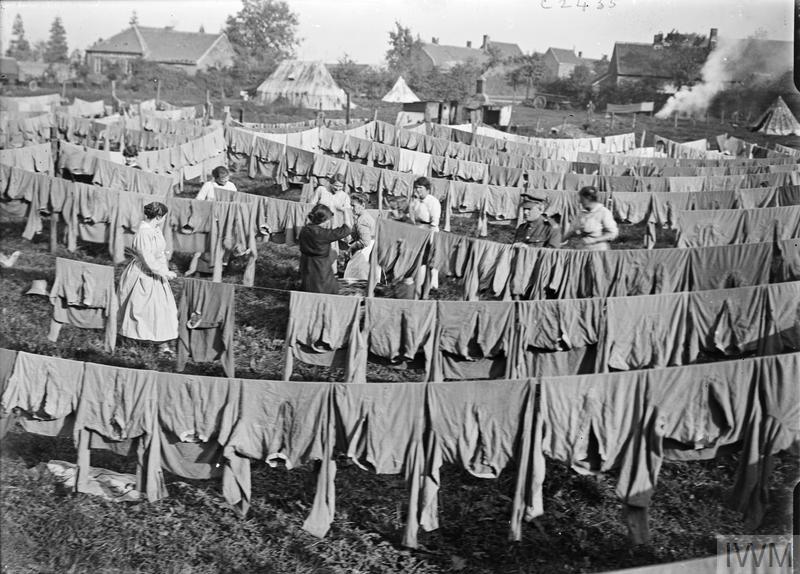
Their responsibilities went well beyond basic supply. Ordnance units also operated salvage sections to recover, repair, and repurpose battlefield equipment—a critical function in conserving resources and maintaining operational tempo. They ran mobile repair facilities and oversaw essential services like bath and laundry units, which not only preserved hygiene in the harsh conditions of trench warfare but also boosted morale and prevented disease. These services reflected the Ordnance Corps’ holistic approach to sustaining soldiers, not just with materiel, but with cleanliness, comfort, and care in brutal circumstances.
In the Middle East, NZAOC detachments supported mounted operations across the harsh deserts of Sinai and Palestine. Operating in support of the New Zealand Mounted Rifles Brigade, Ordnance soldiers adapted their methods to suit long, exposed supply lines and the mobile nature of desert warfare. They managed camel trains, improvised field depots, and operated forward repair points—often little more than canvas shelters in the sand—to keep men and animals in the fight. Salvage and maintenance tasks were equally essential here, where resupply could be days away and every item had to be made to last.
By the end of the First World War, the NZAOC had grown into a compact, disciplined, and highly respected corps. From the mud of Flanders to the sands of Beersheba, their work underpinned New Zealand’s military effort. Though rarely seen in official war photographs or commemorated in mainstream histories, their contributions were vital. They demonstrated that logistics was not a sideline to combat—it was its backbone. They also laid the foundation for a professional military logistics tradition in the RNZALR today.
The Second World War and Beyond: Backbone of the Battlefield
During the Second World War, the NZAOC matured into a seasoned and indispensable pillar of military capability. Whether supporting the fight abroad or maintaining the war effort at home, Ordnance personnel were the engine behind the Army’s ability to project and sustain force across multiple theatres of war.
North Africa and Italy: Desert Sands and Mountain Passes
In the North African campaigns of 1941–42, Ordnance units operated across Egypt and Libya’s vast, unforgiving deserts, supplying the 2nd New Zealand Division during pivotal battles such as Operation Crusader and El Alamein. Supply depots were often under canvas, exposed to enemy air raids and desert winds. Light Aid Detachments worked tirelessly in the blistering heat to keep tanks, trucks, and artillery in the fight, repairing on the move and recovering damaged equipment under fire.
A dedicated Ordnance Convoy Section was raised to support the increasing volume and complexity of operations. Its task was to move stores and equipment from rear areas to forward supply points, filling a critical gap when the New Zealand Army Service Corps (NZASC) could not meet demand. These convoys ensured a continuous flow of tools, spare parts, and personal equipment to the front, often through contested or poorly marked desert tracks.
The NZ Divisional Salvage Company also operated until late 1941, recovering and repurposing valuable battlefield materials—everything from damaged vehicles to discarded equipment. This function saved resources and contributed to operational sustainability by rapidly recycling assets back into the supply chain.
Ordnance support also extended to troop welfare. Mobile Bath and Laundry Sections accompanied the Division to provide frontline hygiene services, which were essential in preventing disease, exchanging clothing, maintaining morale, and improving the force’s overall combat effectiveness. Their presence in forward areas helped ensure that troops remained as healthy and combat-ready as conditions allowed.
Fred Kreegher, New Zealand Ordnance Field Park, sorting out stores in the rear of his Bin Truck. The Noel Kreegher collection
When the Division redeployed to Italy in late 1943, the harsh desert gave way to snow-covered mountains and treacherous river valleys. But the demands on Ordnance personnel did not ease. During gruelling campaigns at Monte Cassino and through the Po Valley, the NZOC once again delivered. Ordnance Field Parks and dumps were established within range of enemy guns, and equipment was recovered, repaired, and reissued under complex and often perilous conditions.
These layered capabilities—convoy operations, salvage and recovery, technical maintenance, and personal support—ensured the Division could manoeuvre and fight confidently, knowing its logistical tail was secure. The Ordnance Corps wasn’t simply supporting the fight—it was integral to sustaining it.
The Pacific Theatre: Islands of Sustained Effort
While New Zealand’s main expeditionary force focused on Europe and the Mediterranean, many New Zealand troops were also deployed to the Pacific. Here, the NZAOC supported the 3rd New Zealand Division across island bases in New Caledonia, the Solomon Islands, Tonga, and Fiji. These were remote and logistically challenging environments—characterised by tropical diseases, heavy rain, mud, and dense jungle.
Ordnance detachments established supply points, maintained stores, repaired equipment, and ensured operational readiness across scattered islands. These locations often lacked established infrastructure, requiring personnel to be resourceful and adaptable. Camp maintenance, local procurement, and even salvaging enemy materiel became part of the day-to-day tasks.
Although the 3rd Division never saw major set-piece battles like those in North Africa or Italy, it did undertake several opposed amphibious operations and complex island-clearing operations, most notably in the Solomon Islands campaigns at Vella Lavella, Treasury Islands, and Green Island. These landings were tactically complex and logistically demanding, requiring close coordination between combat troops and supporting elements. The Division’s presence helped safeguard New Zealand’s Pacific interests and contributed meaningfully to the broader Allied campaign in the South-West Pacific Area. The Ordnance Corps was instrumental in keeping this contribution viable—its soldiers operated under arduous conditions, far from public view but never from operational necessity.
The Home Front: Sustaining the War Machine
Back in New Zealand, the Ordnance Corps played an equally vital—if often overlooked—role in sustaining the nation’s war effort. Depots at Trentham, Hopuhopu, Burnham, Palmerston North and Waiouru became crucial hubs for receiving, inspecting, storing, and distributing supplies to deployed units. The scale of this effort was immense: weapons, uniforms, vehicle parts, ammunition, and medical supplies flowed in and out of these depots on a daily basis.
Ordnance staff oversaw procurement, stock accounting, and quality control, ensuring that New Zealand’s contribution to the global conflict was met efficiently and precisely. In addition to servicing the expeditionary forces, these depots supported the Home Guard, Territorial units, and mobilisation centres. When new battalions were raised or re-equipped, Ordnance issued the kit and ensured everything was fit for purpose. This included the units of the 2nd New Zealand Expeditionary Force deployed overseas, as well as the three Divisions and supporting arms raised for home defence. These domestic formations—charged with protecting New Zealand from possible invasion—required full logistical support, from uniforms and webbing to weapons, ammunition and transport. Ordnance Corps personnel were central to ensuring these forces were ready to respond, maintaining a continuous flow of supplies while adapting to changing wartime demands.
“Repairing despatch riders’ motor-cycles. Photo of mechanics and motorcyclists repairing motorcycles at a field workshop during military manoeuvres in Northland.” Auckland Weekly News, 23 December 1942, p.14
Auckland Libraries Heritage Collections AWNS-19421223-14-03
The wartime workforce also included women, with members of the New Zealand Women’s Army Auxiliary Corps (NZWAAC) taking on duties in Ordnance depots, handling clerical tasks, managing stores, and supporting logistics operations nationwide. Their involvement further highlights the adaptability and inclusivity of the Ordnance mission in meeting the demands of total war.
Post-war Transition
Post-war deployments saw Ordnance personnel serve in Japan, Korea, Malaysia, Vietnam, and beyond—often integrated within British, Australian, or Commonwealth logistics formations. Though New Zealand’s contribution to these conflicts was modest in size, the professionalism and impact of its Ordnance soldiers were significant. In the Korean War (1950–53), New Zealand’s primary combat force—16th Field Regiment—was supported by a small but capable number of logistics specialists. Ordnance staff embedded within allied supply chains, managing stores, issuing ammunition, and repairing equipment under the demanding conditions of the Korean Peninsula’s harsh winters and mountainous terrain.
During the Malayan Emergency (1948–1960) and the subsequent Indonesian Confrontation (1962–1966), New Zealand troops operated in dense jungle environments that tested their combat and logistics capabilities. Ordnance soldiers were seconded as individuals to the New Zealand Battalion or British units, where they maintained supply lines through monsoon rains, oppressive humidity, and remote jungle bases. Their tasks ranged from maintaining small arms and issuing jungle kit to managing the complex movement of stores between staging areas and patrol bases—a vital function in an environment where regular resupply was challenging and sometimes depended on airdrops or riverine transport.
Although New Zealand did not deploy a complete Ordnance unit in Vietnam, RNZAOC personnel were seconded individually to Australian and United States forces. These included roles such as supply officers, ammunition controllers, and non-commissioned officers (NCOS) stationed at key logistics hubs like Nui Dat and Vung Tau. Working in a high-tempo combat zone, they handled everything from weapons and clothing to fuel, spare parts, and ammunition—often under the threat of enemy attack. The complexity of the Vietnam conflict demanded rapid response times, adaptability, and technical proficiency, all of which the Ordnance soldiers delivered in spades.
Beyond direct deployments, Ordnance personnel were also deeply involved in supporting the considerable effort required to sustain a deployable division maintained under New Zealand’s national service and conscription scheme during the Cold War. This mobilisation model meant that the RNZAOC was responsible for equipping, maintaining, and provisioning a standing force-in-being that could be rapidly expanded in times of crisis. Warehouses and mobilisation stores across the country were stocked with weapons, webbing, clothing, communications equipment, and general supplies—ready to be issued to citizen-soldiers if called upon. The planning, accounting, and logistical foresight required to maintain this latent capability were immense, and it stood as a testament to the professionalism of the Corps.
Across these theatres and responsibilities, Ordnance personnel served in austere and unpredictable environments. Whether embedded with an allied supply unit in the jungle or managing stockpiles for national mobilisation, they maintained the flow of materiel that kept New Zealand’s military effort credible and ready. Though they rarely received public recognition, their contribution was the vital connective tissue that made readiness a reality.
Peacekeeping and Modern Missions: From Mogadishu to the Pacific
In the late 20th century, as New Zealand’s defence priorities shifted toward peacekeeping and international humanitarian support, Ordnance soldiers once again rose to meet the challenge—this time under the flag of the United Nations. The 1992 deployment to Somalia marked a pivotal moment in New Zealand’s operational history and the modern evolution of the RNZAOC. In response to a deteriorating humanitarian crisis fuelled by civil war and famine, the UN launched a multinational intervention to secure aid routes and stabilise the region. New Zealand’s initial contribution to this effort—the New Zealand Supply Detachment—consisted primarily of 28 RNZAOC personnel, marking the first time in decades that an Ordnance-led contingent was deployed operationally in its own right.
Arriving in Mogadishu in December 1992 as part of the Unified Task Force (UNITAF), the detachment was tasked with establishing a functioning logistics capability in a highly hostile and volatile environment. Somalia’s capital had no functioning government, no stable infrastructure, and was riddled with armed factions. Despite the risks, the RNZAOC personnel immediately began establishing supply chains, securing local procurement channels, and distributing food, water, and stores to support the broader UN mission. They set up New Zealand’s main camp at the now well-known base called “Taniwha Hill,” which would symbolise Kiwi resilience amid chaos.
New Zealand soldiers leave their camp to conduct a patrol. NZDF Offical
Working out of hastily converted shipping containers and tents in the sweltering heat, the team operated under constant threat of gunfire, looting, and militia activity. Despite the mission’s peacekeeping label, it quickly became apparent that they were operating in a conflict zone. Convoys were escorted, personal weapons were always carried, and supply runs often meant travelling at high speed through hostile streets to avoid ambush. One RNZAOC NCO recalled travelling with a rifle propped between his knees, ready to return fire if necessary—a stark contrast to the logistics roles typically performed at home.
As the situation deteriorated, a second and larger contingent of 43 logistics personnel (including reinforcements from the RNZAOC and other corps) deployed in 1993 as the New Zealand Supply Platoon. This platoon was accompanied by an infantry protection element from 1 RNZIR, marking New Zealand’s first combat deployment of infantry since the Vietnam War. This reinforced the seriousness of the mission and highlighted the increasing danger and the blurred lines between combat and combat service support. Operating as an integrated platoon, the team performed with professionalism and efficiency, earning the respect of allied forces for their adaptability, calm under pressure, and ability to keep essential supplies flowing under fire.
The New Zealanders remained through some of the mission’s most violent episodes, including the events surrounding the infamous “Black Hawk Down” incident in October 1993. Positioned nearby, the RNZAOC soldiers bore witness to the heavy fighting yet carried on their duties with unwavering determination. When many international contingents began withdrawing, the New Zealand logistics team continued to operate until mid-1994, one of the last Western elements to depart the theatre.
The Somalia deployment reaffirmed the modern Ordnance soldier’s place at the heart of New Zealand’s deployable military capability. It demonstrated that RNZAOC personnel were not only logisticians, but also frontline enablers—capable of operating in fluid, high-risk environments and delivering under extreme pressure. “Taniwha Hill,” New Zealand’s base in Mogadishu, was regularly subjected to gunfire and mortar attacks, and Kiwis operated in volatile zones with little margin for error. Yet the RNZAOC platoon carried out their duties with quiet professionalism and resolve, ensuring UN and coalition forces remained supplied and mission capable.
This ongoing legacy of service continues under a new banner. In 1996, the RNZAOC was formally disestablished as part of an Army logistics reorganisation. Its personnel, functions, and traditions were integrated into the newly formed RNZALR, uniting the RNZAOC, RNZCT, RNZEME, and Quartermaster staff into a single, cohesive regimental structure. This transformation ensured that the enduring values and capabilities of the Ordnance Corps would carry forward into a modern, agile logistics force aligned with contemporary operational requirements.
Since then, RNZALR Logistic Specialists and Ammunition Technicians have continued to support peacekeeping and humanitarian operations in theatres such as Bosnia, the Sinai, East Timor, and Afghanistan. During the East Timor operation (1999–2002), logistics units played a crucial role in sustaining one of New Zealand’s largest overseas deployments since the Korean War. Their work—whether managing supply convoys, setting up field depots, or coordinating humanitarian assistance—underscored the critical importance of logistics as an enabler and a key factor in mission success.
Domestically, RNZALR Logistics personnel have remained indispensable. From supporting civil defence during the Canterbury earthquakes to managing logistics and providing personnel to support Managed Isolation and Quarantine (MIQ) facilities during the COVID-19 pandemic, and maintaining daily sustainment across Defence camps and bases, they remain central to New Zealand’s readiness and resilience. In every setting, whether at home or abroad, the legacy of the Ordnance soldier lives on through the actions and professionalism of the RNZALR.
Roll of Honour: Service Remembered, Sacrifice Recognised
The story of the Ordnance Corps is also one of loss. The New Zealand Ordnance Roll of Honour lists 63 names of those who died while serving in our logistics and stores organisations—from the Defence Stores Department of 1862 to the RNZAOC’s integration into the RNZALR in 1996. Among them:
Captain Sam Anderson (1899), Defence Storekeeper
Captain Arthur Duvall (1919), New Zealand Army Ordnance Department
Temporary Major William Knox (1941), Divisional Ordnance Field Park, North Africa
Private Russell John Casey (1994), 1 Logistic Regiment, RNZAOC
Each of these individuals—and the many others on the Roll—represents a life dedicated to service, often given in conditions far from home and with little fanfare.
Remembrance and Honour
Each ANZAC Day, we renew our vow: “We will remember them.” In remembering, we broaden our gaze to include those who served without seeking recognition—those who issued the boots, drove the convoys, repaired the radios, and ensured that the warriors had their arms.
The Ordnance Corps soldiers were not mere auxiliaries but the enablers of victory, the sustainers of peace, and the standard-bearers of discipline and duty. Their legacy is not just one of historical interest, but a living ethos that endures in the RNZALR.
As the Last Post echoes and the nation falls silent, let us remember the battles won and the thousands of acts behind the lines that made those victories possible. The story of the Ordnance soldier is one of dedication, innovation, and unheralded bravery.
At the going down of the sun, and in the morning— We will remember them. Lest we forget.
World War Two stands as a testament to immense sacrifice and heroism, with countless stories of courage, endurance, and strategic brilliance shaping the course of history. However, the more well-documented combat narratives overshadow many critical aspects of the war effort. Among these lesser-explored facets is the essential role of military logistics, without which no sustained military operation could have been successful. Within this realm, the contributions of New Zealand’s military logisticians—particularly those of the New Zealand Army Service Corps (NZASC) and the New Zealand Ordnance Corps (NZOC)—have largely been overlooked in historical discourse.
The complexity of sustaining the 2nd New Zealand Expeditionary Force (2NZEF) across multiple theatres of war, including the Middle East, North Africa, Italy, and the Pacific, required an intricate web of supply, transport, and maintenance operations. These responsibilities were carried out by the men of the NZASC and NZOC, who worked tirelessly to ensure that frontline troops received the equipment, ammunition, clothing, vehicles, and other essential supplies necessary for combat effectiveness. While the Official History of New Zealand in the Second World War 1939–45 and the Third Division’s history provide some insight into these operations, the logistical achievements of the NZOC, particularly in the Middle East and Italy, remain largely absent from official records.
A handful of publications, including Julia Millen’s Salute to Service (1997), Peter Cape’s Craftsmen in Uniform (1972), Peter Cooke’s Warrior Craftsmen (2017), and Major Joe Bolton’s History of the Royal New Zealand Army Ordnance Corps (1993), have contributed valuable insights into the broader story of New Zealand’s wartime logistics. However, these works often draw from pre-existing official histories and do not fully account for the NZOC’s activities during the war. Notably, in 1944, the 2NZEF Archives Section recognised the importance of documenting its logistical operations, dispatching Sergeant Jas Brown to visit field units of the NZOC and compile a report on their functions. His notes, augmented by comments from Lieutenant Colonel John Owen Kelsey, the 2NZEF Assistant Director of Ordnance Services (ADOS), represent one of the few surviving firsthand records of the NZOC’s wartime efforts. For the first time, this article presents a full transcription of Sergeant Jas Brown’s field notes, along with accompanying organisational charts and Kelsey’s annotations. By analysing this material, it seeks to rectify the historical oversight of the NZOC’s contributions and provide a clearer understanding of its role within 2NZEF. In doing so, it aims to highlight the indispensable work of New Zealand’s military logisticians—an effort that ensured the operational success of the nation’s fighting forces and remains a crucial yet underappreciated element of New Zealand’s military history.
OFFICIAL ARCHIVES SECTION 2 NZEF
FIELD REPORT
Subject: NZOC
Complier: 63306, Sjt Jas G Brown, Official Archives Sect 2 NZEF.
Sources: (a) Visits to Field Units of NZOC during tour of duty 10-19 Apr 44.
(b) Visit to 2 NZ BOD
Dat of Compilation: 2 – 4 Apr 44
1. As a result of a visit to the office of AOOS at Rear HQ 2NZ Div, attachment to 2 NZ Div Ord Fd Pk was arranged on 11 Apr 44. This unit forms the basis of the Ordnance organisation in the field , thereby being the logical starting point for any series of investigations concerning Ordnance. A chart showing the organisation ‘ of the Ordnance Corps of 2 NZEF is attached as Appx “A”.
2. AOOS, the Assistant Director of Ordnance Services, is, as his title implies, the head of the ordnance organisation of 2 NZEF, exercising direct command over the activities of all the various sections shown in the chart in Appx “A” The problem of AOOS are problems of supply . His is the task of seeing that the Di vision’s equipment is kept up to scale , and of maintaining sufficient reserves to meet the Division’s varying demands as it moves from one theatre of war to another, a task requiring a high degree of foresight in planning ahead, as far, sometimes , as twelve months. His job is to fulfil, as far as possible , demands made by units of 2 NZ Div, ·whether they be for engine s for NZME, or equipment for an infantry battalion. ADOS operates from Rear H 2 NZ Div in an office which is purely an administrative centre. The Ordnance Officer, holding the rank of Captain, passes all indents for uncontrolled stores, but DOS himself is responsible for the distribution and issue of controlled stores , indents for which must be passed and signed by him personally . Releases for these controlled stores are made by FLAMBO, a code- title for the controlling authority for all British Ordnance Services i n Italy.
Chart as Shown in Annex A
Organisation of .ADOS – The 0.0. is not responsible for any demands made on Ordnance Fd Pk far other than Controlled Stores. Demands for vehicles parts are submitted direct by the units to the section of OFP which is responsible for maintaining that unit, i.e., to the Inf or Armd Sections. The O.O. is the deputy of ADOS in the Field and concerns himself with General Stores, clothing, etc. only. In the absence of the ADOS he has authority to release controlled stores. The authority of the ADOS is for items within Scale only – any demands in excess of an authorised scale which is usually laid down by Army or HQ., AAI must be approved by “Q” of Division before issue can be made. Whilst operating under Army most releases are obtained through Army. Copies of schedules showing what items are Controlled and by whom are attached for easy reference.
Appreciation of NZOC Field report – ADOS 2 NZ Div.
3. 2 NZ Div Ord Fd Pk: This unit may be divided into four sections , the Armoured Section, the Infantry Section , the Reserve Section, which includes the Reserve Vehicle Park and the Bulk Breaking Centre, and AOD, which four sections will now be considered in greater detail.
4. Armoured Section: The Armoured Section, as the name suggests, is the supply centre for 4 NZ Armd Regt, being at present, for purposes of convenience, detached from 2 NZ Div Ord Fd Pk and attached to 4 NZ Armd Bde Wksps. The Armd Sect caters for all the requirements of the Armd Bde with the exception of tanks, clothing and general QM Stores. A range of light spares for tanks is carried, as well a s those items, such as thermos flasks, which are a necessary part of a tanks equipment before it can be considered battle worthy. Indents for equipment required by the Armd Bde are made on the -Armd Sec of 2 NZ Div Ord Fd Pk, the indents being passed by the Ordnance Officer in ADOS office at Div HQ. The indent is then presented at the Armd Sec, and the stores collected if available. A scaling of stores is carried, covering a wide range of requirements, but if the stores demanded are not available, an extract from the original indent is made on either 2 NZ BOD or 557 AOD for unheld stocks. In addition to tank equipment, the Armd Sec carries large stocks of MT spares, signal and wireless spares, and gun and small arms spares.
Armd Section of OFP – None of the Controlled items for tanks (i.e. wireless sets, guns, etc) are carried by this Section – it is purely a Section for spare parts far tanks, guns and “B” vehicles and services not only the 4 NZ Armd Bde but provides spares for any unit holding “A” or fighting vehicles except Bren Carriers. The indents are not passed by ADOS Office· but are submitted direct on the Section. Similarly, stores for other Sections of OFP except AOD are controlled direct by this Section
Appreciation of NZOC Field report – ADOS 2 NZ Div.
5. Infantry Section: This section functions in the same manner as the Armd Sec, only no tank and general armoured spares are carried. The stocks furnish all the requirements of an Infantry brigade, except clothing and QM stores and comprises MT spares, signal and wireless spares, gun spares, and small arms spares. The indent procedure is the same, stocks being drawn direct from Infantry Section as required.
6. A point of interest regarding the supply of MT spares by the Infantry or Armoured Sections is the relation existing between 2 NZ Div Ord Fd Pk and the Corps Collecting Point or the Army Collecting Point. To these points all transport beyond repair is taken and dumped, to be salvaged at a later date. Should 2 NZ Div Ord Fd Pk be unable to supply a part required to repair a vehicle , a fitter is sent to the CCP , where he endeavours to find a suitable part on a damaged vehicle. This procedure results in a considerable saving both of time and of material, making fullest use of material available close at hand. Only when requirements cannot be met in this manner is the indent forwarded on to a higher formation.
Stores taken from CCP and ACP – Stores are not cannibalised from vehicles in CCP’s or ACP’s unless as a last resort, i.e. not available in depots or other OFP’s. Authority is vested in ADOS to cannibalise off vehicles Class IV and below if necessary. In all other cases the certificate of the OFP that the stares are not available is sufficient authority for cannibalisation.
Appreciation of NZOC Field report – ADOS 2 NZ Div.
7. Reserve Section: Stocks for both the Armd and Inf Secs are drawn from the Reserve Section. Stock is received in bulk at the Res Sec, the bulk being broken at the Bulk Braking Centre before distribution to the other sections. No issues are made by the Res Sec to any one other than the Armd of Inf Secs, Reserve Sections function being to break down bulk as received and keep the Armd and Inf Secs supplied. In addition to supplying the needs of these two sections, there is as part of the Reserve Section, a Reserve Vehicle Park, holding supplies of all types of “B” Vehicles, for issue to units as required. A stock of spare engines is also carried. These vehicles are issued to replace unit transport lost, or evacuated beyond 2 NZ Div Wksp.
Reserve Section – Stock is not always received as bulk and broken by the Reserve Section – much of the stock for the Armd and Inf Sections is demanded in their name direct from RAOC Stores. Bulk is, however, broken in the case of many items.
The function of the Reserve Vehicle Park in not to hold supplies of vehicle for issue on a replacement basis. It purpose is to collect vehicles released and issue as approved. It is true that at the moment some vehicles are held in the pool but this is not always so.
Appreciation of NZOC Field report – ADOS 2 NZ Div
8. NZ AOD. Until recently NZAOD functioned as a separate section of 2 NZEF. A small section, i t was always attached to 2 NZ Div Ord Fd Pk, working with them. On this account it was decided to disband the AOD as a separate unit, and make it a part of 2 NZ Div Ord Fd Pk, in which state it now operates. Its function is to supply the Division with all clothing requirements and general QM stores. Attached as Appx “B” is a list showing the holdings of NZ AOD. Each day a copy of this form is completed and returned to 2 NZ BOD, which automatically , by means of the Stores Convoy Unit, keeps AOD supplied according to the scales shown.NZ AOD receives and breaks its own bulk, none of its stock passing through the Reserve Section . Certain items in the above-mentioned appendix are marked “C” . These are controlled stores, the issue of which is governed by ADOS himself . ADOS 2 NZ Div must indent for these stores on FLAMBO, who decides how much of the available controlled stores is to be issued, ADOS in turn making a proportionate allocation of the release to various units of 2 NZ Div .
9. In addition to supplying clothing and equipment ot the Division, NZ AOD maintains a small Officers Shop , the stocks of which are sufficiently large to enable officers to preserve a full scale of equipment, and to enable men commissioned in the field to equip themselves as officers where no such facilities would ordinarily exist. Deceased officers kit also passes through NZ AOD. They are checked and inventoried, great care· being taken to ensure the accuracy of the inventory, the effect being sent back to Effects Sec, 2 Ech, 2 NZEF.
A.O.D. – The function of 2 NZ Base Ord Depot in connection with this section is to maintain it mainly with items of NZ origin – it is naturally more of use to the Division in winter time than summer as more of the clothing used goes through it. However, the BOD is of great help for difficult items.
Appreciation of NZOC Field report – ADOS 2 NZ Div
10. In order to ensure that supplies for 2 NZ Div are not diverted to other units in Italy, and also to keep a watch on stocks arriving in the country, with a view to securing what is required by a well-timed indent, Liaison staffs are maintained at both 500 ADO in Bari and 557 AOD in Naples. If, in the opinion of the Liaison staff, a consignment contains items which are needed by 2 NZ Div, an indent, calculated to arrive at the same time as the consignment, is prepared. By this means 2 NZ Div have frequently annexed and entire consignment of a particular item. Consignments to 2 NZ Div through the AODs are also closely watched, and their delivery through the correct channels thereby expedited. By means of this liaison staff the 2 HZ Div has a somewhat unfair advantage over the British unit s, but active disapproval of their existence has not yet been voiced.
Liaison Staff – It is not correct to say that our Division has a somewhat unfair advantage over British Units by maintaining a liaison staff. All our staffs are appointed with the authority and knowledge of RAOC. Other units of the British Army also adopt this system and whatever advantages 2 NZEF reaps from their activities is due to the type of person attached there. He is usually a bright, adaptable and well versed member of the Corps.
Appreciation of NZOC Field report – ADOS 2 NZ Div
11. Brigade Ordnance Warrant Officers: In order to ensure a smooth flow of indents from the units to 2 NZ Div Ord Fd Pk , and the correct distribution of the consignment on arrival , a Brigade Ordnance Warrant Officer, a NCO with the rank of WO1, is attached to each brigade HQ , and to HQ 2 NZ Div Arty. This officer is a person of wide experience in ordnance matters, whose duty it is to advise unit quartermasters about their indents, and one who should be able to answer any questions asked concerning ordnance supplies, giving rulings on the availability of certain items. Although he may be regarded as a liaison officer between ADOS and the units, his power is not absolute, certain demands, such a s those for controlled stores, having to pass through ADOS in person. The BOWO supervises the breaking of bulk when an indent arrives at his HQ and allocates the stores and equipment to the units concerned in the correct proportions.
Brigade Ordnance Warrant Officers – In addition to the BOWO’s mentioned there is one on ADOS staff at Div HQ who looks after the various units not attached in a Brigade Group. Bulk issues are seldom made to BLWOs, most unit indents being approved far issue direct. It is, however, his job to collect indents and see they are correct before sending them to ADOS Office for approval. He has no control over demands made by his units for MT Spares on Infantry and Armoured Sections of the OFP.
Appreciation of NZOC Field report – ADOS 2 NZ Div
12. 1 NZ BOD & 2 NZ BOD: Purley New Zealand types of clothing, such as battledress and underclothing, still has to pass through Egypt, hence the necessity of maintaining 1 NZ BOD in Maadi, and 2 NZ BOD in Bari. Clothing is supplied to 2 NZ :BOD as required from 1 NZ BOD, which received the shipments from New Zealand. 2 NZ BOD carries full stocks of all items, including general British Forces issue equipment, for issue to the Division. Stocks are fed to AOD by means of the Stores Convoy Unit, a section of trucks which forward load equipment for AOD, and back load equipment to be returned to BOD. This convoy is running all the time, the number of vehicles being augmented as occasion demands by drawings from RVP.
The Base Depots – These units are also responsible for NZ units not in 2 NZ Division and the DADOS in charge are also the direct representatives of ADOS who has delegated sane of his powers to them. 1 NZ Base Ord Depot in Egypt has no Stores Convoy Unit.
Appreciation of NZOC Field report – ADOS 2 NZ Div
13. OSME 180 Pack. A pack, know as OSME 180, was designed prior to the departure of 2 NZ Div for Italy, calculated to maintain completely the supplies of the Division for a period of 90 days without recourse to any outside sources of supply. This huge collection of equipment, some of which is still arriving was to go to form 2 NZ BOD but the supply problem in Italy assumed such serious proportions in the early stages of the campaign that it was agreed to place the whole of OSME 180 in the Eight Army Ordnance pool, with certain reservations for 2 NZ Div, where it would be used to supply the whole of the Eighth Army until such time as the supply situation eased. The provision made in this pack proved to be adequate, and the Division was well maintained until further supplies arrived from the Middle East. As a point of interest, the huge loads carried by the troops when they first moved to Italy were in no way part of OSME 180 . What was brought in the first place was essential equipment: OSME was provision for the future.
14. Scaling: The term “scaling” as used by ordnance is a most important one, and one worthy of special attention. Each depot, store , or store- truck carries a scale of stores, designed to meet the normal wastage through wear and breakage, and based on knowledge gained from past experience of the use of those stores . When defects in any item of equipment are noticed, they are reported, and if the defect proves to be persistent, the matter is taken up by TSB at DDOS (P), (meaning Technical Scaling Branch at DDOS (Provision)). There the causes of failure are thoroughly investigated, and the percentage and frequency of the failures are studied. If it is found that the existing authorised scale of replacement parts at the depots is inadequate to meet the demands likely to be made, a new and revised scale, applicable as far down as LAD store trucks, is issued , upon receipt of which the depot s indent on the Special Issues Branch for the stores required to complete their holdings under the new scale. Thus, it is calculated, stocks of spares held will be sufficient to meet all reasonable demands . TSB and SIB are part of the “Planning” organisation, which in its turn, is part of the GHQ of the Army Force operating in the area.
Scales are also applicable to other than MT. There are scales of equipment clothing, vehicles·, tools, expendable stores, etc., these are far too many to enumerate fully. Scales are the basis of Ordnance work and supply.
Appreciation of NZOC Field report – ADOS 2 NZ Div
ANNEX B – NZAOD Scale
15. NZ Mob Laundry & Bath Unit: Hitherto the Laundry unit and Bath unit functioned separately as units of 2 NZEF, but for the purpose of more economical administration a combination of the two was effected.
16. Laundry: The equipment of the laundry consists of two boilers each on a trailer, four washers, four hydro extractors and two driers, one rotary and one of the continuous type. Each washer is on a trailer with a hydro-extractor, a revolving drum in which the laundry is rotated at a speed of 1350revs per minute to remove excess water prior top drying, while each drier is mounted on a trailer. Two generating plants, each on its trailer, supply electric power to drive the machinery. Water is supplied by electric pumps drawing water from nearby stream.
17. The laundry collected from units is sorted into bundles according to the type of material, and placed in labelled baskets, in order to ensure the return of the correct washing to units . A soap mixture is made of water and pure yellow soap flakes, of which 11/2 cwt is used in a day, this being added to the clothes which have been placed in the washer. The water is heated to the correct temperature by steam, and. the wash proceeds. After several rinsing’s with clean water the wash is transferred to the hydro-extractor, thence to the driers. The rotary drier is used for small items, but blankets pass through the continuous drier, an endless belt, equipped with clips to suspend the articles, passing through a heated chamber.
18. Clothing from units is washed in bulk and returned to units with worn or damaged garments replaced. Blankets are washed in bulk, but an issue of clean blankets is made as the dirty ones are sent for washing. When washed, these blankets are returned to store for issue on the arrival of a further load of dirty ones. The linen of 1 NZ (Mob ) CCS is also washed by this unit.
19. In order to increase the output, a disinfector held by the unit is also being used as a drier, mainly to dry blankets. Although somewhat slower than the other types of dryer, it is satisfactory.
20. The laundry can be split into two sections, when necessary, each with one boiler, two washers and extractors, one drier, and one generator. Maintenance of this costly plant is carried out entirely by one fitter and one electrician. These two tradesmen, both privates, maintain not only the laundry but also the unit transport. No work is sent to workshops, the l ack of necessity for major repairs requiring the use of heavy machinery being explained by the fact that the laundry is of civilian type, made before the outbreak of war.
21. The boilers use 260 gallons of fuel oil in a day, while 1000 gallons of water are used every hour in the washers. The latter consumption explains the necessity of having the laundry situated near a plentiful water supply, and also explain the impracticability of having such a unit operating in a forward area in the desert. During the month of March 44, the laundry washed 83000 pieces of clothing and equipment, including 2300 blankets, an estimated dry weight of 70 tons.
22. Bath: The mobile bath consists of four independent shower sections, one of which is attached to each brigade, one remaining with the laundry. Water is drawn from a stream or other suitable supply by an electric pump, is heated in a locally designed boiler fired with oil and water, once passed into a shower room, a tent with duckboards laid out inside, where six showers are available. A larger tent forming a dressing room opens into the shower tent. The supply of water is continuous, and men may use as much as they please, withing reasonable limits, the duration of their bath being determined by the number waiting to go through. The showers use 200 gallons of water an hour, and each section is capable of handling some 500- 600 men in a day.
In conclusion, while significant progress has been made in documenting the wartime contributions of the New Zealand Army Service Corps (NZASC) and the New Zealand Electrical and Mechanical Engineers (NZEME), the role of the New Zealand Ordnance Corps (NZOC) remains largely underexplored. Despite being instrumental in sustaining the 2nd New Zealand Expeditionary Force (2NZEF) across multiple theatres—including the Middle East, North Africa, Italy, and the Pacific—the NZOC’s contributions have not been fully recognised within official histories.
The complexity of maintaining a mechanised force in a global conflict required a well-coordinated effort to supply, repair, and distribute essential materiel. The NZOC played a key role in ensuring the continuous availability of weapons, vehicles, ammunition, and general stores. Yet, the absence of a dedicated historical account has left a critical gap in our understanding of New Zealand’s wartime logistics. The archival field notes of Sergeant Jas Brown, supplemented by Lieutenant Colonel John Owen Kelsey’s annotations, provide rare firsthand insight into these operations and highlight the challenges faced by the NZOC in adapting to the demands of modern warfare.
By presenting this previously unpublished material, this article seeks to bridge the historical gap and emphasise the indispensable role of New Zealand’s wartime logisticians. Recognising the achievements of the NZASC, NZOC, and NZEME not only deepens our appreciation of New Zealand’s military history but also provides valuable lessons for contemporary logisticians. The logistical principles established during World War Two remain relevant today, reinforcing the necessity of efficient supply chains, adaptability, and strategic foresight in sustaining military operations.
The evolution of New Zealand Army stores accounting from 1845 to 1963 reflects the broader transformation of the nation’s military logistics from its colonial origins to a modern, structured system. This study is not a deep dive into the intricate details and complexities of New Zealand military stores accounting but rather an introductory overview of a system that has incrementally evolved over 180 years.
Initially modelled on British military accounting principles, New Zealand’s unique defence requirements—shaped by its geographical isolation, force structure, and operational demands—necessitated continuous refinement. Accounting practices have continuously evolved since the first musket was issued to the militia in 1845. However, it wasn’t until The Public Stores Act of 1867 that structured inventory control and accountability measures were formally introduced. This legislation laid the foundation for military store accounting, marking a significant step towards the professionalisation of the Defence Stores Department. These measures ensured crucial oversight and efficiency in military logistics, particularly highlighted by the demands of the South African War and the two World Wars, underscoring the need for a robust and adaptable system capable of sustaining large-scale military operations.
By the mid-20th century, New Zealand had developed a sophisticated store accounting framework. The introduction of NZP1: Volume I—Stores Accounting in 1951 marked a milestone, formalising the policy regulating the army’s store management. The subsequent 1962 revision further streamlined procedures, ensuring the system remained relevant amid evolving logistical complexities.
New Zealand’s innovations in stores accounting did not go unnoticed. In 1963, the Australian Army sought guidance from New Zealand to modernise its system, acknowledging the effectiveness of the NZ Army’s approach. This recognition underscored New Zealand’s competence in military logistics, demonstrating that despite its smaller size, its expertise had broader strategic significance.
Structure of this Study
Part One will examine the period from 1845 to 1918, tracing the evolution of New Zealand’s military stores accounting system from its British colonial origins to a structured, modern framework comparable to those of New Zealand’s allies by 1914. The demands of the First World War tested the system’s efficiency and resilience, exposing strengths and weaknesses that would shape post-war reforms.
Part Two will cover the period from 1918 to 1945, during which the lessons learned from the First World War were applied to improve inventory control, procurement efficiency, and financial oversight. Economic constraints of the interwar years prompted refinements to stores accounting, leading to the introduction of cost accounting in 1921 and the formalisation of logistical procedures in 1927. The rapid mobilisation for the Second World War tested these systems on an unprecedented scale, accelerating the adoption of modernised inventory tracking and decentralised supply chain management. By 1945, these wartime adaptations had laid the foundation for a more sophisticated and accountable military logistics system.
Part Three will examine the period from 1946 to 1963, focusing on the transition from wartime supply chains to a peacetime military logistics infrastructure. The post-war period saw efforts to streamline surplus disposal, re-establish long-term procurement strategies, and integrate emerging technologies into stores accounting. By 1963, the system had matured into a mature manual store accounting framework, ensuring greater efficiency, accountability, and interoperability.
Military Stores Accounting and Its Distinctions from Commercial Stores Accounting
The primary goal of military stores accounting is to ensure that soldiers on the frontlines, tradesmen in workshops, and medical staff in field hospitals have the necessary tools and equipment to carry out their duties effectively. This involves managing administrative burdens through the command and supply chains and ensuring all required controls are in place for the long-term sustainment and capability maintenance.
Military stores accounting is a specialised system designed to manage and track the acquisition, storage, distribution, and disposal of military supplies. Unlike commercial stores accounting, which primarily focuses on cost control and financial profitability, military stores accounting prioritises accountability, operational readiness, and the efficient utilisation of resources to meet operational outputs.[1]
Differences Between Military and Commercial Stores Accounting
Feature
Military Stores Accounting
Commercial Stores Accounting
Objective
Ensuring operational readiness and accountability
Maximising profit and minimising costs
Nature of Inventory
Includes depreciable assets, expendable, consumable, repairable, and non-expendable items
Primarily consumable and depreciable assets
Accounting System
Uses strict regulatory frameworks and controlled issue systems
Focuses on balance sheets and profit margins
Lifespan of Items
Items can remain in service for decades with periodic refurbishment
Items are typically depreciated and replaced
Valuation
Based on operational utility rather than market price
Based on market valuation and depreciation
Security and Control
Strict control due to security concerns
Less stringent control mechanisms
Classification of Military Stores
Military stores are classified into several categories based on their usage, longevity, and maintenance requirements:
Expendable Stores – Items that are used once and cannot be reused (e.g., ammunition, medical supplies, fuel). These are issued as required and accounted for under strict consumption controls.
Consumable Stores – Items that are used over time and require replenishment (e.g., rations, lubricants, batteries). While they are used up gradually, they still require accountability and stock rotation.
Repairable Stores – High-value equipment that, when damaged or worn, can be repaired and reissued rather than disposed of (e.g., weapons, radios, vehicles). These items are often tracked using maintenance logs and servicing records to maximise their lifespan.
Non-Expendable Stores – Permanent assets that remain in service for extended periods (e.g., buildings, infrastructure, large-calibre weapons). These items require detailed asset management and condition assessments.
The Long-Term Use of Military Equipment
Unlike commercial organisations, where items are often replaced once they end their economic life, military assets— from clothing to high-value or technologically complex equipment—are maintained, refurbished, and upgraded to extend their service life. For example:
Small Arms: Some rifles and sidearms remain in service for decades through regular maintenance and upgrades.
Vehicles: Military transport vehicles, such as trucks and armoured vehicles, can be refurbished multiple times before decommissioning.
Aircraft and Naval Assets: Large defence assets, including ships and aircraft, are often modernised with new technology and systems rather than being replaced outright.
Uniforms and Gear: Certain clothing items and equipment are subject to phased replacement cycles, where only components are updated as needed.
The Importance of Accountability in Military Stores Accounting
Military regulations are always subservient to Government legislation and regulations, especially Treasury rules regarding the expenditure of public monies. Military stores accounting is not a single system, but a collection of specialised accounting frameworks developed to manage different commodities such as ammunition, rations, fuel, vehicles, and technical spares. As military technology has advanced, these systems have evolved parallel to meet modern armed forces’ complex logistical demands.
Accountability is central to military stores accounting, ensuring that every piece of issued equipment is tracked to guarantee:
Proper usage and maintenance,
Prevention of loss or theft,
Compliance with operational requirements,
Efficient resource allocation during deployments.
Military store personnel are responsible for maintaining detailed records, conducting audits, and ensuring strict adherence to regulations. These rigorous accounting and inventory control measures ensure that military resources remain available and serviceable when required. Beyond merely tracking financial transactions, military stores accounting is a critical function that underpins military operations’ effectiveness, security, and sustainability.
Early Developments in Stores Accounting
From 1845, Quartermaster staff managing militia stores and then Volunteer stores from 1858 followed British military procedures. The Defence Stores were formally established in 1862, predating Lieutenant Colonel Edward Gorton’s appointment as Inspector of Defence Stores in 1869. Although Gorton assumed leadership in 1869, the Defence Stores had already been functioning, supporting the colonial military effort.[2]
Lieutenant Colonel Edward Gorton
The 1867 Public Stores Act, implemented under Gorton’s administration, introduced structured accounting procedures.[3] The Defence Stores Department issued circulars and administrative guidelines to ensure proper accountability and management of military supplies. Gorton’s rigorous approach laid the foundation for the 1871 Public Stores Act, which regulated government-wide stores management and standardised accounting practices.[4]
1870-ammunition-stocktake
Despite Gorton’s achievements in strengthening accountability, his strict enforcement and meticulous oversight drew criticism, leading to the abolition of the Stores Inspection Department in 1877.[5] However, his Defence Stores procedures remained robust, and a culture od accountability was established within Defence Stores. Thirty years later, Colonel George Macaulay Kirkpatrick of General Kitchener’s staff validated them in 1910, finding them comparable to British military standards.
Stores records were maintained by a system of indents and vouchers, with balances maintained in ledger books. The Defence Stores were required to provide annual reports of stocks on an annual basis, ensuring accountability and transparency in military logistics. These practices laid the foundation for the modern systematic inventory control and efficient stores management.
Example of a Ledger book
Development of the Artillery Stores (1880s Onwards)
As New Zealand expanded its Garrison Artillery and introduced new guns, equipment, and ammunition, additional accounting and management procedures became necessary. This was beyond the scope of the existing Defence Stores Department, requiring the expertise of military professionals.
In conjunction with Defence Storekeeper Captain Sam Anderson, Sergeant Major Robert George Vinning Parker, formerly of the Royal Garrison Artillery, developed a system of Artillery Stores Accounting. Parker was in charge of artillery ledgers and stores at Auckland, Wellington, and Lyttelton, ensuring the proper tracking and maintenance of artillery supplies. He continued in this role until 1889 when he was reassigned to Dunedin.[6]
Replacing Parker as the Artillery Ledger Keeper was Regimental Sergeant Major and Instructor in Gunnery Frederick Silver. Silver’s expertise in artillery logistics positioned him as a key figure in the continued refinement of artillery accounting systems. Following the death of Captain Sam Anderson in December 1899, Silver applied for the role of Ledger Keeper in the Defence Stores. Given his extensive experience and close working relationship with Anderson, Silver believed he was the ideal candidate.[7] However, due to his seniority, James O’Sullivan, the Chief Clerk of the Defence Stores, was awarded the role of Defence Storekeeper.[8]
Despite this, Silver was appointed as a temporary clerk in the Defence Stores, transitioning from the Permanent Militia on 25 June 1900. While his new role introduced additional responsibilities, Silver managed Artillery Ledgers seamlessly within the Defence Stores framework.[9]
The relationship between the Defence Stores and the Artillery was cooperative, with both functions operating as a single organisation. The Defence Stores was crucial in supporting the artillery’s logistical needs, ensuring that munitions, equipment, and essential supplies were readily available. The interconnected nature of these two functions allowed for a streamlined approach to military logistics, where artillery-specific requirements were integrated within the broader supply framework managed by the Defence Stores.
This integration led to an efficient system that balanced military necessity with stringent logistical oversight.
Organisational Reforms and the Defence Council (1906)
With the passage of the Defence Act Amendment Act 1906 on 28 October 1906, the Defence Council was established, providing the New Zealand Military Forces with a structured headquarters for the first time. The Act introduced specific staff functions, including:
Director of Artillery Services (Ordnance): Responsible for artillery armament, fixed coastal defences, and ordnance supplies.
Director of Stores: Responsible for clothing, personal equipment, accoutrements, saddlery, harnesses, small arms, ammunition, machine guns, transport, vehicles, camp equipment, and all stores required for the Defence Forces.[10]
As part of this reform, James O’Sullivan was confirmed as Director of Stores for New Zealand and appointed Quartermaster and Honorary Captain in the New Zealand Militia. Silver was designated as Assistant Defence Storekeeper, continuing to oversee Artillery Ledgers, which—despite falling under the purview of the Director of Artillery Services (Ordnance)—remained under Defence Stores control.
Despite these improvements, officers and Quartermaster staff in volunteer units were still elected annually, leading to inconsistency in stores management. Many units functioned more like social clubs than military organisations, resulting in disorganised stores accounts. This led to frequent discrepancies between supplies provided by the Crown and actual inventory.
The continued reliance on part-time and volunteer Quartermasters highlighted the need for further professionalisation of the quartermaster within the New Zealand Military, a challenge that would persist as the New Zealand Military transitioned into the modern era.
The Defence Act 1909 and the Transition to a Citizen Army
The Defence Act 1909 marked a significant transformation in New Zealand’s military organisation, laying the groundwork for a citizen-based Territorial Army and ending the Volunteer System.[11] This fundamental shift required extensive adjustments within the Defence Stores Department to support the expanding force structure.
For O’Sullivan, Silver, and the Defence Stores Department, the challenge was to continue modernising stores and logistics to meet the demands of a rapidly growing army. As the Territorial Force expanded, so did the logistical requirements, necessitating a more structured and professional approach to store management.
On 1 June 1910, Silver’s position was redesignated as Assistant Director of Military Stores, and he was appointed a Quartermaster with the rank of Honorary Lieutenant in the New Zealand Militia. His expertise and leadership played a crucial role in ensuring the Defence Stores Department could support the evolving needs of the New Zealand Military.
Guidance on the duties related to the management of stores
In 1910, Lord Kitchener, renowned as “The Empire’s foremost soldier,” visited New Zealand and thoroughly reviewed its military forces.[12] His assessment led to significant reforms within the NZ Military, including establishing the New Zealand Staff Corps (NZSC) and the New Zealand Permanent Staff (NZPS) in 1911. These changes aimed to create a professional cadre of officers (NZSC) and enlisted personnel (NZPS) capable of providing expert guidance and efficient administration to the Territorial Force units.
Lord Kitchener’s visit critically evaluated the military’s capabilities, revealing deficiencies in equipment care, maintenance, and overall responsibility. The existing Regimental Quartermaster Sergeants (RQMS) lacked the necessary skills, underscoring the need for a professional RQMS cadre.
The Regulations (Provisional) for the Military Forces of New Zealand, which came into effect on 5 May 1911, established the command and administrative structure of the Forces.
The overall responsibility for military stores and equipment was placed under the Commandant of the Forces, with specific duties delegated to key officers and commanders at various levels.
Senior Officers Responsible for Stores and Equipment
Quartermaster General
Managed mobilisation stores, including policies on reserves of clothing, equipment, and general stores.
Determined scales of clothing, equipment, and stores needed for troops.
Oversaw mobilisation arrangements for food, forage, clothing, stores, and equipment.
Director of Supplies and Transport
Managed the supply of food, forage, fuel, and lighting.
Responsible for Army Service Corps technical equipment.
Director of Equipment and Stores
Oversaw clothing, equipment, and general stores.
Managed supplies of stationery, forms, and books.
Provided vehicles and technical equipment, except those for Artillery and Engineers.
Supervised the storage and distribution of small arms and ammunition.
Director of Ordnance and Artillery
Established reserve scales for arms, ammunition, and technical equipment for Artillery and Engineer units.
Managed the provision and inspection of guns, small arms, and ammunition.
Oversaw machine guns, Artillery and Engineer vehicles, and technical stores.
Director of Medical Services
Provided advice on and inspected all medical equipment to ensure it met operational standards.
Director of Veterinary Services
Provided expert advice on veterinary stores and equipment.
District and Unit Responsibilities
At a regional level, Commanders of Districts were responsible for maintaining the efficiency of forts and armaments, including all associated buildings, works, stores, and equipment. They also played a key role in ensuring financial prudence by overseeing officers responsible for spending and stores management.
At the unit level, the Commanding Officer had a broad set of responsibilities, including:
Maintaining discipline, efficiency, and proper administrative systems within the unit.
Ensuring accountability for public equipment, clothing, and stores.
Overseeing the maintenance and cleanliness of all issued arms.
Managing the proper receipt and distribution of rations and fuel.
Ensuring daily ration inspections were conducted in the presence of an officer.
Other Regimental Officers, such as Company Commanders, even those in temporary appointments, were also responsible for:
The equipment, ammunition, clothing, and stores assigned to their company.
Ensuring soldiers maintained personal cleanliness and proper care of their uniforms, arms, and accoutrements.
Supervising the quality and adequacy of rations provided to troops.
Finally, the 1911 Regulations clearly stated that any officer or individual responsible for public stores was strictly forbidden from lending any article under their charge unless expressly sanctioned by their Commanding Officer (CO). This regulation reinforced strict accountability and control over military stores, ensuring that all equipment, clothing, and supplies were used solely for authorised military purposes. [13]
To maintain proper accountability and management of military stores, Defence Stores personnel and unit Quartermasters followed detailed policies and procedures outlined in official publications, including:
Regulations (Provisional) for the Military Forces of New Zealand
Financial Instructions and Allowances Regulations for NZ Military Forces
Regulations for Clothing and Equipment of NZ Military Forces
NZ Dress Regulations
Prices Vocabulary of Stores
NZ Mobilisation Regulations
Additional guidance was also found in operational reference materials, such as:
Field Service Regulations
Training Manuals
Field Service Pocket Books
The responsibilities established in 1911 laid the foundation for the structured management of military stores, setting a precedent for all future stores accounting procedures. These early frameworks ensured accountability, efficiency, and operational readiness, embedding core logistical principles underpinning military supply chain management today. While titles and organisational structures have evolved, the fundamental tenets of logistical oversight, resource management, and financial accountability have remained steadfast. Successive iterations of Defence Orders, regulations, and policies have refined and expanded these responsibilities, ensuring their continued relevance and adaptability to the evolving operational and strategic needs of the New Zealand Defence Force in the modern era.
Standardising Stores Management and Training
In November 1911, thirty young men from military districts attended an intensive three-week training course at the Defence Stores Department in Wellington to address this. This comprehensive training, overseen by O’Sullivan, included:
Weapon storage, inspection, maintenance, and accounting
Storage, inspection, and maintenance of leather items (e.g., saddlery and harnesses)
Storage and upkeep of canvas and fabric equipment
Packing procedures for stores
Maintenance of records and documentation
The candidates successfully passed the examinations and were appointed as RQMS under General Order 112/10. Notably, this was the first military trade-related stores course conducted in New Zealand.
“Staff of the Quarter-master General—men who passed as Quarter-master instructors and are being drafted to the various districts, Colourised by Rairty Colour
To ensure consistency across districts, a conference of District Storekeepers was held in Wellington in August 1913. O’Sullivan noted their dedication to maintaining accountability for government property, highlighting their investment in their work.
Historically, annual military camps were managed ad hoc with inconsistent equipment scales. With the establishment of the Territorial Army, the Defence Stores Department introduced standardised camp equipment requirements in 1913.
To streamline supply chain management, temporary Ordnance Depots were established at brigade camps in 1913. Personnel received training under the Director of Equipment and Stores, and roles were assigned as follows:
Ordnance Officer: District Storekeeper Auckland (Lieutenant Beck)
Two clerks
Four issuers
Following the success of the 1913 camps, the system was expanded in 1914, with each regional storekeeper acting as an Ordnance Officer and staff numbers increasing to six clerks and twelve issuers.
Takapau Divisional Camp, 1914. Te Papa (1362454)
Strategic Assessment, Preparedness and Mobilisation
In early 1914, General Sir Ian Hamilton inspected New Zealand’s forces, assessing approximately 70% of personnel. He noted that the Territorial Force was “well-equipped and well-armed” but recommended looking to Australian models for future Ordnance development. O’Sullivan’s annual report for 1914 confirmed that the Defence Stores Department was in a strong position, with ample stocks of small arms, ammunition, clothing, and web equipment.
The 1914 mobilisation was the first test of the reorganised and reequipped New Zealand military forces since the South African War. The challenge was immense: raising, equipping, and dispatching an expeditionary force while maintaining the coastal defence garrisons and the Territorial Army for homeland security. O’Sullivan’s Defence Stores supported this effort, which, under his leadership, played a crucial role in successfully mobilising the New Zealand Expeditionary Force (NZEF).
The groundwork for the NZEF was laid in March 1914 when General Alexander Godley issued mobilisation regulations, adapted from British Army directives, to guide the formation of an expeditionary force. New Zealand’s commitment to supporting Britain in the event of war had been reinforced at the 1907 and 1911 Imperial Conferences, yet it was only in 1912 that Godley, confident in the growth of the Territorial Army, shifted focus to preparing for an overseas force.
As part of this preparation, Godley identified three likely tasks for the NZEF:
Seizure of German Pacific possessions.
Deployment to protect Egypt from a Turkish attack.
Fighting in Europe alongside British forces.
By mid-1914, New Zealand’s military reorganisation was three years into an estimated seven-year process.
Although at full operational strength, confidence in the military’s preparedness was high. Annual training camps had been completed, and unit stores had been restocked. A major stocktake was planned for August 1914—marking the first such effort in two years, as the 1913 stocktake had been postponed due to industrial strikes.
The assassination of Archduke Franz Ferdinand on 28 June 1914 set off a chain of events leading to war. On 30 July, Defence Headquarters instructed District Headquarters to begin precautionary war preparations. By 1 August, partial mobilisation schemes were underway, and further instructions on the composition of the NZEF followed on 2 August.
Each military district contributed a fully equipped infantry battalion, a mounted rifle regiment, artillery, engineers, and medical subunits. These units were to be drawn from the permanent forces, Territorial Force, and reserves. District Storekeepers supported by unit Quartermasters were critical in equipping these units with stores drawn from existing regiments and regional mobilisation depots.
On 3 August, Quartermaster General (QMG) Colonel Alfred William Robin issued detailed instructions regarding individual equipment. Territorial soldiers were to report with their complete kit, while reservists would collect theirs from their regiments. Quartermaster staff were given guidance on recording the transfer of equipment in regimental ledgers.
With war declared, New Zealand’s government announced on 7 August that an Expeditionary Force of 7,000–8,000 men would be mobilised. The response was overwhelming, with thousands of volunteers rushing to enlist. Having had several days’ notice, District Headquarters swiftly implemented mobilisation plans.
Godley’s assumption that the NZEF’s first task would be the seizure of German Pacific territories was proven correct. By 11 August, the New Zealand force for German Samoa—comprising 1,413 personnel—was fully equipped by the Defence Stores and ready for deployment. Additional stores were assembled at Wellington’s wharf for embarkation. The force landed on 29 August, securing Samoa without resistance.
Meanwhile, mobilisation camps were established across New Zealand:
Auckland (Alexandra Park) – District Storekeeper Captain William Thomas Beck set up a mobilisation store, assisted by Sergeant Norman Joseph Levien.
Christchurch (Addington Park) – Captain Arthur Rumbold Carter White managed the Canterbury District mobilisation store.
Dunedin (Tahuna Park) – Captain Owen Paul McGuigan handled equipping recruits, many of whom had no prior military training.
Wellington (Awapuni Racecourse) – The Defence Stores in Wellington directly supported the mobilisation effort.
As the central hub for Defence Stores, Wellington managed the receipt and distribution of equipment nationwide. Public appeals were made for short-supply items like binoculars and compasses. On 14 August, approval was granted for each soldier to receive a second pair of boots—typically, the second pair had to be purchased at a reduced rate.
Mobilisation was not simply a matter of sending troops overseas; it also involved ensuring the ongoing reinforcement of the NZEF and maintaining the Territorial Army at home. Planning for NZEF reinforcements commenced alongside the main mobilisation effort to sustain the force in the field. It was determined that 20% reinforcements would be provided six weeks after the NZEF’s departure, with a further 5% arriving monthly thereafter.
Trentham Camp was selected as the primary training and equipping centre for reinforcement drafts, where the Camp Quartermaster Stores, under Lieutenant (Temporary Captain) Thomas McCristell, played a critical role in ensuring personnel were properly outfitted before deployment. The scale of this task was immense, with store personnel working late into the night to issue uniforms and equipment to the steady stream of reinforcements. While the focus remained on sustaining the NZEF, efforts were also required to maintain the Territorial Army at home, ensuring a trained force remained available for local defence and future deployments. Mobilisation was not a single event but a continuous process that demanded careful logistical planning and execution to sustain the war effort.
Beyond issuing equipment, the Camp Quartermaster Stores also served as a training ground for new Quartermasters destined for overseas service. Selected candidates underwent instruction in key logistical functions, including clothing and equipping troops, managing camp equipment, organising ammunition supplies, and overseeing water distribution and field kitchen setup. This training ensured that reinforcements were well-equipped and supported by skilled personnel capable of sustaining operations in the field.
By September 1914, the Defence Stores had successfully equipped the NZEF. On 24 September, General Godley thanked the Defence Stores staff for their efforts, acknowledging their crucial role in the mobilisation process. However, controversy soon followed.
On 26 October, after ten days at sea, Godley sent a note to Minister of Defence Colonel James Allen, alleging irregularities in Defence Stores operations and implying that O’Sullivan and his staff might be engaging in misappropriation. Despite recognising O’Sullivan’s significant contributions, Godley recommended auditing the Defence Stores’ accounting systems. This unfounded allegation ultimately led to O’Sullivan’s resignation, overshadowing the department’s achievements in successfully mobilising and equipping both the Samoa Expeditionary Force and the NZEF.
New Zealand’s largest military deployment to date placed immense logistical demands on the Defence Stores. The department leveraged pre-war procurement contracts while employing competitive tendering to secure uniforms, equipment, and supplies. This approach facilitated rapid expansion, with Buckle Street in Wellington emerging as a key logistical hub. However, the sheer volume of supplies soon exceeded capacity, necessitating the leasing of commercial storage facilities beyond the department’s central depots in Wellington, Christchurch, and Dunedin.
As military activity intensified, the establishment of the Palmerston North District Store in early 1915 significantly enhanced logistical capabilities, particularly for units stationed in the lower North Island. This expansion underscored the growing need for decentralised supply operations, improving the efficiency of equipment distribution.
The rapid wartime expansion placed immense strain on both personnel and logistics. Despite increasing responsibilities, the department received only minimal increases in permanent staff, forcing heavy reliance on temporary workers to meet operational demands.
As the war progressed, concerns over procurement methods and accounting procedures led to mounting external scrutiny. In 1915, a Commission of Inquiry was launched to examine the Defence Stores’ business practices, financial controls, and purchasing procedures. While the Commission found no evidence of misconduct, it recommended procedural improvements to enhance transparency and efficiency. In response, the government established the Ministry of Munitions, which took over procurement and supply chain management, streamlining logistical operations..
Supporting the NZEF (1915–1921)
The New Zealand Expeditionary Force (NZEF) formed its own New Zealand Army Ordnance Corps (NZAOC) in 1915, recognising the need for a more structured military logistics system. This corps provided dedicated logistical support for the NZEF and residual units until 1921. This development was critical as the demands of modern warfare required a more organised and professional approach to supply chain management, equipment maintenance, and ordnance distribution.
Initially, the NZEF relied heavily on British supply lines and logistical structures, with Quartermasters embedded within units managing day-to-day supply requirements. However, as operations expanded and the need for self-sufficiency grew, the establishment of the NZAOC provided a more formal system of procurement, storage, distribution, and maintenance of military stores. The Centre of mass for the NZAOC within the New Zealand Division was the Assistant Director of Ordnance Stores (DADOS) and his staff, who operated in concert with regimental quartermasters, who remained responsible for issuing and maintaining personal and unit equipment at the frontline.
Quartermasters played a pivotal role in ensuring that troops were properly equipped, fed, and clothed and worked closely with the NZAOC to ensure seamless logistical support across different theatres of war, from Gallipoli to the Western Front and the Middle East.
By 1918, the NZAOC had become a critical component of the NZEF’s supply chain, with depots in the UK and the DADOS operating dumps in key operational areas. As the war concluded, the Corps played a crucial role in the demobilisation process, managing the return of surplus equipment, disposal of unserviceable stores, and redistributing serviceable assets to remaining military units and government departments.
The NZAOC continued to support New Zealand’s post-war military commitments until 1921. The lessons learned during the Great War laid the foundation for future developments in ordnance and supply management, shaping the logistics framework of the post-war army.
The role of Quartermasters and the NZAOC in supporting the NZEF between 1915 and 1921 was instrumental in ensuring that New Zealand troops remained equipped and operationally effective throughout the war. Their contributions sustained the force in combat and established enduring logistical principles that continued influencing military store management in the following decades.
Home Service Stores Accounting
On the home front, military authorities pushed for the complete militarisation of stores accounting, aiming to align New Zealand’s system with British Army Ordnance practices. This led to a significant leadership change in 1916, with Major Thomas McCristell replacing James O’Sullivan as Director of Equipment and Stores. Under McCristell’s leadership, the department underwent a comprehensive reorganisation, transitioning into a formal military structure.
By 1 February 1917, the home service New Zealand Army Ordnance Department (NZAOD) and NZAOC were officially established, replacing the Defence Stores Department. This milestone ended 48 years of civilian-led military logistics, marking a shift towards a fully integrated, military-controlled Ordnance service.
Concurrent with the establishment of the Home Service NZAOC, formal Ordnance Procedures were published, and the Regulations for the Equipment of the New Zealand Military were updated. These replaced all previous instructions and formed the foundation for New Zealand’s modern military logistics system.
Conclusion: Towards a Modern Military Stores Accounting System
The period from 1845 to 1918 laid the foundational principles of New Zealand Army stores accounting, evolving from ad hoc militia supply practices to a structured, professional system aligned with British military standards. Early efforts, such as the 1867 Public Stores Act and the establishment of the Defence Stores Department, introduced much-needed oversight and accountability, ensuring military forces were adequately equipped for colonial conflicts and later global engagements.
The early 20th century saw increasing refinement in stores management, with greater formalisation under the Defence Act 1909, the creation of a structured supply organisation, and the introduction of rigorous accounting and inventory control measures. The mobilisation for World War I tested these systems on an unprecedented scale, demonstrating their strengths and the need for further development. The establishment of the NZEF NZAOC in 1915 and the home service New Zealand Army Ordnance Department and Corps in 1917 signified a pivotal transformation, shifting military logistics from civilian oversight to a dedicated military-run system. The experiences of World War I reinforced the importance of accurate, efficient, and adaptable stores accounting systems, setting the stage for continued evolution in the interwar and post-World War II periods. The next part of this study, New Zealand Army Stores Accounting: 1919–1945, will examine how the lessons learned from wartime operations influenced peacetime logistics, the modernisation of accounting frameworks, and the growing role of technology and centralised control in military supply chain management.
Notes
[1] Australian Defence Force, “Logistics Series – Supply,” Australian Defence Doctrine Publication 4.3 (2004): 1.1-1.16.
[4]“The Public Stores Act 1871,” ed. General Assembly of New Zealand (Wellington, 1871).;”Lieut-Colonel Edward Gorton,” New Zealand Gazette, Issue 1, 26 January 1872, 619.
[11] Peter Cooke and John Crawford, The Territorials (Wellington: Random House New Zealand Ltd, 2011), 153.
[12] Paul William Gladstone Ian McGibbon, The Oxford companion to New Zealand Military History (Auckland; Melbourne; Oxford: Oxford University Press, 2000, 2000), 369.
[13] “Regulations (Provisional) for the Military Forces of New Zealand “, New Zealand Gazette 5 May 1911.;
The RNZAOC Icon, a proud symbol of the Royal New Zealand Army Ordnance Corps (RNZAOC), encapsulates the Corps’s heritage and functionality in a single design. Designed by Major T.D. McBeth (DOS 83-86) in 1971 at the direction of the sitting DOS Lieutenant Colonel GJH Atkinson (DOS 68-72), the cover design cleverly combined various aspects of the RNZAOC and was initially utilised as the cover design for the RNZAOC Newsletter the ‘Pataka’ and on unit plaques.
Description of the design
The design cleverly and meaningfully combines various elements that define the RNZAOC. Its foundation is the NATO map symbol for an ordnance unit, a stylised shield placed over two crossed swords, symbolising the core mission of the Corps: providing logistical and ordnance support to the New Zealand Army.
Design Colour
The icon incorporates the traditional ordnance colours of red, blue, and red, reflecting a heritage that dates back to the Board of Ordnance (1400s to 1855) and its historical connections with the Royal Artillery and Royal Engineers. In the New Zealand context, these red and blue colours were prominently used on the Corps’ flag, tactical patches and signs, stable belts, and other insignia.
Symbolic Quadrants: A Visual Narrative
At the centre of the shield lies the RNZAOC badge, a symbol representing the history and legacy of the RNZAOC. This badge is related to the Colonial Storekeeper and subsequent organisations responsible for managing the New Zealand Army’s stores since 1840. It also signifies the alliance of the RNZAOC with the Royal Army Ordnance Corps (RAOC) and its broader family membership of the Commonwealth Ordnance Corps family.
The RNZAOC badge is surrounded by four distinct quadrants, each representing a unique aspect of the Corps.
Top quadrant
The top quadrant of the icon features a Traditional Māori Pātaka storehouse, an elevated structure historically used by Māori, the indigenous people of New Zealand, to store food, tools, weapons, and other valuables. These intricately designed buildings were central to Māori culture, serving practical and symbolic purposes.
The Maori Pataka is a small elevated outdoor house used for storing food or provisions. Most were not carved. Carved Pataka were only used to store precious treasures such as greenstone, jewellery, weapons, and cloaks. The more elaborate the carvings, the more important the person whose possessions were stored within. Photo Credit: https://www.virtualoceania.net/newzealand/photos/towns/queenstown/nz2481.shtml
In the context of the RNZAOC Icon, the Pātaka symbolises the Corps’ heritage and emphasises the essential role of sustainment storage and resource management. The Royal New Zealand Army Service Corps (RNZASC) managed this function from 1910 until 1979, when responsibility for supply tasks such as rations and fuel was transferred to the RNZAOC.
Right quadrant
The right quadrant depicts a contemporary warehouse, symbolising the RNZAOC’s evolution into a modern organisation. This element reflects the Corps’ adoption of advanced infrastructure and practices to manage military supplies efficiently, demonstrating its commitment to meeting the demands of contemporary logistics.
The RNZAOC Award-winning warehouse at TGrentham was constructed for $1.6 million in 1988. In addition to the high-rise pallet racking for bulk stores, a vertical storage carousel capable of holding 12,000 detail items was installed later.
Bottom quadrant
The bottom quadrant features an RL Bedford truck, which was upgraded to the Unimog in 1984. This familiar workhorse of the New Zealand Army symbolises the Corps’ field operations. It highlights the vital role of the RNZAOC in efficiently ensuring that resources reach the front lines.
Left quadrant
The Left quadrant features the‘Flaming A’ of the Ammunition Trade, representing the critical role of the Corps in handling, storing and supplying munitions, a responsibility that demands precision, expertise and dedication.
New Zealand Ammo Tech ‘Flamming A” Insignia with fern fonds adopted in 1988 to provide a unique New Zeland flavour to the insignia.
Central bar
The blue central bar of the icon is styled like a spanner, symbolising the RNZAOCs links as the parent Corps of the Royal New Zealand Electrical and Mechanical Engineers (RNZEME) and modern technical functions, including RNZAOC Workshops Stores Sections located within RNZEME Workshops, Tailors Shops, and Textile Repair Sections.
Variations of the Icon
Over the years, the RNZAOC Icon evolved. In 1984, the image of the RL Bedford truck was updated to feature the Mercedes-Benz Unimog, which replaced the RL Bedford after its retirement in 1989, following 31 years of service.
The Icon was also adopted as the base design for unit plaques, with some units placing the RNZAOC Crest above the Icon and substituting it in the centre of the icon with a symbol relevant to their specific unit.
A Long-term Legacy
The RNZAOC icon is a visual homage to the Corps’ diverse contributions and rich legacy. Blending traditional, modern, and operational elements highlights the RNZAOC’s steadfast dedication to supporting New Zealand’s defence capabilities. This emblem connects the past, present, and future, symbolising identity and pride for those who have served in the Royal New Zealand Army Ordnance Corps. As the icon of the ‘To the Warriors Their Arms’ website, it pays tribute to the RNZAOC and all the antecedent corps that now form part of the RNZALR, ensuring their memory and significance remain relevant.
Amid the tumultuous landscape of World War Two, a Mobile Bath Unit emerged as a contributor to the triumph of the 2nd New Zealand Division in the Middle East and Italy. Picture this: battle-weary troops, having endured weeks of relentless pursuit through deserts and muddy fields in pursuit of the enemy, suddenly find themselves in a surreal moment. Covered in grime and exhaustion, they are met by an extraordinary sight – a unit ready to offer them a hot shower and a complete change of clothing. This transformation is nothing short of miraculous, revitalising soldiers’ spirits amid the hardships of war. The impact on morale is so profound that one can surmise that, at times, the enemy may have deliberately targeted Bath units for elimination, recognising their pivotal role. This article provides historical context on the NZEF Mobile Bath unit, which operated from 1941 to 1945, spanning Egypt, Syria, and Italy. It sheds light on the unit’s vital role in the overall success of the 2nd New Zealand Division during this pivotal period of World War Two.
Following the British model, the New Zealand Expeditionary Force (NZEF) incorporated a Bath unit into its organisational structure and war establishment. This unfamiliar capability posed challenges to the NZEF leadership, as they lacked experience in this field. There was considerable uncertainty about whether this responsibility fell under Ordnance or the Medical Corps, leading to delays in forming this units. On 15 November 1940, confirmation was received from NZEF liaison staff in London that Bath services did indeed fall under Ordnance responsibility.
Discussions persisted throughout 1941 regarding establishing a Bath unit, with the primary issue being whether this unit should be formed, equipped, and trained in New Zealand before deployment to the Middle East or formed from within the existing structure of the NZEF. Despite these ongoing deliberations, the NZEF Order of Battle was updated on 17 April 1941 to include a Divisional Mobile Bath Unit as part of the NZEF.
Authorisation for the formation of these units under the New Zealand Ordnance Corps (NZOC) was granted on 31 August 1941, with the Mobile Bath unit scheduled for formation on 6 September 1941.
In September 1941, a unit twenty-one strong, consisting of one officer and twenty other ranks, was formed through a call for volunteers. Most of the personnel initially came from infantry units. The initial officer Commanding (OC) was 2nd Lieutenant Astly. On 16 September 1941, the unit was assembled at the Engineer and Ordnance Training Depot (E&OTD).
Following the unit’s formation, most personnel spent five days at the Helwan prisoner of war camp, familiarising themselves with a British-run Bath unit. Upon their return to their depot, they discovered that their equipment had not arrived, and it was uncertain whether such equipment was even in Egypt.
Courses on compass work and similar activities began but became tedious. It was at this point that the unit undertook a crucial task. In the day’s scorching heat, they manually laid approximately 2560 cubic feet of concrete and constructed the entire set of buildings that would house the 6th Division Workshops. This gruelling work lasted for about three months, during which pieces of the unit’s equipment were gradually acquired piecemeal from various Base Ordnance Depots (BODs).
In early 2 December, Lieutenant P. Hawkins assumed command. On 10 January 1942, the unit left Maadi camp for the Canal Zone, where they served alongside the NZ Division on the Great Bitter Lake. They also provided showers to Indian and British troops at Kabrit, Fayid, and other locations in the zone. Despite facing minor challenges, such as a four-day sandstorm, they accomplished valuable work. Two incidents stood out during this time: a raid on a nearby airfield by enemy planes and a fire that destroyed the Shaftes picture theatre.
Vehicle Tactical Sign, NZ Division Mobile Bath Unit (1941)
The NZ Division moved to Syria in February, and the bath unit followed on 13 March. Without their own transport, the Bath unit relied on other units, often unloading and camping in various locations on-route. They reached Baalbeck on 20 March and began working alongside the 27th Battalion machine gunners, performing several months of essential tasks, including laying concrete floors by a creek fed by historic springs.
Syria provided an interesting change from the Egyptian sands, with the unit’s OC arranging many fascinating day trips to cities like Beirut, Damascus, Aleppo, Tripoli, and even Turkey. When the Division was hastily recalled to Egypt, the unit returned on 20 June, calling at the small town of Zahlie for a few days, where they joined up with the mobile laundry. Leaving on 29 June for Kfar Vitkin in Palestine. And then making stops along the way before arriving back in Maadi Camp. In July, they reorganised and left for the western desert, beginning operations at Burg el Arab in August.
After nearly a month in Burg el Arab, their water supply was requisitioned for urgent needs, leading to their return to Maadi Camp. The unit was temporarily disbanded, with the disinfector returned to BOD to allow full credit to be extended to the New Zealand Government, effectively covering its entire cost. The bath equipment was retained as an asset of New Zealand and stored at the E&OTD, anticipating potential future deployment in other theatres of operation.
On 22 August 1942, eleven Other Ranks from the Bath Unit were transferred back to their respective depots. The formal disbandment of both the NZ Divisional Mobile Bath Unit occurred on 30 September 1942, with the OC and remaining Other Ranks of the bath unit transferred to other branches of the NZOC on the understanding that if the bath capabilities were to be regenerated, these men would be released to train and have the unit fully operational within a matter of days.
In September 1943, the Bath unit was reformed at Maadi as 1 NZ Mobile Bath Unit, with 2nd Lieutenant D. Ewing in charge. The personnel remained the same in number, including two members from the previous unit who provided valuable information. However, the shower did not function as expected.
In October 1943, the NZ Division and the newly formed 1 NZ Mobile Bath Unit conducted a covert move from Egypt to the southern regions of Italy. In late October, the flight personnel left Alexandria, with the unit Drivers and equipment departing Port Said for Italy. After some travel, they arrived near the Sangro River and commenced operations. Despite challenges, the unit improved its functioning, and on New Year’s Eve, they faced a heavy snowstorm that transformed their surroundings. Despite the adversity, they carried on with their work.
As the Division moved to the Fifth Army front, the unit went to Atessa and proceeded northwest, proving invaluable to the Mobile Laundry unit by towing heavy trailers. In November 1943, the NZ Division ADOS expressed the intention to streamline administration by placing the Mobile Bath Unit under the command of the Officer Commanding the Mobile Laundry Unit. This move aimed to achieve greater efficiency in the management of both units.
On 16 February 1944, the NZ Mobile Bath Unit was disbanded, and concurrently, the NZ Mobile Laundry Unit was rebranded as the NZ Mobile Laundry and Bath Unit (NZ Mob Laundry & Bath Unit).
This restructuring aligned the New Zealand organisation with the British Army War Establishment II/293/1 of December 1943, categorised as a Type B: Mobile Field Laundry and Bath Unit. The mobile bath component of the MLBU consisted of four independent shower sections, one attached to each brigade and one remaining with the laundry.
Water for showers was drawn from a stream or other suitable supply by an electric pump, heated in a locally designed boiler fired with oil and water, and passed into a shower room, a tent with duckboards laid out inside, where six showers were available. A larger tent forming a dressing room opened into the shower tent. The water supply was continuous, and men could use as much as they pleased, within reasonable limits, with the duration of showers determined by the number waiting to go through. The showers used two hundred gallons of water an hour, and each section could manage 500- 600 men daily.
Vehicle Tactical Sign 2 NZ Mobile Laundry and Bath Unit (1944)
The figures below show the number of men who received showers. In cases where the numbers are low or incomplete, this can be attributed to the lack of recorded data during the Division’s advance or during periods when sufficient shower facilities were available within the Divisional area, rendering the full-time operation of mobile units unnecessary. An example of this was when the Division was billeted around Trieste.
Throughout the Italian campaign, the NZ Mob Laundry & Bath Unit supported the NZ Division, often deploying detachments to provide frontline units with essential services. The unit continued its service until it was disbanded as part of the NZEF on 8 December 1945.
A significant function of the New Zealand Army Ordnance Corps as part of the New Zealand Expeditionary Force during the First World War was managing the New Zealand Divisional Laundries and Baths. The Laundry and Bath functions helped to maintain the New Zealand Division’s hygiene by providing the opportunity for regular bathing, the exchanging of underclothing and socks and the delousing of uniforms. Although the NZ Division s Laundry and Bath functions were interconnected with its neighbouring Divisions and supporting Corps, this article’s focus is on providing a snapshot of the NZ Divisions Laundry and Bath operations from October 1916 to June 1918.
At the onset of the First World War, partly due to the lessons learnt in the South African War and the more recent Balkan Wars, the British Army had a reasonable understanding of the importance of hygiene in the field and published The Manual of Elementary Military Hygiene in 1912.[1] However, as with any military doctrine, the practical application of the field hygiene lessons learnt took time to become effective in the early years of the War. However, by the time the New Zealand Division arrived at the Western Front in mid-1916, the British Army had a rudimentary Laundry and Bath system at the Corps and Divisional levels into which the New Zealand Division was integrated into.
Command and Control
Initially, as the New Zealand Division took over the existing Laundry and Baths from British units, these functions were initially vested as a responsibility of the New Zealand Medical Corps, who provided officers and men to supplement he existing civilian staff.[2] In line with British practice both the Divisional Laundry and Baths came under the control of the Division Headquarters “Q” Branch, and from 21 December 1916, the New Zealand Division, Deputy Assistant Director of Ordnance Services (DADOS) was the officer responsible for the running of the Divisional Laundry and Baths.[3]
Baths
The Bathing concept was that four Bathhouses were to be established in a Divisional area: usually one Bathhouse for each Infantry brigade and one Bathhouse for the rest of the Division. The concept was that Soldiers were to rotate through Bathhouse on a schedule to allow the entire Division to be bathed once every ten days. In the early years of the war, Bathing facilities were rudimentary, with Baths ranging from breweries or fabric processing plants to Beer barrels cut in half.[4]
Although initially built on an ad-hoc basis using whatever resources were available, by 1917 most Bathhouses in the New Zealand Division were built and operated on a uniform pattern: [5]
A typical Bathhouse was be operated as follows.
The men enter at 1, Undress and hand their Service Dress and valuables in at 2(Obtaining receipt) and dirty underclothes at 3.
They then have a hot shower in D
While the men are having their showers, the seams of their Service Dress Tunics and Trousers were ironed to kill lice, and small repairs were undertaken.
Upon completing the shower, the men enter F, collect a towel, clean underclothes at 4 and their Service Dress and valuables at 5. Dress and leave by 6.
All Towels and dirty underclothes are sent from the baths to the Divisional Laundry daily, and a supply of clean or new items received in exchange.
In June 1918, the system of delousing the soldier’s Service Dress clothing was improved using the Thresh Disinfector Delousing Chamber. As soldiers passed into the Bathhouse, the soldier’s Service Dress was turned inside out and handed over to the Thresh operators. The Garments were hung up inside the Thresh’s airtight chamber and sealed. Coke braziers then heated the airtight chamber, and after the garments had been treated by this method for 15 minutes, they were found to be entirely free form lice and eggs.[6]
Personnel employed in the Divisional usually consisted of
Locally employed civilian women for ironing and mending.
Depending on the ebb and flow of the battle and the New Zealand Division’s movement, between October 1916 and June 1918 the DADOS War Diary records that Bathhouses to support the NZ Division were established in over thirty-four separate locations.[8] On most occasions, existing bathhouses were taken over from other Divisions. If there were no existing Bathhouse or the ones taken over were not deemed suitable, NZ Engineers were employed to construct new bathhouses.[9]
Plan for the NZ Divisional Baths as Vauchelles. Archives New Zealand
By June 1918, the New Zealand Divisional Bathhouse system was operating effectively and bathing on average between 700 – 800 troops daily, with 46411 men passing through the Divisional Bathhouses in total.[10]
New Zealand soldiers recently in the trenches outside the Divisional Baths, France. Royal New Zealand Returned and Services’ Association :New Zealand official negatives, World War 1914-1918. Ref: 1/2-013160-G. Alexander Turnbull Library, Wellington, New Zealand. /records/23139145
Soldiers after leaving the line wait their turn for a bath. Royal New Zealand Returned and Services’ Association :New Zealand official negatives, World War 1914-1918. Ref: 1/2-012817-G. Alexander Turnbull Library, Wellington, New Zealand. /records/23097155
Laundry
On most occasions, as the Division relieved an existing Division in the area and took over the existing Divisional Laundry as a going concern. However, there were occasions when a Laundry needed to be established from the ground up, such as when the Division Laundry and Baths at Pont de Nieppe were destroyed by enemy shell fire in April 1917.[11]
The Divisional Laundry received dirty garments from the Baths, (underclothes, socks, and towels) they were disinfected, washed, and mended and placed into a reissue pool.[12]
Usually, the Divisional Laundry placed indents on the supply chain for new items to replace items beyond repair, however, in January 1918 authority was granted for the Divisional Baths to hold a pool of new clothing to me maintained consisting of: [13]
5000 shirts
13100 vests woollen
12450 Drawers Woollen
12700 Towels
19000 pairs of socks
By 1918 the average output from the New Zealand Divisional Laundry was 35,000 – 40,000 garments per week.
Personnel employed in the Divisional Laundry usually consisted of.
Between October 1916 and June 1918, as the NZ Division moved, the NZ Divisional Laundry was also relocated and established in new locations, some of the known sites were
October 1916 Located at Estaires.
Pont de Nieppe, Laundry destroyed by enemy shellfire, 12 April 1917
18 to 25 April 1917 Established at Steenwerck, Handed over to the 8th Division.
Before and during the German 1918 Spring Offensive, the Divisional Laundry was located at.
RenninghelstOuttersteene Westoutre
Abbeville
Socks
Socks were an unlikely enabler; in the extreme conditions found in the mud-filled trenches, clean, dry socks were often the difference between life and death. When feet are constantly wet, as they often were in the trenches, they begin to rot. Gangrene sets in, and often the only remedy is amputation. In the First World War, 75,000 British troops died due to complications caused by trench foot.[15]
Acutely aware of the need for clean socks, the New Zealand Division maintained a system where socks were exchanged daily. To facilitate the daily exchange, a dry sock store was run in conjunction with the Bathhouses. Here dry socks were drawn daily by units in the line in exchange for dirty socks. The dirty sock was then be backloaded to the Divisional Laundry and exchanged for clean socks.
Once received by the Divisional Laundry, the dirty socks if damaged, were mended, washed, and once dried, treated with camphor (as prevention against trench foot) before being placed into the exchange pool.
By May 1918, the disruption caused by the 1918 German Kaiserschlacht offensive had affected the supply routes with the railway service from the Laundry at Abbeville becoming irregular, and it was taking 6-7 days for trucks to travel the short distance to replenish Bathhouses with clean underclothing and socks. However, given the hygiene and morale benefits that clean socks brought, the need to maintain the sock exchange system to the forward troops was a priority. Therefore, close to the front, under the supervision of the NZAOC, a small sock washing depot was established with Sixteen men from the Divisional Employment Company in May 1918. Socks were sorted with torn or holey socks returned to the Laundry for mending, with the remainder of the socks washed by hand. In fine weather, the drying was done outside, if it was wet, the socks were hung on wires from the ceiling of a room and dried employing coke braziers. The men did excellent work, and output was 4 to 5 thousand pairs daily and kept up an adequate supply.[16]
Soldiers washing socks during World War I, Bus-les-artois, France. Royal New Zealand Returned and Services’ Association :New Zealand official negatives, World War 1914-1918. Ref: 1/2-013179-G. Alexander Turnbull Library, Wellington, New Zealand. /records/23052031
New Zealand soldiers washing socks in wooden tubs near the New Zealand Divisional Headquarters at Bus-les-artois, 7 May 1918. Photograph taken by Henry Armitage Sanders Nº H-563 Photo source – Alexander Turnbull collection at the National Library of New Zealand. (Colorized by Marina Amaral from Brazil) https://www.facebook.com/marinamaralarts/?fref=nf See less
Gumboots
As the western front settled down into the routine of trench warfare in the winter of 1915, the time spent in the saturated trenches by British troops was limited to thirty-six hours during which the wearing of gumboots became widespread in the water-soaked areas.[17] The use of gumboots helped minimise the effects of mud and water on exposed feet, thus limiting Trench foot occurrences. Based on the early success of gumboots, contracts were placed with the North British Rubber Company (now Hunter Boot Ltd) to manufacture over 1,185,000 pairs of Gumboots for the British army during WW1.[18]
Boots were classed as Trench Stores and usually only issued to a division when it was on the line. The NZ Division was typically provided with around 6000 pairs, pooled, and issued from a Gumboot Store. The Gumboot store was designed with drying racks and heaters to allow the wet gumboots to be dried and prepared for reissue.
Plan for Drying Apparatus for Rubber Boots. Australian Imperial Force Unit War Diaries, 1914-1919 – Australian Corps Baths and Laundries, 2 – June 1916 – April 1918.” Australian War Memorial Archives Collection No AWM4 18/1/1 PART 2 (1918)
This article provides a small snapshot of how the Laundry and Bath functions contributed to maintaining the New Zealand Division’s hygiene by providing the opportunity for regular bathing, the exchanging of underclothing and socks and the delousing of uniforms. Although the playing a small but significant role in maintaining the combat effectiveness of the New Zealand Division, the efforts of the NZ Division DADOS Staff, the men of the Divisional Employment Companies and the locally employed civilian staff in maintaining the Laundry and Bath operations are worthy of further study to expand the historiography of New Zealand’s First World War combat enablers.
Notes
[1] Martin C. M. Bricknell and Colonel David A. Ross, “Fit to Fight – from Military Hygiene to Wellbeing in the British Army,” Military Medical Research 7, no. 1 (2020).
[2] Major J.S Bolton, A History of the Royal New Zealand Army Ordnance Corps (Trentham: RNZAOC, 1992), 71-72.
[3] “2nd Australia & New Zealand Army Corps [2anzac], Assistant Director of Ordnance Services (Ados) – War Diary, 1 December – 31 December 1916,” Archives New Zealand Item No R23487340 (1916).
[4] Janet Macdonald, Supplying the British Army in the First World War, vol. , (Pen and Sword military, 2019), , 143.
[5] “An Account of the Working of the Baths Established in the Divisional Areas in France,” Archives New Zealand Item No R24428508 (1918).
[6] “Headquarters New Zealand and Australian Division – New Zealand Division – Deputy Assistant Director of Ordnance Services (Dados) – War Diary, 1 June – 30 June 1918,” Archives New Zealand Item No R23487667 (1918).
[7] From May 1917 drawn from No 1 NZ (Divisional) Employment Company.
[8] Based on the DADOS War Diaries Bathhouses were established at, Neuve-Eglise, Selles, Balinghem,Merck-Saint-Liévin, Watou Area, Vlamertinge, Poperinghe, Canal Bank, Bayenghem, Potijze, Hondichen, Staple, Halifax Camp, Caistre, Béthencourt, Louvencourt, Pas, Nauchelles, Pont de Nieppe, Blendecques, Café Belge
[9] Peter D. F. Cooke, Won by the Spade: How the Royal New Zealand Engineers Built a Nation (Exisle Publishing Ltd, 2019), Bibliographies, Non-fiction, 199.
[10] “Headquarters New Zealand and Australian Division – New Zealand Division – Deputy Assistant Director of Ordnance Services (Dados) – War Diary, 1 June – 30 June 1918”
[11] “Headquarters New Zealand and Australian Division – New Zealand Division – Deputy Assistant Director of Ordnance Services (Dados) – War Diary, 1 April – 30 April 1917,” Archives New Zealand Item No R23487653 (1917).
[12] “An Account of the Working of the Baths Established in the Divisional Areas in France.”
[13] “Headquarters New Zealand and Australian Division – New Zealand Division – Deputy Assistant Director of Ordnance Services (Dados) – War Diary, 1 January – 31 January 1918,” Archives New Zealand Item No R23487662 (1918).
[14] From May 1917 drawn from No 1 NZ (Divisional) Employment Company.
[16] “Headquarters New Zealand and Australian Division – New Zealand Division – Deputy Assistant Director of Ordnance Services (Dados) – War Diary, 1 June – 30 June 1918.”
[17] Susan Cohen, Medical Services in the First World War (Bloomsbury Publishing, 2014).
Released in 1959 and based on his book The songs we sang, musician Les Cleveland accompanied by his group the D Day Dodgers released this collection of often very irreverent songs that were sung by New Zealand Servicemen during the Second World War.
In World War Two, New Zealand sent two infantry divisions overseas and supplied a great many sailors and airmen for the Allied Forces. Though the war has been over for fifteen years, the songs are still with us. Many of us have half-forgotten them; others will have heard only a few of them and these in a variety of versions – but all will listen to them with new interest, conscious that the songs speak with unfading humour and sentiment of difficult days, conscious too that they occupy a unique place in New Zealand music and folk-lore. they are sings that deserve to live again.
One of the paradoxes of World War Two was that while at any given moment ferocious struggles would be raging at widely separated points on the combined fronts, there would be thousands and thousands of other men who were uncommitted, killing time in bivouacs, camps and garrisons anywhere from Siberia to the Campbell Islands. Singing was one of the ways to fight boredom and relieve nervous tension.
The New Zealand formation, always a clannish, high spirited lot, soon developed their own unit traditions. A great many ballads and choruses emerged. Some of the most popular have been used on this recording.
RED WHITE AND NAVY BLUE
This song was heard in units of the 3rd Divison who were stationed on the assorted Pacific Islands. At one stage their 8th Brigade Concert Party – a devoted group which, when not doing defence platoon duties, rattled around with a piano in a truck giving shows in the jungle – used this course as a theme, it was a wry denouement, for the Pacific troops were much given to irony and satire to relive and express the frustration and monotony of their duties.
“We’re the heroes of the night And we’d rather drink than fight! We’re the heroes of Bob Semple’s Fusiliers.”
Semple was a labour politician with a pungent, forthright turn of speech. He distinguished himself on the outbreak of the war by causing the Public Works Department, of which he was head to fabricate a tank out of some old steel plate and a crawler tractor. It took part in one military parade, broke down, and was never seen again.
AIWA SAIDA
A spirited and celebrated song, popular amongst all the troops in the Middle East, Especially the Kiwis.
MY AFRICA STAR
This is a satire base on one of the red-hot grievances of the New Zealand Division in the Middle East. The Eighth Army was formed in September 1941. To qualify for a small metal figure eight which was worn on the Africa Star ribbon, it was necessary to have served in the Eighth Army on or after October 23 1942. But the formation had been fighting for a year prior to that arbitrary date so that all these men who had been knocked out with wounds, invalided out with illness or transferred to non-operational units were denied this small nut significant award. Some of them were veterans of the first desert battles, and their remarks were often voluble and loud when they saw less-worthy soldiers – including girls serving ice-cream in army canteen and “those who were in Palestine” wearing “the eight”.
SAIDA BINT
Another sentimental song widely known and sung by troops in Egypt.
ROLLING WHEELS
A Maori Battalion song which mentions a few of the many places in which they campaigned. Ngarimu was the famous Maori Victora Cross awardee.
THE GOOD SHIP “VENUS
The adventures of the crew of this fabulous vessel constitute a saga with as many variations as there are singers and audiences.
MY A.25
A humorous piece about the hazard of deck landing on aircraft carriers. It was essentially a song of the Fleet Air Arm, the flying branch of the Royal Navy in which around 1000 New Zeland pilots and navigators served. The A.25 was an Admiralty form on which a pilot had to attempt to explain away the circumstances of the crash he had walked- or swum – away from.
Other technical terms;
Batsman, the deck landing signals officer who directed planes in to land. Goofers, a slang reference to a relatively safe vantage point from which it was possible to watch the sport of deck landing. Cut, the final signal from the batsman to a pilot making a landing. Barrier, a wire net to protect aircraft on the bow of the aircraft carrier from the over-enthusiastic efforts of pilots landing. Booster, an accelerator catapult. Supermarine, the firm of Vickers-Supermarine, makers of the Spitfire and Seafire aircraft. Wings, an abbreviated term for the senior flying officer on the carrier. Lee,Lee on Solent, wartime air station of the Fleet Air Arm.
A clever device combing light and a large curved mirror has now replaced the batsman- automation no less! With the advent of the angled deck, barriers are not normally required except in the event of a hook failure. They are now made of nylon.
THE ARMY IN FIJI
A song which reflects the bitter feelings of many members of the original Eight Brigade Group which was hastily sent to Fiji when it was thought that Japanese Forces might reach that far in their Pacific drive. This garrison force was none-too-well supplied, it saw no action, and most of the men in it were soon tired of existing miserably in the tropics. Some of the weapons that wnt to Fiji were very old and worn. In the early stages, there were shortages of ammunition and other necessities, the song describes a celebrated incident which many soldiers insist actually occurred- a box of ammunition was open and found to contain lead head nails.
THE FIGHTING KIWI, SIDE SIDE MONOWAI SIDE AND THIS IS MY STORY
A kiwi variation of a traditional theme which sailors and troops have applied to a long list of warships and troop carriers. This particular one – The Monawai- was a liner which was used a good deal during the war to move troops. Soldiers always hate being on troop-ships. The food is poor, quarters are crowded and stuffy and some starch old naval type is always apt to demand that mess decks be scrubbed, water rationed or kits stowed in a certain way. The troops invariably felt that the regulations were designed for their personal inconvenience rather than the safety of the ship of the general furtherance of the war effort. The fact that the troops were occasionally wrong in the warmth which they objected to this regimentation did not affect their vehemence.
In the early years of the Second World War, the United Kingdom was unable to provide Australia with the necessary military hardware to equip a rapidly expanding Australian Army. The following two articles; For Want of Clean Socks: The Australian Mobile Laundry Trailers and And More Clean Socks: The Australian Light Laundry Trailer by Australian military historian and authority on the technical history of vehicles and equipment, Michael K Cecil, examine how Australian industry stepped up to provide the Australian Army Ordnance Corps with a Mobile Laundry capability. First published in the Australian Khaki Vehicle Enthusiasts Newsletter the KVE News of March 2013 these articles are Published with the permission of the author, Michael K Cecil.Copyright Michael K Cecil
For Want of Clean Socks: The Australian Mobile Laundry Trailers
Laundry the hard way: scrubbing by hand in a basin of water.
Keeping clothing and bedding clean is only second in importance to good food and clean water when it comes to maintaining an Army’s health and morale. To this end, Laundry Units have been an integral part of the Australian Army’s Order of Battle since the First World War. But the early days of the Second World War heralded a change from the semi-static trench warfare of the First World War to a much more mechanised and fluid war – a war on wheels and tracks where gains or losses might be measured in tens of kilometres in a day. Any unit operating in a forward area had best be prepared to move quickly in response to changes in the tactical situation.
Mobile laundry facilities were first given serious consideration by the 2nd Australian Imperial Force (2AIF) in mid-1940, and by the Australian Military Forces (AMF) later the same year. Initial equipment was to be provided by purchase from Britain in line with the policy of adopting British Army standardised equipment wherever possible. However, Britain was unable to supply the laundry equipment in a timely manner or in the quantities required, so the Army turned to local industry to bridge the gap.
By late 1940, orders had been placed for the supply of various commercially available laundry equipment, in order to assemble a pilot model mobile laundry for trials. Several Australian companies from across the nation were contracted – Robert Bryce for the washing machine, Robert Lilley and Co. for the hydro-extractor and the soap and soda dissolver, Burtons Ltd for the tumble dryer, Cameron and Sutherland supplied centrifugal pumps, and a clarifier was supplied by the Perth-based firm Boltons Ltd. An entirely new device, a continuous drying machine, was being designed by the Land Headquarters Experimental Workshop, who would also assemble the pilot model laundry trailers. Power for each complete laundry was to be supplied by a 25kva, 415 Volt, three-phase AC generator mounted on a four wheel trailer. This was already an issue item, so procuring one for the pilot model laundry did not present a problem.
The equipment had all arrived at the workshop by the close of July 1941, except for the trailers. These were in extremely short supply owing to a higher priority demand for machinery trailers. The workshop went ahead and began assembling the laundry as a static unit – at least the components could be tested and their inter-relationship could be worked out within the trailer’s known dimensions in the interim.
And they were desperately needed. By February 1941, sixteen mobile laundry units were allowed for on the Australian Army’s Order of Battle – six for the 2nd AIF, and ten for a fully mobilised AMF, each one attached to an individual higher formation. Of those for the 2nd AIF, 5 were needed overseas. The 8 th Infantry Division in Malaya were in the greatest need, so the pilot model laundry – still not mounted on trailers – was sent to Malaya, along with some additional commercially available equipment, to provide a static laundry facility. Tropical conditions were already proving to be particularly hard on troops, and regular changes of clothing and bed linen helped keep tropical diseases, particularly skin rashes, in check.
By the time the pilot model’s equipment left for Malaya in September 1941, the mobile laundry design was well advanced. In anticipation of receiving trailers, contracts for the supply of the various major components were issued to suppliers. There was even a contract for the woven rattan trolley baskets, with Lawries Ltd engaged to manufacture enough sets for 11 mobile laundries.
Assembly of the first mobile laundry was to be undertaken by Robert Lilley and Co., but the supply of the trailers was still proving something of a problem. It was overcome by supplying machinery trailers that then had to be converted: hardly an ideal solution, but the only one available under the prevailing circumstances. The stripped machinery trailers were delivered to Lilleys in late April, 1942.
A Mobile Hospital laundry set up, with the boiler trailer set at right angles to the other 4 trailers. The trailer sides are dropped to the horizontal and used as the walkways and working area. The boiler trailer is the specially built McGrath model with the stepped bed construction to provide maximum height for the vertical boiler. AWM140751. Copyright expired.
By mid June 1942, good progress was being made on the construction of the pilot model mobile laundry at Robert Lilley and Co in West Melbourne. Trailer brake modifications were well advanced at Patons Brakes, and the McGrath Trailer Co had completed a new trailer specifically for the boiler assembly after the converted machinery trailer proved unsatisfactory. In anticipation of successful trials, contracts had also been placed with various manufacturers for laundry components, such was the urgent need to supply completed laundries to field units. The contractors list was a veritable ‘who’s who’ of the Australian light manufacturing industry at the time: Andrew & Higgs, Gordon Brothers, Lawries Ltd, Johnsons Tyne Foundry, and L Horscroft & Co., to name a few.
A fully equipped divisional mobile laundry consisted of 9 trailers of equipment, each one towed by a 3- ton truck or lorry. There were four washing machine trailers, two boiler and feed water trailers, two trailers equipped with a generator and tumble dryer (the dedicated generator trailer had been abandoned in favour of combining it with a dryer in a more compact layout), and a continuous drying room trailer. They were designed to be parked in a line and interconnected by the various pipe work and electrical cabling. The trailers’ lower sides were designed to fold out horizontally to provide working room and facilitate movement of staff and trolleys laden carrying washing between trailers. The upper wire mesh sides were hinged at the top, allowing them to be raised to the horizontal to provide an all round awning over the workspace.
Feeding the laundry boiler to provide hot water and steam for washing, and heat for the continuous dryer. The boiler had the versatility to be fired by wood or, in the tropics where dry wood was not available, quickly converted to a petrol-fed ‘hydra burner’. AWM055382 Copyright expired.
Baskets full of linen waiting to be washed. A mobile laundry’s work was never done! The near trailer houses the drum-type washing machine and to its right, a ‘hydro-extractor’ is being loaded from the trolley basket. The hydro-extractor was a machine that performed the ‘spin’ cycle of a modern washing machine. AWM026376. Copyright expired.
The Unit was manned by 3 officers and 118 other ranks, and the washing capacity was 400 pounds weight (181 kilograms) of dry clothing and linen per hour. Manning was based upon a sustained operation of two 8 hour shifts per day, 6 days per week, but greater output was possible if operated with more staff on a three shift rotation. For attachment to hospitals, a Hospital Mobile Laundry Unit was created. This was essentially a ‘half laundry’, consisting of five trailers: 2 washing machine, 1 each boiler and generator/tumble dryer trailer, and a drying room.
By early 1943, mobile laundry equipment manufactured by Australian industry was flowing to field units. Divisional Units were attached to higher formations located across Australia and in New Guinea, and Hospital laundry units were taking over from the older and far less efficient technology being employed at General Hospitals and Casualty Clearing Stations in Northern Australia and New Guinea.
A ‘flat head’ V8 working hard to spin the generator to provide all the power needs of the Mobile Laundry Unit. The other end of the same trailer housed a tumble dryer unit. AWM027631. Copyright expired
While these large capacity laundries were hard at work satisfying the never-ending requirements for clean linen and uniforms in larger formations and medical facilities, experience in the tropics during 1942 had demonstrated a need to constantly provide front line troops with clean clothes whenever possible, both for health and morale reasons. But the Mobile and Hospital laundries were just too far in the rear and too unwieldy to be safely moved further into the combat zone. Consequently, there was a desperate need for a lighter, more compact laundry for deployment as far forward into the combat zone as possible. Consequently, there was a desperate need for a lighter, more compact laundry for deployment as far forward into the combat zone as possible. The following article covers the Australian ‘Light Laundry’,
And More Clean Socks: The Australian Light Laundry Trailer
While the multi-trailer Mobile and Hospital laundries served the rear areas well, there was still a desperate need for a lighter, more compact laundry for deployment as far forward into the combat zone as possible. Troops operating anywhere need to maintain their clothes and equipment, but suffice to say, combat conditions often preclude anything more than the most basic of attention to this. While troops could survive quite well operating in the dry conditions of the Middle East, Greece and North Africa, the tropics meant dealing with a whole new regime of endlessly wet, muddy and humid conditions, together with the prevalence of some debilitating tropical diseases. Such conditions could rapidly reduce an army’s fighting effectiveness. Hence, the provision of clothes washing and decontamination facilities for front line troops and forward medical facilities such as Casualty Clearing Stations became almost as important as good food and shelter.
To provide washing facilities, the mobile showering unit, wholly mounted in a ¼ ton truck, was invented. To wash and decontaminate their clothes, the Australian Light Laundry was devised. The design work commenced in earnest in December 1942, and a pilot model was put together during January 1943. It was a somewhat radical design, as it dispensed with the steam pressure boiler altogether, opting for a direct-fired water heater to provide the hot water directly to the washing machine. This had the advantage that a qualified pressure vessel (boiler) attendant was not required: the simple system could be operated by almost anyone with a minimum of training. The drying system was also a departure from the conventional, as it too used a system of direct firing to heat the air exchanger that forced heated air into the tumble dryer. The complete laundry was mounted on a single four-wheeled 14 foot x 7 foot flat bed trailer. Initial trials of the pilot model during January and February 1943 proved the rugged simplicity of the design.
The Light Laundry (Aust) used a radical design to achieve compactness, but not sacrifice efficiency. Built by L. Horscroft, they were an instant success in forward areas. (Image reproduced from the MGO Equipment Memorandum)
The US Forces had also come to the realisation that a light mobile laundry was needed, but when shown the Australian pilot model, expressed some dismay at its unconventional features. The US Army Services of Supply (USASOS) opted for a different, more conventional design much to the disappointment of the Australian authorities. This design, which utilised a conventional 100 psi steam pressure boiler, was to be manufactured in Australia under the Reciprocal Lease Lend agreement. By refusing to standardise, Australian industry would effectively be required to split their efforts and produce two light laundry designs in parallel. Australian authorities considered this division a waste of precious manufacturing resources, but the USASOS were not to be swayed.
The Light Laundry (Aust) was geared toward the washing needs of a small hospital or casualty clearing station of up to 200 beds. With this capability, it could also be used for the washing and decontamination of the clothing of front line units when withdrawn to secure areas a short distance behind the lines. In addition to consumables such as soap and fuel, all the Light Laundry (Aust) needed was a reliable supply of water. Delivery of water to the washer and water heater was handled by a small petrol engine driven pump which was included as part of the laundry’s basic equipment.
The oil-fired water heater provided hot water to the washing machine, with the residual heat used to provide the primary supply of warm air to the tumble dryer. A booster burner was also provided to heat the air-exchanger for times when the water heater was not in full operation. Power to operate the dryer and washer was provided by a 10hp Ford petrol engine connected to a counter-shaft running the full length of the trailer. Flexible couplings enabled any one part of the system to be temporarily disengaged, such as when emptying or filling the dryer or washing machine, and power was transferred from the countershaft by belts and pulleys. The fully integrated system was designed to wash 60 lbs dry weight of clothing per hour, but early trials exceeded all expectations by consistently processing more than 70 lbs per hour, and an experienced crew could complete more than 80 lbs per hour for short periods if needed.
With the success of the pilot model, and in anticipation of an early delivery of the production equipment, Army Headquarters authorised the addition of 22 Light Mobile Laundry Units onto the Order of Battle in February 1943. The units were designed to operate with any type of formation or unit as required, and were manned by members of the Australian Army Ordnance Corps (AAOC). To equip them, contracts were raised with L Horscroft and Co. for 25 Light Laundries (Aust) in April 1943, which was later raised to 40. L. Horscroft and Co. were experienced in the manufacture of laundry and oven equipment, and were already handling several military contracts for cleaning and drying equipment, including ovens for heating explosives. Within a few months, Light Mobile Laundry Units AAOC were in operation within Australia and on their way to several locations in New Guinea.
The Light Laundry (Aust) was one of the more successful collaborative projects undertaken by Australian industry during the Second World War. From the Army’s articulation of the requirement in late 1942, it took only until mid-1943 to equip, raise and deploy the new units into forward areas. Truly a fantastic effort.
Copyright Michael K Cecil
Biographical Details Michael K Cecil
Michael K. Cecil was born in Melbourne, Australia in 1955. His tertiary studies were at Monash University (Clayton campus) where he graduated with two degrees: a Batchelor of Science with Honours and a Batchelor of Arts. He later studied at Canberra Institute of Technology, where he graduated with a Certificate IV in Museum Practice.
Following graduation from Monash University, he held various positions in both the public service and in private consulting. These included research assistant to the ‘Atlas of Victoria’ project, various tertiary teaching positions, and technical administration appointments.
Always passionate about history, he has been researching Australian military history – particularly the technical history of vehicles and equipment – since the early 1970s. This translated into publication of articles in the late 1980s, and his first book in the early 1990s.